



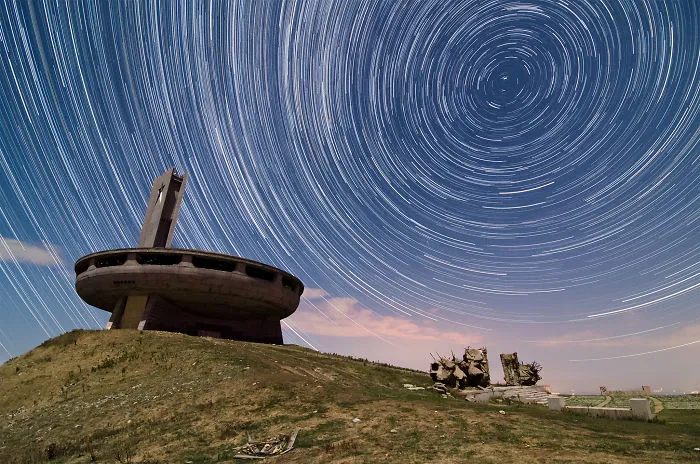
There are a ton of stars up there. Roughly five thousand are visible to the naked eye but there is only one that doesn’t move (much) to observers in the northern hemisphere - Polaris; the North Star. Knowing how to locate Polaris is a vital tool in the nocturnal explorer’s toolkit as once you have determined its position... You guessed it; that's north. Everything else will then fall into place. The same is reflected in the southern hemisphere for a group of stars called the Southern Cross. These two arbitrary points loosely determine the rotational axis of the planet, so every other star will appear to rotate around them like a cosmic clock.
There are tons of guides out there to teach you how to find Polaris and the Southern Cross. It’s advised to gain an understanding of how to locate them before you head out into the field. It would be easy to whip your phone out and check your route on maps, but that will ruin your night vision and spoil some of the fun too. With just a small amount of knowledge and a sense of direction, there’s some great atmosphere and satisfaction to be absorbed from using only the moon and the stars to lead you through the night.
This composite photograph shows the effect of the planet’s rotation over the course of an hour. The abandoned monument on the Bulgarian peak of Mount Buzludzha is illuminated by the dominating moonlight, whilst the cosmos dances its way around Polaris in the background.

