






While traveling is not on the table at this point in our pandemic lives, looking at nature photography can also provide a form of mental escape. Various studies have shown that it has soothing effects and helps our brains that are on their way to 2020-induced overdrive to calm down.
But luckily, the annual Nature Photographer of the Year (NPOTY) has just announced its winners of the 2020 competition. The judges chose from 19,547 images submitted from over 95 different countries, which made it a record for this competition.
The winner of the contest became an Italian nature photographer, Roberto Marchegiani, who impressed the jury with a mystical image of a giraffe titled “Jurassic Park.” “This image has a fairy-tale quality that goes far beyond a wildlife document,” Magdalena Herrera, director of photography for Geo, France, and the chair of the jury praised the winner.
So let’s take a look at all the amazing winning photographs that show the spellbinding nature around us as seen through the lens of the artists.
More info: NaturePhotographerOfTheYear.com
#21 Category Underwater: Highly Commended, 'Big Blue' By Paul Goldstein
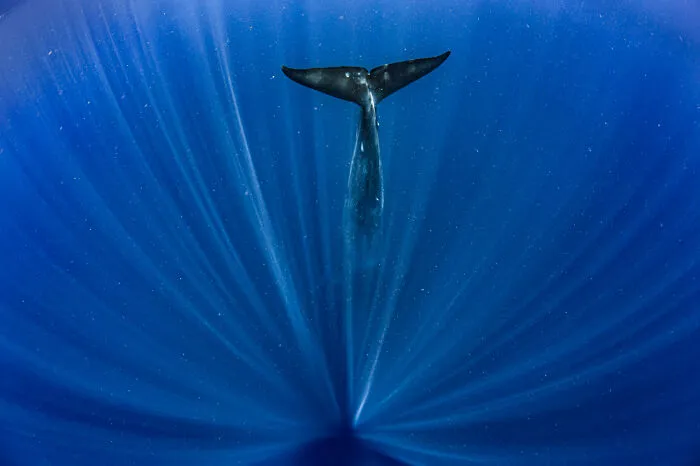
"This image was taken in the East Coast of Trincomalee Sri Lanka. I have guided several wildlife tours to Sri Lanka in the past but my colleague in Colombo had mentioned this East Coast swimming tour to me and it became a staple for a few years. The subjects are super-pods of sperm whales and the occasional blue. There are days with no whales and you are many nautical miles from shore looking for distant blows. It is a long and often hot quest but with small boats and very good local guides.
You also need to be a strong swimmer, something I had trained for, as well as most of my clients. It is critical to be sensitive in the water. Too much splashing and bubbles scares the cetaceons and this is exactly the reason that no oxygen tanks are permitted, fortunately. That morning we first spotted this Blue whale and during the second dive I was determined to get something special in front of my lens.
There is something humble, enchanting and also terrifying about such a huge mammal the size of six double decker buses, when it passes below you. But I pulled myself together, took a deep breath and followed it down. Not easy when the camera housing is acting as a life jacket! My ears were protesting as were my lungs and I pointed the rig down and squeezed off a couple of images as the leviathan dropped vertically into 3000 feet of deep blue.
Just being in the water with whales is something close to maritime witchcraft, but when it is a Blue it takes some recovery time, in this case physically and mentally!"
Report
38points
#22 Category Other Animals: Winner, 'Nature’s Pitfall' By Samantha Stephens
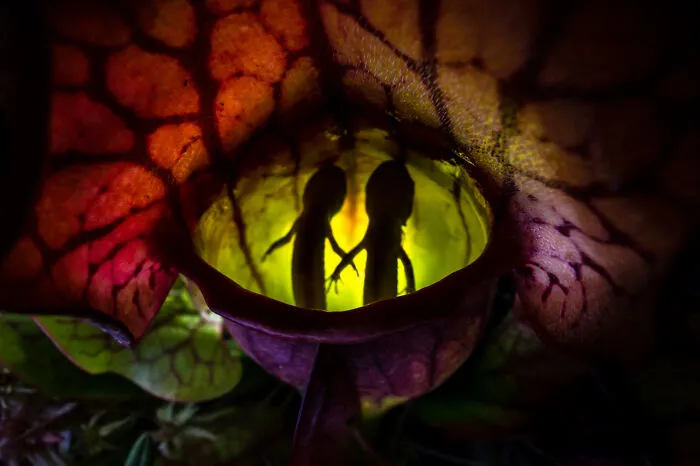
"Northern Pitcher Plants (Sarracenia purpurea) have evolved to be carnivorous to survive in bog environments that lack nutrient-rich soil. These plants trap invertebrate prey (such as moths and flies), in their bell-shaped leaves that fill with rainwater. But recently researchers at the Algonquin Wildlife Research Station discovered a new item on the menu for a particular population of these plants in Algonquin Provincial Park: juvenile Spotted Salamanders (Ambystoma maculatum)! This is the first account of Northern Pitcher Plants regularly capturing a vertebrate prey. These juvenile salamanders are a massive source of nitrogen compared to the plant’s typical prey, and researchers continue to investigate what this ecological interaction means for both the plants, and the salamanders.
On the day I made this image, I was joining the researchers for their daily survey of the plants, as I had done many times before. When we found this pitcher with two salamanders trapped simultaneously, both at the same stage of decomposition and floating on the surface of the fluid, I knew it was a special and fleeting moment. When we returned the next day, both salamanders had sunk to the bottom of the pitcher.
Thank you to the Algonquin Wildlife Research Station for continuing to recognize the power that visual storytelling has to communicate science and for facilitating my work, and to researchers Patrick Moldowan and Amanda Semenuk who graciously continue to let me follow them as they work on this study."
Report
38points
#23 Nature-Photography-Contest-Npoty-2020
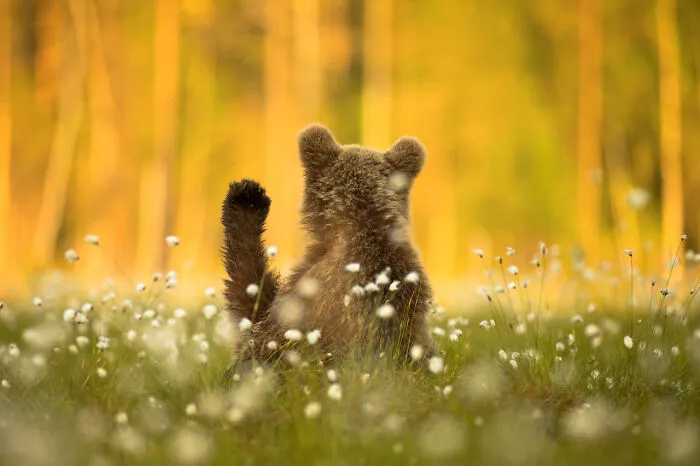
"This image was taken in east Finland. Every early summer some small, unremarkable brown and green flowers develop distinctive white bristle-like seed-heads that resemble tufts of cotton. I planned my photography project to be there at the right time for the bloom. Peak flowering lasts only two weeks a year and varies from year to year depending on the weather.The bears in this area are pretty shy and afraid of people so they are mostly active at dusk and dawn. I spent a few days laying down in a tiny claustrophobic one person hide, hoping for something to come out to an open wetland.
One evening I was fortunate to witness a beautiful family of mother and triplet Eurasian Brown Bears stepping out of the forest and playing in the beautiful golden light. When one of the cubs got tired of playing he left his siblings and sat down to rest in a special way with his leg lifted up.
He seemed enjoying the moment watching the beauty of his environment while the golden rays of the sun painted the forest in gold. I liked the way he was sitting with his back to me like someone who has no worries in the world and shooting from this angle tells his story with the environment in an unconventional way.
As photographers we are often fixated on photographing the animal looking at us and not away from us. So it is good to try and think out of the box sometimes. There is always a surprise in a bear and I think this is why so many people including myself feel a special connection with this animal and a strong need to protect them in order to make sure they stay on our planet for good."
Report
36points
#24 Category Animal Portraits: Runner-Up, 'Contact With The Dwarf Minke' By Craig Parry
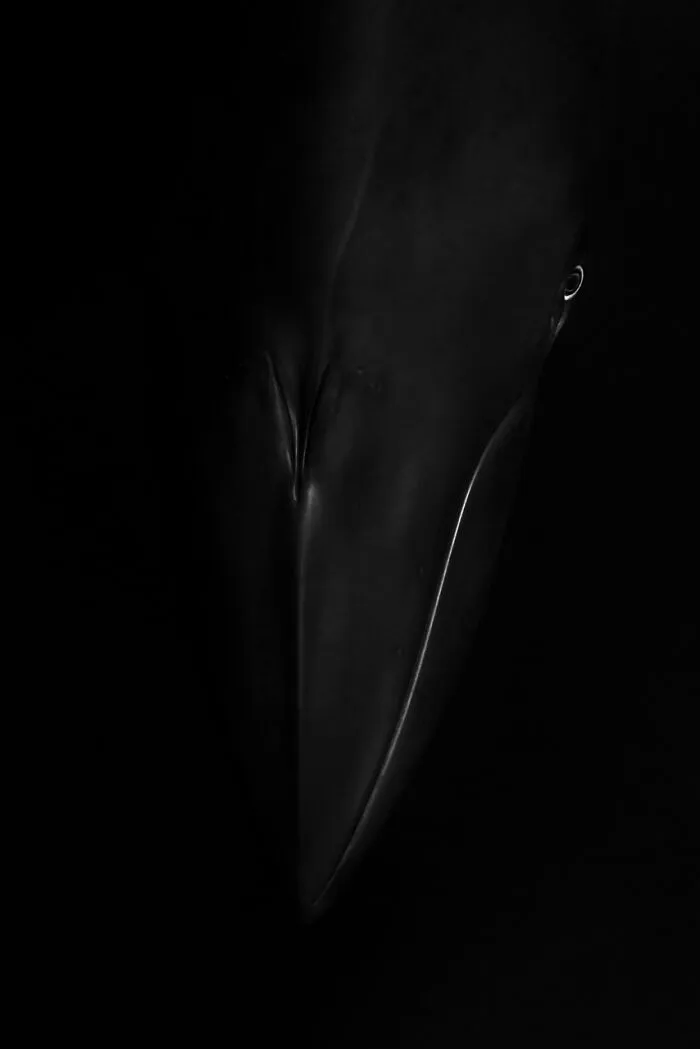
"Capturing that moment when the dominant Dwarf Minke makes eye contact with you is truly humbling and an overwhelming experience. It took over 2 hours to develop trust with this particular Minke, he would swim past at a distance over and over and finally came so close to me at a slow pace that he almost completely stopped in the water column to check me out. This allowed me to capture this captivating portrait and I am extremely proud of this image.
The image was captured on the Ribbon Reefs which are a part of Australia’s Great Barrier Reef. I documented the Dwarf Minke migration the previous year and this helped me understand their behaviour and temperament allowing me to visualise this picture. Visualisaton has always been a big part of my success as a nature photographer allowing me to capture unique and abstract images."
Report
35points
#25 Category Other Animals: Runner-Up, 'Take Care' By Yuhui Hu
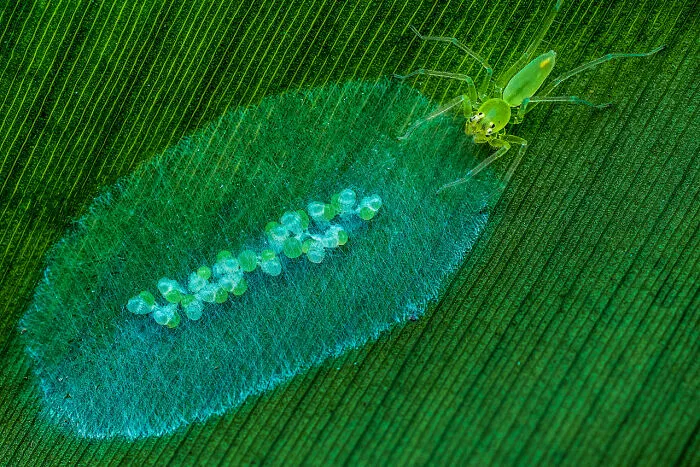
"This photo was taken in Guangdong Gaoming Lutian Nature Reserve in China. In the early summer, insects have entered the breeding season. An Ono spider is hiding under the green banana leaves. The baby is just like the emerald-colored baby. The green little life and the banana leaves merge into a green world."
Report
35points
#26 Category Landscapes: Runner-Up, 'Electric' By Joshua Cripps
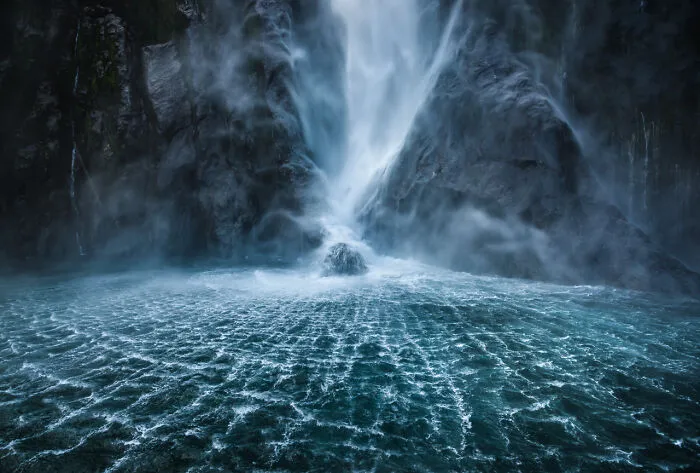
"Stirling Falls, New Zealand is a marvelous sight in a marvelous country. Located in Milford Sound, it’s a waterfall that plummets 500 feet to land directly on the ocean’s surface. When the conditions are just right, the water falling from the sky impacts the rocks at the base off the cliff and ricochets outward, creating a marvelous display of patterns and textures. The only way to reach the falls is by boat, and that creates a number of significant challenges for photography.
The first challenge is that you have a very limited amount of time to shoot. Due to the cruise schedule in Milford Sound boats stay at the falls for only 3-5 minutes. This means you have to get your camera completely set up and be totally ready to shoot when the falls comes into view, which means taking test exposures and getting the settings perfect BEFORE you arrive at the falls. How to know what settings are the right ones? Simple: trial and error.
I visited Stirling Falls by boat a number of times before I figured out the right combination of settings that would allow for movement in the falling water, while maintaining detail in the patterns on the ocean. Also, depending on the wind and water when you visit, you may not see any patterns at all.
The second main challenge is that you have to shoot from a moving boat. You can’t use a tripod to do a long exposure or perfect your composition. You have to act fast, shoot handheld using VR/IS, and shoot a lot of frames. Hopefully one will come out great.
The final challenge is dealing with spray from the waterfall. Every few frames you have to wipe the front of your lens or your image will be a smeary mess. After visiting the falls numerous times over a six year period, everything came together for me on a recent visit and I was able to create this image."
Report
34points
#27 Category Black & White: Highly Commended, 'Red Deer In White' By Kevin Berghmans
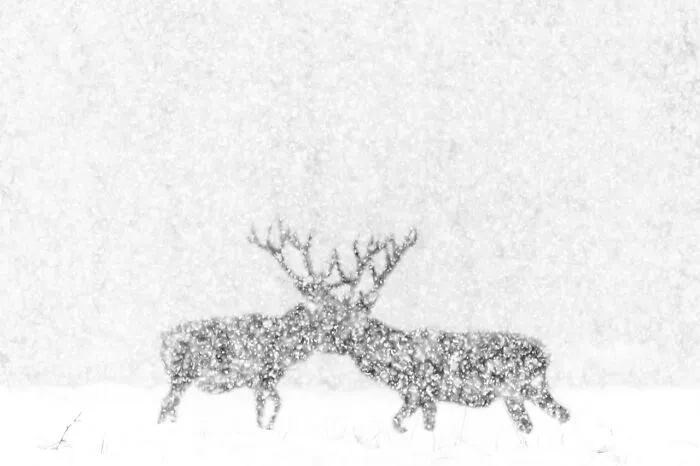
"The photo shows two red deers at the Veluwe at a rare moment in the Netherlands, during heavy snow fall. The photo was taken in a period which I mainly focused on Western Red Deers (Cervus elaphus). That particular day was the perfect moment. After a few hours of waiting, they appeared on the scene, and it was a photographic opportunity that I couldn’t miss."
Report
33points
#28 Category Other Animals: Highly Commended, 'A New Immersion' By Ruben Perez Novo
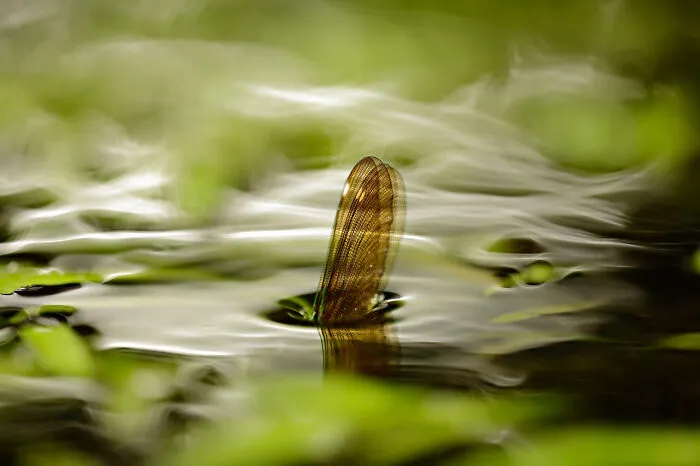
"The photo is taken in an area of the Sor river in Coruña, northern Spain. It is a female Calopteryx Virgo, the females of these damselflies are characterized by laying their eggs inside the leaves that are underwater.
I was in the middle of the river photographing them while they mated with the males. The females were perching on the leaves that came to the surface of the water to lay their eggs. I was surprised when I saw they were embedding their eggs on the leaves were moving along the leaf. They dind’t stop until they were completely submerged underwater. The calopteryx remained for a few minutes down while they continued to lay their eggs. I was impressed with the amount of time they can stay underwater while laying and then can get out and fly without any difficulty. That females lay their eggs in rivers is a sign of cleanliness and purity of that river.
To take this photo I was in the river with a tripod and camera. The lighting is totally natural, the sunlight filtered through the dense foliage of the trees that surrounded the river which made the light very soft. The greatest difficulty was finding the appropriate shutter speed to get a small movement of the river water to be appreciated. I was making sure the damselfly’s wings did not moved. I had to take care of all of these things while the female Calopteryx Virgo was moving around the leaf laying its eggs."
Report
31points
#29 Category Plants And Fungi: Winner, 'Dead Forest' By Radomir Jakubowski
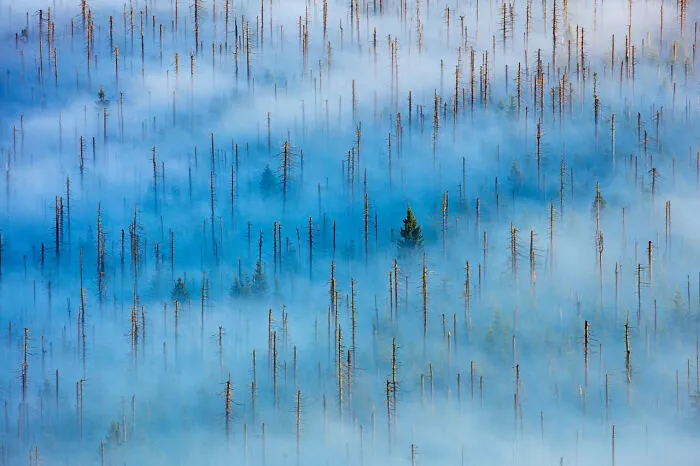
"This image was taken in the National Park of Bavarian Forest. This year is the 50th birthday of the national park. I’ve visited this area for fifteen years now. Around 25 years ago the inect bark beetle killed big areas of this forest. In the last fifteen years I saw how the forest change from a dead to a more living forest. I took this image during an autumn morning. The height of the fog was perfect, it only covered the forest. So the shape of the dead trees were coming out of the fog."
Report
31points
#30 Category Landscapes: Winner, 'Il Bosco Incantato' By Stanislao Basileo
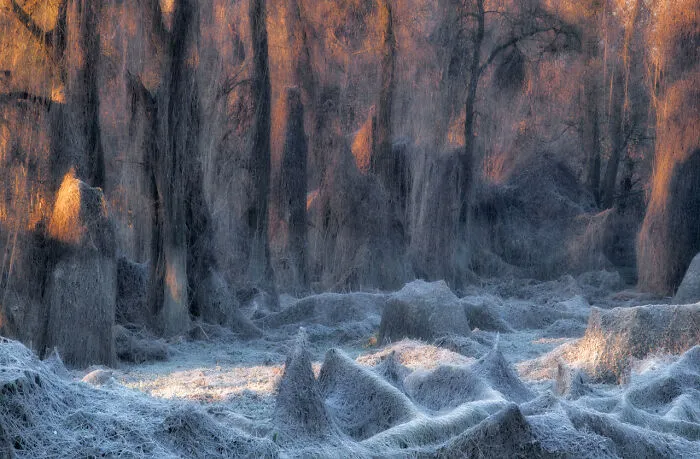
"One winter morning in January taking advantage of the spectacle of the frost I went for a walk along the river Po looking for particular situations. At one point I was observing a spectacular situation created by many branches of larches falling to the ground completely covered by frost. It seemed to me an 'Il bosco incantato'"
Report
27points
