




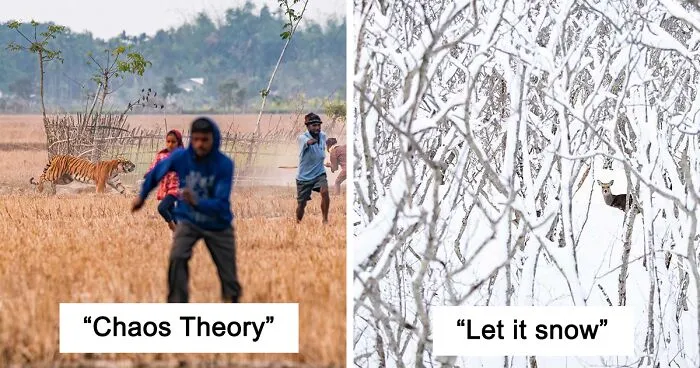


The Nature inFocus Photography Awards received photos that captured thrilling and thought-provoking moments in the natural environment thanks to the addition of a new category. Photographers portrayed animal moments using a collection of photographs that work together to tell a story in the new category, Photographer of the Year - Portfolio, which showcased the best in visual storytelling.
This year's new features included more than just the category. The number of awards increased with the announcement of three winners and roughly five jury picks for each category.
The panel members and curator, Kalyan Varma, co-founder of Nature inFocus, presented the winning photographs LIVE on YouTube on November 25.
With that being said, if you'd love to see previous year's winners make sure to click here!
#21 "Burnt Violet", Jury Selection, Creative Nature Photography
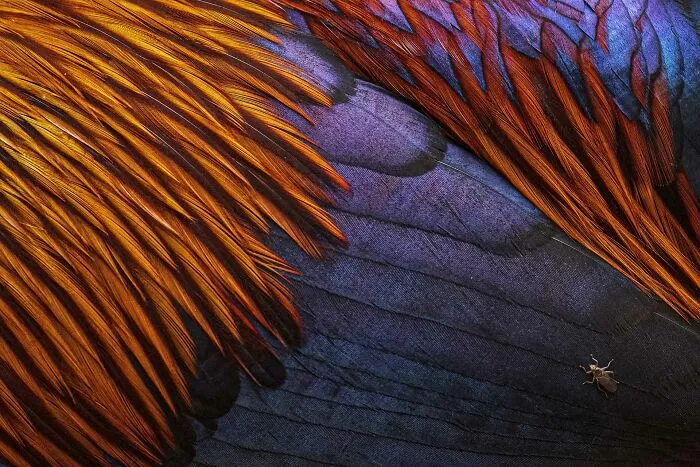
The Sri Lanka Junglefowl is an endemic species that is a common sight across the island nation. A stunning burnt orange plumage with dark streaks, and an iridescent, glossy black tail, junglefowls are a sight for sore eyes. This close-up photograph of its wing is a confounding play of colors, almost hypnotizing, if not for a certain photobombing winged friend.
By Ashane Marasinghe.
43points
#22 "Out For A Duck", Winner, Animal Behaviour
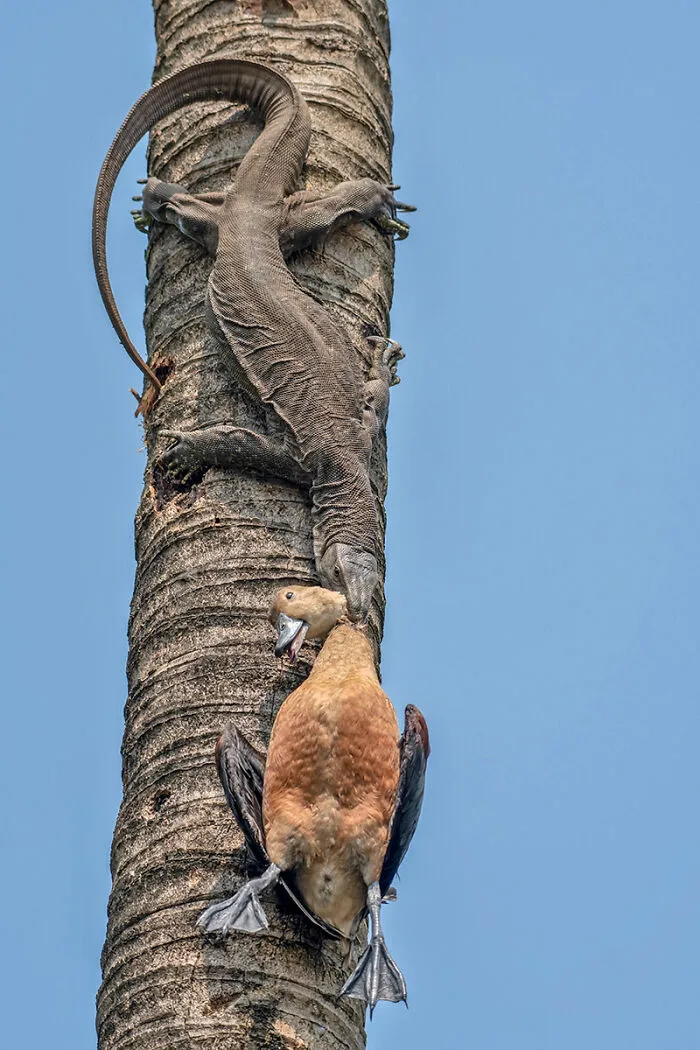
Monitor Lizards will eat almost anything. Fish, insects, birds, crabs, snakes—you name it! They even scale trees to raid nests or capture squirrels. But it's not every day that you find a giant lizard holding a Lesser-whistling Duck by its neck. Lesser-whistling Ducks are known to build nests in tree cavities and on the branches of large trees. Sometimes, even high up on a tree is just not high enough!
By Ratheesh Rajan.
41points
#23 "Fire Alarm", Jury Selection, Conservation Focus
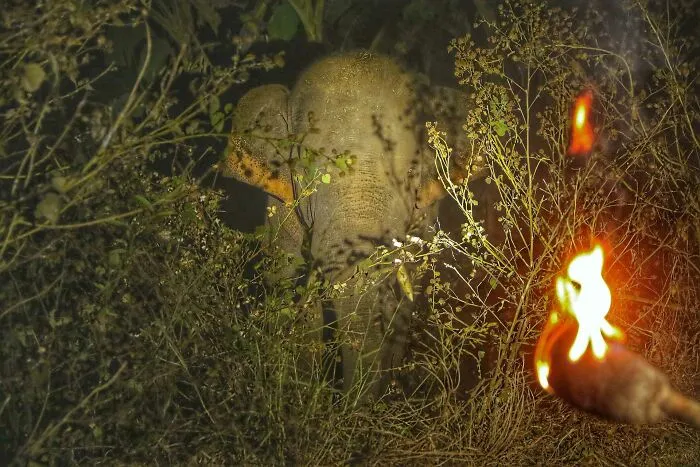
A quick fix or a cry for help? For the people of Parvathipuram, wild elephants are a common sight. Coexisting with them for about a decade, the villagers have come up with their own systems to not get in the way of the gentle giants. There are hundreds of houses in the region and no street lights, which makes it difficult to navigate the landscape especially at night time. To avoid encounters they use fire torches to signal their presence. The image represents how we often overlook the importance of infrastructure in conflict-prone areas.
By Sanjay Kothapalli.
40points
#24 "Plastic Home", Jury Selection, Conservation Focus
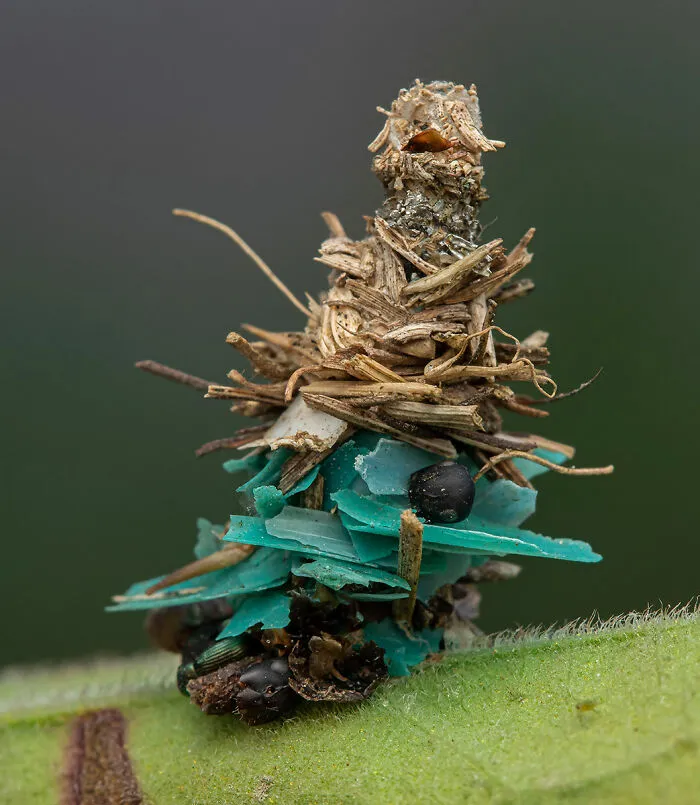
A Bagworm Moth caterpillar builds a protective shell with the resources it has around it. Normally, this would include twigs, leaves and other natural debris. But here, the caterpillar has turned to plastic waste. The image highlights how rampant plastic pollution is and why it is crucial that we address the issue.
By Amith Kiran Menezes.
40points
#25 "Aarey’s Cats", Winner, Wildscape & Animals In Their Habitat
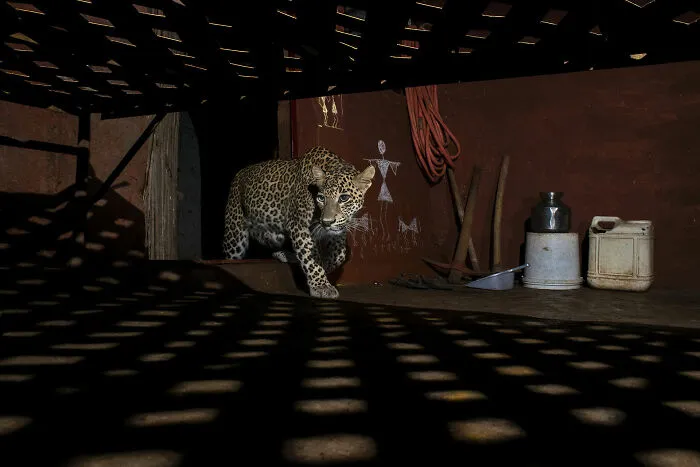
The camera trap image portrays the peaceful coexistence of leopards with humans in Mumbai’s Aarey Colony. The felids reside in the adjacent Sanjay Gandhi National Park and often visit the neighboring areas in search of prey. Here, a lactating leopardess is seeking refuge from the rains in an abandoned house located within a village of the Warli community.
By Kapil Sharma.
37points
#26 "The Seven Moons Of Sahara", Winner, Creative Nature Photography
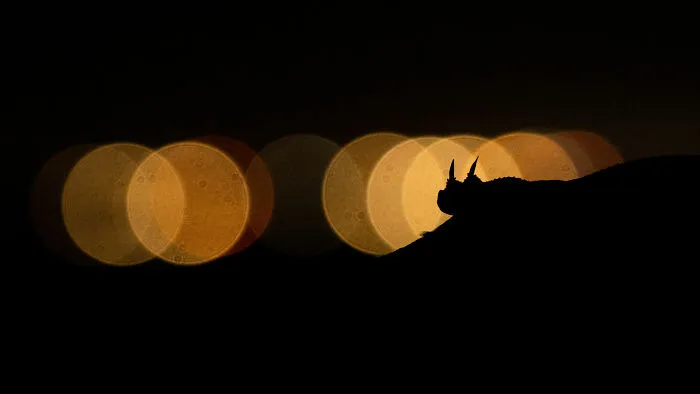
The Horned Desert Viper or Saharan Horned Viper is one of the most commonly seen snakes in the North African and Middle Eastern deserts. This stunning silhouette against the city lights illustrates the signature 'horns' of the reptile, its most distinguishing feature. The so-called horns are a single scale present above each eye.
By Kai Kolodziej.
36points
#27 "Mohun In Danger", Jury Selection, Photographer Of The Year – Portfolio
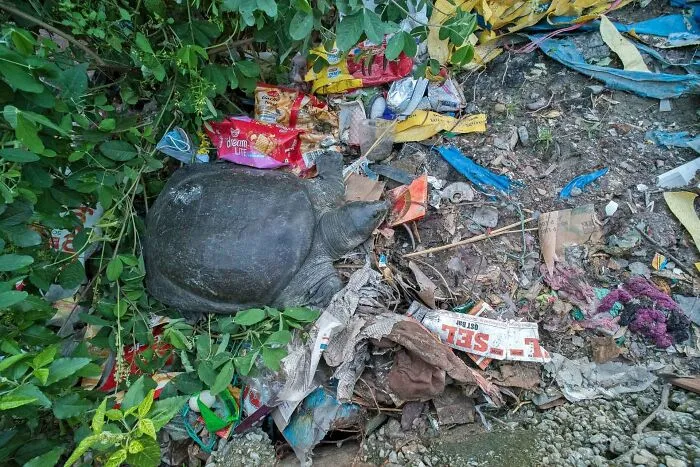
A critically endangered chelonian, the Black Softshell Turtle has found an unlikely home in the temple ponds of Cooch Behar, West Bengal. Find out how this turtle is surviving in this urban landscape.
By Ripan Biswas.
35points
#28 "Higher Up The Food Chain", Winner, Young Photographer
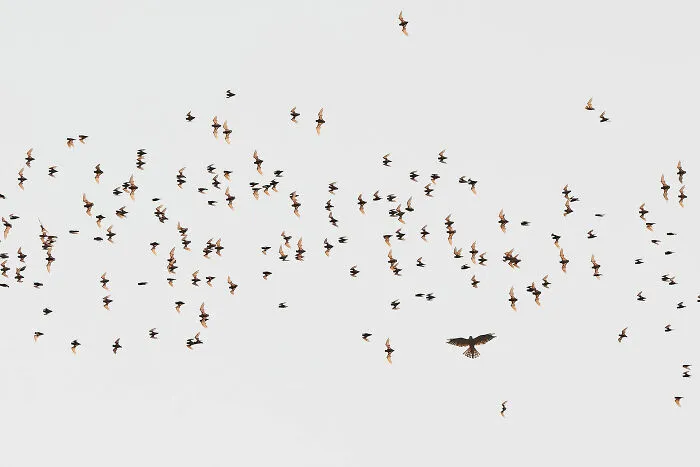
Fill in the blank. When the bats are out to feed, the hawks are out to…..? Jomtup observed the bats leaving their caves every evening in order to feed. Around the same time, the hawks would emerge to capture their prey—the bats. Being opportunistic feeders, hawks eat everything from rodents, small birds, and insects to bats!
By Jomtup Charoenlapnumchai.
34points
#29 "A Full Meal", Winner, Animal Behaviour
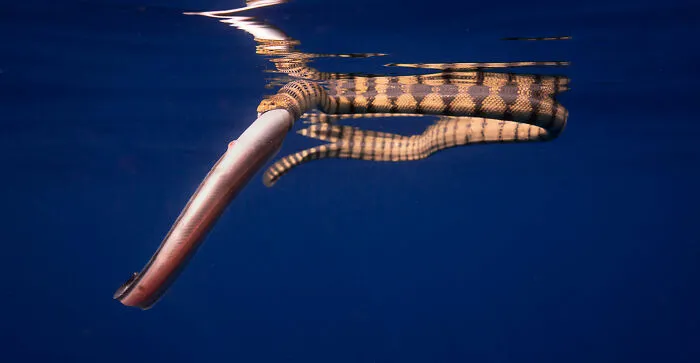
If you think about it, it's quite a conundrum for sea snakes. These marine serpents are surrounded by their prey, but in a world of coral reefs, rock crevices, and quick maneuvers, to make an actual catch requires additional skills. Sea snakes are highly venomous and let their bite do most of the work. Here, a Striped Sea Snake latches onto its catch, making for rare documentation of the reptile in action in the open sea.
By Joshua Barton.
32points


