



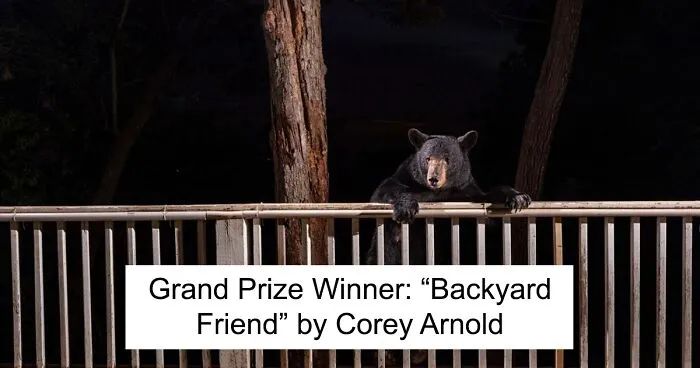


Every year, the famous 'The Big Picture' photography contest, organized by the California Academy of Sciences and Biographic, brings us closer to the work of some of the best nature photographers in the world. The 10th-year contest winners and finalists have been selected, and we are more than happy to share the amazing nature shots with you that made the cut.
Overall, there were 7 categories: Art of Nature, Aquatic Life, Winged Life, Landscapes, Waterscapes, and Flora, Terrestrial Wildlife, Human/Nature, and Photo Story: A Matter Of Time. The Grand Prize was won by Corey Arnold, a commercial fisherman and photographer from Washington, United States, with a photograph of a bear in a backyard called "Backyard Friend".
So without further ado, we invite you to immerse yourselves in these beautiful photographs, and for last year's awards, see the post on Bored Panda here.
#21 Terrestrial Wildlife Finalist - "Livin' On The Edge" By Amit Eshel
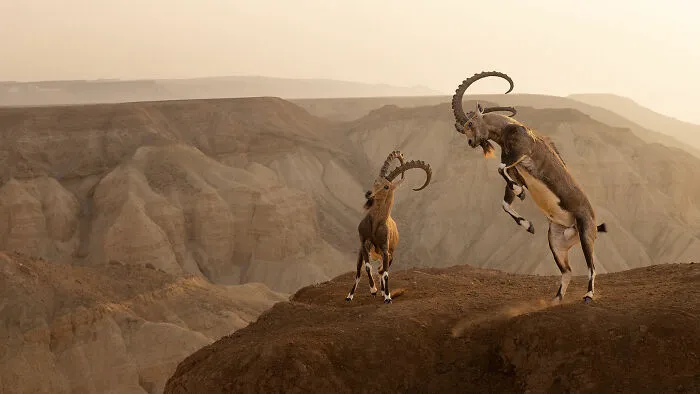
Zin Desert, Israel.
"As there are less than 5,000 of them left in the world, finding any Nubian ibex (Capra nubiana) is a challenge—let alone battling adult males. This photographer has witnessed numerous juveniles bumping heads as practice, but before this moment had never seen adult males battling at full power for the right to breed."
Report
93points
#22 Photo Story: A Matter Of Time Finalist - "Cities Gone Wild" By Corey Arnold
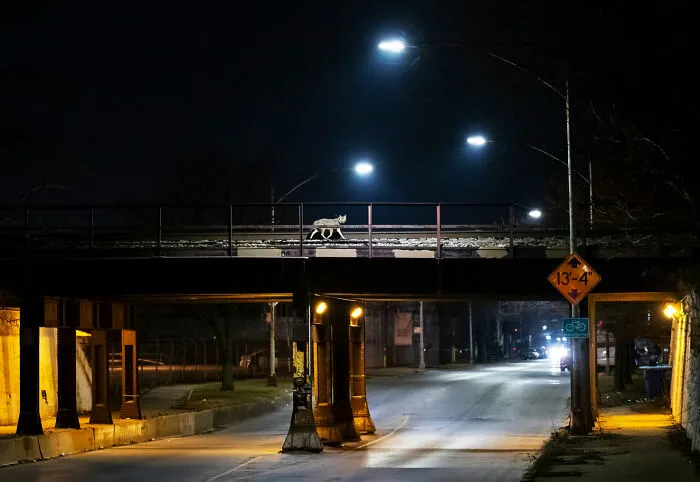
West Chicago, Illinois, United States.
"A female coyote crosses a freight train bridge. Urban coyotes in Chicago have distinct territories they claim as their own, often using railroad tracks to avoid crossing busy highways in order to travel between green spaces and abandoned lots where they hunt for rabbits, rodents, and other urban food sources."
Report
90points
#23 Photo Story: A Matter Of Time Finalist - "Cities Gone Wild" By Corey Arnold
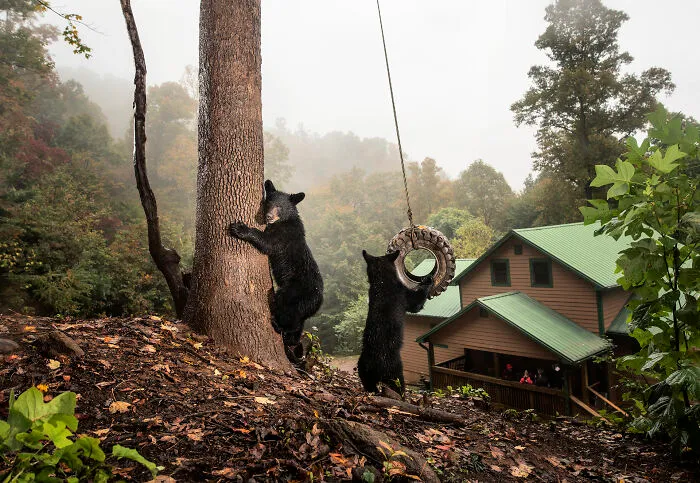
Asheville, North Carolina, United States.
"Young black bears in take a brief break from foraging to play with a family’s tire swing."
Report
85points
#24 Grand Prize Winner: "Backyard Friend" (From "Cities Gone Wild") By Corey Arnold
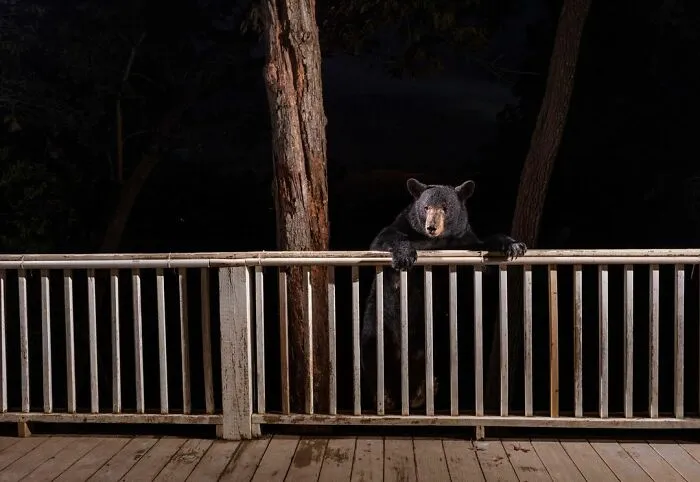
Asheville, North Carolina, United States.
"With a wildlife corridor passing through their property, a retired couple living on the outskirts of Asheville, North Carolina frequently find four-legged visitors at their back porch, including this beautiful American black bear (Ursus americanus). In fact, residents of Asheville are known for their close relationship with wild black bears in the area. This photographer theorizes that through this coexistence, these bears may be growing more intelligent and increasingly bold—resulting in close contact like that featured here."
Report
82points
#25 Winged Life Finalist - "Dedication" By Kurt Jay Bertels
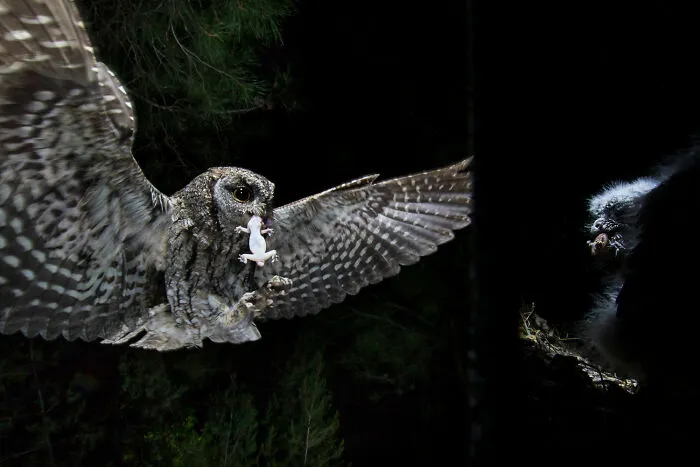
Kalo Chorio (outside Nicosia), Cyprus.
"This photographer had always hoped to capture the inside and outside of an owl tree nest at the same time. With this exact photo in mind, he took years to construct an appropriate camera trap and bird box and wait for these Cyprus scops owls (Otus cyprius) to use it. And use it they did. The pictured owl alone returned to its offspring nearly twenty times a night with all manner of prey in tow, including this unlucky gecko."
Report
76points
#26 Art Of Nature Finalist - "Tree Of Life" By Karim Iliya
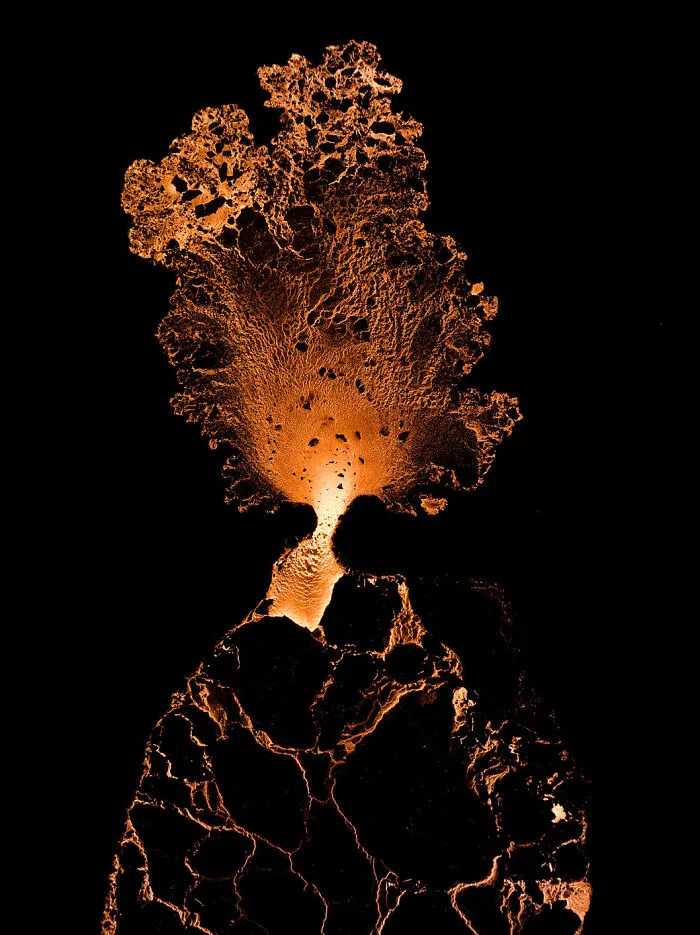
Fagradalsfjall, Reykjanes, Iceland.
"A hypnotic scene as viewed from a neighboring mountain: New lava flow branches off to run its course, the pattern reminiscent of tree roots. The photographer muses that volcanoes are one of the few places where you can watch the land change and grow over the course of seconds, when typically geology takes thousands or millions of years, existing on a timescale far greater than that of humans."
Report
74points
#27 Human/Nature Finalist - "Hvaldimir Playing With Ropes" By Audun Rikardsen
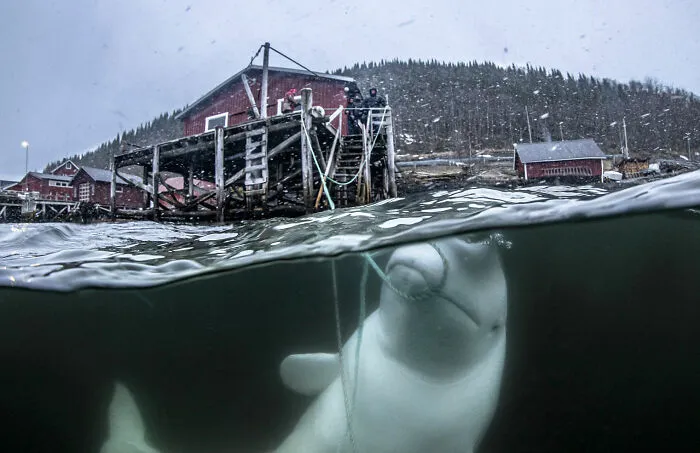
Sørfolda, Norway.
"When they coined the phrase ‘whale of a tale,’ they must have been thinking of Hvaldimir—a beluga whale (Delphinapterus leucas) with one incredible backstory. After surfacing off the coast of Norway in 2019 wearing a Russian harness and a camera mount, locals believed that Hvaldimir had been trained as a spy. Beyond this theory, not much else is known about him, but as this image suggests, he’s gotten into a fair amount of trouble with humans. As he’s no longer part of a pod due to his domestication, he seeks out human interaction, which can be quite dangerous."
Report
74points
#28 Photo Story: A Matter Of Time Finalist - "Cities Gone Wild" By Corey Arnold
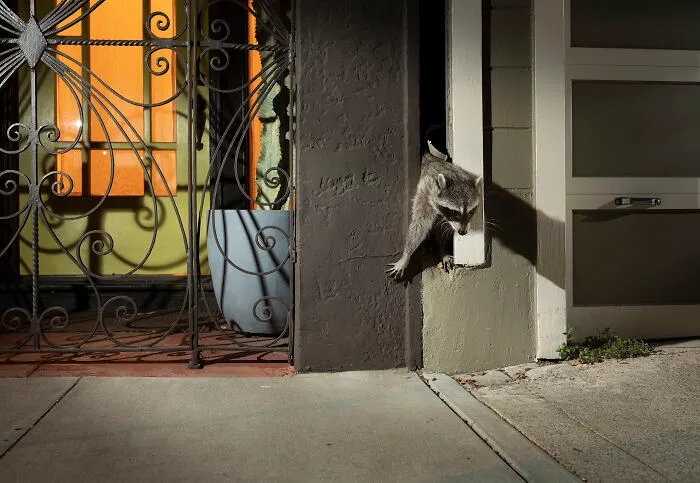
San Francisco, California, United States.
"This raccoon maneuvers between two buildings, giving new meaning to ‘crawl space.’"
Report
74points
#29 Landscapes, Waterscapes, And Flora Category Winner - "Regeneration" By Miquel Angel Artús Illana
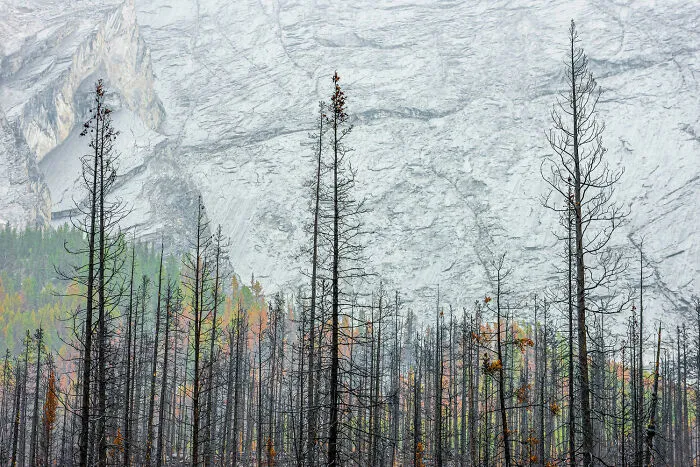
Tossa De Mar, Spain.
"Miquel Angel Artús Illana is a photographer from and trained in Barcelona, currently residing in Tossa De Mar. He has always been fascinated by landscapes, traveling weekly since he was very young to the native forests and mountains of his home."
Report
72points
#30 Landscapes, Waterscapes, And Flora Finalist - "In The Place Of My Dreams" By Paulo Olivier Hanshing
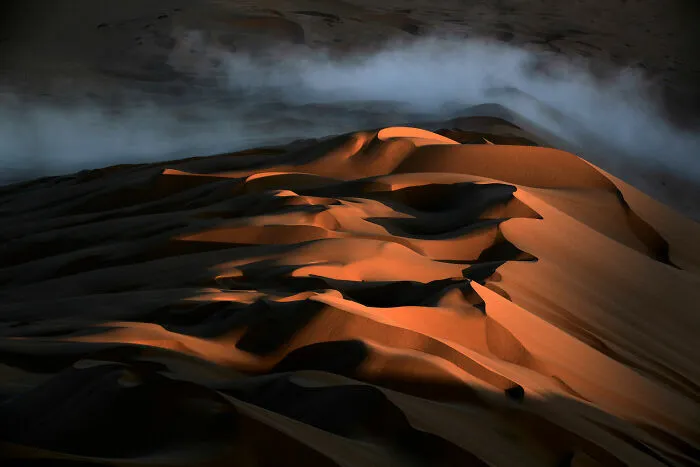
Región de Atacama, Copiapó, Chile.
"Even the driest non polar desert in the world is teeming with life if you look closely enough. After various trips to the area, this photographer camped out for three days in order to capture this breathtaking image that shows how the mist and fog roll over the seemingly barren desert of Atacama."
Report
69points
#31 Winged Life Finalist - "Flying" By Takuya Ishiguro
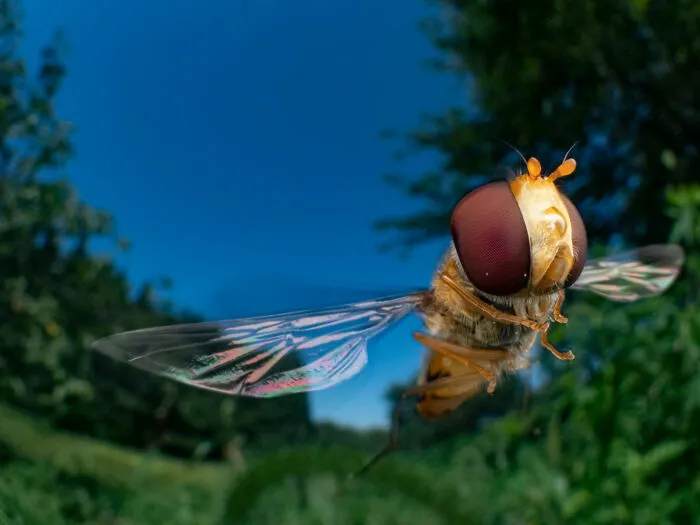
Osaki-shi Miyagi-ken, Japan.
"Even up close, it’s clear to see why Japanese hoverflies (Monocromia pleuralis) are often mistaken for honey bees or wasps; however, as their name suggests, they are members of the fly family. It’s hypothesized that they have evolved to resemble bees and wasps as a form of protection, but they do share a similarity with their lookalikes: they’re exceptional pollinators, making them an integral part of their local ecosystems."
Report
67points
#32 Art Of Nature Category Winner -"Field Of Dreams" By J Fritz Rumpf
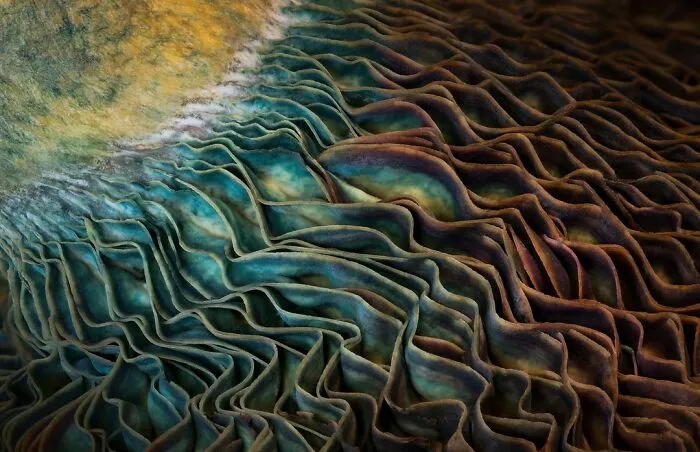
White Mountains, Arizona, United States.
"This year’s Art of Nature winner serves as a photographic Rorschach test! The photographer mentions a range of reactions and theories as to what the mesmerizing lines might be part of. A coastal scene with waves crashing on the cliff or sand rippled with waves in the deep desert? We’ll keep you in suspense no longer: It’s the underside of a mushroom, likely a member of the Lactarius family. The photographer notes that he was drawn back to the unusually vibrant colors displayed on the gills, the blue color in particular, which might indicate the presence of psilocybin or psilocin. Trippy indeed!"
Report
66points
#33 Terrestrial Wildlife Finalist - "New Life" By Tomasz Szpila
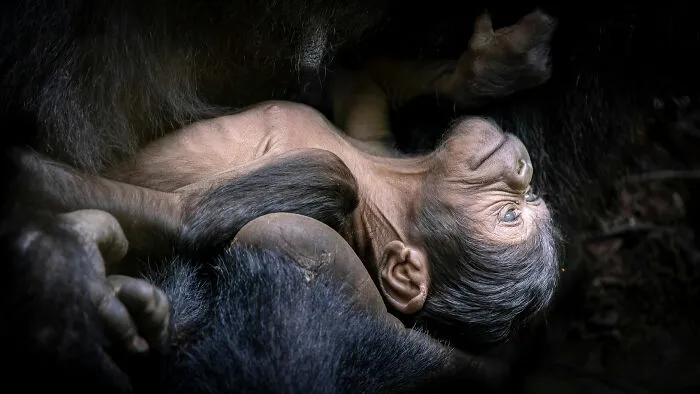
Bwindi Impenetrable National Park, Uganda, Africa.
"Capturing an image of a week-old mountain gorilla (Gorilla beringei beringei) is no easy feat, as the mothers are understandably protective of their offspring and the number of such gorillas in general has shrunk. After surveilling this gorilla family at a distance for many days, the opportunity to snap a shot of the newborn presented itself, resulting in a solemn reminder of both the beauty and fragility of nature."
Report
65points
#34 Landscapes, Waterscapes, And Flora Finalist - "Mushroom Tornado" By Liu Yang
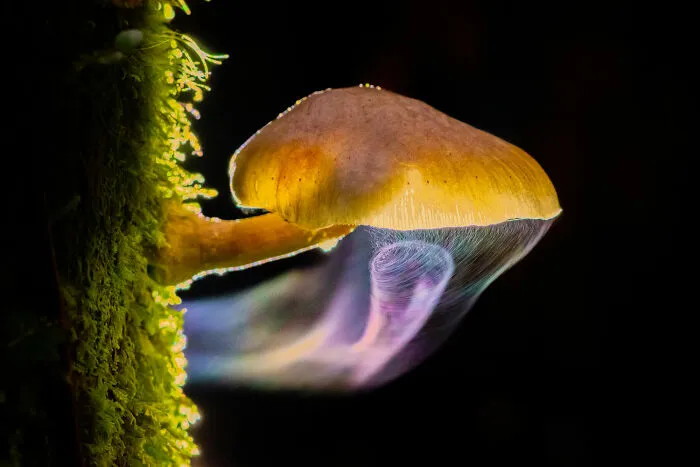
Lake Matheson, Fox Glacier, Westland National Park, New Zealand.
"A mesmerizing, yet deadly, spore scene. This beautiful, mushroom-forming fungus (Armillaria novae-zelandiae) is a member of the Physalacriaceae family—one of three Armillaria species native to New Zealand. This highly invasive species is often found on decaying wood and capable of causing root rot in plants with which it comes into contact."
Report
65points
#35 Art Of Nature Finalist - "The Nebula" By Morgan Heim
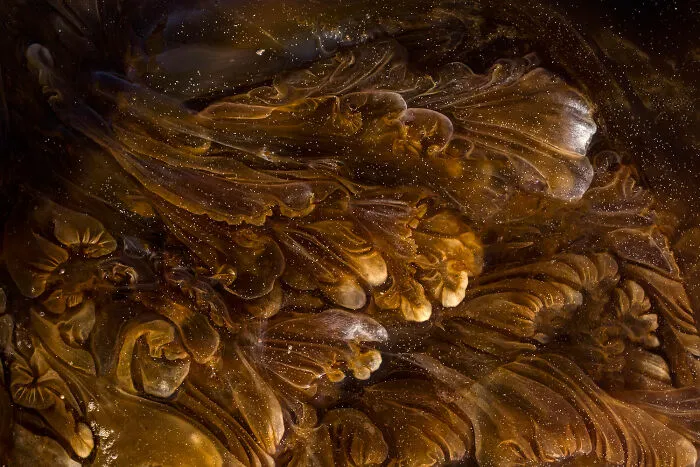
Nehalem Bay State Park, Oregon, United States.
"Reminders that we are all made of stardust can be found in the most unlikely of places: Including this Pacific sea nettle, (Chrysaora fuscescens) that has washed up on the beach. As the sun glints and radiates against its beautiful body, a galaxy shines through."
Report
65points
#36 Photo Story: A Matter Of Time Finalist - "Cities Gone Wild" By Corey Arnold
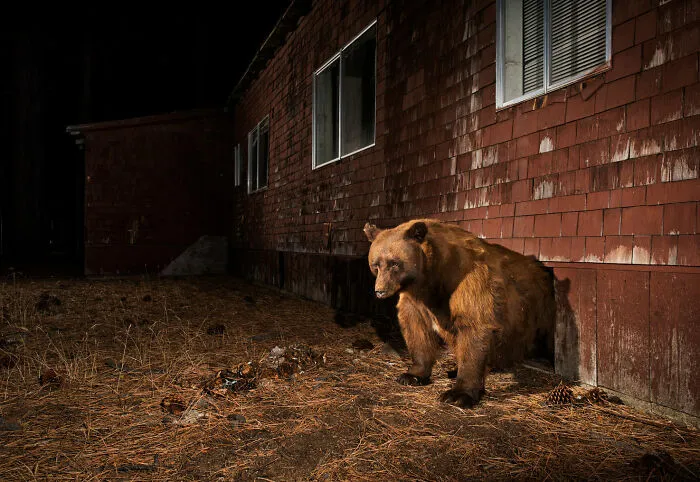
South Lake Tahoe, California, United States.
"A bear lives under an abandoned house that serves as its homebase to access food resources in South Lake Tahoe, California."
Report
65points
#37 Landscapes, Waterscapes, And Flora Finalist - "Northern Lights In The Sand" By Antonio Fernandez
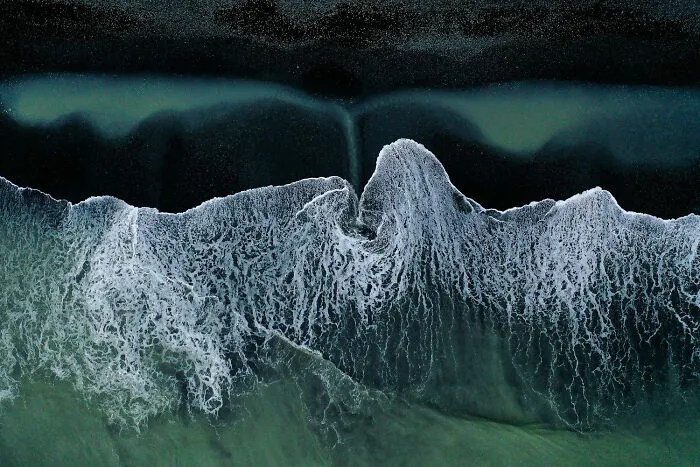
Reynivellir, Iceland.
"Naturally, this photographer had high hopes of seeing the Northern Lights while in Iceland. Unfortunately, due to gray skies and the low intensity of the lights, he wasn't able to capture them in the sky; however, he later found a surprise in the sand of Iceland’s volcanic black beaches—a shock of green that closely resembled the iconic Arctic phenomenon."
Report
63points
#38 Human/Nature Finalist - "Lake In Pain" By Daniel Núñez
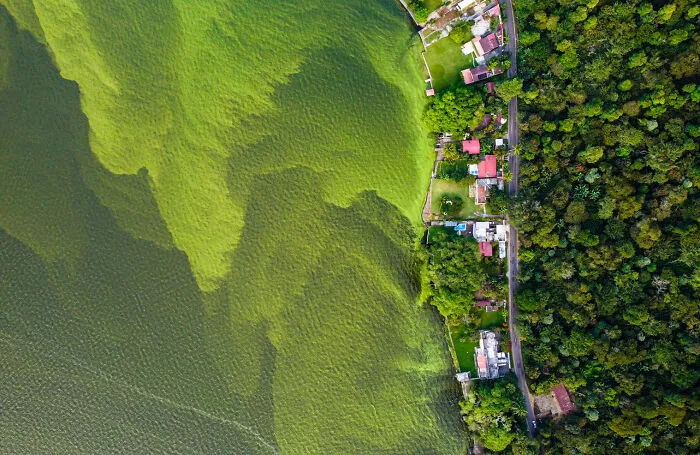
Amatitlán Lake, Guatemala.
"We’ve been conditioned to think that when it comes to nature, green is good; unfortunately, in the case of Amatitlán Lake this couldn’t be further from the truth. Each year, enormous quantities of untreated sewage and sediment are carried into this lake from Guatemala City. The result is this disarmingly neon green and undoubtedly toxic lakefront view, visible from the air."
Report
62points
#39 Landscapes, Waterscapes, And Flora Finalist - "The Great Storm" By Luis Vilariño Lopez
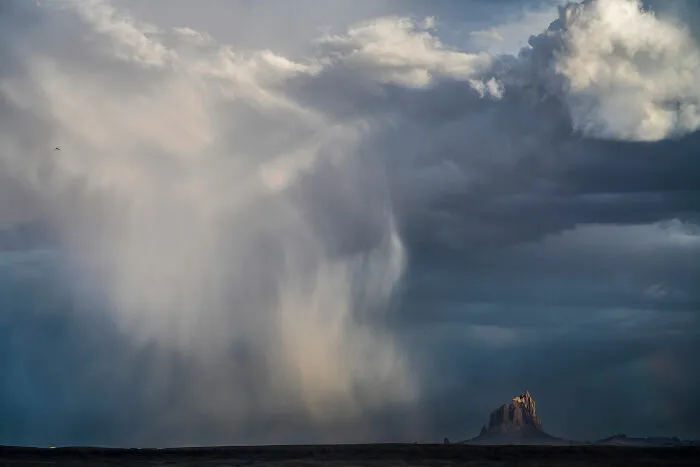
Shiprock, New Mexico, United States.
"A humbling display of the true scale of a storm as it rips through the landscape of Shiprock, reminding us that nothing escapes the powerful forces of nature."
Report
61points
#40 Aquatic Life Category Winner - "Of Blades & Spines" By Kate Vylet
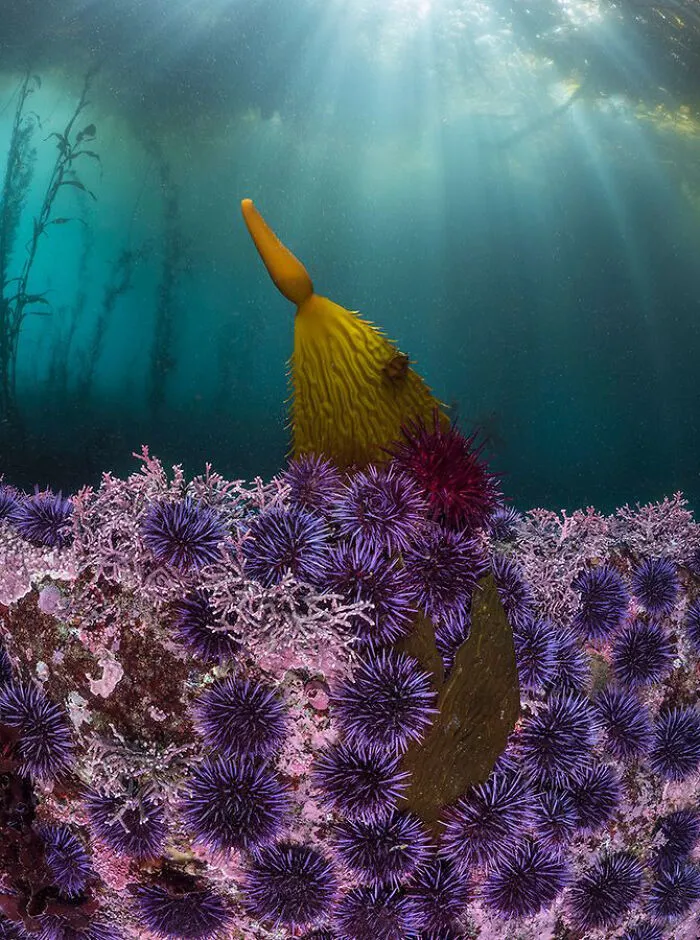
Carmel Bay, United States.
"Urchins are often vilified in media coverage of changing kelp forests—they’re the most visible cause of kelp forest loss, devouring algae and replacing lush forests with spine-studded barrens. But in this remarkable photo, we see how urchins belong to kelp forests as much as the kelp itself does; more importantly, they play a crucial role as detritivores—eating dead algae and feeding marine life higher up the food chain. Ultimately, urchins are trying to survive in changing seas just like kelp; the loss of their kelp forest homes is a consequence of climate change from which they also suffer."
Report
60points


