





We owe a big thank you to past scientists who set the stage for today's modern technologies even though some of their creations can be puzzling to us now. Think of Leonardo Da Vinci and his flying car or Thomas Edison and his discovery of the light bulb. Their brilliant ideas have shaped the world we live in and continue to inspire innovations.
There was a time when certain things were seen as chic, but now they're simply odd. The Instagram account 'Got Weird' is all about that. It shows both strange inventions and odd moments in time that demonstrate how perspectives change over the years. So take a trip down memory lane and explore what used to be cool – it might bring a smile to your face or a sneaky chuckle.
#21 Before Pumpkins, The Irish Carved Jack-O’-Lanterns From Turnips And Potatoes
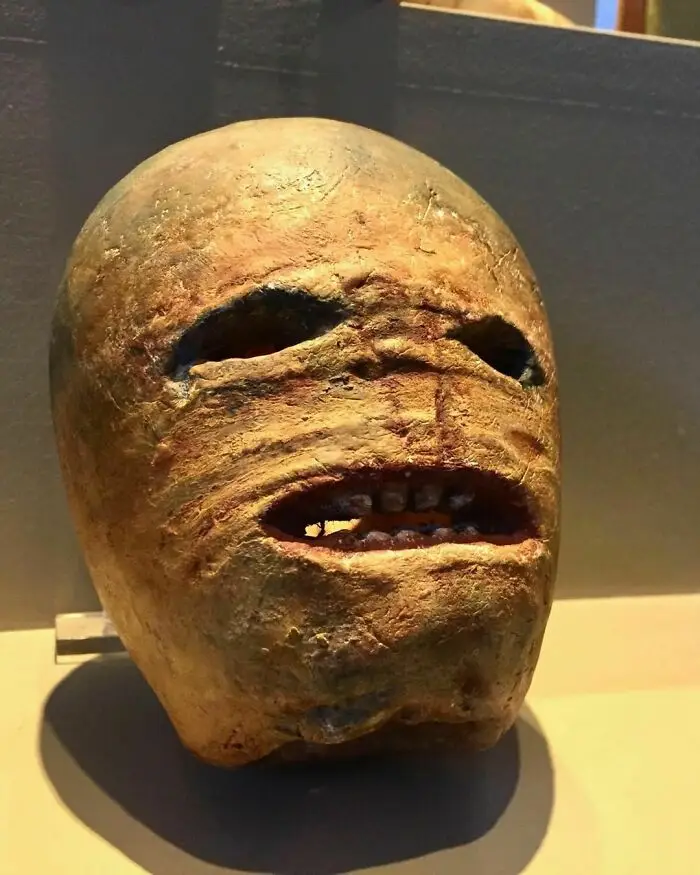
The jack-o’-lantern tradition dates back centuries, when people in Ireland decorated turnips, beets, and potatoes to frighten away a mythical character named Stingy Jack. Irish immigrants brought the tradition to America, home of the pumpkin, and the popular fruit became an integral part of Halloween. According to the folktale, Stingy Jack was having a drink with the Devil but didn’t want to pay for his drink. To fix this problem, he persuaded Satan to transform into a coin that Jack could use. However, Jack decided to put the coin in his pocket, next to a silver cross. This silver cross prevented the Devil from changing back. Jack made a deal that the Devil would not bother him for a year and is not allowed to take his soul if Jack dies. A year later, Jack meets the Devil again. Jack convinced the Devil to climb a tree and pick fruit. Whilst the Devil was up in the tree, Jack carved a cross into the bark of the tree so the Devil could not come down. Jack then made another deal, which stated that the Devil could not bother him for 10 years. Jack died a while after this. He was going to go to Heaven but God did not want him there, so he was to be sent to hell. However, the Devil was not allowed to claim his soul and didn’t want him anyway, and so he was forced to wander the Earth. The Devil gave him a lump of burning coal, which Jack put into a hollowed-out turnip. The Irish people who saw him would refer to him as “Jack of the lantern”, which was eventually shortened to “Jack O’Lantern”. People in Ireland and Scotland would start carving faces into turnips and potatoes, to frighten Stingy Jack away and repel other wicked spirits. Immigrants from the British Isles who came to the United States of America bought the story with them. Except they started using pumpkins instead of turnips and potatoes, hence why carved pumpkins are called Jack O’Lanterns
Report
0points
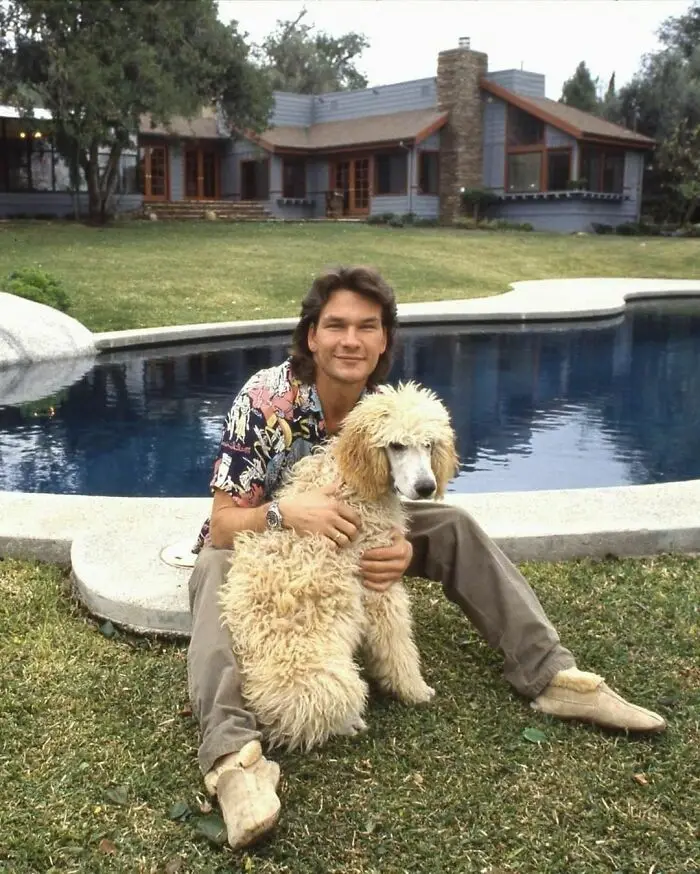
#23 Jodie Foster Holding A Lamb In A Promo Shoot For ‘The Silence Of The Lambs’ (1991)

Report
0points
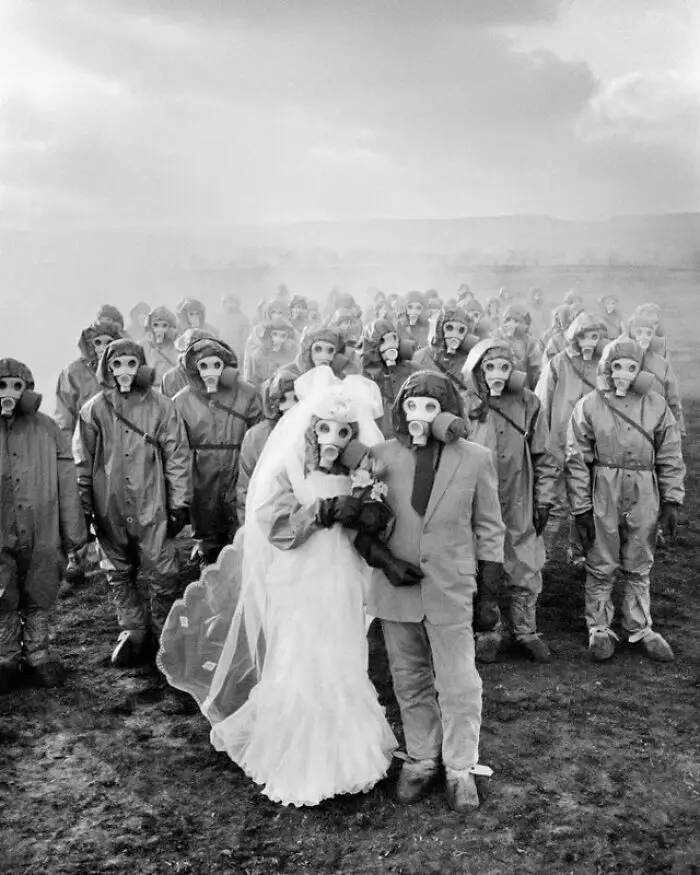
#24 A Russian Wedding Party Protests Against Air Pollution, Russia, Ca. 1980s. (Photo By A. Zhdanov
Report
0points
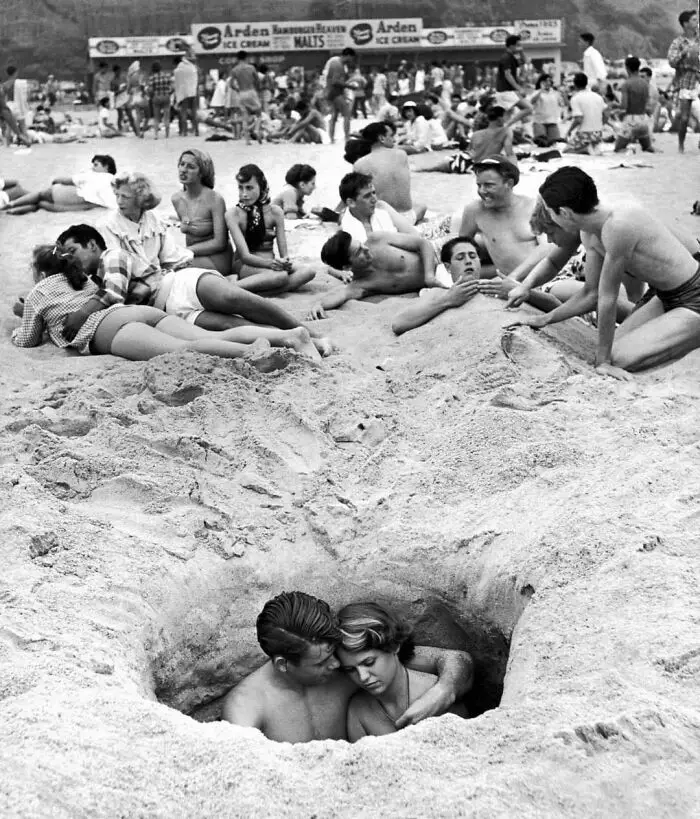
#25 Couple Cuddling While Sitting In A Hole As Others Enjoy The Beach On The 4th Of July In Santa Monica, California, 1950. (Photographed By Ralph Crane)
Report
0points
#26 V-Flumes Were Used To Transport Logs, Lumber, Working Material And Supplies But They Were Also Used To Transport People And For Entertainment From The Early 20th Century
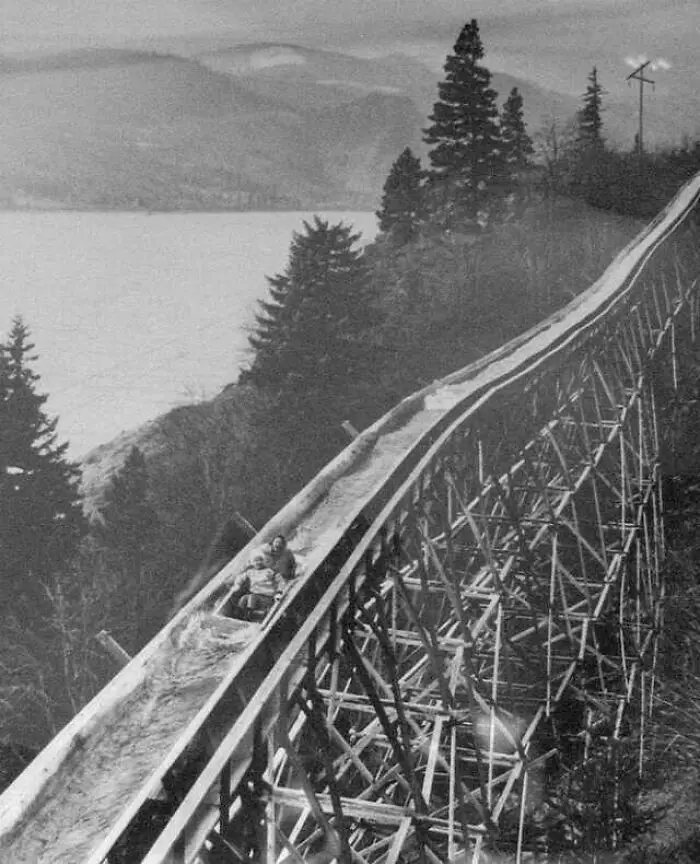
A sick or injured person from the mountains would many times be placed in a “flume boat” and sent to the valley, sometimes alone and sometimes with family or friends in attendance, for medical treatment. It was the fastest way to get them help. A very ‘trendy’ date night would include asking your date to walk with you along the flumes, especially at 100 feet above ground at the highest trestle points (which have no railing, but you are in a shallow flume), to show how much you cared for her and how bold and courageous you were. Including lunch or dinner only made the date that much more special. Loggers liked the flumes since it got them to town much faster for one of their few nights off. (Remember many logging towns did not allow drinking.) The loggers would build small boats to fit the flume with which they could ride down to town. But for the early loggers the most fun was the sport of flume riding. This daring sport gained popularity in 1865–1895 starting out as log-riding and then becoming the more ‘refined’ sport of flume riding. Some of the more interesting rides would have the ‘logger boat’ flying off the flume endpoint at an exorbitant height and speed where the passengers needed to make sure they ejected from the log before the log hit the water and they were safe and far from where the log would land. No one knows where flume riding started – probably in ancient Roman aquaducts – which more closely resembled the box flumes with large volumes of water moving at slow speeds. V-flumes changed the sport.
Report
0points
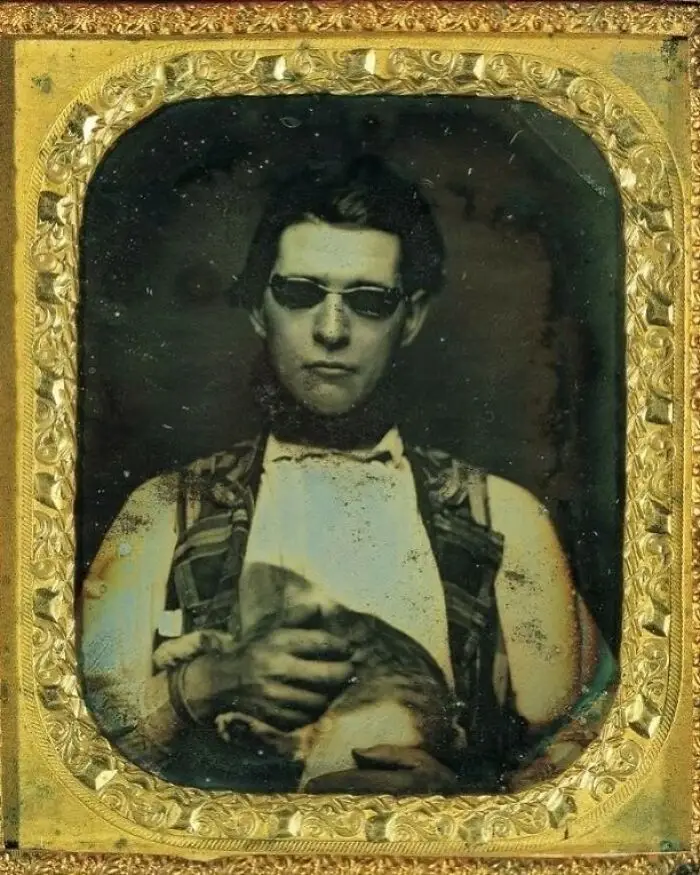
#28 Actress Veronica Lake With Her Hair Twisted In A Drill Press, Demonstrating Potential Dangers To Women In Factories During World War II. November, 1943

During World War II, Veronica Lake (1919–1973) changed her trademark peek-a-boo hairstyle at the urging of the Government to encourage women working in war industry factories to adopt more practical, safer hairstyles. Although the change helped to decrease accidents involving women getting their hair caught in machinery, doing so may have damaged Lake’s career. She also became a popular pin-up girl for soldiers during World War II and traveled throughout the United States to raise money for war bonds
Report
0points
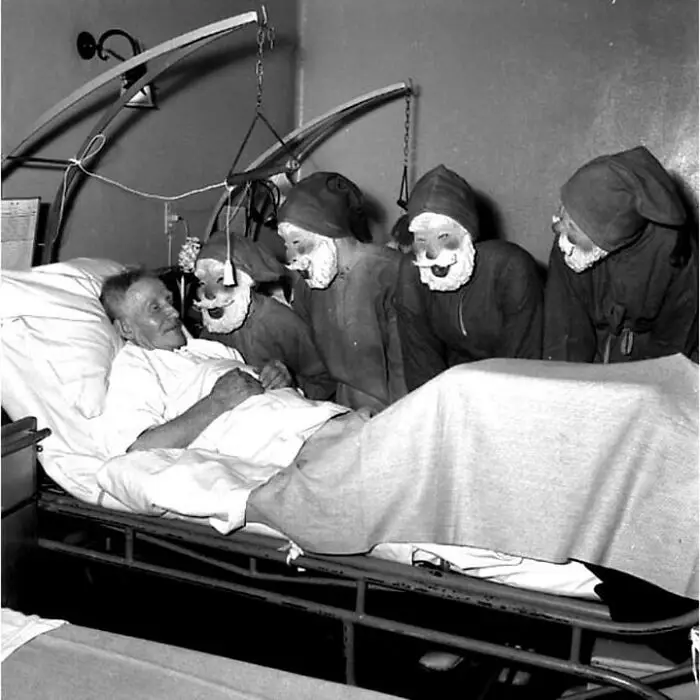
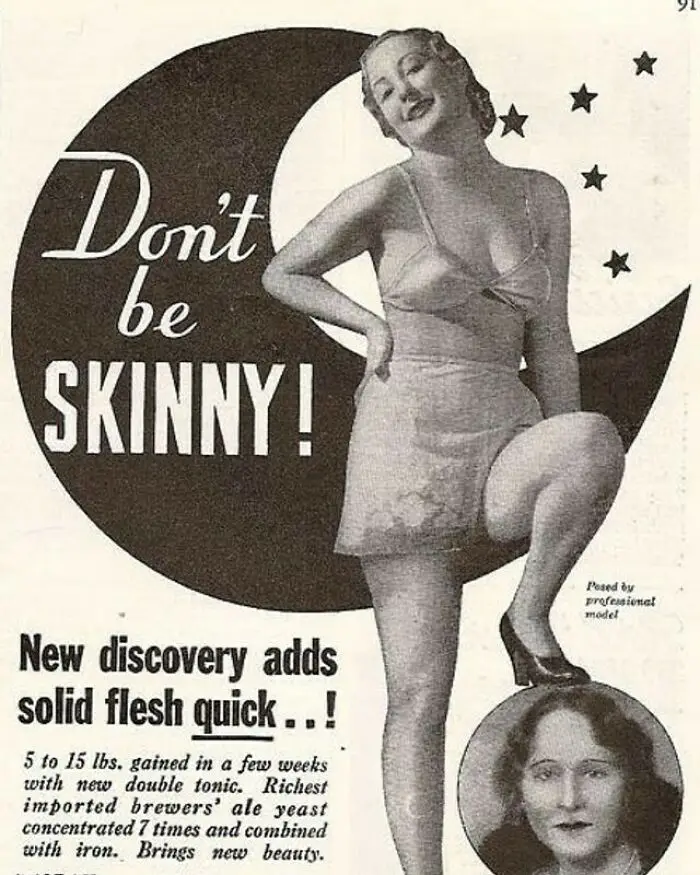
#31 You May Not Know His Name, But You Know His Cars
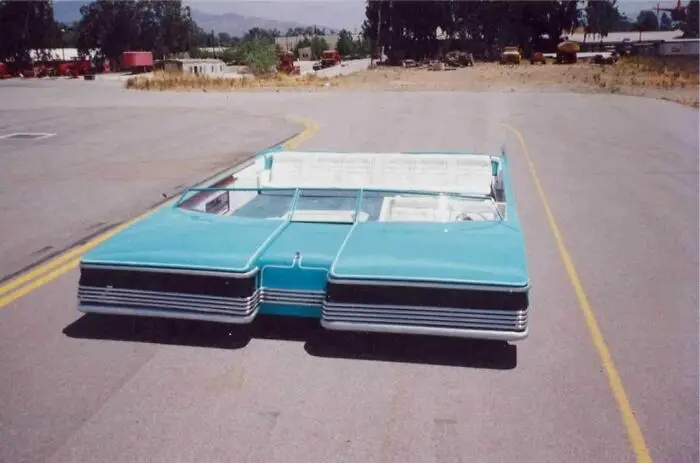
Jay Ohrberg is Hollywood’s favorite car designer, having built hundreds of experimental vehicles with an incredible range of features. His creations have appeared in more than 100 movies, TV shows and videos, earning him the title “The King of Show Cars.” The “wide limousine” was just one of longtime custom car impresario Jay Ohrberg’s crazy concoctions, which spanned 2.5 cars wide and 30 feet long. Powered by two ’75 Cadillac FWD engines with eight wheels per side, the limo had to be disassembled to be transported from show to show. Amazingly, each half could be driven separately
Report
0points

#33 Back When The Rotor Rides Were Fun And Dangerous
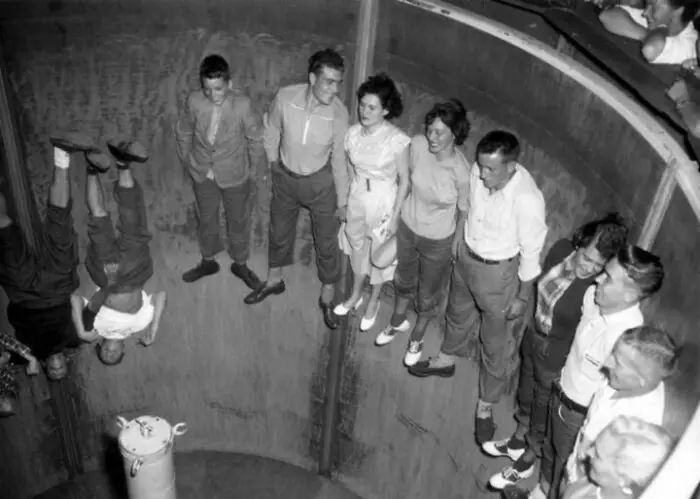
The rotor is an amusement park ride, designed and patented by German engineer Ernst Hoffmeister in 1948. The ride was first demonstrated at Oktoberfest 1949, and was exhibited at fairs and events throughout Europe, during the 1950s and 1960s. The ride still appears in numerous amusement parks, although traveling variants have been surpassed by the Gravitron. The ride itself was a scientific experience as riders felt the force of centripetal acceleration seemingly sticking them to the wall. What is happening on the rotor falls in line with Newtonian physics in that a body in motion remains in motion unless acted upon by a resisting force. A rider traveling around the drum of a rotor is constantly changing the direction of their motion but at any given point Newtonian laws state that they would prefer, if unhindered, to continue traveling in the direction they are traveling at that particular moment in time. However, every split second whilst the ride spins the planar vector that defines what is perpendicular keeps changing, thus the rider feels that they are being pushed outwards against the wall of the drum. The sequence of the ride varied in the early machines. Some loaded at the top with the floor dropping as the riders are pinned to the wall and as the ride slows the riders slip ungraciously down to the floor and exit in the pit of the drum. Others saw the floor lower and then return to allow riders a bit more dignity as they left via the top of the drum. Finally some machines loaded at the bottom, pushed the riders up with an elevating floor, which then descended and re-ascended to pick up the riders.
Report
0points
#34 In Goldfield, Nevada There Is A Grave For An Unknown Man Who Died Eating Library Paste In 1908
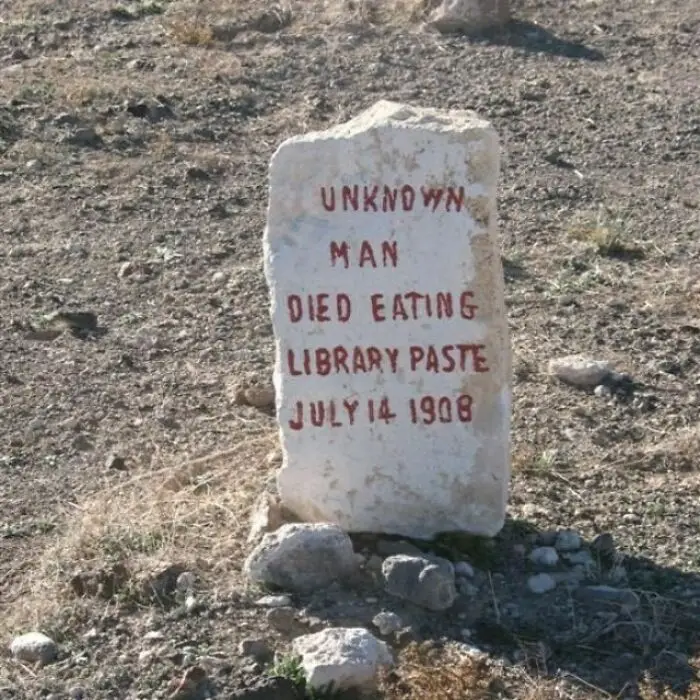
As the story goes, a vagrant wandering the streets of Goldfield, Nevada in 1908 was rummaging through the trash outside the local library, looking for something to eat. The best sustenance he came across was a jar of book paste. He would have found the paste surprisingly sweet, because in addition to flour and water, it was 60% alum. Unfortunately, the concentration was deadly. The legend continues to say that when the townspeople found the deceased drifter, he was buried in Pioneer Cemetery, which was little more than a dirt patch. The grave was topped with a headstone that stated what little they knew about him. It reads, “UNKNOWN MAN DIED EATING LIBRARY PASTE JULY 14 1908.” Skeptics point to the fact that the grave’s red paint is very bright for being more than a century old. That being said, some ascribe the fresh paint to sympathetic cemetery-goers who regularly paint over the epitaph so that the unknown man can be remembered for years to come. Others say the whole thing is just a local prank. Whatever the case, the grave serves as a cautionary tale: don’t eat glue.
Report
0points
#35 The Window Tent Was Originally Devised In Order To Give The Open-Air Treatment For Tuberculosis To Patients In Their Own Homes When They Could Not Procure The Use Of Porches Or Other Open Buildings For This Purpose In The 1910s
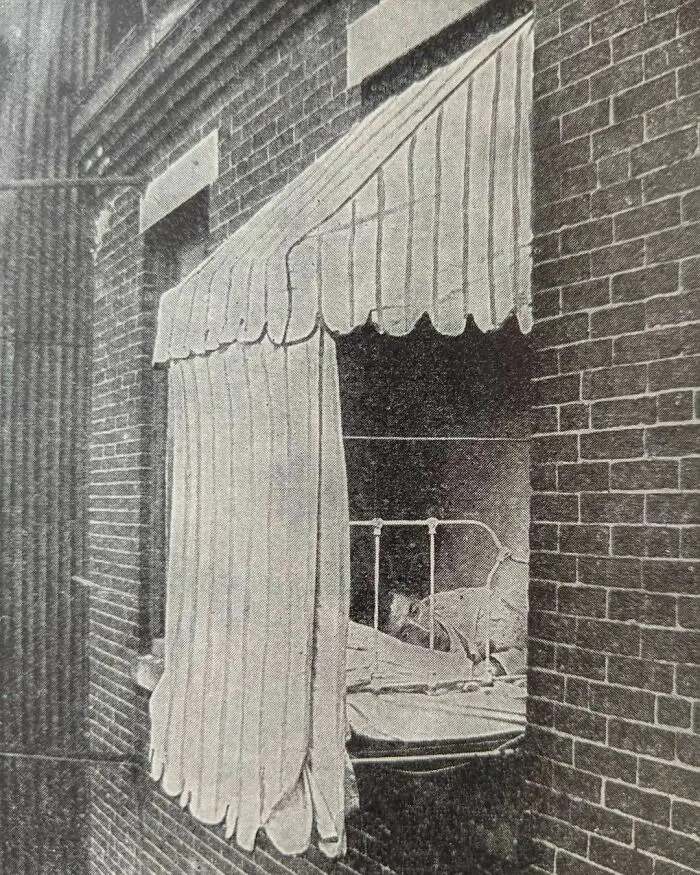
But as window tents have proven both convenient and economical, they are now used by many healthy persons who wish to sleep in the fresh air during the winter months without cooling off their houses. Window tents are all constructed practically on the same principle, the difference between them being largely in their shape and the manner of their manipulation. A frame, usually of steel, supports a canvas cover, and this canopy encloses a space inside the room connected with the window. The tent frame is either attached to the window casing or the head of the bed, and projects over the bed, covering the head and shoulders of the person lying on it
Report
0points