







Throughout history, humanity has strived to understand and control the forces of nature: building dams to hold back raging rivers, planting forests to prevent erosion, whatever it took. Yet despite our efforts, Mother Earth is still reminding us that our powers are no match for hers.
The 20th century witnessed devastating natural disasters ever recorded; events that not only caused extensive damage but also resulted in immense loss of life. So we invite you to reflect on these tragedies, and remember the ongoing need to prepare, adapt, and, ultimately, respect the world around us.
#21 1973 Luhuo Earthquake

A 7.2 earthquake struck the remote Luhuo County in China's Sichuan province on February 6, 1973. The shaking destroyed nearly every building in the town of Luhuo, with the collapse of traditional stone and wood homes causing most of the fatalities. The disaster ultimately resulted in the deaths of more than 2,200 people and another 2,000 injuries.
Report
11points
#22 1970 Bhola Cyclone

Considered the deadliest tropical cyclone ever recorded, the 1970 Bhola Cyclone devastated the coast of East Pakistan (now Bangladesh). Its massive storm surge completely flooded the low-lying delta region and an estimated 300,000 to 500,000 people lost their lives. The widely criticized government response to the disaster became a major catalyst for the political turmoil that led to the Bangladesh Liberation War the following year.
10points
#23 1917 Bali Earthquake

A series of destructive earthquakes struck the island of Bali on January 21, 1917, triggering catastrophic landslides across the region. These massive earthflows destroyed thousands of homes and an estimated 2,400 temples, ultimately ending in around 1,500 deaths.
Report
10points
#24 1975 Banqiao Dam Failure

The catastrophic failure of the Banqiao Dam in China was triggered by record-breaking rainfall from Typhoon Nina in August 1975. Its collapse set off a chain reaction, destroying dozens of smaller dams downstream and unleashing a massive flood wave that took an estimated 26,000 people's lives. The subsequent famine and epidemics raised the total death toll to around 171,000, making it the deadliest dam failure in history.
10points
#25 1978 Tabas Earthquake

The city of Tabas in eastern Iran was almost completely obliterated by a massive earthquake on September 16, 1978. The quake's extreme intensity leveled nearly every building, destroying the city's modern infrastructure and adobe homes alike. This near-total destruction resulted in a death toll estimated between 15,000 and 25,000 people, wiping out the vast majority of the city's residents.
10points
#26 1971 Hanoi And Red River Delta Flood

Intense monsoon rains in August 1971 caused disastrous flooding in the Red River Delta of North Vietnam, a region already strained by the ongoing war. The floodwaters submerged the vital rice-growing region, including parts of Hanoi, and overwhelmed the population. Though the government largely concealed the extent of the damage, the event is estimated to have ended more than 100,000 lives.
Report
10points
#27 1938 Hanshin Flood

The Hanshin Flood of July 1938 was caused by torrential rains that triggered massive landslides from Mount Rokkō into the city of Kobe, Japan. These powerful debris flows engulfed entire neighborhoods and destroyed critical infrastructure, resulting in the deaths of more than 700 people.
10points
#28 1962 Tropical Storm Harriet

In October 1962, Tropical Storm Harriet struck southern Thailand, creating a massive storm surge that swept over the Laem Talumphuk peninsula. The event is considered the deadliest storm in the country's history, destroying entire villages and taking more than 900 people's lives.
9points
#29 1977 Andhra Pradesh Cyclone

A powerful cyclone struck India's Andhra Pradesh state in November 1977, creating a massive storm surge nearly 20 feet high. This devastating wall of water swept far inland, completely submerging hundreds of low-lying coastal villages and an estimated 10,000 people died.
9points
#30 1985 Armero Tragedy

The Armero tragedy was triggered by the eruption of the Nevado del Ruiz volcano in Colombia on November 13, 1985. The eruption's heat melted the mountain's summit glaciers, creating a massive volcanic mudflow, or lahar, that descended upon the nearby town of Armero. Despite warnings from scientists about the risk, the town was not evacuated, and the lahar buried it completely, leading to the death of an estimated 23,000 of its 29,000 residents.
9points
#31 1998 Hurricane Mitch

Hurricane Mitch, a massive and extremely slow-moving storm, stalled over Central America in late October 1998, unleashing days of torrential rain. The resulting catastrophic floods and mudslides devastated Honduras and Nicaragua, burying entire villages and an estimated 11,000 people died, with thousands more reported missing.
9points
#32 1903 Manzikert Earthquake

A destructive earthquake struck the town of Manzikert in the Ottoman Empire (modern-day Turkey) on April 28, 1903. The disaster leveled 12,000 of houses and public buildings in the region and caused severe damage to the historic Manzikert fortress. The quake and its devastating aftershocks ultimately ended an estimated 3,500 people's lives and 20,000 animals' lives.
Report
8points
#33 1974 Hurricane Fifi–Orlene

As a slow-moving storm in September 1974, Hurricane Fifi unleashed days of torrential rain on the mountainous terrain of Honduras, causing catastrophic inland flooding and mudslides that buried entire communities. The disaster ended an estimated 8,000 to 10,000 lives, and after crossing Central America, the storm re-emerged in the Pacific and was renamed Hurricane Orlene.
8points
#34 1922 Shantou Typhoon
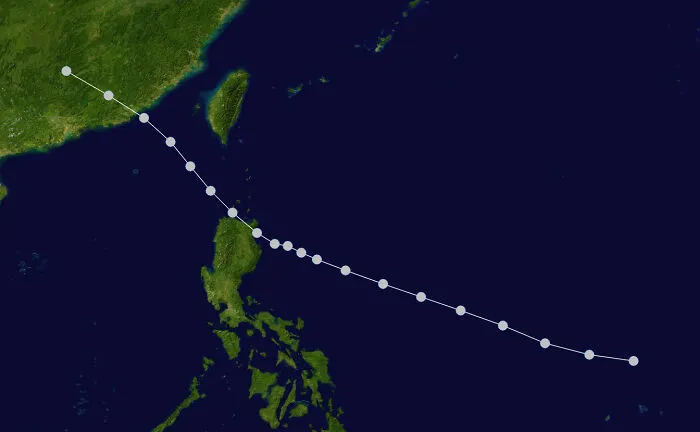
The coastal city of Shantou, China, was struck by a devastating typhoon in August 1922, which created one of the highest storm surges ever recorded. This massive wall of water overwhelmed the low-lying region, with the resulting flooding drowning an estimated 50,000 to 100,000 people and marking it as one of the deadliest typhoons in history.
8points
#35 1955 Hurricane Janet

In late September 1955, Hurricane Janet slammed into the Caribbean as a powerful Category 5 storm. It was particularly catastrophic for Mexico's Yucatán Peninsula, where it almost completely destroyed the city of Chetumal and left over 1,000 people dead in its wake.
8points
#36 1954 Yangtze Floods

A period of unusually heavy rainfall throughout the spring and summer of 1954 caused the Yangtze River in China to swell to record levels. This resulted in a massive, prolonged flood that inundated huge swaths of farmland and kept the major city of Wuhan underwater for three months, ultimately taking an estimated 33,000 lives.
7points
#37 1937 Hong Kong Typhoon

A fatal typhoon created a massive storm surge that swept through Hong Kong's Tolo Harbour on September 2, 1937. The surge caught the region's large fishing community completely by surprise, destroying their fleet and drowning thousands who lived on their boats. With an estimated death toll of 11,000 people, it remains the deadliest natural disaster in the territory's history.
Report
7points
#38 1949 Khait Earthquake

The 1949 Khait earthquake in Tajikistan is remembered for the catastrophic landslides it triggered in the region's mountains. A massive debris flow completely buried the town of Khait and dozens of surrounding villages under tons of earth. The disaster was so swift and total that it ended an estimated 7,500 lives, with most deaths attributed to the landslides rather than the initial quake.
Report
7points
#39 1979 Hurricane David

As a Category 5 storm, Hurricane David carved a devastating path across the Caribbean in August 1979. It made a catastrophic landfall on the island of Dominica, destroying nearly all of its infrastructure, before striking the Dominican Republic. There, the storm's torrential rains triggered massive river floods and mudslides, leading to the deaths of over 2,000 people.
7points
#40 1920 Haiyuan Earthquake
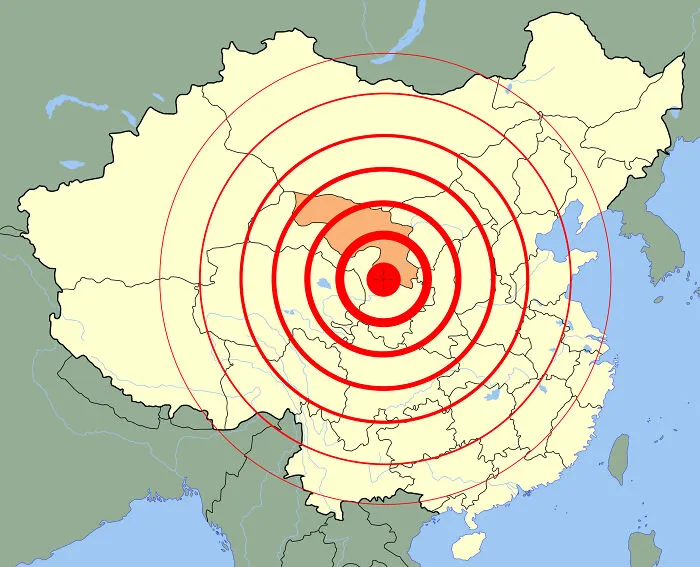
A massive earthquake struck Haiyuan County, China, on December 16, 1920, triggering catastrophic landslides in the region's unique loess hills. The maximum intensity quake and the subsequent earthflows buried entire villages and caused rivers to change course. With many survivors left homeless in the harsh winter, the total death toll is estimated to have exceeded 250,000, making it one of the deadliest earthquakes of the 20th century.
6points