







If cats always land on their feet and buttered toast always lands buttered side down, what would happen if you strapped buttered toast to the back of a cat - buttered side up - and it falls off a table?
It makes you think, doesn’t it? It’s a contradiction that might even confuse you. But some people refuse to believe that problems are unsolvable. And thus, there must be a concrete answer. So, if you were to ask certain scientists the question, they’d say the cat would never land. Instead, it would stop falling at some point above the floor. As it tries to orient its feet against the attraction of the butter to the floor, the cat would begin spinning - and it would never stop. Basically, buttered cat = perpetual motion machine. Problem solved. Or was it?
The Buttered Cat Paradox is one of many logical paradoxes. Confusing conundrums that contradict themselves. And seem to have no concrete solution. Until someone comes up with something that sort of makes sense, but also doesn't really. Bored Panda has put together a list of the best ones. Many of these mind-bending puzzles may make your brain hurt. So buckle up, keep scrolling and upvote the ones that turn your reality upside down.
#21 Barbershop Paradox

The Barbershop Paradox explores the tricky consequences of believing that "if one of two simultaneous assumptions leads to a contradiction, the other assumption is also disproved." This very supposition—that proving one idea wrong automatically proves the other wrong when they're considered together—can itself lead to paradoxical or illogical outcomes.
Report
4points
#22 Temperature Paradox
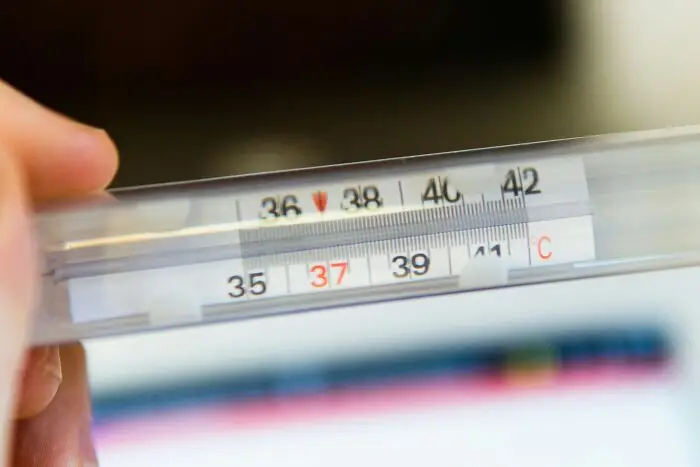
The Temperature Paradox, also known as Partee's paradox, highlights how language can be tricky. It presents an argument like this: "The temperature is ninety. The temperature is rising. Therefore, ninety is rising." The conclusion "ninety is rising" is clearly wrong. The paradox arises because the word "temperature" is used in two different ways: first, to state a specific value (ninety), and second, to describe a changing condition (rising). The number ninety itself cannot "rise" in the same way a temperature can.
Report
4points
#23 Surprise Test Paradox

The Surprise Test Paradox explores a puzzle about expectations. Imagine a teacher tells students they will have a surprise test sometime next week, meaning they won't know which day it will be. Students might reason that if the test hasn't happened by Thursday, it must be Friday, so Friday wouldn't be a surprise. Ruling out Friday, they might then reason it can't be Thursday (as it would then be expected), and so on, seemingly eliminating all possible days. Yet, if the teacher gives the test on Wednesday, it still feels like a surprise, creating the paradox.
Report
3points
#24 Berry Paradox

The Berry Paradox emerges from considering an expression like "The smallest positive integer not definable in under sixty letters." The problem is that this very phrase, which has fewer than sixty letters (for instance, fifty-seven letters), actually defines that specific integer. This creates a contradiction, because the phrase defines a number using fewer than sixty letters, while the number it's supposed to describe is one that allegedly cannot be defined in under sixty letters.
Report
3points
#25 Lottery Paradox
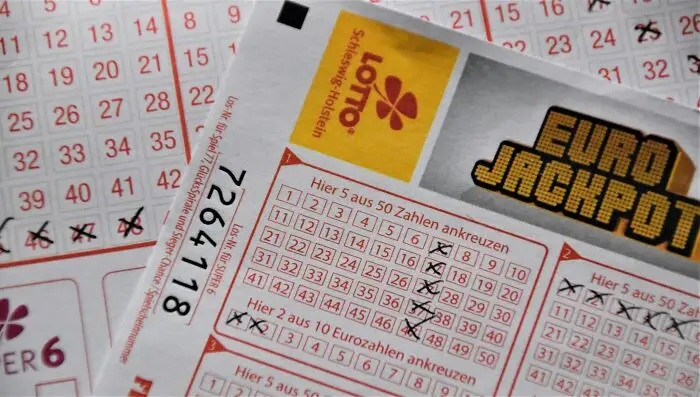
The Lottery Paradox points out a conflict in what seems reasonable to believe. In a big lottery with only one winner, it makes sense to think that any single ticket you pick probably isn't the winner. However, it doesn't make sense to believe that none of the tickets will win, because we know there has to be one winning ticket.
Report
2points
#26 What The Tortoise Said To Achilles
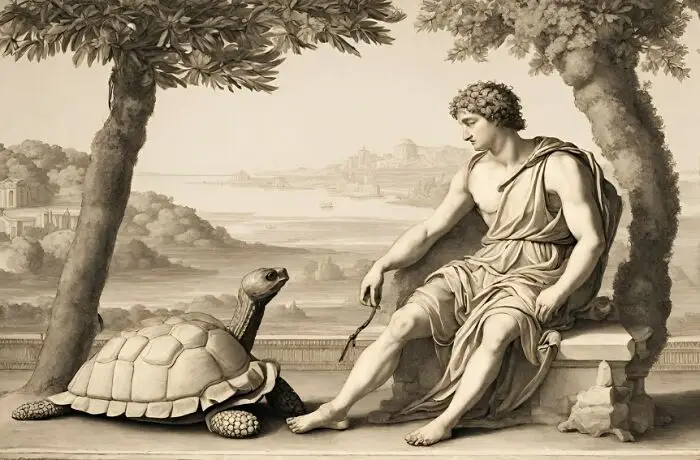
This paradox, also known as Carroll's paradox, highlights a problem with the nature of logical deduction. It suggests that if you always need to add a new premise stating that a specific conclusion can be deduced from the existing premises, then you can never actually reach the conclusion, leading to an infinite regress. The core idea is that an inference rule (the method of reasoning) cannot simply be treated as another factual premise (something true or false) without running into this endless loop.
Report
1point