






Attention, attention, this is your public service announcement of the day. The teenagers you see around you every day are not millennials.
While you were trying to get them off your lawn, millennials grew up, and the youngest are now on the wrong side of twenty, while the oldest are steadily approaching their forties.
So, if you want to get on with the times and learn new slang to be able to understand your teenager, Gen Z slang is probably what you are looking for.
Still, if your interest in millennial slang terms is purely *ahem* scientific, you’ve come to the right place. After all, the days when slang words were considered inappropriate to use in society are long gone.
Modern slang has firmly established itself in the way we speak and is nowadays considered somewhat of a norm.
For this article, we collected some of the most popular slang words millennials added to our daily language. Upvote the ones you like and actively use daily.
Are there any words on the list that you think should be banned from being used forever? Let us know in the comments.
And, of course, make sure you share this article with other linguistics enthusiasts. If you know other cool slang words and phrases, do share them with us in the comments.
#21
GOAT
The acronym GOAT stands for the “Greatest of All Time.” This internet term is used to mostly compliment athletes, musicians, and other celebrities.
Report
12points
#22

Blessed
An adjective for experiencing happiness or having something good happen to you.
Report
12points
#23
Bougie
Sometimes also spelled as “boujee,” it means “related to or typical of the middle class,” notably in placing a high value on money, education, and social position, or in liking and desiring expensive and unusual things.
Report
12points
#24
Legit
“Legit” is an abbreviated version of the word “legitimate,” yet it has nothing to do with law or legislation since it’s used to refer to things that are cool or extremely awesome.
Report
12points
#25

FOMO
FOMO stands for “fear of missing out,” and is pronounced foh-moh. It captures the universal emotion of concern about others having fun without you.
Report
11points
#26

Fam
“Fam” is a shortened version of “family.” This word is used to describe a group of friends who feel more like a family than just friends.
Report
11points
#27
Yas
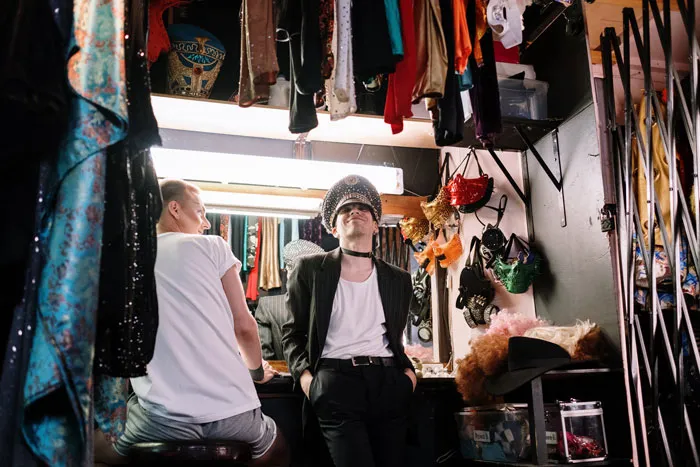
“Yas” originated in LGBT, POC subcultures in the 1980s but only gained popularity as millennial slang in the 2000s. You’d hear it especially frequently during balls, when contestants (sometimes in drag) would stride around the floor flashing their fiercest expressions.
Report
10points
#28
TBH
TBH is an initialism of the phrase “to be honest.” It is frequently used when expressing an opinion on something, for instance on social media and in text messages.
Report
10points
#29

Spilling tea
The expression “spill the tea” is used to request that someone share any gossip they might know. It’s similar to the saying “spill the beans” from years past.
Report
10points
#30
Cool beans
“Cool beans” might be used to express approval in place of plain “cool.” It’s unclear how the addition of beans enhances the interjection. This slang expression, according to Merriam-Webster, first appeared in 1985, when the oldest millennials were just 4 years old.
Report
9points
#31
Extra
When you are acting out of character, going over the top, and being too dramatic to handle, someone might call you extra or even ask you to stop being that way.
Report
9points
#32
Savage
Being “savage” means that something or someone is viciously cool and has nothing to do with its original meaning of “wild” or “untamed.”
Report
9points
#33
SMH
SMH stands for “shaking my head” and is used in appropriate situations in online conversations.
Report
9points
#34

Netflix and chill
An internet slang phrase, “Netflix and chill” is used to denote engaging in s*xual behavior, whether it be part of a love relationship or casual. By 2015, “Netflix and chill” had become something of an internet meme. It can be used as any part of speech.
Report
9points
#35
AF
An initialism for “as f*ck,” it is intended to emphasize your point. Use it with care, as it still has the F-word in it.
Report
8points
#36
Salty
Being “salty” means being upset or bitter over a little thing.
Report
8points
#37
Shipping
The term “shipping,” which is derived from the word “relationship,” refers to the desire of members of a fandom for two or more individuals—real people or fictitious characters from books, movies, television shows, etc.—to be in a romantic or sexual relationship.
Report
8points
#38
Canceled
Canceling and cancel culture involve withdrawing support from public figures in reaction to their offensive actions or opinions. This can entail refraining from supporting their work or engaging in boycotts.
Report
8points
#39
Humblebrag
If you feel self-conscious bragging about your achievements, you can always fall back on the humblebrag. Announcing an important accomplishment in a casual or self-deprecating tone lets you boast about it without coming off as conceited (at least that’s the intention).
Report
7points
#40
Mood
Describing something that is relatable, “mood” is a more modern version of “same.” “Big mood” increases the relatability factor.
Report
7points