

When you’re pregnant, there are some things you just can’t do if you want to have a healthy baby. Most people would probably tell you that smoking, drinking, and similar vices go out the window once you’re expecting, but there are some foods and drinks that should be a no-no, and the people around you should know that too.
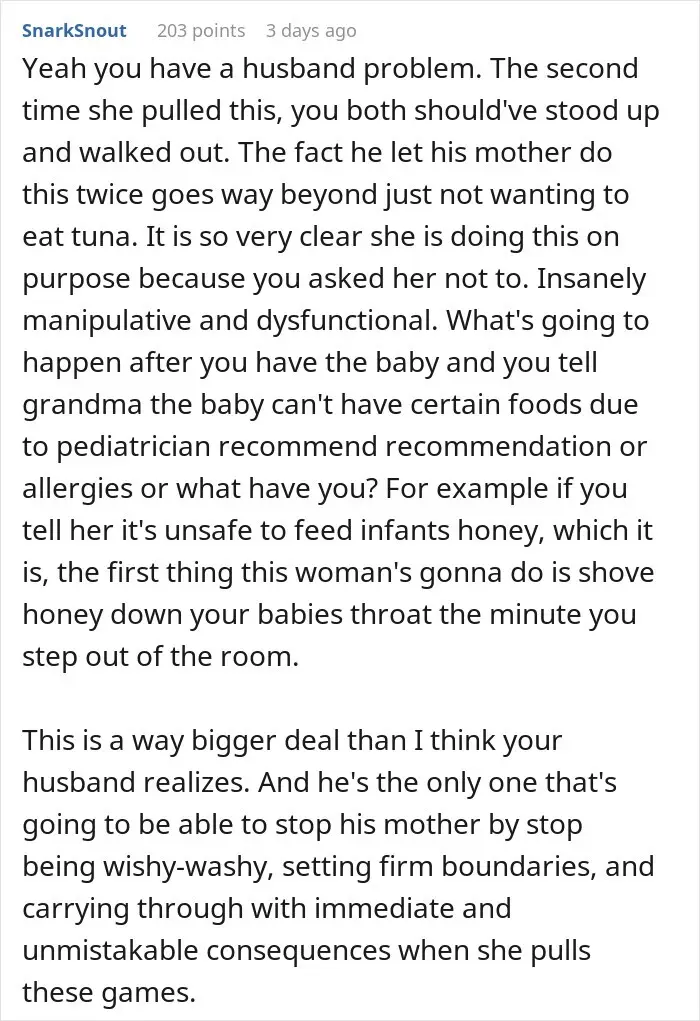
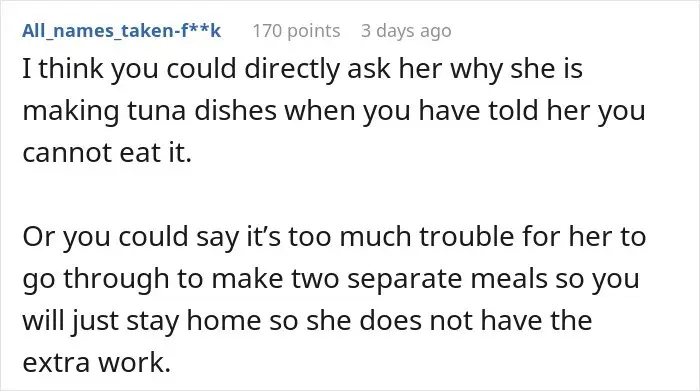
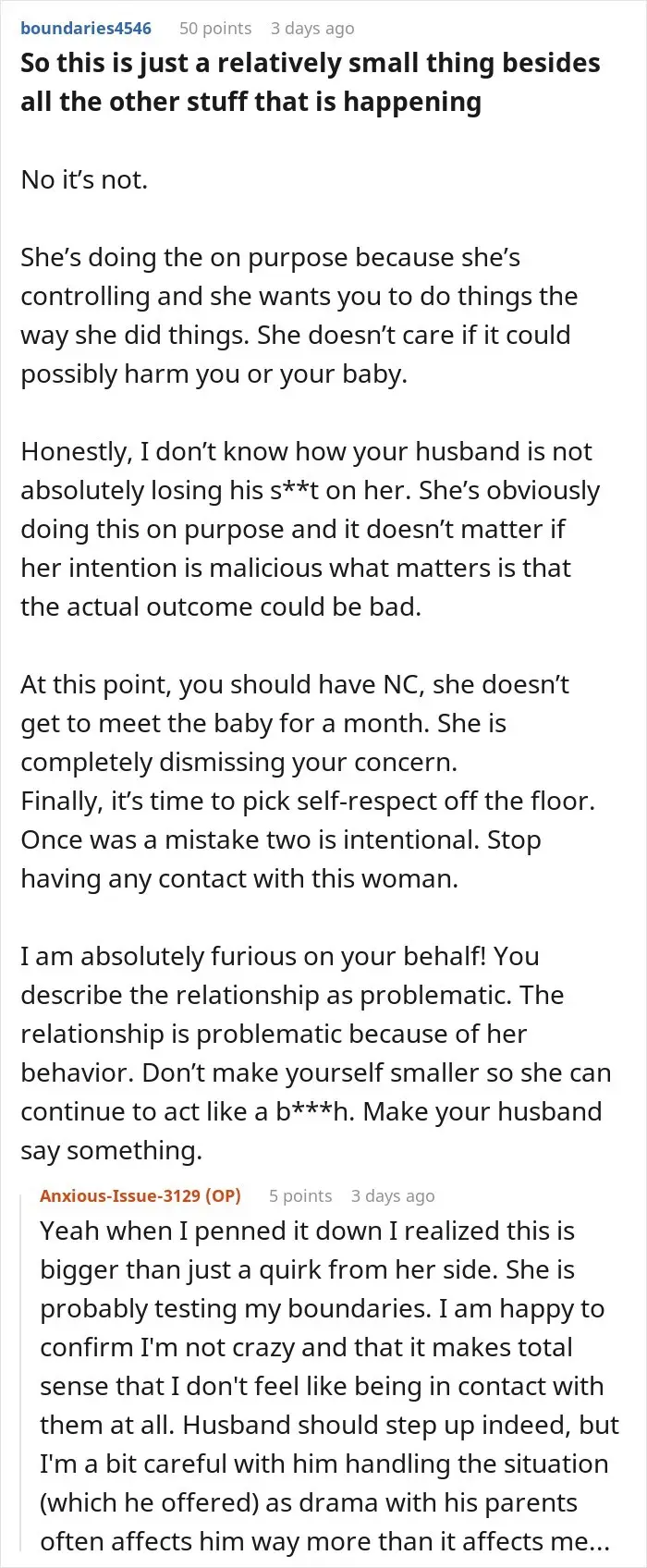
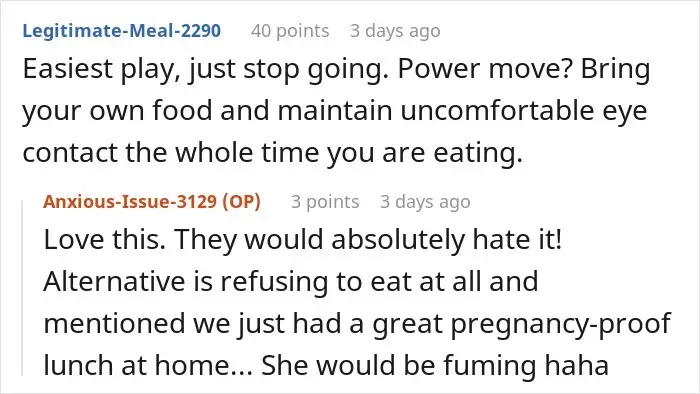
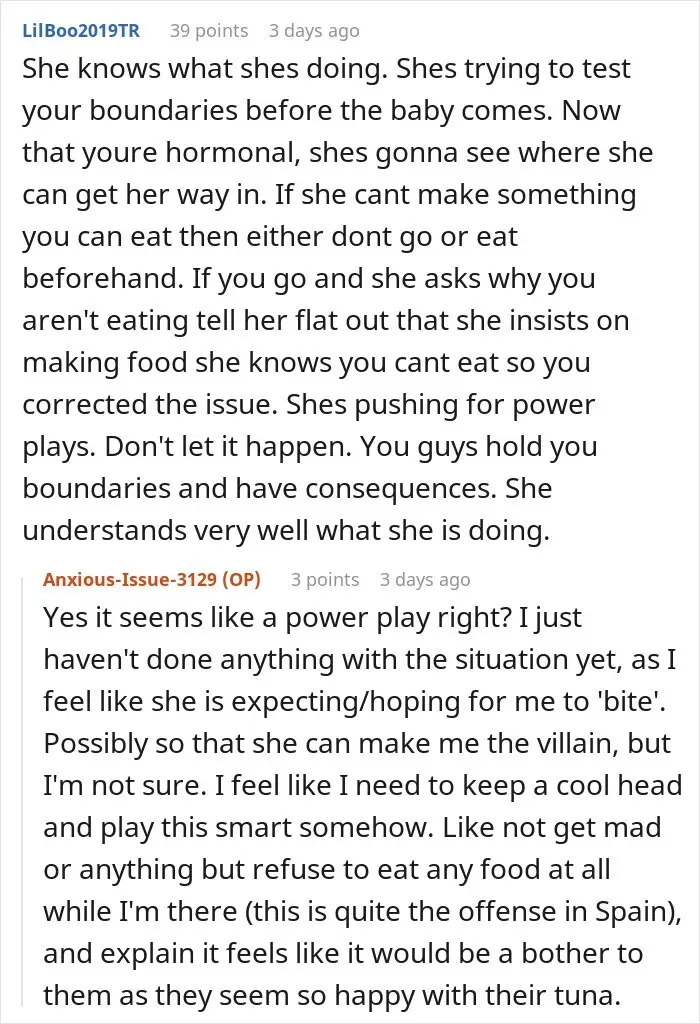
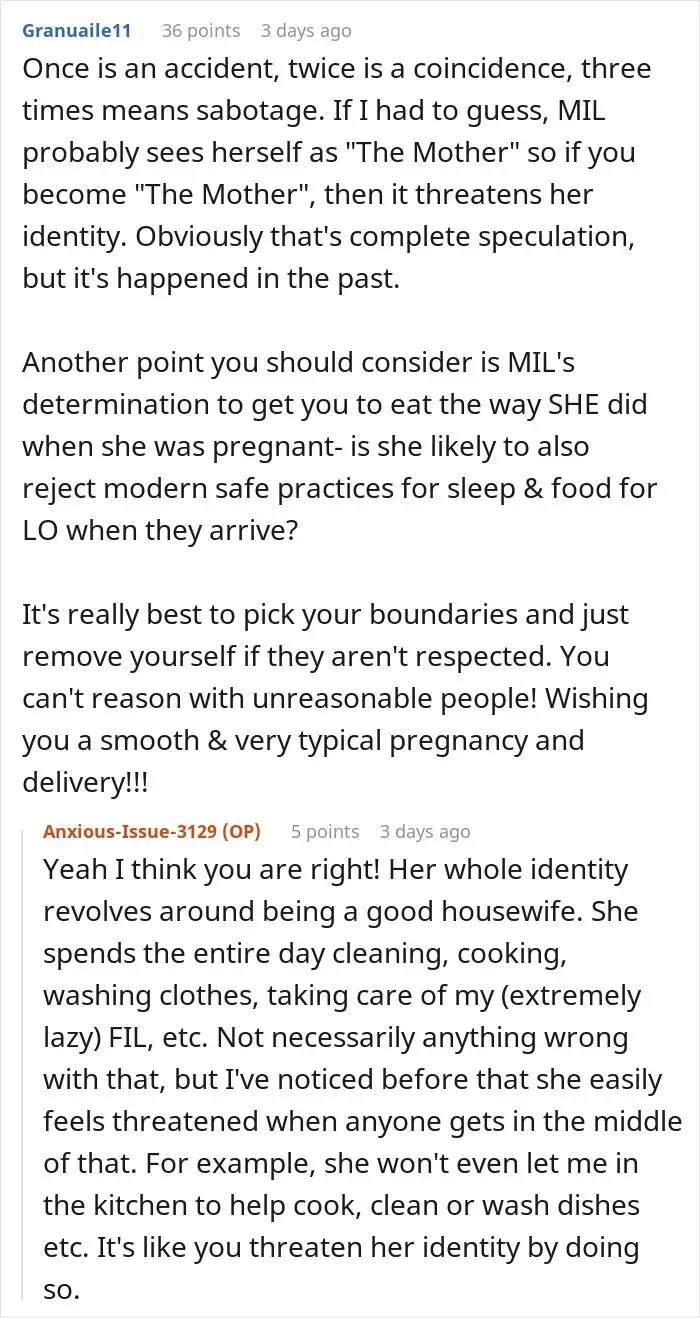
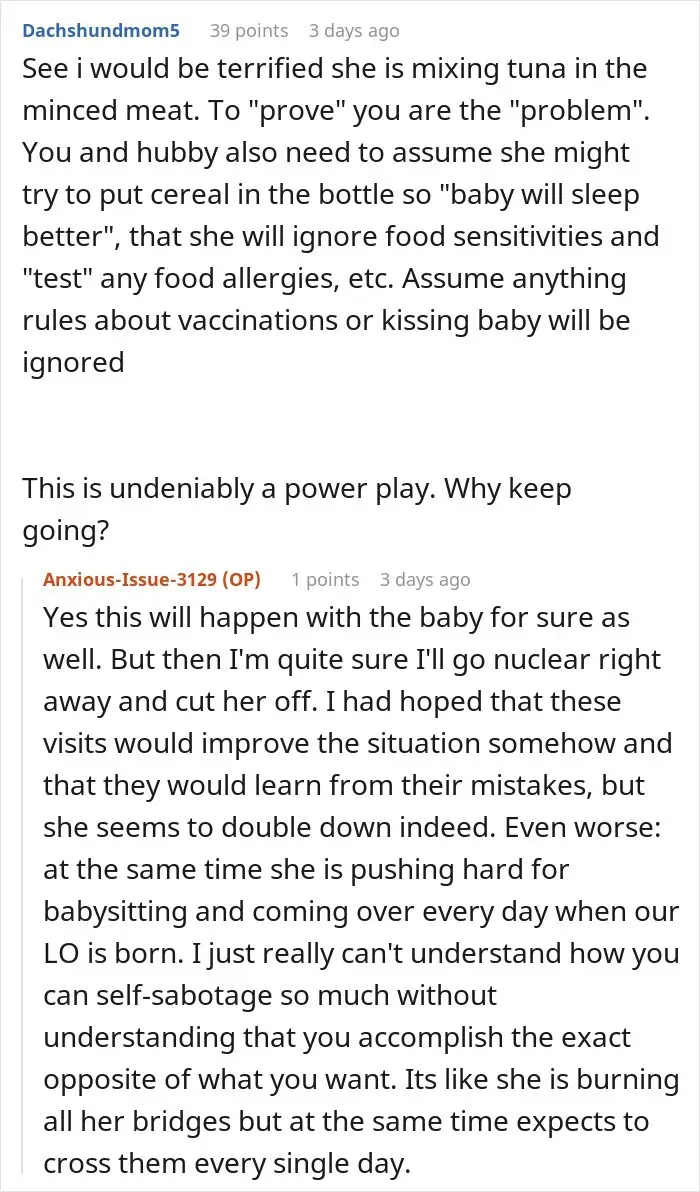
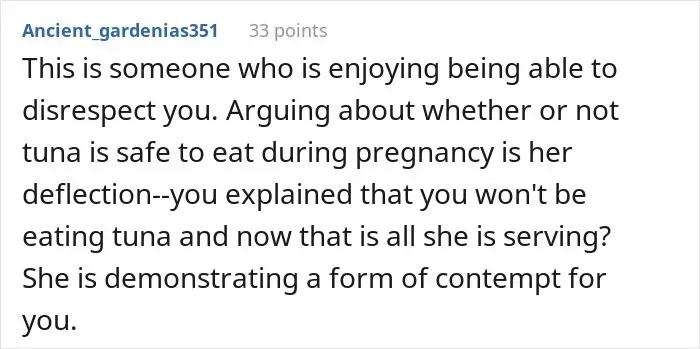
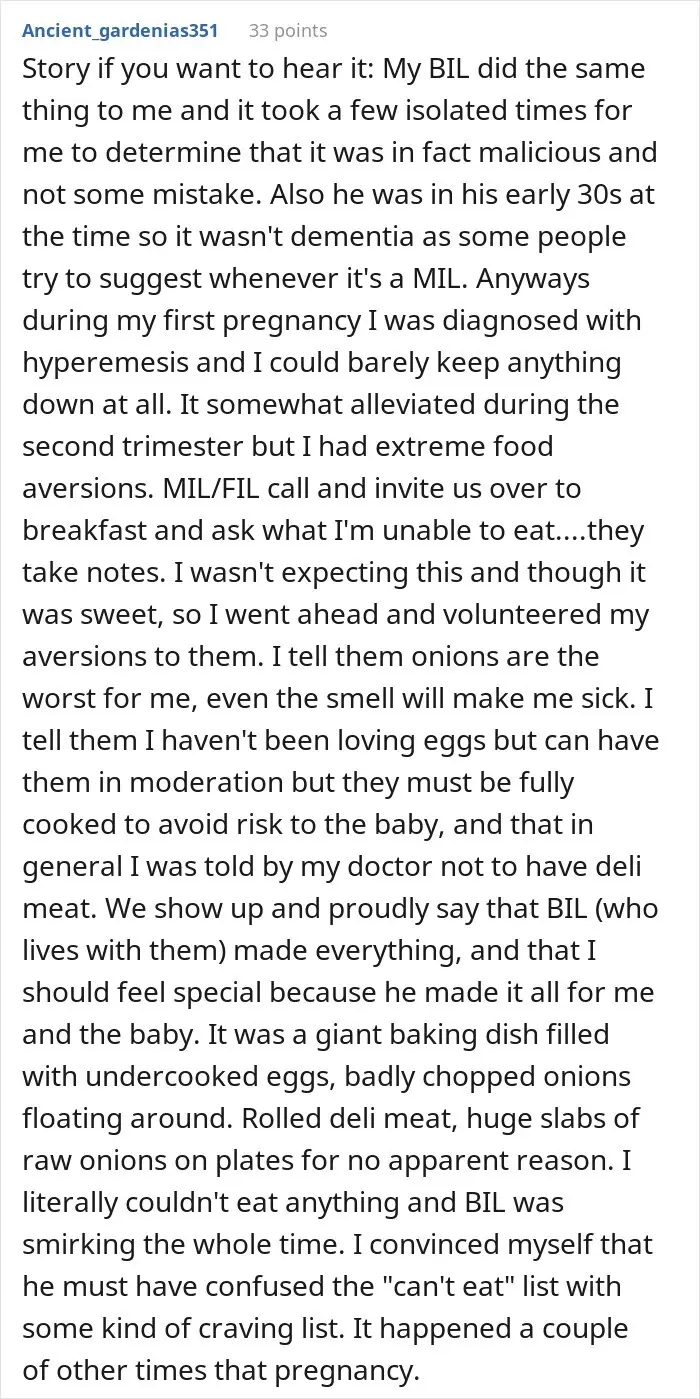
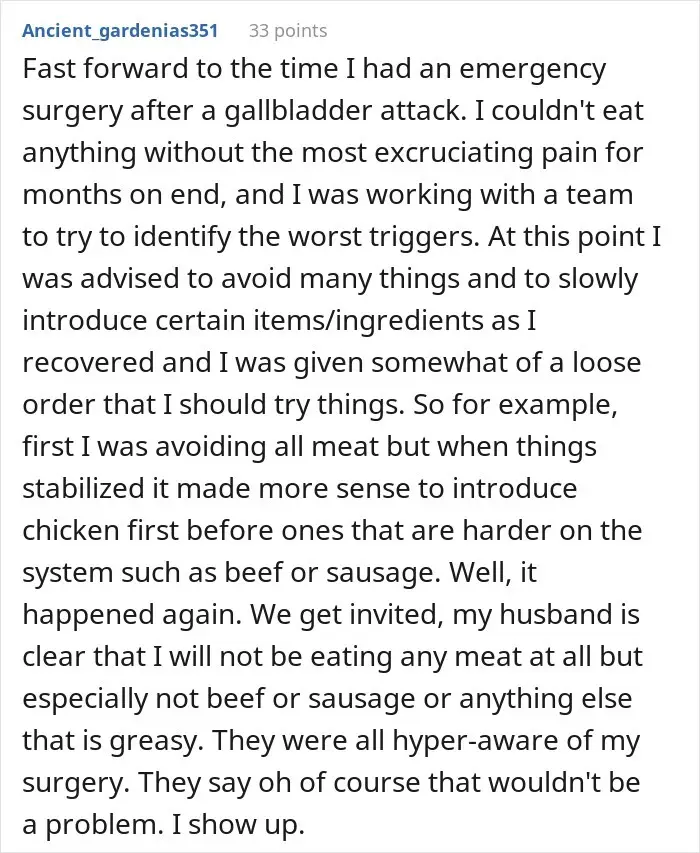
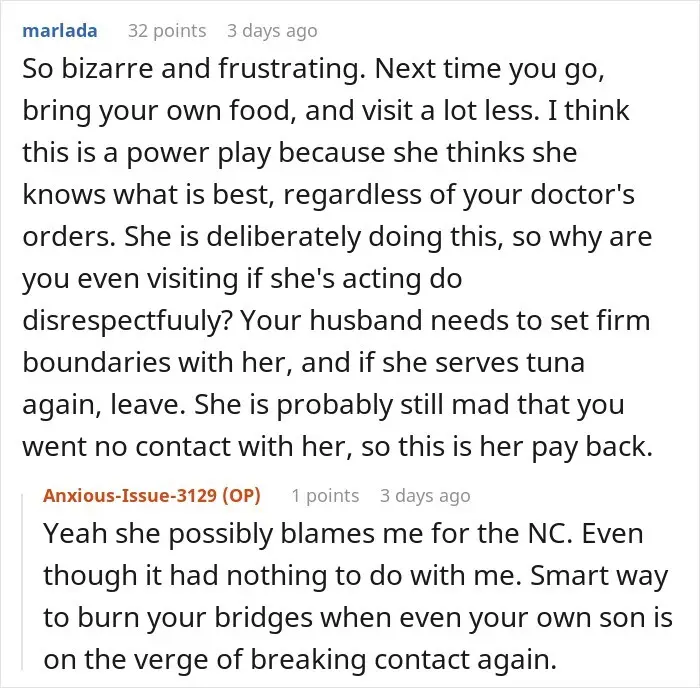
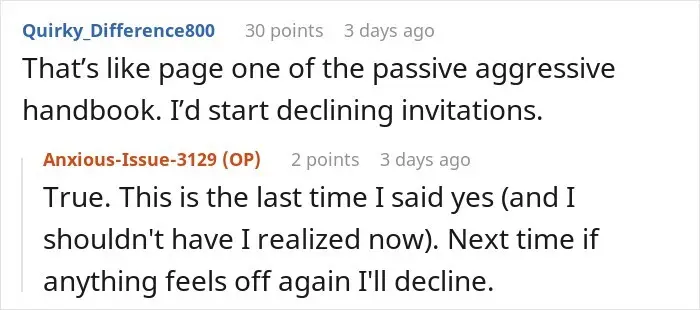
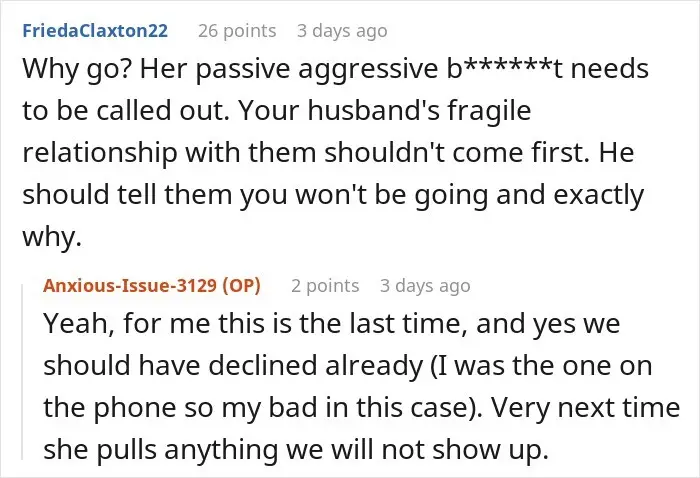
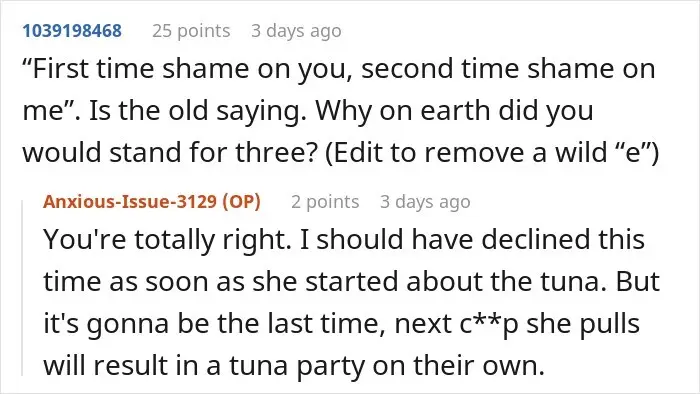
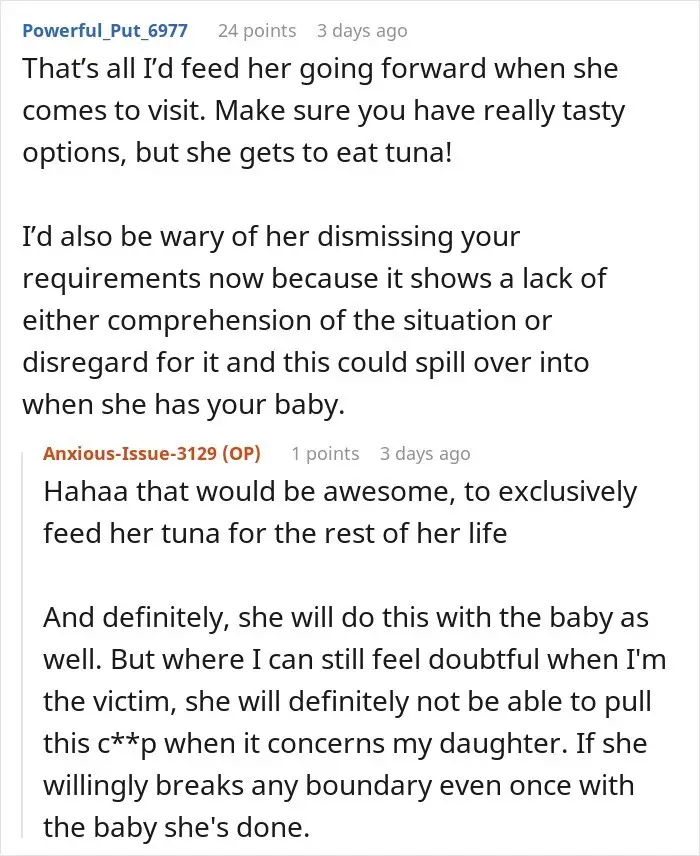
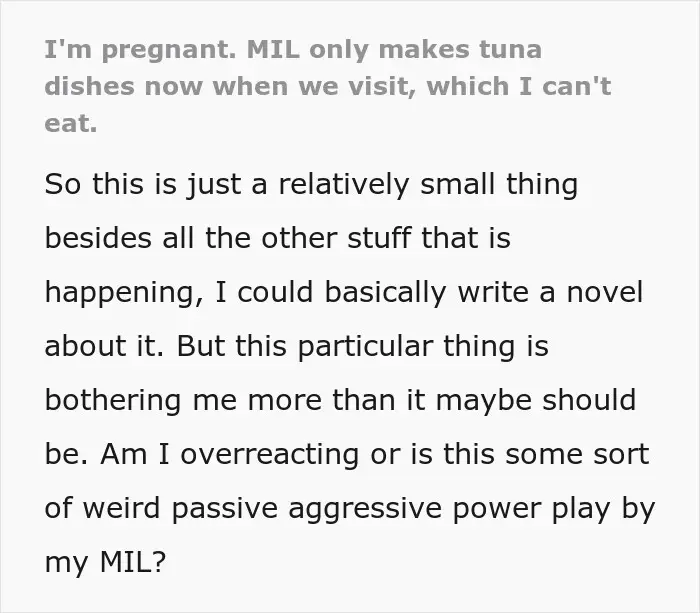
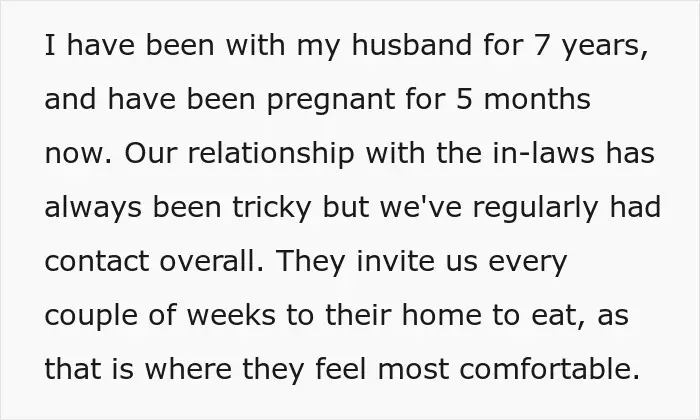
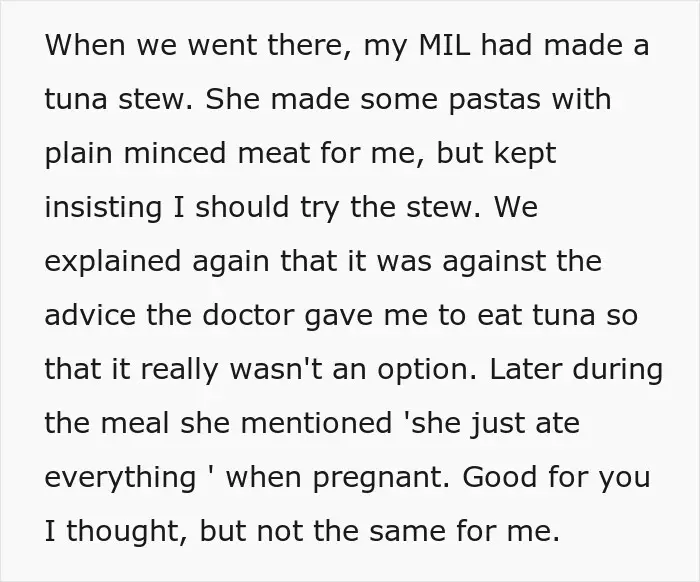
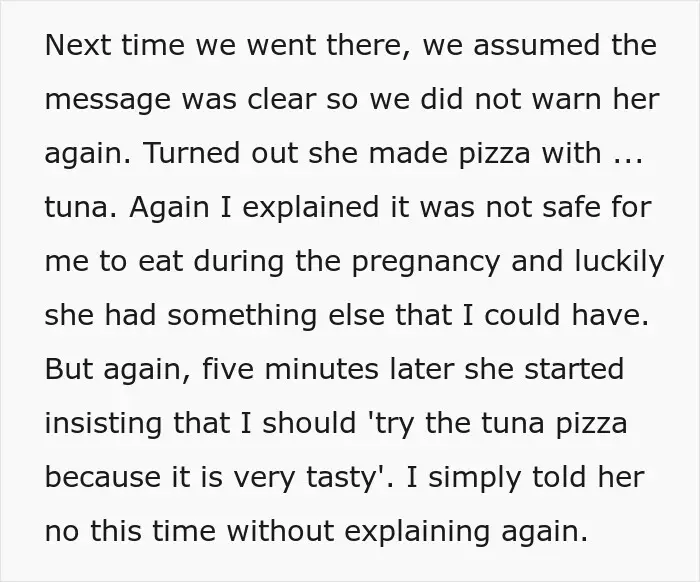
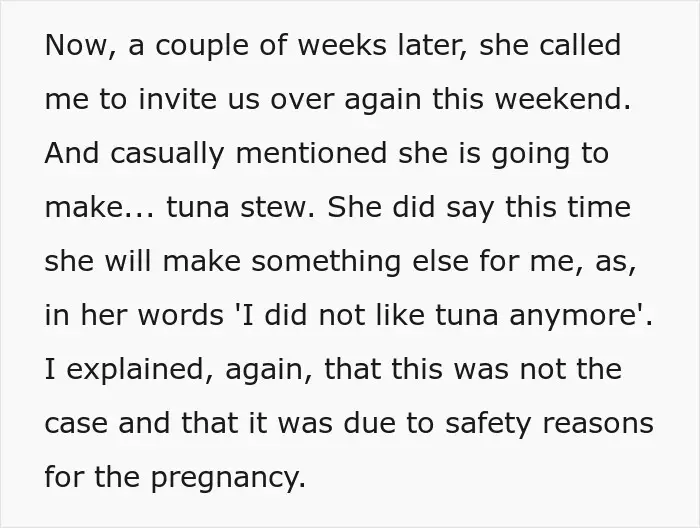
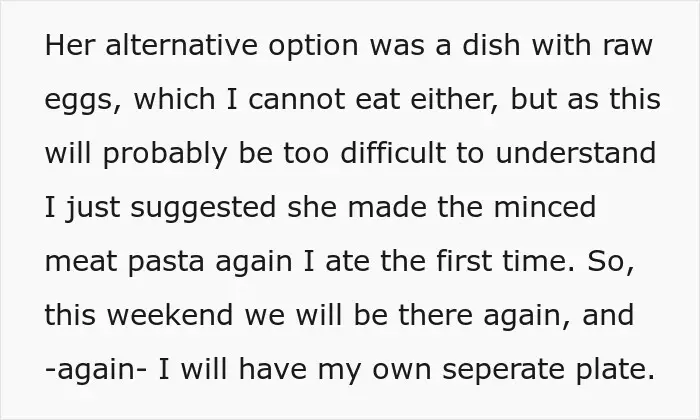
This mother-in-law, however, ignored her son’s and daughter-in-law’s pleas to stop forcing the pregnant woman to eat tuna. She repeatedly included it in all her dishes when they would come to visit, so much so that the wife started thinking she was on some weird power trip and doing it on purpose. To get to the bottom of it, she sought advice online.
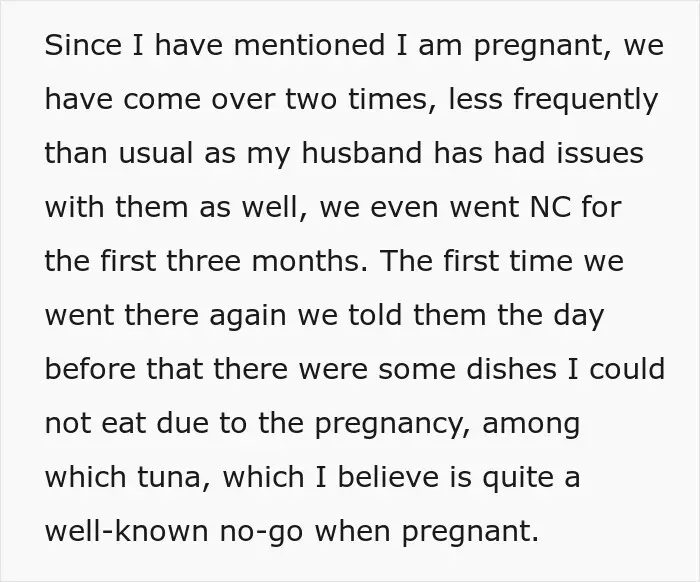
A doctor advised a pregnant woman not to eat tuna during her pregnancy

Her MIL knew that, yet she kept serving her tuna dishes and forcing her to eat it






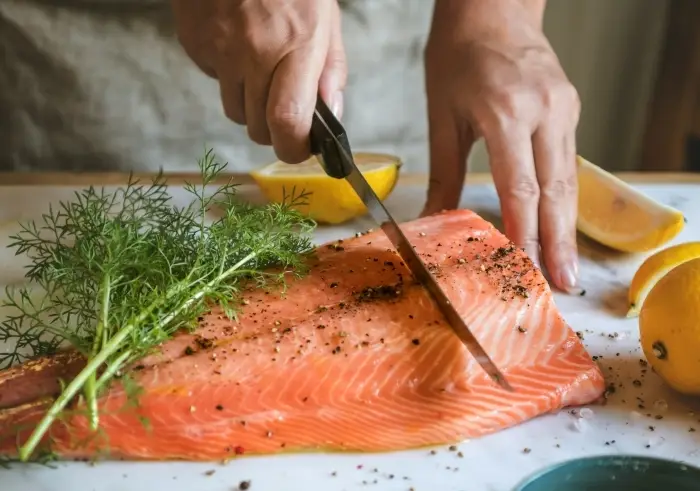
Tuna has one of the highest mercury contents of all seafood products and isn’t safe to eat in large amounts for anyone
Is tuna really unsafe to eat for all pregnant people or was this just a doctor’s advice for this particular woman? If you’re a big fan of tuna, you might be disappointed to learn that it’s not advised to eat it more than 2-3 times per week, and that’s for people who are not even pregnant.
First of all, it’s all about the kind of tuna you’re eating. Canned tuna is the second most popular kind of seafood product consumed in the U.S., and it’s the most common way people consume tuna. The U.S. Food and Drug Administration (FDA) recommends no more than 12 ounces of canned tuna a week.
That’s because tuna tends to have a high concentration of mercury. According to Healthline, it contains more mercury than salmon, oysters, lobster, scallops, and tilapia. Because tuna feed on smaller fish that already have mercury in them and they don’t excrete it easily, the mercury content inside their tissues builds up over time.
Canned tuna is usually made from two kinds of tuna: skipjack (70%) and albacore (20%). Albacore has twice the mercury content as skipjack and is often sold as white tuna. Skipjack, in turn, is called chunk light or flaked tuna. Experts recommend eating light canned tuna (skipjack) 2-3 times per week or one serving of white canned tuna (albacore) per week.

Pregnant women should be extra careful because it can harm the baby’s brain and nervous system development
Certain people should abstain from eating tuna entirely or at least eat very little of it. That includes infants, young children, pregnant women, breastfeeding women, or women who are trying to conceive. However, if a woman doesn’t receive clear instructions from her doctor not to eat tuna, she can do so in moderation if she knows which types to avoid.
Seafood can be beneficial to a pregnancy diet, since it contains omega-3 fatty acids, protein, vitamin B12 and iron. Dr. Nicole Sparks, MD, an ob-gyn based in Georgia, told The Bump that, generally, pregnant women can eat approximately two to three servings of light canned tuna each week. It’s best to eat as little albacore tuna as possible and avoid yellowfin tuna altogether.
Too much mercury can be very harmful to a baby’s nervous system and brain development. That’s why raw fish tuna in sushi or sashimi is a hard no, and cooked fresh tuna is best consumed in moderation, too. Fresh tuna usually has a higher mercury content than canned tuna, so it’s best to eat up to 4 ounces a week.
There are lots of other foods and drinks moms-to-be should avoid and be cautious about during pregnancy:
- Anything containing unpasteurized milk products, including pre-packaged sandwiches and salads
- Raw and undercooked meats, liver, and game meats (pheasant, venison, goose, etc.)
- Raw, partially cooked, or uncooked eggs
- Any kind of raw fish and shellfish, swordfish, shark, or marlin
- Limit caffeine intake
- Unwashed fruits and vegetables, including pre-packaged and pre-cut ones
- Alcohol and anything containing licorice root
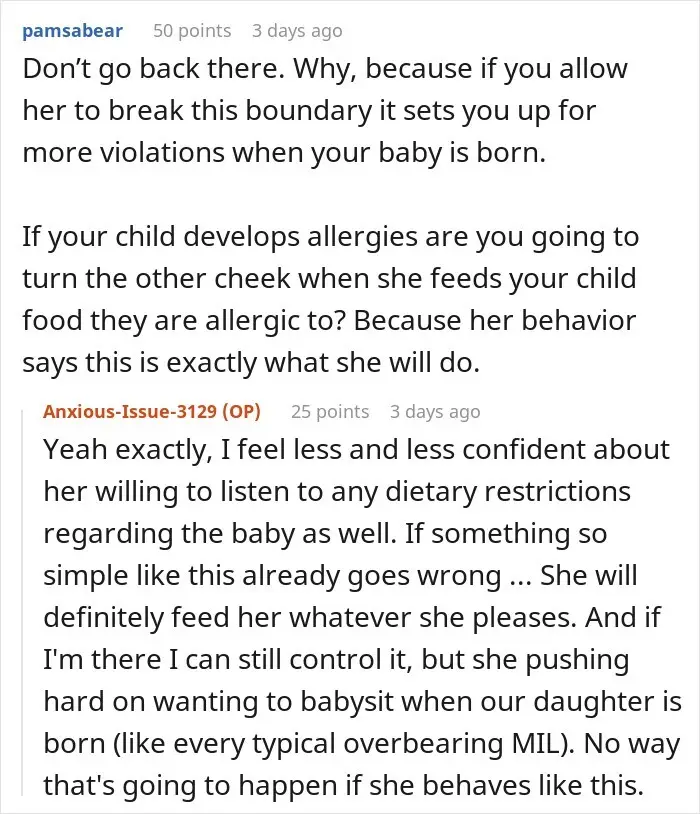
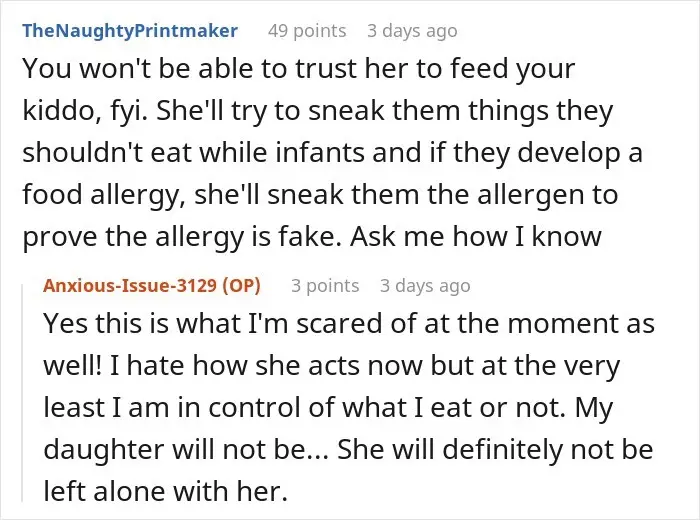
The OP added that she won’t feel comfortable letting the MIL babysit when the baby is born if this behavior continues