

Some people truly are meant to be parents. They have everything planned down to the smallest detail, from their parenting style to all the necessities they'll need, as well as the support system they want around them.
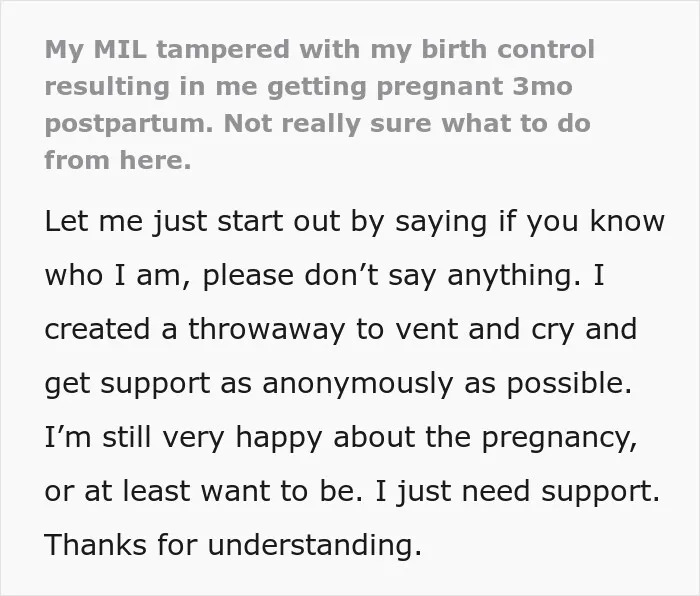
But, much like every other aspect of life, parenthood doesn't always go according to plan — and we're not just talking about a fussy baby who refuses to sleep through the night. We're talking about fussy in-laws. One woman shared a story on r/relationship_advice about how her seemingly perfect newborn phase took a turn for the worse when she realized she was pregnant — thanks to her mother-in-law.
Most first-time parents cherish the first few months with their newborns

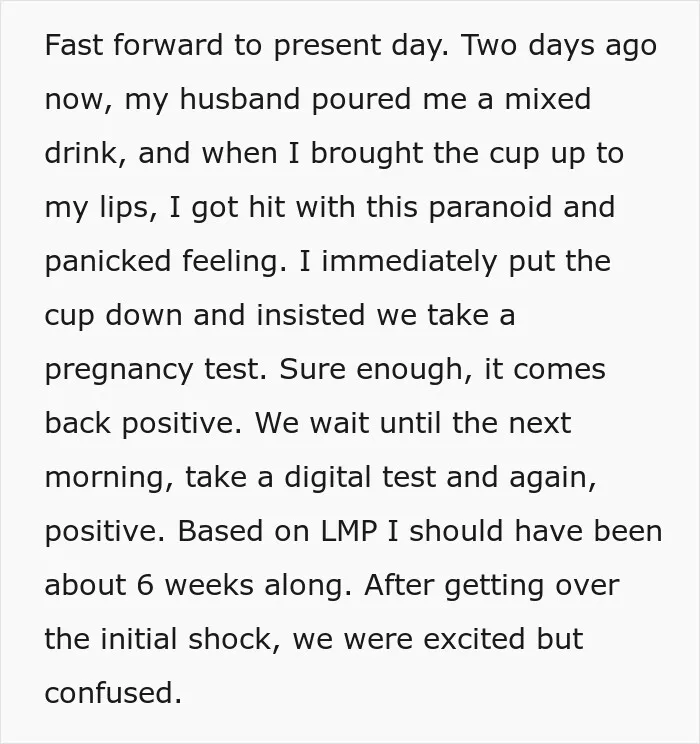
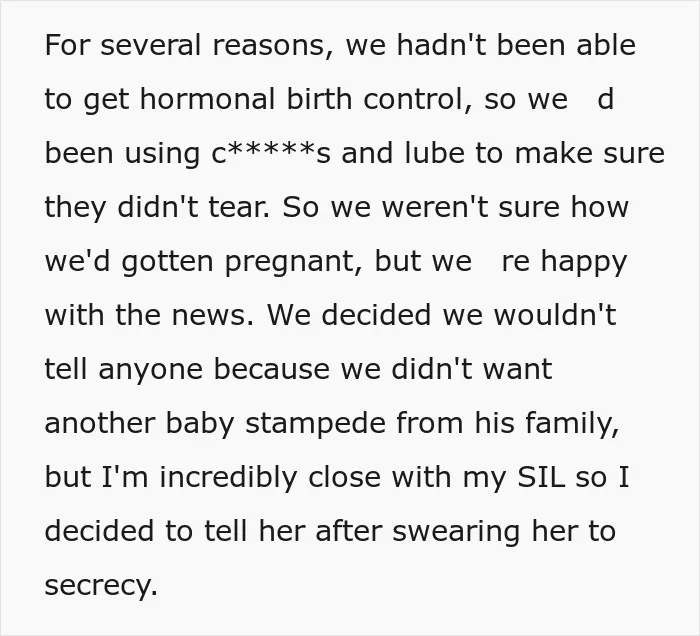
But a couple's bliss turned sour when a woman realized she was pregnant, only 3 months after giving birth












Doctors recommend mothers should wait between 18 and 24 months to safely conceive another baby
Not all mothers-in-law are toxic, but the one in this story goes well beyond what is acceptable. In fact, her behavior could be considered a form of toxicity because her actions fit the description of reproductive coercion. This refers to behaviors intended to control another person's reproductive autonomy. According to several studies, around 10% of women have experienced some form of reproductive coercion.
However, this behavior can have serious consequences for the mother. For starters, research highlights that an unplanned pregnancy resulting from birth control sabotage by a trusted family member can significantly increase the risk of postpartum depression, partly due to the sudden loss of bodily autonomy.
And the potential harm isn't just psychological. From a physical standpoint, experts recommend waiting at least 18 to 24 months after giving birth before conceiving again. This is because becoming pregnant again too soon can increase the risk of serious health complications for the mother, including nutrient depletion, incomplete tissue healing, and placental abnormalities. It can also pose health risks to the baby.
This situation could also harbor resentment in the marriage or the relationship with the baby
But sadly, the narrator's experience is a far cry from the reality many women still face today. In many parts of the world, particularly East and South Asia, the preference for a male heir remains deeply rooted in cultural traditions. Sociologists call this "patrilineal continuation bias." However, statistics show that even in the United States, men have historically been more likely to prefer having sons over daughters.
Now, the husband is allegedly supporting whatever decision his wife makes. However, it's important to note that Dr. Susan Forward warns that unless the spouse caught in the middle of a family conflict unequivocally sides with their partner, it can lead to severe marital distress, especially when an unplanned child is involved.
So, what should the couple do? Well, specialists actually recommend doing exactly what the new mother is planning: enforcing a no-contact boundary. Dr. Karl Pillemer notes that estrangement often stems from long-term, repeated boundary infringements, so it's important to keep distance from someone like that.
But what would you do? Would you try to prove that the mother-in-law sabotaged the birth control? Would you even go ahead with the pregnancy? Let us know!
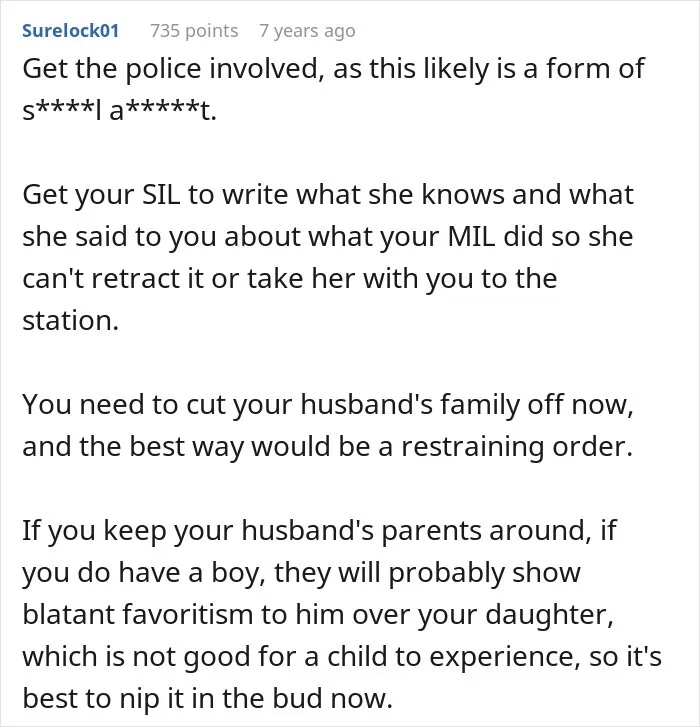
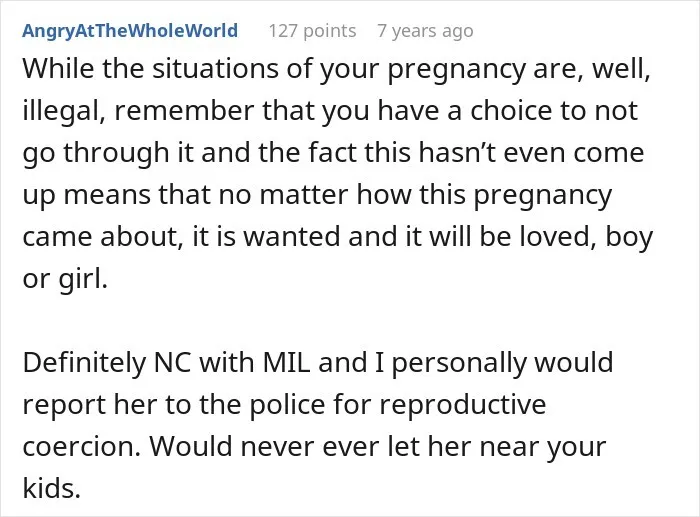
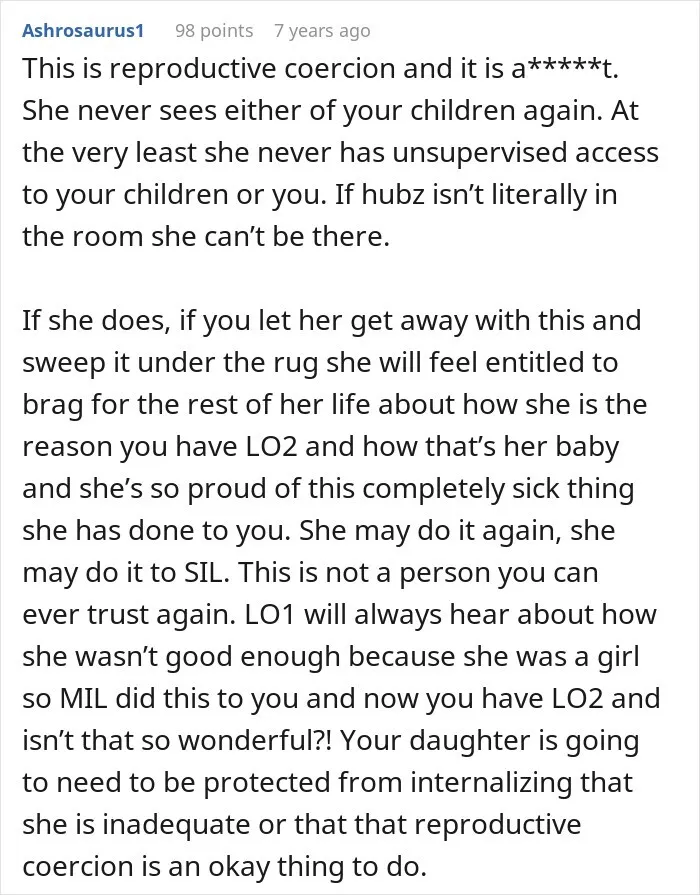
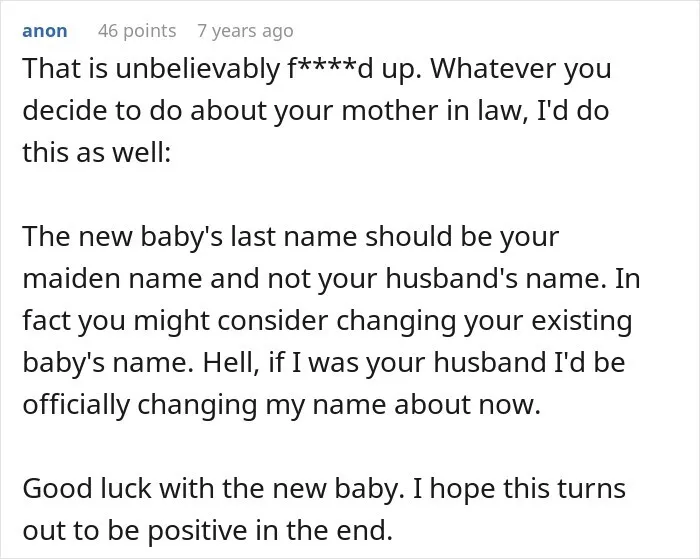
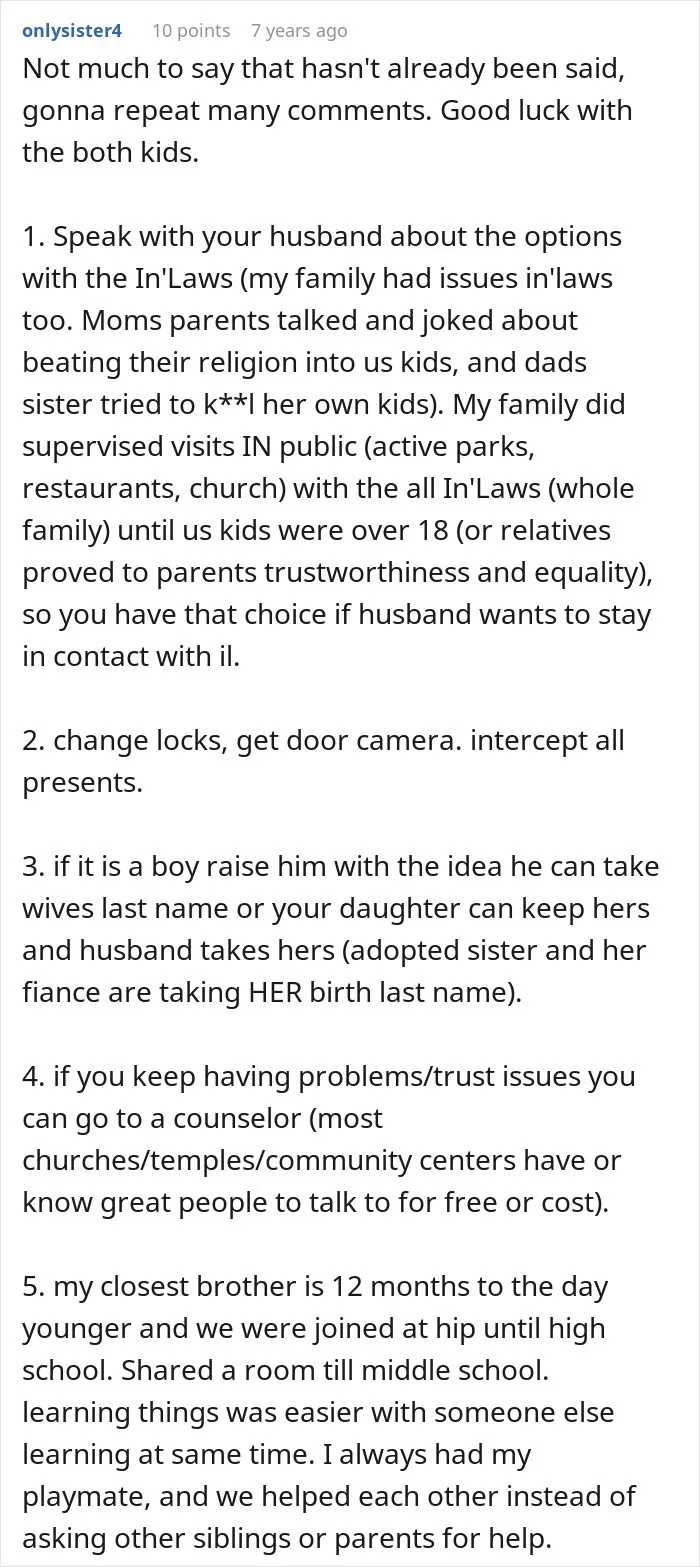
Readers had some questions, but most offered advice on how to keep the mother-in-law away from them