
For many families, a trip to Disneyland and Universal is the stuff of dreams, the kind of vacation kids treasure for years. But as we all know, that kind of magic doesn’t come cheap.
So when this woman and her husband won a $3,000 travel voucher, they put it toward a trip with their two kids. It wasn’t enough to cover everything, though. That’s when Grandma stepped in and offered to pay the difference, on one condition: She’d come along. The couple said yes. They wanted their kids to have the experience, after all. But Mom had a nagging feeling she’d regret it. And, oh boy, was she right.
This woman had a feeling bringing her MIL on their dream family vacation was a mistake

But nothing could prepare her for how bad things would get—especially for her 8-year-old














Families can pass down more than just money
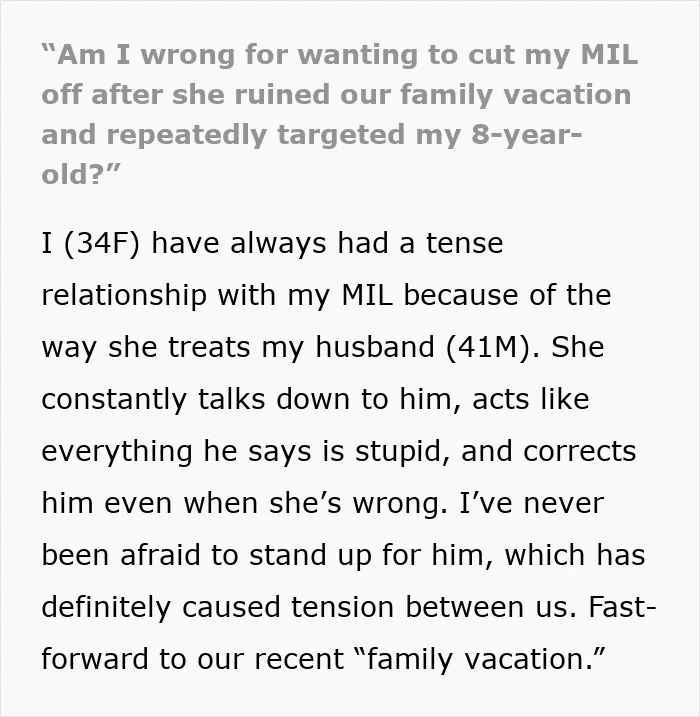
We’ve no doubt all had our fair share of family disagreements around the dinner table, especially when mothers-in-law are involved. But this wasn’t simply a clash over the new drapes or whose meatloaf recipe reigns supreme. Before the trip had even begun, there was already plenty of baggage to contend with. The poster says her mother-in-law has a long history of belittling her husband, complicated by a difficult childhood and years of unresolved issues between them. And those issues didn’t stay in the past—they continued to spill over into family gatherings, creating tension all round.
So it’s understandable that the poster had a nagging feeling she might come to regret bringing her mother-in-law along. Interestingly, the question of whether her money was worth putting up with her on a dream vacation ended up mirroring the dilemma waiting for them at home: whether maintaining a relationship with her was worth the possibility of an inheritance. The poster makes clear that this wasn’t their sole reservation about doing so, but the parallel is striking. An inheritance is also a tangible reminder of what gets passed down in families. That can be money, sure. But it can also be expectations, resentment, unresolved conflict, or unhealthy relationship patterns.
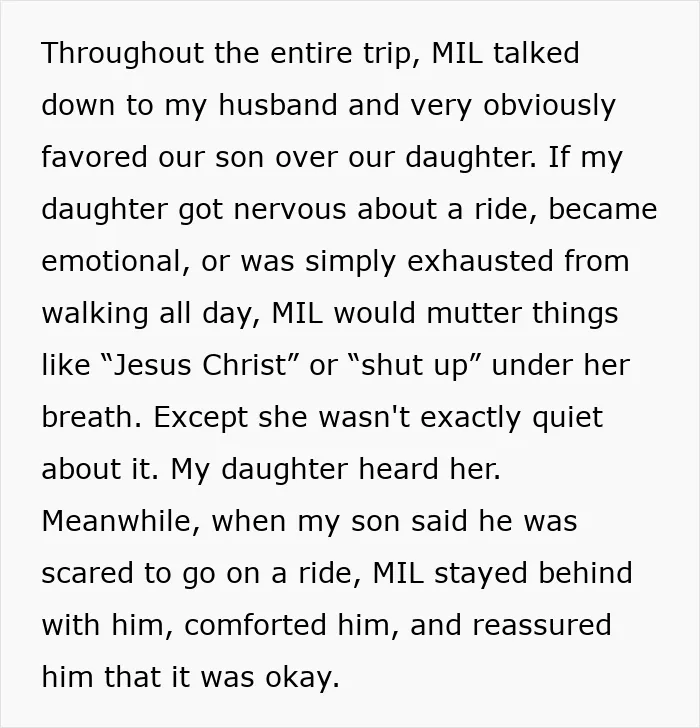
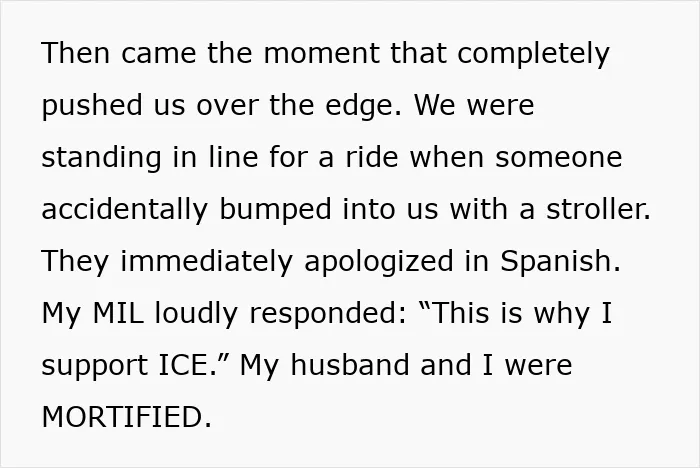
And that’s perhaps what makes the poster’s 8-year-old daughter asking, “Why does Grandma hate me so much?” that much more heartbreaking. The mother-in-law’s behavior was abominable—particularly her disgusting ICE remark, which appears to have been the final straw—but this wasn’t just about one ruined vacation. It had become about a difficult, perhaps toxic, family dynamic that was now starting to sink its claws into the next generation.

When family ties start to come at a cost
Inheritance or not, cutting ties with a family member isn’t always easy. And while going no contact is hardly unheard of—with a recent poll finding that 38% of Americans reported cutting off communication with a friend or family member in the previous year—it’s still a decisive step. After everything that happened on the trip, coupled with everything that came before it, it makes sense that the woman finally declared she was “done.”
Writing for Psychology Today, Edie Stark, LCSW, MSc, outlines five of the most common reasons adults choose to go low or no contact with their parents. Reading them alongside the poster’s story is striking.
For starters, there’s what Stark calls “chronic invalidating dynamics” and the question of boundaries. The poster describes a mother-in-law who repeatedly undermines her husband, inserts herself into their lives, and—during the vacation—directed hurtful behavior toward their daughter. By the end of the trip, this wasn’t simply about whether the adults could tolerate one another. An 8-year-old was asking why her grandmother hated her.
That distinction matters. As Stark explains, “For many adults, parenthood brings everything into 20/20. The behaviors you once minimized—criticism, control, emotional neglect—can suddenly feel intolerable when you imagine your child being on the receiving end.” Except the poster and her husband didn’t have to imagine this. They were watching it happen to their daughter.
Stark also notes that some people choose low or no contact because they don’t want the same patterns repeated with the next generation, while others recognize that they can’t model healthy relationships while remaining immersed in unhealthy ones. Psychologist Chivonna Childs, PhD, puts it more bluntly, explaining that going no contact can help people “break trauma cycles” by modeling healthier behavior for those watching, including children.
That seems particularly relevant here: whatever issues existed between the mother-in-law and her son were no longer confined to the two of them. Her behavior was affecting the family he had built, too, leaving the couple to consider what they were willing to let their children accept as normal.
And perhaps that’s the crux of it. Sometimes, going no contact is about deciding what kind of behavior you’re willing to have in your life—and what you’re willing to expose your children to. In that light, the inheritance starts to look less like a potential financial windfall and more like something that could come at a much higher cost.
Commenters weighed in, prompting the poster to share more about the family dynamic
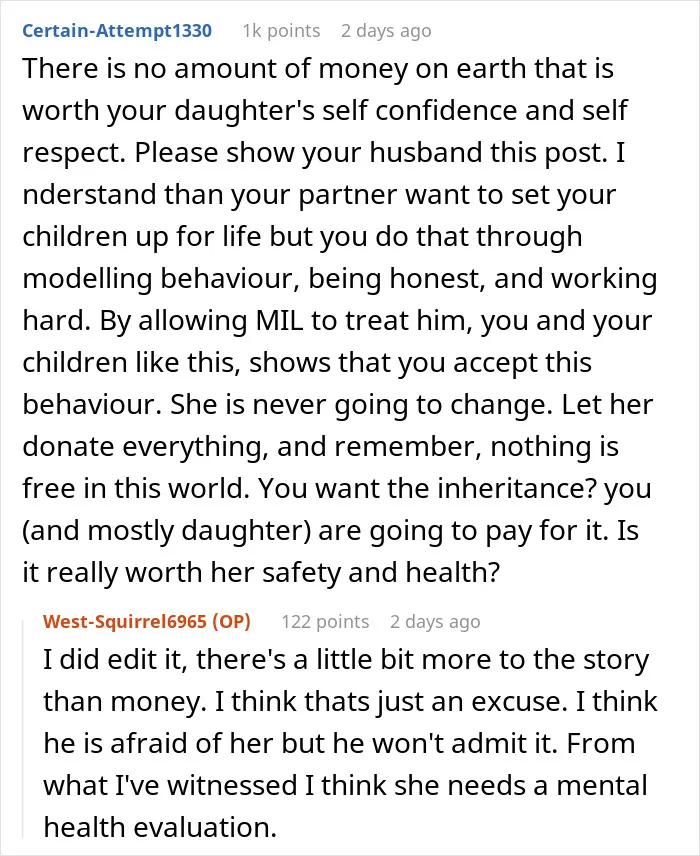
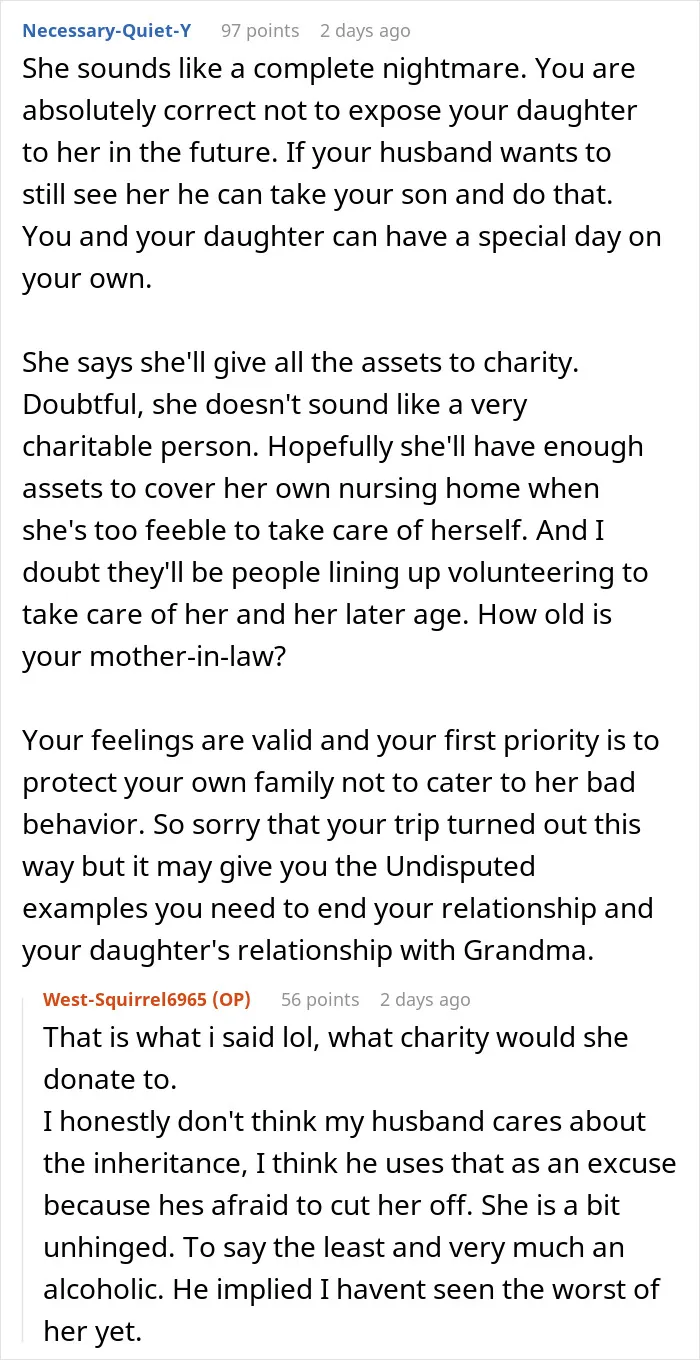
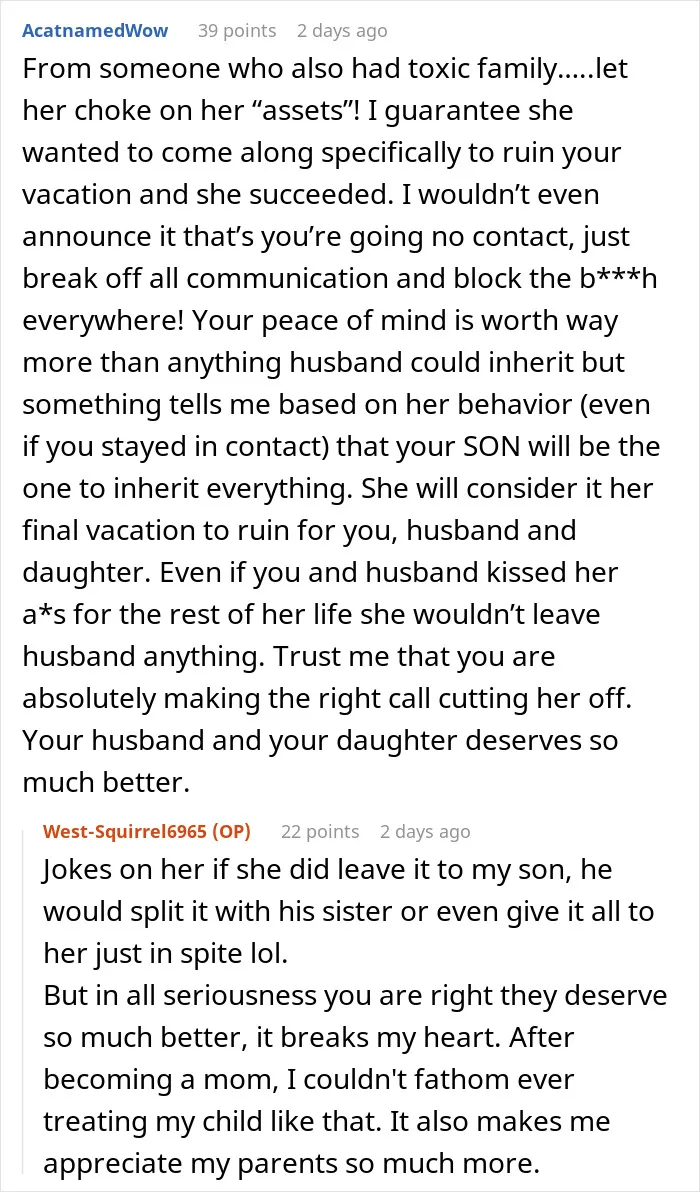
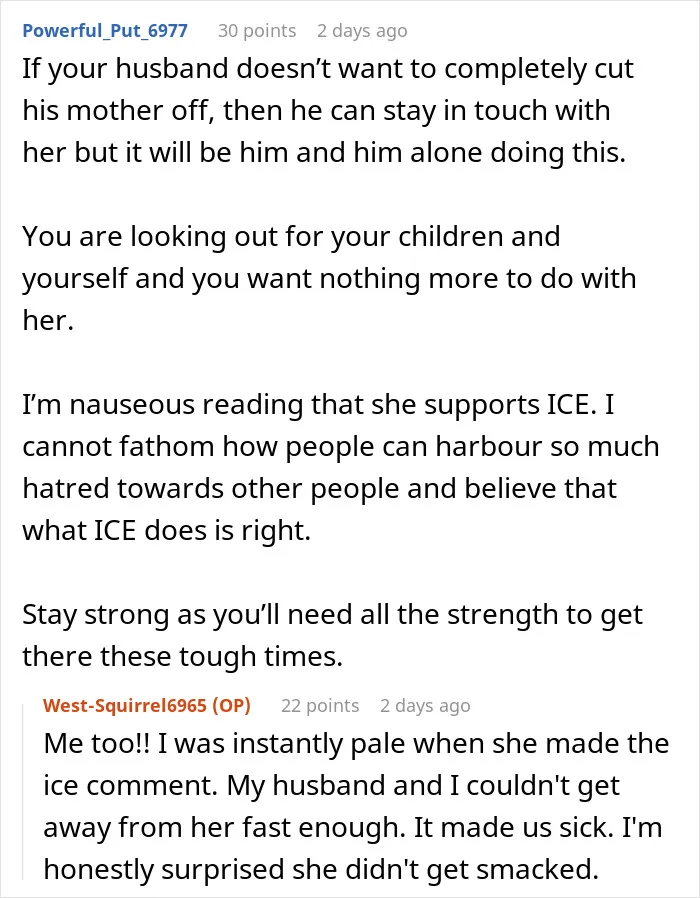
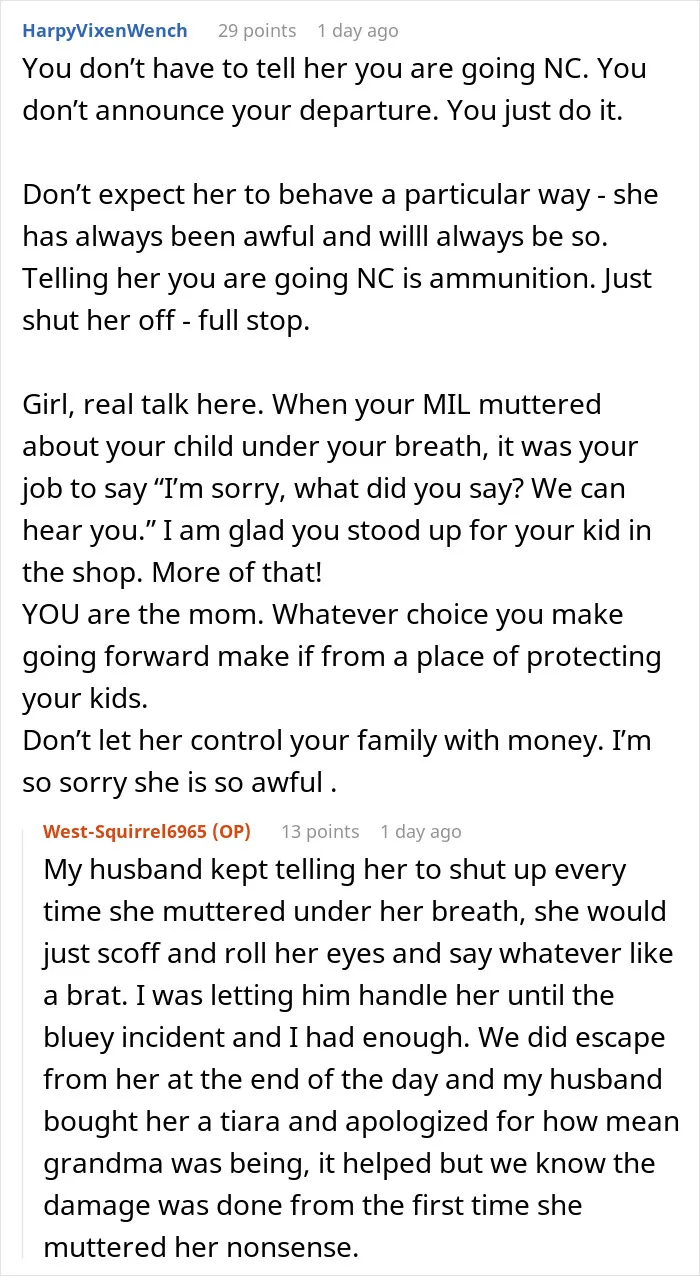
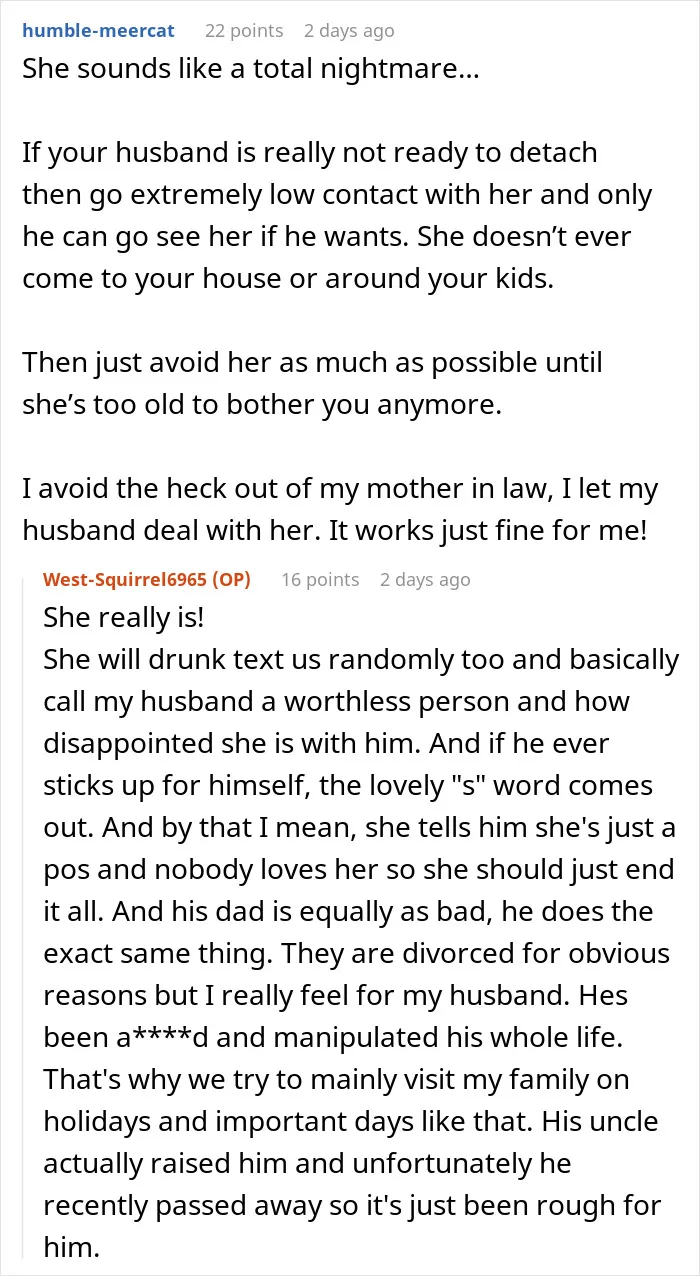
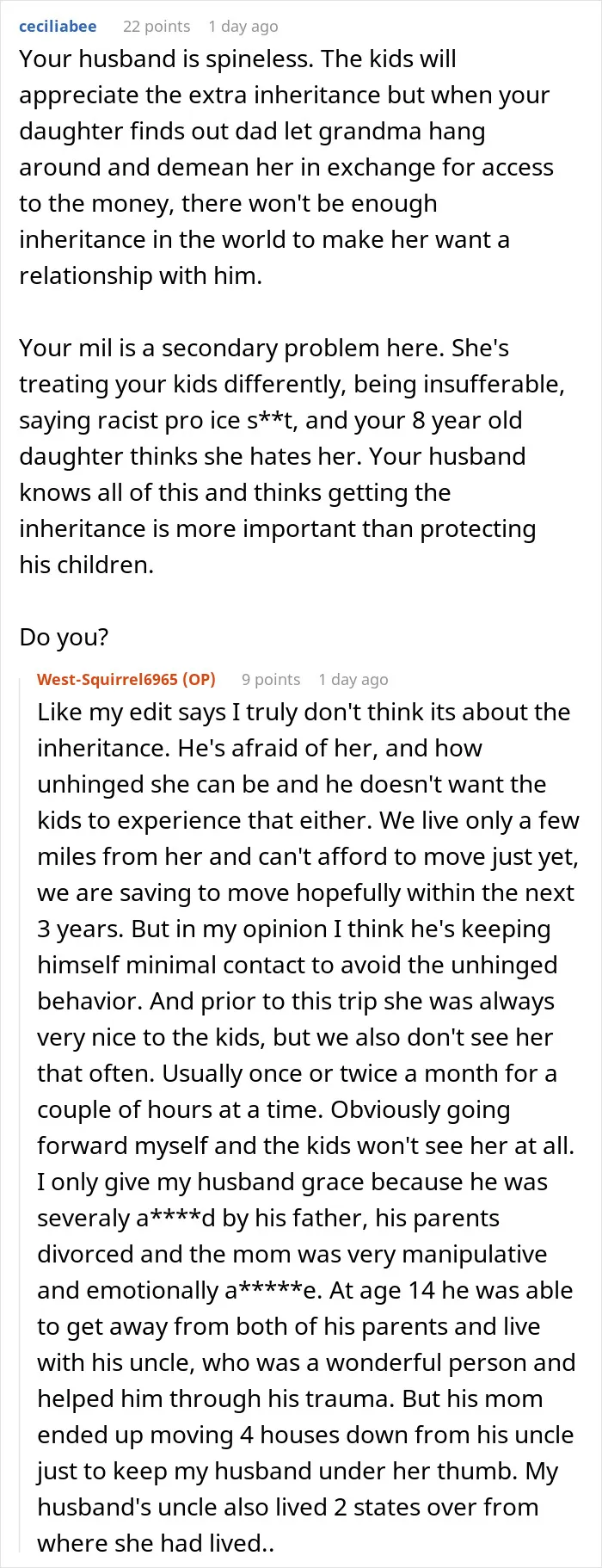
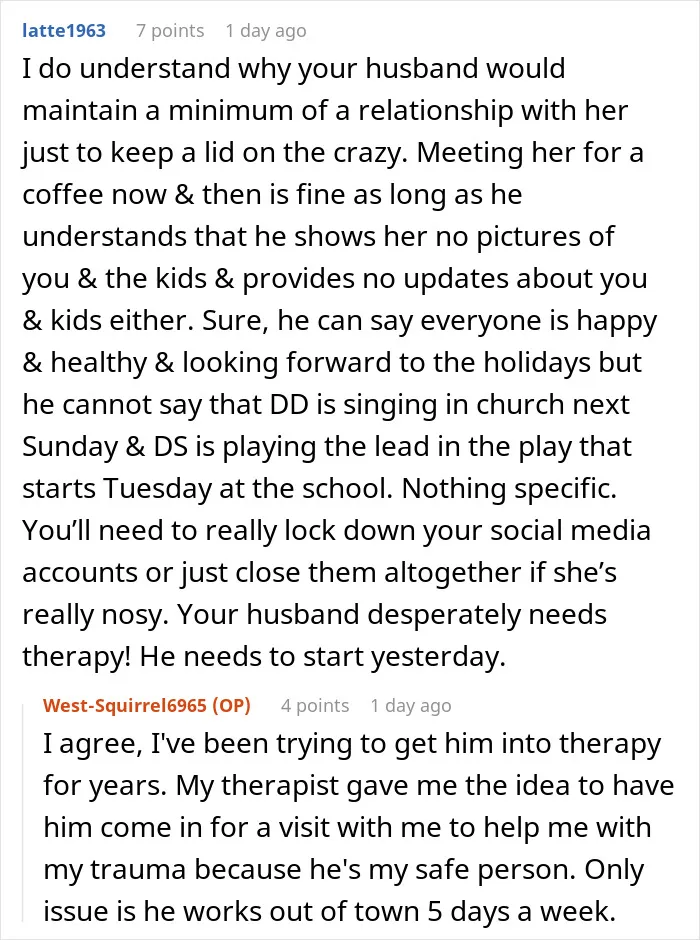
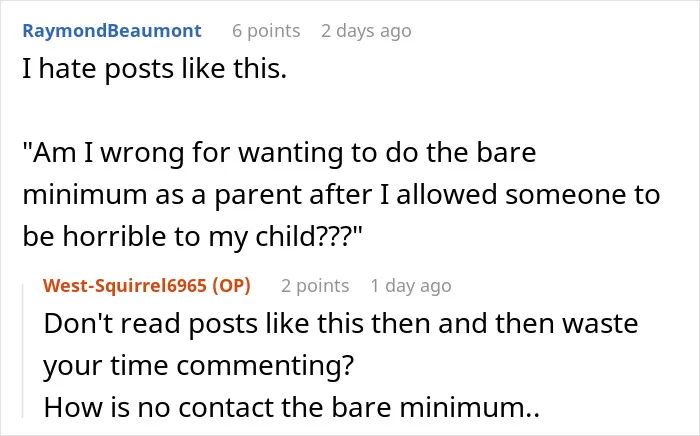

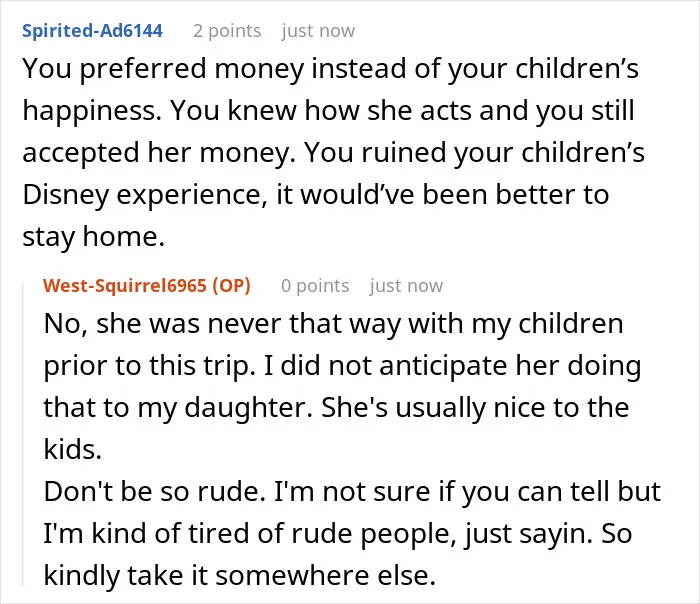
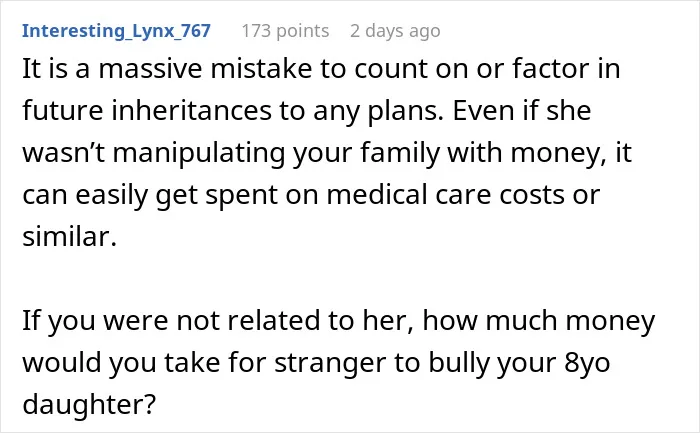
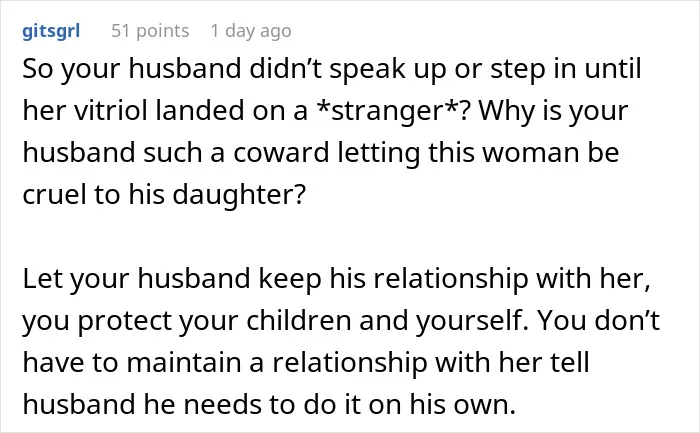
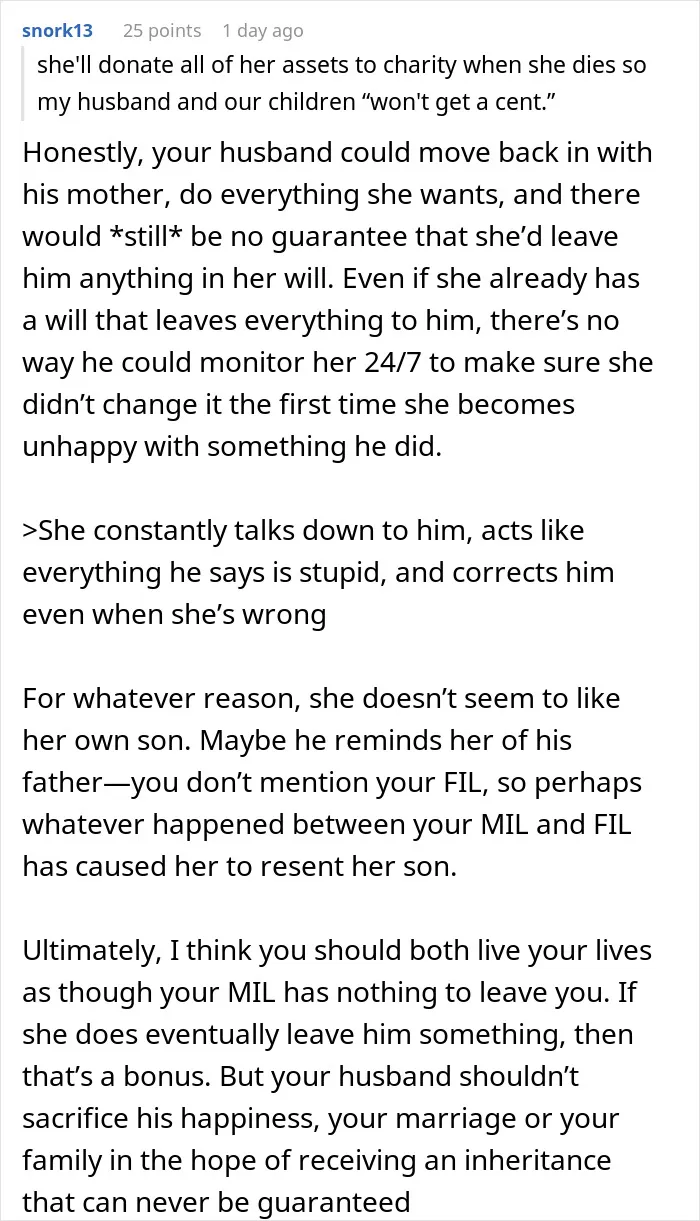
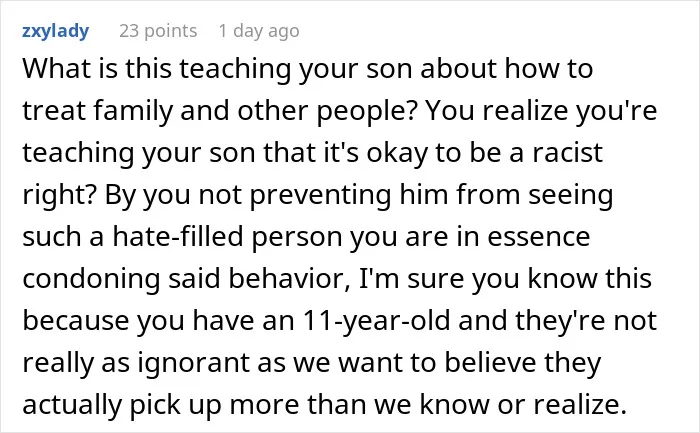
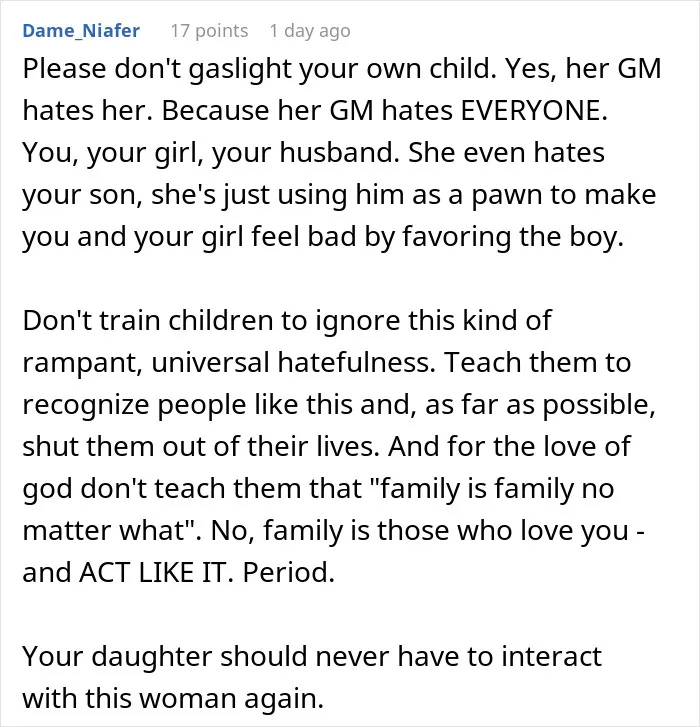
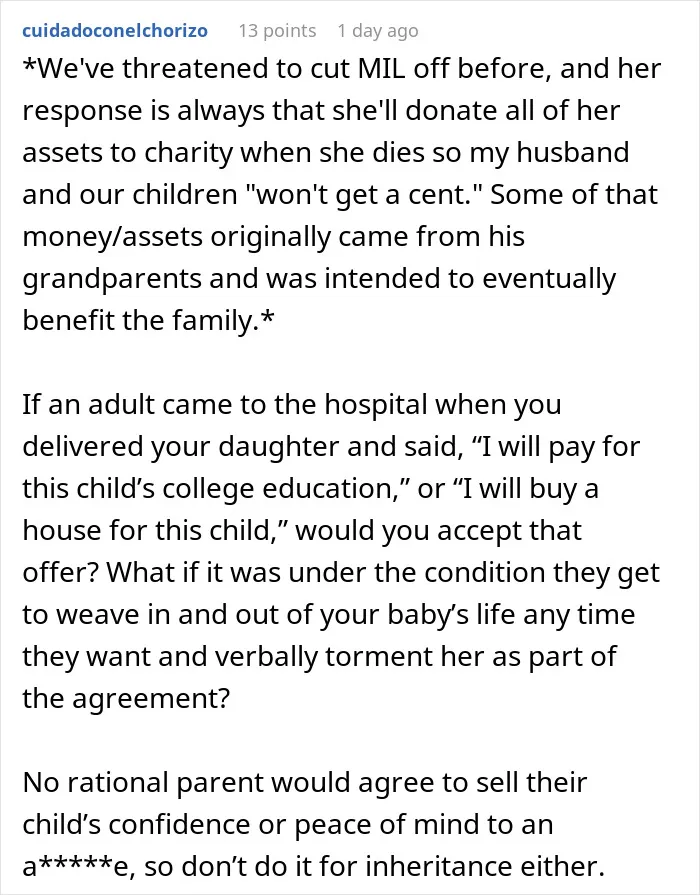
Many commenters felt no inheritance was worth keeping the MIL in their lives



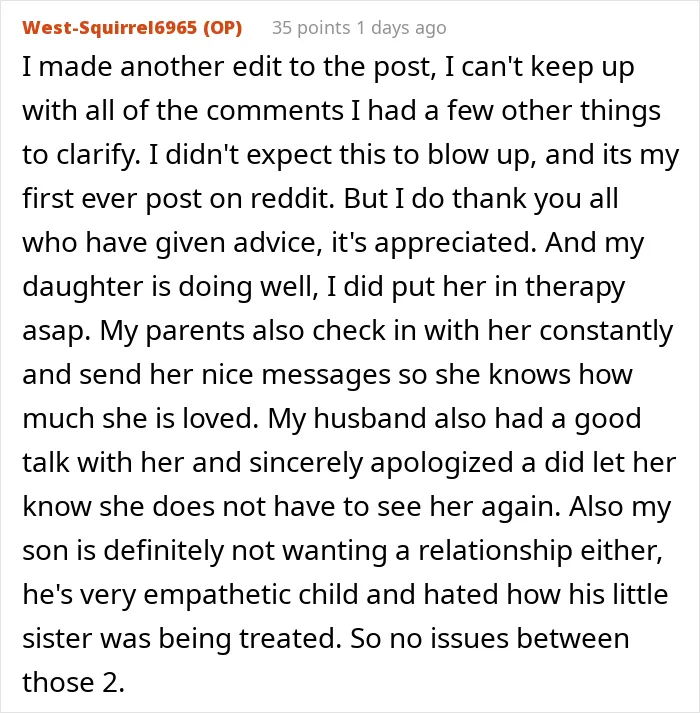
The poster later shared an update on her family