

Some people seem to think allergies are no big deal. A few sneezes, some itchy eyes, maybe a runny nose, and that's about it. But not all allergic reactions are so mild. For some, even a tiny bite of the wrong food can turn into a life-threatening emergency.
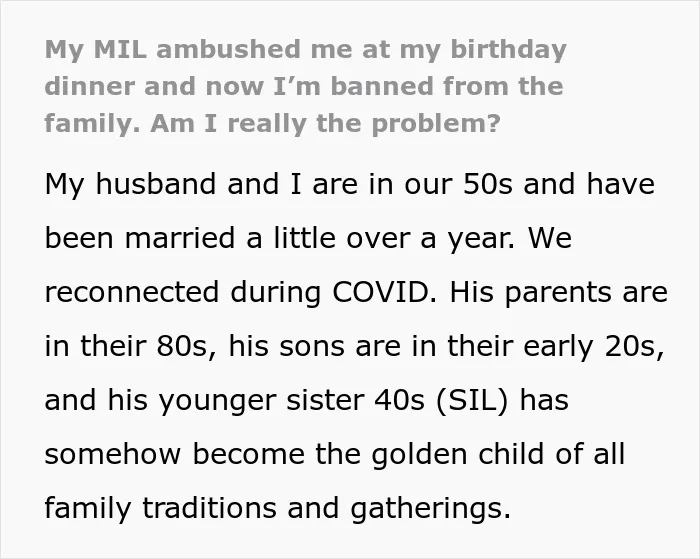
One woman’s in-laws have brushed off her severe allergies for years, even after she suffered a serious reaction at a family gathering. Instead of showing any concern, they somehow made her out to be the villain. And when the woman thought she could finally enjoy a peaceful birthday dinner, her mother-in-law found a way to ruin that, too.
The woman’s in-laws refused to take her severe allergies seriously, even after she suffered a dangerous reaction

Somehow, she became the villain and was eventually banned from family gatherings







Despite how serious allergies can be, plenty of people still believe they’re exaggerated or that those who have them are simply being dramatic
According to the latest figures from the Centers for Disease Control and Prevention, nearly one-third of American adults have been diagnosed with at least one allergy. Food allergies alone affect 6.7% of adults, which means millions of people have to think twice before eating something as ordinary as a sandwich or a slice of birthday cake.
The tricky thing about allergies is that reactions aren’t always predictable. Someone might eat a particular food and develop a rash one day, only to have a much more serious reaction the next time they’re exposed to it.
Even people who’ve only had mild symptoms in the past can suddenly develop anaphylaxis. This is a severe allergic reaction that can cause breathing difficulties and a dangerous drop in blood pressure. Without prompt treatment, it can be fatal.
So, why do some people still act as though food allergies are something to roll their eyes at?
Part of the problem may be that many people simply don’t understand how they work. A 2024 Australian survey found that a significant proportion of adults without food allergies lacked basic knowledge about allergic reactions, including how to recognize the warning signs of anaphylaxis.
But a lack of understanding isn’t the only issue. Some people genuinely believe food allergies are exaggerated. In a 2024 UK survey of more than 2,000 people, nearly one in four said they thought food allergies had been blown out of proportion in recent years. Meanwhile, half believed that people with allergies were often seen as fussy or making a bigger deal out of their condition than necessary.
As a result, everyday life can become pretty exhausting for someone with food allergies. Imagine having to be on guard every time you visit a restaurant or sit down for a meal with family.
You have to double-check, even triple-check, what’s in your food and hope that whoever prepared it took your allergies seriously. And on top of that, you might worry about coming across as demanding or difficult simply because you’re trying to stay safe.
Research involving college students with food allergies found that some had been accused of being picky or lying about their condition. Others recalled friends and relatives making jokes about their allergies or brushing off their concerns. Some even started avoiding social gatherings altogether because they were fed up with being treated that way.

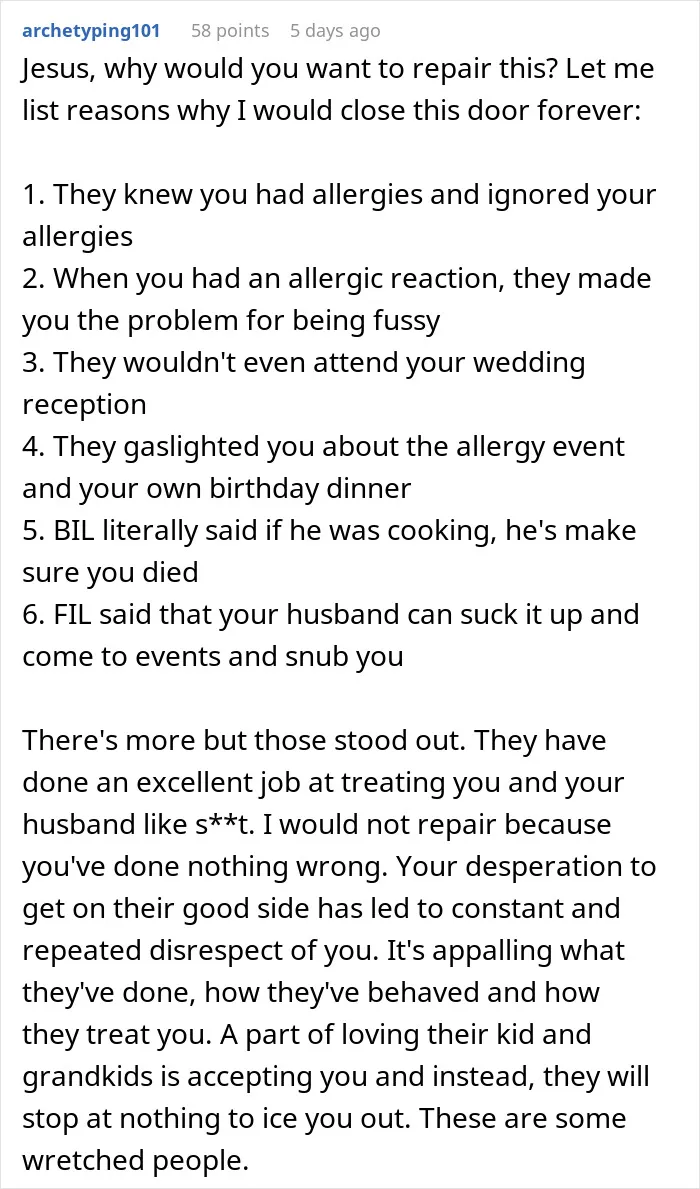
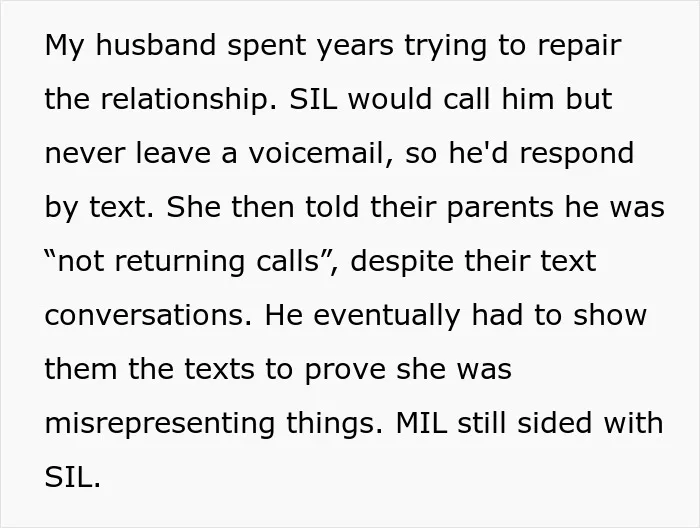
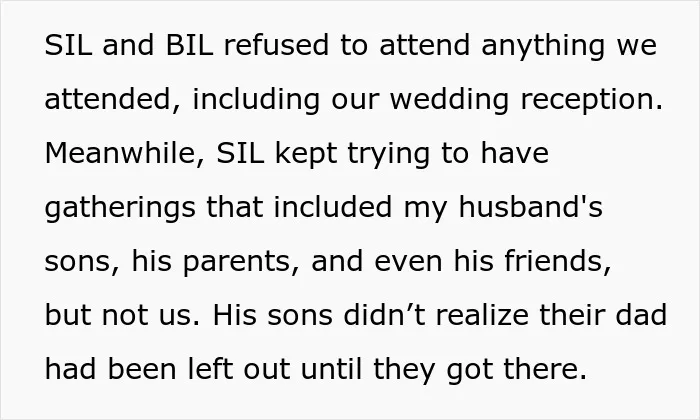
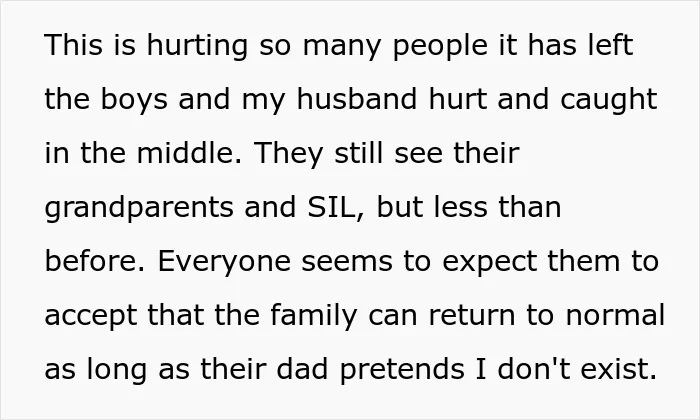
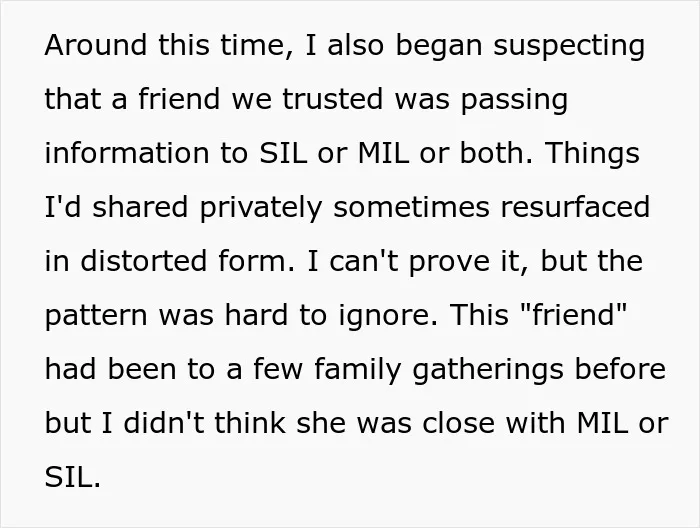
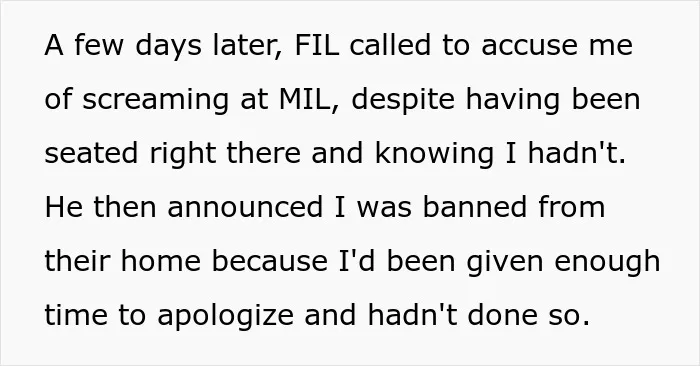
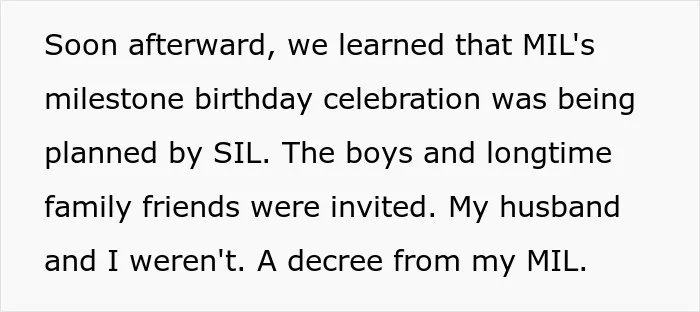
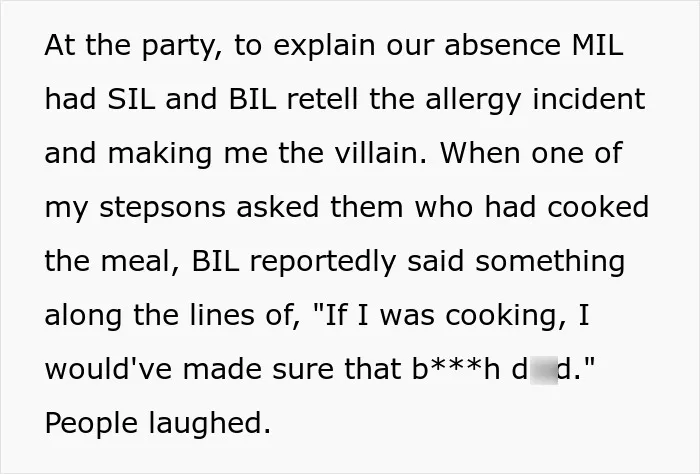
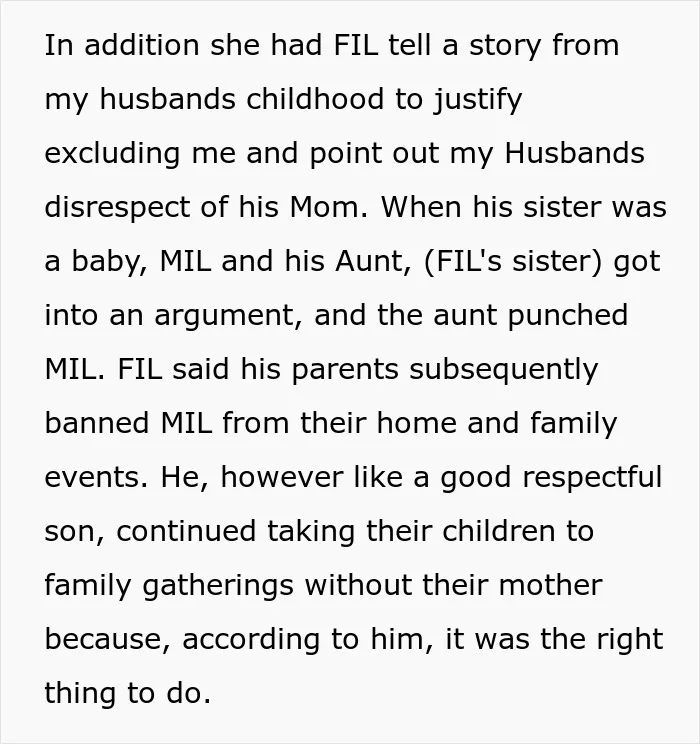
In the Redditor’s case, her sister-in-law knew about her severe allergies and still served food that wasn’t safe for her. Yet years later, the woman is the one being pressured to apologize. Her mother-in-law has even suggested that her husband should attend family events without her.
Of course, disagreements with in-laws are hardly unusual. When you marry someone, you become part of another family with its own habits and expectations. And if you don’t see eye to eye, even something as simple as how often you visit or where you spend the holidays can turn into a big argument.
Relationships between mothers-in-law and daughters-in-law, in particular, have a reputation for being strenuous. Psychologist Terri Apter found that more than 60% of women said their relationship with their mother-in-law caused them long-term stress, compared to just 15% of men.
A 2022 study also found that people reported more conflict with their mothers-in-law than with their own mothers. According to Apter, much of the tension comes from both sides feeling threatened by the other and worrying about losing their place in the family.
For the woman in this story, the family feud has dragged on for years, and things seem to be getting worse rather than better. Her husband has repeatedly tried to make peace, but his parents continue to blame his wife and expect him to attend family gatherings without her. Now, the couple is left wondering whether there’s any way to repair these relationships at all.
What do you think about this whole situation, Pandas? Should the woman and her husband continue trying to make peace with his family, or have they already done enough? And how would you deal with in-laws who refuse to accept your side of the story? Let us know in the comments below.
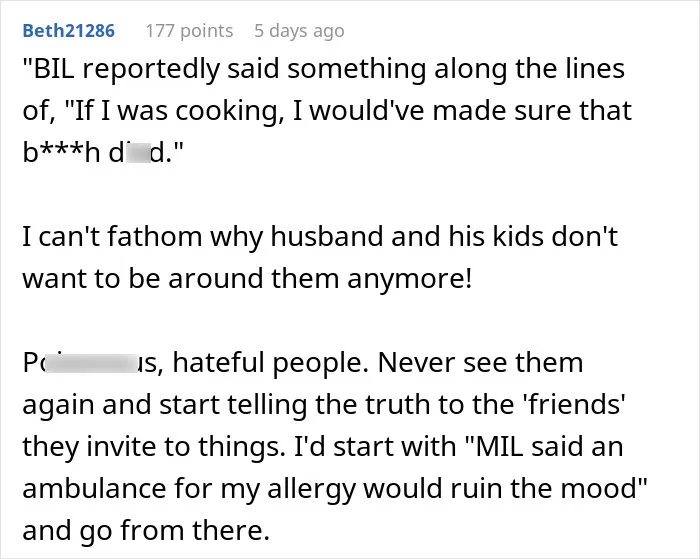
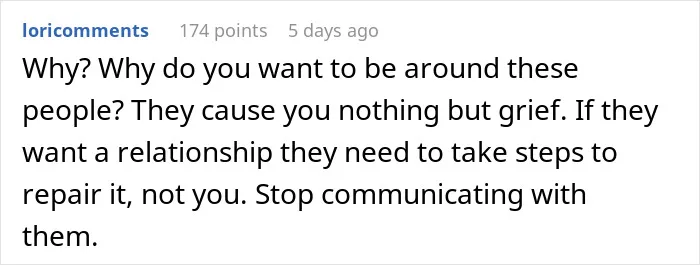
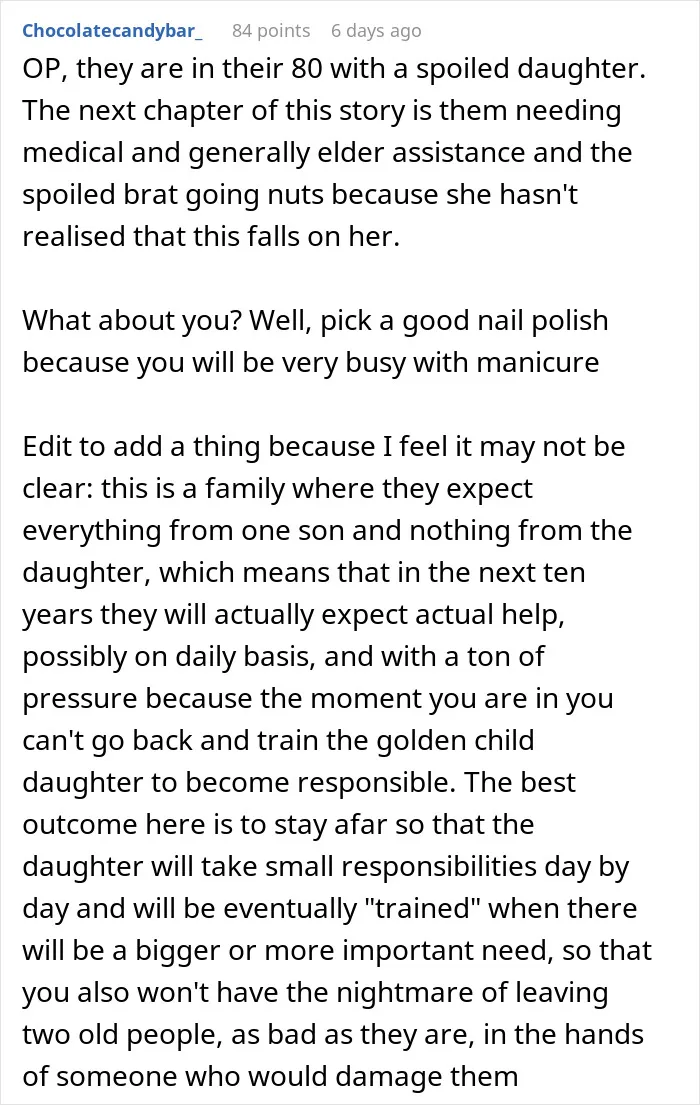
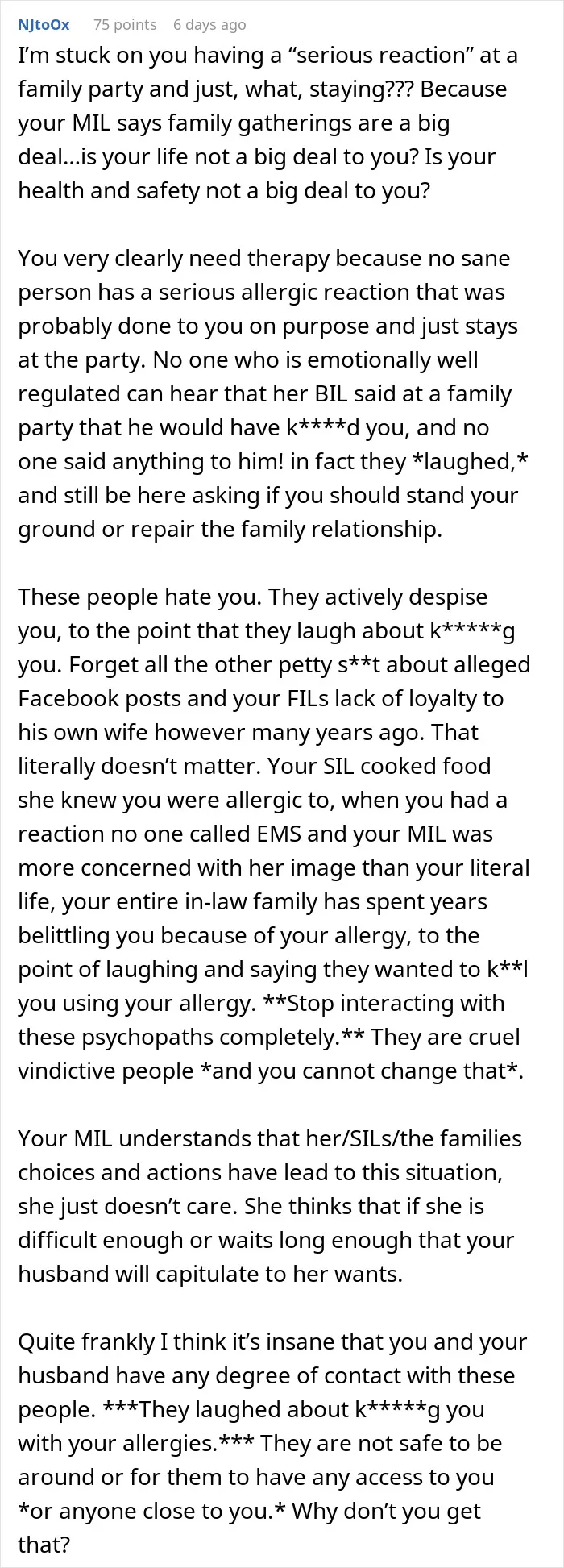
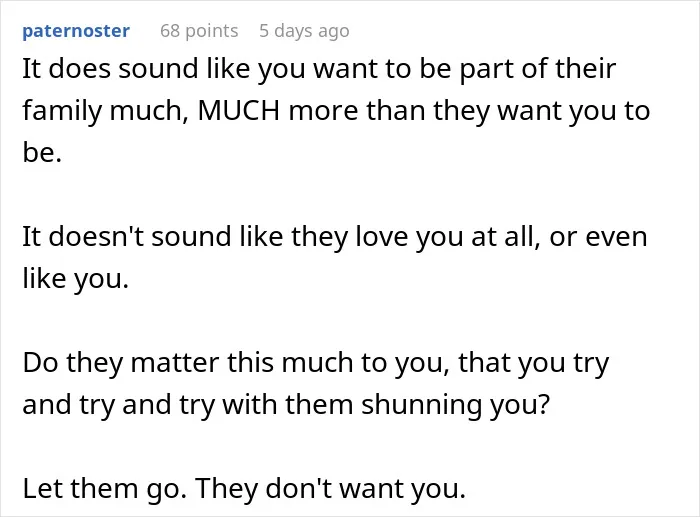
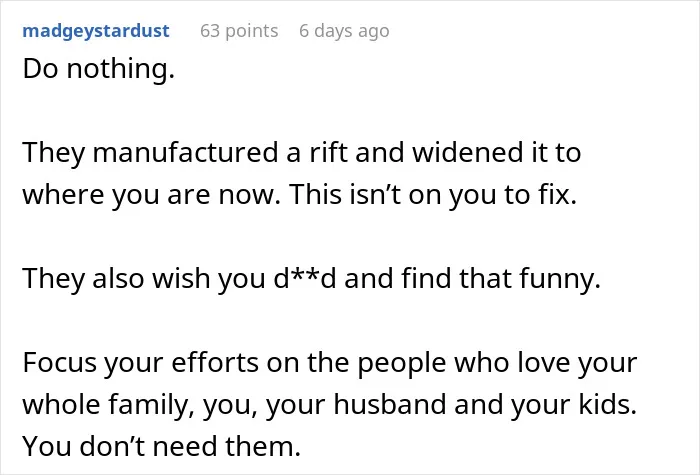
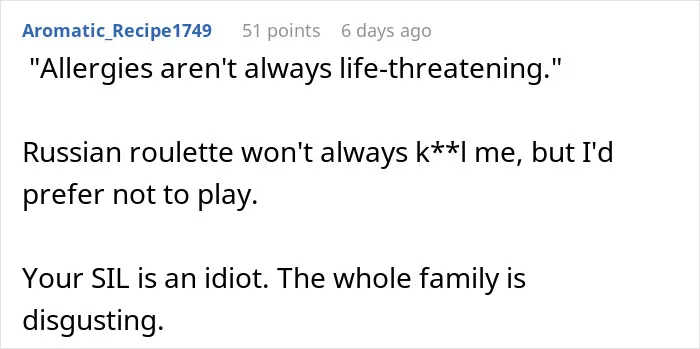
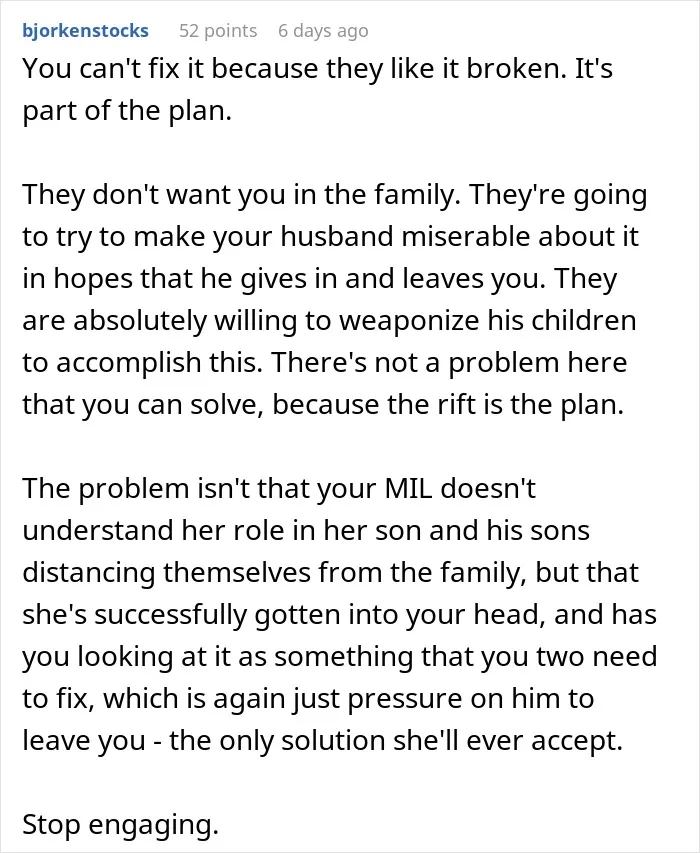
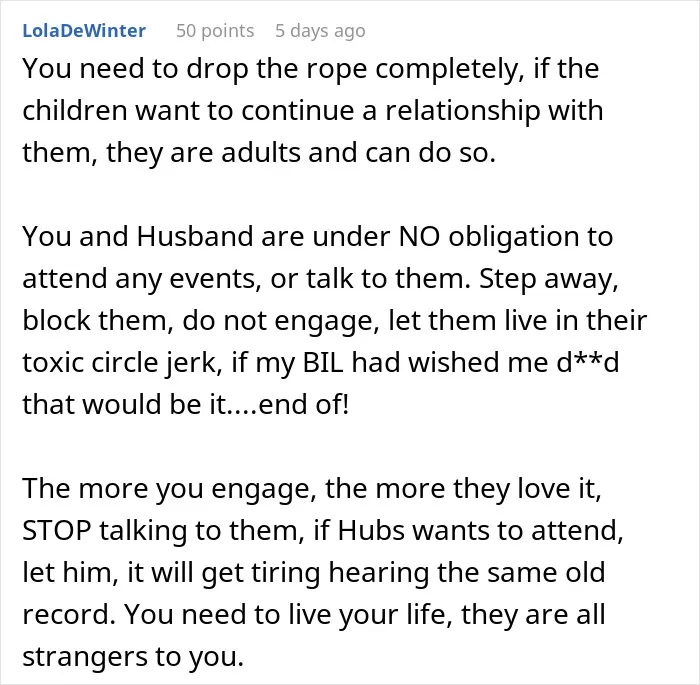
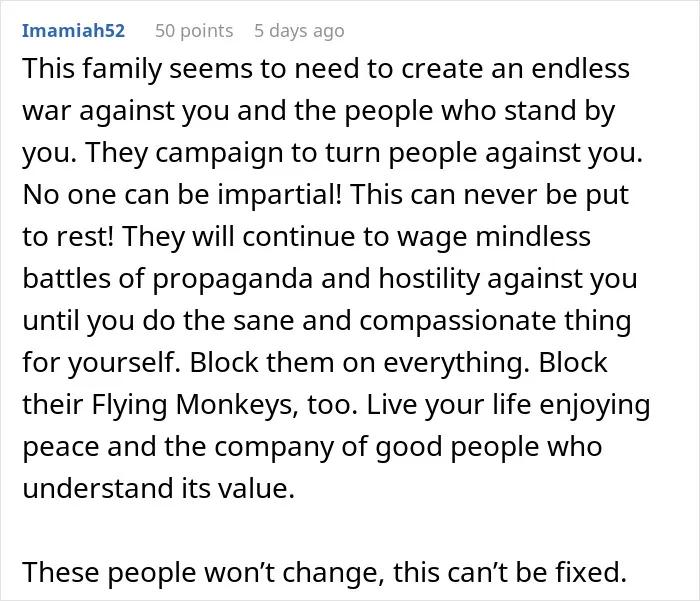
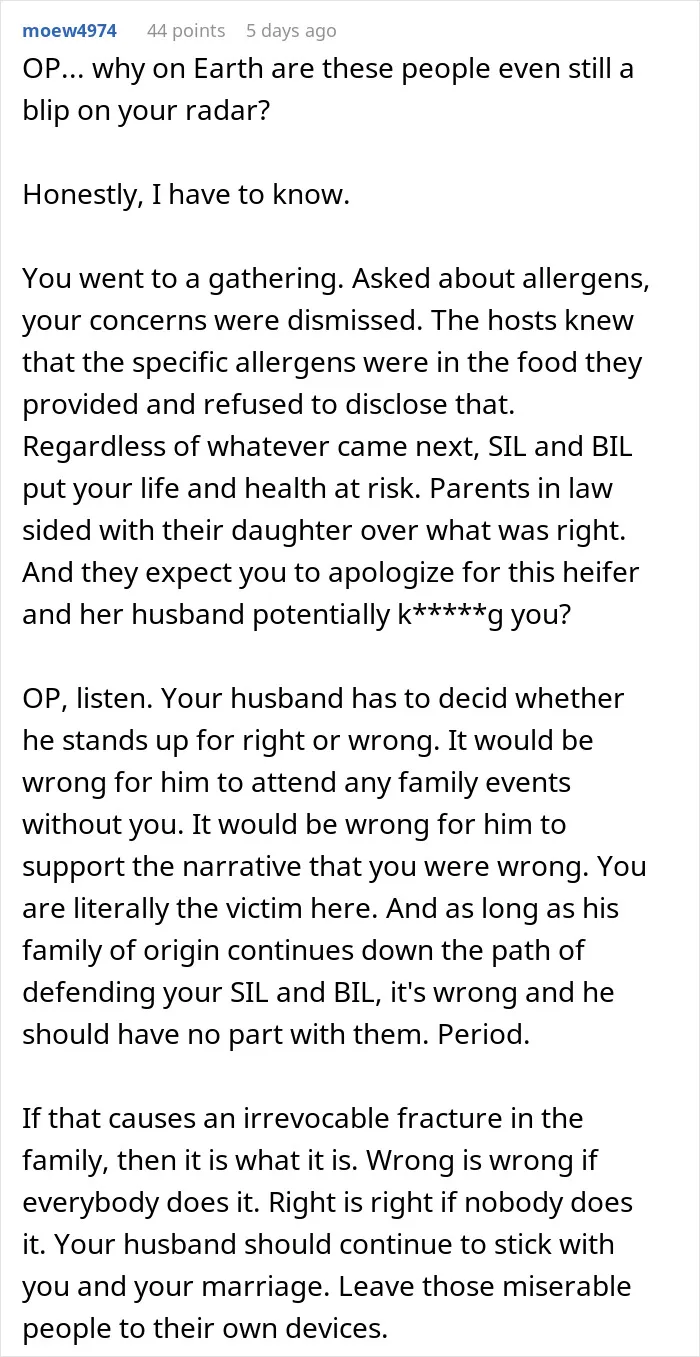
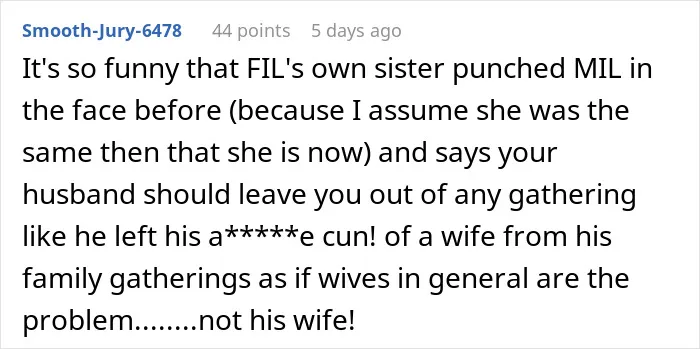
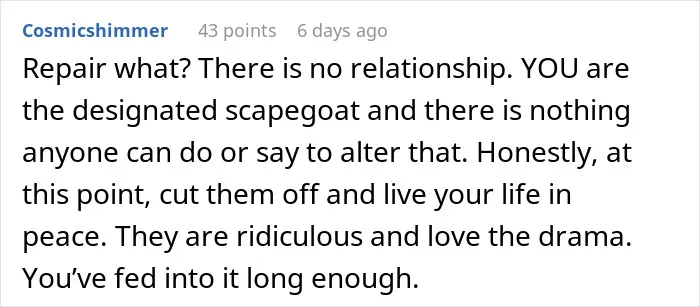
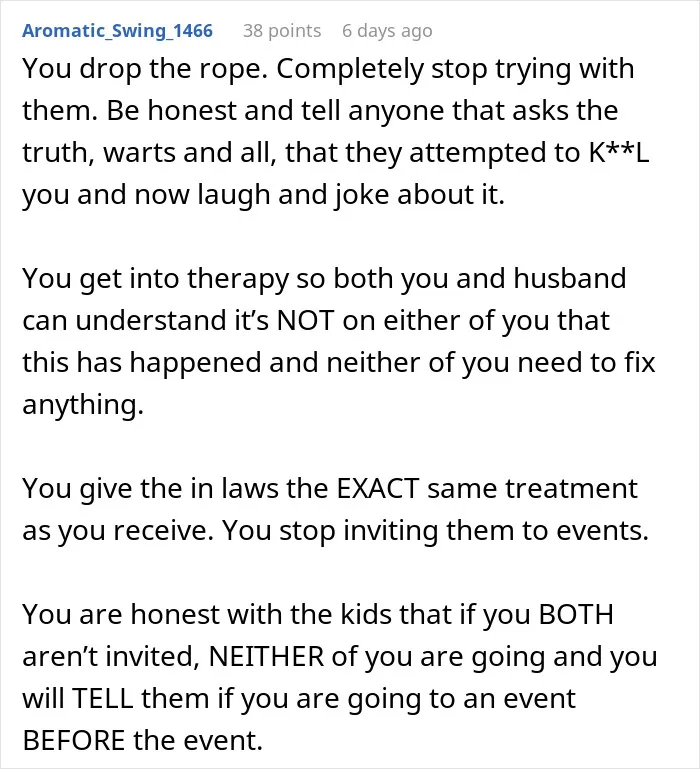
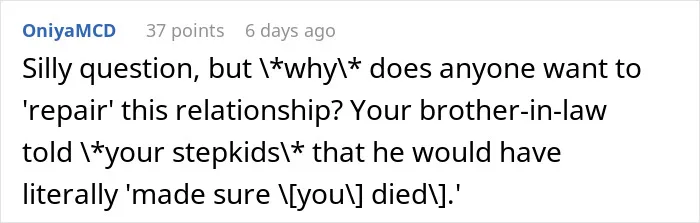
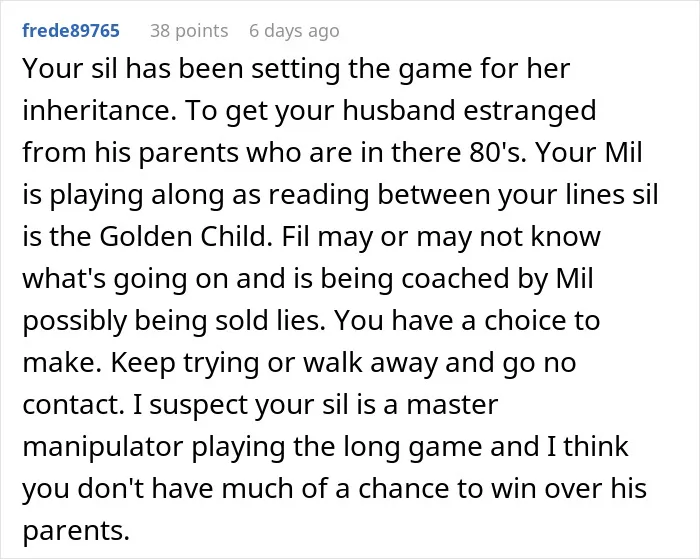
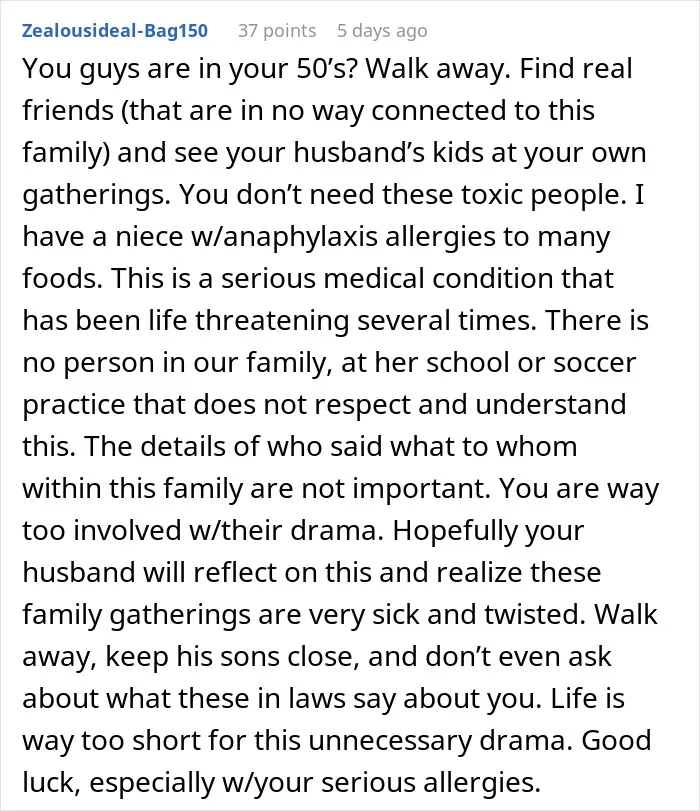
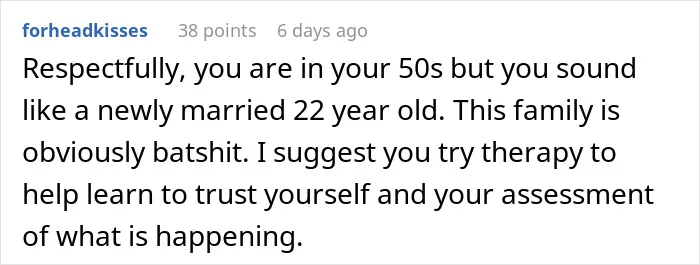
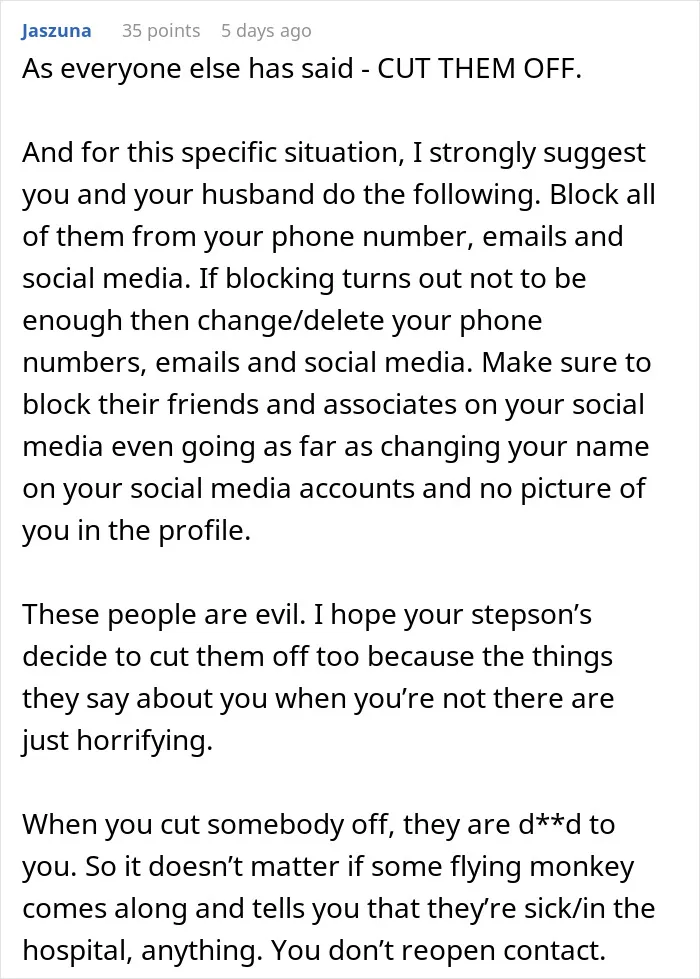
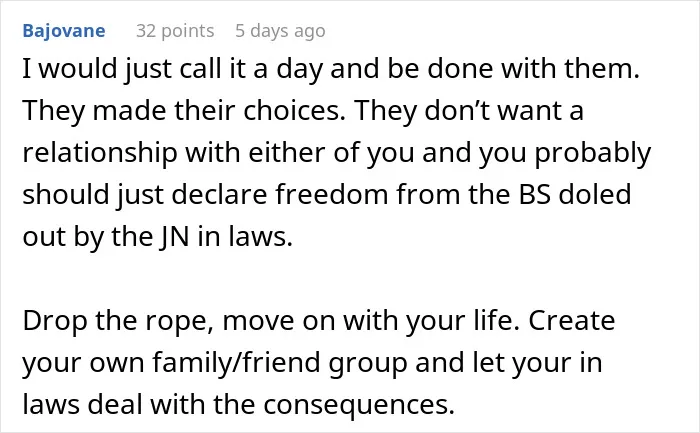
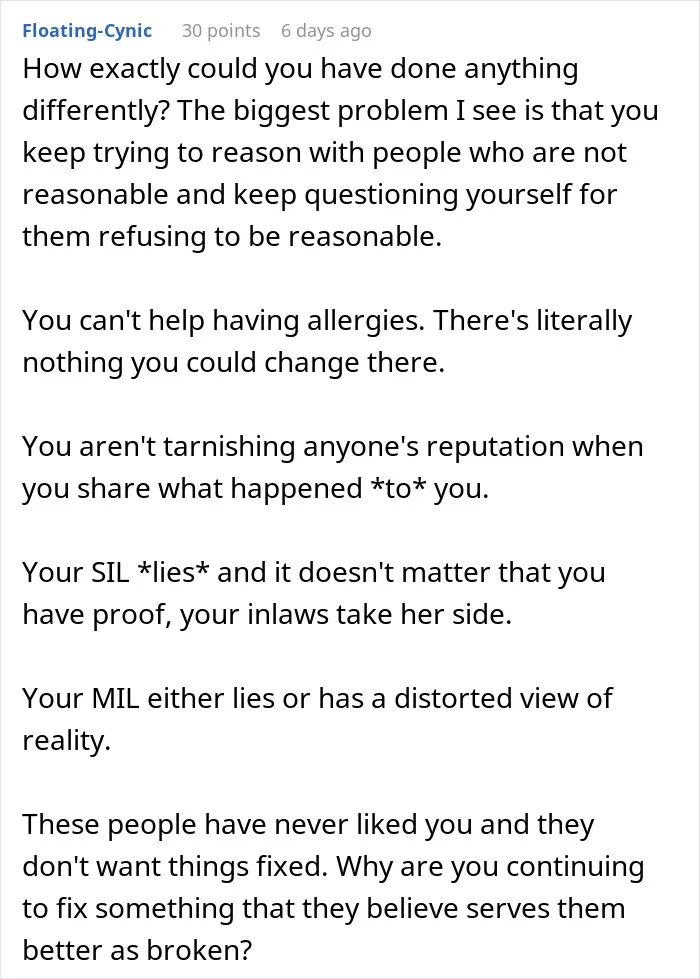
Many readers wondered why the woman wanted to repair the relationship, arguing that cutting contact with her in-laws would be the best option