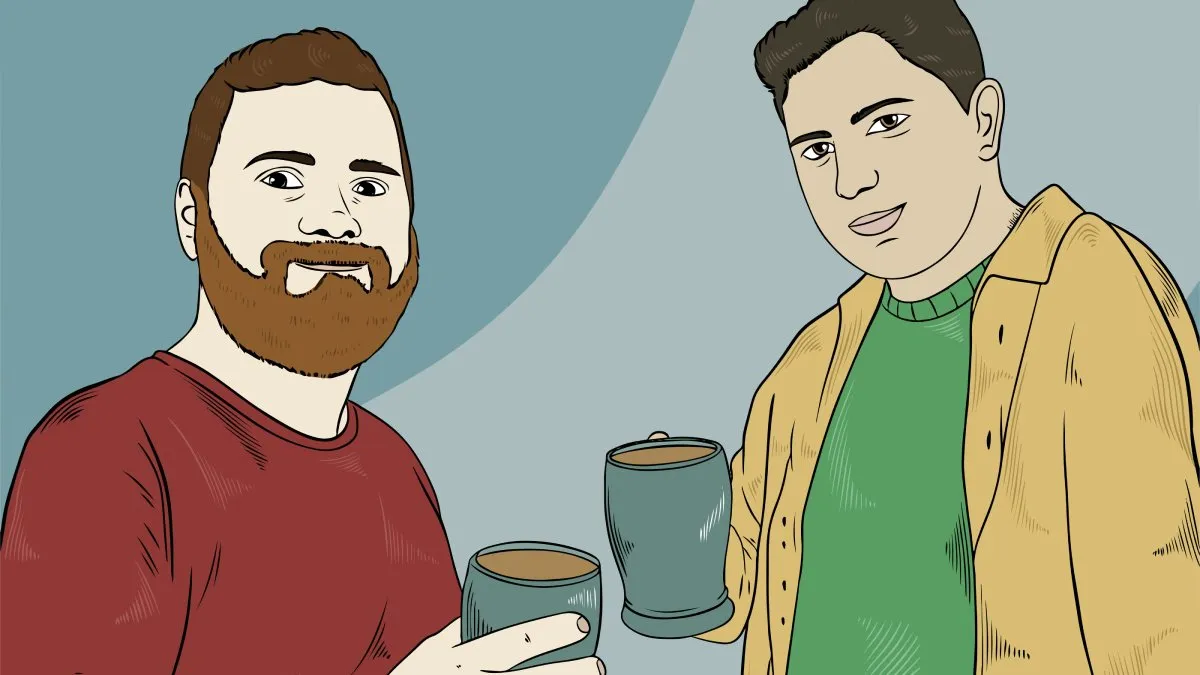
Dr. Ben Garrett has a question he puts to the men in their forties who come to his counselling practice: who would you call if you were having a bad night? Most can list plenty of acquaintances. Very few can give him a name. I could answer it once. Now I can name several friends I have lost. Some friendships faded as life pulled us in different directions. Others ended with a harder break and no clear way back. A few people who once felt like permanent fixtures became little more than memories. That is not only my experience. The largest analysis ever done on how social networks change with age found that they grow through young adulthood and then shrink, and that one kind of network shrinks first. It is the one men are worst at rebuilding. I asked four people who work with men, relationships and grief why this happens and whether it can be reversed. They agreed on the mechanism, which has a short name and nothing to do with men being bad at feelings. They also agreed on where midlife friendships are quietly forming again, and it is not where anyone over forty would expect. Sara Oliveira / Unsplash When we are young, friendships tend to form naturally. School puts us with the same people each day, sports give us something to do together, and early jobs create another group we see almost as much as our families. We do not need to plan for friendship; we just keep showing up in the same places, with the same people, and bonding is easy. Jarie Bolander, author of The Male Friendship Experience and a contributor to Psychology Today, says that men often depend on these repeated situations. “Men make and keep friends side-by-side instead of face-to-face”. Shared activities help build trust, which later makes it easier for people to talk about personal things. Doing something together brings people together, and the conversations that happen during those times help the friendship grow. Dr. Ben Garrett, a counsellor at Vedder Counselling, notices the same pattern in his work with adults. School, sports, and early jobs used to bring men together regularly, but those situations eventually go away. By the time people reach midlife, work and family often take up the time that used to let friendships form naturally. The numbers tell a similar story. There is a major analysis of 277 studies with 177,635 participants that found that people’s social networks get bigger during young adulthood, then shrink later on. Friendship networks, in particular, tend to get smaller as people get older. The researchers also found that big life changes, like starting a job, becoming a parent, or losing a spouse, can change these networks. This does not mean everyone ends up with no friends by midlife. Instead, something more subtle happens. The routines that used to keep friendships going start to fade. A friend you saw every day at school might become someone you have to text. A teammate might become someone you need to invite to see. A coworker might leave the company, move away, or just get too busy to meet outside of work. Now, keeping the relationship going on takes effort instead of just seeing each other regularly. This might be why the problem often surprises people. No one suddenly decides to stop having friends. Instead, those regular meetings fade away little by little, and adult responsibilities take their place. When friendship is no longer automatic, someone has to make time for it, but midlife usually does not offer that time easily. Faruk Tokluoğlu / Pexels Losing the places where friendships happen naturally is only half the problem. The rest comes from what fills up our schedules after those places are gone. Work becomes more demanding, children need care, partners want time together, and daily tasks keep adding up. Even if friendship still matters, it can be much harder to fit into a regular week. Dr. Garrett sees this pattern in his practice. Men in their 40s might have many acquaintances, but often cannot name someone they would call if they were having a tough night. He says the issue is not always a lack of desire for friends. Instead, work and family take up the time that friendships need to develop. Linda Whiteside, LPCC, a primary therapist at NuView Treatment Center who works with many men in their 50s on mental health, addiction, and aging, makes a similar point. Building and keeping friendships takes time, effort, and openness, and these are often used up by family and work. For some men, money worries make it even harder, since free time becomes something they cannot easily afford. Studies show that friendship takes more than just good intentions. It’s called the Differential Investment of Resources model, and it states that time and energy are the main things people put into building and keeping social connections. The research also notes that work and raising children in midlife can limit how much time and energy people have for friends outside those responsibilities. This leads to a frustrating cycle. When two friends see each other less often, each meeting takes more effort. A weekly game turns into a monthly dinner, and then the dinner becomes just a message saying, “We should catch up sometime.” Neither person chose to end the friendship. They just stopped having the small, regular moments that used to keep it going. This is where midlife shows the difference between having friends and keeping up with friendships. Someone can care a lot about people they rarely see and still lose contact. In the end, it is much easier to put off a friendly catch up than a work meeting, a deadline, or a family responsibility. lan Taylor / Unsplash There is an uncomfortable contradiction in the way we talk about men today. We tell them to communicate, be emotionally available and talk about what they are going through. Yet many men still grow up learning that self-reliance is safer than admitting they need someone. That lesson can follow them into friendships long after the playground and schoolyard have disappeared. Blythe Landry, LCSW, M.Ed., founder of Grief To Purpose and a grief educator and therapist, sees that contradiction in her work. “We say collectively that we want men to be sensitive and emotionally available, but in many, many environments that is not truly welcomed”, she told us. Men often hear that being open is important, but they also see that acting tough and hiding their feelings is more accepted. This is important because real friendship is about more than just having things in common. You might watch sports, work together, or play games for years without ever sharing your struggles. Friendships grow deeper when someone is willing to say, “I’m having a hard time,” and trusts their friend to listen without judging. As Bolander writes, traditional ideas about masculinity can make it feel risky for men to be emotionally open, even though society now encourages them to “open up.” For many men, showing vulnerability only feels okay in rare situations. However, we do need friendships, since they can help by offering a safer place to be honest and slowly making openness feel less intimidating. Dr. Garrett points out another challenge that comes up even before deeper conversations start. Many adults feel embarrassed about trying to make new friends. It often seems simpler to convince yourself you do not need anyone new than to reach out and risk finding out the other person does not feel the same. As Garrett says, “We’re too darn embarrassed to give friendship a try.” This embarrassment can be even harder in midlife, when the usual ways to meet people are gone. Someone has to take the first step. If reaching out feels like admitting to loneliness or vulnerability, it is often easier to stick with casual acquaintances than to risk forming a closer bond. Men may not stop wanting friendship, but they might become less willing to show how much they want it. Onur / Pexels When friendship starts slipping down the list of priorities, it might feel natural to lean on the relationships that are still close. A partner is at home, family gives a sense of belonging, and coworkers take up much of your time. But each of these relationships has its own role. Just being surrounded by people is not the same as having friends you choose simply because you like spending time with them. Jarie Bolander says it clearly: a romantic partner cannot take on every emotional burden. Men need friends who help them feel “connected, seen, heard by similar others.” This does not make a partner less important. It just means that no single relationship can give all the support someone might need as an adult. Likewise, Linda Whiteside also sees friendship as a source of belonging outside family and work. This difference is important in midlife, when jobs can change, children grow up and leave, and relationships sometimes end. If a man’s whole social life depends on just one role, he might suddenly find that role is no longer there. Divorce can make the loss of social connections stand out. Blythe Landry notes that some men form their social circles through their wives or partners. They often become close to the same friends and family, but after a divorce, those ties may fade along with the relationship. So, what seems like a breakup between two people can actually take away a whole social network from one person. In other words, being partnered does not eliminate the need for close friendships. The APA’s discussion of adulthood’s “rush hour” highlights how careers, children, family responsibilities and other demands can squeeze the time people have for their social lives. A partner may become the person someone sees most often, but that does not make every other friendship unnecessary. That makes the loss of friendship more consequential than simply having fewer people to call on Saturday night. A partner, family member, coworker, and friend might all care about someone, but each plays a different role in life. If most of a man’s social life centers on one relationship, a breakup, divorce, or big life change can leave a much bigger gap than expected. TED If men often build friendships side by side, then gaming stands out as a place where that kind of connection still happens, and it’s one I know from the inside. You don’t have to sit down for a deep talk with someone you don’t know. Instead, you play together, solve problems, compete, share a laugh, and if you keep coming back, you slowly get to know each other. And there is a good reason those relationships can grow. Researchers have found that gaming communities often lead to positive social outcomes, such as friendship, better social skills, and stronger social ties. Shared goals, teamwork, and regular interaction are some of the key factors that help these connections grow. Simply put, games give people a way to spend time together, and seeing each other often can help friendships form. I have experienced this myself. I do not go out often, but gaming has helped me meet people from places I might never have known. Some stayed as gaming friends, while others became colleagues or people I could talk to when I needed someone to listen. The game was what brought us together at first, but the friendship often grew beyond the game. This happens when people consistently show up for one another. Familiarity and social proximity within gaming communities helps in building stronger online connections, and it’s also associated with social support outside the game. The more people interact and let their relationships grow beyond just playing, the stronger those connections become. Of course, gaming does not always lead to close friendships. Someone might spend hundreds of hours playing online and still never form a real connection with another player. Quick matches, only competing, or being in groups that encourage hostility can make the experience very different. What really matters is not the screen, but the regular social contact that comes from sharing an activity. This is the same reason sports teams, school hallways, and workplaces have always helped people make friends. This brings us back to the idea of missing social spaces. Men don’t really need to rebuild the same social lives they had as teenagers or young adults. Instead, they may need new places where friendships can form naturally, without having to share deep feelings right away. Gaming is one example, but the bigger point is that when people have a reason to keep meeting up, it gives friendship a place to begin. Maybe the point isn’t that men have stopped needing friends, but that adulthood has stopped making friendship easy. And if we want men to stay connected, we may need to build and look for new spaces where friendship can happen naturally again.