



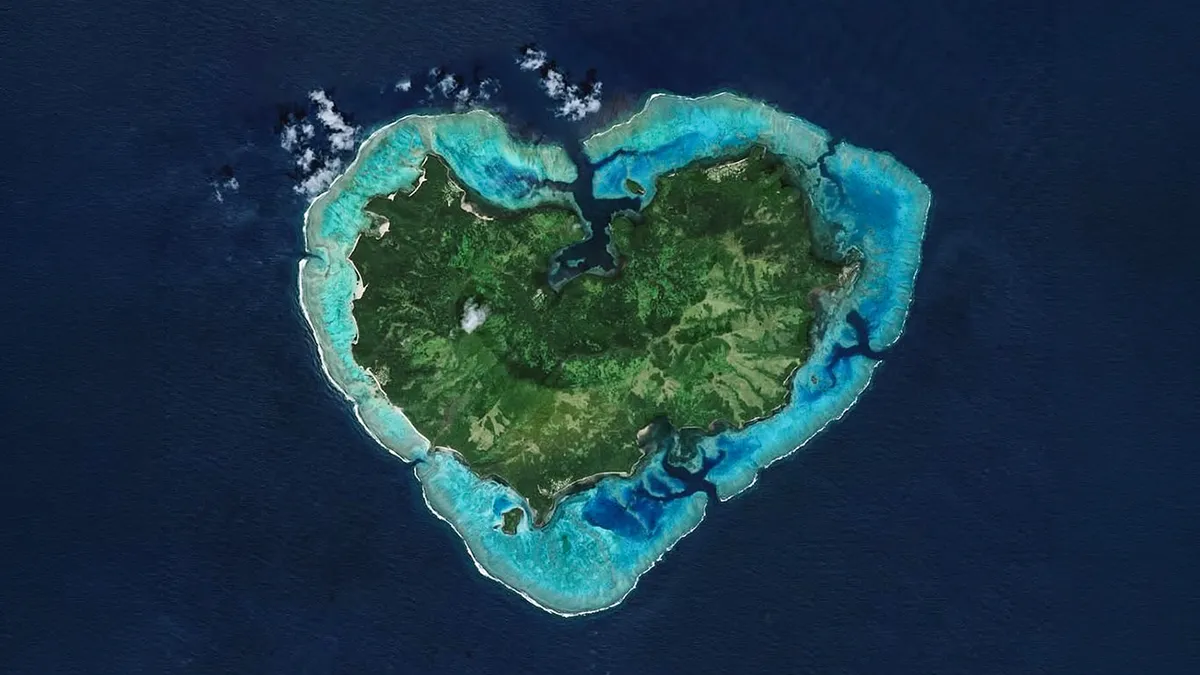

Astronauts have a name for the feeling that hits them when they see Earth from space for the first time: the overview effect. The term was coined by writer Frank White in 1987 and describes a sudden rush of awe at how fragile and connected the planet looks from above. There are no borders, just swirling clouds, glowing oceans and landscapes painted in colors you’d never notice from the ground. Most of us will never leave the atmosphere, but thanks to the satellites circling overhead, we can get a pretty good taste of that view.
The Instagram page Galaxies regularly shares these breathtaking perspectives, and its feed reads like a gallery of Earth’s most astonishing corners. A desert in Africa stares back like a giant eye. A volcano in New Zealand sits inside a forest so perfectly round it looks drawn with a compass. A Pacific island is shaped like a heart, a Nevada lake swirls like spilled paint, and a weather satellite catches the Moon peeking over Earth’s horizon. Some scenes look so surreal they could pass for another planet entirely.
We’ve gathered some of the most striking images from the page, along with the fascinating stories behind them, from ancient pyramids and Ice Age lakes to restless volcanoes that are still reshaping the map. Scroll down for a fresh look at the world we call home, and tell us which view made your jaw drop.
More info: Instagram
#21 Sandstorm Over The Persian Gulf
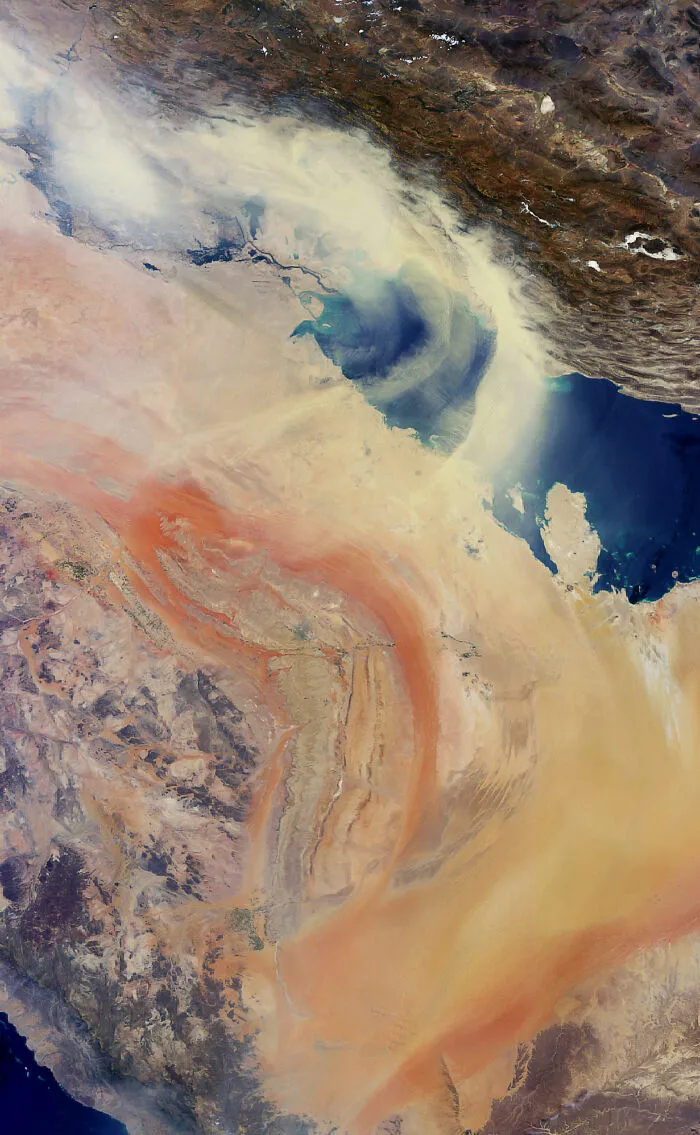
A huge wall of sand and dust sweeps across the Middle East, carried from the deserts of Iraq and Saudi Arabia toward the Persian Gulf and Iran. Storms like this are often driven by the shamal, a strong northwesterly wind that can blow for days, especially in early summer. In the worst storms, visibility drops to just a few hundred yards, which can shut down airports and ports. The rivers and marshes of Iraq are visible at the top left, Iran’s mountains at the top, and the Qatar peninsula on the right.
Report
3points
#22 Mount Fuji, Japan
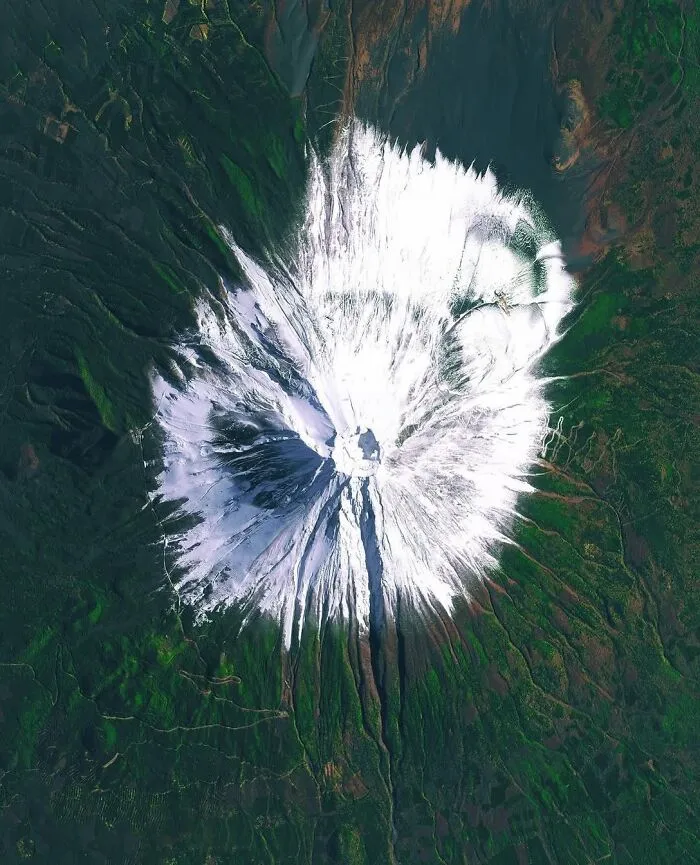
At 12,388 feet (3,776 m), Fuji is Japan’s tallest peak, and from above its snowcap looks like a white starburst around the summit crater. It’s still an active volcano, although it hasn’t erupted since 1707. Sacred for centuries and the subject of countless artworks, including Hokusai’s famous prints, it became a UNESCO World Heritage Site in 2013.
Report
3points
#23 Venice, Italy
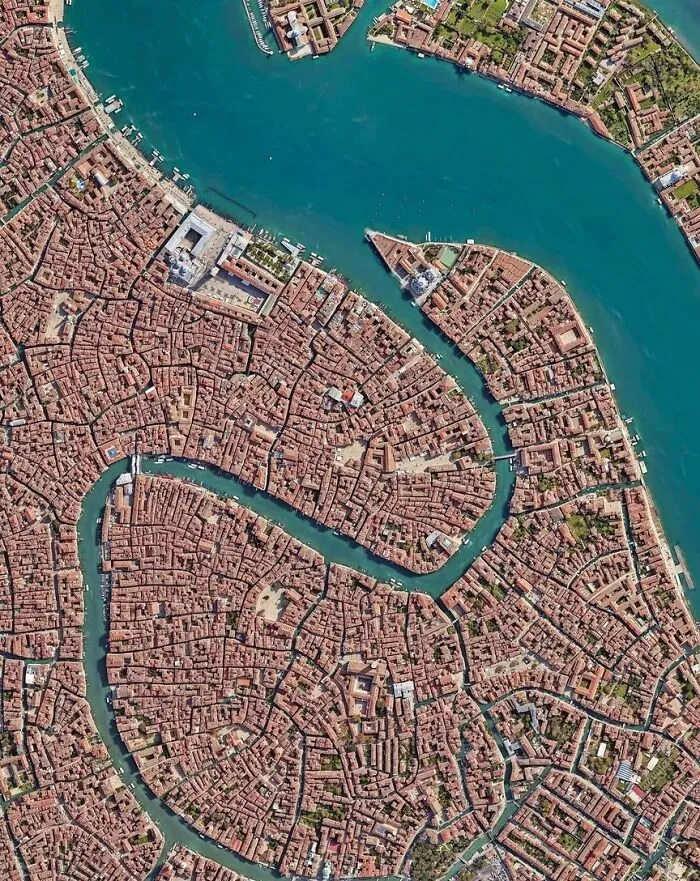
The Grand Canal snakes through the city in a reverse “S,” about 2.4 miles (3.8 km) long. Venice is built on 118 small islands linked by more than 400 bridges, and much of it rests on millions of wooden piles driven into the mud of the lagoon. Look closely and you’ll spot St. Mark’s Square at the top left and the domed Santa Maria della Salute church at the tip across the water.
Report
3points

