


#1
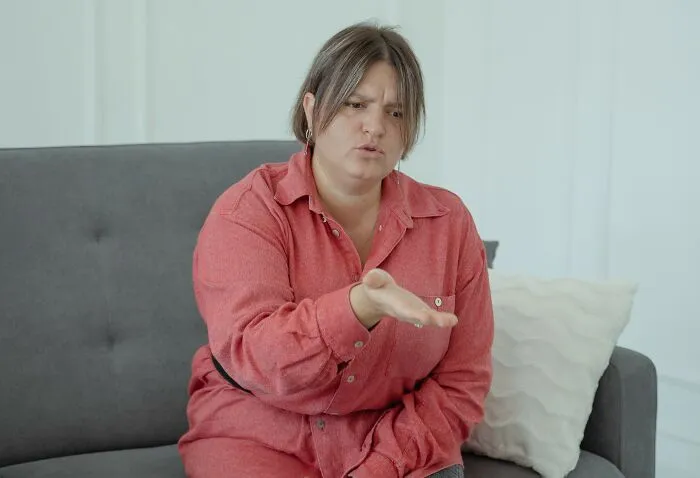
No. You did the dishes because you’re an adult who Iives here and eats food.
Also, please stop announcing it like I’m supposed to throw confetti and cheer.
#2

“Soccer” vs. “Women”s Soccer”.
Asking women what they use for birth control, but not asking men. Medical records not even having a place to document what men do for their part in contraception. It doesn’t even occur to people that men can (and should) play a role in pregnancy prevention.
#3

Microaggressions are exactly what they sound like, micro. Not the big, obvious stuff that everyone can agree is a problem, but the small, everyday moments that individually seem almost too minor to mention and collectively make you feel like you are losing your mind. The term was coined by psychiatrist Chester Pierce in the 1970s and later expanded by psychologist Derald Wing Sue, who defined them as the commonplace verbal and behavioral indignities that communicate something negative, whether the person delivering them meant to or not.
That last part is the one that tends to derail every conversation about this topic, because intention and impact are not the same thing, and the woman who just got asked if she is sure she understands how the software works does not feel better about it because the guy asking probably meant well. The message landed all the same, and the damage is the same regardless.
#4

#5

#6
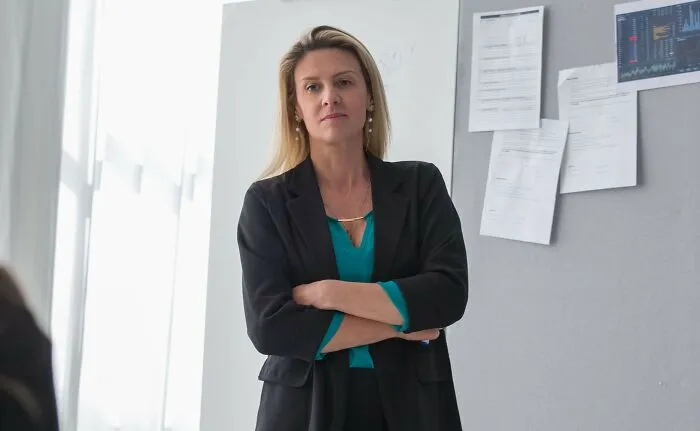
Mansplaining has been happening for centuries, but it got its name in 2008 when Rebecca Solnit wrote an essay called 'Men Explain Things to Me', describing the experience of a man at a party confidently explaining her own book to her without knowing she had written it. The essay went viral because every woman who read it immediately thought of seventeen personal examples.
Research confirmed what women already knew from lived experience: a 2014 study from George Washington University found that men interrupted women 33% more in mixed-gender conversations and were more likely to interrupt women than women were to interrupt men. The interruption is rarely aggressive but it is relentless, and that is the most exhausting part.
#7

#8

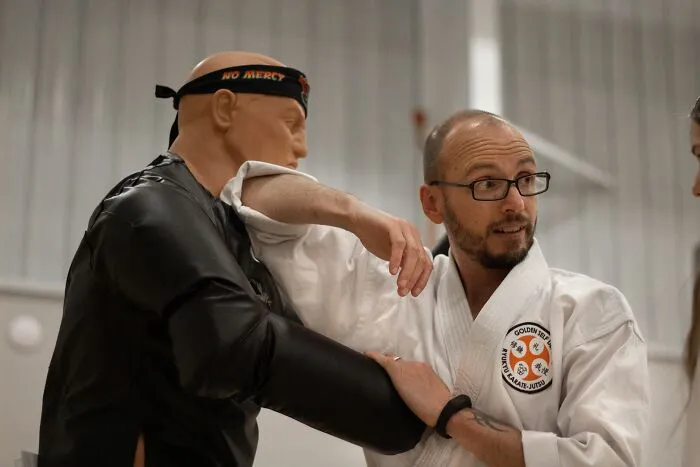
I’m a martial arts instructor. Had a guy in class recently struggling with a drill and taking out his frustrations on another dude by telling him he hit “like a little girl”.
I told him in no uncertain terms that was unacceptable. Then I stepped in to work with him and show him how hard a girl hits. He left class bruised but wiser, and most importantly quieter.
#9

The professional credibility gap is another common issue that a Yale study gave some validity to. They sent identical CVs to faculty across American universities with one variable: the name at the top. The female-named applications were rated as less competent, less hireable, and deserving of a lower starting salary than the male-named ones.
Same CV. Different name. Different outcome. Both male and female faculty rated them this way, which might be the worst part of it all. Women in professional settings who feel like they are constantly having to prove something their male colleagues are simply assumed to have are not imagining it. Yale confirmed it.
#10

#11
#12
Arlie Hochschild coined the term 'emotional labour' in 1983 to describe the work of managing your feelings as part of a job, originally applied to flight attendants trained to stay pleasant no matter what was happening around them. The concept has since expanded to cover something women have been doing for free in every area of their lives for way longer.
In professional settings, it looks like softening bad news so nobody feels bad, mediating conflicts nobody asked you to mediate, and remembering every colleague's birthday while also doing your actual job. At home it looks like being the person who notices when the toilet paper is running low, tracks the family calendar, and senses that something is wrong before anyone has said a word. It is work. It just does not get called that, which is rather convenient for everyone who benefits from it.
#13

#14

If I say the sky is blue a man will pop up from six towns over to bicker about it. It's weird as hell and y'all need to stop.
When you look at the numbers, it is simply too alarming to mansplain away. According to the McKinsey Women in the Workplace Report, 55% of women report experiencing at least one competence-based microaggression at work, and research by the Integrating Women Leaders Foundation puts the broader figure at 65% experiencing subtle or indirect discrimination on the job, making women up to three times more likely to encounter it than men.
In male-dominated or highly competitive fields, those numbers climb to between 72% and 85%, which at that point makes it an integrated part of the job description. It's just not one you will see openly advertised n LinkedIn.
#16
#18
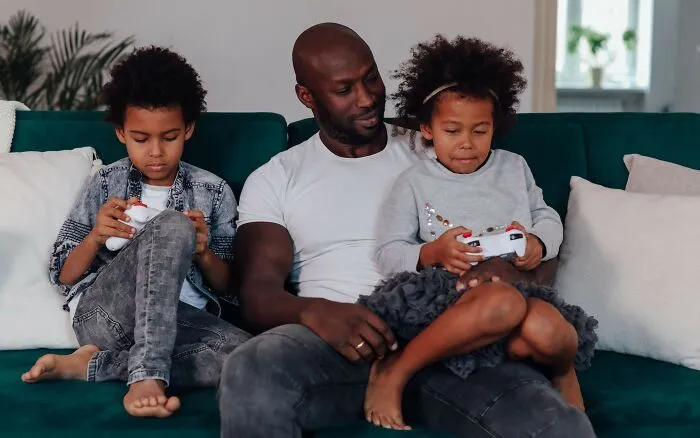
And although this kind of behavior can be seen in every industry, women in medicine are particularly targeted. Among female resident and attending physicians, 84.6% reported experiencing gender-based microaggressions, and 72% of women applying for residency programs reported encountering them during interviews, compared to 30% of men going through the exact same process.
These are not entry-level industries full of people still figuring out professional norms. These are highly trained specialists in rooms full of other highly trained specialists, and it is still happening at that rate, which tells you something about how little the level of the room changes the dynamic.
#19
#20