







Most days, our bodies are just there—mundane vessels we inhabit on autopilot. We wake up, get on with our routines, eat, sleep, repeat. But the moment you actually stop and think about what’s happening beneath your skin? It gets weird. Fascinatingly, beautifully weird.
That’s exactly what happened when one Redditor asked users to share medical facts that sound completely fake but are actually true. People delivered with some genuinely strange and interesting stuff, and we’ve pulled together the best responses below. Scroll down and see which ones surprise you.
#41

The "need to breathe" you feel when holding you breath is from an overabundance of CO2 in your lungs, not a lack of oxygen. In fact, your body has no way to tell you you're not getting enough oxygen. Hypoxia is a thing, yes, but your ability to think and act is heavily impacted by that point.
tokke:
That's why hyperventilating can be dangerous. It removes to much CO2 from your blood, but doesn't provide enough oxygen to balance out. So after hyperventilating, if you would hold your breath you wouldn't feel the need to breath until it might be to late. One of the dangers if you are freediving.
tokke:
That's why hyperventilating can be dangerous. It removes to much CO2 from your blood, but doesn't provide enough oxygen to balance out. So after hyperventilating, if you would hold your breath you wouldn't feel the need to breath until it might be to late. One of the dangers if you are freediving.
Report
12points
#42
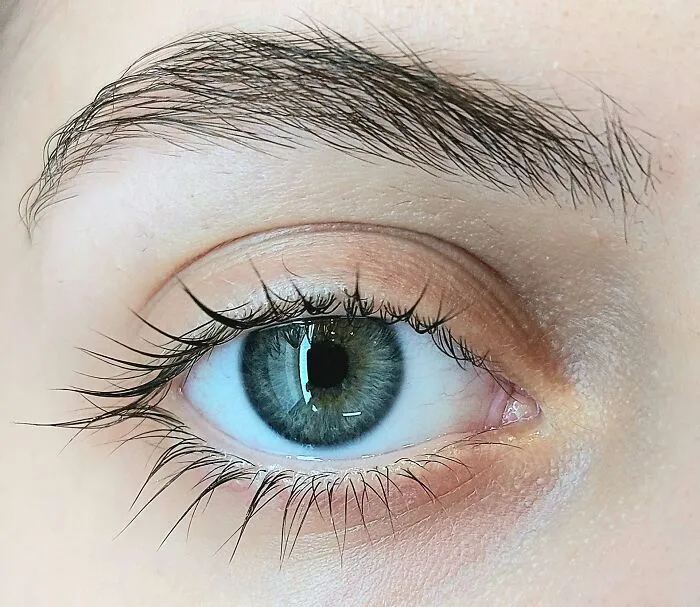
Your lower eye lids have a little visible hole on the inside area that touches the bottom of the eye. This hole drains directly into the sinuses, and is the reason why sometimes when you messy cry your nose runs too.
Report
12points
#43
You can in fact die from literally drinking too much water in a short amount of time. Its called **Hyponatremia or water intoxication.** It usually affects high or extreme performance athletes who are unaware that they've taken in too much during their race (like triathlons etc).
Report
12points
#44
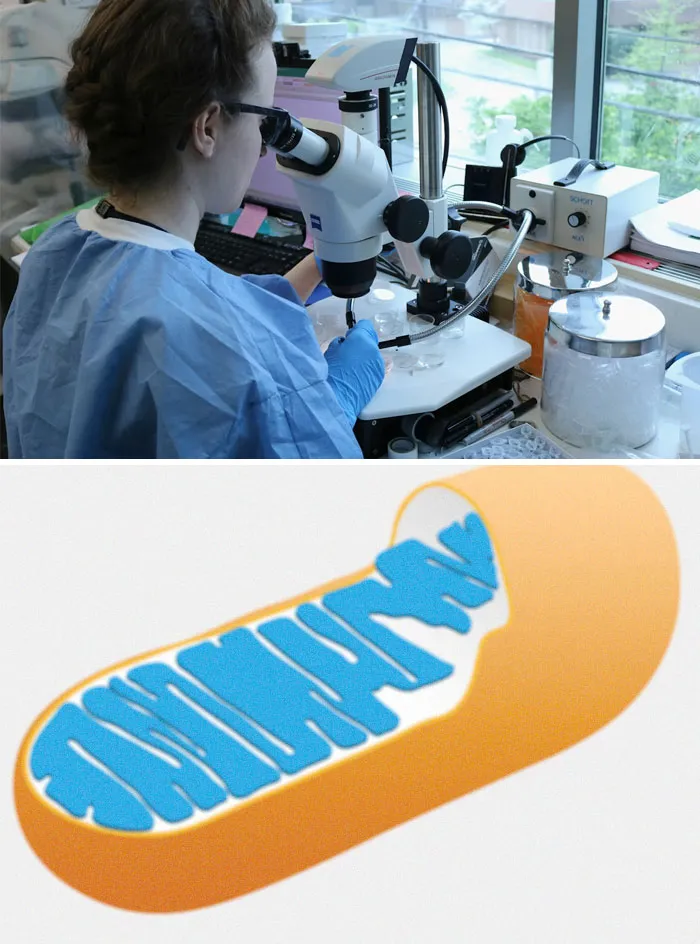
The mitochondria (powerhouse of the cell) are almost certainly other organisms that integrated into our own cells during our evolutionary history, and have their own genome.
megabeano:
And isn't mitochondrial dna only passed down from mothers? So we can trace matrilineal geneology very accurately by looking at that dna instead of what's in your nuclei. It would be very very similar since I assume the only differences would come from mutations.
OP:
Correct; s***m have mitochondria, but very little mitochondrial DNA and what mtDNA it does have is largely degraded after fertilization, meaning that mtDNA is solely inherited from the egg.
mS0hungry:
Is this related to the shrinkage and potential loss of the Y-chromosome?
OP:
Not really. Remember that s***m are roughly 50% X and 50% Y chromosomes, so anything Y-chromosome specific wouldn't be related. Current theory is that because the mitochondria in s***m are specialized to provide movement for the s***m and are relatively unprotected from outside forces, there would be a higher risk of mtDNA damage, and therefore it was evolutionarily advantageous for the s***m's mtDNA to degrade rapidly after fertilization.
megabeano:
And isn't mitochondrial dna only passed down from mothers? So we can trace matrilineal geneology very accurately by looking at that dna instead of what's in your nuclei. It would be very very similar since I assume the only differences would come from mutations.
OP:
Correct; s***m have mitochondria, but very little mitochondrial DNA and what mtDNA it does have is largely degraded after fertilization, meaning that mtDNA is solely inherited from the egg.
mS0hungry:
Is this related to the shrinkage and potential loss of the Y-chromosome?
OP:
Not really. Remember that s***m are roughly 50% X and 50% Y chromosomes, so anything Y-chromosome specific wouldn't be related. Current theory is that because the mitochondria in s***m are specialized to provide movement for the s***m and are relatively unprotected from outside forces, there would be a higher risk of mtDNA damage, and therefore it was evolutionarily advantageous for the s***m's mtDNA to degrade rapidly after fertilization.
Report
11points
#45
Your lung can just up and collapse without warning for no discernable reason. It's called a spontaneous pneumothorax.
Report
11points
#46
No one actually knows how Lithium works as a medication...just that it does something sometimes for some people.
Report
11points
#47
A “Bogota Bag”.
A sterile plastic bag, from leftover medical supplies, can be sewn into human skin to create a temporary “skin” around abdominal wounds.
A sterile plastic bag, from leftover medical supplies, can be sewn into human skin to create a temporary “skin” around abdominal wounds.
Report
9points
#48
EMDR. The fact that moving your eyes side to side a few times can reset me after a traumatic incident feels like a cheat code.
Report
9points
#49
You're somewhere between 3-7% virus DNA.
No, not 7% of your mass is virus, but your living bodily DNA is that of a virus.
No, not 7% of your mass is virus, but your living bodily DNA is that of a virus.
Report
9points
#52
The brain has no pain receptors, this is how awake brain surgery is possible for certain tumors in very eloquent regions.
Report
8points
#53
In people with auto brewery syndrome the body produces its own alcohol.
Report
7points
#54
You have invisible buttcheek swirls and stripes on your skin. They're called Blaschko Lines. They're believed to be the pathing cells took when they divide and grow into the skin you're in now. Certain skin conditions follow these pathways on you body.
Report
7points
#55
Sitis Inversus is a rare medical condition where your internal organs are entirely mirrored. It presents no issues whatsoever until trying to diagnose something. For example, the telltale sign of appendicitis is pain in the lower right. Someone with sitis Inversus will have their appendix in the lower right, which is usually how it's discovered.
Report
7points
#57
If you apply pressure to your eyeball, it can slow your heart rate. In extreme cases, this can cause the heart to stop (asystole).
The oculocardiac reflex is mediated by the ophthalmic branch of the trigeminal nerve via ciliary ganglia and the vagus nerve.
The oculocardiac reflex is mediated by the ophthalmic branch of the trigeminal nerve via ciliary ganglia and the vagus nerve.
Report
6points
#58
Another one: While moving your eyes, you are blind, and your brain compensates so you don't notice.
It's called saccadic masking and you can easily try it by looking at yourself in the mirror, looking at your eyes back and forth, and it will look like your eyes don't move. To compare with what it actually looks like, ask someone else to look at your eyes in the same way.
Evil bonus: I once convinced my little sister for a brief time that she was a clone and not a real human by exploting this. I told her she could not see her eyes moving in the mirror because they where actually cameras, not real eyes.
It's called saccadic masking and you can easily try it by looking at yourself in the mirror, looking at your eyes back and forth, and it will look like your eyes don't move. To compare with what it actually looks like, ask someone else to look at your eyes in the same way.
Evil bonus: I once convinced my little sister for a brief time that she was a clone and not a real human by exploting this. I told her she could not see her eyes moving in the mirror because they where actually cameras, not real eyes.
Report
5points