

Bored Panda
42 Eye-Opening Winning Images Of The 2024 Mangrove Photography Awards

42 Eye-Opening Winning Images Of The 2024 Mangrove Photography Awards

49
5
For the 10th year in a row, The Mangrove Photography Awards, hosted by the Mangrove Action Project, are spreading awareness about mangroves' importance to various species and to us humans as well.
"Every year, we’re inspired by the incredible submissions, which help raise awareness of the people and wildlife that rely on mangrove forests, the threats they face, and why urgent action is needed to protect them," wrote the organizers on their site.
So today, we would like to present you with this year's winners, runner-ups, and highly commended entries. Hopefully, these photos will inspire you to learn more about mangroves and their importance to our world and maybe even try to help preserve them.
Take a look at the winners of 2023. And here are the People's Choice Awards, where people can vote for their favorite mangrove photo on Instagram.

#21 "Guardians Of The Bay" By Jake Mason, Australia
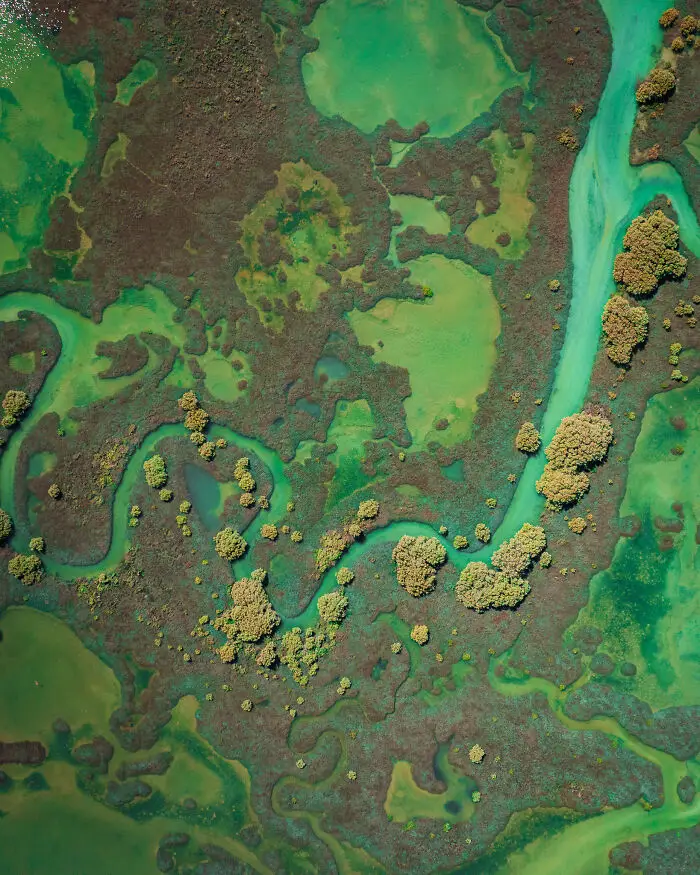
"Guardians Of The Bay" By Jake Mason, Australia
Mangroves and Landscape category, Highly Commended.
A cluster of mangrove trees at the water’s edge guard the coastline, protecting against erosion and providing habitat for countless species.
“During our exploration, these mangroves, positioned at the forefront of Faure Island, stood out as natural defenders against coastal erosion.
“This photograph captures their dense roots and lush foliage at dusk, with the calm seas and fading light creating a tranquil yet powerful scene. The image underscores the importance of these ecosystems in maintaining coastal integrity and supporting marine life.”
12points

#22 "Symbiosis" By Giacomo D'orlando, Indonesia
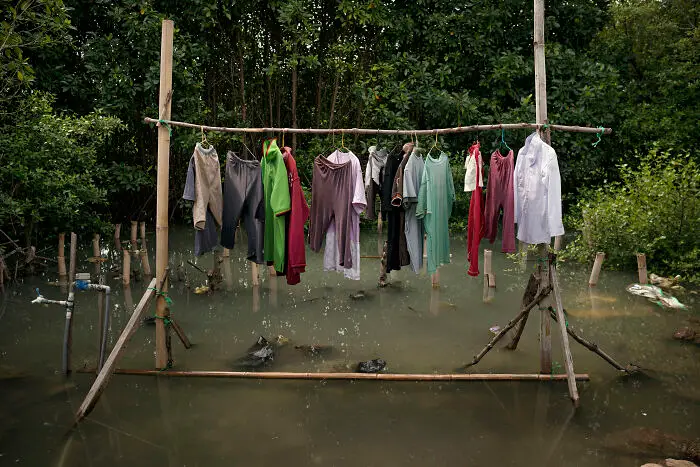
"Symbiosis" By Giacomo D'orlando, Indonesia
Mangroves and Conservation Stories category, Winner.
Giacomo d’Orlando portrays life in one of the most vulnerable places to climate change.
"In Demak Regency, a combination of human induced activities and the increasing pressure brought by climate change are threatening coastal communities. The coastline has been severely eroded, and mangroves that once protected the coast have been cut down and replaced by aquaculture ponds. As a result, the sea is literally swallowing people’s homes.
“Despite the difficult living conditions, most of Demak's residents don't want to move because their income potential is tied to their location near the sea. Over time, though, they have realised that the only solution is to restore the ecosystem by replanting the mangroves that had been cut down.
“A government policy based on mangrove transplantation, together with a reduction in groundwater extraction, could be the only way to ensure a future for the local coastal communities."
12points

As the Mangrove Photography Awards continue to grow, Leo shared his aspirations for the future of this competition:

“I mentioned above we are seeing so many aerial photographs, perhaps that should be a new category next year. We are also about to launch our first People’s Choice Award, a selection of 9 awesome images from this year’s submissions, which will run for one week. Please check it out and vote for your favorite and have a chance to win a signed print. Check it out on our Instagram.

Our bigger aim for the project is that the awards inspires and catalyses conservation and restoration efforts of our mangrove ecosystems. We’re working hard with partners to keep raising awareness of mangroves, but in the end, we want it to directly lead to impact on the ground. So we’re looking to combine the storytelling world with the conservation and restoration world, ensuring the health of mangroves for generations to come.”

#23 "Satellite-Tagged Rewilding Hope" By Upamanyu Chakraborty, India
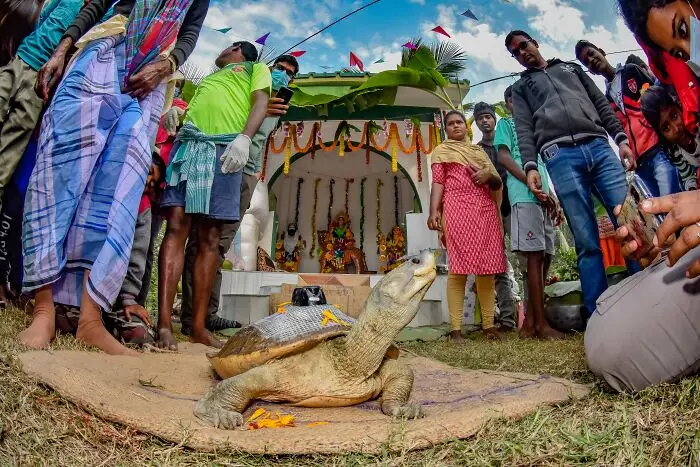
"Satellite-Tagged Rewilding Hope" By Upamanyu Chakraborty, India
Mangroves and People category, Runner Up.
Upamanyu Chakraborty captures a Northern River terrapin (Batagur baska) before release as part of a conservation breeding program and rewilding in the Sundarbans.
“After a possible local extinction from the mangroves of Odisa, the estuaries of the Sundarbans are now the last resort of this brackish water-dwelling four-toed terrapin, thanks to relentless poaching for meat and harvesting eggs.
“However, a conservation breeding program was started in 2012 with a very small existing founder population from a village pond. Presently, this comprehensive program has reached a milestone. With blessings from 'Bonbibi', a deity worshipped by both Hindus and Muslims, who protect them from 'Dakshinray', the incarnation of Bengal Tigers, a successful rewilding program into the natural habitat of some sub-adult individuals with 'Satellite tags' was done in January 2022, along with a robust post-release monitoring program.
“By collecting the inputs from this pilot reintroduction, the hope is to bring back a viable population in the natural habitat of the Sundarbans.”
11points

#24 "Guardians Of The Mangroves" By Olivier Clement, Bahamas
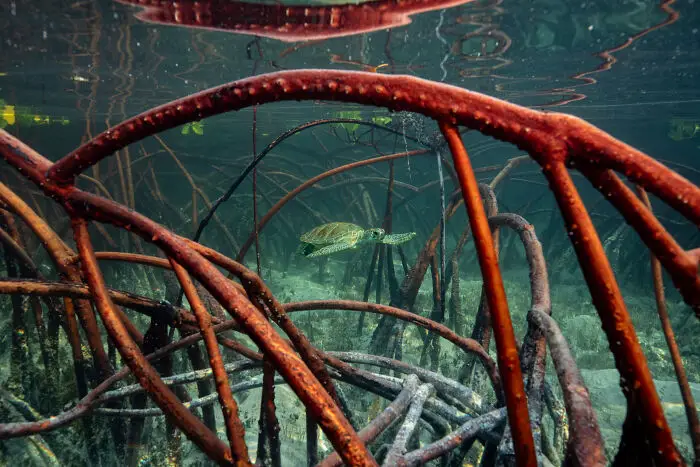
"Guardians Of The Mangroves" By Olivier Clement, Bahamas
Mangroves and Underwater category, Winner.
Olivier Clement offers a glimpse into the intricate world of mangrove roots in the Bahamas. Judge Christian Zielger enjoyed the use of the mangrove roots as a captivating ‘frame’. “It evokes a sense of calm and peace”, he says.
“A turtle gracefully navigates the mangroves’ labyrinthine roots at high tide, seeking refuge for the night. At high tide, the water rises, engulfing the roots and transforming this space into a haven for marine life seeking shelter and safety.
“The turtle's journey is a poignant reminder of the vital role these ecosystems play in sustaining marine biodiversity. As the day fades into dusk, the turtle's search for a safe resting place reflects the delicate balance of life within the mangroves, highlighting the urgent need for conservation to ensure the survival of these invaluable habitats for generations to come.”
11points

Lastly, Leo added: “Just to say come and follow us across social and get involved if you are into photography or the environment.

The Mangrove Photography Awards is brought to you by Mangrove Action Project (MAP), a US-based non-profit whose mission is to empower communities worldwide to conserve, manage, and restore mangrove forests. Through science, training, and environmental education, they provide nature-based solutions for people and our planet.”

#25 "The Fire Within" By Javier Orozco, Mexico
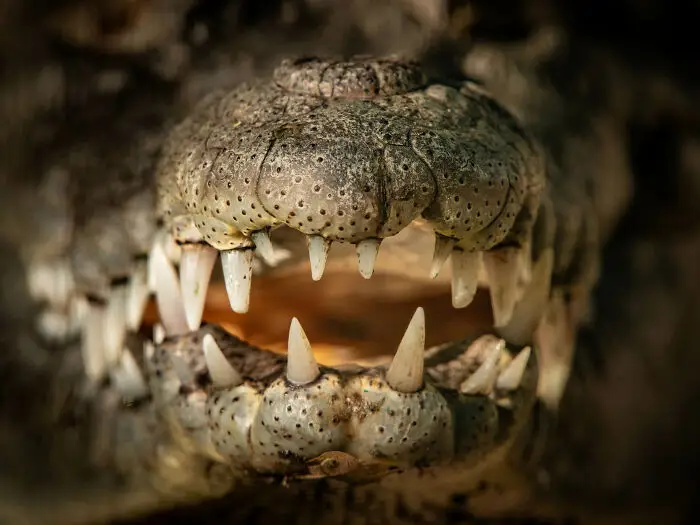
"The Fire Within" By Javier Orozco, Mexico
Mangroves and Wildlife category, Highly Commended.
Javier Orozco comes face to face with a crocodile at El Cora Crocodile Sanctuary in Bucerias in the State of Nayarit, Mexico.
“In the last 40 years, Banderas Bay has lost more than 80% of its wetlands to urban expansion. Crocodiles and other species continue to survive, now surrounded by busy highways, hotels, and condominiums.
“This crocodile sanctuary is a non-profit organization located next to a small lagoon. The surrounding area has been taken over by shopping centers, hotels, and condos and the biggest threat has been the "Flamingos" developers. Corrupt politicians have sold Federal and non-Federal land that has fragmented the remaining wetlands.”
11points

#26 "Mangroves On Tidal Flats" By Stuart Chape, Australia
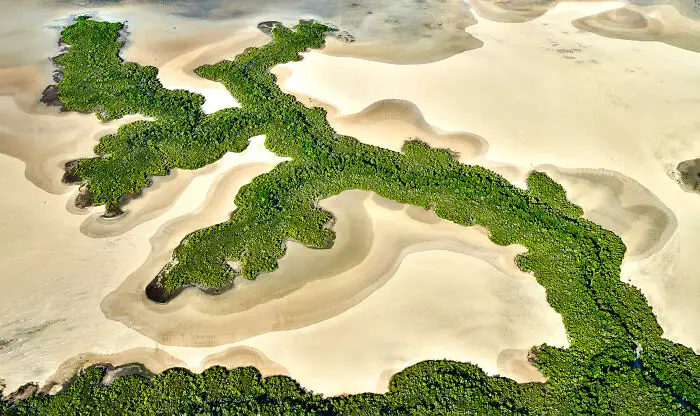
"Mangroves On Tidal Flats" By Stuart Chape, Australia
Mangroves and Landscape category, Highly Commended.
Mangrove forests grow along creek lines on the tidal flats of Kakadu National Park.
Stuart Chape captured this shot from a helicopter in Australia’s Northern Territory. Mangroves are a significant ecosystem in the park’s coastal zone, which is only accessible by boat or air. Here, mangroves not only provide coastal protection but are also high in biodiversity and provide an important resource for Aboriginal people.
10points

#27 "The Last Mangrove" By Roun Ry, Cambodia
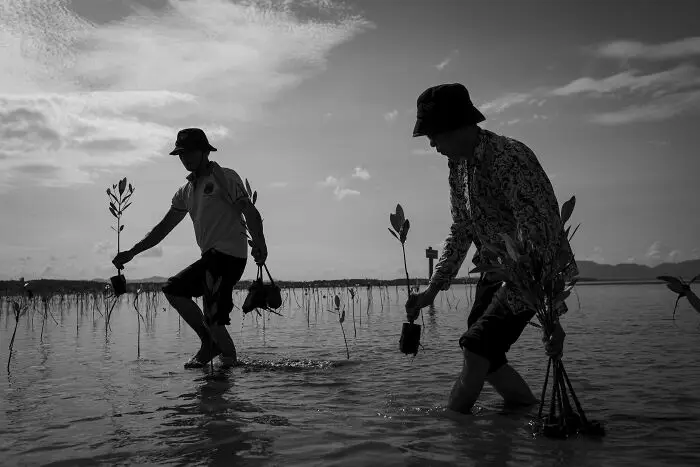
"The Last Mangrove" By Roun Ry, Cambodia
Mangroves and People category, Highly Commended.
Trapeang Sangkae Fishing Community Members help a group of locals to replant mangrove trees in Kampot, Cambodia.
“Bôndy, a private company working in ecosystem restoration, collaborates hand in hand with local communities to restore mangroves.
“The local communities realize that with the cutting of mangrove trees, it is becoming increasingly difficult to fish, catch crabs, or simply protect themselves from climate change and increasingly violent cyclones in these regions. Together, always with a smile and in good spirits, they traverse the mangroves to revive vast stretches of isolated land.”
9points

#28 "Foggy Fusion" By Ammar Alsayed Ahmed, United Arab Emirates
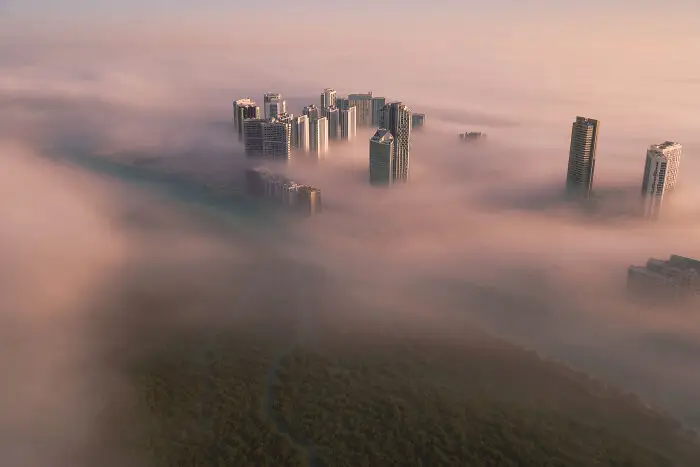
"Foggy Fusion" By Ammar Alsayed Ahmed, United Arab Emirates
Mangroves and Landscape category, Highly Commended.
Ammar Alsayed Ahmed captures a magical moment as dawn fog sweeps over the urban mangroves of Al Reem Island in Abu Dhabi.
The UAE’s coastline features 155 square kilometers of mangrove trees, known locally as Qurm. In the past, local communities heavily relied on qurm as a source of food, fuel, and for building ships and houses.
Across the country’s seven emirates, 13 important mangrove sites nestle along the coastline, including Al Hafiya in Khor Kalba, Sharjah, a Ramsar site of international importance.
9points

#29 "Citrus Serenity" By Olivier Clement, Bahamas
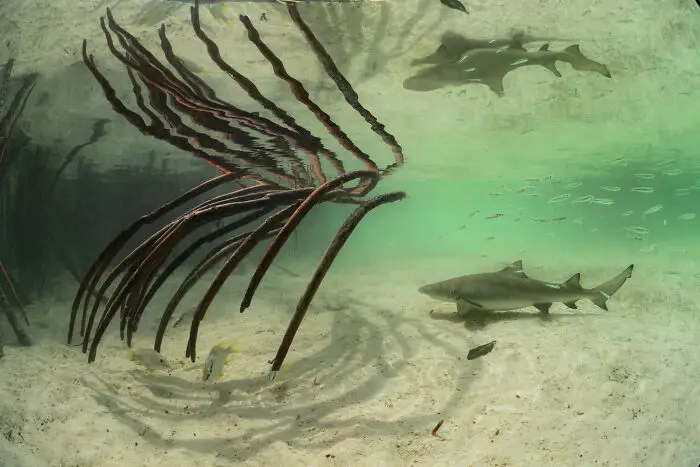
"Citrus Serenity" By Olivier Clement, Bahamas
Mangroves and Underwater category, Highly Commended.
Olivier Clement witnesses the grace of a lemon shark navigating the intricate mangrove maze beneath the Bahamas’ tranquil waters.
"As I waded through the shallow waters, camera in hand, I stumbled upon a breathtaking scene: a lemon shark gracefully gliding through the maze, its sleek form contrasting against the verdant backdrop of the mangroves.
“With every movement, the shark seemed to dance among the roots, a testament to the harmony between predator and habitat. The lemon shark, about a foot long, exuded a sense of tranquillity as it navigated the channels, its presence a reminder of the delicate balance within this thriving ecosystem.
“Capturing this moment was a privilege, a glimpse into the hidden wonders of the natural world and a testament to the importance of preserving such sanctuaries for generations to come."
9points

#30 "Roots And Refuge" By Mark Kevin Badayos, Philippines
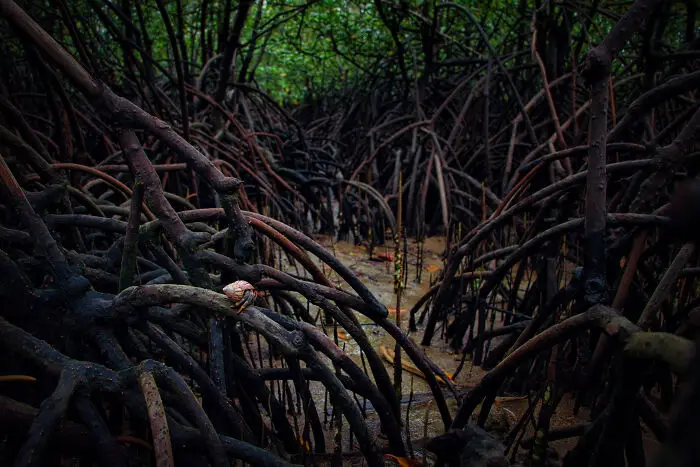
"Roots And Refuge" By Mark Kevin Badayos, Philippines
Mangroves and Landscape category, Highly Commended.
This captivating image illustrates the role of mangrove roots in protecting and stabilizing shorelines. All sorts of diverse marine life are adapted to survive in the coastal habitats.
“Among the intricate roots of the mangroves, a solitary hermit crab stands guard, symbolizing the delicate balance of our coastal ecosystems.”
9points

#31 "Moonlit Shadow" By Wyatt Albert, Bahamas
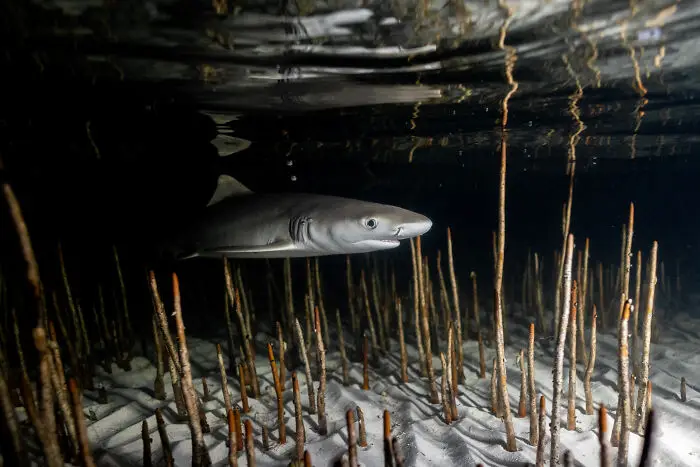
"Moonlit Shadow" By Wyatt Albert, Bahamas
Mangroves and Underwater category, Highly Commended.
Wyatt Albert calmly captures a youngster appearing out of the darkness
“The security of mangroves in the night allows juvenile lemon sharks to swim under their branches to hide their moonlit shadows from lurking predators.
"Exhibiting dilated pupils along with utilising the maze created by Black mangrove (Avicenna germinans) peg roots, they are able to either capture their prey or evade their larger predators in the darkness."
9points

#32 "Sian Kaan’s Orange Carpet" By Santiago Gibert Isern, Mexico
"Sian Kaan’s Orange Carpet" By Santiago Gibert Isern, Mexico
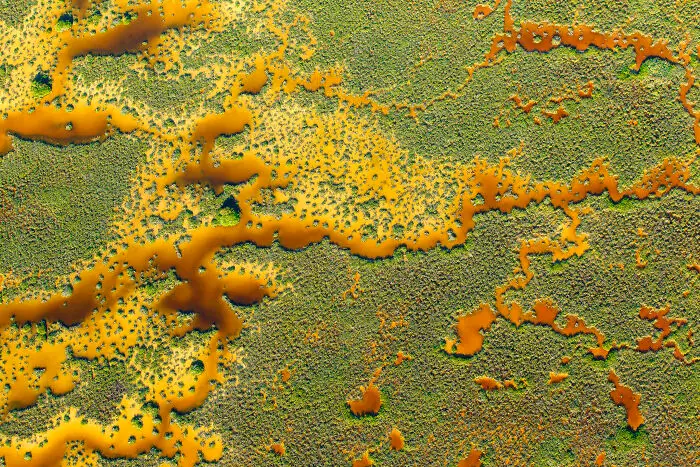
Mangroves and Landscape category, Runner Up.
Santiago Gibert Isern captures the unique patterns of the Sian Ka'an Biosphere Reserve in Quintana Roo in Mexico’s Yucatan Peninsula.
During a series of flights to document the reserve’s conservation status at the beginning of the rainy season, the conservation photographer and storyteller noticed the intense colors below.
“I asked the pilot if we could make some circles over the lagoon to capture one of the most characteristic processes of the mangroves, the decomposition of the dead leaves that dye the water with their tannins and at the same time nourish such an important ecosystem. The result was an artistic impression where two powerful colors are combined: green and orange — the first one represents life in all its splendor and the second one the regeneration of life.”
9points

#33 "Mangrove Walls Broken" By Dipayan Bose, India
"Mangrove Walls Broken" By Dipayan Bose, India
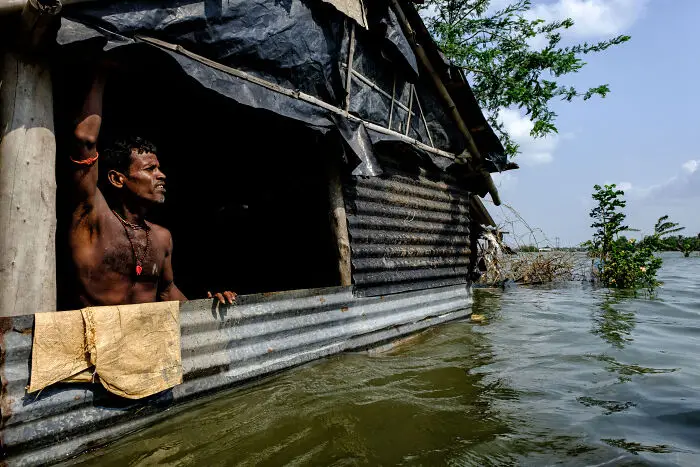
Mangroves and Threats category, Winner.
Dipayan Bose frames a villager standing inside his half-submerged home during a flood.
Due to repeated tropical cyclones and sea level rise in the Bay of Bengal, river embankments have become broken by high tides in coastal villages across the Sundarbans, West Bengal. As a result, homes and farms have flooded, fisheries have become destroyed by seawater, and people have been forced to migrate, victims of climate change.
“This villager has lost all his household belongings in the flood. The cutting down of trees for commercial and domestic use has made the area prone to natural disasters. Storms, heavy rainfall, and floods wreak havoc here. Approximately 3.14mm rise in sea levels every year has taken several islands under the sea. Increased soil erosion and loss of soil quality resulting in reduced crop yield have made situations worse.”
9points

#34 "Nature's Ribbon" By Ammar Alsayed Ahmed, United Arab Emirates
"Nature's Ribbon" By Ammar Alsayed Ahmed, United Arab Emirates
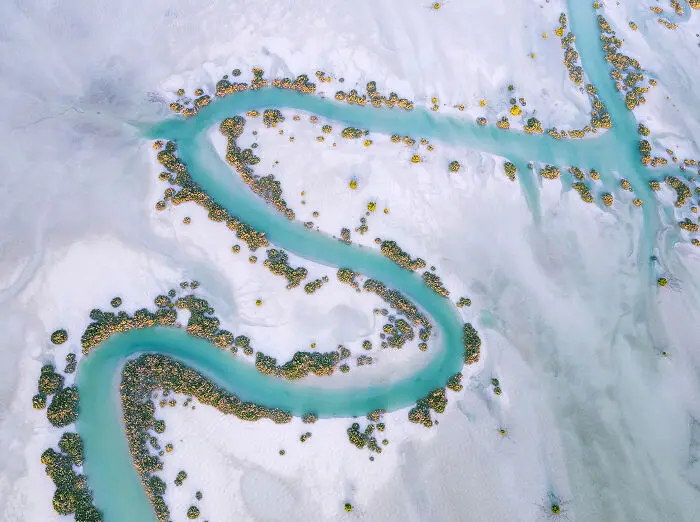
Mangroves and Landscape category, Winner.
In nature's embrace, a sinuous water channel meanders gracefully, flanked by a verdant gallery of mangrove trees lining its edges, in Al Dhafra Region, Abu Dhabi.
“This tranquil scene invites contemplation as the gentle flow of water navigates its course through the heart of the mangrove forest.
“The intertwining roots of the trees form intricate patterns, creating a natural tapestry that harmonises with the fluidity of the water. In this tranquil oasis, the photograph captures the timeless beauty and serenity of a landscape shaped by the delicate dance of water and mangroves.”
9points

#35 "The Hippo And The Yellow Fly" By Nele Holstegge, Gambia
"The Hippo And The Yellow Fly" By Nele Holstegge, Gambia
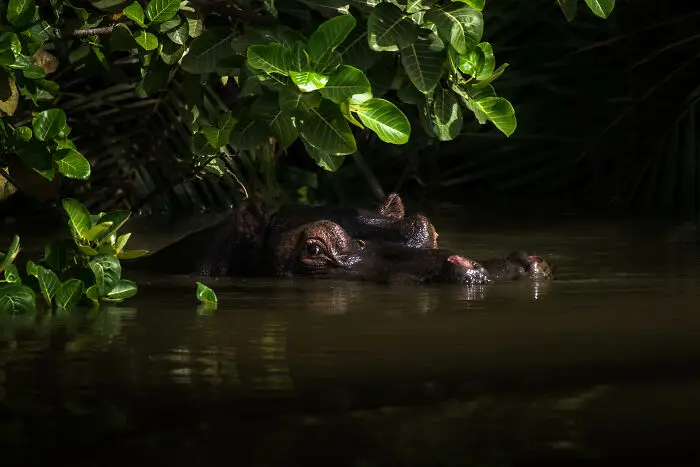
Mangroves and Wildlife category, Highly Commended.
Nele Holstegge captures a hippo peeking out of the water of the river Gambie.
“We were driving past the mangroves that line the shores of the river Gambie looking for chimpanzees when I suddenly saw two big eyes peeking out of the water just 2-3 meters away from the boat.
“I was amazed at how inconspicuous an animal of this size could be, as I had never seen one before. I only recognized the fly next to its eye when I was editing the photo afterwards.”
9points

#36 "Mudskipper In Aurora" By Jayanta Guha, India
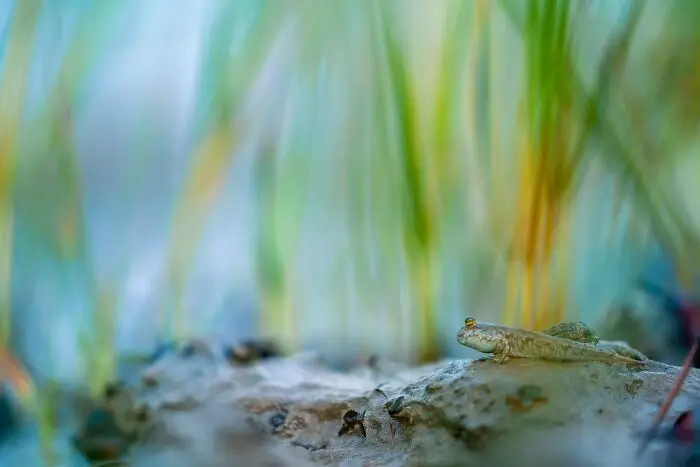
"Mudskipper In Aurora" By Jayanta Guha, India
Mangroves and Wildlife category, Runner Up.
“Jayanta transports us into a dreamlike painting with the mudskipper, among the tall colorful grasses.”, says judge Christian Zielger.
Mudskippers are actually a species of fish found in mangroves and mudflats. Spending most of their time out of the water, they’re adapted to remain on land even after the tide has gone out. They mostly breathe by holding water in their mouth and gill chamber, though staying damp also allows them to breathe through their skin.
Their large eyes make them excellent predators while their pectoral fins act as legs, allowing them to crawl over mud and trees along the mangrove floor.
8points

#37 "Human Hunger" By Star Udyawar, India
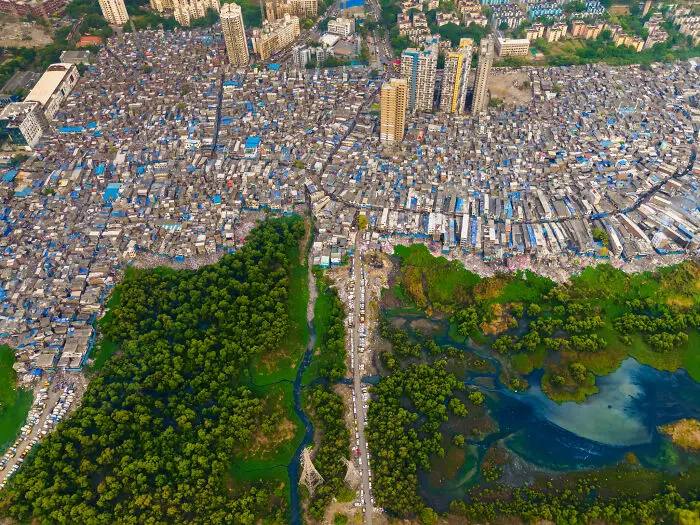
"Human Hunger" By Star Udyawar, India
Mangroves and Threats category, Highly Commended.
Star Udyawar highlights how widespread urban development has encroached on mangrove habitats.
“Towering buildings and cleared land serve as a stark contrast against the delicate and biodiverse mangrove forests. The encroachment represents a profound threat to the environment, as these vital coastal habitats are being rapidly diminished by widespread development and clearing.
“Hundreds of hectares of mangroves are cleared to make room for these industries. But that is not the end of the problem. These industries typically release effluents into the nearby ponds on several occasions, creating an impervious physical and toxic oily layer.”
8points

#38 "Mangrove Coast" By Balazs Fodor, Indonesia
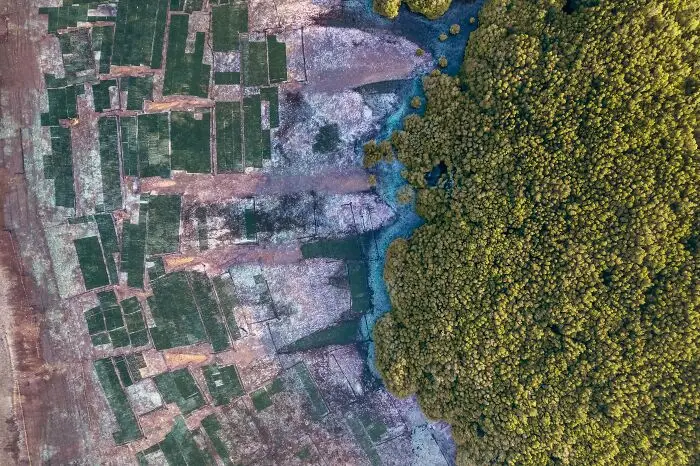
"Mangrove Coast" By Balazs Fodor, Indonesia
Mangroves and Landscape category, Highly Commended.
Balazs Fodor captures an aerial view of seaweed farms along a mangrove coast in Nusa Lembongan, Indonesia.
“Seaweed farming in Nusa Lembongan has been a significant economic activity for local communities for decades. The shallow, nutrient-rich waters of this small island provide an ideal environment for seaweed cultivation.
“In regions like Nusa Lembongan, where mangrove forests fringe the coastline, integrating seaweed farming with mangrove conservation can yield multiple benefits. Seaweed can only thrive in a healthy environment, so seaweed farmers keep beaches and shorelines clean, thereby further enhancing local biodiversity.”
7points

#39 "The Threatened Future Of Mangroves" By Teja Yantrapalli, India
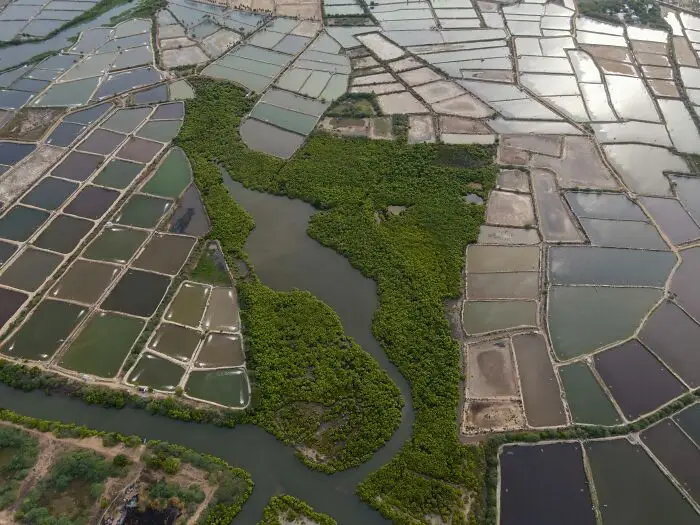
"The Threatened Future Of Mangroves" By Teja Yantrapalli, India
Young Mangrove Photographer of the Year, Runner Up.
Teja Yantrappalli highlights the vast degradation of mangrove forests in India.
“Each plot, a canvas for cultivation, advised a tale of the symbiosis of soil and water. The land, now occupied by fishing ponds, was once covered with thriving mangroves. If this trend persists, the remaining mangroves in the area may soon vanish.
7points

#40 "Love Entangled In Ghost Net" By Daphne Wong, Hong Kong
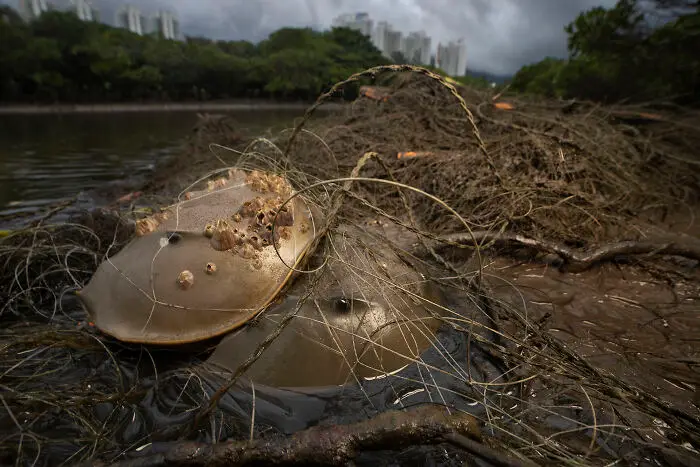
"Love Entangled In Ghost Net" By Daphne Wong, Hong Kong
Mangroves and Threats category, Highly Commended.
On Tung Chung Bay, a pair of adult horseshoe crabs encounter each other.
“The male horseshoe crab tightly grasps onto the back of the female, on a mission of reproduction. They move up the tidal zone with the rising tide, searching for a suitable place to lay their eggs. But when they reach the mangroves, they become entangled in a huge ghost net. If no one rescues them in time, they will eventually die from prolonged exposure.
“This situation is very common in Hong Kong and throughout Asia. Abandoned fishing nets washed ashore become trapped along the high tide line and in mangrove forests, entangling many creatures.
“Horseshoe crabs were once abundant and widespread throughout the waters of Hong Kong, up until the early 1980s. Regarded as ‘living fossils’, they have been around for millions of years and play an important role in our coastal ecology.”
7points
49
5
Hidrėlėy
HidrėlėyApproved Contributor