







It sounds cliché almost every time, but couples could prevent so many fights if they just communicated better, and this story is a perfect reminder of that.
One woman thought her boyfriend was treating her to a romantic getaway at the beach. However, the second they got there, she realized her idea of the trip was very different from his, especially when it came to who was expected to pay, cook, and take care of everything.
So after they got back from their disastrous weekend away, she asked the internet whether she was overreacting or if her boyfriend’s behavior was as selfish as it seemed.
This woman went on a weekend getaway with her boyfriend expecting to split the costs

Image credits: Getty Images / Unsplash (not the actual photo)
But he made her cover every bill and treated her like his personal chef

Image credits: Alexander Grey / Unsplash (not the actual photo)

The woman ended up spending almost all of her money

Image credits: magnific / Magnific (not the actual photo)

And it was clear that the guy knew what he was doing

Image credits: Ketut Subiyanto / Pexels (not the actual photo)



Image credits: Kelli McClintock / Unsplash (not the actual photo)
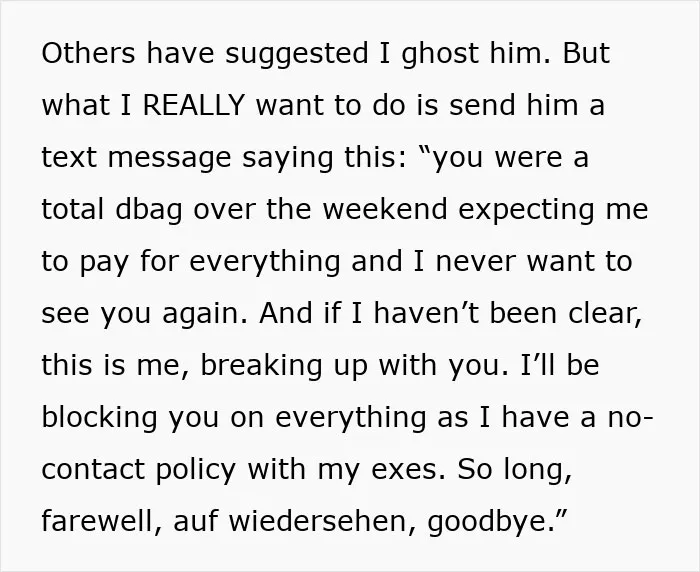

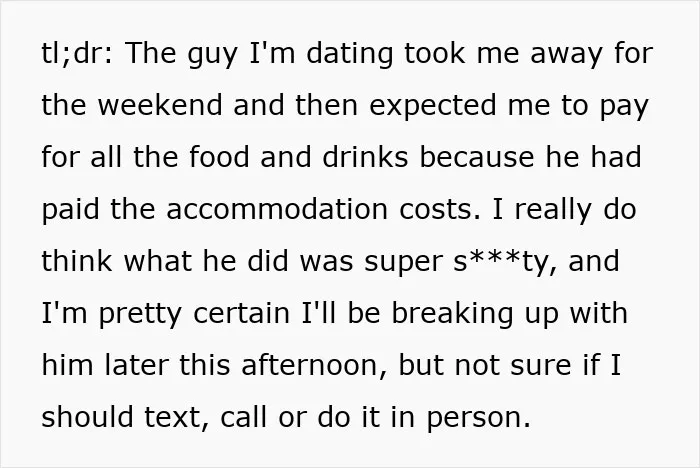
Image credits: anon
The silver lining is that the two of them realized they weren't compatible sooner rather than later
A poll from Ipsos, conducted on behalf of BMO, found that one in three (34%) partnered Americans view money as a source of conflict in their relationships. That figure rises to nearly half (47%) among partnered Americans aged 18 to 24.
More than one-third think their partner spends too much on impulse purchases (37%) or admit they have been untruthful about money (36%), both of which may contribute to these conflicts. Meanwhile, nearly half (49%) of Americans overall admit they often spend more than they know they should.
Younger Americans are also more likely to be dishonest about money with their partner, with 46% of 18- to 24-year-olds and 43% of 25- to 34-year-olds admitting they've been untruthful about finances.
The findings also help explain why four in five (79%) Americans believe finances should be discussed early in a relationship. About one in ten (9%) say the conversation should happen after the first few dates, two in five (39%) once the relationship becomes official, and roughly one in three (31%) when the couple starts planning to live together.
Interestingly, one in six (16%) believe couples should combine their finances as soon as the relationship becomes official, while almost as many (14%) think it's never appropriate to combine finances at all.
So, if nothing else, the Redditor's "boyfriend" probably did her a favor by showing his true colors before the relationship became any more serious.
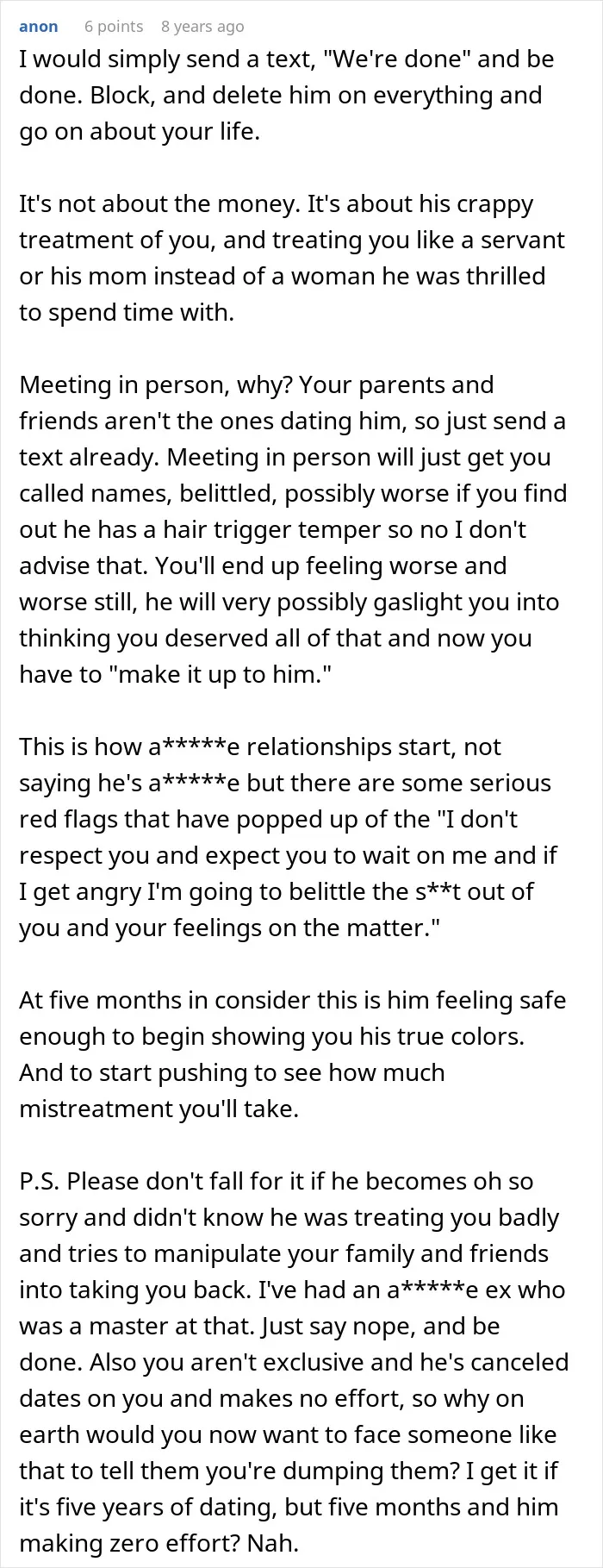
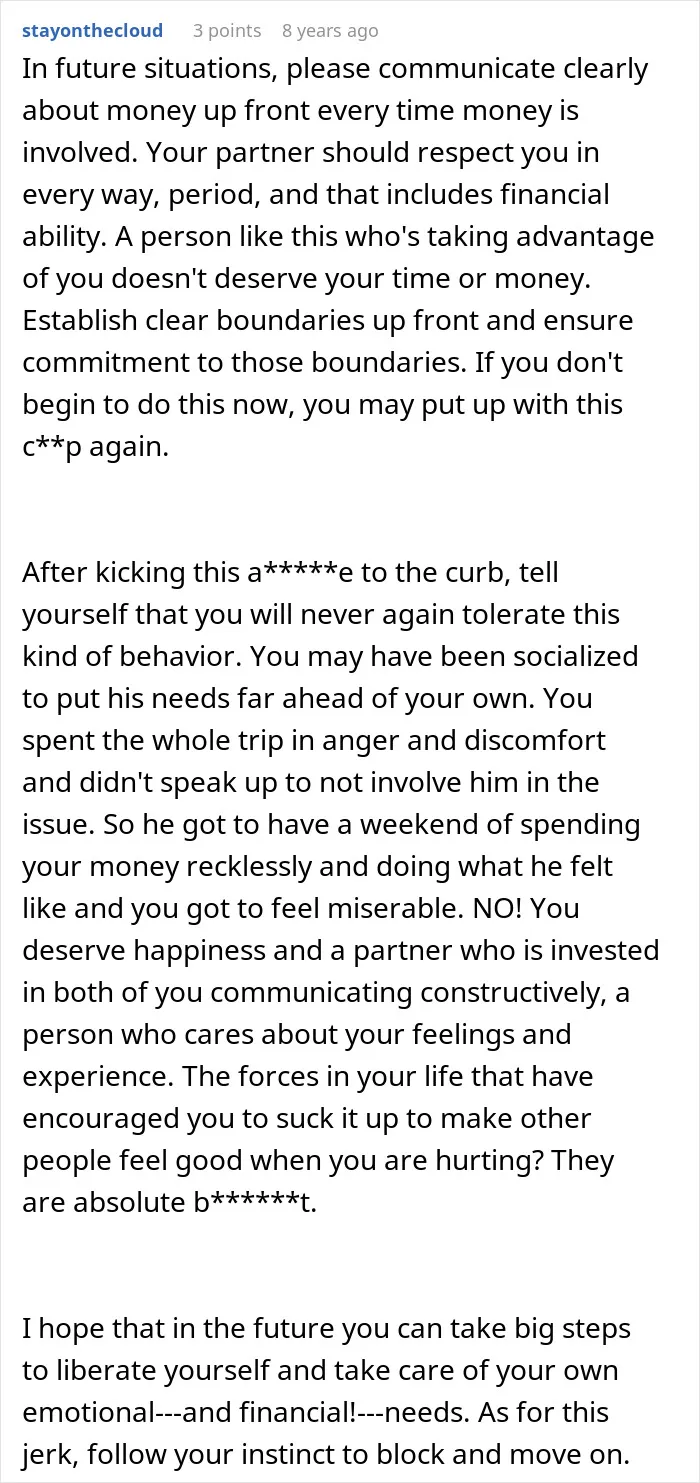
After sharing her story, the woman revealed more information about the guy and their "relationship" in the comments

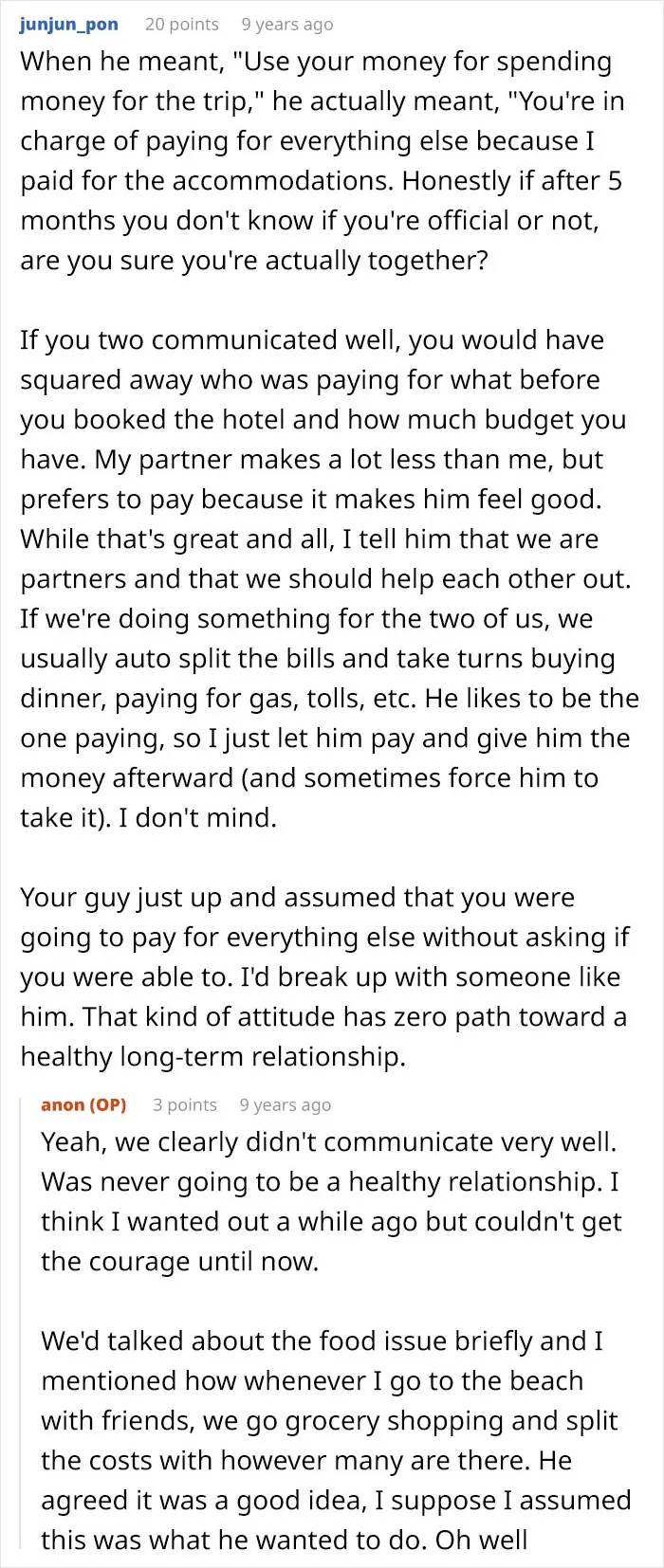
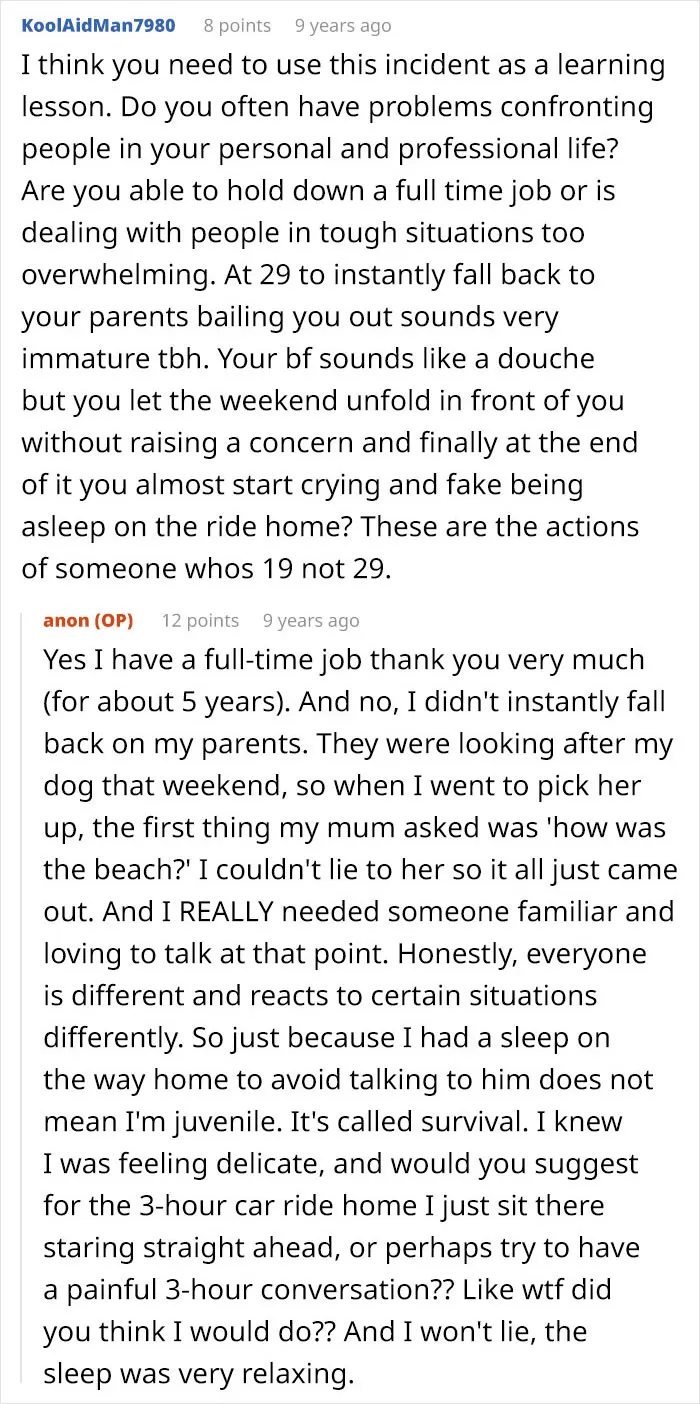

While most people said the guy acted like a jerk, others pointed out that the woman still needed to work on her communication skills






Eventually, the woman returned with an update, revealing that she had ended things with the guy

Image credits: nguyen quan / Unsplash (not the actual photo)
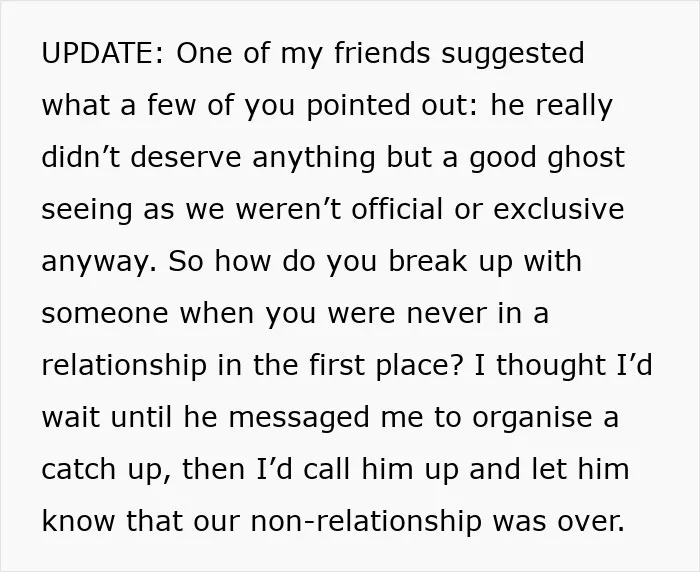
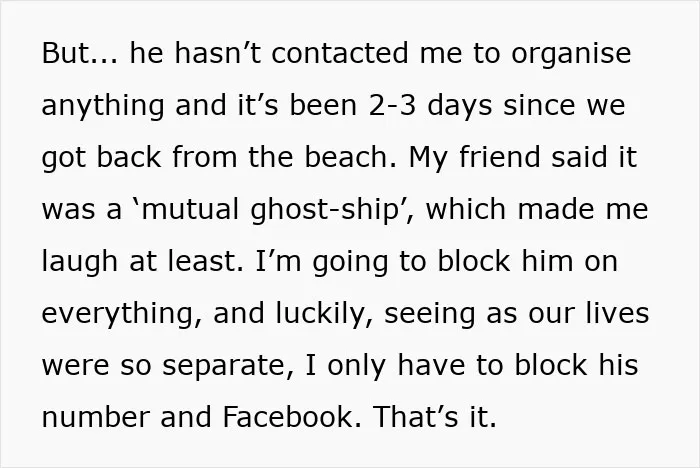
Image credits: anon
Couples need to address the annoying things their significant other does
Some commenters said that the Redditor made a mistake by not bringing up the money sooner, and they're largely right: it could've made things easier.
Of course, it's easy for us to judge a situation we're not part of, but licensed psychologist Dr. Seth J. Gillihan says that if you're in a committed relationship, your partner will no doubt do things from time to time that bother you. After all, no two people are exactly alike. So the question is: how do you let them know about it?
According to Gillihan, the best way to approach the situation is head-on.
"When you're unhappy about something your partner is doing, start by asking them about it. Bring it up at a non-stressful time, and allow them to describe it from their own perspective," the psychologist recommends.
Sensitivity is key.
"Be as neutral as possible in the way you bring it up—for example, asking your partner why they're 'so grumpy in the morning' is just going to start a fight. Consider instead leading with something like, 'Can we talk about our morning interactions? I often feel like you're annoyed with me. I'd like to know what those interactions are like from your perspective.' It doesn't have to feel like a canned opening, of course. Use whatever wording feels natural to you," Gillihan says.
Once you've invited your partner to share their experience, the next step is to actually listen to them. That means resisting the urge to respond in a way that dismisses what they say. For example, they might say, "I usually feel so rushed in the morning that it's hard for me to think about your questions, and I get frustrated." If your immediate reply is, "I feel rushed, too, but you don't see me snapping at you," then you're heading toward an unproductive fight.
"Take time to really understand what your partner is saying, and check out what you've heard to make sure you got it right," Gillihan adds. "It's helpful for them to feel listened to, and it's going to help you, too, as it allows for more effective solutions. For example, if your partner feels overloaded in the morning, you can plan to avoid talking with them in the morning as much as possible."
However, that doesn't mean you should give up on your own needs. On the contrary.
"Just as you want to have your partner's needs and concerns on the table, it's important to make yours a part of the discussion, too. A solution will work only to the extent that it addresses both of your needs," the psychologist highlights.
In the example above, you might explain why you sometimes need to communicate with your partner in the morning. Take care to express your needs in nonjudgmental terms. For instance, rather than saying, "I need you to be nicer," you might describe situations in which you need to ask them something, such as what time they'll be home that evening.
But if you want things to change, you have to speak up. Keeping your frustrations to yourself rarely leads to a solution.