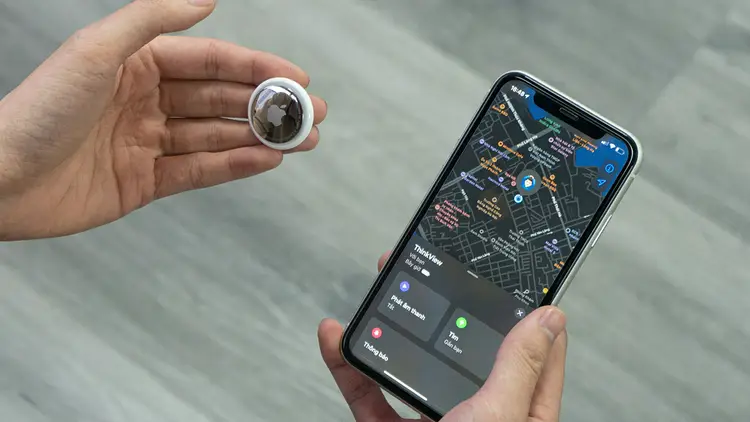
Remember when we were kids, and our parents had absolutely no clue what we were doing for most of the afternoon? We'd disappear with our friends, ride our bikes around the neighborhood, and occasionally show up late for dinner. Our parents worried, of course. But unless they called every friend's house, there wasn't much they could do. Fast-forward to today, and a mother sitting on her couch can find out that her son has stopped at McDonald's instead of heading straight home. She can even check how fast he was driving on the way there. A quick glance at a phone can now answer questions that once required several phone calls and a fair bit of patience. It's fascinating how much technology has changed parenting, isn't it? For some families, location-sharing apps offer peace of mind, especially when children are traveling alone or staying out late. For others, constantly being monitored can feel a little suffocating. So, where do we draw the line between keeping children safe and giving them room to become independent? Keep reading as we speak to parents and teenagers about their experiences with location tracking, explore the research behind it, and discuss what it means for trust, privacy, and the freedom to grow up. magnific / Magnific (not the actual photo) Let's start by looking at how common it has become for parents to track their children's whereabouts. A 2023 study involving 729 adolescents, with an average age of 15, found that roughly half of parents and teenagers reported parental location tracking. Notably, girls and younger teenagers were more likely to be monitored. Furthermore, a 2024 review of existing research found that anywhere between 33% and 69% of families used digital location tracking, depending on the population studied. Now, you might assume that once children turn 18 and head off to college, their parents stop keeping tabs on them. Well, not necessarily. A 2024 survey by Pew Research Center found that 25% of American parents with adult children aged 18 to 34 tracked their whereabouts at least occasionally. Among parents of children aged 18 to 24, that figure was 42%. It dropped to 21% for those with children aged 25 to 29 and 9% for those with children in their early 30s. Daughters were more likely to be tracked than sons, at 31% and 21%, respectively. Imagine being old enough to get married, buy a house, and have children of your own, yet your mom still knows every time you pop out for groceries! Curated Lifestyle / Unsplash (not the actual photo) Of course, before we criticize parents for doing this, it's worth understanding where some of that behavior comes from. Parenting involves a tremendous amount of worrying. When children are little, you worry about them falling off the playground swing. When they're older, you worry about them driving, attending parties, and walking home alone. The worries change, but they don't necessarily disappear. To better understand this perspective, Bored Panda spoke with Preeti Jiwrajka, a marketing consultant who works with leading brands in India and a mother of three. “Being a working mom, I can't always be around when my children leave for their classes or come back home. Sometimes, in the middle of a busy workday, I just want to know that they've reached home safely. It's a small thing, but it makes me feel connected to their day, even when I'm not physically there. As a mother, that reassurance means a lot to me,” she shared. And Preeti is certainly not alone in feeling this way. In June 2026, C.S. Mott Children's Hospital surveyed 1,542 American parents with children aged 18 to 25. Around 52% said they tracked their young adult children's locations. Among those parents, 68% said they did so for peace of mind, while 64% wanted to know their children's whereabouts in case of an emergency. However, parents were also using these apps for some rather ordinary reasons. Around 21% wanted to see whether it was a good time to call, while 17% wanted to know what their children were doing. Another 9% wanted to ensure they were visiting places their parents approved of. Certain situations made parents particularly anxious. Around 44% were more likely to check when their children were out late at night, 39% when they were somewhere unfamiliar, and 25% when they were using a taxi or rideshare service. For Preeti, having access to her children's locations also means she doesn't have to interrupt their day with constant phone calls. “I don't want to be that mom who keeps calling and asking, ‘Where are you? Have you reached? When are you coming home?’ I remember how much I valued my own freedom growing up, and I want my children to have that, too. But no matter how old they get, I think a little part of me will always worry about them. If a quick glance at my phone allows me to relax and lets them enjoy their time without me bothering them, I see that as a good thing,” she added. Getty Images / Unsplash (not the actual photo) Unfortunately, young people aren't immune to crime. Figures from the US Bureau of Justice Statistics show that approximately 501,590 Americans aged 12 to 17 experienced at least one nonfatal violent crime in 2024, compared with 371,390 in 2023. That's an increase from 1.45% to 1.95% of people in that age group. Even places we generally consider safe, such as schools, aren't entirely free from crime. A 2026 report from the Bureau of Justice Statistics found that students aged 12 to 18 experienced 27 criminal victimizations per 1,000 students at school in 2024, compared with 17.7 away from school. These figures included theft and nonfatal violent crimes. However, the overall victimization rate at school wasn't significantly different from what it was in 2014. So, while parents have understandable reasons to worry, we shouldn't automatically assume that growing up today is considerably more dangerous than it was a decade ago. Furthermore, there's a difference between knowing where your child is and knowing that they're safe. Location-tracking apps can certainly be helpful during emergencies, but these crime figures don't establish that tracking children constantly prevents such incidents. Đức Trịnh / Unsplash (not the actual photo) We've heard quite a bit about what parents think. But what about their children? A 2024 study published in the Journal of Adolescence surveyed 706 college students aged 18 to 25 in the southeastern United States. Around 36.1% were currently being tracked by their parents or caregivers, while another 11% had previously been monitored. In fact, 82.5% of those being tracked believed their parents were primarily concerned about their safety. Only 7.1% identified control as the main motivation. For some young adults, this understanding develops as they grow older. We spoke with Preeti's daughter, Roshni Jiwrajka, who is currently pursuing a medical degree in Australia, about how her feelings toward location tracking have changed over the years. “When I was living in India, I knew Mom would occasionally check where I was. As a teenager, there were definitely times when I found it annoying. I remember thinking, ‘Why does she need to know where I am all the time?’ But now that I'm living thousands of miles away from home, I understand her a little better. I know she misses having me around, and if knowing I've reached home safely helps her sleep better, I honestly don't mind.” Ironically, growing older can also mean finding yourself worrying about the very people who spent years worrying about you. The aforementioned study found that around 30.5% of students also had access to their parents' locations. Nearly 70% of them cited safety as their primary reason for doing so. It's a sentiment that Roshni can relate to as well. “Living away from my family has made me realize how much comfort there is in those little everyday things. Sometimes, you just miss knowing what everyone at home is up to. I used to think Mom worried too much, but now I'm the one reminding her to message me when she gets home! It's funny how things change when you grow older.” For families living miles apart, location sharing can become a small way of looking out for one another. However, there's an important difference between willingly sharing your whereabouts with someone you love and feeling obliged to do so. user23538080 / Magnific (not the actual photo) Picture this. You're 22, your afternoon lecture gets canceled, and you decide to get lunch with a friend. Five minutes later, your mother calls. "Why aren't you at college?" You explain yourself, finish your lunch, and get on with your day. But imagine having similar conversations every time you deviate slightly from your usual routine. It would get annoying, wouldn't it? The 2026 Mott poll revealed that while 96% of tracking parents said their adult children knew they were being monitored, only 54% had given them the option to decline. Additionally, 71% kept location tracking permanently enabled. That distinction is particularly important for young adults who still rely on their parents financially. It's one thing to ask your parents to stop tracking you when you're paying your own bills. It's another when they're covering your college tuition, rent, and living expenses. This was something a Bulgarian teenager we spoke with could relate to. Currently studying in Germany, the student, who wished to remain anonymous, explained how moving away from home didn't necessarily come with the independence they'd hoped for. “When I first moved to Germany, my parents were paying for my dorm, and they wanted updates about practically everything. I absolutely despised it. I was finally living on my own, but somehow, I still felt like I needed to explain every little thing I did. And because they were financially supporting me, I didn't really feel like I was in a position to complain.” It's easy to see why some young adults might continue sharing their locations simply to keep the peace at home. They may appreciate everything their parents do for them while still wanting a little more freedom. And if switching off your location immediately results in an angry phone call, how much of a choice did you really have in the first place? lgolubovystock / Magnific (not the actual photo) Knowing what goes on in your children's lives and having them willingly tell you about it are two very different things. Ideally, you want your kids to feel comfortable coming to you when something goes wrong. Whether they've had an argument with a friend, failed an exam, or made a rather silly decision, you want to be someone they can turn to for help. Research discussed in a 2023 study suggests that teenagers who voluntarily open up to their parents tend to be better adjusted. On the other hand, more intrusive attempts by parents to obtain information have sometimes been linked to poorer outcomes. For Violetta, who is currently pursuing a master's degree in informatics at the Technical University of Munich, being able to speak openly with her parents is something she attributes to her upbringing. “Growing up, I always felt comfortable talking to my parents about pretty much anything. Even now that I live away from them, I openly tell them about my plans, who I'm meeting, or where I'm going. I don't do it because I feel obliged to report back to them. I genuinely enjoy sharing what's happening in my life with them. I think that's largely because they've always made me feel trusted.” And perhaps that's something worth keeping in mind when it comes to location tracking. While we still need more research into its long-term effects, it's worth considering how it might affect the trust between parents and their children. Say your teenage son tells you he's spending the afternoon at a friend's house. Do you take his word for it, or do you pull out your phone to double-check? And how might he feel if he knows you're doing the latter? Ironically, constantly keeping tabs on your children might make some of them less inclined to tell you what's happening in their lives. And that's probably the last thing a caring parent would want. Getty Images / Unsplash (not the actual photo) However, the Mott poll revealed that location tracking doesn't always give parents the peace of mind they're looking for. While 95% of parents who tracked their children said it helped them worry less, 23% admitted that it sometimes made them more anxious than reassured. Say your son's location hasn't changed in over an hour, and he's not picking up his phone. Naturally, you start worrying about whether something's happened to him. In reality, he might just be at the movies, enjoying some popcorn with his phone switched off. The more accustomed we become to having information readily available, the more unsettling it can feel when we suddenly lose access to it. Something as innocent as a dead phone battery or a poor internet connection can leave a parent worrying for hours. Furthermore, constantly keeping tabs on your children can make it difficult to switch off from your responsibilities as a parent. You deserve to enjoy dinner with your friends without feeling the need to check what your 22-year-old is doing every half an hour. Andrej Lišakov / Unsplash (not the actual photo) Of course, we're not suggesting that families should delete their location-sharing apps altogether. They can come in handy in plenty of situations. Your teenage son might be going on his first road trip with friends, or your daughter might be traveling solo through Europe. Knowing they've reached their destination safely can be incredibly reassuring. However, it's worth revisiting these arrangements as your children grow older. What seemed perfectly reasonable when your child was 13 might feel somewhat intrusive when they're 23. The same goes for our friends and romantic partners. It's lovely having people in our lives who care enough to check whether we've made it home safely. Having to explain why we're at a particular restaurant on a Tuesday evening, however, is another matter entirely. One of the toughest things about being a parent is learning to take a step back. After spending years teaching your children how to look after themselves, you eventually have to trust that they're capable of doing so. They might make mistakes along the way, but that's how most of us learned to navigate adulthood, too. We'd love to hear your thoughts on this, pandas. Do you share your location with your parents? Do you find it reassuring or rather intrusive? Meanwhile, those of you who have children of your own, how do you approach location tracking in your family?