



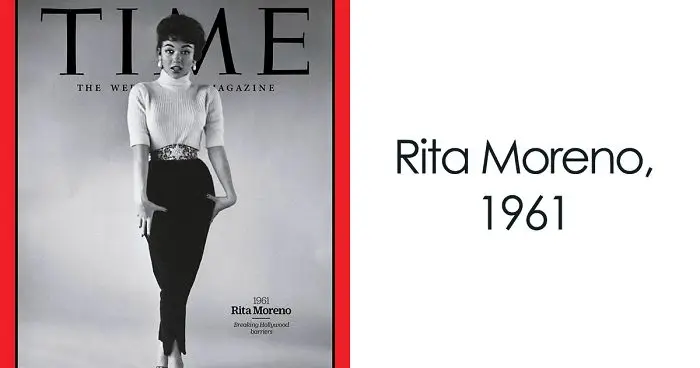


Women's Day is over, but our appreciation for women doesn't end. There are so many women that deserve recognition, that have done so much for our world to be a better place. That's why Time magazine decided to honor all females from 1920 to the present. They took the most influential and powerful women from the past century and made "Person of the Year" covers with them, explaining why they deserve to be there.
Over the past 100 years, only five women have been named "Person of the Year"—Wallis Simpson (1936), Elizabeth II (1952), Corazon Aquino (1986), Angela Merkel (2015), and Greta Thunberg (2019). So here are 100 women that have shined with their skills and ambition. Read about their achievements and vote for your favorite one.
Are there more women you wish were on the cover of Time magazine? Which one inspired you the most? Tell us in the comments!
More info: time.com
#21 1960: The Mirabal Sisters
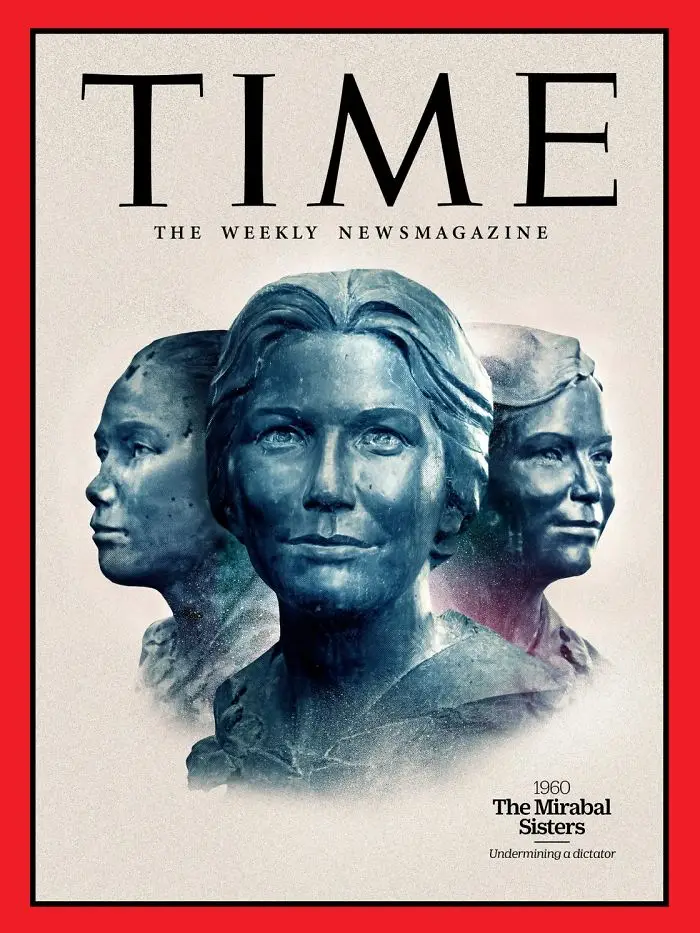
"Patria, Minerva, and María Teresa Mirabal—three sisters from a middle-class family, all married with children—may not have seemed the most likely revolutionaries. But living under the Dominican Republic’s brutal dictator Rafael Trujillo in the late 1950s, the Mirabal sisters risked their lives to work in the resistance. During Trujillo’s 31 years in power, the regime violently repressed civil liberties and dissent. The Mirabal sisters helped to organize and grow the underground movement challenging the regime and were repeatedly arrested for their activities. Minerva once dismissed her allies’ fears for her life, saying 'If they kill me, I’ll reach my arms out from the tomb and I’ll be stronger.'
She fulfilled the promise. The state’s murder of the three sisters, aged 36, 34 and 25 on Nov. 25, 1960, outraged the public and was a key trigger for Trujillo’s own assassination by a group of dissidents and former allies six months later. After the transition to democracy in the late 1970s, the Butterflies, as Dominicans call the sisters, became symbols of both democratic and feminist resistance. A fourth Mirabal sister, Dede, who was less actively involved in the resistance, survived the regime and helped continue her sisters’ legacy until her death in 2014, setting up a foundation and a museum in their name. The U.N. made the date of their death the International Day for the Elimination of Violence Against Women. —Ciara Nugent"
Report
23points
#22 1952: Queen Elizabeth II
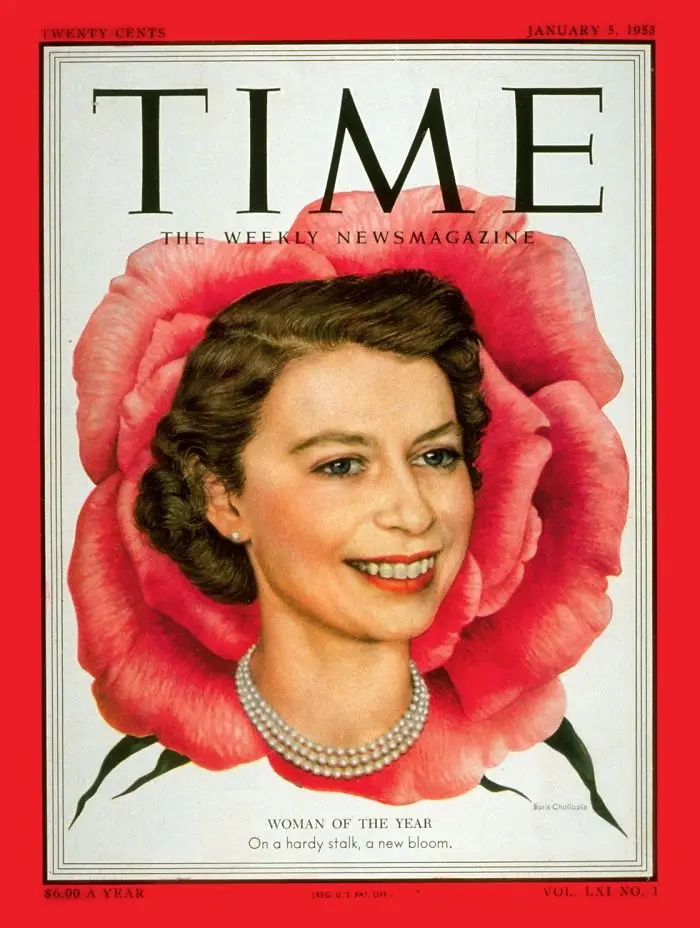
"When TIME named Queen Elizabeth II the Woman of the Year in 1952, it was not for her gender but for what she symbolized. The 26-year-old acceding to the throne, editors wrote, was a 'fresh young blossom' whose citizens hoped she would be an 'omen of a great future.'
In fact, Elizabeth became Queen just as the dissolution of the British Empire sped up, with the loss of Egypt, Sudan and Ghana in the early years of her reign. Almost seven decades later, she oversees an island nation reduced to a bit player on the world stage. Yet at the age of 93, her soft power is undimmed; she draws both great leaders and throngs of tourists to her state and personifies British endurance untainted by politics. She has steered her family through scandal successfully enough that the next generation is poised to carry the crown forward.
Unlike her heirs, however, she remains virtually unknowable, having never allowed the media access to her private thoughts or opinions. In her utter rejection of a public persona, she is best understood, still, as a symbol: no longer the potent fluorescence of youth, but a hard-worn tree in whose limbs and roots can be traced the archaeology of an era. — Dan Stewart."
Report
22points
#23 1985: Wilma Mankiller
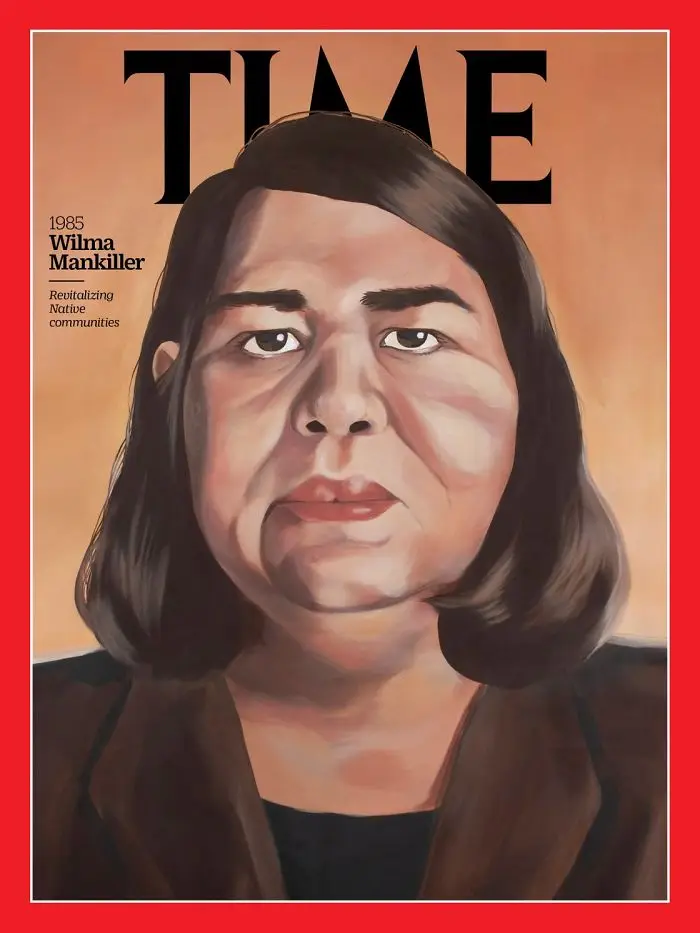
"In 1985, Wilma Mankiller paved the way for female leadership in America when she became the first woman to be Principal Chief of the Cherokee Nation, the largest tribe in the U.S., a role she held for a decade, ushering in an era of prosperity, cultural revitalization and self-governance for Cherokee people. Mankiller was born in 1945 in Tahlequah, Okla, on rural family land. In the 1950s, federal relocation programs that attempted assimilation by moving Native people into cities sent her family to San Francisco.
They lived in urban poverty and faced discrimination and racism, but were also surrounded by a strong, political and diverse indigenous community, which formed a foundation for Mankiller’s feminism and belief in the power of Native communities to support and govern themselves. In 1977, she moved back to Oklahoma with her children and lived without running water or electricity on her family land. Using her knowledge of Native sovereignty, political history, and federal Indian law, Mankiller worked for the tribe, embodying the Cherokee concept of gadugi—collective community work toward a common goal. When Ross Swimmer sought a running mate in the 1983 Cherokee Nation election, he selected Mankiller despite her relatively recent return to the Oklahoma community.
They overcame hesitancy and sexism from voters and won. In 1985, Swimmer was tapped for a role in the federal government and Mankiller took over as Principal Chief. Her policies were progressive; she saw the interconnectedness of economic growth and social programs, putting revenue from casinos and other tribal economic ventures back into health clinics, job training, and other self-determination initiatives. Mankiller won two more terms as Principal Chief before deciding not to run for re-election in 1995 because of poor health.
During her time as chief, tribal enrollment grew, infant mortality dropped and employment rates doubled. Mankiller died in 2010, leaving a legacy of cultural pride. “I want to be remembered as the person who helped us restore faith in ourselves,” she once said. Indeed, her policies on health care, education, and self-governance for the Cherokee Nation provided a model that would be followed by other tribal nations, and the U.S. — Adrienne Keene"
Report
22points
#24 1968: Aretha Franklin
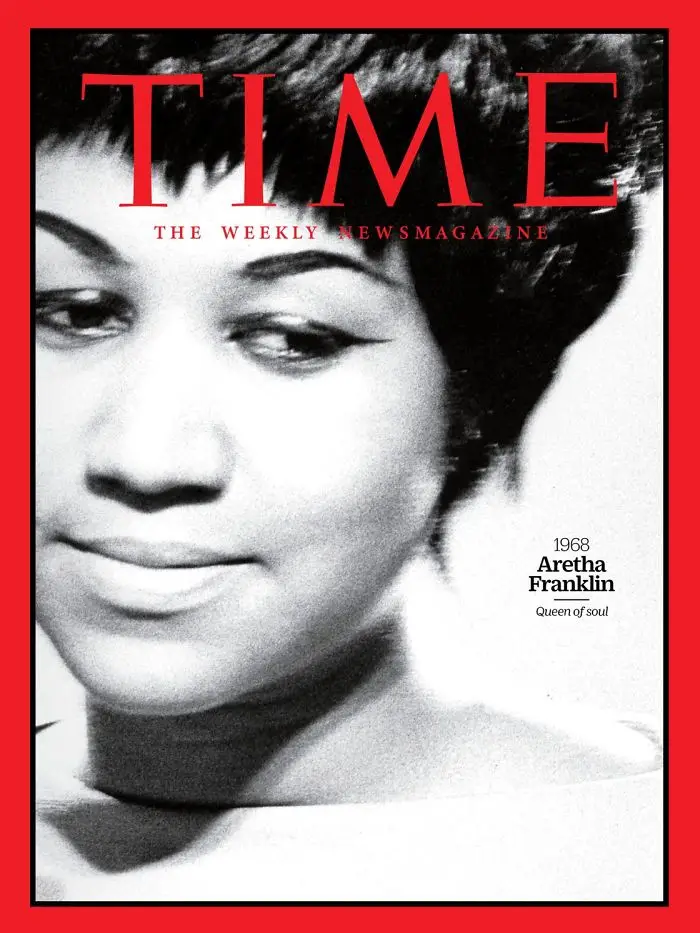
"R&B may be the secular child of gospel music, but in Aretha Franklin’s voice the two styles entwined in heavenly perfection: every note she sang felt sacred and sublime. Franklin, born in 1942, began singing gospel as a child in her father’s Detroit church and, at 18, signed with Columbia Records.
But it was her move to Atlantic Records, in 1967, that ignited her career. Franklin released three albums in 1968: Lady Soul, appearing in January, included “Chain of Fools,” a dis aimed at an ex-lover that could also be read as an excoriation of people who would follow blindly rather than lead.
Summer saw the release of Aretha Now; on that album’s “Think,” Franklin turned the words “Freedom, oh freedom!” into a defiant chant, an insistence on forward movement at all costs. That song—that whole album—was a salve for a torn nation: between the release of Lady Soul and Aretha Now, the assassination of Martin Luther King Jr. opened up a wound in the country that has never fully healed. Franklin capped off the year with a live album, and her career continued to climb. But 1968 was when we needed her most. She more than delivered. — Stephanie Zacharek"
Report
21points
#25 1939: Billie Holiday
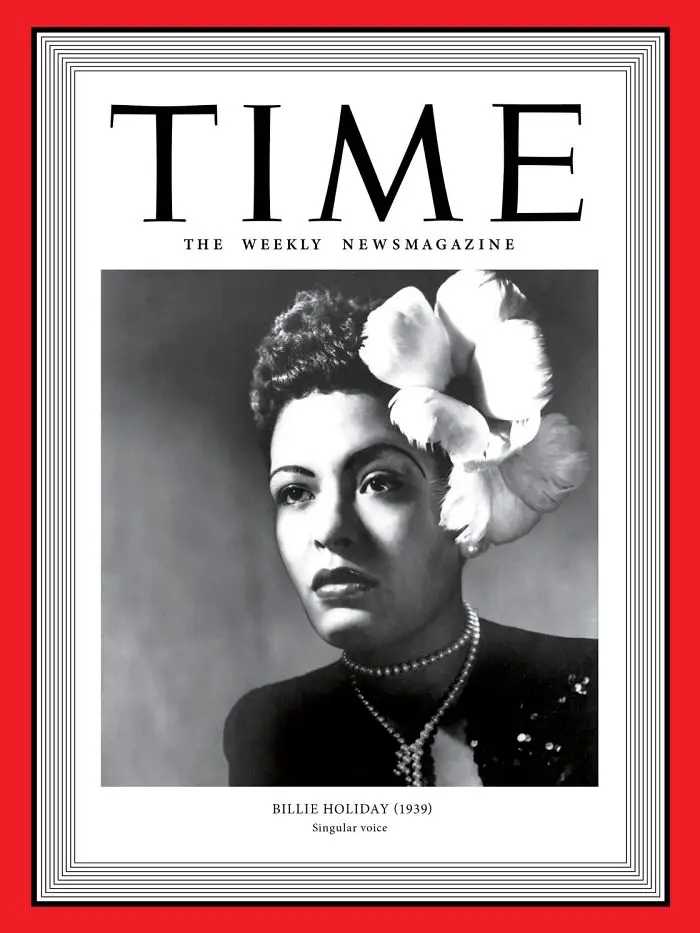
"Billie Holiday knew the dangerous power of “Strange Fruit” when she first sang it at a Manhattan club in 1939. As written by the schoolteacher Abel Meeropol, with its images of black bodies hanging like bruised fruit, the ballad was already a vivid protest of lynching. But filtered through Holiday’s smoky vocals, it took on even greater urgency.
It was so incendiary that Columbia Records refused to let her record it, some radio stations banned it, and federal agents tried to stop her from singing it. And the song, released on an alternative label, did strike a nerve—starting a conversation about racially motivated hate crimes and giving Holiday a national audience. Her rise was surprising in a musical era dominated by belters: Holiday, by contrast, had a small range and a conversational singing style that often dragged behind the beat. But it was this approach that unlocked a personal subtext in songs, whether it be deep pathos or low-burning sultriness.
While Holiday earned her way into venues like Carnegie Hall, she was plagued by one challenge after the next: drug addictions, domestic abuse, racist audiences. Thanks in part to her outspokenness about inequality and racism, federal agents hunted her for her entire life. They jailed her in 1947 and revoked her cabaret card on the grounds that her songs might harm the “morals” of the public. In 1956, Holiday published her autobiography, Lady Sings the Blues, which biographer John Szwed tells TIME is “probably the most damning document of America ever produced.”
Three years later, she died, bitter and broke. But her legacy would only grow. Twenty-six years after Holiday’s rendition, at the height of the civil rights movement, Nina Simone would record a cover of “Strange Fruit” that Kanye West would sample 48 years after that. Through it all, Holiday’s version retains its unmatched potency. — Andrew R. Chow"
Report
20points
#26 1921: Emmy Noether
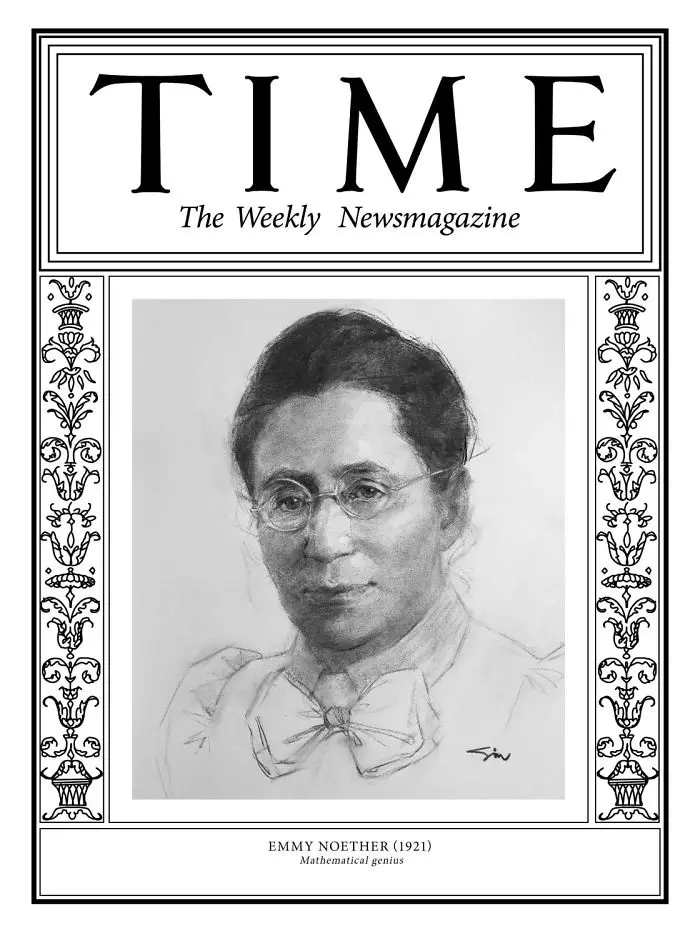
"'Smart' didn’t do Emmy Noether justice: Albert Einstein called her a “creative mathematical genius.” The German-born Noether altered algebra—notably with her 1921 paper Theory of Ideals in Ring Domains—and her proofs about conservation of energy-resolved a quirk in Einstein’s general theory of relativity.
Even so, as a woman, Noether had to fight for a professorship. When she did get one, at the University of Göttingen, she was paid minimally, and in 1933, with Germany under Nazi rule, she and other Jewish professors were dismissed. Exiled to the U.S., she kept teaching until her death in 1935. Even now, the world still learns from Noether, whose abstract principles are fundamental to modern particle physics. — Emily Barone"
Report
19points
#27 1943: Virginia Hall
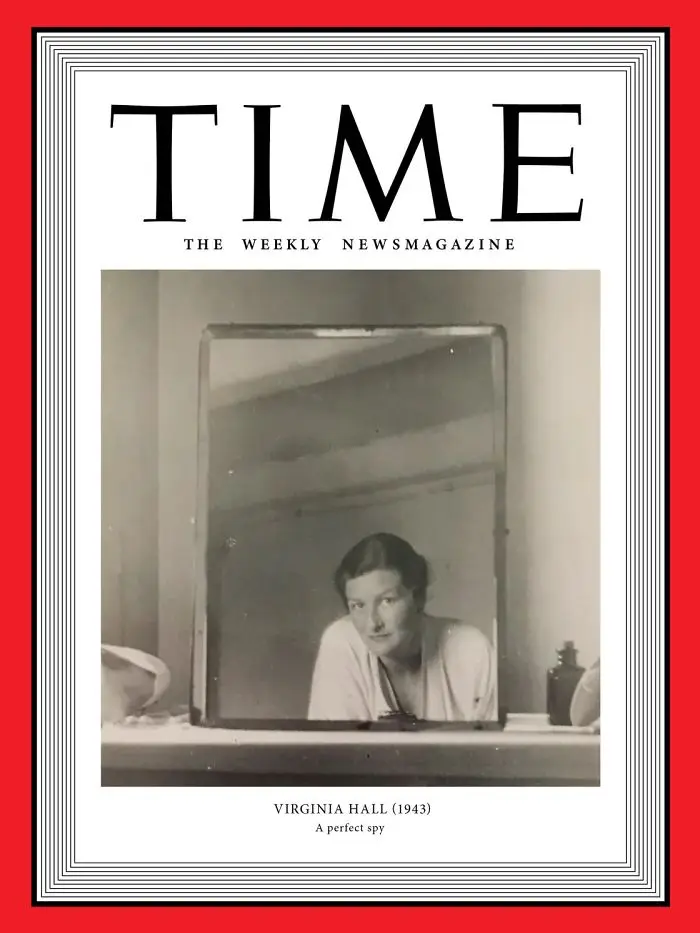
"She was known as the Limping Lady, because of a prosthetic leg, but secretly, she was a hero. During tours in occupied France with the British Special Operations Executive and CIA predecessor Office of Strategic Services, American spy Virginia Hall was an intelligence-industry innovator.
She used makeup and savvy subterfuge to escape capture by the Gestapo, who unsuccessfully hunted her for assisting the French Resistance. Hall trained resistance cells that performed guerrilla sabotage like blowing up bridges and even derailing a freight train and set the stage for the Allies to invade Normandy and Provence. At the end of the war, she reported that her team had captured 500 Germans and killed 150. The Nazis called her 'the enemy’s most dangerous spy.'
Her work is credited with convincing British and American military officials to deploy other women as spies during a major moment for women in war. In 1942 and 1943, the U.S. Armed Forces finally allowed women to enlist. But female war veterans still struggled for recognition and benefits. Though never publicly lauded during her lifetime—she received awards, but didn’t want to blow her cover—Hall was the U.S.’s most decorated WW II woman civilian. She is credited with developing spy tactics that are still used by the CIA today. — Erin Blakemore"
Report
19points
#28 1996: Ruth Bader Ginsburg
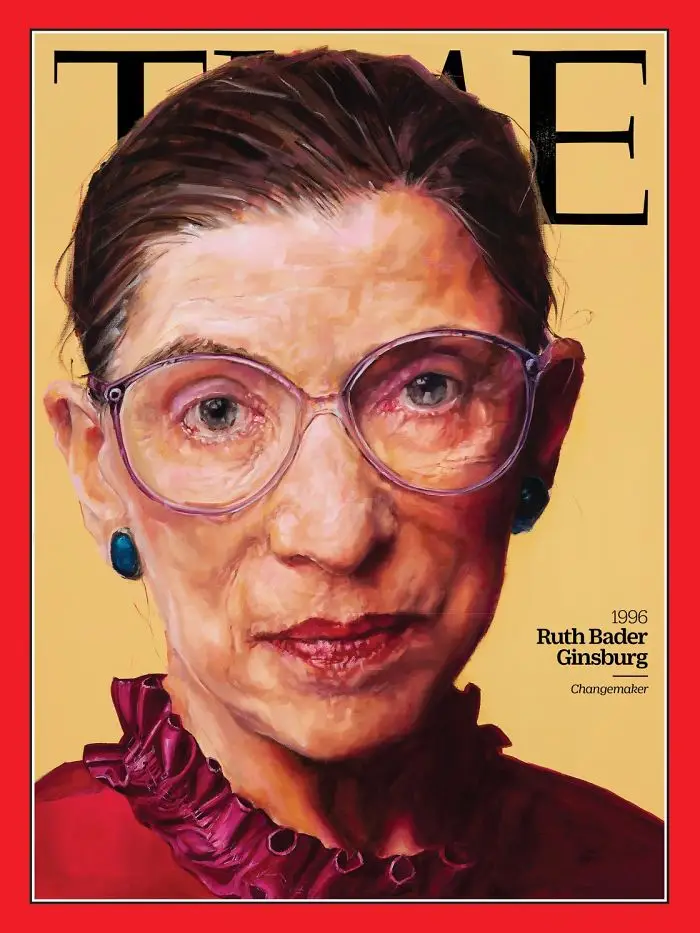
"It’s hard to believe now that there was ever a time when Ruth Bader Ginsburg was not known for her dissents. But for a stretch of 1996, the second woman appointed to the Supreme Court could imagine a triumphant future building on her work as visionary advocate in the 1970s—not just for women’s liberation, as she often said, but for women’s and men’s liberation.
The prestigious Virginia Military Institute (VMI) still barred women, but when the case went to the Supreme Court, Ginsburg argued that everyone was harmed, and all stood to benefit. 'If women are to be leaders in life and in the military, then men have got to become accustomed to taking commands from women,' she said at oral argument, 'and men will not become accustomed if women are not let in.' Back in her ACLU days, on a quest to prove that gender discrimination violated the Constitution, she had represented not only women who broke glass ceilings but also men who were caregivers, each limited by the law as it stood.
She had rarely convinced Justice William- Rehnquist. In 1996, though, the conservative Justice joined a 7-1 decision requiring that women be admitted to VMI, helping Justice Ginsburg finish what attorney Ginsburg had started and establishing a major precedent. The paradox of Ginsburg—reserved institutionalist arguing for radical constitutional change—seemed to resolve itself in the VMI victory. But as politics left her outnumbered on much that mattered to her, the Justice stiffened the resolve she had from the days she was blocked for being, as she put it, a 'woman, a Jew and a mother.' By age 80, in 2013, her righteous dissents would earn her fans around the world.
Today, Ginsburg is surprisingly optimistic. Her work has been at the pinnacle of the law, but she recognizes that, as she puts it, 'change comes from a groundswell of ordinary people … And men have to be part of the effort.' — Irin Carmon"
Report
19points
#29 2019: Greta Thunberg
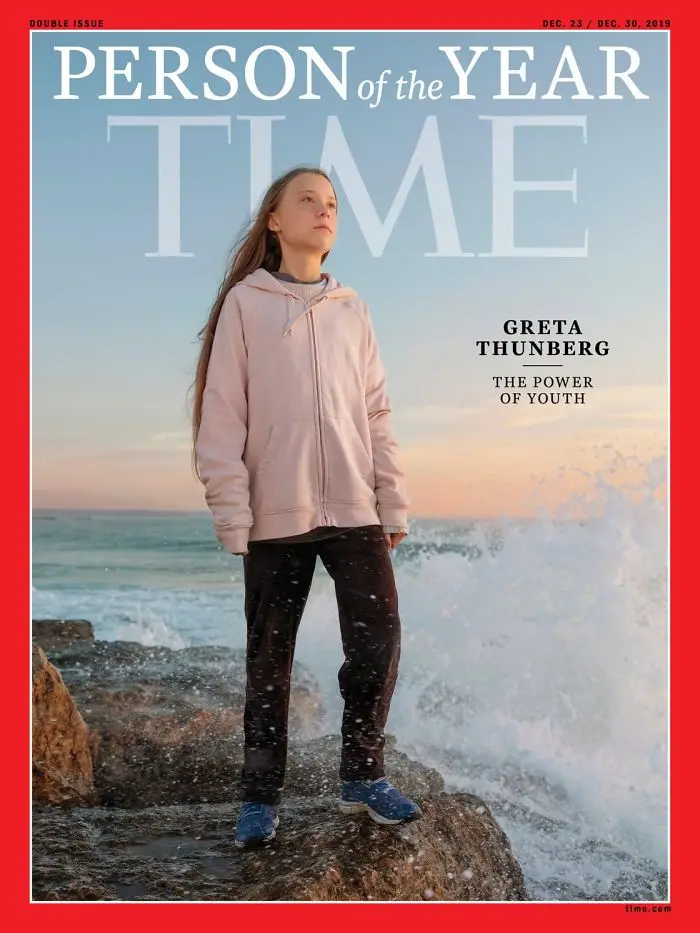
"She started a global movement at the age of 15, dominated headlines and became TIME’s youngest ever individual Person of the Year in 2019. But Greta Thunberg was understated when reflecting on her year. 'I have not accomplished anything,' she told TIME in Lisbon, after a rough trans-Atlantic sailing trip brought her back from a four-month climate strike tour around North America. 'I have just acted on my conscience and done what everyone should be doing.'
Acting on her conscience has spurred millions around the world to act, whether it’s eating less meat, eschewing air travel or joining a weekly climate strike. What began with the solitary teenager in a blue hoodie striking from school on the steps of the Swedish Parliament in August 2018 to protest government inaction on climate change swelled to an estimated 4 million people joining strikes in September 2019, in the largest climate demonstration in human history.
Friends and family, and even Thunberg herself, didn’t expect the movement to grow to that size. She too has grown along with it—from being a quiet teenager to a symbol for millions speaking to the whole world. Her persistence has propelled the climate crisis to the forefront of global public consciousness and shown that a generation of young leaders are ready to step up where adults have faltered. 'We are the ones right now who are leading the way,' Thunberg told thousands at another mass strike in Madrid, at the same time as the U.N. climate talks. 'The people in power need to catch up with us.' — Suyin Haynes"
Report
19points
#30 2004: Oprah Winfrey
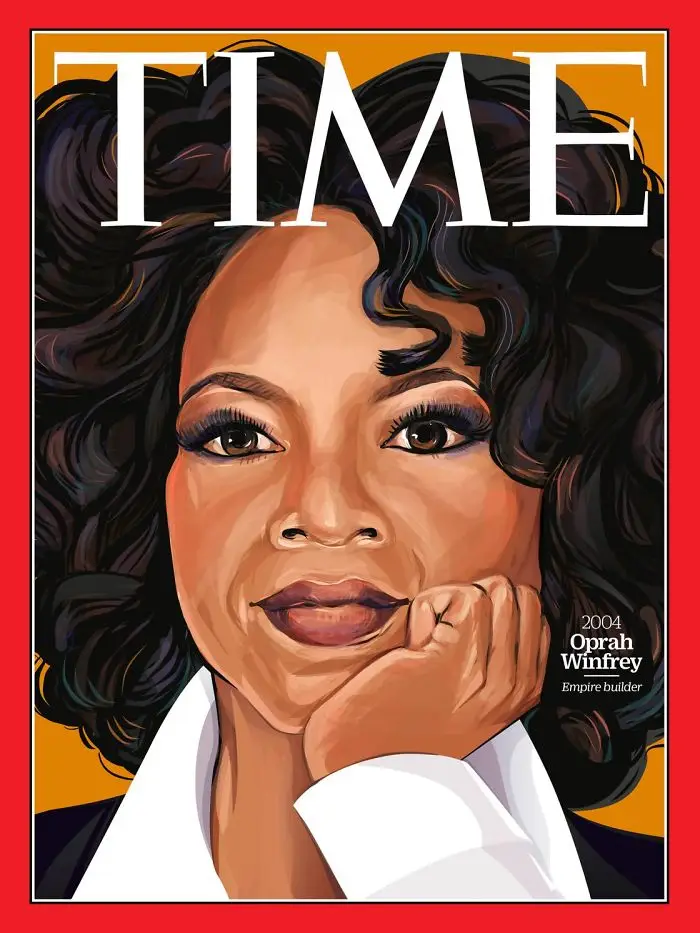
"By the time Oprah Winfrey became the first black woman to make it onto the Forbes billionaire list, in 2003, she was already the most successful talk-show host in TV history and a producer, media mogul, actor, author and philanthropist of unparalleled cultural clout.
But it wasn’t until the following year, when she gave away Pontiacs to her entire studio audience, that she ascended to something like secular-saint status—despite facing some backlash over the hefty gift taxes recipients had to pay. 'You get a car! You get a car! Everybody gets a car!' became shorthand for any modern miracle. That Oprah magic has only grown since 2004.
A recipient of accolades, from a Peabody to a Kennedy Center Honor, she gave a crucial early endorsement to Barack Obama. In 2011, she wrapped her 26-year-old talk show and launched cable network OWN; last fall saw the revival of her powerhouse book club as part of a multiyear Apple TV+ deal. She may never heed the call of pundits who wish she’d run for President. Yet when political discourse and pop culture so often cater to the lowest common denominator, Oprah’s signature fusion of entertainment, education and social conscience remains a vital appeal to our best selves. — Judy Berman"
Report
11points
The celebration of women's achievements and resilience is an ongoing task that encourages us to constantly reevaluate societal standards. In a world where beauty and power are often dictated by certain norms, Ilka Brühl and her modeling career powerfully remind us of the importance of self-acceptance and breaking barriers.
As you explore the stories of influential women in history, consider how these narratives align with defying conventional standards of beauty and success to inspire future generations.


