





Laws are not meant to be broken but that doesn't mean they can't be bent or twisted a little bit to perfectly fit a given scenario. Seeking out legal loopholes is a big part of a lawyer's job. They get paid massive amounts of money to use their eagle eyes to find that one tiny clause that'll make a big difference to their clients' lives, and often bank accounts.
We've heard of billionaires using loopholes to get out of paying taxes, or even criminals exploiting an unexpected loophole to get out of jail free. But there are some perfectly legal ways for ordinary people to beat the system too, as we discovered while reading through an intriguing online thread.
Someone had asked lawyers to share some of the most interesting laws or loopholes they've encountered on the job. And legal experts weren't afraid to speak up. No less than 5,000 comments came pouring in. Some were clever, others absurd and a few were actually entertaining.
Bored Panda has put together a list of the best for you to scroll through before you ever find yourself on the wrong side of the law. We also take a look at some infamous times people have found a loophole and managed to exploit the heck out of it. You'll find that info between the images.
#21

Minors _can_ enter into legal contracts, but they can also break them without penalty.
Report
7points
#22

I'm not a lawyer but a paralegal in various capacities... you can pretty much claim anything as a work-related injury. If you get carpal tunnel for example, you can also say that your carpal tunnel causes you depression, anxiety and insomnia. If they're not disputing the carpal tunnel, they probably won't dispute anything else you add on. If they want to dispute it, they will have to pay for the doctor to prove you don't have depression/anxiety/insomnia and they would rather just give you the money as part of your settlement.
Also, Wills and Trusts are pretty fun. You can pretty much do whatever you want. It's like creating a little fantasy world for after you die and everyone will be obligated to honor your wishes the best they can.
Also, Wills and Trusts are pretty fun. You can pretty much do whatever you want. It's like creating a little fantasy world for after you die and everyone will be obligated to honor your wishes the best they can.
6points
#23

Exceeding the posted speed limit in Texas (and a few other states) is not technically a crime... its just *really really* good evidence that you were speeding.
It falls under the umbrella of 'prima facie' law, which means on the face of things. Speeding is loosely defined as driving too fast for the given conditions. So if you are going over the posted speed limit but driving "safely" according to a set of standards and conditions, you are not speeding.
Good luck convincing a judge though lol.
Report
6points
#24

You can form a family LLC, keep 1 or 2% voting shares, transfer 99 or 98% non-voting shares, then gift or sell the LLC shares to an irrevocable trust at a substantial discount (up to 35%) with your children as beneficiaries, to leverage your gift tax exemption up to $5M each this year. oh sorry, you said interesting.
Report
6points
#25

If you own a company, don't pay yourself as an employee.. Instead set it up as a corporation and pay yourself dividends.. you pay way less in taxes.
Report
5points
#26
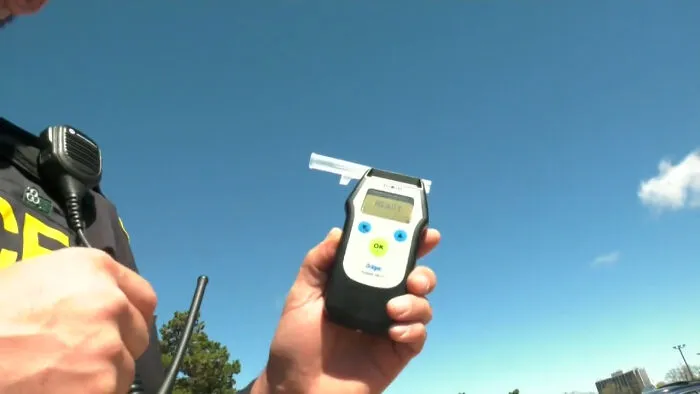
Best practical advice? If you get a DUI, refuse the breathlizer. Always refuse it, regardless of state laws, there's no upside; you can fight the mandatory license suspension at an admin level, and if they get a reading, you are going to have a really hard time beating the charge.
Also, a prosecutor I used to work with said, if you want to get away with a serious crime, its easy:
1) DONT TELL ANYONE. MOST IMPORTANT; 90% of SERIOUS CRIMES ARE ADMITTED TO TO SOMEONE (MOST OFTEN THE POLICE)
2) Don't use your cell phone in or around the crime
3) Don't talk to the police (lawyer up, see rule 1) if you become a person of interest
Its really hard to prosecute with no admission, no cell phone records. Eyewitness testimony is not enough typically. Can't use DNA evidence with out circumstantial evidence.
5points
#27

Germany: If you take something, that's not yours, with the honest intention to bring it back later, without diminishing its value, it is not stealing and totally legal. With the exception of bicycles, though.
Report
5points
#28

Non-lawyer here. i was arrested and i FOIAed the GPS records for the vehicle used to transport me. police denied request. i appealed to city manager, he upheld the denial because the police GPS records are managed and stored for them by a private company so he doesn't consider them "public records". loophole = if you're the cops and you don't want the public to be able to access your records, just pay a private company to house them. bingo! not FOIA-able.
Report
4points
#29

In Louisiana, children cannot sue their parents (they have to emancipate themselves first) but parents can sue their children.
I think this has something to do with insurance.
I think this has something to do with insurance.
Report
4points
#30

This is not intended as legal advice, etc.
I've always been a little troubled by location-based federal jurisdiction over state crimes. That is, any ordinary state-level crime (e.g., DUI, indecent exposure... whatever) can be prosecuted at the federal level if the crime is committed on federal property (national park, federal highway, airplane, etc.). This could mean big differences in charges (misdemeanors vs. felonies) and sentencing conditions (including term, parole eligibility, federal vs. state prison, etc.), even if you're only a few feet over the property line.
I've always been a little troubled by location-based federal jurisdiction over state crimes. That is, any ordinary state-level crime (e.g., DUI, indecent exposure... whatever) can be prosecuted at the federal level if the crime is committed on federal property (national park, federal highway, airplane, etc.). This could mean big differences in charges (misdemeanors vs. felonies) and sentencing conditions (including term, parole eligibility, federal vs. state prison, etc.), even if you're only a few feet over the property line.
Report
3points
#31
While not really a loophole, checks are fun. You can do all sorts of things with special endorsements... if where ever you write them is dumb enough to take them.
I always like to write stupid things on checks I'm cashing just to see if the tellers will take it rofl. They usually do, but every once in a while I get it sent back with a polite "uhhhhhh, yeah, I can't take that."
A guy a while back won a case against Best Buy because they accepted a check that he had endorsed with conditions that essentially said if they mailed him any advertisements (which, duh, of course they will) he can settle for something like $500 a pop LOL. Held up in court, too.
Report
3points
#32
If someone steals something from you, you can legally steal it back. I think there are some rules, like you can't hurt anyone, but you can basically bust on in to someone's house and steal your stuff back with impunity.
Report
3points
#33
Not sure about this one, but I found it fascinating and hilarious. In the UK, a hackney carriage (basically a taxi) is legally required to either carry a bale of hay in the back to feed at least one horse, or at least have the capacity to carry said hay.
Report
3points
#34
This is in the UK - if you receive a parking fine from a private parking company (at a supermarket or shopping centre for example) don't pay it. They're just invoices and practically unenforceable in court. They also can't charge you more than the loss incurred, which would just be the normal parking fee.
Report
3points
#35
At the time you sign a contract, you have no idea what that contract might mean if it ever came time to have a court interpret it. The rules of contract interpretation can change, and often do, and sometimes your contracts are judged from a future perspective.
I always thought this was an incredibly interesting point - your legal rights are not established by the contract you sign based on the prevailing law at the time you sign it, which would seem to make the most sense. Instead, if you sign a contract that obligates you to pay $1.00 in late fees for every minute your payment to the bank is late, and that provision would be enforceable **now, today**, it might not be enforceable tomorrow.
This is a loophole, in a way, because it allows people to avoid contractual obligations that they purposely, intentionally, and voluntarily agreed to, knowing exactly what it meant.
Report
3points
#36
Hm, okay. 544(b) of the Bankruptcy Code allows the trustee--basically a person appointed to look out for creditors--in a bankruptcy case to assert the rights that actual creditors could assert, in order to bring property into the estate. For example, let's say that you regularly lend money to a dry goods store. In return, you take a lien on their assets. One day, you walk towards the dry goods store, and you are happy. The sun is shining, and bluebirds are chirping in the branches of joyous trees.
But when you enter the store, your face falls. The inventory is there, but the owner is nowhere to be seen! You speak with the man behind the counter, and he tells you that the old owner sold him the store, and its inventory, lock, stock, and barrel. He has skipped town. Later on, you learn that he has filed for bankruptcy, and, naturally, you would like to get your money back. So, you'd like to slap a lien on the inventory of the store, and then sell it off and get your cheddar.
You can do this under non-bankruptcy law, because you are in a jurisdiction where the applicable bulk sale laws state that the seller's obligations to you follow the inventory he has sold. You are happy to learn that 544(b) of the bankruptcy code allows the trustee in bankruptcy to assert the same right to the goods.
The other creditors are overjoyed to learn that they have received a windfall. As it turns out, the goods have appreciated in value, such that they were worth substantially more than your loan. However, due to a Supreme Court case called *Moore v. Bay*, the balance of the loan will be split with the other creditors proportionately, even though, under non-bankruptcy law, only you could assert the claim against the goods, and you'd only receive compensation to the extent of your interest.
The other creditors are actually ecstatic to hear about you, because they realize that that "person" you made a loan to was actually a corporation. Recently, this corporation reorganized using a leveraged buy-out. Essentially, the corporation took out a loan from a bank, and used the proceeds to buy its own stock. Because this was a transfer not for reasonable value, and because it rendered the company insolvent, this was a fraudulent conveyance, that can be avoided under the Bankruptcy Code Section 548.
Because the trustee can use you to assert this claim under 544(b), the other creditors can now collect the amount of the transfer from the Bank, neatly sidestepping the problem of trying to collect from an insolvent debtor. And all because you decided to loan out some dough for dry goods!
**Tl;dr** don't go to law school, it is boring.
Report
2points
#37
My brother (a lawyer) told me that you can only be charged with mayhem if your victim loses a body part.
Report
2points
#38
If you watch someone drown, no liability. If you start trying to save them and give up, you're potentially liable.
Report
2points
#39
This isn't technically a loophole, but store security has no more power over you than a normal citizen. So if you steal something and the store security tells you to stop, you can just keep right on walking.
Report
2points
#40
In Michigan, if A sues B and secures a judgment for money damages, these are the rules on what B can keep:
(a) All family pictures, all arms and accouterments required by law to be kept by any person, all wearing apparel of every person or family, and provisions and fuel for comfortable subsistence of each householder and his or her family for 6 months.
(b) All household goods, furniture, utensils, books, and appliances, not exceeding in value $1,000.00.
(c) A seat, pew, or slip occupied by the judgment debtor or the judgment debtor's family in any house or place of public worship, and all cemeteries, tombs, and rights of burial while in use as repositories of the dead of the judgment debtor's family or kept for burial of the judgment debtor.
(d) To each householder, 10 sheep, 2 cows, 5 swine, 100 hens, 5 roosters, and a sufficient quantity of hay and grain, growing or otherwise, for properly keeping the animals and poultry for 6 months.
(e) The tools, implements, materials, stock, apparatus, team, vehicle, motor vehicle, horses, harness, or other things to enable a person to carry on the profession, trade, occupation, or business in which the person is principally engaged, not exceeding in value $1,000.00.
Report
1point


