






#21
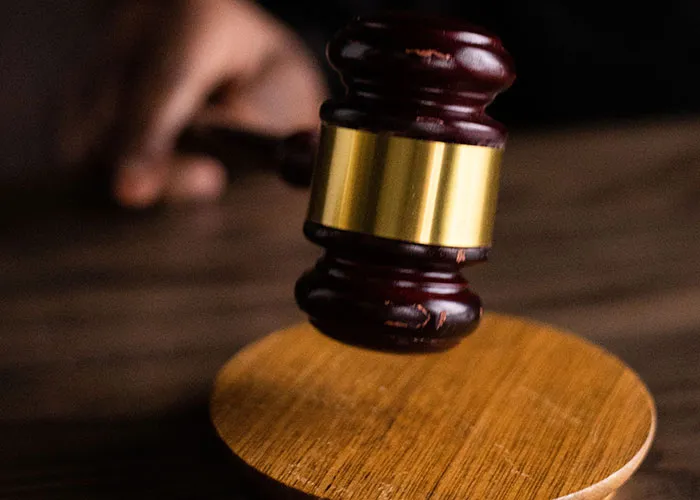
Canadian Lawyer Magazine explores another reason certain cases can stay with legal professionals long after the final decision: the emotional toll of dealing with other people's suffering. Lawyers may regularly hear accounts of domestic violence, child abuse, sexual assault, catastrophic injuries, or wrongful loss, while also examining distressing photographs, medical records, and testimony.
Repeated exposure to these experiences can contribute to vicarious trauma or secondary traumatic stress, which involves trauma-related reactions arising from engaging with another person's suffering. The burden may become heavier when a lawyer feels responsible for a client's future and the outcome falls short of what they hoped to achieve.
An innocent person being convicted, a vulnerable client remaining in danger, or a victim receiving inadequate compensation can leave a lawyer struggling with guilt, grief, or a sense of failure.
#22
#23
One of my tasks as the judge's law clerk was to keep all the evidence that was admitted in my office until the trial was over. This included all of the victim's blood soaked clothes and the bullet fragments the medical examiner pulled out of his head during the autopsy. Knowing I wanted to be a prosecutor, that was my fork in the road for deciding whether or not I had what it took to deal with that kind of brutality. I'm glad I chose to continue down the path because I love my job, but this case will always have a front row spot in my mind.
Defendant was convicted and sentenced to life without the possibility of parole.
#24
The hearing was for a mom trying to get custody back of her daughter. She was taken because mom was a j****e and they found the daughter in a trap house and the mom was passed out.
Daughter was placed with grand parents who were really well off and really loved their grand daughter and it was the best place for her.
However mom had gotten a job and tried getting her back. Mom is legit nodding on the court room but since she had held a job for 30 days straight the court ruled that she was now fit to parent and was given back to mom.
Some cases also create what is known as moral injury, a form of distress that can arise when someone witnesses or is unable to prevent events that conflict with their deepest moral beliefs. Certain details may remain vivid for years, and the conclusion of a case does not necessarily provide emotional closure. Yet lasting memories are not always painful.
Lawyers may also remember the cases in which they helped someone escape abuse, prevented a wrongful conviction, or secured compensation that made a meaningful difference to a client's life. These experiences reflect the complicated nature of legal work: the profession can expose people to disturbing behaviour and heartbreaking outcomes, but it can also give them the opportunity to protect others and make a difference when it matters most.
#25
#26
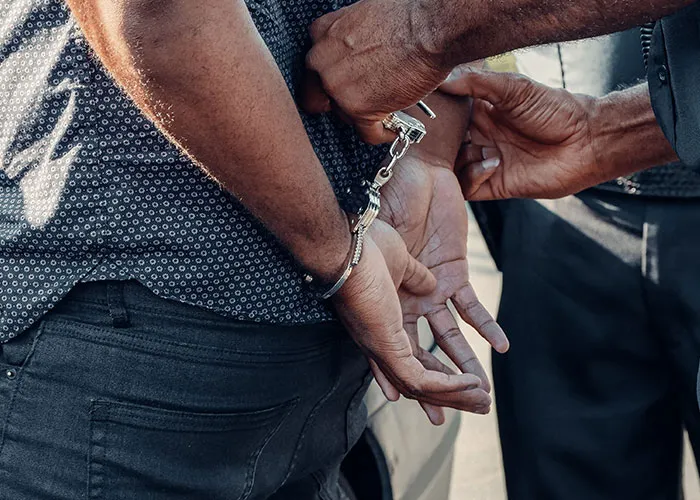
Worst part: the guy I was defending was 15 years old. And the other ones that did it with him where 13 and 12 years old. That's hard to see.
#27
I'm from a pretty small town. Through a connection of my parents, I was able to "shadow" the District Attorney for a summer during college. I expected to be going to an awful lot of DUI, statutory rape, and burglary trials, since that's most of what showed up on the police blotter. The night before I was to start, I went to bed very early. What can I say, I was excited. My parents were off on vacation and I was just home with my big brother.
After I had been asleep for a short time, my brother came into my room. "The phone is for you. It's the police."
"Hi Whovi, it's [the District Attorney]. I know you're not starting with us until tomorrow, but how would you like to get started tonight? Wear jeans and boots, if you have them."
I didn't even really say anything to my brother, I just got changed quickly and went to the police station.
Turns out, a woman in town had set her home on fire with her two children inside, k*****g both of them. I was up all night with the DA during the initial investigation. He took me to the home, I had to climb up a ladder and onto the roof to get into the girl's bedroom. They shared a room, but had separate beds. I was told by the police that, when they found them, both were in the same bed. Meaning they were awake when the house was on fire and crawled into bed together, terrified.
The neighbor was a police officer. He saw that the house was on fire, ran over to try and help, and was told by the mother that the kids were still inside. He couldn't get in to save them and was just devastated.
The rest of the day is a blur. And exhausting and traumatizing blur. I went to the autopsies. I got dizzy and had to leave the room.
Honestly, the case was so devastating that I tried to wipe it out and didn't follow it much once I went back to college. A quick search tells me that the mom plead out to avoid the death penalty, which I knew the DA was going to fight for. She'll be in prison for the rest of her life.
TL;DR: Woman set her house on fire to k**l her two small children.
Behind every legal case is a situation that brought people into a courtroom, and sometimes the details are far more disturbing, creepy, or heartbreaking than anyone could have anticipated. While lawyers spend years learning how to navigate the law, no amount of preparation can make every shocking revelation or unexpected turn easier to process.
Some cases test their patience, others challenge their sense of justice, and a few leave a lasting impression long after the paperwork has been put away. The stories shared by lawyers offer a glimpse into the unpredictable side of the profession, where human behaviour can be stranger than fiction and the truth is not always easy to uncover. Which of these cases shocked you the most? Let us know in the comments!
#28
#29
Needless to say, the police were very happy and labeled it the ‘easiest d**g bust ever’.
#30
#31
A few years back, protesters began systematically blocking access to the Burnaby (near Vancouver, BC) oil refinery in an attempt to block construction on the new pipeline that was coming in. At first, people did it and kinda ran away, but an injunction was received and people started violating the injunction as a point of pride, getting arrested and so on. In almost every case, there were people present and press present so it served as a form of "criminal contempt of court" instead of a civil contempt of court. The difference works itself out below.
Now the way public injunction breaches of this nature work is that the first few people tend to get slaps on the wrist despite their breaches being criminal contempt. The first few people got $500-1000 fines (this would be in line with a civil violation which cannot result in jail time). However, the way the court sees it, if you continue to breach the injunction, despite knowing (or you should know) for weeks or months that it is in place, you will receive stiffer penalties.
The early people could have gotten jail time, but essentially no one did. However, as time went on, people still blocked, got arrested, and sentenced. Once a few weeks/months past, it got a bit crazy because almost every single person had no criminal record, the violation was simply too far in time.
So if you sat in the court room, you would unironically start seeing little old ladies who were first time offenders being sentenced to a week in jail. Most of them obviously didn't anticipate this so they were gobsmacked, but it was like, yeah its rough but maybe don't publicly violate court orders?
I applaud them for the courage of their convictions, but you won't catch me in jail any time soon.
#32
#33
#34
#35
#36
#37
I grew up in Kentucky, and went to college in a poor county. Married couple, 2 children, 5 and 2. 2 year old was found dead, touching an electric socket. Apparently, a case of deadly neglect... Until they found the ligature marks.
She had been tied by the feet and strangled. The parents then posed her touching the socket and left her to be found by the 5 year old.
As an intern, I had to review the testimony of the expert witness (coroner) and pull out some facts.... Which means I had to look at the pictures, crime scene and autopsy.
We were working for the defense.
#38
We had several love letters the girlfriend sent this client in jail. They were in another language, which I speak. I translated them for the attorney.
These letters were heart-wrenching. She was still so in love. She prayed every day that her a****r would get out of jail, and she already hoped to name the baby after its dad-the dad who hospitalized the mother in an attempt to k**l the kid-made me hate my job a little bit.
And that's why I don't do criminal law and work with domestic a***e victims on reduced fees!