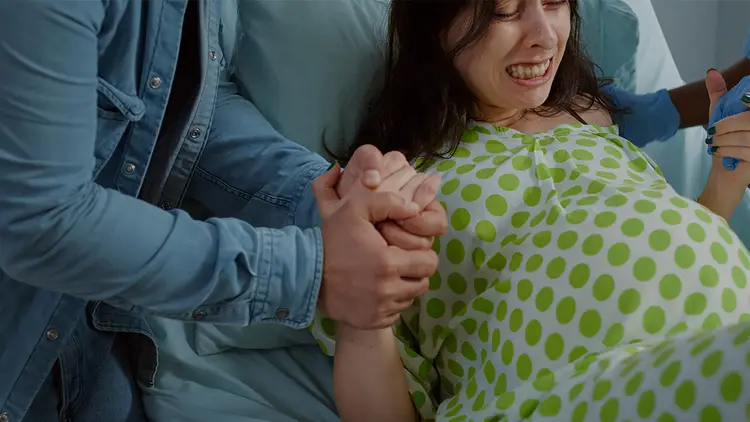
After giving birth to a beautiful baby girl, Melissa Hogenboom thought that she was through the worst of it. An emergency cesarean section was terrifying, but at least her daughter was safe and healthy. She could finally enjoy the bliss of having a newborn. Four days later, however, Hogenboom was back in the hospital having another emergency surgery to repair the complications that were caused by her stitches coming undone. Seven years after that, she was in the hospital yet again due to a bowel obstruction. It’s no secret that having a child is an excruciating and laborious process. Moms are warned for months before giving birth about all of the potential health complications, but many don’t realize just how long-lasting these issues might be. To help women understand exactly what they’re getting themselves into when they decide to start a family, mothers have been opening up about the ways in which childbirth has permanently impacted their bodies. We did a deep dive into the risks of having a baby in 2026 and what new moms can do to ensure that they receive the support they need. Doodler Collective / Unsplash (not the actual photo) DC Studio / magnific (not the actual photo) Childbirth should be one of the most natural experiences that a woman can go through. It’s been done billions of times, and none of us would be here without it. Yet even today, with modern medicine, this can be an excruciating process for moms to undergo, sometimes leading to lifelong health complications. As Melissa Hogenboom explained, her health didn’t simply bounce back after she had given birth. In 2024, her bowels had protruded into a gap in her stomach lining, causing it to perforate. This led to pus forming in her abdomen, which caused a life-threatening infection. Had Hogenboom not received medical attention when she did, her condition could have led to sepsis. And while her specific situation was rare, the idea of mothers experiencing complications from childbirth that no one prepared them for is disturbingly common. In fact, it’s estimated that every year, approximately 40 million women around the globe who have given birth are impacted by complications that last months or years. Some of these issues don’t even appear until their child is a toddler or in school. pressfoto / magnific (not the actual photo) Giving birth has never been without risk. The World Health Organization reports that 260,000 women lost their lives during and following pregnancy and childbirth in 2023. However, 92% of these deaths occurred in low- and lower-middle-income countries. So there is a common assumption that giving birth in a high-income nation comes with little to no risks. This is far from the truth. Giving birth is much safer than it was a century ago, as maternal mortality rates were 30 to 50 times higher than they are today. But the emphasis on saving lives has left many long-term consequences of giving birth overlooked and neglected. The most common long-term health complications stemming from childbirth include difficult or painful sex (35%), lower back pain (32%), urinary incontinence (8-31%), anxiety (9-24%), fecal incontinence (19%), depression (11-17%), tokophobia or fear of childbirth (6-15%), and secondary infertility (11%). More serious complications can include pelvic organ prolapse, post-traumatic stress disorder, thyroid dysfunction, nerve injury, peripartum cardiomyopathy, and obstetric fistula. Meanwhile, it’s estimated that up to 90% of mothers will experience at least some tearing, grazing, or an episiotomy while giving birth. According to a 2024 survey from the Pew Research Center, 45% of young women in the United States say that they’d like to become mothers someday. But it’s important for these women to make an informed decision and understand exactly what they’re getting themselves into when they decide to start a family. Getty Images / Unsplash (not the actual photo) Compared to many other mammals, humans are unique in the ways that we give birth. For example, human babies cannot immediately get up, walk around, and feed without assistance. They are uniquely helpless. At the same time, human newborns have much more active brains than other species, leaving moms with an incredibly difficult job during childbirth. This leads to the obstetrical dilemma. It’s not easy for our unusually large brains to fit through a mother’s birth canal, so moms must give birth before the child’s head is too big. But the baby isn’t really fully developed yet, which is why he or she requires so much attention and help from their parents during the first year of life. Apparently, childbirth may be becoming even more difficult for moms over time. Research has found that women’s pelvises have been shrinking over the past century, with the average female’s pelvis measuring 4.2 centimeters narrower than it was in 1926. Not only does this mean that childbirth is becoming more of a challenge for mothers, but it also means that many more women will have to opt for cesarean sections instead of vaginal births. By 2030, C-sections are expected to account for 29% of births worldwide. Getty Images / Unsplash (not the actual photo) In some countries, such as the Dominican Republic, Brazil, Cyprus, and Egypt, C-sections already make up the majority of births. And in the United States, they account for one-third of births. Both delivery options come with their own sets of risks and potential complications, but mothers who have a cesarean section face a 16% higher risk of dying during childbirth than those who give birth naturally. Other potential risks and complications include an infection at the incision site, hemorrhage or increased blood loss, injury to organs, adhesions, an extended stay in the hospital, extended recovery time, reactions to medications, and risk of needing additional surgeries. As for the long-term impacts, however, one study found that mothers who have given birth by C-section face an increased risk of needing a hysterectomy later in life, as well as other potential surgical complications. The researchers also noted that in many cases, the C-sections performed were not necessary and that mothers could have opted for natural births instead. Plus, every subsequent time a mother has a C-section, she’s opening herself up to more risks. “Because women often have more than one baby, we are the only surgeons that routinely cut on the same scar over and over again,” Dr. Neel Shah, co-author of the study, explained. “That makes surgery technically harder each time. C-sections and hysterectomies are two of the most common surgeries performed on women, and those who require both may be at significantly higher risk of complications." Regardless of the method of delivery, many mothers also experience chronic pain and mental health issues years after giving birth. Polina Tankilevitch / Pexels (not the actual photo) Is there anything mothers can do to minimize the risks that they’ll face after giving birth? The Mayo Clinic notes that one of the most important factors is having access to proper postpartum care. New moms must be in contact with their doctor within three weeks of giving birth, and they should return for a complete checkup within 12 weeks of delivery. It’s crucial for mothers to be open about any concerns they may have, and their doctors should conduct a thorough appointment to assess their mood, emotional well-being, and physical health. Moms should also feel empowered to speak up when they’re experiencing health complications or anything that they think might not be normal. Unfortunately, a 2019 study that examined women’s experiences after undergoing pelvic organ prolapse found that many delayed seeking help. This was often because they felt embarrassed or felt that their symptoms were dismissed by healthcare providers. One woman in particular tried to ignore her symptoms for 30 years before finally visiting a doctor. Another study found that moms overwhelmingly expressed a need for having a checkup a year post-childbirth. But unfortunately, many parents and doctors don’t prioritize this, as their entire focus tends to become about the baby once he or she is born. As Alison Stuebe, professor of obstetrics at the University of North Carolina, put it: “It is as though the baby is the candy, the mom is the wrapper. After the candy is out, the wrapper, we cast it aside." Learning how to advocate for themselves is something that can benefit women in many ways, and it might even save their lives when it comes to health complications post-childbirth. Bringing home a healthy and happy newborn is certainly something to celebrate. But Moms deserve to receive just as much care and support after giving birth.