


It’s common practice to pay a deposit when you rent a home. Unfortunately, dealing with a jerk landlord is also becoming the norm. While many tenants get their deposit back at the end of their rental period, about 10-20% never receive it.
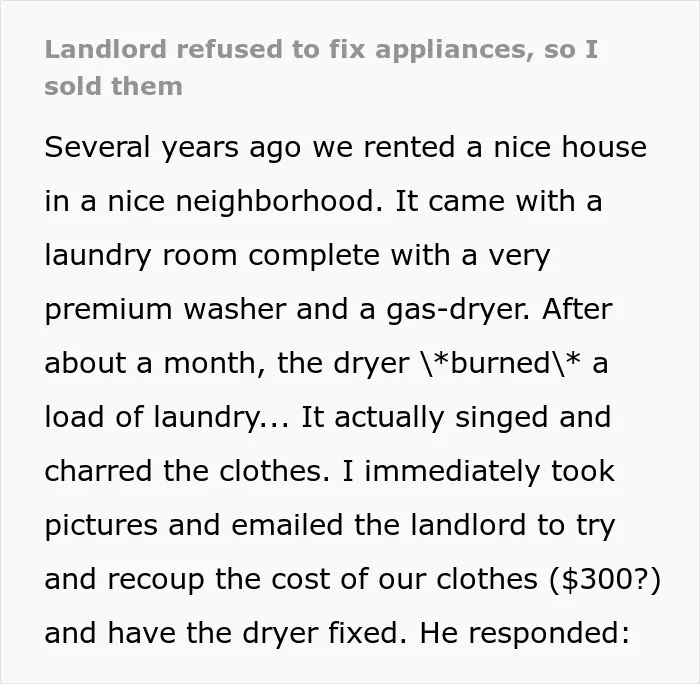
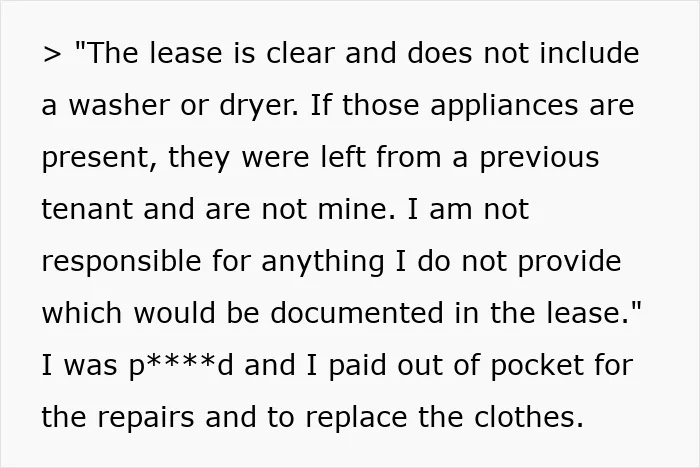
This person had to deal with a similarly greedy landlord. When appliances needed fixing, he refused to chip in, claiming they weren’t his and that he wouldn’t pay for it. So, to get revenge on the jerk landlord, the tenant went through the lease agreement again and applied the landlord’s logic, but this time in a way that left the landlord fuming.
A tenant asked their landlord to fix appliances, but he refused, stating that they weren’t even his
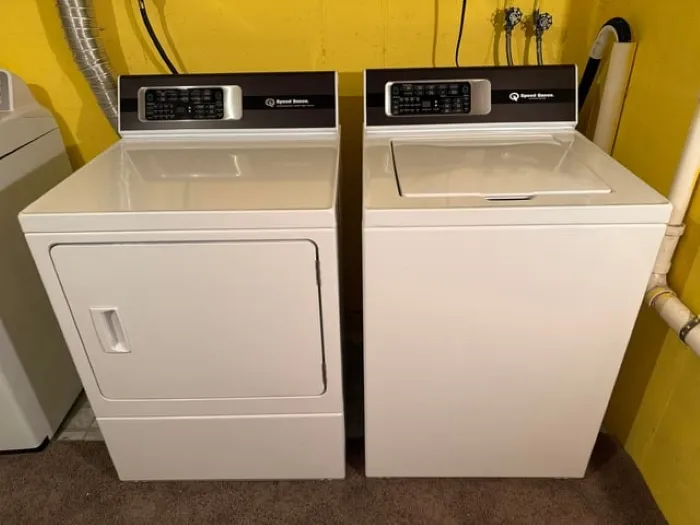
So, the tenant applied that logic and found a way to get their deposit back using said appliances

Many tenants lose their security deposits, but many also take their landlords to small claims court
A security deposit is like Schrödinger’s Cat for a lot of renters: it’s there and very real when you pay your landlord, yet you can never be sure whether it will be there when your rental period ends. That usually depends on the whims of your landlord: if they don’t feel like paying it back, they’ll likely come up with a reason.
Getting their deposit back can be a real challenge for some renters. In fact, this is such a common problem that 59% of renters don’t actually expect to receive their deposit back. It’s almost an open secret that a landlord is likely to keep the deposit even if the property is spotless when the renter moves out.
Contrary to what some landlords might believe, the security deposit doesn’t belong to them. According to Steph’s Bookkeeping Service, “The moment a tenant hands over a security deposit, that money does not belong to the property owner,” they write. “It belongs to the tenant until the lease ends and [the landlord has] documented, lawful reasons to retain any portion of it.”
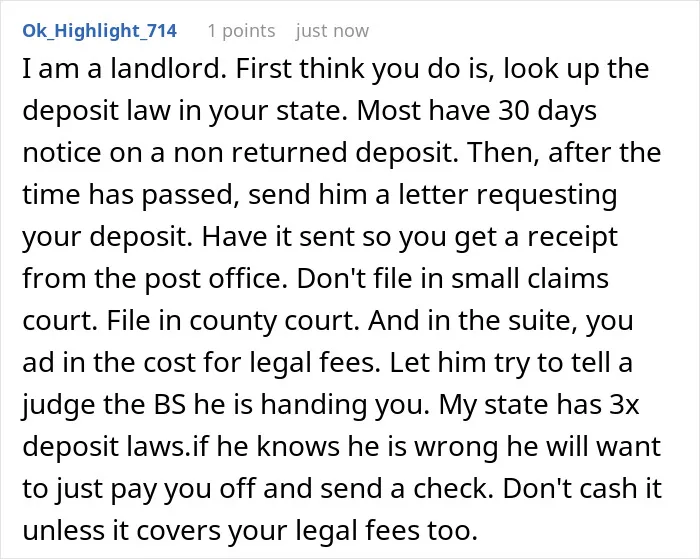
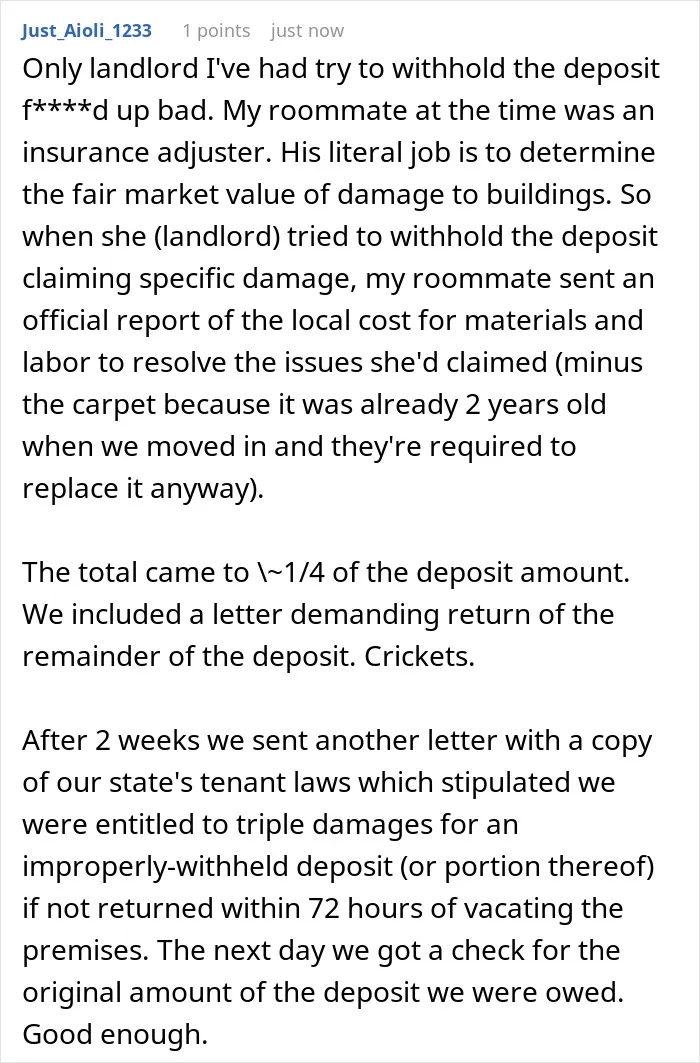
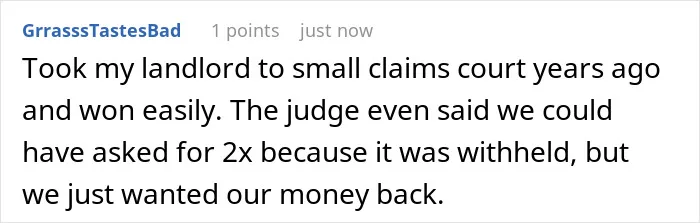
As many commenters recommended, tenants can actually contest their landlords and try to get their deposits back. A large portion of cases that end up in small claims court actually are about a tenant’s security deposit.
The experts at Nolo urge tenants to thoroughly document the state of a rental property as soon as they move in. That way, it’s easier to prove that the tenant caused no or minimal damage during their tenancy and therefore deserves their deposit back.
A landlord should be responsible for repairing all the appliances that were in a home from the beginning of the tenancy
Leftover furniture and appliances in a rental are not that uncommon. Sure, it seems like a waste of money for previous tenants to just leave it there, but at least 30% of British landlords report that their previous tenants have left belongings behind. General household goods like furniture, clothing, and kitchenware are the most common items left behind, but things like laptops, legal paperwork, and even IDs sometimes get left behind.
Disagreements about repairs between tenants and landlords are common, too. Granted, few probably involve landlords renouncing ownership of appliances just to avoid paying for repairs, but maintenance and repairs are the most common topics of contention between renters and landlords. So much so that about 52% of American renters say they've had disagreements with their landlords over similar topics.
In this story, the appliances were already there when the tenant moved in. Even if the landlord didn’t list them in the agreement, logical thinking suggests he should pay for their repairs. He might argue that only furniture and appliances listed in the agreement will be repaired, but it’s generally understood that a landlord is responsible for all the appliances that were there before the tenant moved in.
“There’s an implied promise in the lease or rental agreement that the landlord will continue throughout the tenancy to provide the amenities that were present at the beginning of the tenancy,” according to experts at Nolo. “A landlord who doesn’t deliver on the promises made at the time of rental isn’t upholding their end of the bargain.”
In the comments, the tenant detailed other ways in which the landlord was the classic jerk
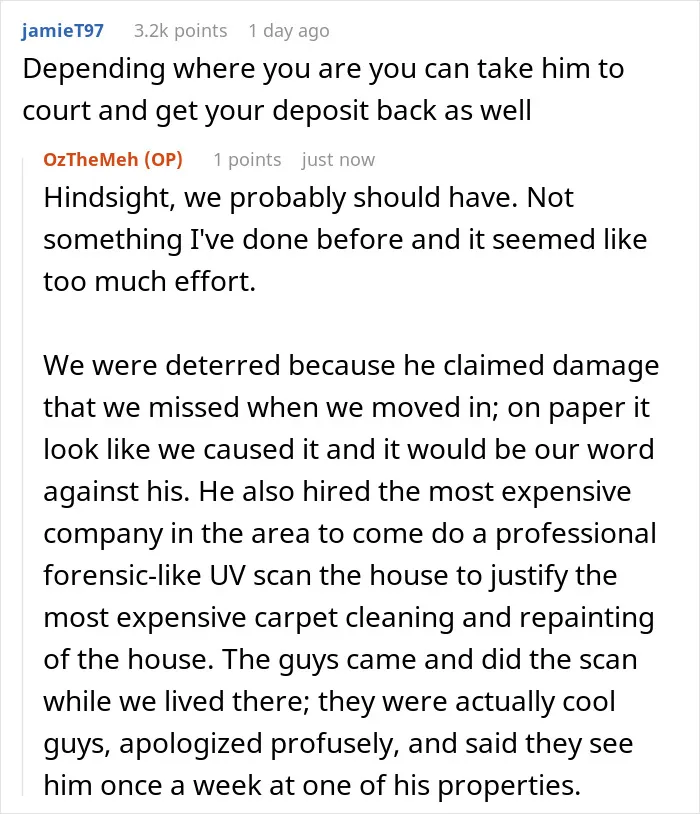
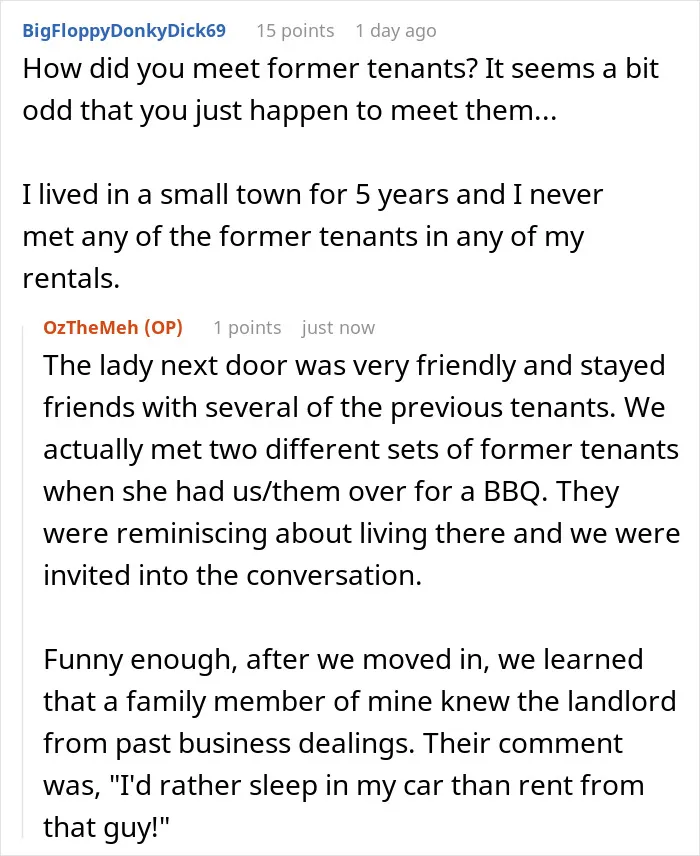
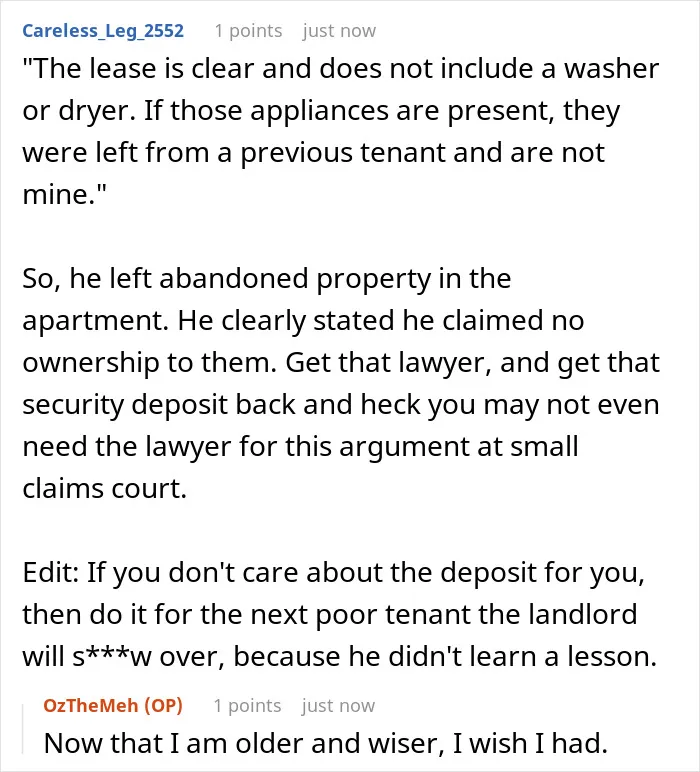
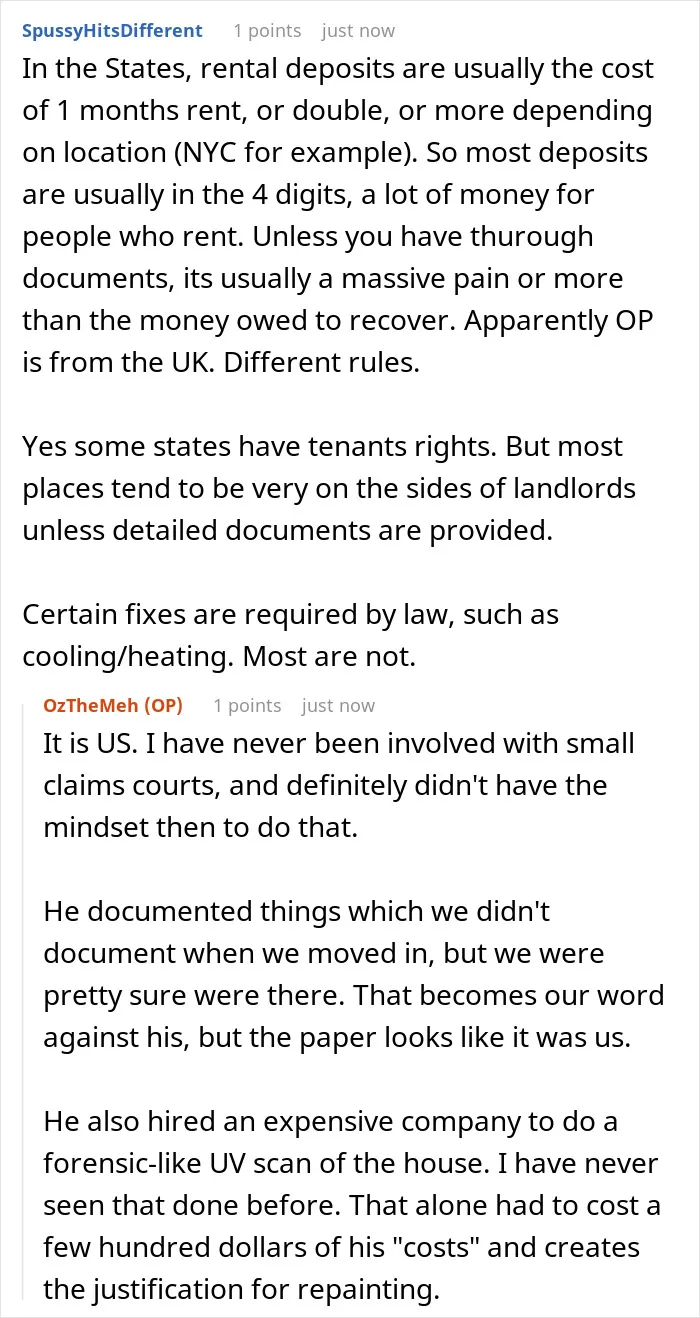
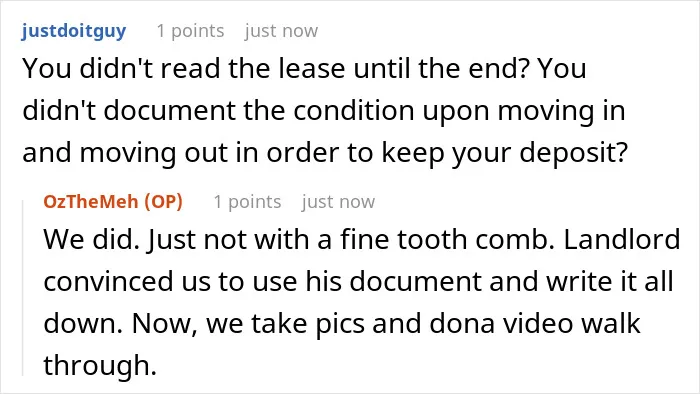
Commenters cheered for the tenant’s brilliant revenge, urging them to take legal action as well
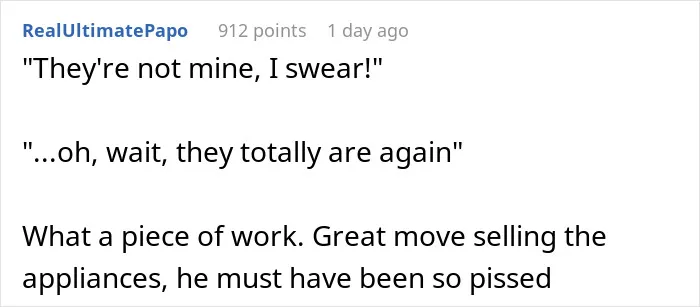

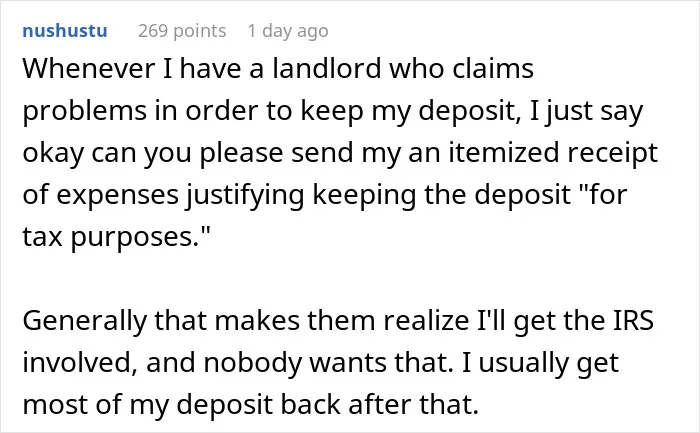
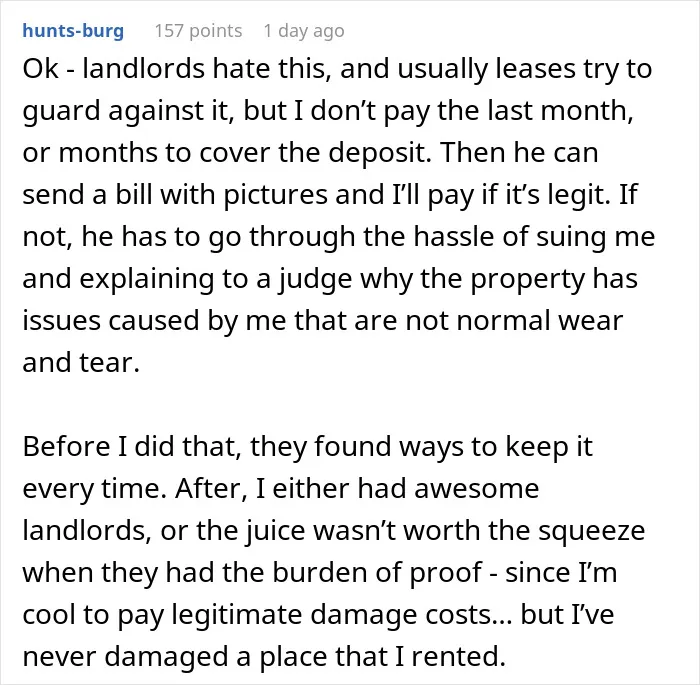

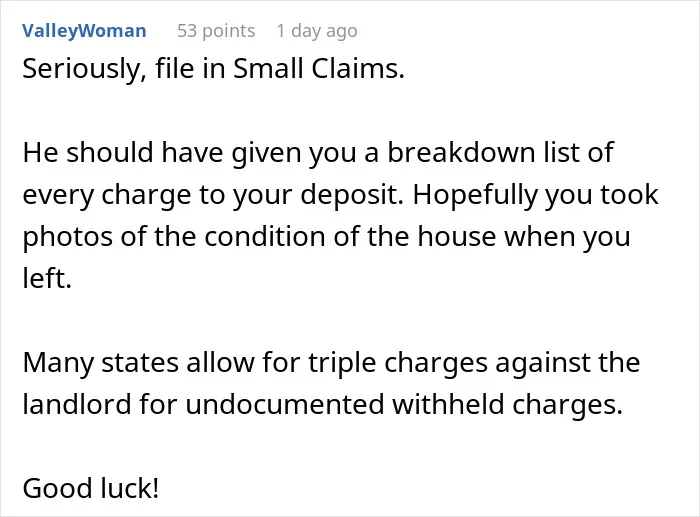




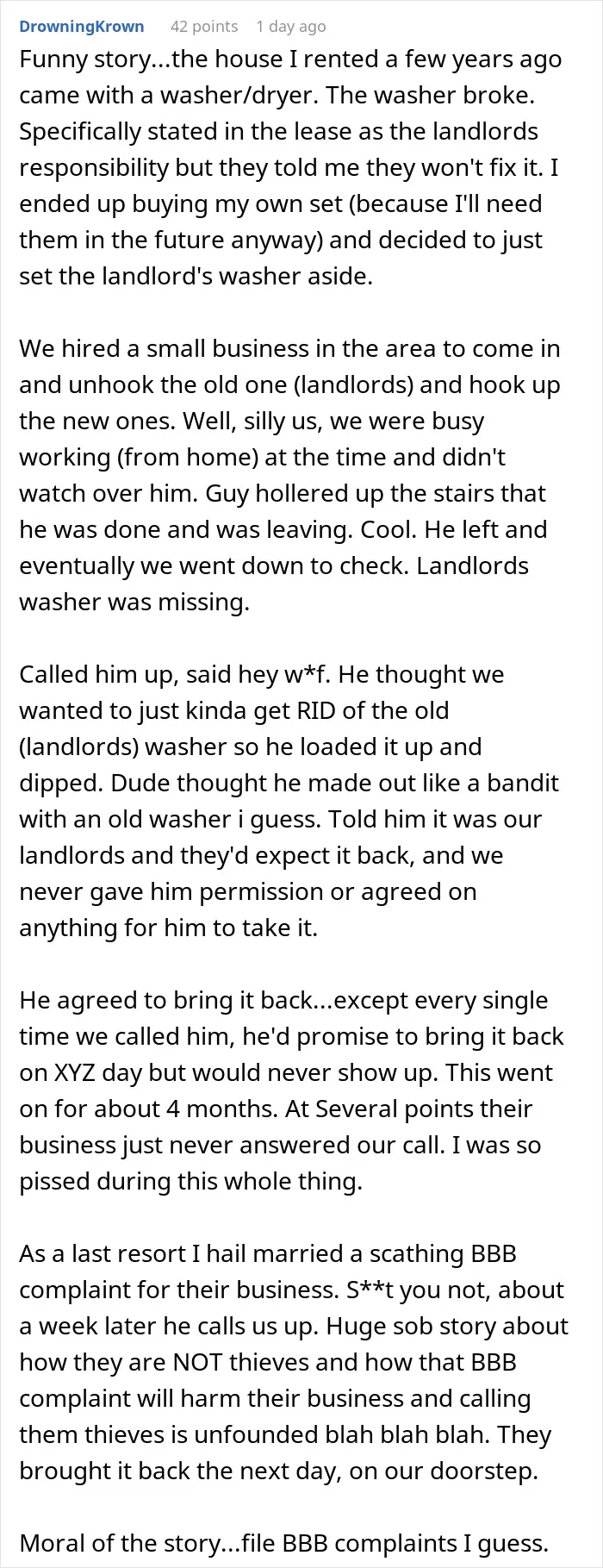
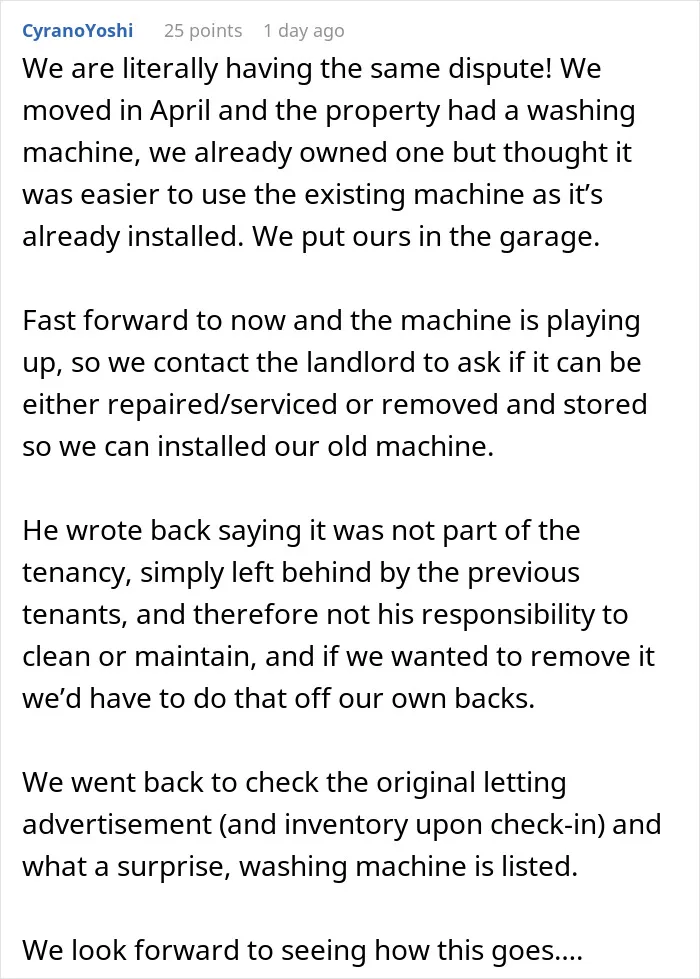
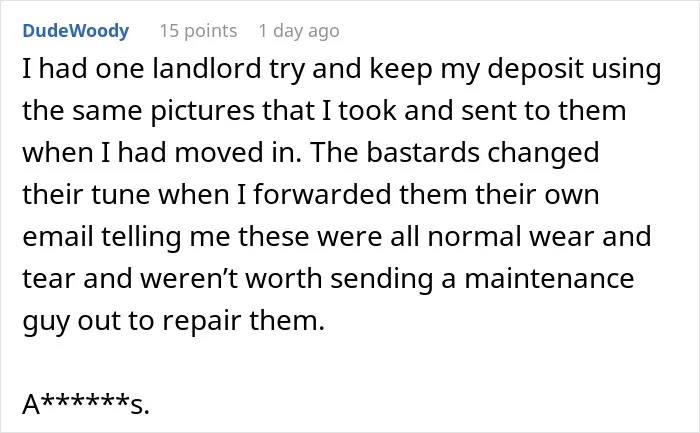
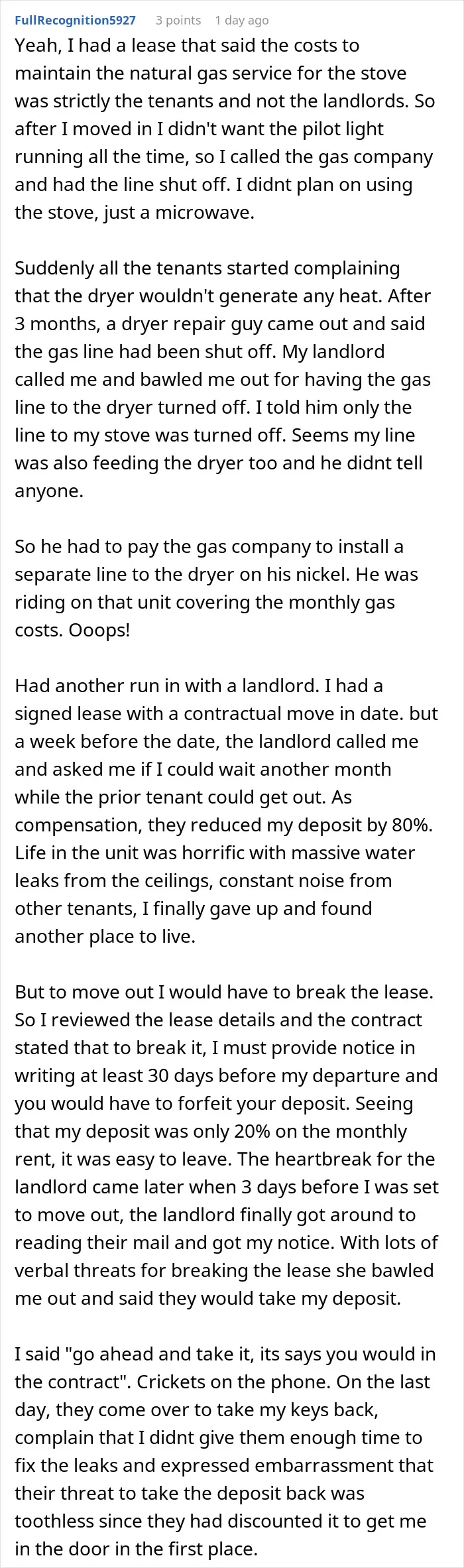
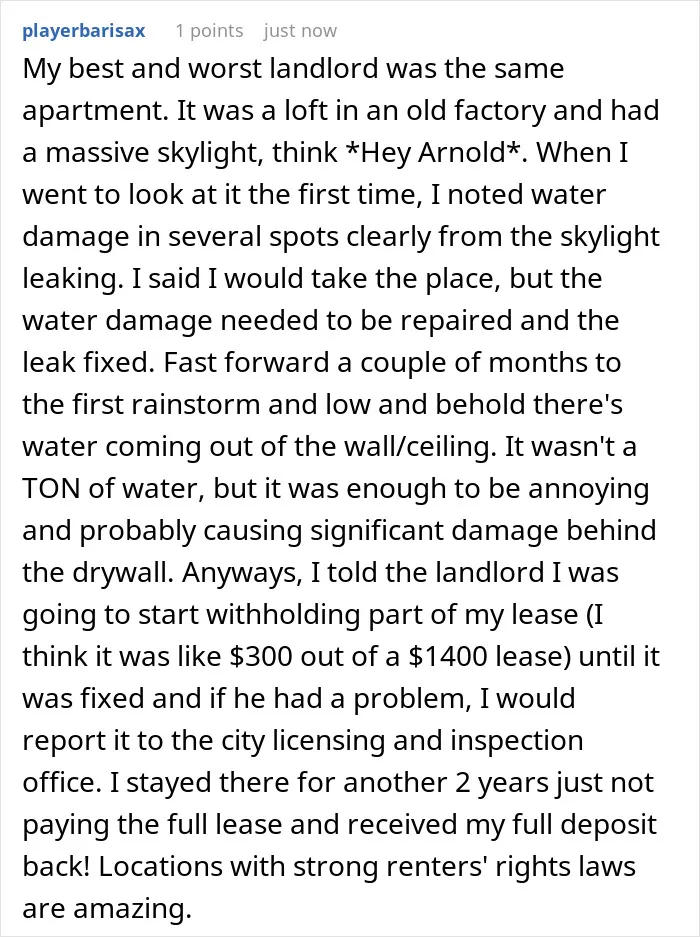
Other people had similar stories about dealing with insufferable landlords