


This post may include affiliate links.

#2
#3

We like to think we’d instantly know what to do when disaster strikes, but human psychology works very differently. When faced with danger, our brains struggle to process what is actually happening, leading us to pretend everything is fine for as long as possible.
If an unfamiliar alarm goes off in a mall, your first thought is rarely to run. Instead, your brain defaults to assuming someone made a mistake. That tiny delay can steal the most critical seconds you have to react.
“In emergencies people can deny that anything is wrong. They ignore fire alarms or they don't believe emergency warnings to evacuate etc. The best thing people can do is prep,” survival psychologist Sarita Robinson tells Bored Panda.
#4

Dr. Robinson believes that if you have had emergency training then you are more likely to do better in an emergency as you are not having to think through new behaviors.
“For example, if you have had fire extinguisher training you are likely to be able to think more clearly in an emergency and be more able to fire extinguisher more effectively as you will have rehearsed the behaviors before,” she tells us in an interview.
“A nice cup of tea can help in a crisis. The L-theanine (an amino acid found in tea) can help reduce anxiety. If you have a spoonful of sugar, it can boost blood glucose levels which can help you think more clearly.”
She notes that if you don’t have time for tea, some people benefit from caffeinated chewing gum. “The caffeine can help you feel more alert especially if you are lacking sleep.”
#5

#6
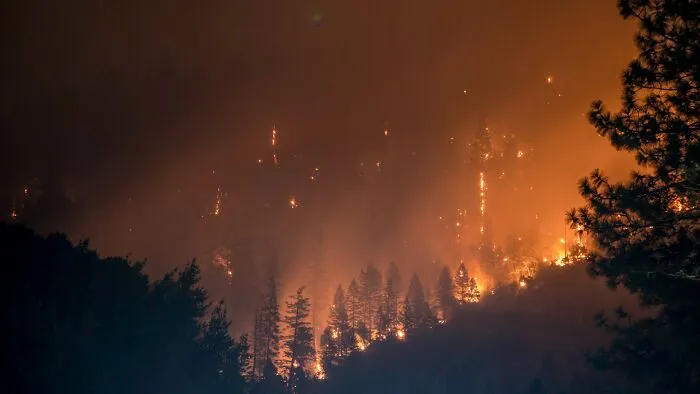
Psychologist John Leach spent years studying disaster scenes and realized that people split into three distinct groups during a crisis. He called this the 10-80-10 rule.
According to this rule, the top 10% are people who stay calm, quickly assess their options, and take control. The bottom 10% are people who completely break down, lose self-control, or act recklessly. And the remaining 80% freeze up.
In short, true panic is remarkably rare in a crisis. The most dangerous threat to survival is almost always our natural impulse to pause, freeze, and do nothing at all.
“Cognitive paralysis, resulting in complete inaction, is too common an occurrence to be ignored, and the case has been presented for the classic ‘fight or flight’ response to be renamed the ‘fight, flight or freeze’ response,” says Leach, who authored the book Survival Psychology.
#7

#8

#9
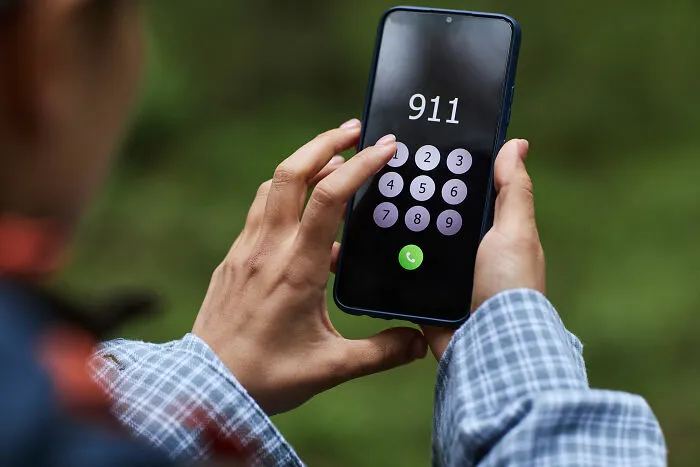
When a disaster strikes, the average brain gets flooded with stress hormones. Your heart beats out of your chest, your vision narrows, and you feel like you’re moving through deep mud.
During building evacuations, safety researchers often see people doing completely normal, random things instead of leaving. They might stand around gathering their things, putting on a jacket, or waiting for someone else to make a move. Their minds are basically trying to turn a terrifying situation into a normal day.
“Being in a situation where your life is in danger increases your emotional arousal, and high arousal causes people to limit the number of alternatives they consider. That can be bad when trying to determine a course of action, since you may never consider the option most likely to result in escaping safely,” says Jerome Chertkoff, a social psychologist at Indiana University.
#10

#11

#12

We see the freeze response play out during real-world catastrophes time and time again.
In a study by the National Institute of Standards and Technology, researchers examined how survivors reacted after the hijacked planes struck the Twin Towers on 9/11.
Instead of immediately running for the stairs, the average survivor hesitated for six minutes before moving, with some waiting up to half an hour. Caught completely off guard, many carried on with their work, collected their belongings, or stood around watching what others were doing, waiting for someone else to take the lead.
#13

#14

#15

Science explains why this cognitive gridlock happens.
A study published in Nature Reviews Neuroscience found that when people face extreme danger, the body releases a surge of stress hormones, including adrenaline and cortisol. These chemicals can temporarily impair the prefrontal cortex — the brain region responsible for planning, memory, and decision-making.
The brain may then shift toward faster, more automatic responses that rely on familiar patterns and instincts.
“We are all day-to-day survivors. We are alive today because from childbirth our behavior has adapted to our own particular environment. The danger arises when we are forced outside of our adapted environment,” says Leach.
#16

#17
#18

Another big reason people freeze up or react incorrectly during a crisis is remarkably simple: lack of basic knowledge.
According to research from St John Ambulance, England’s leading first aid charity, nearly half of all adults (49%) admit they would panic in a medical emergency simply because they don’t know what to do.
The study revealed that around 26% have never received any first aid training in their lives. And only four in ten feel confident they possess the skills to step in if someone were choking, bleeding out, or suffering a cardiac arrest.
#19
#20