





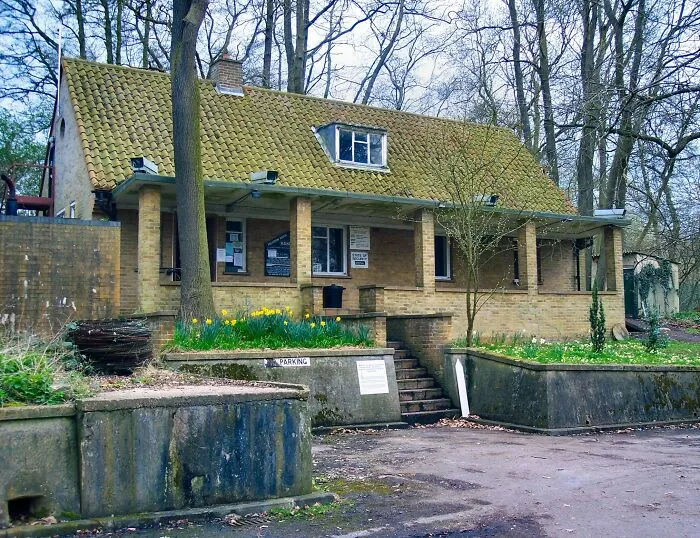
Tucked beneath an ordinary bungalow in the Essex countryside, the Kelvedon Hatch Secret Nuclear Bunker is one of Britain's best-kept Cold War secrets.
A plain, unmarked farmhouse door opens into a 100-foot tunnel leading three stories underground, where the British government planned to ride out a nuclear war in near-total secrecy (per Secret Nuclear Bunker).
Built in 1952 and expanding to over 20,000 square feet, the bunker was designed to house up to 600 government officials, military personnel, and BBC broadcasters, who would have been responsible for communicating with any survivors above ground.
The facility included its own BBC studio, a hospital, a canteen, and enough supplies to sustain its occupants for up to three months (per BBC)
For decades, locals had no idea what was buried beneath the Essex hills. The site was so effectively concealed that even the road signs pointing to it simply read "secret nuclear bunker," a deeply ironic label that became something of a local joke.
The British government officially decommissioned the bunker in 1992, and it has since been opened to the public as a museum by the Parrish family, who have owned the land since the 1950s.
A plain, unmarked farmhouse door opens into a 100-foot tunnel leading three stories underground, where the British government planned to ride out a nuclear war in near-total secrecy (per Secret Nuclear Bunker).
Built in 1952 and expanding to over 20,000 square feet, the bunker was designed to house up to 600 government officials, military personnel, and BBC broadcasters, who would have been responsible for communicating with any survivors above ground.
The facility included its own BBC studio, a hospital, a canteen, and enough supplies to sustain its occupants for up to three months (per BBC)
For decades, locals had no idea what was buried beneath the Essex hills. The site was so effectively concealed that even the road signs pointing to it simply read "secret nuclear bunker," a deeply ironic label that became something of a local joke.
The British government officially decommissioned the bunker in 1992, and it has since been opened to the public as a museum by the Parrish family, who have owned the land since the 1950s.