



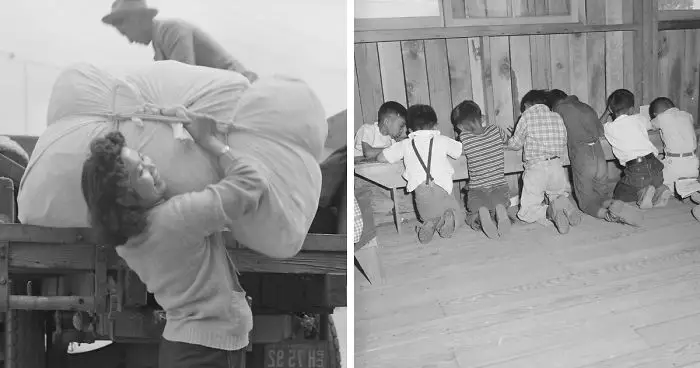

In 1941 Pearl Harbour became the scene of a devasting surprise attack by Japanese forces. After decades of being on the edge of war with Japan, the attack pushed the US to join World War II. Not only did this attack took thousands of lives but also triggered racial prejudices towards Japanese-Americans which led to mass 'evacuation' of around 1200,000 people.
On February 19, 1942, just a couple months after the attack, President Franklin D. Roosevelt signed Executive Order to deport and incarcerate all Japanese-Americans. Thousands of people, many of whom were born in the US, were forced to abandon their houses, businesses, farms, and possessions. They were loaded into busses with only as many things as they can carry with no knowledge of where they're going and how long they're staying there.
A photographer Dorothea Lange who is probably best known for her photo titled Migrant Mother was hired by the US government to document the evacuation. The photographer perfectly captured the devastating moments of Japanese-Americans leaving their old lives behind and entering into the unknown. However, the military wasn't happy with Lange's opposing opinion of the internment camps. The photographs were seized from her and only made public in 2006. Today we finally have the opportunity to look back at this particular moment in history and see for our selves how the lives of Japanese-Americans were changed forever.
#21
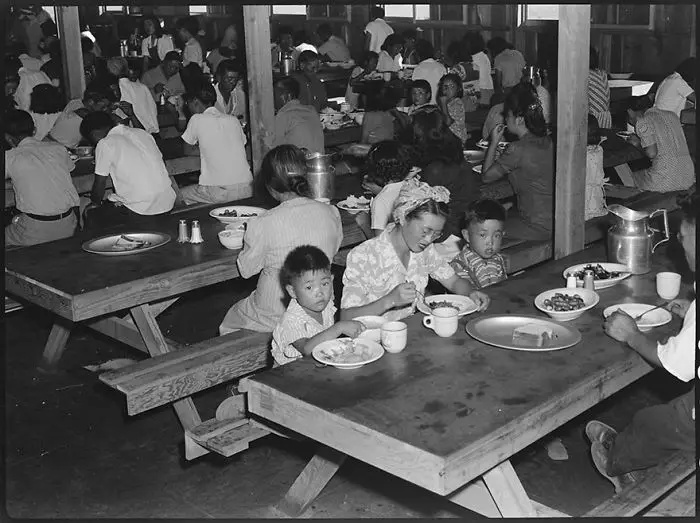
The full caption for this photograph reads: Manzanar Relocation Center, Manzanar, California. Mealtime in one of the messhalls at this War Relocation Authority center for evacuees of Japanese ancestry.
Report
17points
#22
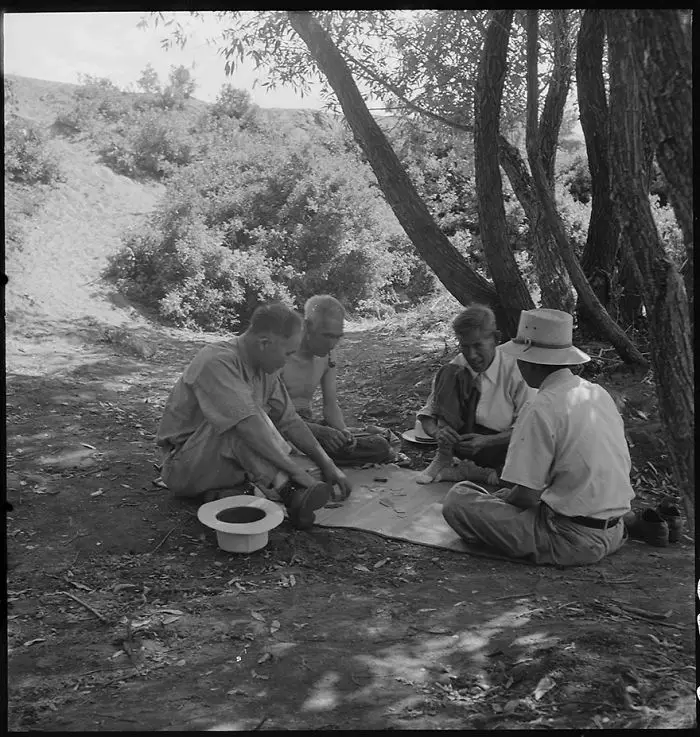
The full caption for this photograph reads: Manzanar Relocation Center, Manzanar, California. Evacuees enjoying games under the shade of trees near the creek which flows through the desert on the border of this War Relocation Authrority center.
Report
16points
#23
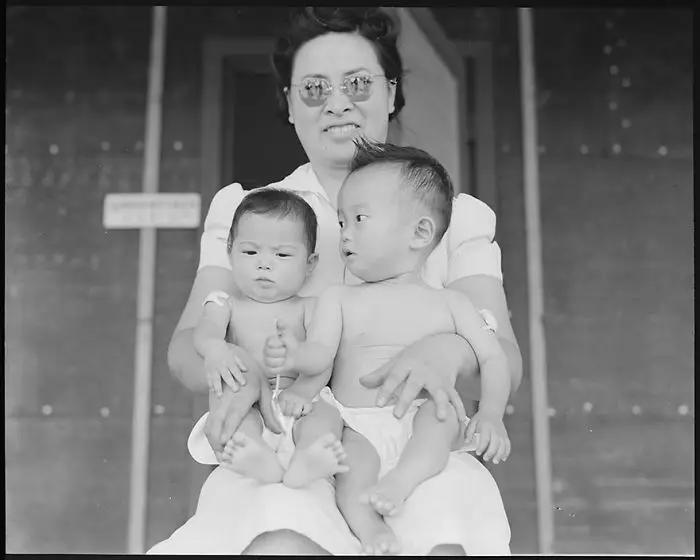
The full caption for this photograph reads: Manzanar Relocation Center, Manzanar, California. The two youngest of the 65 evacuee orphans in the Childrens' Village at this War Relocation Authrority center for evacuees of Japanese ancestry.
Report
16points
#24
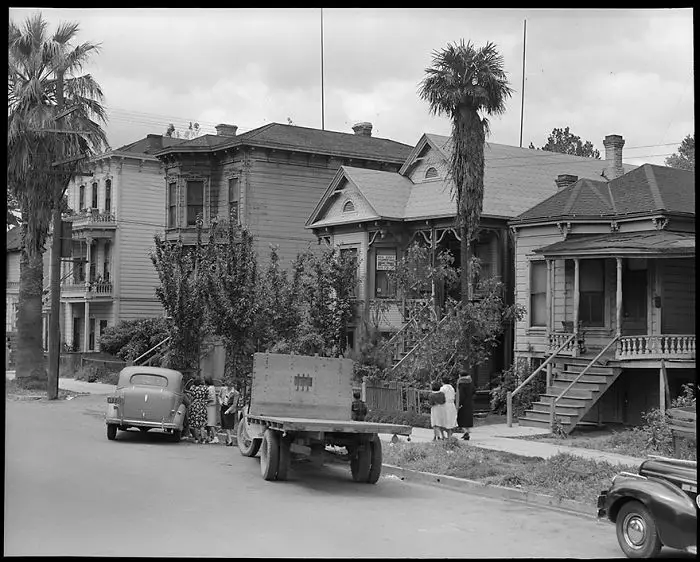
The full caption for this photograph reads: Sacramento, California. Typical homes of residents of Japanese ancestry. Evacuation to assembly centers is due in a few days and preparations are now under way.
Report
15points
#25
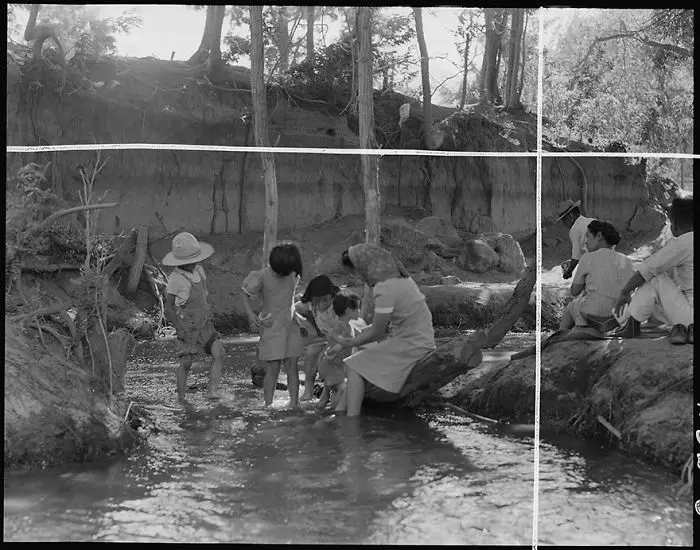
The full caption for this photograph reads: Manzanar Relocation Center, Manzanar, California. Evacuees enjoying the creek which flows along the outer border of this War Relocation Authority center.
Report
14points
#26
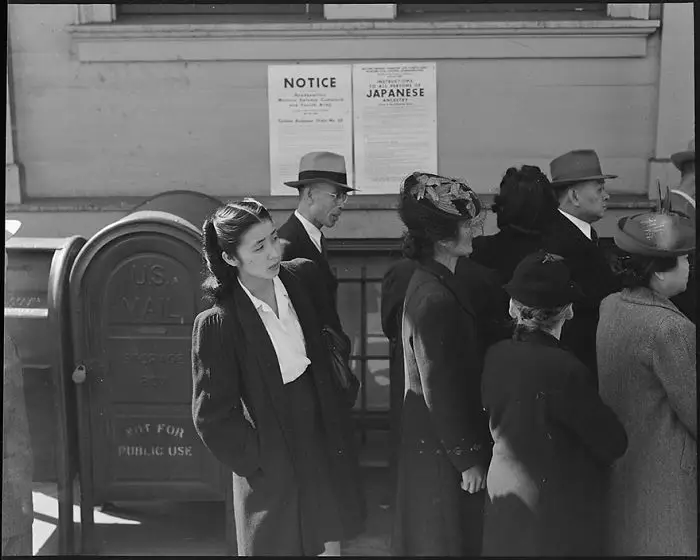
The full caption for this photograph reads: San Francisco, California. Residents of Japanese ancestry appear for registration prior to evacuation. Evacuees will be housed in War Relocation Authority centers for the duration.
Report
13points
#27
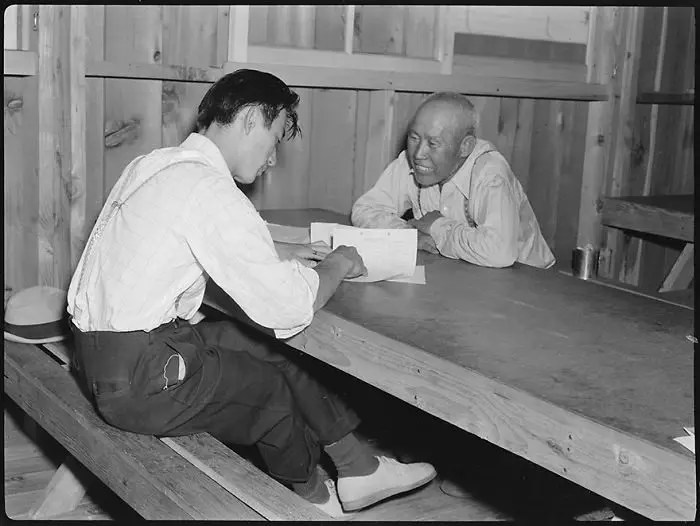
The full caption for this photograph reads: Manzanar Relocation Center, Manzanar, California. A complete record, by personal interview, is being made of every evacuee of Japanese ancestry at this War Relocation Authority center.
Report
13points
#28
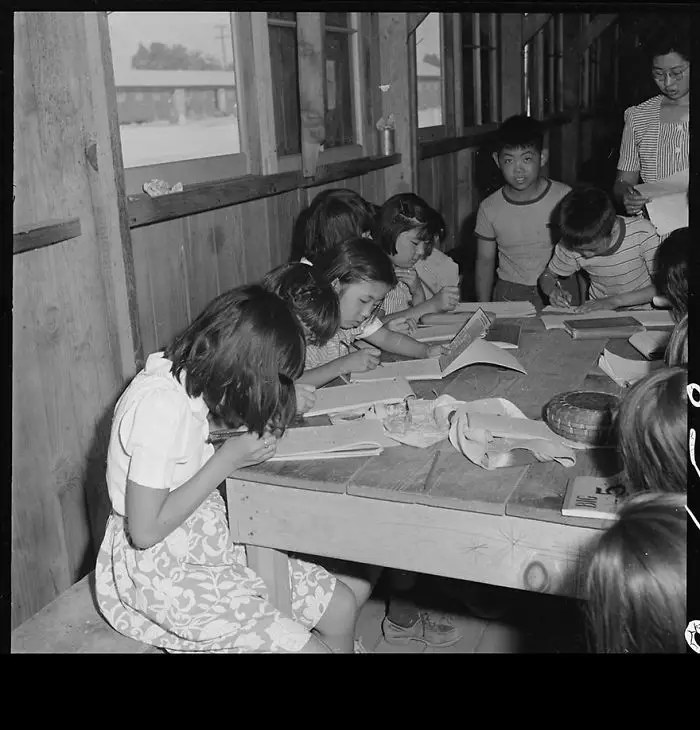
The full caption for this photograph reads: Manzanar Relocation Center, Manzanar, California. These young evacuees are attending the first elementary school at this War Relocation Authority center. There are six grades with volunteer teachers and voluntary attendance.
Report
13points
#29
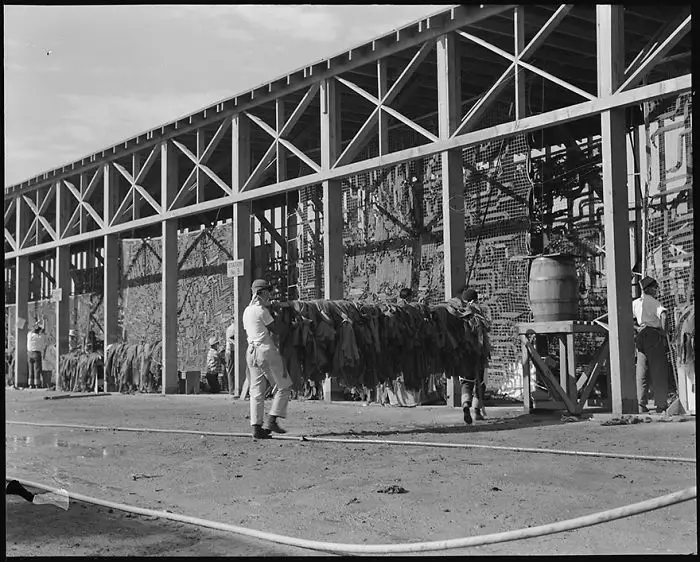
The full caption for this photograph reads: Manzanar Relocation Center, Manzanar, California. Making camouflage nets for the War Department. This is one of several War and Navy Department projects carried on by persons of Japanese ancestry in relocation centers.
Report
12points
#30
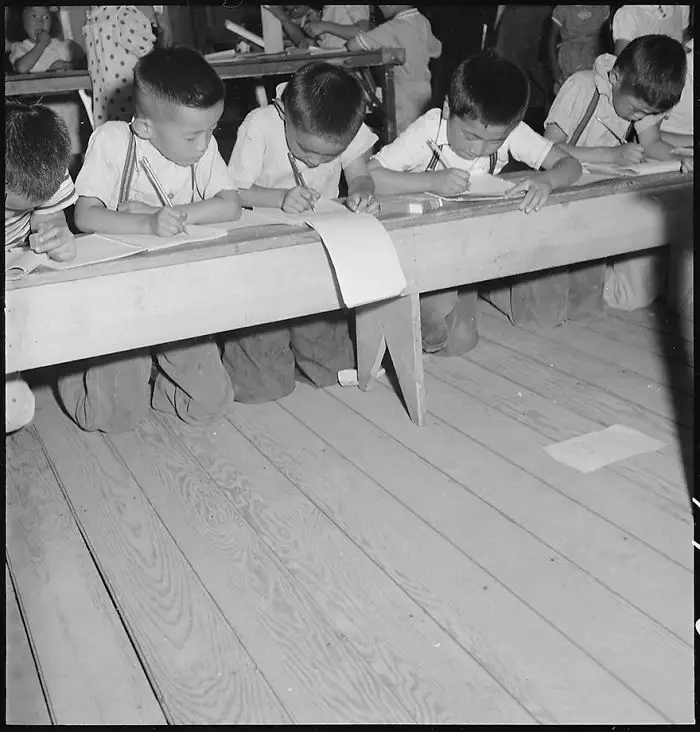
The full caption for this photograph reads: Manzanar Relocation Center, Manzanar, California. An elementary school with voluntary attendance has been established with volunteer evacuee teachers, most of whom are college graduates. No school equipment is as yet obtainable and available tables and benches are used.
Report
12points