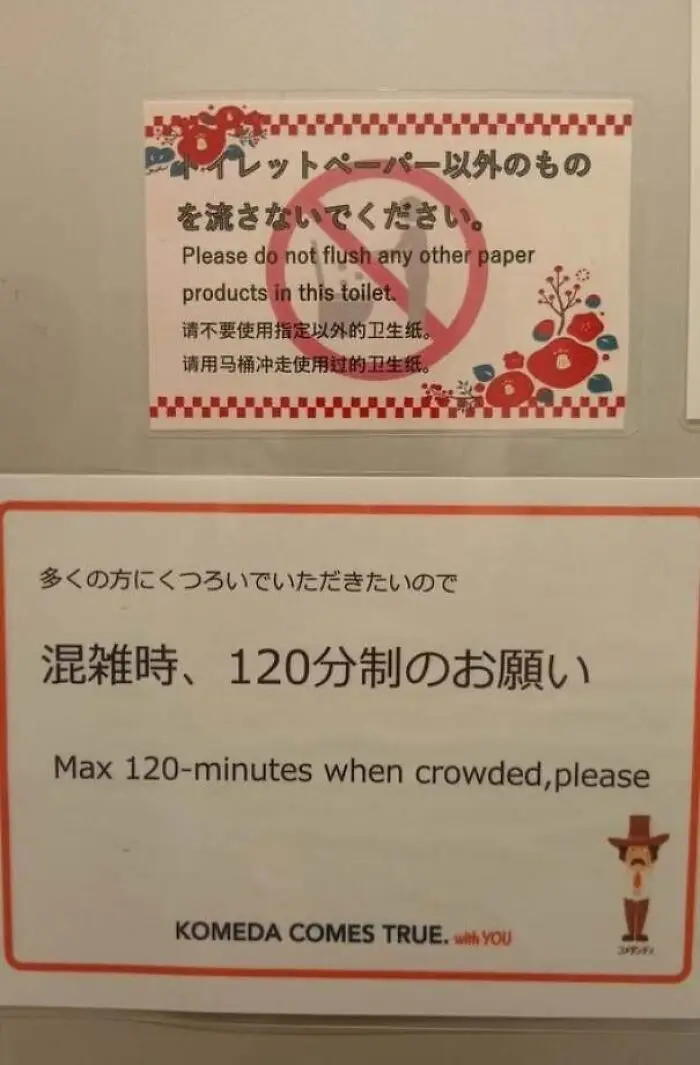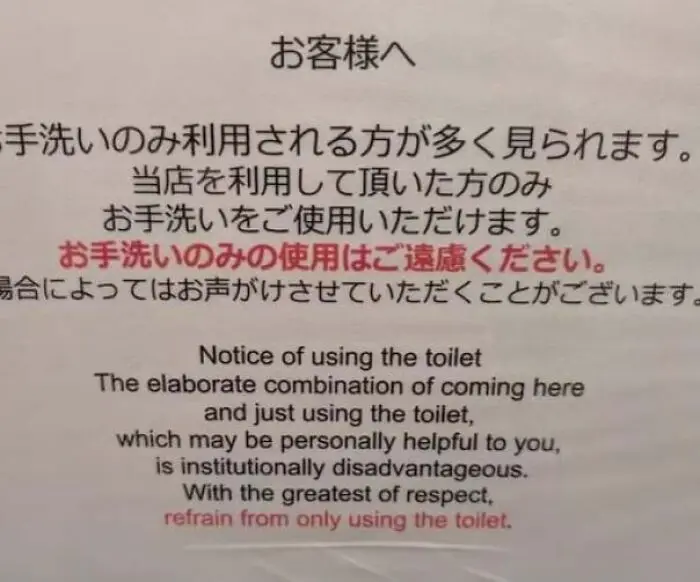



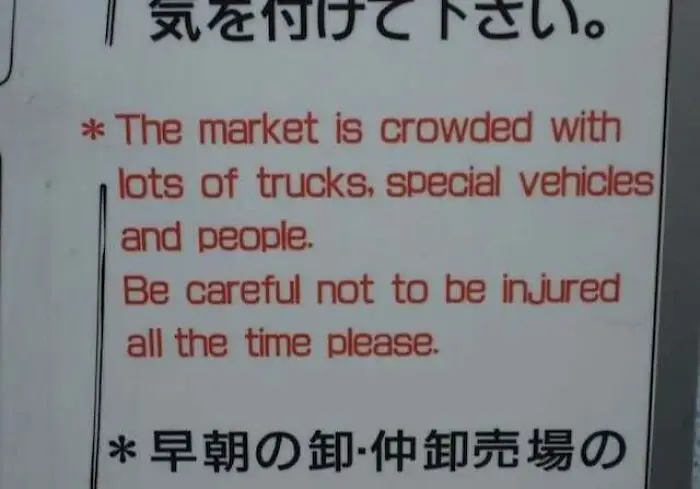
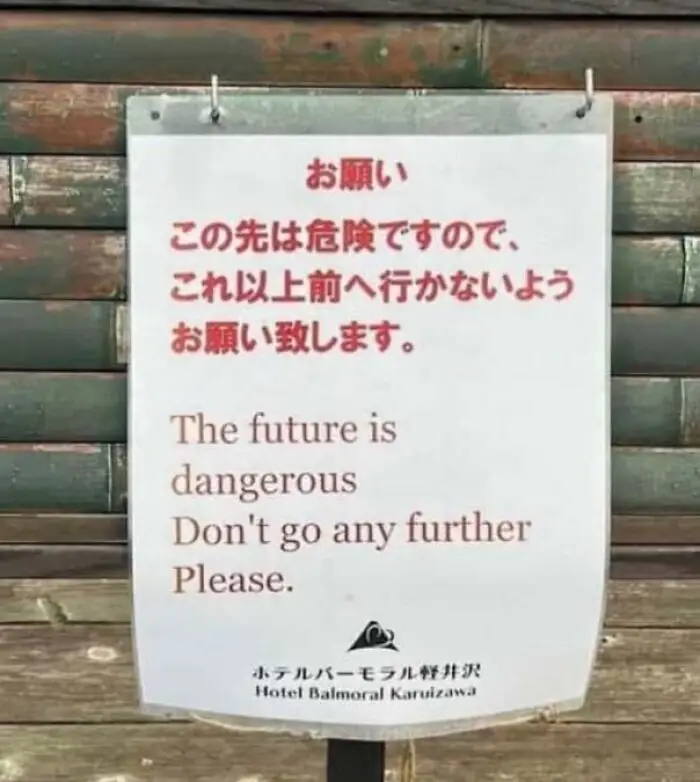
English has a rather interesting presence in Japan, where it is often used for more than simply communicating information. Research into Japanese advertising and public signage highlights how English can function as a visual and symbolic design element, even when the people seeing it are not expected to understand every word.
Businesses frequently incorporate English into shop signs, packaging, clothing, menus, and advertisements because it creates an appealing contrast with Japanese writing and makes designs stand out. Its presence can also give products a more modern, international, or fashionable appearance.
English is associated with ideas such as globalization, technology, and Western culture, which makes it an attractive addition for businesses hoping to project a particular image.



This use of English is not necessarily an indication that everyone in Japan speaks the language fluently. Sometimes, the words are included primarily for their appearance or the associations they create rather than their literal meaning.
English can make a brand seem more sophisticated or internationally connected, even if the phrases themselves are not particularly meaningful to someone who speaks the language. Historically, the language has also been associated with social status, educational opportunities, and desirable Western influences.
Consequently, its appearance in public spaces can serve a decorative purpose, adding atmosphere and visual appeal without necessarily being intended as practical communication.
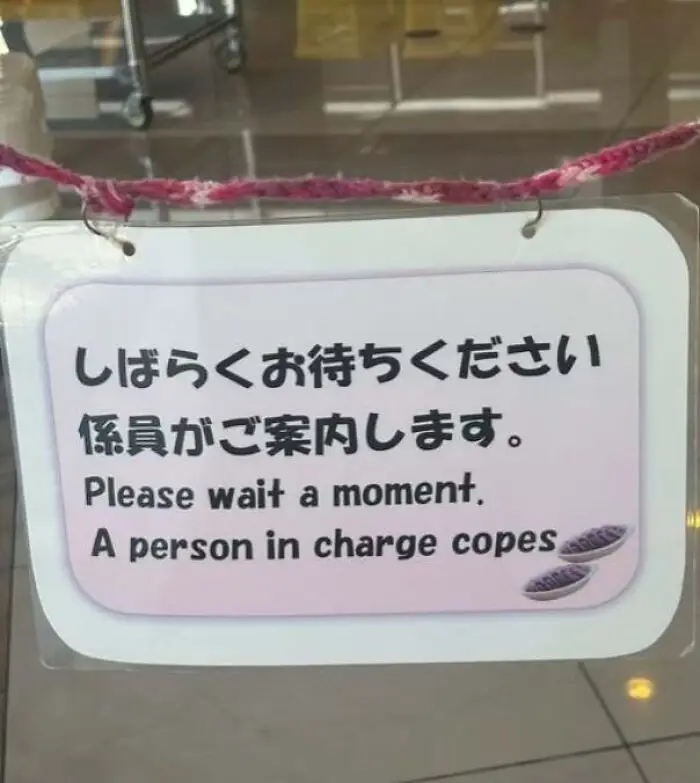
#8 When You Don’t Want Your Clientele To Be Motivated To Buy Anything…
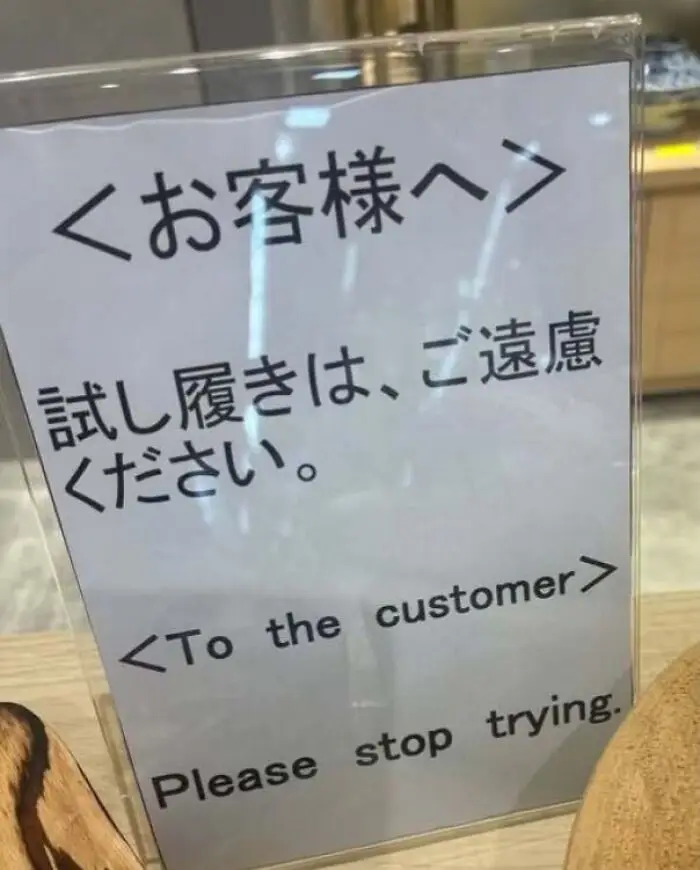

According to Transifex, Japan also has an interesting relationship with borrowed English vocabulary, as foreign words frequently enter Japanese and gradually develop meanings of their own. Some expressions are adapted to fit Japanese pronunciation, while others take on definitions that might surprise someone familiar with their original English meanings. This phenomenon demonstrates that languages do not simply borrow words without changing them.
Once incorporated into another linguistic environment, familiar expressions can evolve according to local habits and cultural influences. This is one reason why certain English-looking phrases in Japan might seem unusual to international visitors, even when they have become perfectly recognizable parts of everyday Japanese vocabulary.
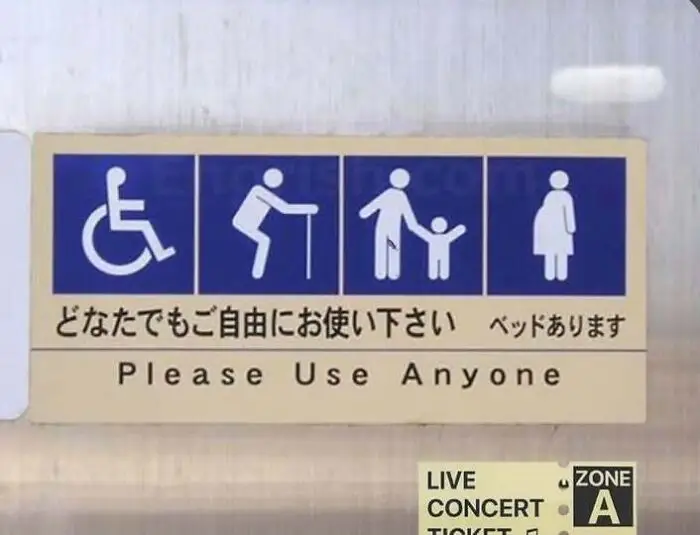
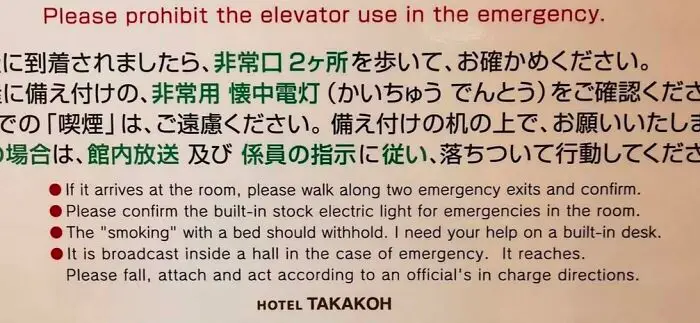

These differences become particularly noticeable when someone attempts to translate an entire sentence rather than an individual word. A phrase might contain vocabulary that is technically correct but still sound unnatural because its structure, tone, or intended meaning has not been properly adapted.
Proofreading can catch spelling mistakes, grammatical problems, inconsistent terminology, and formatting issues, but producing a natural translation requires a deeper understanding of the audience. Humor, politeness, idioms, and cultural references can all carry different meanings depending on where they are used.
A sentence that sounds friendly in one language might come across as confusing or unnecessarily direct in another, making cultural awareness just as important as linguistic accuracy.



Japan Today further explores why translations can go hilariously wrong, pointing out that languages rarely have direct equivalents for every expression. Idioms are particularly difficult because their meanings cannot always be understood by looking at the individual words. English phrases such as "break a leg" and "spill the beans" illustrate this problem, as their intended meanings have little to do with their literal wording.
Japanese and English also organize information differently, with Japanese frequently leaving out subjects and other details that can be understood from context. English generally requires these elements to be expressed more clearly, meaning a direct translation can sometimes produce a sentence that sounds incomplete, awkward, or entirely different from what was intended.



Machine translation can make these misunderstandings even more noticeable, particularly when dealing with slang, jokes, short phrases, and expressions that have several possible meanings. Translation software might select a technically valid definition without recognizing how the surrounding sentence changes its meaning.
For example, Japan Today discusses a Japanese expression that can be translated literally as an instruction to obtain someone's agreement, even though a more natural English version would communicate appreciation for their understanding.
The problem is not always that the individual words are incorrect, but that the final sentence fails to capture what someone is actually trying to say. This is why translators need to consider the complete situation rather than rely entirely on word-for-word substitutions.