

This post may include affiliate links.

There is a subtle but important line between sentimentality on one side and hoarding on the other. The former is healthy, grounded, and puts you in control. The latter is unhealthy, a sign of deeper emotional or mental issues, and places you in the role of the victim of your impulses.
Individuals with hoarding disorder have difficulty discarding or parting with possessions, no matter their (lack of) value.
The International OCD Foundation reports that between 2% to 6% of the world’s population suffers from hoarding disorder.
Hoarding disorder tends to affect men and women at similar rates. It is a universal phenomenon across different countries, cultures, and backgrounds around the world.
#4 My Grandma Kept Track Of All The Boys She Dated In 1940 And Wrote "My Darling Little Soldier" As Her First Impression Of The Man She Would End Up Marrying


Symptoms begin appearing early on in life, between the ages of 11 and 15, and can start interfering with your everyday functioning by your mid-20s. By your mid-30s, your hoarding disorder can lead to clinically significant impairment and is likely to meet the criteria for a full diagnosis.
That being said, hoarding symptoms are thrice as common in older adults, aged 55+, than younger adults.
#7 The Contents Of My Great-Grandmother's Purse

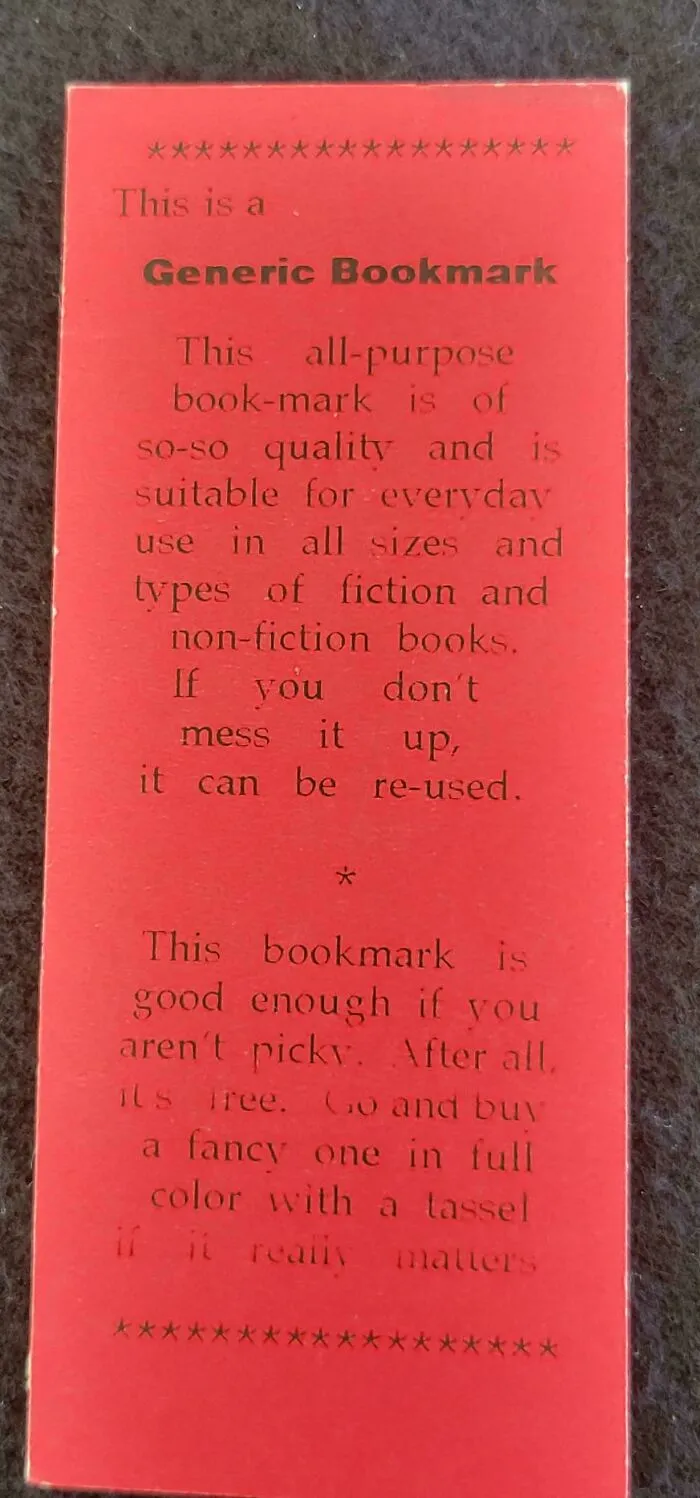
#8 I Volunteer At A Used Book Store. I’ve Been Collecting The Bookmarks We Find In Donations For Months And Finally Got Around To Making This Display


The vast majority (75%) of individuals with this disorder also have a co-occurring mental health condition, such as major depressive disorder, social anxiety disorder, social phobia, and generalized anxiety disorder.
Roughly 20% of people who have a hoarding disorder also have obsessive-compulsive disorder.


Gregory L. Jantz, Ph.D., who authored The Anxiety Reset: A Life-Changing Approach to Overcoming Fear, Stress, Worry, Panic Attacks, OCD and More, explains that around one in four people with OCD are also compulsive hoarders.
Hoarding is often accompanied by varying levels of anxiety and depression, and creates “clinically significant distress or impairment in functioning.” One of the consequences is that you are no longer able to maintain a safe space.
“Their compulsion causes the hoarders' mental, emotional, physical, and financial health to suffer. Most tragically, their relationships unravel as families and friends struggle to cope with their condition,” writes Jantz.
“Neuroimaging studies have revealed peculiar commonalities among hoarders including severe emotional attachment to inanimate objects and extreme anxiety when making decisions.”
#13 I Was 8 Years Old When I Wrote An Anti-Whaling Letter To President Jimmy Carter. This Was The Reply

#14 Found In A Jar Of Receipts Of Bills & Receipts

The paradox is that hoarding has a bizarre relationship with anxiety: it both relieves and generates it.
“The more hoarders accumulate, the more insulated they feel from the world and its dangers. But of course, the more they accumulate, the more isolated they become from the outside world, including family and friends. Even the thought of discarding or cleaning out hoarded items produces extreme feelings of panic and discomfort,” Jantz warns.


#18 My Grandpappy’s Last Driver’s License: Born In ‘89…that’s *1889*
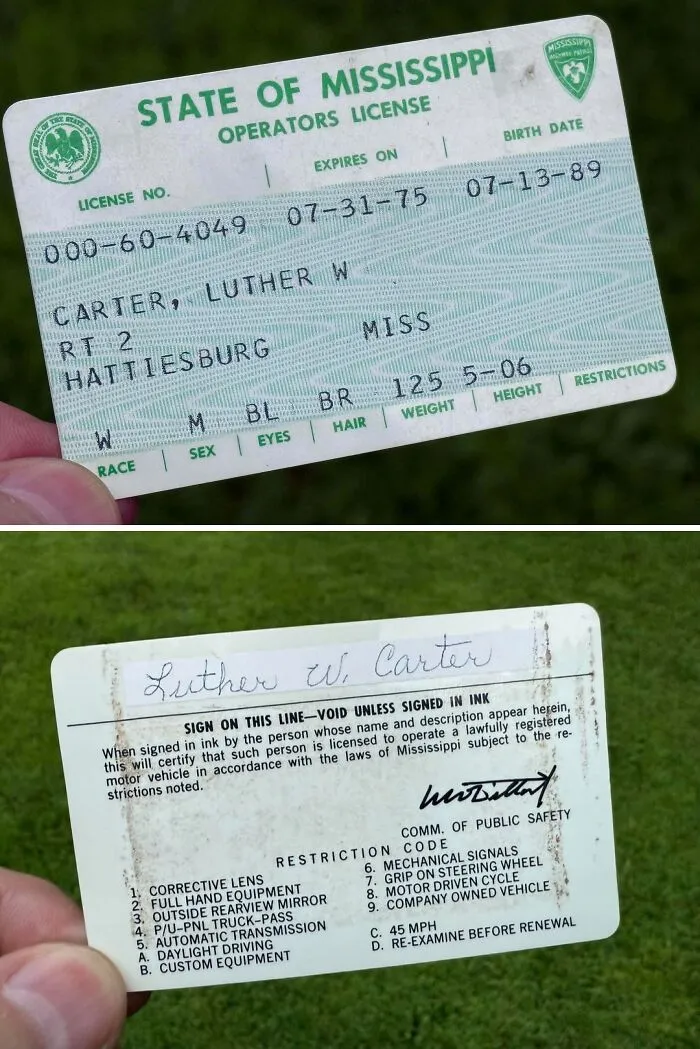
He only completed the 4th grade and remained illiterate his entire life. The signature on the back isn’t his—it’s my granny’s. She had to sign his name for him because he couldn’t write it himself.
Despite his age, he still drove a truck and worked on the farm. I remember sitting with him on the porch as a kid in 1969, shortly after the Apollo moon landing. He looked up at the full moon and told me, “See how bright it is? It’s like the sun. No way a man could walk on that. They’d burn up.”
He truly believed the moon was a ball of fire—he never learned otherwise.
This little plastic card feels like a time machine. He was born just 24 years after the Civil War ended and lived to see color television…
“It can be difficult to determine whether someone is a hoarder or just a pack rat, someone who just likes to hang on to things. The main determinant of whether a behavior is just a personal preference or a disorder usually has to do with whether, and how much, that behavior has begun to negatively impact daily functioning.”
Hoarding disorder may arise from traumatic events, persistent difficulty making decisions, and having family members who are hoarders. What’s more, hoarders tend to be socially withdrawn or isolated. They may start hoarding as a way to find comfort.

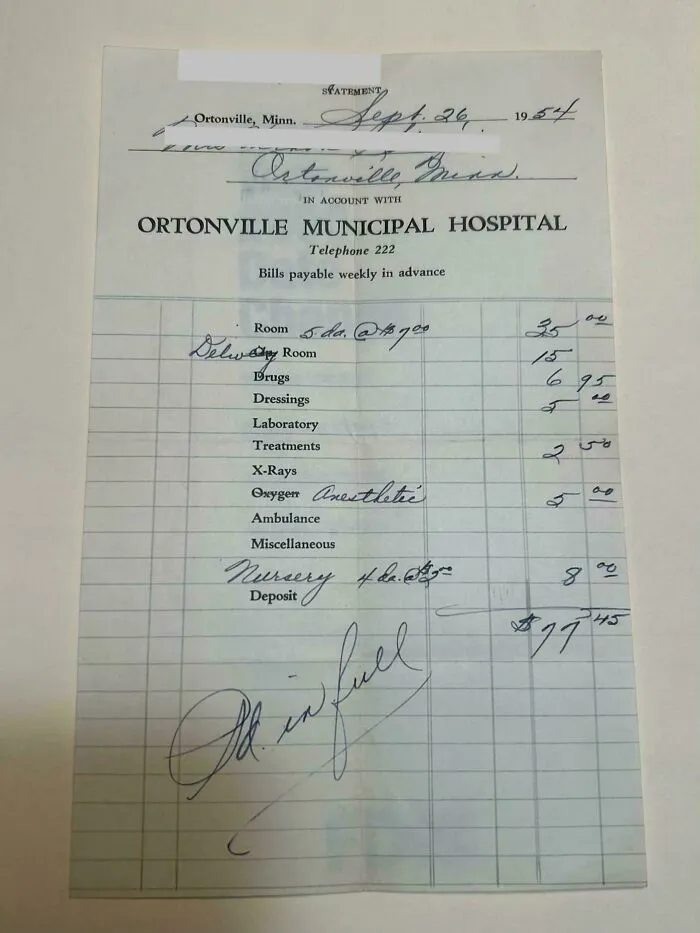
#20 My Mom’s Receipt From When She Was Born