





There’s always something new to learn! Staying curious throughout your life is a great way to keep your mind sharp and avoid cognitive decline. Meanwhile, social media isn’t just meant to be entertaining. It can be very educational, too.
‘Explained Fact’ is a massively popular Instagram account with millions of followers that aims to share some of the most interesting and unusual facts about the world, science, history, and psychology. We’ve collected the most intriguing ones to give your brain a workout during your next coffee break.
#61

There are places on Earth that governments sealed off, erased from maps, or wrapped in silence. Mount Yamantau in Russia is rumored to hide a vast underground complex, while Pine Gap in Australia operates as one of the world’s most secretive intelligence facilities, its true purpose still heavily debated. Diego Garcia was emptied of its native population to become a strategic military base, leaving behind a story of forced exile that few were meant to notice.
Some locations were hidden not for strategy, but for fear. The so called sleep experiment room, tied to a disturbing Cold War era story, remains one of the most unsettling rumored test sites ever discussed, whether myth or suppressed truth. In Pripyat Hospital, the radioactive clothing of Chernobyl firefighters still lies in the basement, sealed away because it is too dangerous to move, a silent reminder of how quickly disaster can be buried.
Then there is Wittenoom, an Australian town erased after asbestos poisoning ended thousands. It was removed from maps, road signs taken down, and its name discouraged from being spoken. These places were not just abandoned, they were deliberately hidden, reminding us that history is not only written by what we are shown, but by what we are never meant to see.
Report
26points
#62

Relationship surveys indicate that a growing number of women in their forties are choosing to date younger men, marking a clear change from previous decades. This trend reflects a broader shift in dating patterns and personal preferences among midlife women.
Researchers attribute this change to evolving social attitudes, greater confidence among women, and a more open acceptance of age differences in relationships. As traditional expectations continue to fade, age is increasingly seen as less important than compatibility and shared values.
Report
25points
#63

A recent observational study published in The Journal of Nutrition reported a link between eating more than one egg per week and a 47 percent lower risk of developing Alzheimer’s dementia in older adults, compared with those who rarely consumed eggs.
The researchers followed 1,024 older adults with an average age of 81.4 years who lived in residential facilities in Illinois. Participants were observed for an average of 6.7 years. The findings suggest that much of the potential protective benefit comes from choline, an essential nutrient that is especially rich in egg yolks.
Choline plays a key role in the production of acetylcholine, a neurotransmitter that supports memory and learning. Levels of acetylcholine are often reduced in individuals experiencing cognitive decline. The study found that higher choline intake explained about 39 percent of the observed association between egg consumption and reduced dementia risk.
In addition, brain autopsies of participants who had passed away showed that those who regularly ate eggs had lower levels of amyloid plaques and tau tangles, which are toxic protein accumulations commonly associated with Alzheimer’s disease. Eggs also provide other nutrients that support brain health, including omega 3 fatty acids, lutein, vitamin B12, and folate. These nutrients may work together to help maintain cognitive function as people age.
Report
24points
#64

A man in North Carolina is drawing attention for creating a dating app where he is the only man who can join.
Aaron Smith, 31, introduced Singularity after becoming tired of using typical dating platforms. The app presents women with various versions of Smith’s own profile, making him the only male choice.
Smith told CNET that the idea came from a basic issue: his photo was not getting enough notice on other apps. He designed Singularity as a lighthearted and imaginative answer to that problem.
The concept quickly spread online, with many people entertained by a dating app centered around one person and others viewing it as a playful commentary on current dating trends. Smith says it is partly a joke and partly a creative way to stand out in today’s crowded dating scene.
Report
23points
#65

Florida will start offering driver’s license exams only in English beginning Feb. 6.
The policy applies statewide to all written and driving tests and ends the use of other languages and translation services that were previously available. The Florida Department of Highway Safety and Motor Vehicles said the change is meant to improve communication, strengthen understanding of traffic laws, and encourage responsible driving to help keep roads safe.
Report
22points
#66

Research shows that the amount of sleep we get has a powerful effect on how our bodies metabolize food. In one study, participants who slept only 5.5 hours lost less fat and more muscle than those who slept 8.5 hours, even though both groups followed the same diet.
Lack of sleep disrupts key hormones like ghrelin and leptin, which regulate hunger, and raises cortisol levels, promoting fat storage and insulin resistance. In short, insufficient rest shifts metabolism, causing the body to store more food as fat rather than using it for energy or muscle repair.
This insight is especially important during menopause, when sleep disturbances are common. The 30-Day Natural Menopause Reset provides natural, practical strategies to improve sleep through nutrition, lifestyle changes, and gentle hormone-balancing techniques—helping women move through this stage of life with greater balance and ease.
Report
22points

#68

Gaming is not just entertainment; it is a meaningful way for couples who live far apart to stay emotionally connected.
A recent study found that couples who regularly play multiplayer games together feel closer, more supported, and more in tune with each other. Whether working as a team in cooperative missions or simply talking during casual matches, the shared experience helps recreate the feeling of being together, even from miles away.
In a world where physical presence is not always possible, gaming can provide emotional presence, and sometimes that is what matters most.
Report
20points
#69

Significant areas of the Amazon Rainforest are still poorly documented, even after decades of satellite imaging. Researchers estimate that nearly 60 percent of the forest has never been directly studied in the field, especially in remote interior regions that are hard to reach. 🌳🛰
While satellites can track tree cover, rivers, and large scale changes, they cannot replace hands on research. Many ecosystems, soil types, microhabitats, and species can only be accurately identified through direct observation and sampling. 🔬🌱
Because of this, vast sections of the world’s largest rainforest remain only partially understood, even as deforestation, climate change, and biodiversity loss continue to intensify.
Report
19points
#70

Taking a shower together is not only about physical intimacy, it is also about emotional connection.
From a psychological perspective, shared routines can help regulate stress by creating a sense of safety and calm. Warm water encourages relaxation, while close physical proximity can trigger the release of oxytocin, a hormone linked to bonding and trust. Engaging in this kind of low distraction time allows partners to be fully present with each other, which can deepen emotional closeness.
These moments also reinforce trust and comfort, as partners share a private, everyday experience without pressure or expectations. Over time, simple shared rituals like this can strengthen relationship stability and foster a deeper sense of partnership.
Often, it is the most ordinary routines that build the strongest bonds.
Report
18points
#71

An American mother is gaining attention online after saying her baby has unusually dark skin because of ancestral heritage.
In a viral video, she claims the child’s complexion comes from generations back on one side of the family, which has sparked discussion about genetics, skin tone, and how heritage can influence appearance.
Experts explain that skin color is shaped by complex genetic factors, not a simple family explanation, and that parents with lighter skin can still have a darker toned child due to the way genes combine.
The post has divided viewers, with some applauding her confidence and others questioning the scientific accuracy of her claim.
Report
17points
#72

Everyday situations can turn dangerous fast, but knowing how the body, animals, and physics actually behave can save lives. Simple awareness matters, like recognizing when a vehicle might be following you, understanding how wildlife reacts on the road, or knowing why air bags and moving vehicles are more dangerous than they look. Even small signals, such as hair standing up during a storm, are the body’s early warning system telling you to act immediately.
Survival often depends on doing the opposite of instinct. Staying calm around animals, using designed safety features like train track crawl spaces, and reducing impact rather than panicking can drastically improve outcomes. These facts are not meant to scare but to prepare. Knowledge gives you time, and time gives you choices that can mean the difference between injury and survival.
Report
15points
#73

A 21 year old man recently went viral after explaining why he refuses to work, saying his reasoning is simple: he “never asked to be born.” He argues that since he had no say in entering the world, he should not be obligated to follow the traditional expectation of working just to survive.
The comment quickly ignited debate across social media. Some people supported the philosophical point about modern work culture and questioned whether basic needs like housing and food should be guaranteed, while others dismissed the idea as unrealistic. Either way, the discussion sparked a wider conversation about responsibility, personal freedom, and how society organizes work and survival.
Report
14points
#74

Sometimes distance accomplishes what closeness cannot. Many couples who spend time apart say they feel more connected when they come back together, as absence often strengthens appreciation and offers a fresh view of the relationship.
Research in relationship psychology shows that time away can ease conflict, increase gratitude, and inspire more thoughtful communication. Whether the separation lasts a few weeks for work or several months across long distances, studies have found that many couples return with a deeper sense of commitment and a greater ability to face challenges as a team. The effect is especially strong when reunions follow meaningful dates or major life events, since those moments gain extra significance.
It seems that space does not always create distance between people. Under the right circumstances, it can bring them even closer.
Report
13points
#75

This isn’t just a passport - it’s a map of adventure 🗺️
Back in 2011, Land Rover ran a print campaign that turned an open passport into art. The silhouette of the Defender was built entirely from entry stamps, marking over 20 destinations around the world.
Each stamp, from Belize to Chile to Vietnam and Hong Kong, stood in for miles driven and borders crossed. No specs. No action shots. Just a powerful idea: a vehicle defined by the places it can reach.
Report
12points
#76
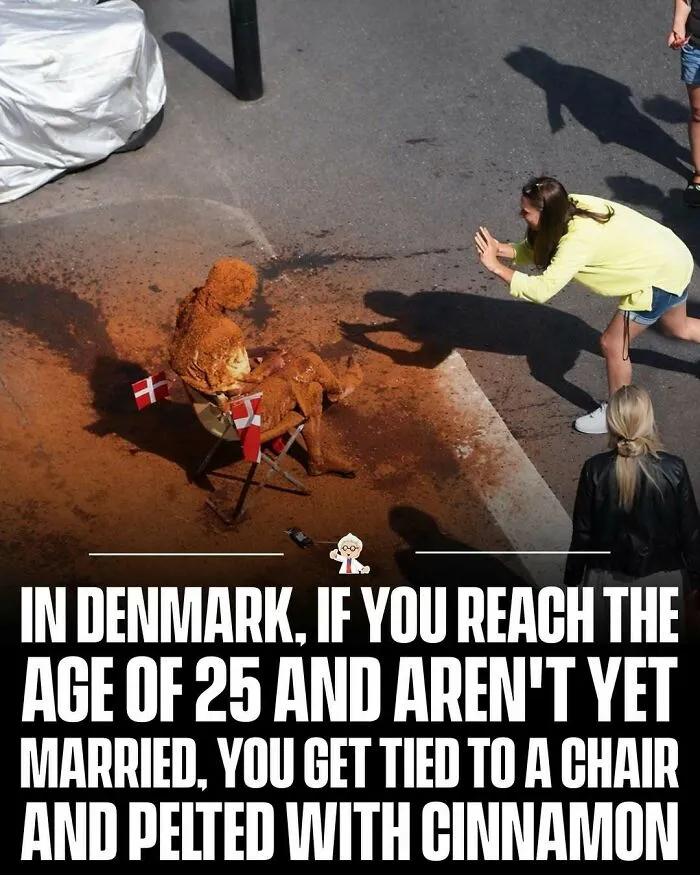
In Denmark, there is a lighthearted tradition that if someone turns 25 and is not yet married, friends may surprise them by tying them to a chair and covering them in cinnamon 🎉. This playful custom is meant to tease the birthday person about still being single, but it is all done in good fun. The cinnamon is often thrown in large amounts, sometimes even sprayed with water first so it sticks better.
The tradition is believed to date back hundreds of years to spice traders, who were often unmarried because they traveled so frequently. Over time, the idea evolved into a humorous celebration among friends and family 🪑. While it may look intense, it is usually organized as a friendly prank and has become a memorable milestone birthday event in Danish culture.
Report
12points
#77

Eighty one year old farmer Thai Ngoc claims he has not slept a single night since suffering a high fever in 1962. Despite this extraordinary claim and the fact that science suggests long term sleeplessness should be impossible, he continues to work his fields each day with steady energy.
In 2023, a YouTuber stayed overnight to observe him firsthand. Throughout the night, Ngoc brewed rice wine, tended to his crops, and relaxed, but never lay down to rest. According to his family and neighbors, no one has ever seen him asleep.
Doctors who have examined Ngoc have found nothing seriously abnormal. Some specialists believe he may slip into very brief moments of unconsciousness, though no such episodes have been officially documented. Even now, he maintains his daily routine, smokes around seventy cigarettes a day, drinks alcohol regularly, and continues to baffle experts who cannot explain how he functions without proper sleep.
Report
12points
#78

Imagine a future where humans live not just decades longer, but thousands of years. Aging researcher João Pedro de Magalhães of the University of Birmingham believes this could be possible if science learns to stop aging at the cellular level.
He views aging not as natural “wear and tear,” but as a kind of biological programming error that could one day be corrected. Clues lie in nature: bowhead whales live over 200 years thanks to exceptional DNA repair, elephants carry extra tumor-suppressing genes, and naked mole rats show remarkable resistance to cancer.
By borrowing these molecular “tricks,” Magalhães argues, humans might eventually rewrite the biological rules of longevity.
Some advances already point in that direction. The drug rapamycin and caloric restriction have extended animal lifespans by slowing metabolism and cellular aging, though these effects are small compared to the idea of halting aging entirely.
Still, many experts remain skeptical. A major Nature Aging study suggests human life expectancy may have plateaued at around 87–90 years for women and 84 for men, barring revolutionary medical advances.
For now, proven ways to extend healthy living—balanced diets, regular exercise, stress management, and social connection—remain the most effective tools. Yet the notion that aging could one day be “reprogrammed” continues to spark fascination and hope for a radically longer future.
Report
10points
#79

The average adult male in the United States weighs about 199.8 pounds, based on recent CDC data. 🇺🇸
This number shows a steady increase over the decades due to changes in lifestyle and diet.
While average weight can differ depending on age, height, and region, 199.8 pounds is still considered the national standard
Report
9points
#80

Studies in language, attachment, and emotional response suggest that being called “baby” can provide short term stress relief for some women. Researchers explain that affectionate terms can create feelings of safety and closeness, which in turn activate calming responses in the brain. The impact comes less from the specific word and more from the emotional meaning and intention behind it.
Psychologists point out that pet names often reflect early bonding experiences, when comfort and reassurance were communicated through tone and presence rather than reasoning. When used sincerely and with mutual consent, this kind of language can lower cortisol levels and strengthen feelings of connection. Without trust or emotional safety, however, the same words tend to have little or no effect.
Overall, this discussion shows how subtle forms of communication can shape emotional wellbeing. Small verbal cues can carry significant emotional weight, particularly in close relationships. Ultimately, it is not the nickname itself that matters, but the feeling of being genuinely cared for
Report
5points
