








#1 South Korea. The Solar Panels In The Middle Of The Highway Have A Bicycle Path Underneath - Cyclists Are Protected From The Sun, Isolated From Traffic, And The Country Can Produce Clean Energy

#2 A Cafe In Japan Is Hiring Paralyzed People To To Control Robot Servers In Order To Still Make An Income

#3 Starlink Works Great Until The Cats Find Out That The Dish Gives Off A Little Heat On Cold Days

Today's post is a reminder of just how fascinating the worlds of technology, science, and aviation truly are. Behind every machine, device, and invention is a story of curiosity, innovation, and countless hours of problem-solving. That's why it's worth taking a moment to appreciate some of the remarkable creations and engineering achievements that have shaped our world today and continue to influence the way we live, work, and explore.
Take the humble 3.5-inch floppy disk, for instance. In the late 1980s and 1990s, it was the gold standard for storing and transferring files. With a capacity of just 1.44 megabytes, it wouldn't even hold a single high-quality smartphone photo today, yet it was once enough for school projects, office documents, and even entire computer games spread across several disks. The floppy disk may be obsolete, but its legacy lives on every time we click the familiar "Save" icon.

Another gadget that once felt incredibly futuristic was the pager, or "beeper." Long before smartphones became an extension of our hands, carrying a pager meant you were important enough to be reachable at any moment. Doctors, emergency workers, and on-call professionals relied on them every day. The device itself was incredibly simple; it would beep or vibrate and display a phone number, leaving you to find the nearest payphone to return the call. Over time, people even invented clever numeric codes to send short messages using only numbers. Looking back now, it's amazing to think how exciting such a basic device once seemed, especially when today's phones let us video call someone halfway across the world in seconds.



Entertainment has changed just as dramatically. Today, watching a movie is as simple as opening a streaming app and pressing play. A few decades ago, movie night meant digging through a cabinet full of VHS tapes, hoping someone had remembered to rewind the one you wanted. Those chunky plastic cassettes contained magnetic tape that a VCR would physically pull through the machine to play the film. They were bulky, sometimes frustrating, and occasionally chewed up your favorite movie—but for millions of families, they were the heart of weekend entertainment. There's something wonderfully nostalgic about hearing the satisfying clunk of a VHS sliding into a VCR.


The internet has arguably seen one of the biggest transformations of all. Today, our devices connect automatically to fast Wi-Fi or 5G without us giving it a second thought. Back in the 1990s, getting online was practically an event. Your computer had to dial your internet provider over the household phone line, filling the room with the unforgettable chorus of screeches and static that anyone from that era instantly recognizes. And if someone picked up the telephone while you were online? Connection lost. Downloading a single song could take close to an hour, yet at the time it felt like magic simply being able to browse the web from home.
#13 The World's Smallest Hard Drive, 8gb Of Storage Measuring In At .85 Inches, From A Time Before SSDs

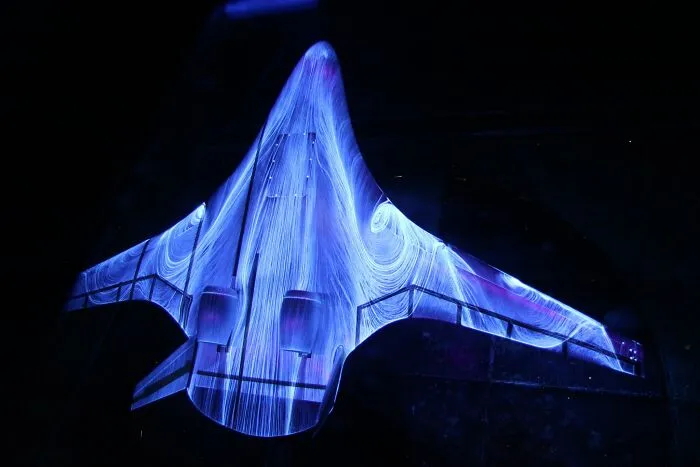
#15 A Futuristic Hybrid Wing Body During Tests In The Wind Tunnel At NASA's Langley Research Center. The Patterns Are Formed By Air Movement Over The Fluorescent Oil Sprayed Onto The Wings
Computer monitors have also undergone an incredible makeover. Before today's slim flat-screen displays, homes and offices were filled with enormous CRT monitors—heavy boxes with curved glass screens that took up half the desk. They worked by firing electrons inside a vacuum tube to create an image, which sounds almost like science fiction today. They buzzed quietly, attracted dust with static electricity, and weighed enough to make moving house a genuine workout. Despite their size, many retro gamers still love CRTs because classic games were actually designed to look their best on those glowing scanlines.
Listening to music has become almost effortless. Right, Pandas? You can open Spotify or Apple Music and millions of songs are available instantly. But not too long ago, portable music meant carrying around a Sony Discman and a wallet packed with CDs. Every album was a physical object you had to buy, carry, and carefully protect from scratches. If you wanted a different playlist, you swapped discs by hand. It may sound inconvenient now, but there was something special about flipping through your favorite albums before choosing the soundtrack for your journey. Devices like the iPod (and eventually streaming services) completely changed the way we listen to music forever.
#19 Six Of The Primary Mirrors Of The James Webb Space Telescope Being Prepared For Acceptance Testing

