






Do you know what the farthest point in the ocean is? Or where you can find vending machines that hand out free food during earthquakes? Sounds like trivia you’d only hear at pub quizzes, or maybe while scrolling through a rabbit hole of fascinating facts online.
#41

A strange transit incident unfolded when a man took control of an unattended Hamilton Street Railway bus and began driving along its normal route through the city. Passengers said he pulled up to regular bus stops, opened the doors, and let riders on just like a real driver. Some people only realized something was wrong after noticing he was not wearing a transit uniform. One witness even claimed he refused to let someone board because their pass had expired. The unusual ride continued for several stops until police located the bus and safely stopped it. Officers then took the man into custody, ending one of the strangest transit incidents the city had seen.
Report
30points
#42

Research in music cognition shows that most people can recognize familiar songs extremely quickly after they start. Studies have found that recognition can happen in roughly 100 to 300 milliseconds, sometimes even faster, depending on how distinctive the opening sound is. This happens because the brain stores detailed auditory memories of songs, including rhythm, melody, and tone. When the first notes play, the brain rapidly compares that sound pattern with stored memories. If the match is strong, recognition happens almost instantly. Distinctive openings such as a unique drum beat, guitar riff, or vocal tone make this process even faster, which is why many popular songs can be identified almost immediately.
Report
30points
#43

The first confirmed discovery of planets beyond our solar system happened in 1992, when astronomers Aleksander Wolszczan and Dale Frail detected two planets orbiting a pulsar called PSR B1257 plus 12. Before that, scientists suspected other planets existed, but none had been proven with solid evidence.
The breakthrough came from precise measurements of the pulsar’s radio signals. The tiny disruptions in its timing revealed the gravitational pull of orbiting planets. It was a surprising place to find worlds, but it opened the door to modern exoplanet research. Since then, thousands of exoplanets have been discovered around stars across the galaxy.
Report
30points
#44

In 1974, residents near Goulburn in New South Wales looked up and saw something surreal. Thousands of tiny spiders appeared to fall from the sky, drifting down on fine strands of silk and covering fields, fences, and trees. It looked like a scene from a horror film, but it was a real natural event. The phenomenon is called ballooning. Young spiders release silk threads that catch the wind and carry them high into the air. When weather conditions shift, large numbers can descend at once, creating the illusion that it is raining spiders. Events like this have been recorded in Australia and other countries, showing how small creatures can travel remarkable distances through the sky.
Report
29points
#45
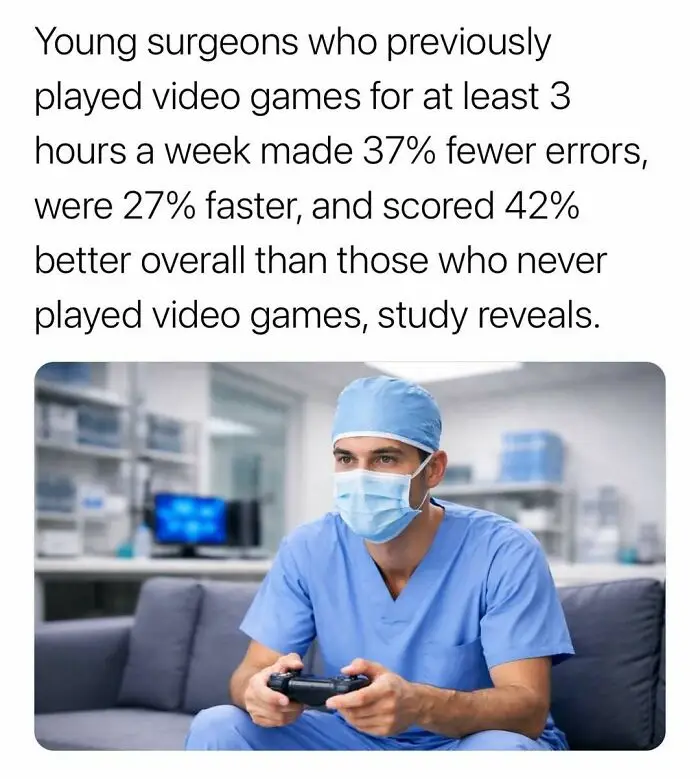
Research has shown a clear link between video game experience and performance in surgical simulations. In a widely cited study published in 2007, surgeons who played video games for at least 3 hours per week performed noticeably better on laparoscopic surgery simulators than those with no gaming experience. They made fewer errors, completed tasks more quickly, and achieved higher overall scores during the tests.
The reason comes down to skill transfer. Video games often require precise hand eye coordination, fast reaction times, spatial awareness, and the ability to manipulate tools while watching a screen. These are the same core skills needed for minimally invasive surgery, where surgeons operate using instruments while viewing a monitor rather than looking directly at their hands.
The findings helped spark broader interest in using simulation training and game like exercises in medical education. The research highlighted how unexpected activities, such as gaming, can help develop real world technical skills when they overlap in cognitive and motor demands.
Report
28points
#46

Historical records confirm that in 452, Attila the Hun advanced toward Rome after devastating much of northern Italy. Pope Leo I (also known as Leo the Great) met him near the River Mincio, close to Mantua. The exact details of their discussion aren’t recorded, but shortly afterward, Attila withdrew his forces and did not attack Rome.
Report
27points
#47

A scientific study found that dogs can have trouble sleeping after stressful experiences, similar to humans. In the experiment, 16 dogs had their brain activity monitored after either positive moments like play and affection or negative ones like brief separation from their owners.
The results showed that stressed dogs had poorer sleep quality during a 3 hour nap. They spent more time in REM sleep, woke up earlier, and fell asleep faster, a response researchers linked to stress related fatigue. A calm bedtime routine and a little affection may help your dog rest easier.
Report
27points

#49
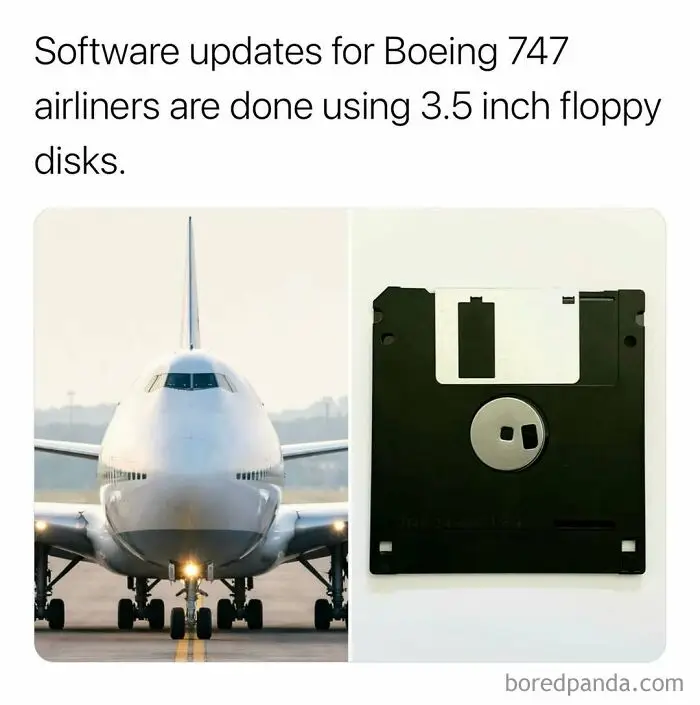
Many Boeing 747 aircraft, especially older variants still in service, rely on legacy avionics systems that were designed decades ago. Those systems were certified with hardware and software standards from their era, including the use of 3.5 inch floppy disks for loading navigation databases and certain software updates.
Airlines continue using them because aviation certification rules strongly discourage changing proven systems unless absolutely necessary, since any modification requires extensive testing and regulatory approval.
Report
25points
#50

In 1957, Phillies outfielder Richie Ashburn accidentally created one of baseball’s most unbelievable moments. A foul ball off his bat struck a woman in the stands named Alice Roth and broke her nose. Medical staff rushed to help her and placed her on a stretcher to take her out of the stadium.
As the crowd watched with concern, Ashburn hit the very next pitch foul again and it somehow struck her a second time while she was being carried away.
Report
25points
#51

Not all chicken is the same once it hits the shelf. Some products are injected with a saltwater solution to improve moisture and boost weight. In certain cases, that added liquid can make up to 30% of what you’re paying for. It can also increase sodium to 200 to 500 mg per serving, compared to about 45 to 70 mg in plain, unenhanced chicken. If you are watching your sodium intake or simply want pure meat, check the label for words like enhanced or seasoned. The difference is printed right there in the nutrition facts.
Report
25points
#52

In 2014, a guinea pig named Randy grabbed attention after slipping out of his enclosure at Hatton Country World, a farm attraction in Warwickshire, England. He found his way into a pen with more than 100 female guinea pigs, and before staff noticed, a large number of them were expecting.
Report
25points
#53

Apollo missions depended on parachutes to safely slow the Command Module during its return to Earth. Those parachutes had to deploy perfectly after traveling through space and reentering the atmosphere at extreme speeds. Because the margin for error was almost zero, only 3 specialists in the United States were trusted to hand pack the parachutes used for Apollo 15. Their work required extraordinary precision, since a single mistake could affect the spacecraft’s final descent. Their expertise was considered so critical that precautions were taken to avoid losing them in one accident. They were required to travel separately so a single incident could not remove the people responsible for one of the mission’s most important safety systems.
Report
24points
#54

There are no confirmed living people born in the 1800s. The last fully verified person from that century was Emma Morano from Italy, who was born in 1899 and lived to 117. She was recognized by global longevity researchers, and her record marked the end of all documented individuals born in the 1800s.
Report
24points
#55
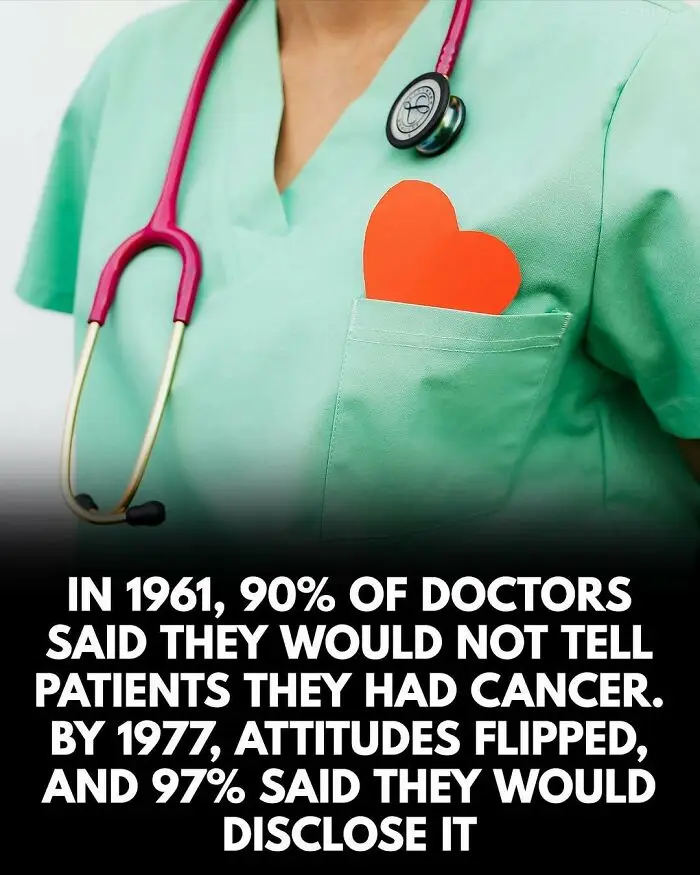
In 1961, most doctors believed it was better not to tell patients if they had cancer. A survey found that about 90% of physicians said they would withhold the diagnosis. Many thought the truth would cause too much fear or remove a patient’s hope, so the information was often shared only with family members. By 1977, the medical community had shifted dramatically. Around 97% of doctors said they would tell patients their diagnosis directly. The change reflected a growing belief that patients have the right to understand their condition and make informed decisions about their own treatment and care.
Report
23points
#56
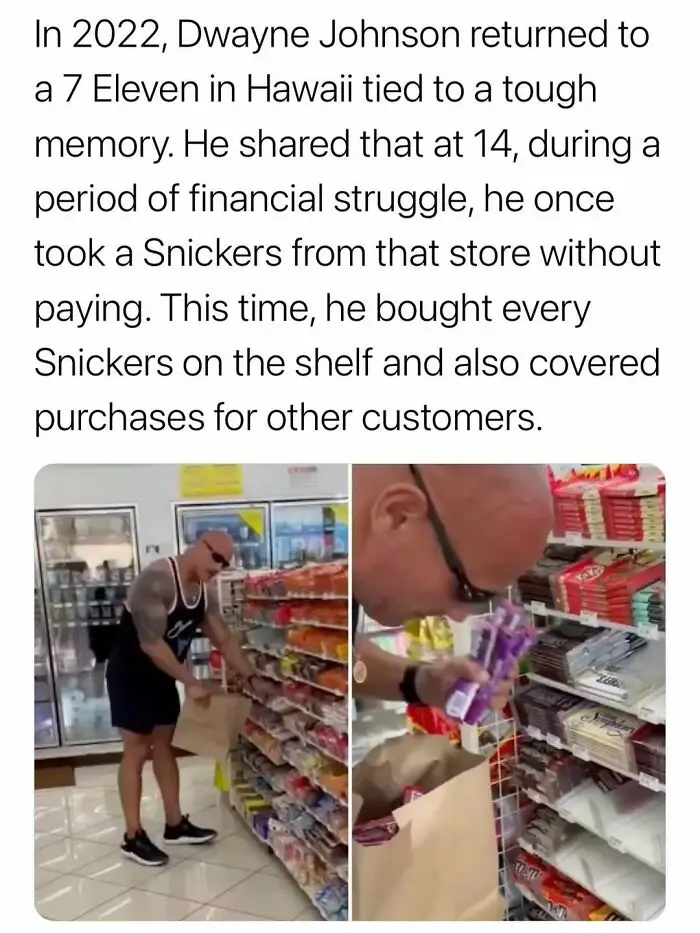
In 2022, Dwayne Johnson shared a personal story about returning to a 7 Eleven in Hawaii that played a small but meaningful role in his early life. As a teenager around age 14, he said his family was struggling financially, and during that time he once took a Snickers bar from the store without paying. He has spoken openly about those years as a period of instability, which shaped his perspective on discipline, accountability, and growth.
Years later, after achieving major success, Johnson revisited the same store with a different purpose. He bought every Snickers bar on the shelf and paid for items for other customers who were shopping at the time. The gesture was meant as a way of acknowledging a past mistake and giving back to the community.
Report
23points
#57

A university experiment explored how bacteria behave on denim during everyday use. A student wore the same pair of jeans for 15 months, totaling about 330 wears, without washing them. After the long wear period, the jeans were washed once and then worn again for another 13 days. Fabric samples were collected at each stage and examined by a textile scientist using laboratory testing methods.
The findings challenged common assumptions about clothing hygiene. Test results showed little difference in bacterial levels between the unwashed jeans and the jeans tested after washing and rewearing. Denim tends to dry quickly and experiences constant friction, which can limit bacterial growth. The study focused on bacteria rather than smell or appearance.
Report
22points
#58
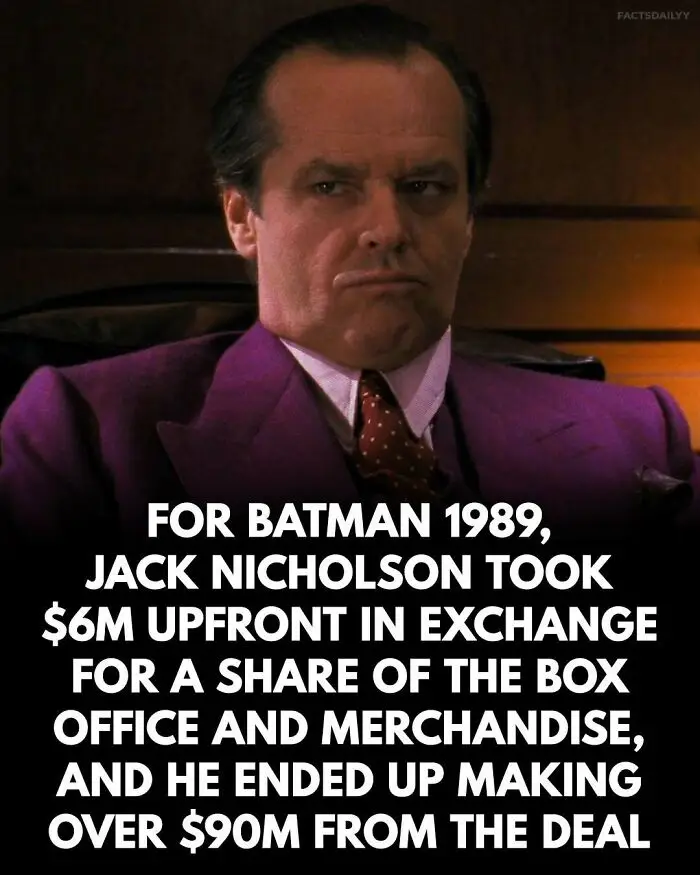
In 1989, Jack Nicholson made one of the smartest deals in Hollywood. Instead of taking a massive upfront paycheck for Batman, he accepted $6M and negotiated a percentage of the box office and merchandise. The film became a global hit, and that backend deal reportedly earned him over $90M. At the time, profit participation was not common for major actors on superhero films. His contract changed how studios approached star negotiations and proved that betting on a film’s success can be far more valuable than a guaranteed salary.
Report
22points
#59

In many modern cars, the traditional mechanical relay that produced the physical clicking sound is gone. Older vehicles used an electromechanical flasher, and the click was a natural byproduct of that component opening and closing the circuit.
Modern vehicles rely on solid state electronics and body control modules, which operate silently. Because drivers still expect audible feedback when a turn signal is on, manufacturers add an artificial clicking sound that is played through a small speaker or the car’s audio system. In some models, the sound even changes in volume with cabin noise or can differ between brands for design reasons.
So the sound you hear is often intentionally generated, not mechanically produced.
Report
21points
#60
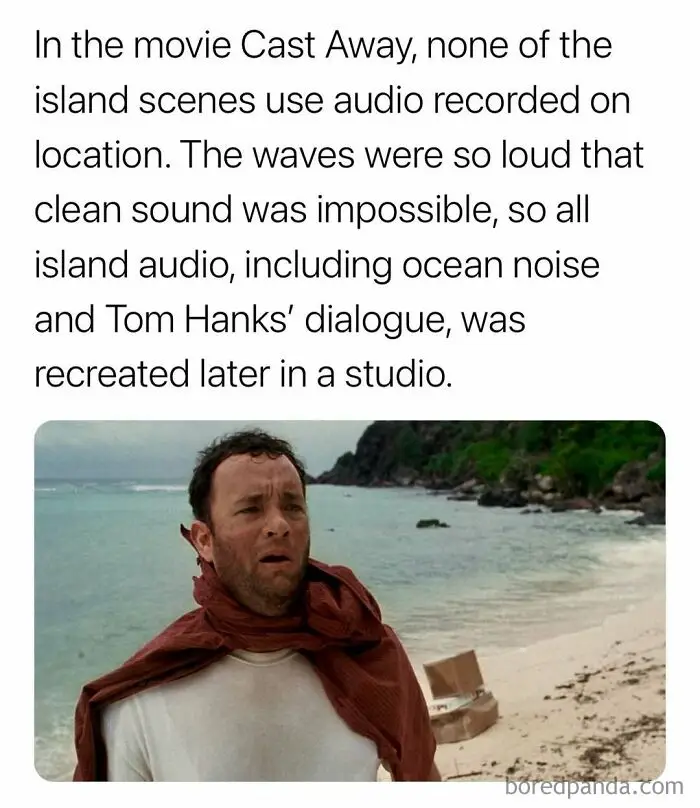
The island scenes in Cast Away were filmed in extremely windy and wave heavy conditions, which made recording usable on location audio impractical. Because of that, most of the sound you hear during those scenes, including ocean ambience and Tom Hanks’ dialogue, was recorded later using post production techniques like ADR and sound design.
Report
20points