History books can only cover so much, and most of us haven’t cracked one open since we were in college. But if you want to learn about some fascinating moments from the past, accompanied by captivating images, you’ve come to the right place!
We visited the History Cool Kids Instagram account and gathered some of their best posts down below. Keep reading to find a conversation with Gemma Hollman, Author and Creator of Just History Posts, and be sure to upvote the stories that you’ll never forget!
#21
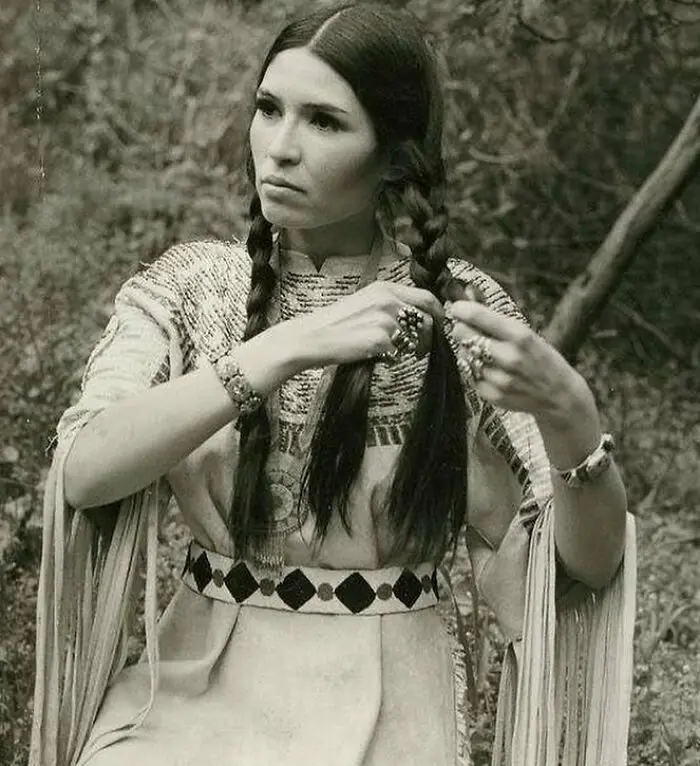
In 1973, Sacheen Littlefeather took the stage to reject an Oscar on behalf of Marlon Brando. She was given 60 seconds on stage to provide the following speech: “Hello. My name is Sacheen Littlefeather. I'm Apache and I am president of the National Native American Affirmative Image Committee. I'm representing Marlon Brando this evening and he has asked me to tell you in a very long speech, which I cannot share with you presently because of time but I will be glad to share with the press afterwards, that he very regretfully cannot accept this very generous award. And the reasons for this being are the treatment of American Indians today by the film industry – excuse me – and on television in movie reruns, and also with recent happenings at Wounded Knee. I beg at this time that I have not intruded upon this evening and that we will in the future, our hearts and our understandings will meet with love and generosity. Thank you on behalf of Marlon Brando.” She kept her full composure despite the boos and jeers coming from the audience. John Wayne had to be restrained by security because he wanted to physically a*****t her as she left the stage. Clint Eastwood mocked her by saying that he was presenting the award on behalf of “all the cowboys shot in all the John Ford Westerns.” Subsequently, Littlefeather was blacklisted by Hollywood and never worked in the film industry again. Nearly half a century later, Littlefeather will return to the Academy as a guest of honor on September 17, 2022.
Finally, Gemma noted that social media has been so great for popularizing history. "So many people find it boring at school because it’s all about dates and facts and memorizing, but social media allows us to remember other aspects of history," she shared. "Whether it’s silly drawings in medieval manuscripts, ancient artefacts in museums, beautiful paintings or intriguing photographs, sharing history on social media has made it accessible to a huge range of people who can learn something new that they weren’t expecting."
#22
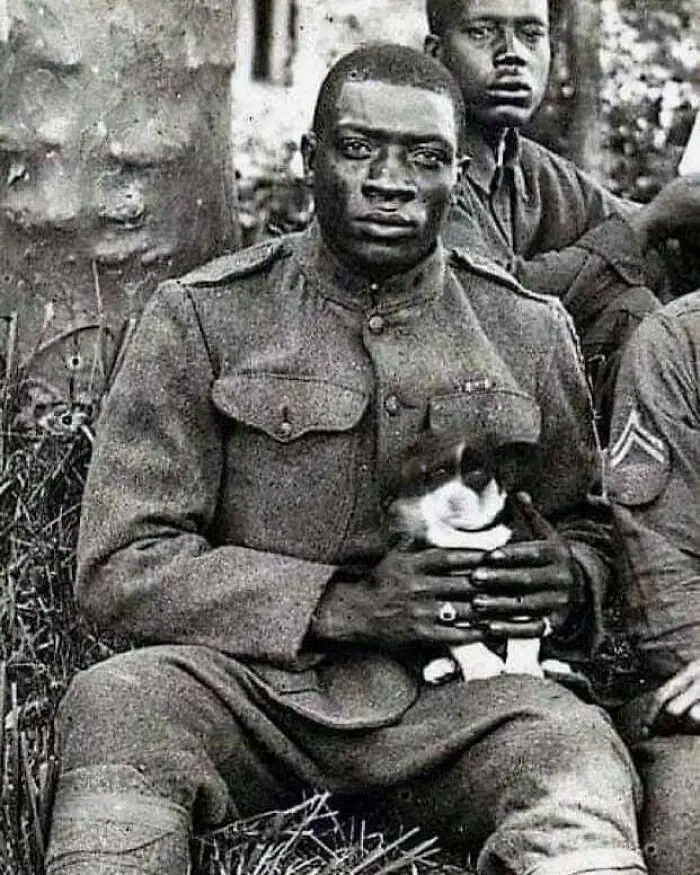
A member of the Harlem Hellfighters (369th Infantry Regiment) poses for the camera while holding a puppy he saved during World War 1, 1918. The Harlem Hellfighters was a regiment made up of decorated Black soldiers who fought as part of the French army because the U.S. did not allow Black soldiers to fight alongside white soldiers. The French accepted the Harlem Hellfighters with open arms and did not racially segregate them. During World War 1, they fought on the front lines for 191 days, longer than any other American unit. And as a result, suffered the most casualties of any American regiment—losing approximately 1,500 men. Despite the heavy death toll and the poor replacement system, the Harlem Hellfighters never lost a trench or a foot of ground to the enemy; none of them became prisoners of war. Not only were they one of the most successful regiments of World War 1, but they also helped bring Jazz to France. Upon returning home, the Harlem Hellfighters received a welcome parade in New York City; a privilege that was denied to them before they had left for war. However, the celebrations were short lived as the summer of 1919 became known as the Red Summer, in which the country saw some of the worst racial violence since the Civil War. The Harlem Hellfighters who dreamed of returning home to a place that would finally treat them with respect and as equal human beings, quickly realized that nothing had changed at all.
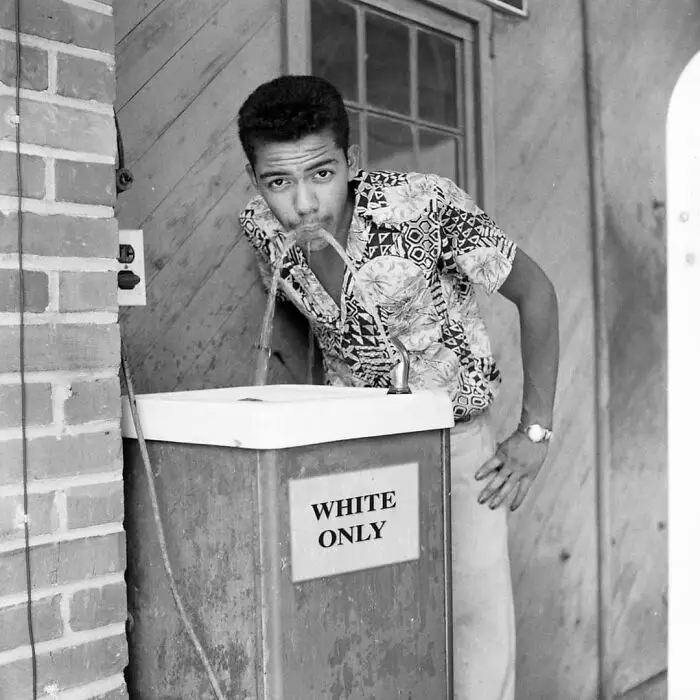
Photographer Cecil J. Williams drinking from a white only water fountain, 1964. Williams was born in 1937 to parents of mixed ancestry: his mother was half-white and his father was half Native American. At the age of 9, Williams received a camera from his older brother and soon realized he could make money off his photographs. He photographed his first wedding at age 11 and by 12 he was taking photos of people on Sundays at church, charging them a dollar or two. By the 1950s, he turned his camera to documenting desegregation efforts in South Carolina. Some of his photos depict activities during the Briggs v. Elliott case, which was the first of five desegregation cases pushing to integrate public schools in the United States. In January of 1960, when Williams was a senior in college, he visited NYC and read that JFK was coming to a downtown hotel for a press conference. Williams wanted to snap some photos but forgot his press pass and was about to be kicked out by security when JFK stepped in and told them to let Williams stay. JFK gave Williams his personal address and soon he became one of JFK's favorite photographers during his campaign to become president. Williams is still alive at 81 years old and is currently spending his 2019 summer opening up his own museum, which will showcase more than 350 images and artifacts from the civil rights movement.
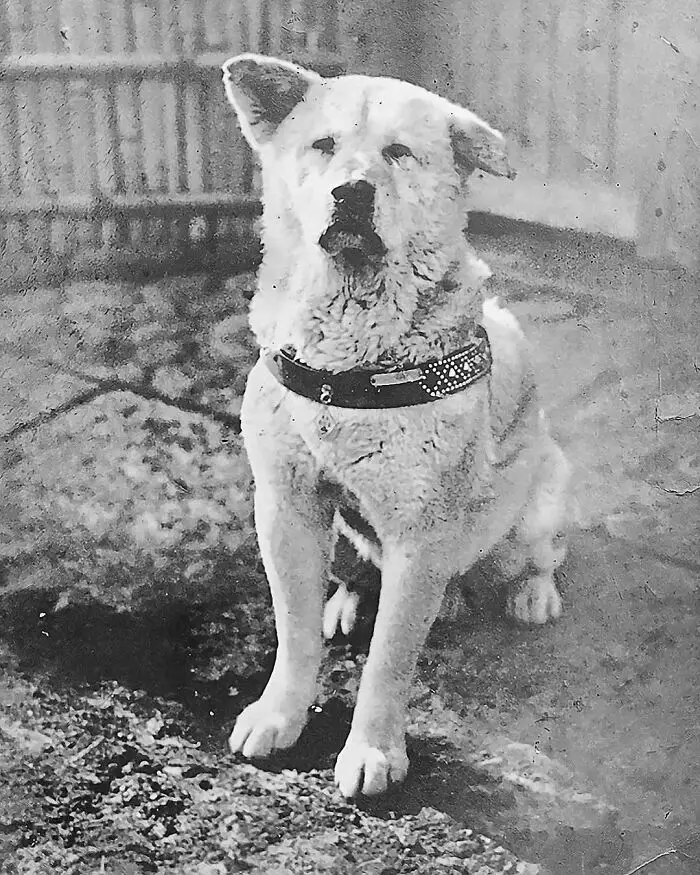
This is a photo of Hachikō, a Japanese Akita dog remembered for his unwavering loyalty to his owner. Hachikō belonged to Professor Eizaburo Ueno who lived in Shibuya and taught at Tokyo Imperial University during the early 1920s. Every day, Ueno would walk to Shibuya Station with Hachikō and take the train to work. Once he was done for the day, he would take the train back and return to the station at precisely 3 PM. Hachikō would always be there waiting patiently to accompany the professor home. One day, Ueno suffered a stroke and never arrived at the station. Hachikō went to the station every day for 9 years until his death in 1935.
Are you enjoying this list of historical stories, pandas? Keep upvoting the ones that teach you something new, and let us know in the comments what your favorite moments from history are. Then, if you’d like to see even more images that shine a new light on the past, we recommend checking out this Bored Panda list next!
#25
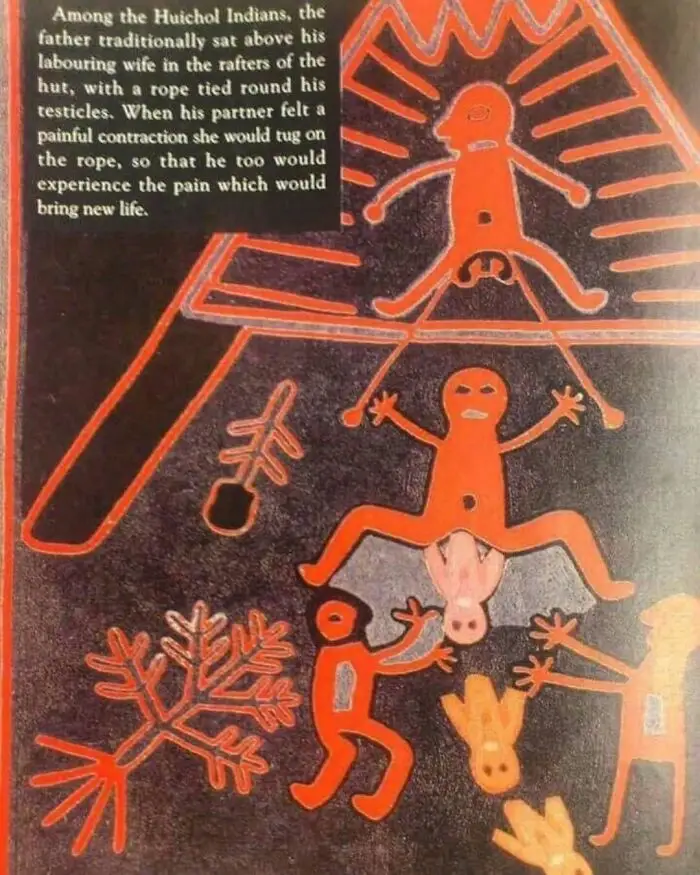
The Huichol are Indigenous people that originated from the deep mountains of Central Mexico some 15,000 years ago. Today, they live in the Sierra Madre Occidental mountains and work as subsistence farmers, growing maize, beans, squash, and cucumbers. According to their ancient traditions, both men and women experience the pain of childbirth together. The father would position himself on the rafters with rope tied around his scrotum, which would be pulled by the mother during delivery. Today, we know very little of the medical knowledge and birth customs of the Indigenous people of the Americas because much of their hand-painted manuscripts were destroyed by Spanish conquistadors and missionaries who viewed them as “pagan” practices.
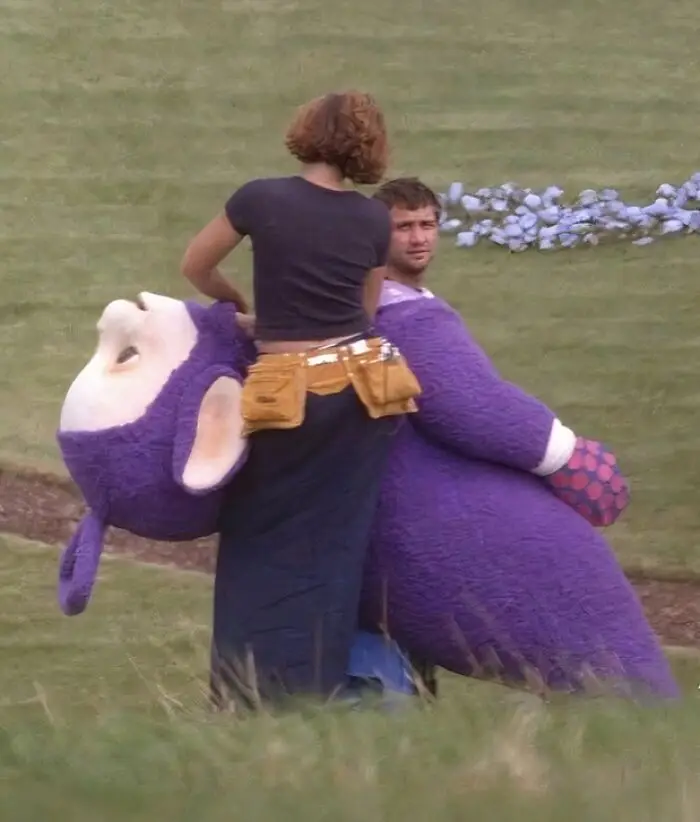
Behind the scenes from the British television show, Telletubbies, which originally aired from 1997 to 2001. In real life, the Telletubbies were actually very tall. The oldest, purple Teletubby, Tinky Winky, stood at 10 feet tall (305 cm). The red Teletubby, Po, was 6 feet 6 (198 cm) inches tall. The yellow Teletubby, Laa-Laa, was 6 feet 5 inches (196 cm). The green Teletubby, Dipsy, was 8 feet (244 cm). The show was filmed on an incredibly large set to create the illusion that the Telletubbies were small. The location of the set was so secret that visitors had to be blindfolded. Eventually, word got out and it became known that a sloping hill on a private field in Wimpstone, Warwickshire in England was the home to "Tubbytronic Superdome". After the show ended, tourists began to flock to the iconic set. The landowners became fed up with trespassers, stating that "it was never meant to be a tourist attraction. We had people jumping fences, crossing cattle fields and all sorts..." They ultimately decided to flood the entire set and it has now been underwater for nearly two decades. The set is now occupied by a family of swans and freshwater fish.
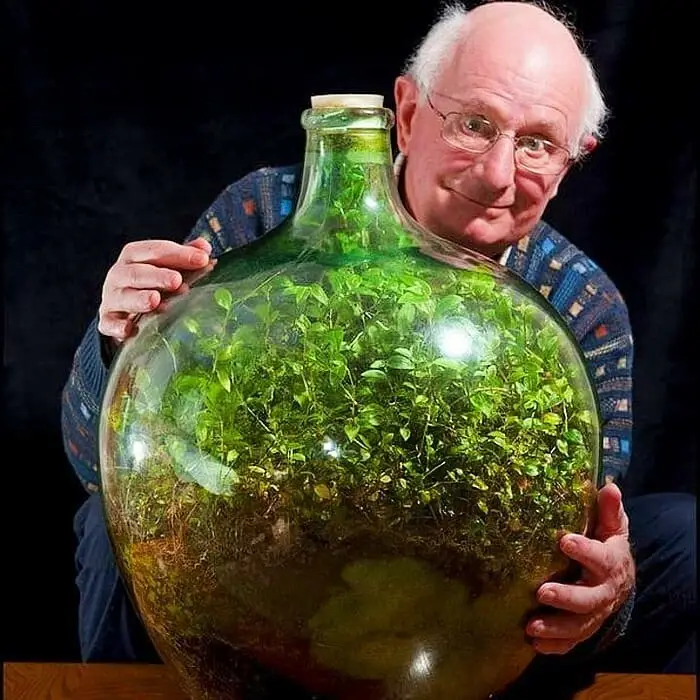
In 1960, David Latimer planted a spiderwort sprout inside of a large glass bottle, added a quarter pint of water, and then sealed it shut. He opened the bottle 12 years later in 1972 to add some water and then sealed it for good. The self contained ecosystem has flourished for more than 60 years. For those who are wondering how this is even possible: the garden is a perfectly balanced and self-sufficient ecosystem. The bacteria in the compost eats the dead plants and breaks down the oxygen that is released by the plants, turning it into carbon dioxide, which is needed for photosynthesis. The bottle is essentially a microcosm of earth.
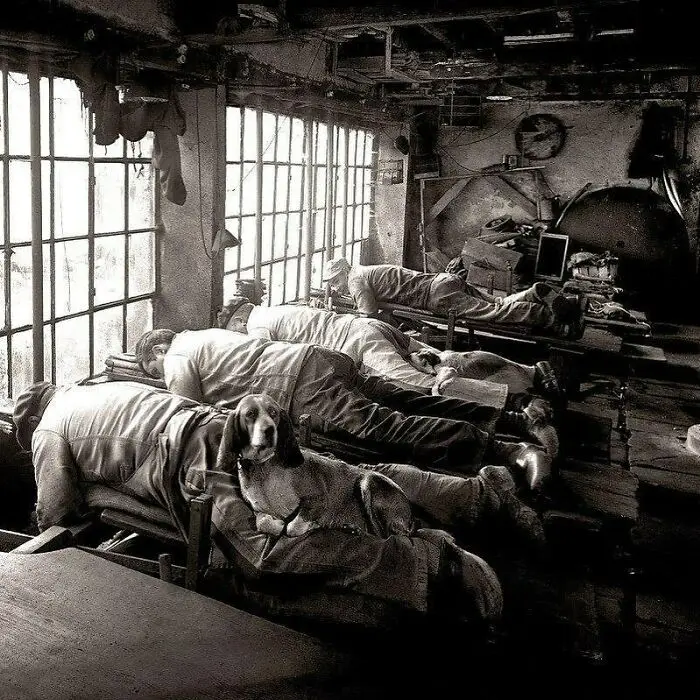
French knife grinders were called ventres jaunes (“yellow bellies” in English) because of the yellow dust that would be released from the grinding wheel. This photo from 1902 shows the workers on their stomachs in order to save their backs from being hunched all day. They were also encouraged to bring their dogs to work to keep them company and also act as mini heaters by having them rest on their owners’ legs.
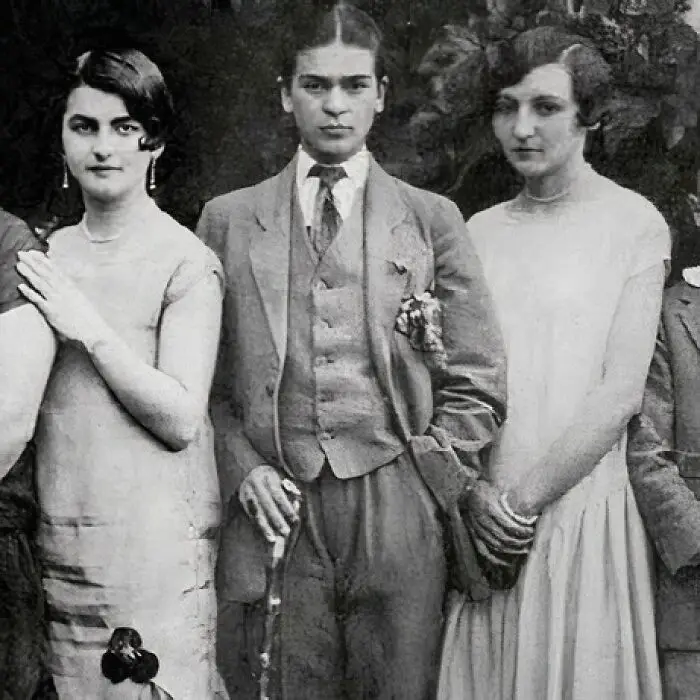
Frida Kahlo takes a family photo, wearing a 3-piece suit and holding a cane, 1924. Nearly 30 years later, in 1953, she writes a letter to Diego Rivera as she awaits surgery to amputate one of her legs. "I’m writing this letter from a hospital room before I am admitted into the operating theatre. They want me to hurry, but I am determined to finish writing first, as I don’t want to leave anything unfinished. Especially now that I know what they are up to. They want to hurt my pride by cutting a leg off. When they told me it would be necessary to amputate, the news didn’t affect me the way everybody expected. No, I was already a maimed woman when I lost you, again, for the umpteenth time maybe, and still I survived. I am not afraid of pain and you know it. It is almost inherent to my being, although I confess that I suffered, and a great deal, when you cheated on me, every time you did it, not just with my sister but with so many other women. How did they let themselves be fooled by you?" "...Let’s not fool ourselves, Diego, I gave you everything that is humanly possible to offer and we both know that. But still, how the hell do you manage to seduce so many women when you’re such an ugly son of a b***h?" The reason why I’m writing is not to accuse you of anything more than we’ve already accused each other of in this and however many more bloody lives. It’s because I’m having a leg cut off (damned thing, it got what it wanted in the end). I told you I’ve counted myself as incomplete for a long time, but why the f**k does everybody else need to know about it too? Now my fragmentation will be obvious for everyone to see, for you to see… That’s why I’m telling you before you hear it on the grapevine..." "...I’m writing to let you know I’m releasing you, I’m amputating you. Be happy and never seek me again. I don’t want to hear from you, I don’t want you to hear from me. If there is anything I’d enjoy before I die, it’d be not having to see your f*****g horrible b*****d face wandering around my garden. That is all, I can now go to be chopped up in peace. Good bye from somebody who is crazy and vehemently in love with you, Your Frida"
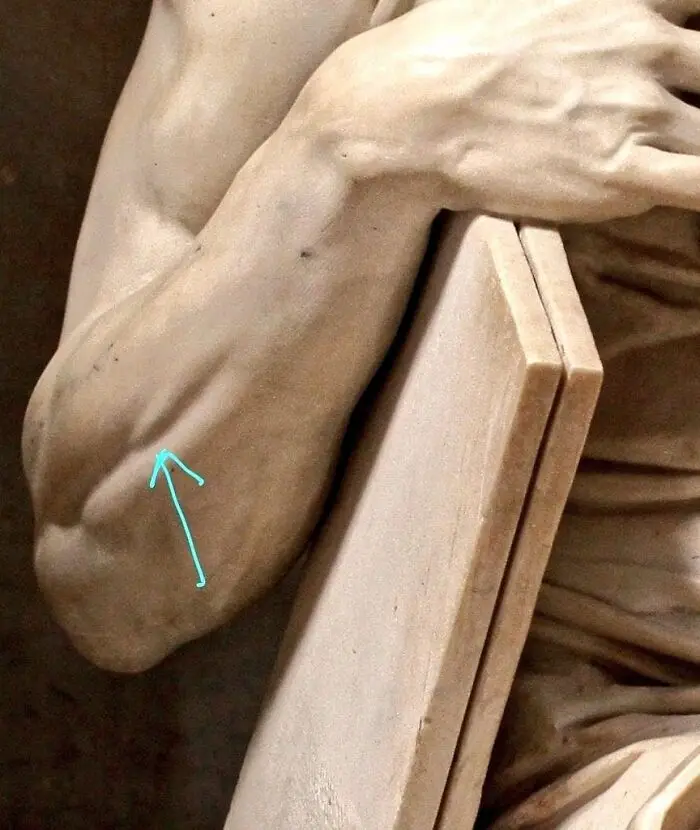
This is the right forearm of Michelangelo's Moses (c. 1513–1515) statue. The arrow points to a small muscle called the extensor digiti minimi, which only contracts when the pinky is lifted, otherwise it is invisible. Most of Michelangelo's sculptures are painstakingly detailed and you can clearly see his obsession with the human body, which he saw as a physical representation of the soul. Michelangelo always preferred sculpting over painting. Here's a letter he wrote to Giovanni da Pistoia (a member of the Florentine Academy) while painting the Sistine Chapel. "I’ve already grown a goiter from this t*****e, swollen up here like a cat from Lombardy (or anywhere where the stagnant water’s p****n). My stomach’s squashed under my chin, my beard’s pointing at heaven, my brain’s crushed in a casket, my breast twists like a harpy’s. My brush, above me all the time, dribbles the paint so my face makes a fine floor for droppings! My haunches are grinding into my guts, my poor a*s strains to work as a counterweight, every gesture I make is blind and aimless. My skin hangs loose below me, my spine’s all knotted from folding over itself, I’m bent taut as a Syrian bow. And because I’m like this, my thoughts are crazy perfidious tripe: anyone shoots badly through a crooked blowpipe. My painting is dead. Defend it for me, Giovanni, protect my honor. I am not in the right place—I am not a painter."
While the first article addresses the ongoing crisis in South Asia due to massive floods, the second article delves into fascinating historical moments captured visually. A discussion about the historical neglect of certain news stories and how they can shape our understanding of the present could benefit readers. Those interested in underreported events may also be intrigued by the narrative of substantial but less-covered occurrences, such as the South Asian floods.