

#1 In 2016, A Japanese Ice Cream Company Created A Commercial To Publicly Apologize About Needing To Raise The Price Of Their Ice Cream Bars For The First Time In 25 Years From 60 Yen To 70 Yen

#2 Marie Wilcox Realized She Was The Last Person On Earth Who Could Speak The Wukchumni Language Fluently

#3 In 2006, A Filipino Fisherman Found A 34kg (75-Pound) Pearl But Didn’t Know Its Value

Curiosity might have taken out the cat, but for humans, it’s practically a superpower. Experts believe it’s why we survived. Our ancestors didn’t thrive because they were the strongest; they survived because they were driven to explore the unknown, map new lands, and piece together nature's patterns.
That same drive led us to build microscopes to look inside tiny worlds and telescopes to scan the stars.
#4 In 1995, This Premature Twin Was Dying Until A Nurse Broke Protocol And Placed Her In The Same Incubator As Her Sister. The Hug Saved Her Life

#5 Before 1923, Mail Carriers Waited At Every Door Until Someone Answered, Wasting 1.5 Hours Daily. Then The U.S. Made Mailboxes Mandatory, Letting Carriers Drop Off Mail And Move On

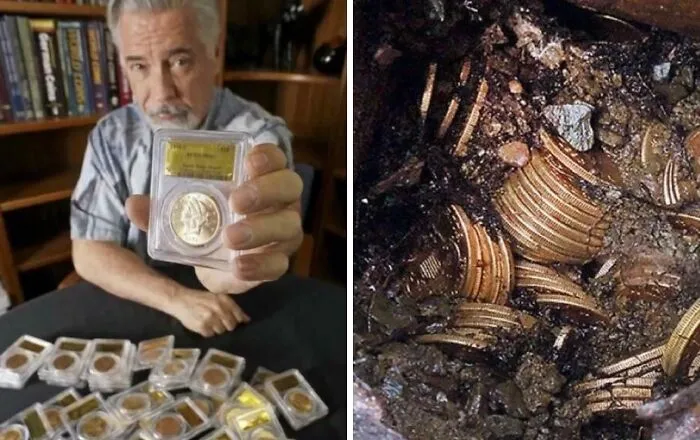
#6 In 2013, A Couple Walking Their Dog In Northern California Discovered Eight Rusty Cans Containing 1,427 Gold Coins Buried On Their Land
You might wonder why this evolutionary drive matters today. After all, our ancestors needed curiosity to hunt and survive, but today we carry all the information in the universe in our pockets. At the same time, we won't suddenly become master inventors just by being curious.
But the truth is, curiosity matters more than ever.
In an era of social media echo chambers and algorithms designed to show you only what you already agree with, it’s easy for our minds to get lazy. Seeking out new facts and different perspectives is how we fight back. When you stumble across a strange piece of history or a wild conspiracy theory, it sparks a healthy skepticism. It makes you want to fact-check, dig deeper, and go down your own rabbit holes instead of just passively scrolling.
That simple habit changes how you view the world. Studies show that stepping outside your comfort zone and engaging with the unfamiliar can make you more empathetic, resilient, and open-minded.
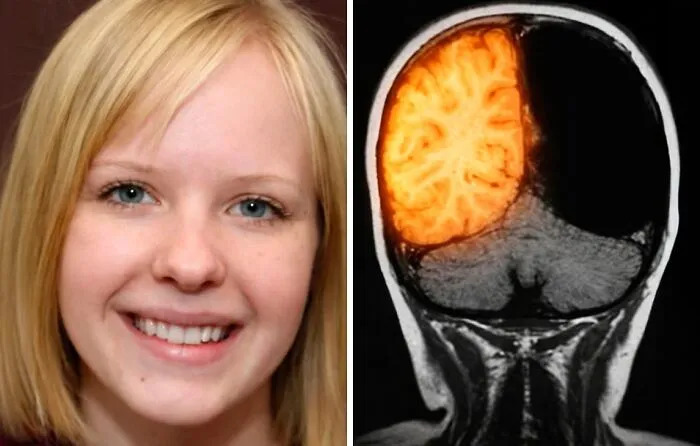
#7 At 8, Christina Santhouse Had The Right Half Of Her Brain Removed After Suffering Up To 150 Seizures A Day
#8 Joy Milne Claimed She Could Smell Parkinson’s Disease

#9 In 1986, 20-Year-Old Christopher Knight Disappeared Into The Maine Forest, Surviving Alone For 27 Years By Committing Over 1,000 Burglaries, All While Remaining Unseen

But are humans truly unique when it comes to curiosity?
In a 2023 study, researchers from Germany and the US set out to test that idea because, well, they were curious. They compared how great apes make choices against human toddlers in a similar setup. When faced with a choice, children consistently showed more curiosity than apes — often giving up a guaranteed reward just to see what was hidden under an uncertain option.
“Apes, in contrast, capitalize on what they know: the transparent option,” explains Alejandro Sánchez-Amaro, co-author of the study and postdoctoral researcher at the Max Planck Institute for Evolutionary Anthropology. “And only after they are provided with alternative clues do they start to choose the opaque option.”
That’s why the stories and facts in this list are so fascinating: they scratch that evolutionary itch in our brains to know something. We’re basically handing your brain the exact curiosity fix it’s craving.
#10 In 1980, Mark Defriest, An Autistic Savant, Was Sentenced To 4 Years For Taking Tools Left To Him In His Father's Will

#11 “Radium Girls” Painted Glowing Watch Dials With Self Luminous Paint, Licking Their Brushes To Keep A Sharp Tip

#12 In 2003, Pizza Delivery Driver Brian Wells Robbed A Bank With A Collar B*mb Locked Around His Neck. He Told Police He Was Being Forced To Do It

In 2014, researchers wanted to see what actually happens inside the brain when we get curious. They started by showing participants a series of trivia questions — like what year the first computer mouse was invented or why flamingos are pink. The subjects rated how eager they were to know each answer.
Next, while lying inside an fMRI brain scanner, they had to wait 14 seconds to get the answer to each question. To test background memory, researchers flashed random, unrelated pictures of neutral faces during that brief waiting period. Results showed that people easily remembered answers to questions that sparked their interest. But the kicker was that they were also far better at recognizing the random faces shown while they waited for those answers.
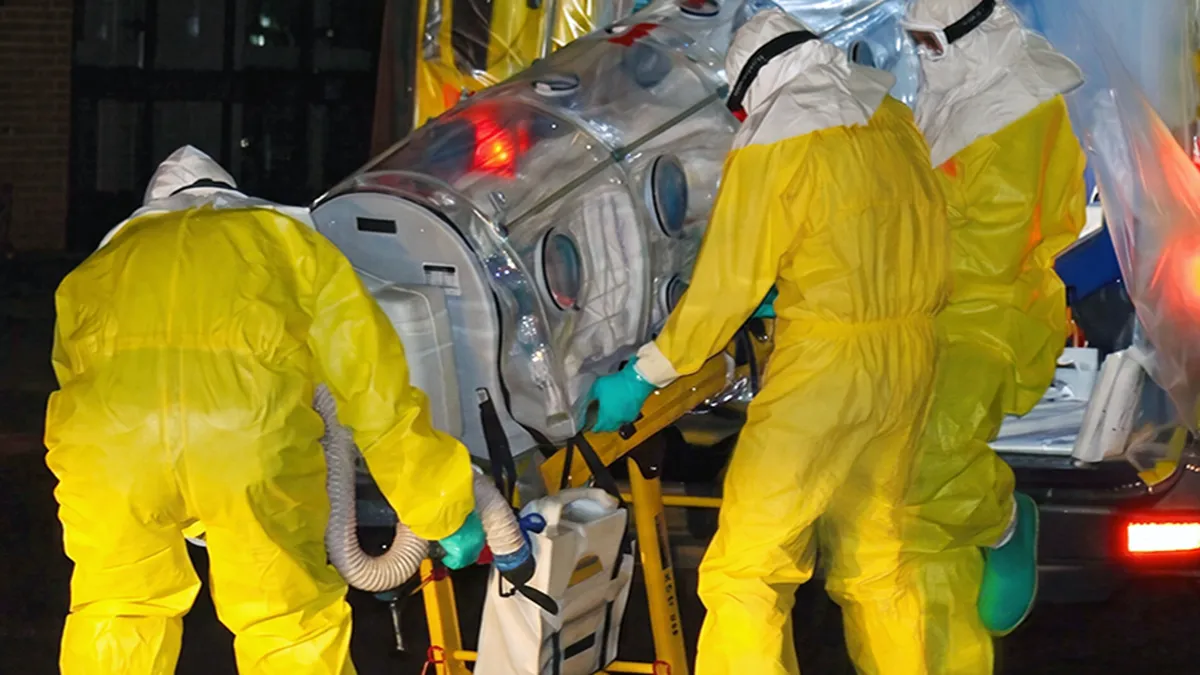
#13 In 1994, Gloria Ramirez Became Known As The “Toxic Lady” After 23 Hospital Workers Got Sick While Treating Her In A California Er

#14 In 2009, A Four-Year-Old Boy From Essex Discovered A 16th-Century Gold Pendant Just Minutes Into A Metal Detecting Outing, Now Showcased At The British Museum

#15 The Photo Features Chandler Crews, A Woman With Achondroplasia, A Form Of Dwarfism

When curiosity kicks in, the brain fires up its reward system. It floods the circuit with dopamine — the same chemical linked to physical rewards like food or money. This surge sparks heavy communication between the brain’s reward center (the nucleus accumbens) and its memory hub (the hippocampus). As a result, a UC Davis study says, curiosity puts your whole brain in an optimal learning state.
For example, when you come across the heartbreaking story of the “Radium Girls,” the tragic details might instantly grab your attention. That spark of curiosity might even lead you to learn and retain the broader historical context around 1920s safety laws and workers’ rights.
As lead author Matthias Gruber put it, curiosity acts like a mental “vortex” that pulls in whatever you want to know — along with all the random background details around it.
#16 In 2004, Ukrainian Presidential Candidate Viktor Yushchenko Was Poisoned With Dioxin, Leaving His Face Disfigured

#17 In 2013, Cook Harrison Okene Was Trapped Nearly 100 Feet Underwater After His Tugboat Capsized Off Nigeria And Sank To The Ocean Floor

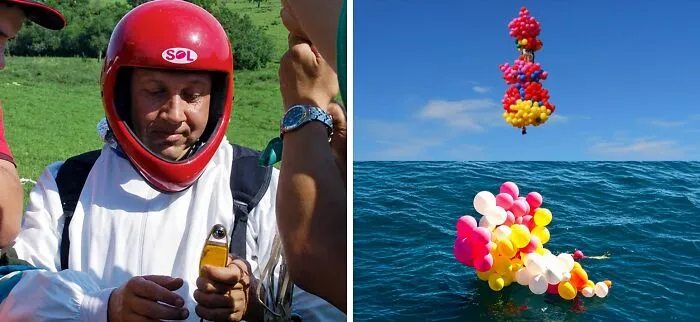
#18 In 2008, Brazilian Priest Adelir Antônio De Carli Strapped Himself To A Plastic Chair Lifted By 1,000 Helium Balloons, Hoping To Break A World Record And Raise Money For Charity
Curiosity doesn’t just make us smarter — it also makes us far more patient.
A recent study by Duke University researcher Abigail Hsiung found that curious people are much more willing to wait and solve a puzzle on their own. Less curious people, on the other hand, quickly grow impatient and rush to the answer. “High curiosity meant that people wanted to have that moment of realization and discovery on their own,” says Hsiung.
When you stick with a problem longer, you dig deeper, explore further, and try to understand complex topics. This willingness to sit with a question is why curiosity is also one of the strongest predictors of academic success.
#19 Kevin Strickland Spent 43 Years In Prison For A Triple M**der He Didn't Commit

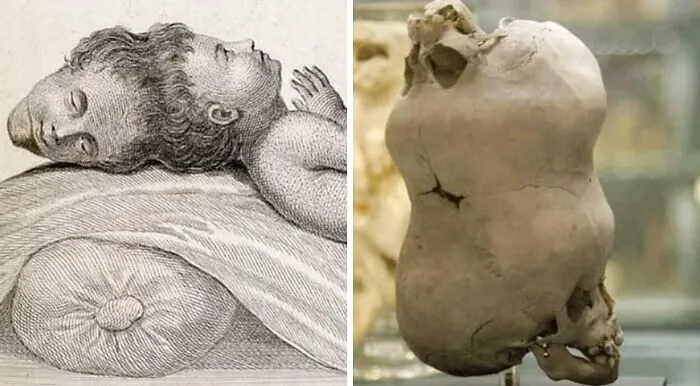
#20 In 1783, A Boy Was Born With Two Heads. The Second Head Was Upside Down, With The Neck Pointed Straight Up