




#21
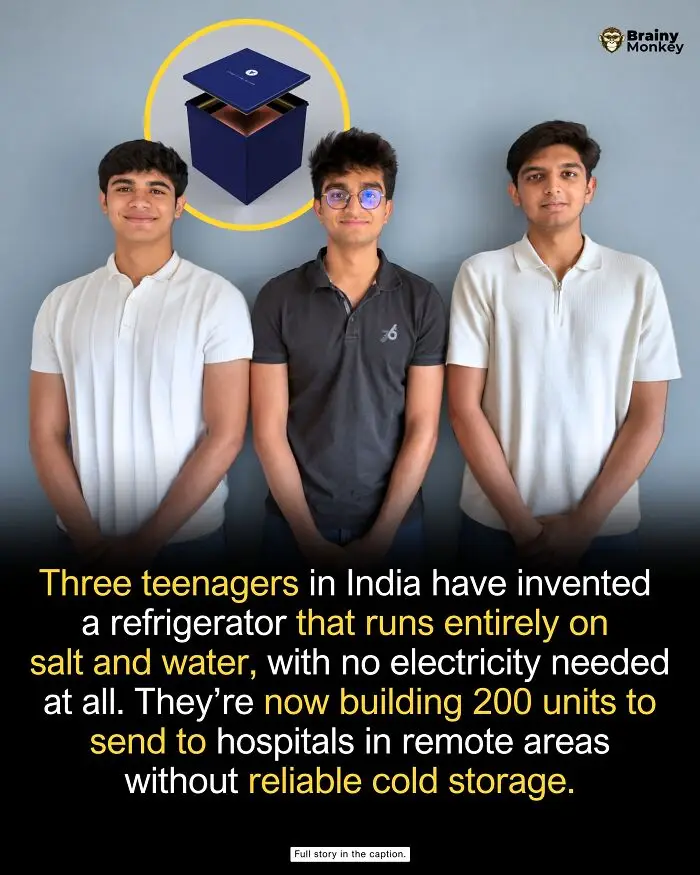
In 2025, 16- and 17-year-olds Dhruv Chaudhary, Mithran Ladhania, and Mridul Jain created Thermavault, a portable cooling system designed to keep medicines and vaccines cold in places where reliable electricity is hard to find.
The device can maintain temperatures of around 2–6 °C (35–43 °F) for 10–12 hours, making it suitable for storing temperature-sensitive medical supplies.
Even better, the salts used in the cooling process can be reused, helping keep operating costs low.
Their idea earned them the Earth Prize Asia 2025 and $12,500 in funding. Now, they plan to build 200 units and test them across 120 hospitals in India.
The inspiration came from a real problem. During COVID-19, many rural clinics struggled to keep vaccines cold because of unreliable power.
Their solution is simple, portable, and potentially life-changing.
Three teenagers. Salt, water, and one idea that could bring reliable cold storage to places that need it most.
Human kindness has a measurable physical effect on the person giving it, not just the person receiving it. Research from the Cleveland Clinic found that performing acts of kindness releases serotonin in the brain of both the giver and the receiver, and that witnessing an act of kindness produces the same effect in the observer.
This three-way chemical reaction has been described as the "helper's high," and it suggests that generosity is not a sacrifice but a neurological reward. The cynicism bias that makes us assume people are selfish is, in the most literal sense, costing us serotonin we could be having for free.
#22
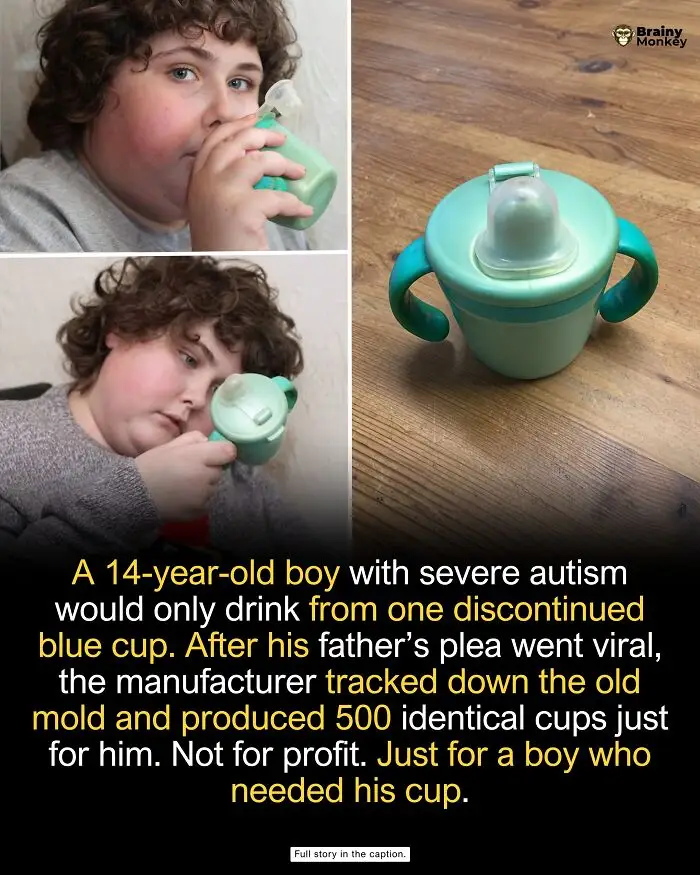
Ben Carter, a teenager with severe autism from England, would only drink from one specific blue training cup he had used since childhood.
When the cup was discontinued and his last one began falling apart, his father made a desperate online appeal.
For Ben, it wasn’t simply a favorite cup. Even tiny changes in shape, color, or texture could make him refuse to drink. His attachment was so strong that he had previously been hospitalized with dehydration after rejecting other cups.
Then the story went viral.
The manufacturer tracked down the original mold, restarted production, and made 500 identical cups just for Ben, giving him what was essentially a lifetime supply.
1 blue cup. 1 worried father. More than a decade after the model was discontinued. 500 replacements made for one boy.
Sometimes the smallest things can mean everything.
#23
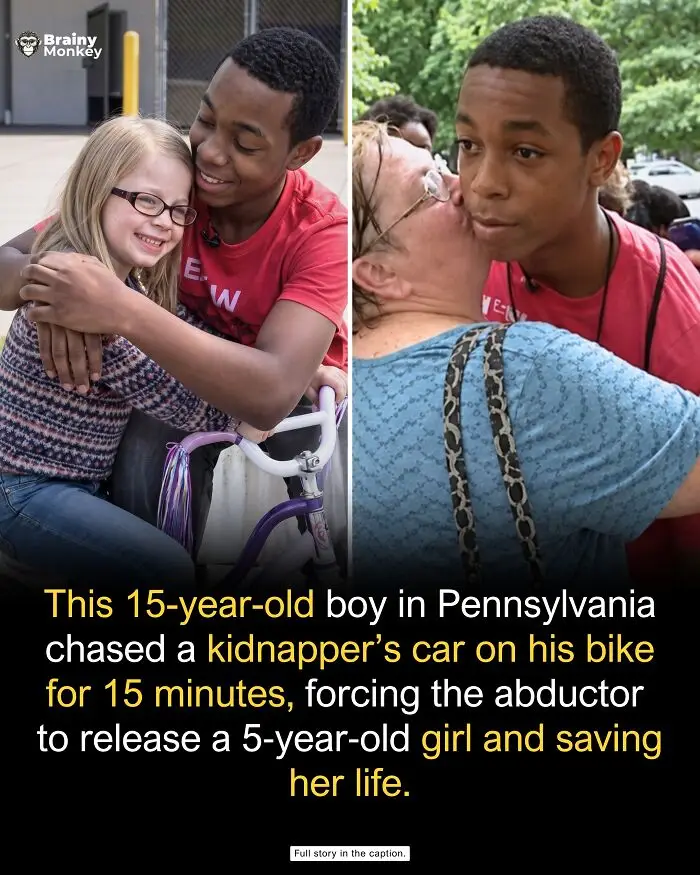
In 2013, Temar Boggs of Lancaster, Pennsylvania heard that 5-year-old Jocelyn Rojas had been taken from her front yard. He jumped on his bike with a friend, spotted a suspicious car, and chased it through the neighborhood for nearly 15 minutes.
The driver eventually stopped and let Jocelyn out.
She ran straight to Temar and said she wanted her mommy.
Police later arrested a suspect, and Jocelyn was safely reunited with her family.
One teenager. One bicycle. One 15-minute chase. One little girl brought home alive.
#24
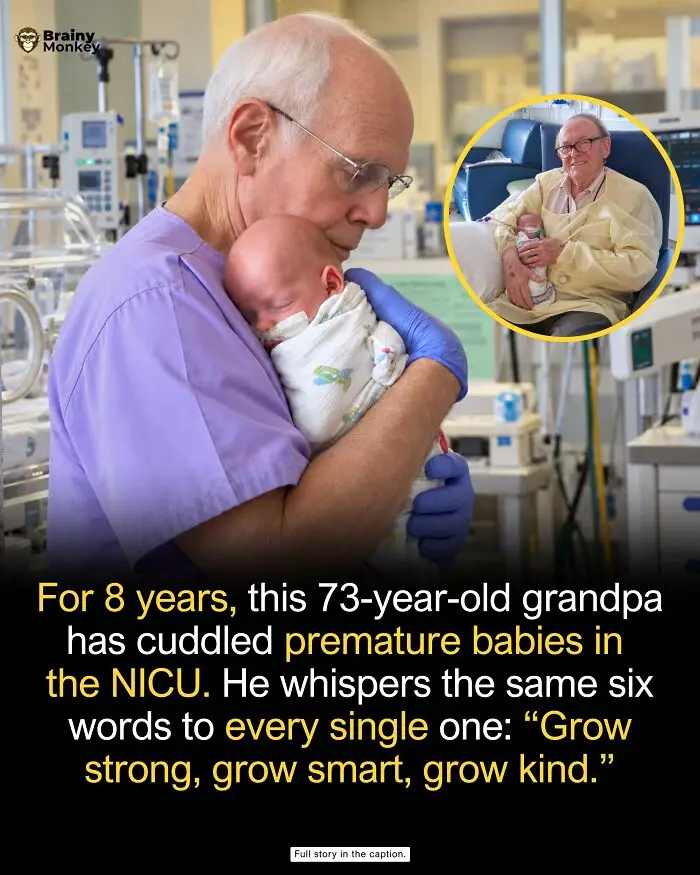
Dave Whitlow, 73, volunteers twice a week at the Children’s Hospital of Richmond at VCU, where he cuddles fragile newborns in the NICU.
During each visit, he may hold 5 or 6 babies, some weighing as little as 2 pounds, rocking them gently and giving them the comfort of human touch.
And before placing each baby back in the crib, he whispers the same six words:
“Grow strong, grow smart, grow kind.”
After 8 years, hundreds of babies have heard those words.
One grandfather. Two days a week. Hundreds of tiny lives comforted by kindness.
The ozone layer, which was one of the defining environmental anxieties of the 1980s and 1990s, is healing. The Montreal Protocol of 1987, which phased out the chlorofluorocarbons destroying it, is now widely considered the most successful international environmental agreement in history.
NASA confirmed in 2023 that the ozone hole over Antarctica has been shrinking consistently and is on track to fully recover by approximately 2066. It is the story of a global problem, a global agreement, and a global outcome that went exactly the way it was supposed to, which is rare enough to be remarkable and does not get nearly enough airtime given what it actually represents.
#25
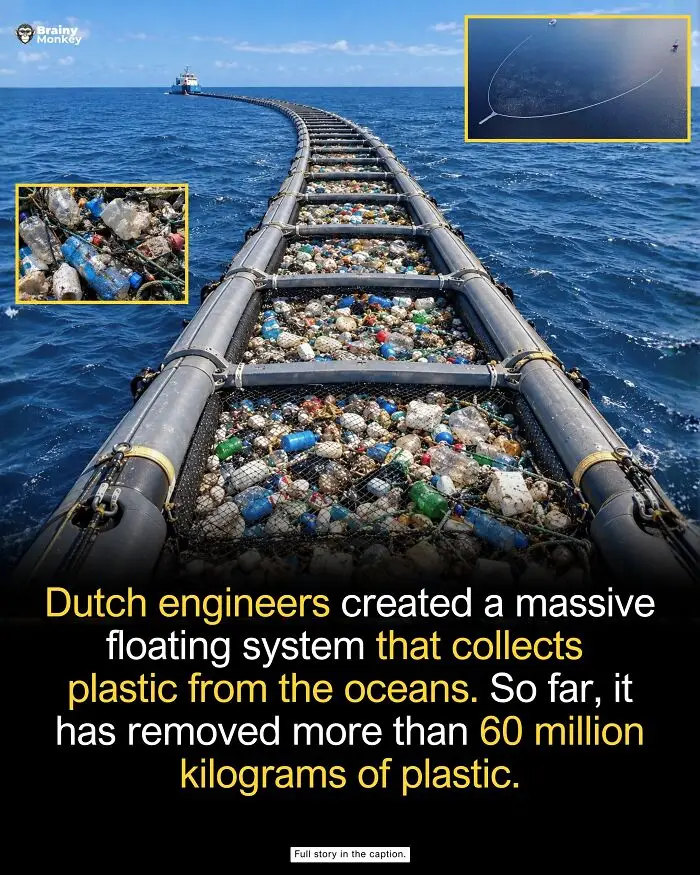
Founded in 2013 by Dutch inventor Boyan Slat, The Ocean Cleanup now deploys massive floating barriers across polluted waters, including the Great Pacific Garbage Patch, where ocean currents naturally concentrate plastic waste.
The project also uses solar-powered Interceptors in rivers to stop trash before it ever reaches the sea.
So far, the organization says it has removed more than 60 million kilograms of plastic from oceans and waterways worldwide.
What began as one young inventor’s ambitious idea has grown into a global operation involving more than 150 engineers and scientists, all working toward an even bigger goal: reducing floating ocean plastic by 90% by 2040.
60+ million kilograms removed. 150+ engineers and scientists. One mission: stop plastic before it takes over our oceans.
#26
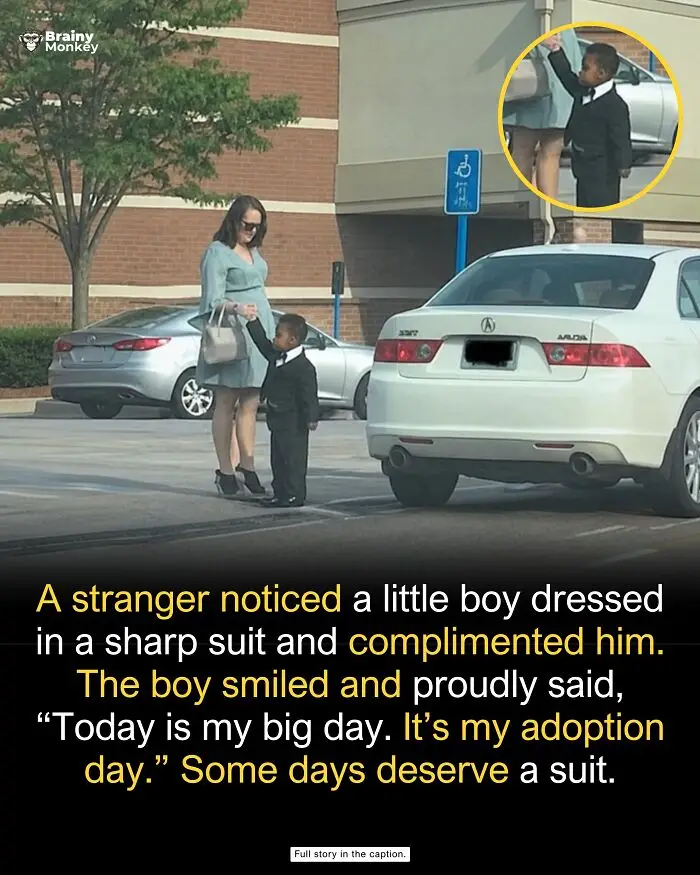
In 2022, a little boy was spotted in public dressed sharply in a suit. When a stranger complimented him, he smiled and proudly replied:
“Today is my big day. It’s my adoption day.”
The simple moment quickly spread online, with people celebrating the joy of a child finally beginning a new chapter with his forever family.
For many families, adoption day is more than paperwork. It is the day waiting ends and belonging begins.
One little boy. One sharp suit. One adoption day. One unforgettable reason to dress for the occasion.
Some days really do deserve a suit.
#27
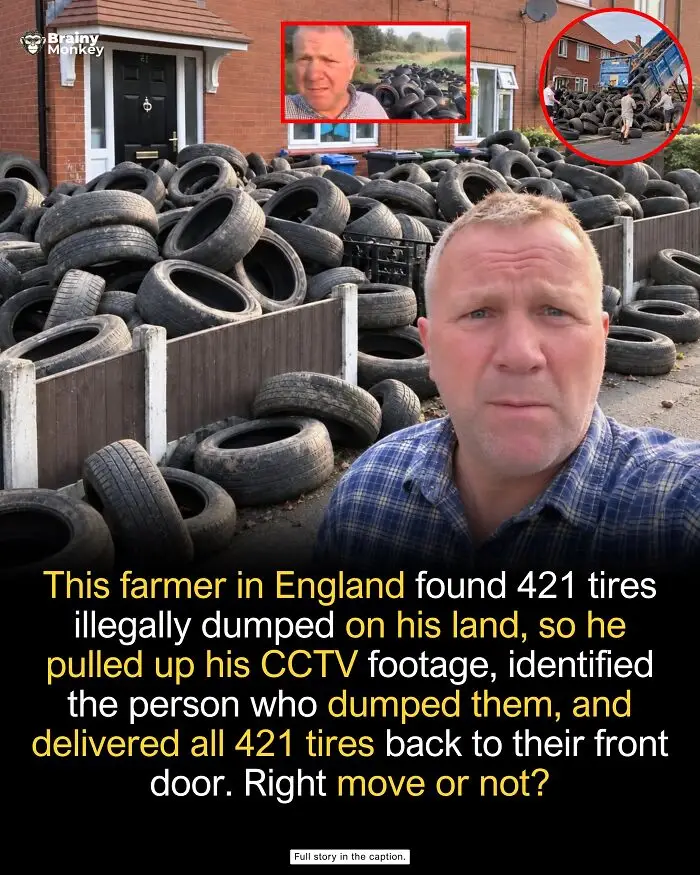
In 2020, English farmer Stuart Baldwin discovered a huge pile of dumped tires on his property.
He checked his CCTV footage, identified the person believed to be responsible, and gave them 3 days to come back and clean it up.
They didn’t. So Baldwin loaded all 421 tires onto a truck and delivered them straight back to the person’s front door and garden.
His response quickly went viral, with people divided over whether it was perfect justice or taking matters too far.
Would you have done the same?
If this list teaches us anything, it is that there are still people doing good in the world. Whether they are making massive scientific breakthroughs, or just braiding a little girl's hair to compensate for the loss of her mother, they are out there. We just need to look hard enough. Or, at the very least, try to curate our social media feeds to include pages that share good news and heartwarming facts. Just sit back and watch the serotonin flood in.
Which one of these facts made the world feel a little less dark today? Tell us in the comments!
#28
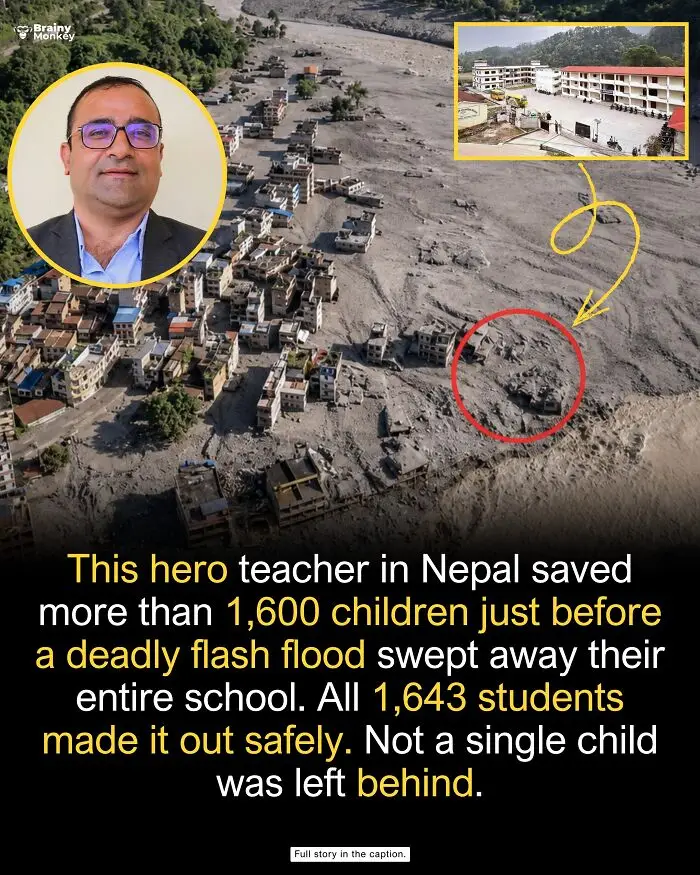
On August 26, 2026, Rajendra Dawadi, principal of Tribhuvan Trishuli Secondary School in Nepal, received an urgent warning that a catastrophic flash flood was rushing toward the Trishuli Valley.
He didn’t wait.
Dawadi rang the school bell, ordered classrooms evacuated, called school bus drivers to turn back, and led students uphill toward higher ground. Minutes later, floodwaters swept through the area and destroyed the school buildings.
All 1,643 students escaped. Not a single child was swept away from the school. Some students and staff were stranded on higher ground for days afterward, but they had escaped the immediate disaster.
Tragically, two school employees were later reported passed away after separately returning toward the flood zone. The wider disaster has devastated Nepal and Tibet, with hundreds of lives ended and thousands still missing.
#29
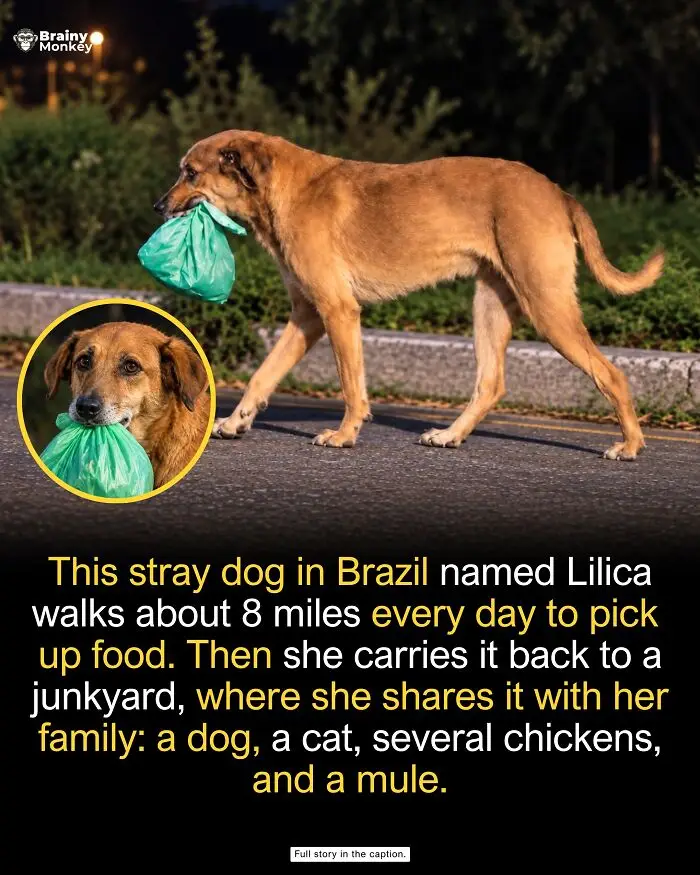
In São Carlos, São Paulo, a dog named Lilica became known for traveling up to 8 miles, about 12 km, to meet a teacher named Lucia Helena de Souza, who would give her food.
Then Lilica would carry the bag all the way back to the junkyard where she lived.
Waiting for her were the animals she considered family: another dog, a cat, several chickens, and even a mule.
She repeated the journey for years, sharing what she had instead of eating it alone.
One stray dog. An 8-mile journey. One bag of food. A whole family waiting for her return.
#30
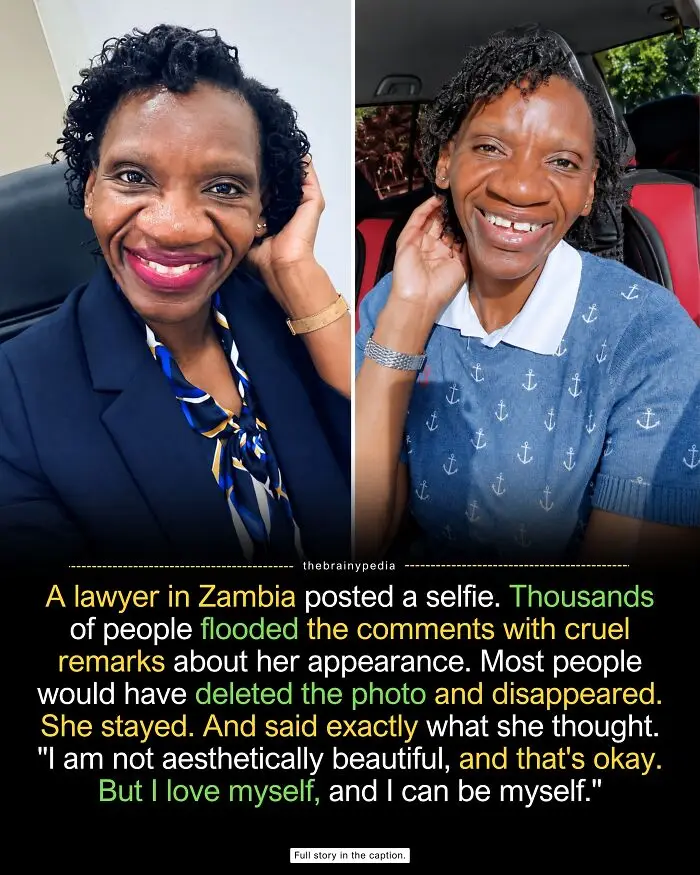
In June 2025, 37-year-old Zambian lawyer Naomie Pilula posted a casual selfie online.
The photo quickly went viral, drawing hundreds of thousands of comments and shares, including thousands of cruel remarks about her appearance.
Instead of deleting the photo, Naomie left it up and responded with confidence:
“I am not aesthetically beautiful, and that’s okay. But I love myself, and I can be myself.”
Her story resonated with people around the world, and her following grew from about 1,000 to 20,000 within weeks.
What began as online mockery became a powerful reminder that self-worth does not have to depend on other people’s approval.
#31
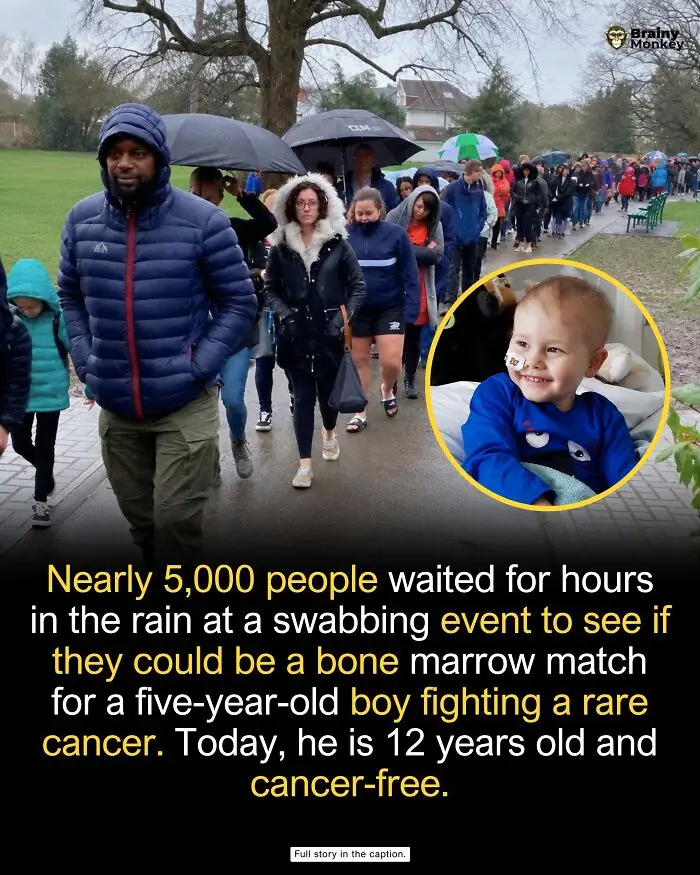
In March 2019, Oscar Saxelby-Lee from Worcester, England, was battling a rare and aggressive form of leukemia and urgently needed a stem cell transplant.
His community organized a donor drive at his primary school, hoping to find a match.
Then something incredible happened.
Despite the relentless rain, 4,855 people showed up and waited in line for hours just to have their cheeks swabbed. The turnout more than doubled the charity’s previous single-event record of 2,200 registrations.
And it worked.
A matching donor was found for Oscar. After his transplant and further treatment, he went on to become cancer-free.
4,855 strangers. One little boy. One massive act of community kindness.
Sometimes, saving a life really can begin with something as simple as a cotton swab.
#32
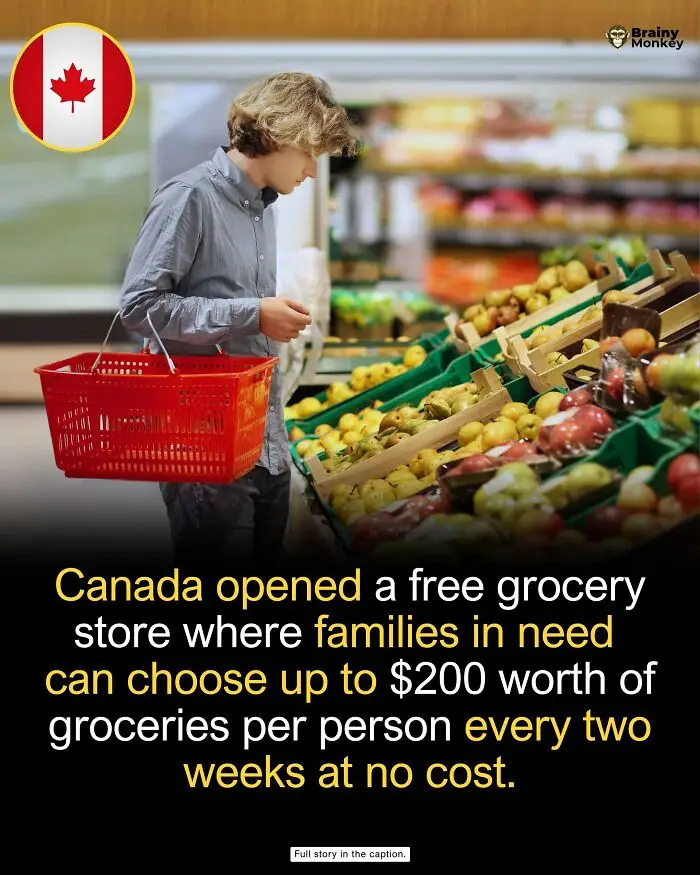
The Regina Food Bank in Saskatchewan opened a grocery-store-style food hub where registered clients can walk through the aisles and choose the food they actually need.
Families can visit once every 2 weeks by appointment, and clients can leave with about $200 worth of groceries per person at no cost.
Instead of receiving a pre-packed food hamper, people can select their own items, giving them more choice and dignity.
The store is designed to make food assistance feel more like regular grocery shopping while helping families stretch their budgets during difficult times.
Free groceries, but with the freedom to choose. Should more cities do this?
#33
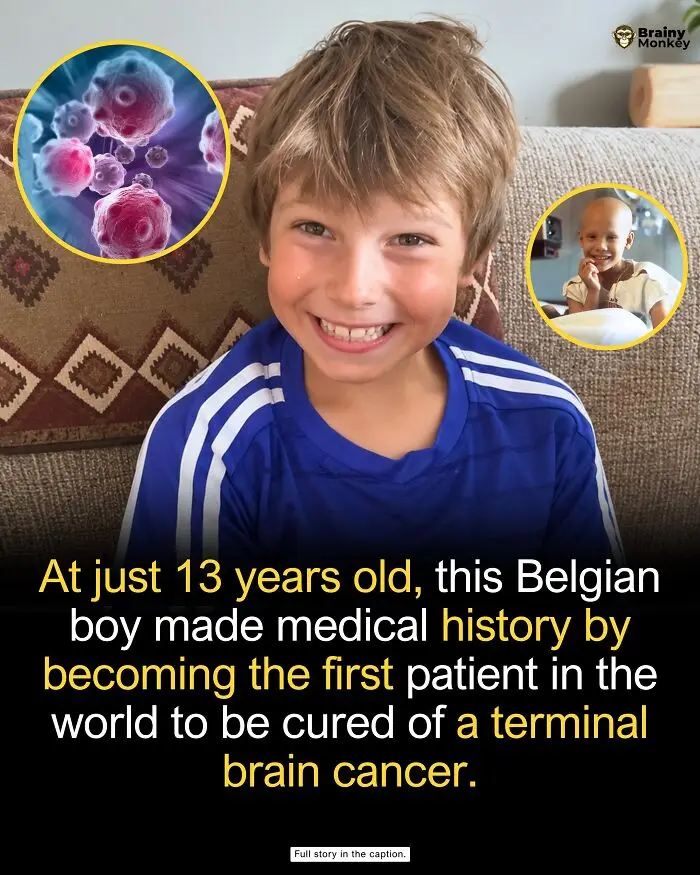
At age six, he was diagnosed with diffuse intrinsic pontine glioma (DIPG), one of the deadliest childhood brain tumors, with most patients surviving less than two years.
Lucas joined the BIOMEDE clinical trial in Paris and was treated with everolimus, a drug designed to block pathways involved in tumor growth.
Then something extraordinary happened.
Scan after scan showed the tumor shrinking, until eventually it disappeared completely.
By 2024, Lucas was reported as the first known patient in the world to achieve a complete, lasting response to DIPG, turning a diagnosis once considered almost universally fatal into a medical milestone.
A boy given almost no chance became the case that gave doctors a reason to believe the impossible might not stay impossible forever.
#34
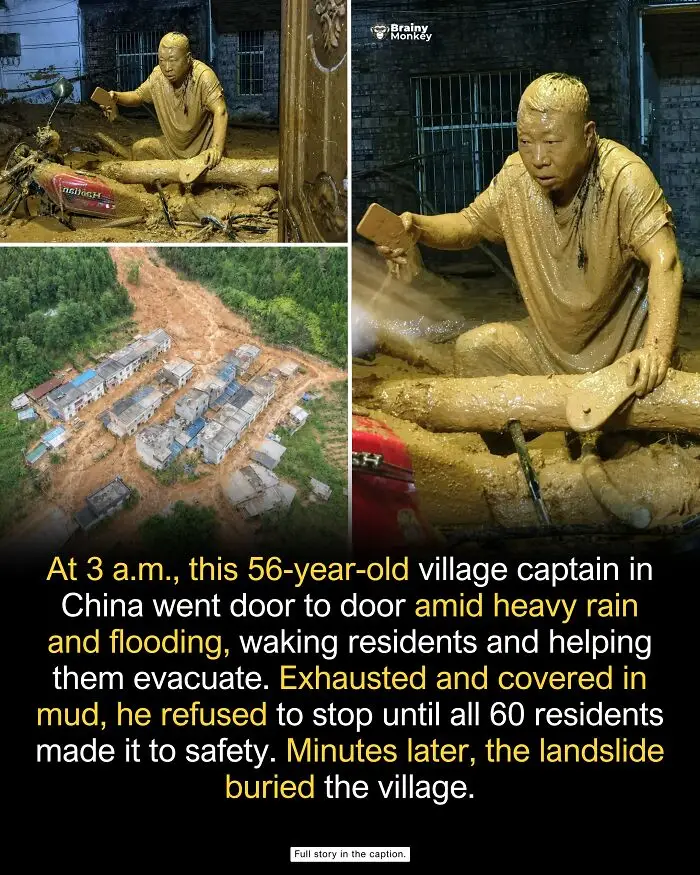
At 3 a.m., with torrential rain pounding his village and floodwaters rising around him, 56-year-old village captain Tian Ruliang went door to door in Shanghongyan Village, Yunnan Province, China, waking families and telling them to get out immediately.
He was exhausted. He was covered in mud. At one point, floodwaters even knocked him off his feet, forcing him to cling to a tree to survive.
But he kept going.
Tian continued knocking on doors and shouting warnings through a loudspeaker until all 60 residents from 21 households had reached higher ground.
Minutes later, the mountainside gave way.
More than 10,000 cubic meters of mud and rock crashed into the village, burying homes and covering much of the area that families had just escaped.
60 people made it to safety. Not one resident was left behind.
Tian didn’t wait for someone else to take responsibility. He saw danger coming and kept moving until everyone was safe.
That is what leadership looks like when there is no time for speeches, only action.
#35
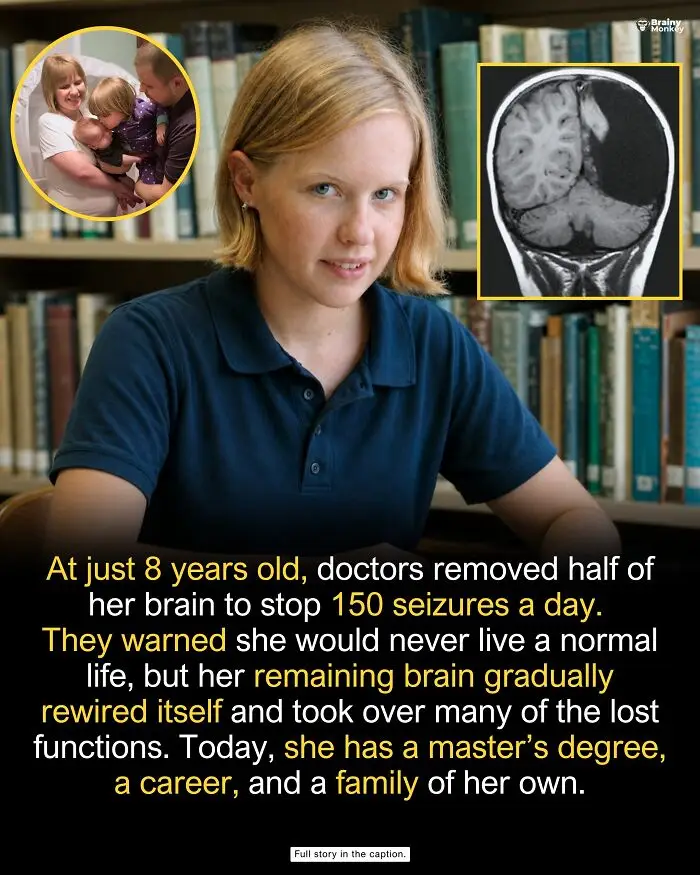
Christina Santhouse underwent a rare hemispherectomy, a life-saving surgery that removed the right hemisphere of her brain in an effort to stop the relentless seizures.
Doctors warned that the consequences could be devastating. She might struggle to walk, speak, or ever live independently.
But Christina’s brain did something extraordinary.
Through neuroplasticity, the remaining half gradually reorganized itself and took over many of the functions that had been lost.
And she didn’t just recover.
Christina went on to earn a bachelor’s degree and a master’s degree, build a career as a speech pathologist, and start a family of her own.
Half a brain removed. 150 seizures a day stopped. A life doctors feared might never be normal became anything but ordinary.
Her story is a remarkable example of just how powerful and adaptable the human brain can be.
#36
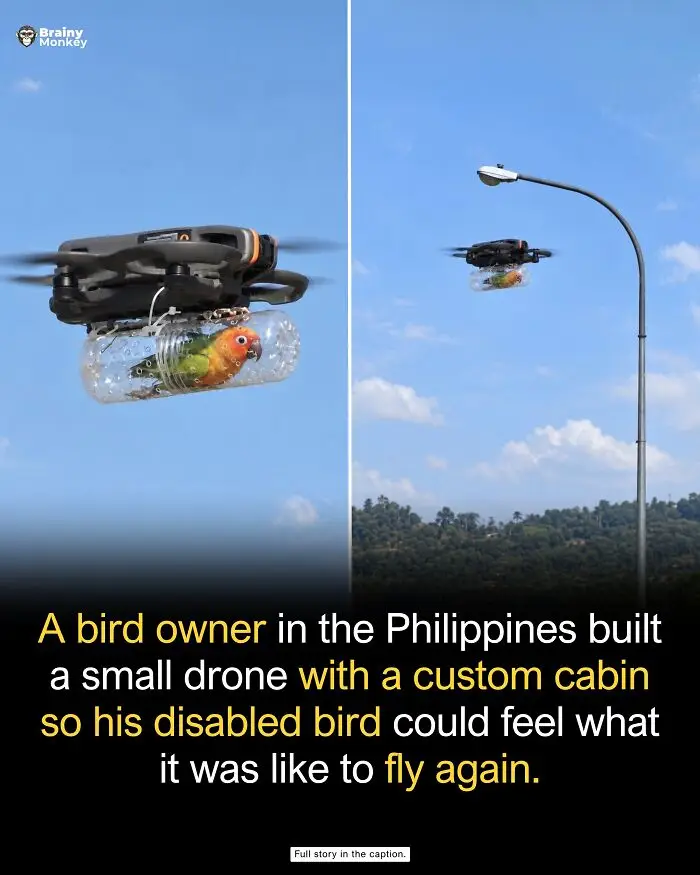
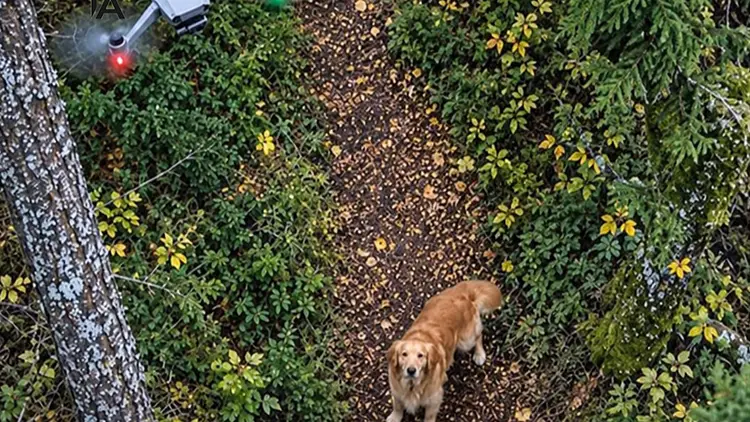
In Davao City, Philippines, bird owner Marc Joseph Colando built a custom transparent cabin beneath a drone so his injured lovebird, Nitya, could experience flying again.
Nitya had been badly hurt in a cat attack in 2025, leaving her unable to stand, walk, or land properly. She could still manage short, low flights, but nothing like before.
So Marc built her a lightweight, ventilated cabin and securely attached it beneath a DJI drone.
On April 13, 2026, Nitya took her first assisted flight.
Since then, she has spent 10 to 15 minutes in the air almost every day, soaring above fields and parks while chirping from her tiny cabin.
One bird. One drone. One owner who refused to let an injury take away her sky.
#37
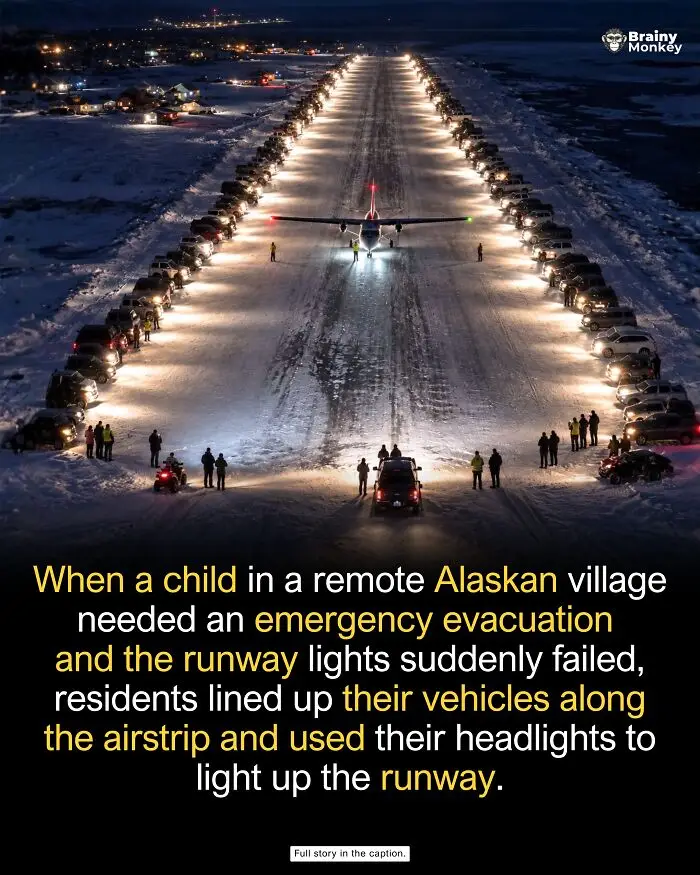
In August 2020, a child in the remote village of Igiugig, Alaska, needed an emergency medical evacuation. But there was one terrifying problem: the runway lights weren’t working.
With only 68 people living in the village, tribal clerk Ida Nelson started calling neighbors for help.
Within about 20 minutes, roughly 20 cars, trucks, and ATVs lined both sides of the airstrip, aiming their headlights toward the runway to create a glowing path through the darkness.
Residents from 8 to 70 years old rushed out, some still in their pajamas, just to help.
The medevac plane landed safely, picked up the child, and took off again under the light of the villagers’ vehicles.
The child was flown to Anchorage for treatment.
#38
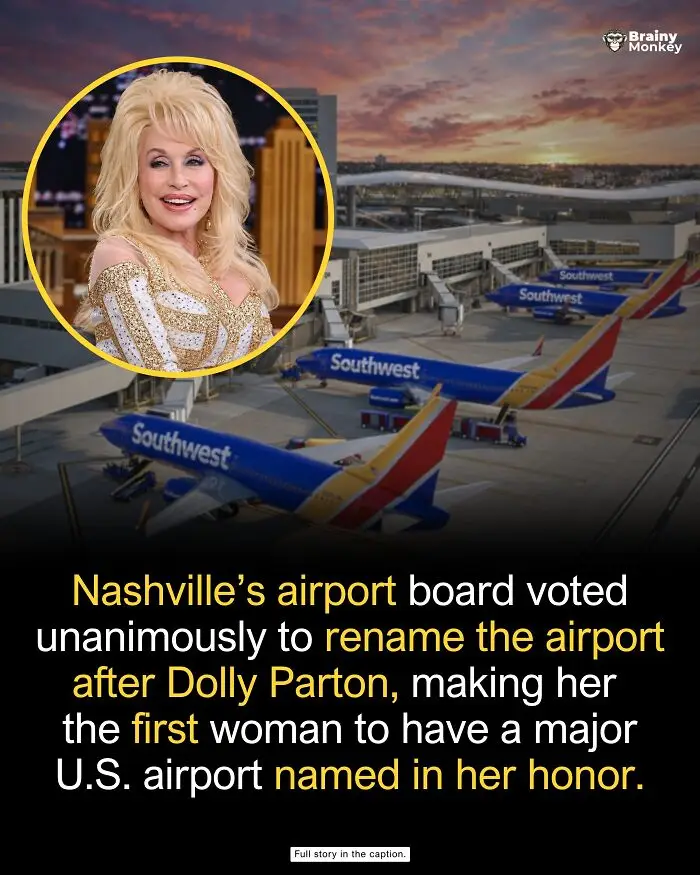
On September 11, 2026, the Metropolitan Nashville Airport Authority board voted unanimously, 6–0, to begin the process of renaming Nashville International Airport (BNA) in her honor.
If the change is completed, Dolly would become the first woman to have a major U.S. airport named after her.
Support has been huge. The proposal has backing from Tennessee leaders, Nashville officials, and more than 175,000 people who signed a petition supporting the idea.
Six votes. 175,000 supporters. One legendary Tennessee icon.
Soon, millions of travelers could be flying through an airport bearing the name Dolly Parton.
#39
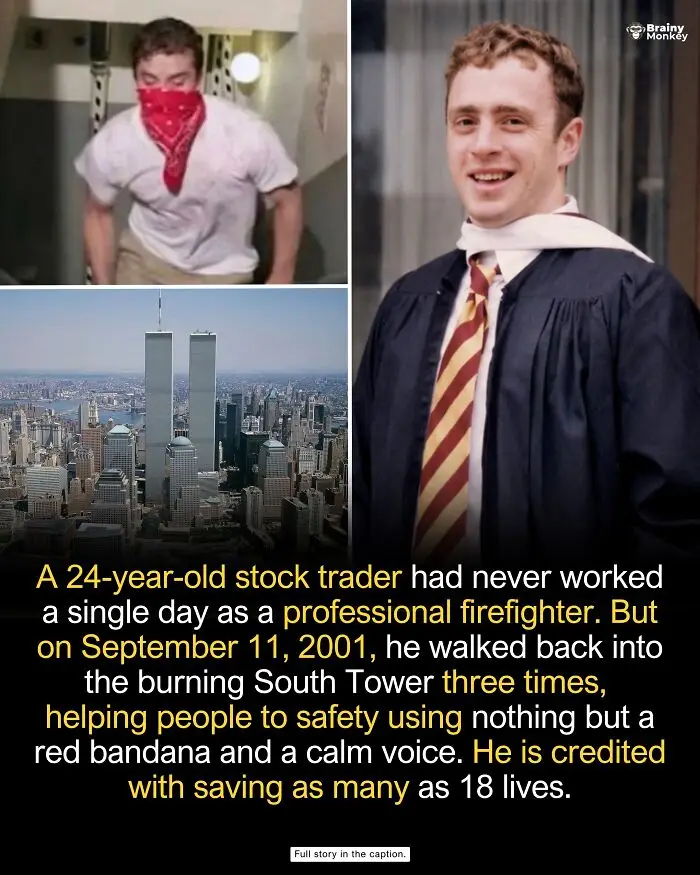
On September 11, 2001, 24-year-old Welles Crowther was working as a stock trader on the 104th floor of the South Tower when the attacks began.
Instead of escaping and staying out, he tied his trademark red bandana over his face and went back into the burning tower three separate times.
Survivors remembered his calm voice as he carried one injured woman on his back and guided groups of people down 17 floors to safety. Crowther had trained as a volunteer firefighter in his hometown of Nyack, New York, but had never worked professionally.
He is credited with helping save as many as 18 lives.
Crowther was last seen heading back upstairs with firefighters before the South Tower collapsed at 9:59 a.m. Months later, survivors finally identified their rescuer as “the man in the red bandana.”
His legacy lives on through Boston College’s Red Bandana Game, and in May 2026, he was posthumously awarded the Presidential Medal of Freedom.
24 years old. Three trips back inside. Up to 18 lives saved. One legacy that still inspires millions.
#40
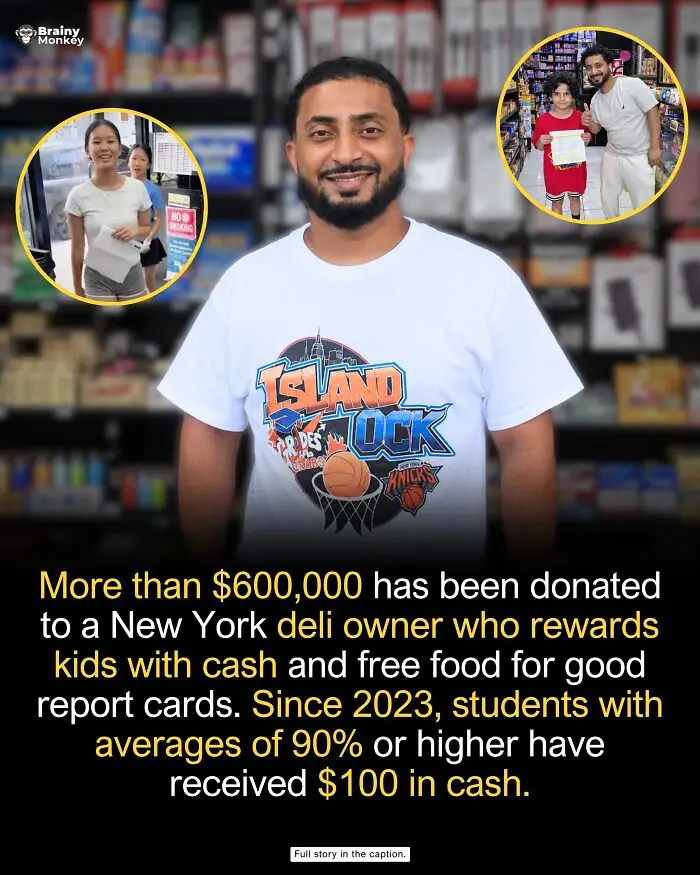
Wail Alselwi, known as “Island Ock,” runs a Staten Island deli where students can bring in their report cards and earn rewards for strong grades or major improvement.
Students scoring 90% or higher can receive $100 in cash, while others may get free snacks, groceries, and other rewards.
His “Grades for Grabs” program went viral, inspiring more than 13,000 donations and raising about $608,000 to help keep the rewards going.
What started as one deli owner encouraging local kids has turned into a community-backed effort to make academic success feel worth celebrating.
