





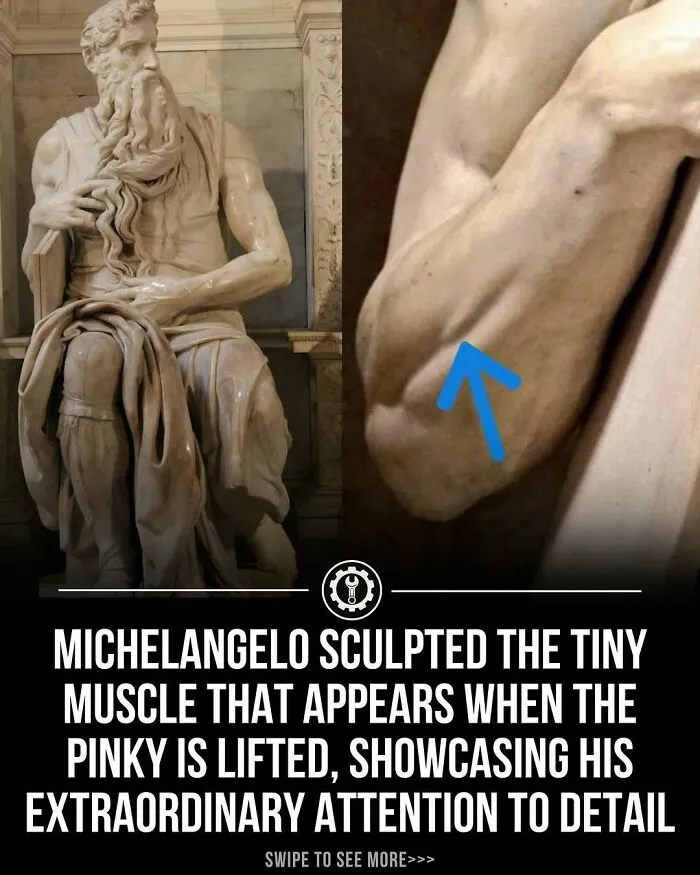
In Moses (1513–1515), he carved the subtle forearm muscle that activates when the pinky lifts — a detail so small most artists would ignore it entirely. That slight tension makes the statue feel alive. Not posed. Not frozen. Alive. It’s one of the clearest examples of how deeply Michelangelo studied human anatomy, even dissecting cadavers to understand how muscles actually move beneath the skin