


“There is a level of novelty to it, it removes boredom quickly, and it helps us to discover our emotional limits while understanding the minds of those who go beyond social norms and potentially gaining knowledge of how we might avoid being victims ourselves. They also offer closure, with many stories ending with the mystery being solved, and the criminal being brought to a level of justice," he said.
According to the psychologist, some members of the audience even find it comforting when they’re exposed to evil through entertainment. You’re safe as the viewer, yet you’re free to go on an emotional journey.
"It can take us on an emotional rollercoaster, have us trying to solve the puzzle and test our fear in a controlled way. The permission to explore evil is powerful, as we so rarely get the chance elsewhere, and in itself, it is healthy and normal in moderation," he said.

Meanwhile, writer and editor Doug Murano told Bored Panda his take on why many people are fascinated with horror and the unknown.
“I suspect that most of us—regardless of our spiritual beliefs—have a longing for something beyond this life. Human beings seem to be pre-programmed with this urge. So much of horror and speculative fiction grapples with death and what happens after we die that I can't help but believe much of our interest in such stories is an expression of a longing for experiences and existences beyond our perceptions," he told us earlier.

"Great horror stories thread a precarious needle: They maintain a sense of the truly inexplicable while creating a world and a narrative that provides enough answers to ground the story. Over-explanation kills most horror, which is why the shark is scariest when you only see the fin; the alien is most terrifying when it's lurking in the shadows; the killer is most monstrous when he's masked," Doug said that leaving some things ambiguous, not explaining the entire context, are powerful tools that creators have.

#32
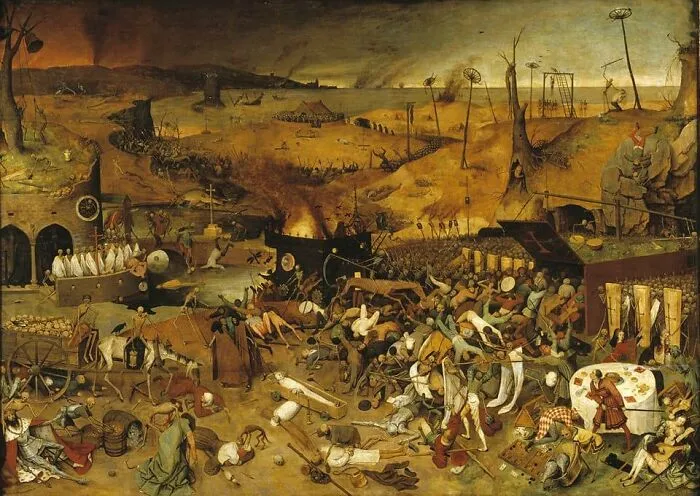
Every time I look at this I see something else going on.