



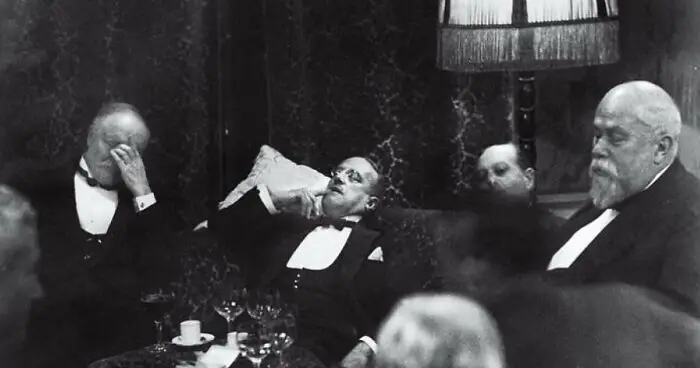

Photos have a way of immortalizing history in its rawest form, capturing the feelings, hardships, and victories in ways words often can’t. From devastating scenes of war to everyday life, these images give us a window into the past, portraying real people living through extraordinary times. Some of these photos will move you, others may shock you, but all of them reveal truths about the world we live in. We’ve compiled a collection of 30 historical photos that offer a powerful journey through the ages, images that inspire reflection and remind us of the authentic stories behind history’s most iconic moments.
#1 Dorothy Counts, 1957
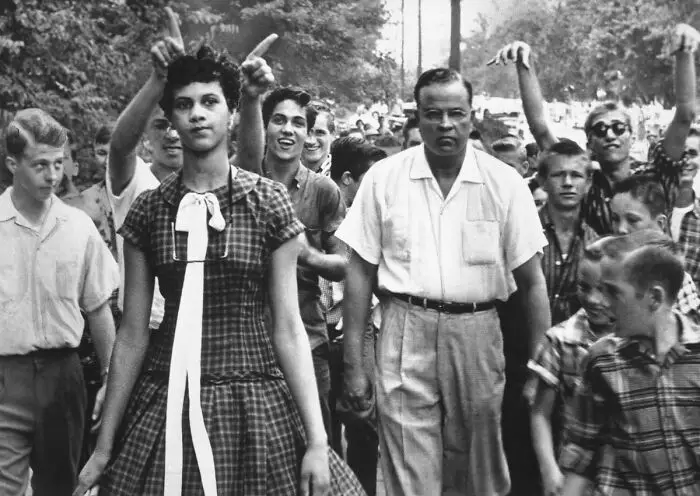
Photographed here by Douglas Martin is 15-year-old Dorothy Counts, who became the first of four Black students to attend a non-integrated high School in Charlotte, North Carolina in 1957. On her first day at Harding High School, she was confronted by a hostile crowd of white students who taunted and harassed her for attending. Despite the bullying, Counts walked into the school with dignity and grace. Her courage embodied the spirit of the Civil Rights Movement, and this photo became a defining image of the struggle against segregation.
0points
#2 A Soldier Defecting To West Berlin, 1961
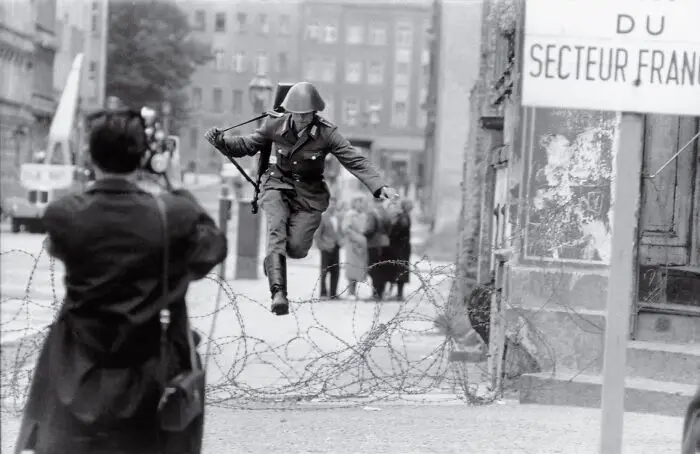
During the Cold War, this photo of 19-year-old East German border guard Conrad Schumann making a bold escape from the Berlin Wall quickly became a powerful symbol of resistance. Photographer Peter Leibing captured the electrifying moment Schumann seized the opportunity to leap over. This iconic moment is now immortalized as the iconic “Leap into Freedom”.
Report
0points
#3 A Starving Boy And A Missionary In Uganda, 1980
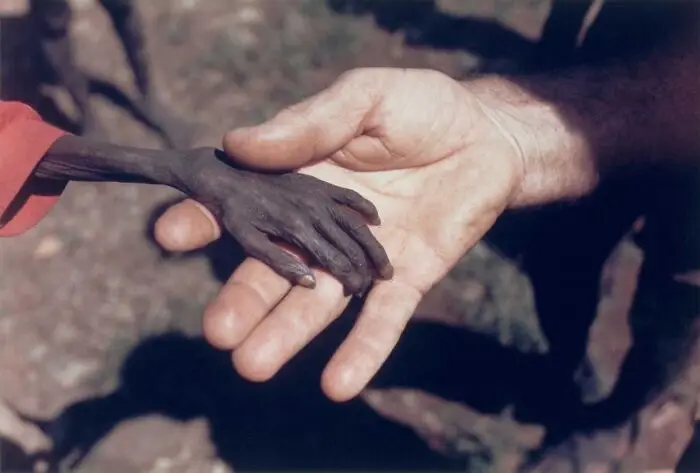
British photojournalist Mike Wells captured this haunting photo of a Catholic missionary holding the hand of a starving boy in Uganda in 1980. The gauntness of the boy’s hand in contrast with the missionary's illustrated the heartbreaking effects of the famine that had ravaged parts of the country. Much to Wells’s disapproval, the photo went on to win the World Press Photo of the Year award and later became a powerful symbol of human suffering.
Report
0points
#4 "The Only Human Not In The Frame", 1969
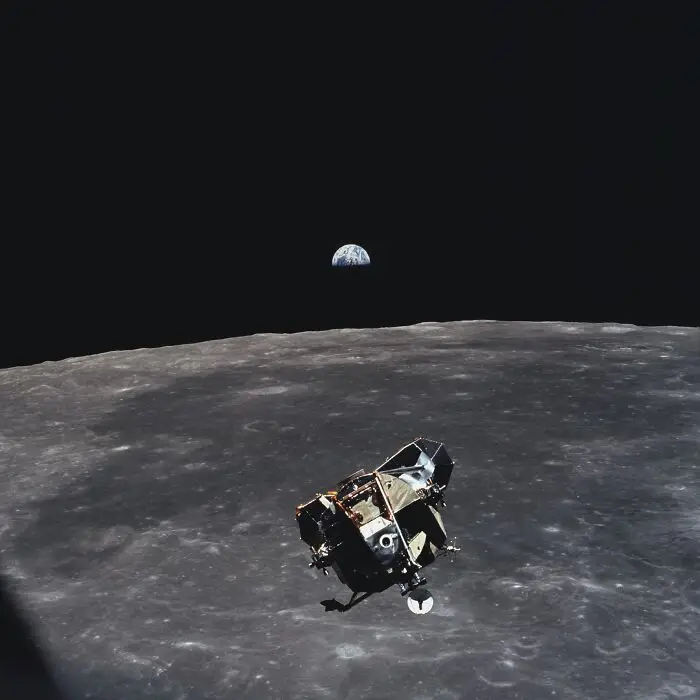
During the Apollo 11 mission in 1969, while Neil Armstrong and Buzz Aldrin descended to the lunar surface, astronaut Michael Collins captured this captivating photo of the Lunar Module Eagle descending towards the moon, with Earth visible in the background. Interestingly, because the Earth is behind the Module, Collins is technically the only person in the world not in this iconic photo.
0points
#5 "Wait For Me, Daddy" 1940
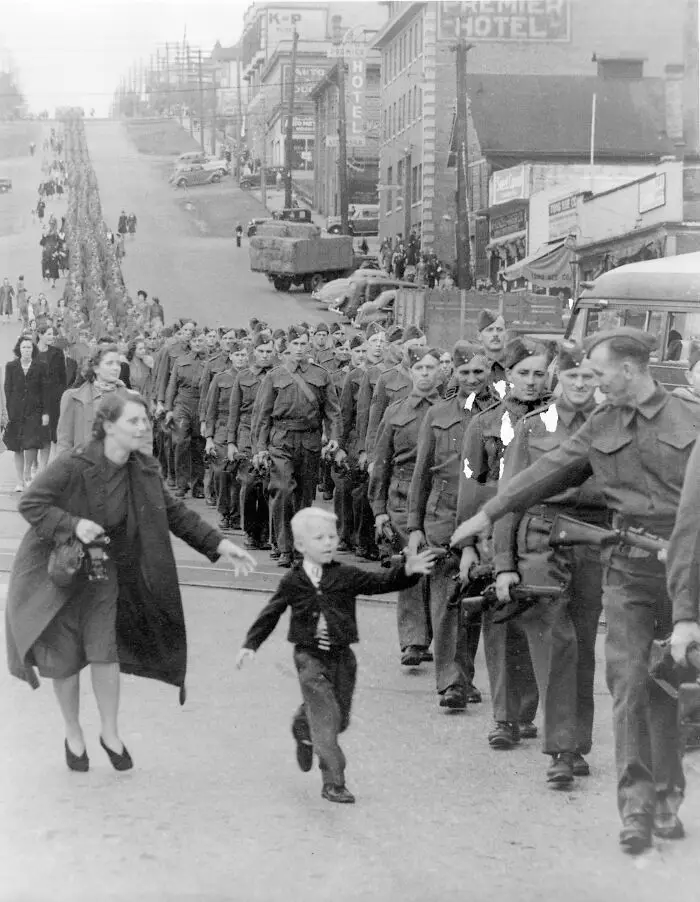
Published in The Province newspaper, this photo, which quickly became a symbol of the emotional burden of war, was taken by photographer Claude P. Dettloff on October 1, 1940. It captured the moment five-year-old Warren “Whitey” Bernard broke away from his mother’s grasp to grab hold of his father, Private Jack Bernard’s hand, as he marched with the British Columbia Regiment in Canada.
Report
0points
#6 The Eyes Of Hate, 1933
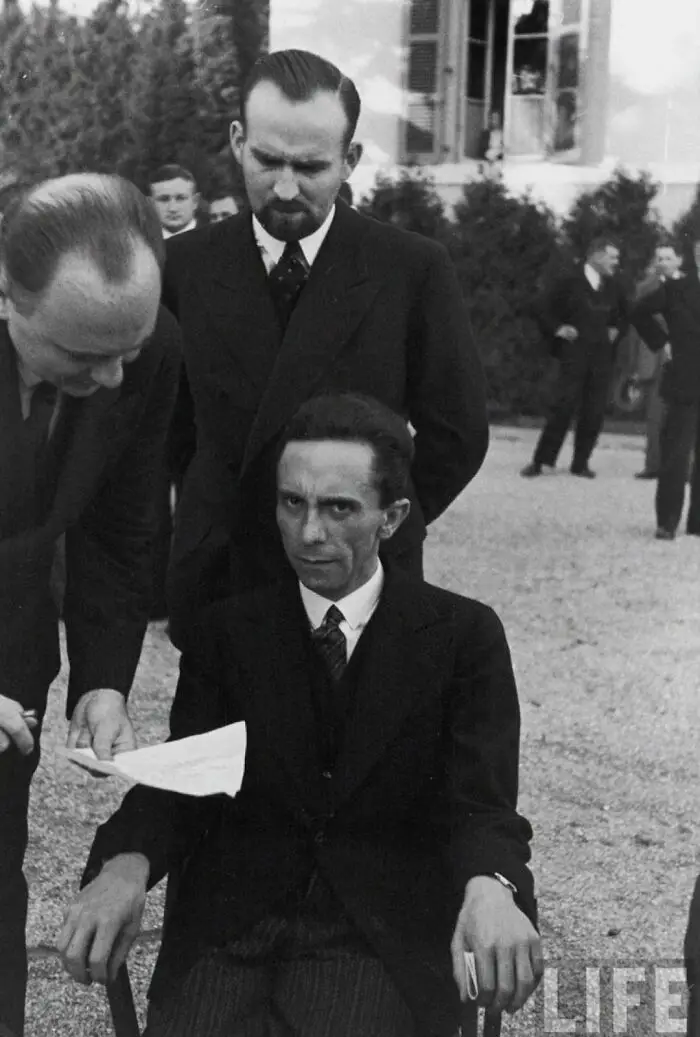
Jewish Photographer Alfred Eisenstaedt captured this eerie photo of Joseph Goebbels, Germany’s propaganda minister, during a League of Nations conference in Geneva in 1933. Initially, Goebbels was happy to pose for the camera; however, when he realized Eisenstaedt was Jewish, his demeanor turned menacing, even going as far as gazing at him with hateful eyes. Now, this photo is referred to as the “Eyes of Hate” and has become a powerful representation of the rooted anti-semitism in that era.
Report
0points
#7 Abandoned Boy Following German Aerial Bombing Of London, 1945
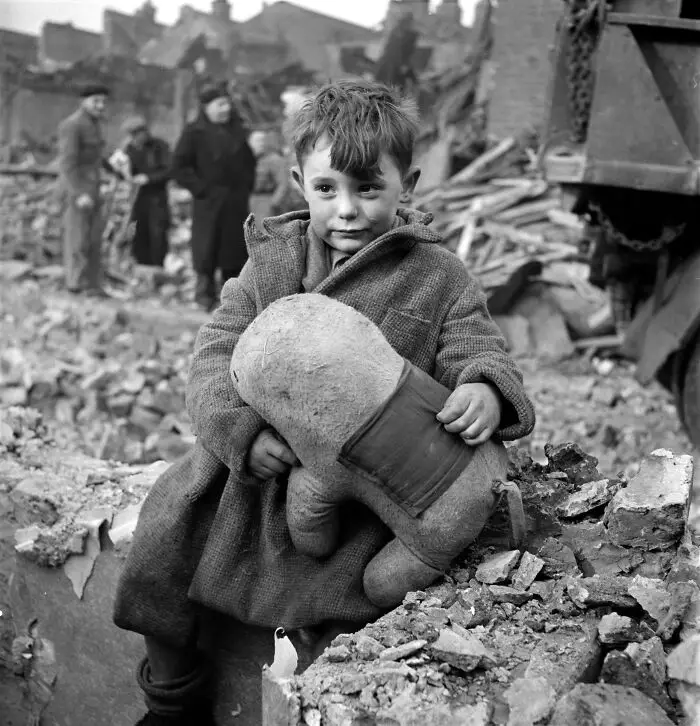
American photographer Toni Frisell captured this chilling photo of a boy clutching a stuffed animal in what was left of his home after German aerial bombings of London. Tragically, his whole family lost their lives in the blast, leaving him orphaned. It may come as a surprise, but the boy actually survived the war and went on to become a truck driver in his adult years.
Report
0points
#8 A Disembodied Statue Of Joseph Stalin's Head, 1956
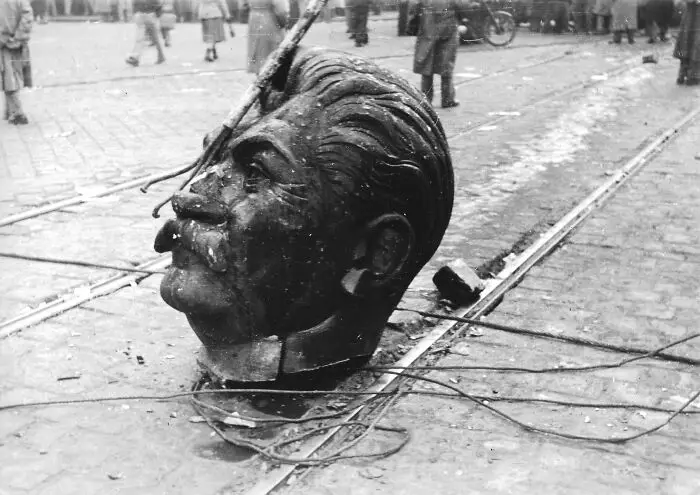
Photographed here is the massive detached head of one of Soviet leader Joseph Stalin’s statues lying on a Budapest street. Citizens tore down his statue in an act of defiance and revolt during the Hungarian Revolution in 1956. This photo encapsulates the chaos of the era and the citizens’ desire for freedom.
Report
0points
#9 A Mother Searching For Her Son, 1947
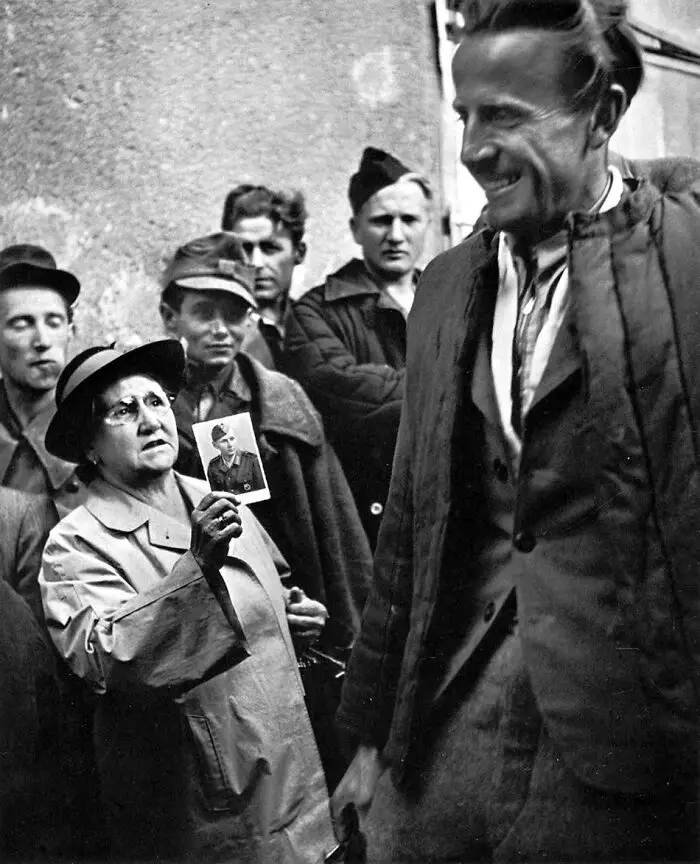
This haunting photo of a mother holding up a picture of her missing son to a returning soldier was captured by photographer Ernst Haas in 1947 at Vienna’s Southern Railway Station. The mother was hoping someone would recognize or have any information about her son. Sadly, this photo sums up the human cost of war and the uncertainty faced by many families awaiting the return of their loved ones.
Report
0points
#10 The Elephant's Foot Of The Chernobyl Disaster, 1996

Captured in this 1996 photo was Artur Korneyev, a Kazakhstani nuclear inspector. He was photographed next to the “Elephant’s Foot,” a massive, highly radioactive mass of corium and other materials beneath Reactor No. 4 in Chernobyl. Shockingly, Korneyev risked his life by being so close to the mass, as it could have caused severe radiation poisoning within minutes of exposure at the time.
Report
0points
#11 The Weeping Frenchman, 1940
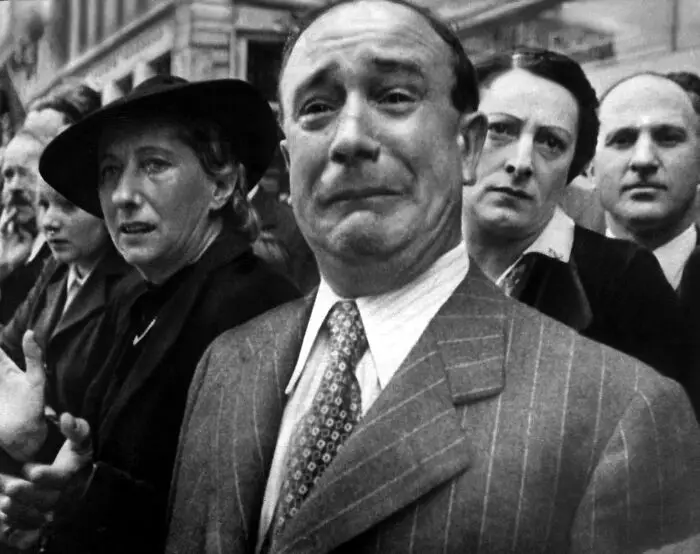
This impactful photo, taken in Marseille in 1940, captured a Frenchman (later identified as Jérôme Barzetti) crying as France’s regimental flags were shipped off to Africa after the nation’s unfortunate surrender to Germany. In just a matter of weeks, Germany’s blitzkrieg had destroyed the French army and completely shattered the country’s national pride.
0points
#12 Nine Kings In One Photo, 1910
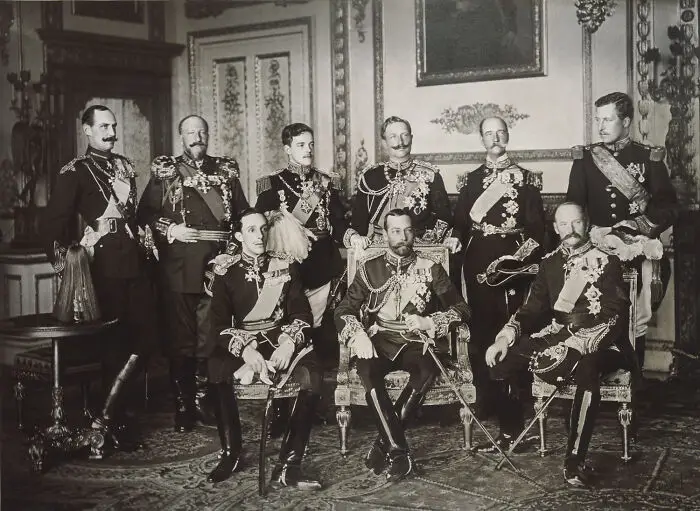
This photo of nine kings attending King Edward VII’s funeral on 20 May 1910 seems pretty ordinary at first glance. However, just four years later, these monarchs would become enemies in WWI. Shockingly, the kings from Greece, Germany, Portugal, and Bulgaria, all standing together in the moment this photo was taken, would be deposed, and one would even lose his life during the war.
Report
0points
#13 Girls In The Windows
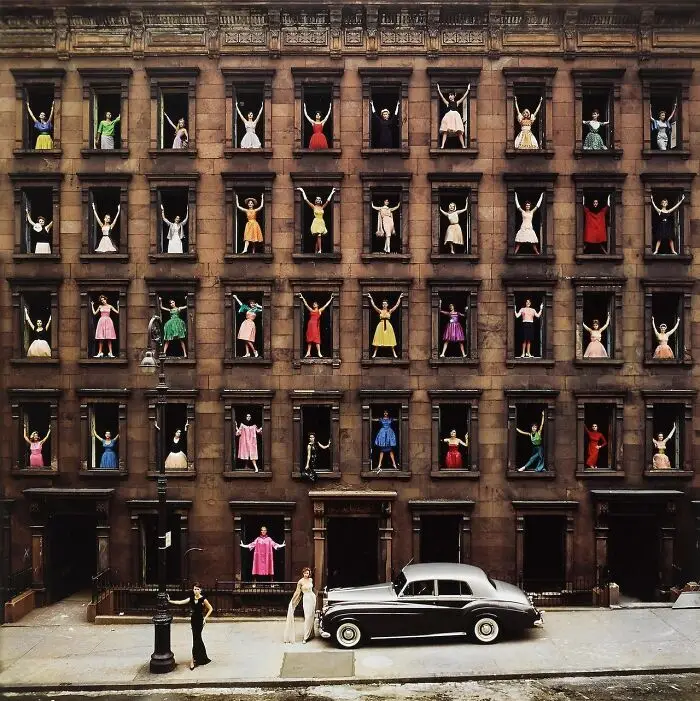
This striking 1960s photo, known as “Girls in the windows,” was captured by photographer Ormond Gigli. He enlisted 43 vibrantly dressed women, including his own wife, to pose in the windows of the soon-to-be-demolished brownstone building across the street from his studio. The photo became commercially available three decades later, when Gigli’s wife offered it to a gallery. Since then, more than $12 million worth of signed prints have been sold at auction, making it one of the most commercially successful photos in history.
Report
0points
#14 Sarajevo’s Romeo And Juliet
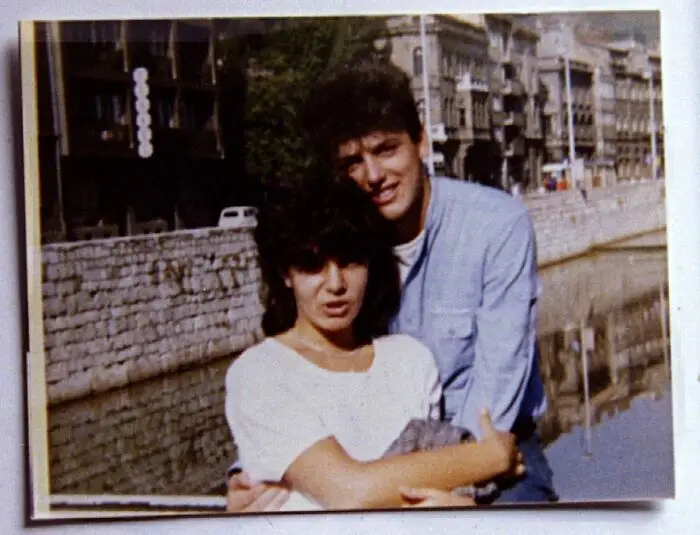
Dubbed Sarajevo’s Romeo and Juliet, Boško Brkić (24) and Admira Ismić (25), pictured here, tragically lost their lives to sniper fire while trying to cross Vrbanja Bridge. The couple’s tragic passing at the height of the Bosnian War was captured in a heartbreaking photograph taken by Mark Milstein. In their final moments, Brkić and Ismić embraced each other on the bridge, becoming an enduring symbol of love and loss in the war.
Report
0points
#15 The Cologne Cathedral After Allied Bombings, 1944
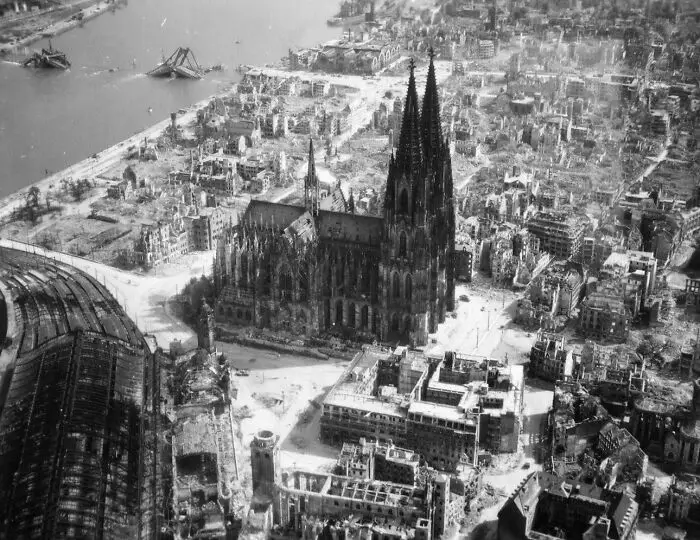
In 1944, during WWII, the city of Cologne was almost destroyed after Allied bombings. Photographed here is the Cologne Cathedral, which remained standing even after sustaining 14 hits, a testament to its sturdy architecture. Because the building’s tall, pointed towers were visible from the air, Allied pilots used them to guide their way while flying, which would explain why the cathedral was preserved while the other buildings weren’t.
0points
#16 Cotton Mill Girl, 1908
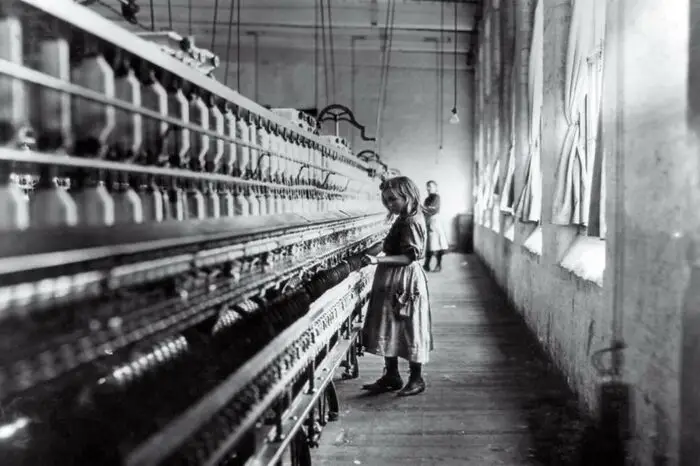
While working for the National Child Labor Committee in 1906, Lewis Hine captured this photo of Sadie Pfeifer, a child laborer at the South Carolina cotton mill. Next to her small, 48-inch-tall frame was the dangerous equipment she had to operate day in and day out. Naturally, this photo and many more like it sparked the passage of child labor laws in the United States.
Report
0points
#17 French Civilians Shaving A Young Woman’s Head, 1944
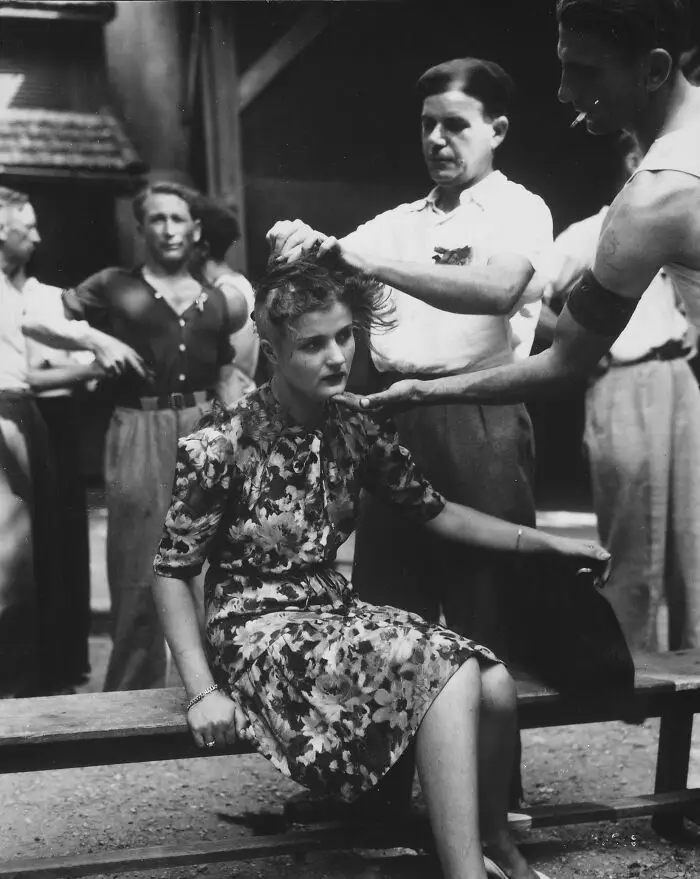
After the Liberation of France from German occupation in 1944, over 20,000 women were accused of being “horizontal collaborators” for having relations with German soldiers. This photo, taken on August 29, 1944, captured French civilians subjecting a young woman to public humiliation by shaving her head as a consequence for alleged horizontal collaboration. Today, the photo serves as a reminder of the hardships women faced during and after WWII.
Report
0points
#18 The Louisville Flood Victims, 1937
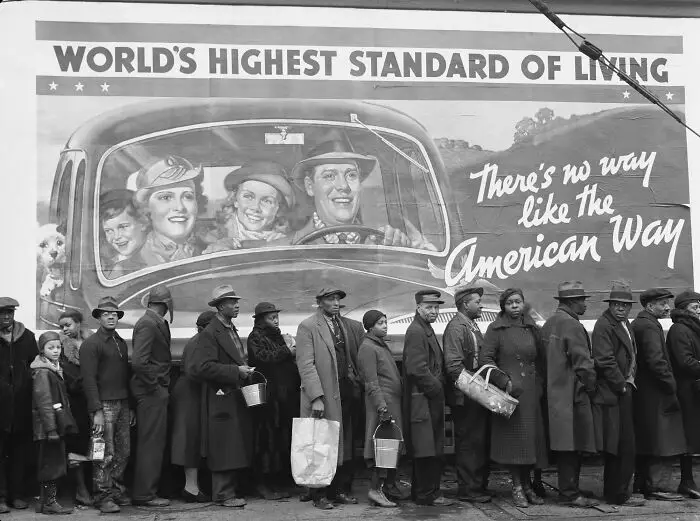
Photojournalist Margaret Bourke-White captured this striking photo of African American flood victims waiting in line outside a flood relief station in 1937 during the Ohio River flood in Louisville. In contrast to their somber faces, the billboard above them depicts a smiling family under the caption “World’s Highest Standard of Living. There’s No Way Like the American Way.” The photo captured the disparity between America’s promise of success and the harsh struggles minorities went through during the Great Depression era.
Report
0points
#19 Emperor Hirohito And General Macarthur, 1945
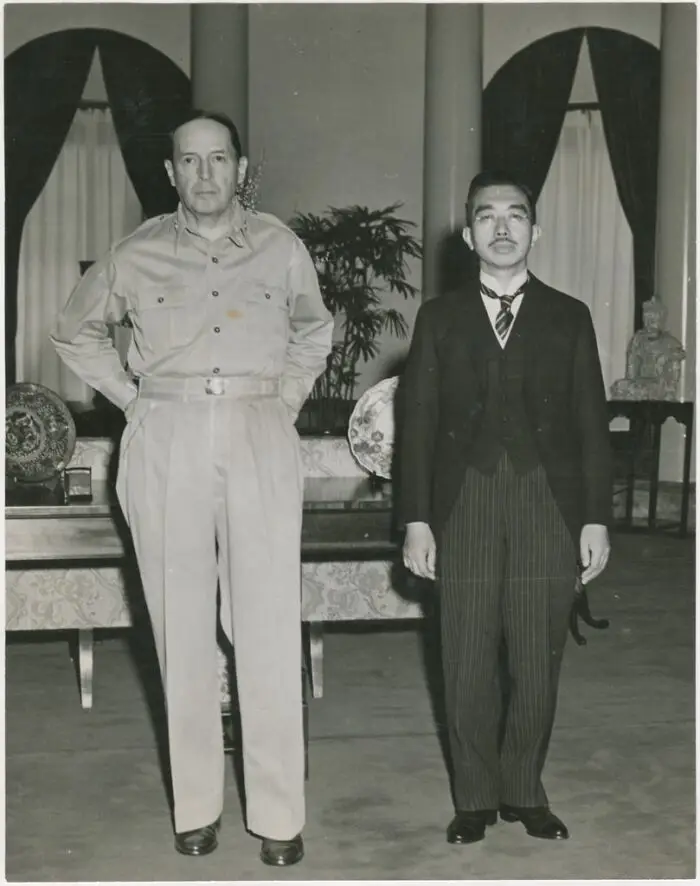
Taken on September 27, 1945, just a few months after Japan’s surrender in WWII, this photo of Emperor Hirohito and General Douglas MacArthur sparked major backlash in Japan. This image of the pair symbolized both the end of the war and the start of Japan’s Allied occupation. Many Japanese citizens took offense at how casual MacArthur looked next to Hirohito, whom they revered, and how the photo also depicted the Emperor as a subordinate.
Report
0points
#20 Fidel Castro At The Lincoln Memorial, 1959
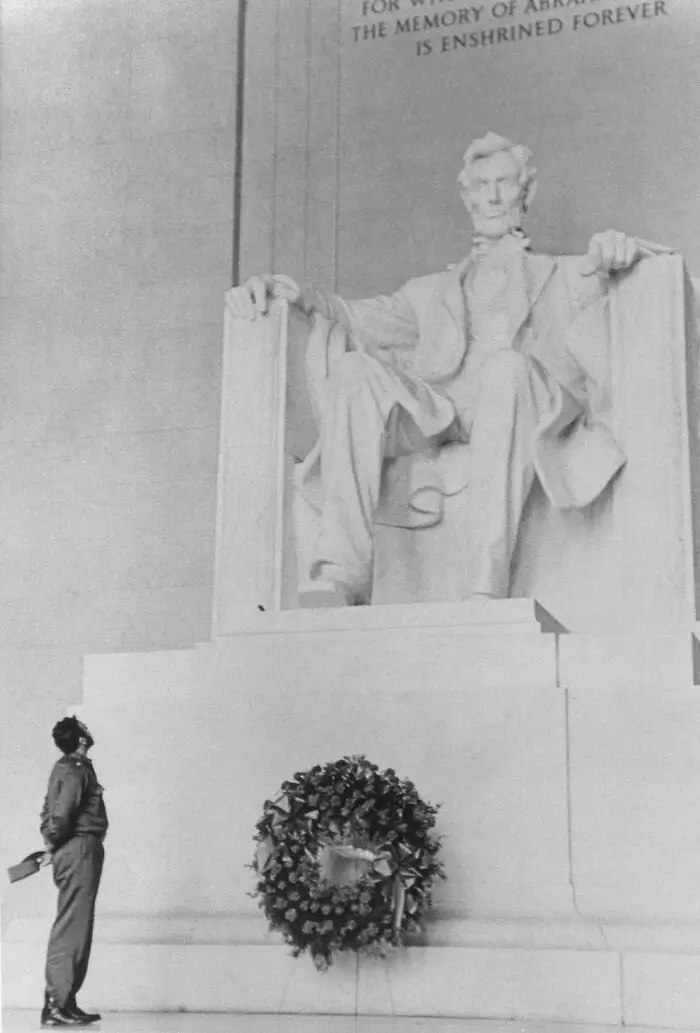
Shortly after his victory in 1959, Fidel Castro took a tour of the United States. Not long after this photo of him admiring the statue of Abraham Lincoln at the Lincoln Memorial in Washington was taken, relations between Cuba and the U.S. turned sour. Tensions soon escalated just three years later when the world was at odds with Castro over Soviet ballistic missiles located in Cuba.
Report
0points