




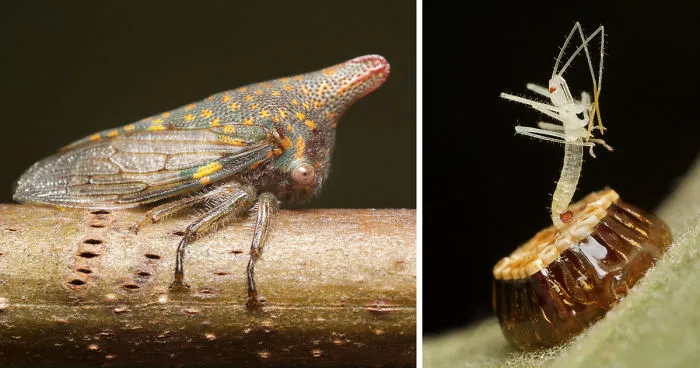

I fancy myself a bug and botanical portrait photographer. Sounds strange, but I love showing people the beauty and diversity of insects and spiders up close.
I spent all summer photographing the diversity of insects and spiders in my backyard and local arboretum in NE Ohio. Here are my favorite 40 images.
More info: Facebook
#21 Lady Beetle Larva (Coccinellidae)
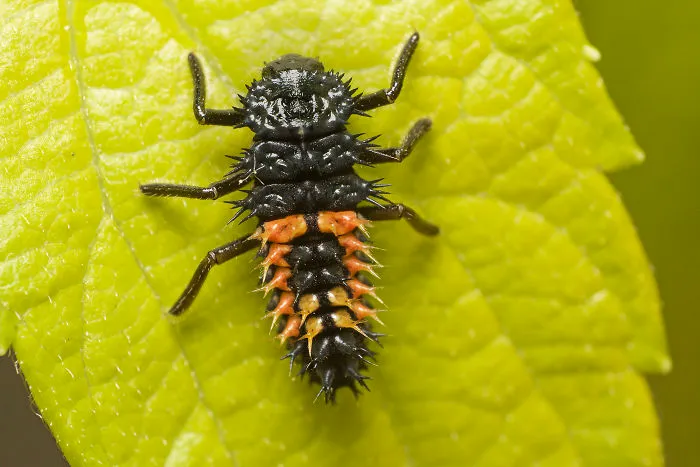
I've always thought lady beetle larvae look like tiny alligators!
15points
#22 Digger Bee (Anthophora Terminalis)
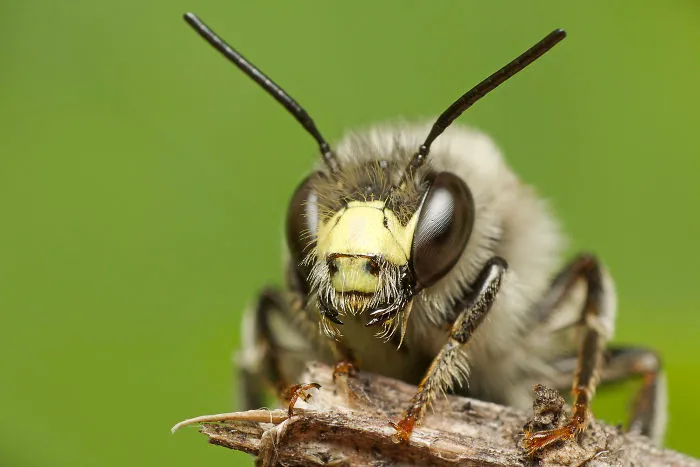
Just look at those chin whiskers! Digger bees are solitary and nest in the ground, hence their name.
15points
#23 Paper Wasp (Polistinae)
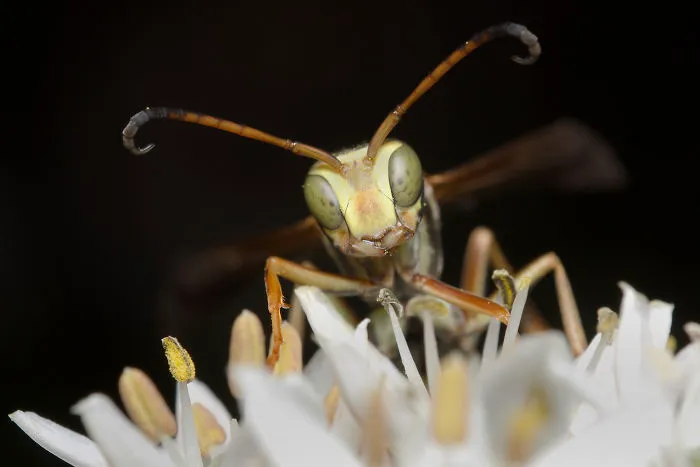
I find that people tend to have a negative attitude towards wasps, hornets, and yellow jackets. Having photographed many wasps, I find them fascinating and beautiful. It's best to photograph them on a cool fall day though, when they are most docile!
15points
#24 Hoverfly (Syrphidae)
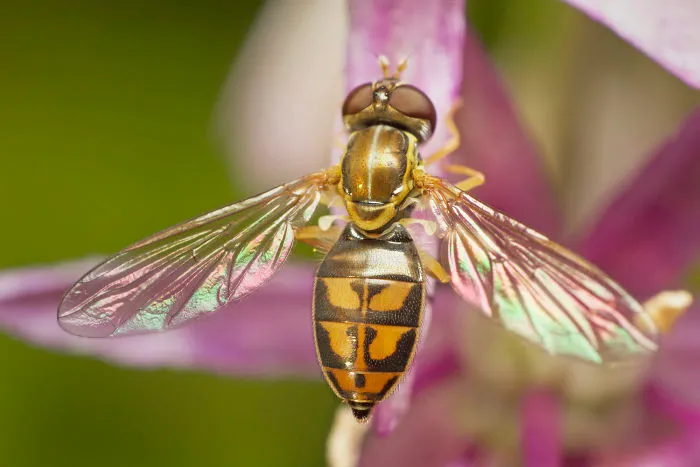
Nope! It's not a sweat bee! These beautiful insects are flies. An easy way to tell the difference is by looking at their wings. Flies have one pair of wings (hence their order – Diptera – meaning "two wings.") Bees and wasps have two pairs of wings.
14points
#25 Stinkbug Nymph (Halyomorpha Halys)
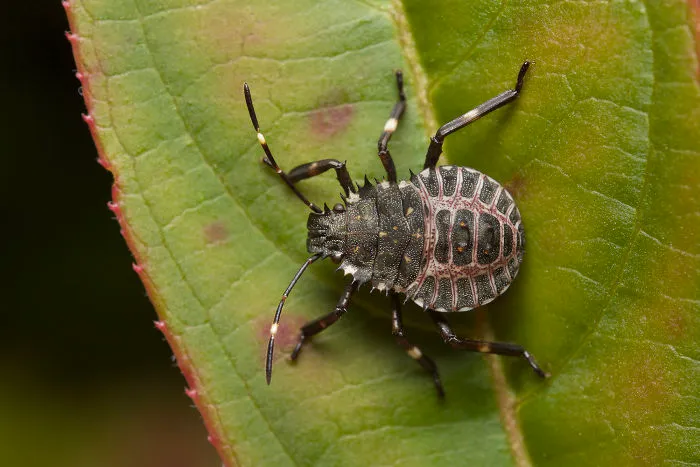
Stinkbugs stink! Brown marmorated stinkbugs smell a lot like cilantro when squished, which may explain why some people HATE cilantro!
12points
#26 Robberfly (Asilidae)
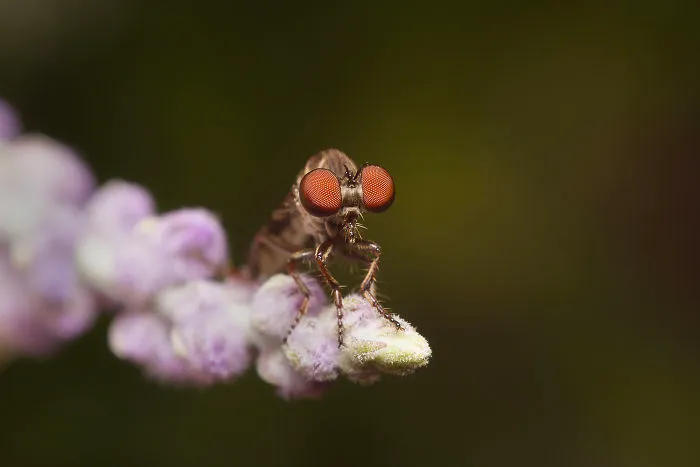
Perhaps one of the most alien-looking insects, robberflies are fierce arial predators. I love their bright bulgy eyes!
12points
#27 Sand Wasp (Bembicini)
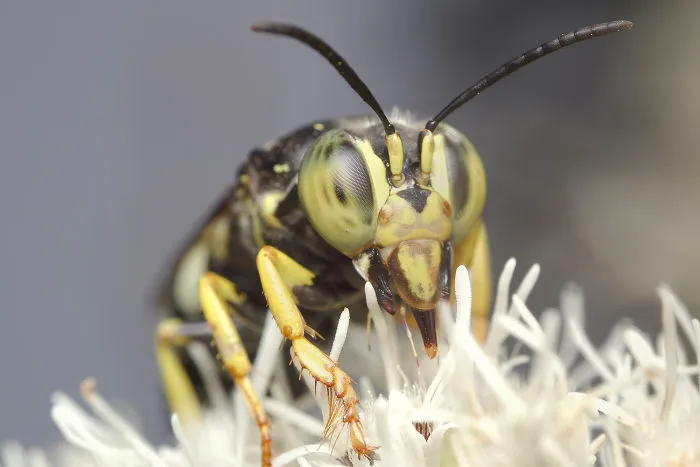
Happy wasp is happy to see you! I caught this wasp mid-feed. Notice how its tongue is halfway out.
11points
#28 Parasitoid Wasp (Trissolcus) On Stinkbug Eggs
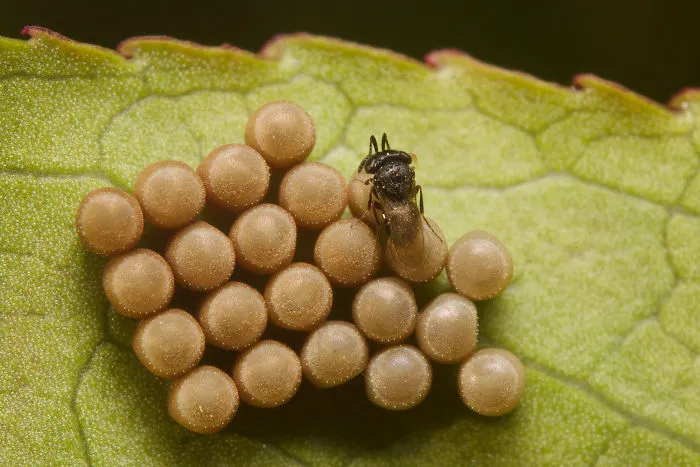
This tiny parasitoid wasp is looking for a place to lay her eggs. Her larvae, after hatching inside the stinkbug egg, will feed on the stinkbug larva before emerging. Natural stinkbug control!
11points
#29 Jumping Spider (Female Paraphidippus Aurantius)
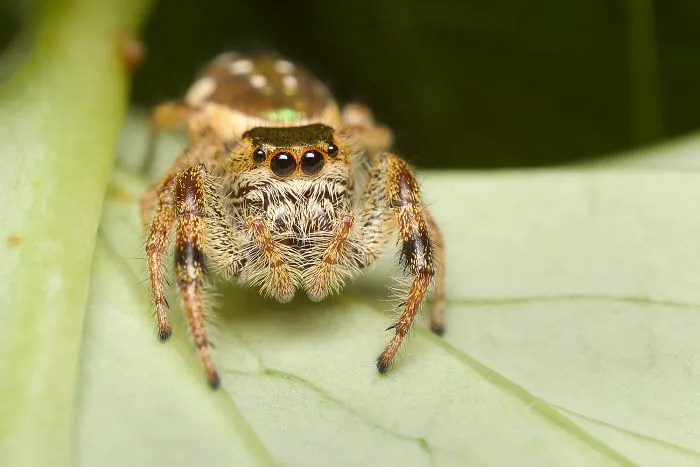
Sometimes called the emerald jumper (because of the emerald green coloration on its back), this female jumping spider is a fierce predator. I watched as she attempted to capture the largest firefly I'd ever seen (the firefly escaped before I captured this shot).
11points
#30 Bush Katydid Nymph (Scudderia)
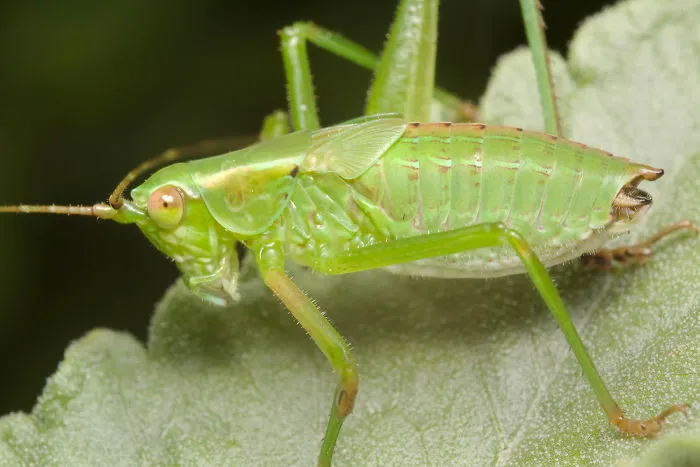
Like many insects, katydids display courtship rituals. In the case of katydids, males stridulate, or produce sounds with their wings. According to Wikipedia: "Many katydids stridulate at a tempo which is governed by ambient temperature, so that the number of chirps in a defined period of time can produce a fairly accurate temperature reading. For American katydids, the formula is generally given as the number of chirps in 15 seconds plus 37 to give the temperature in degrees Fahrenheit." Soooo... next time you forget a thermometer, bring along your katydid!
11points
#31 Leaphopper Nymph (Coelidia Olitoria)
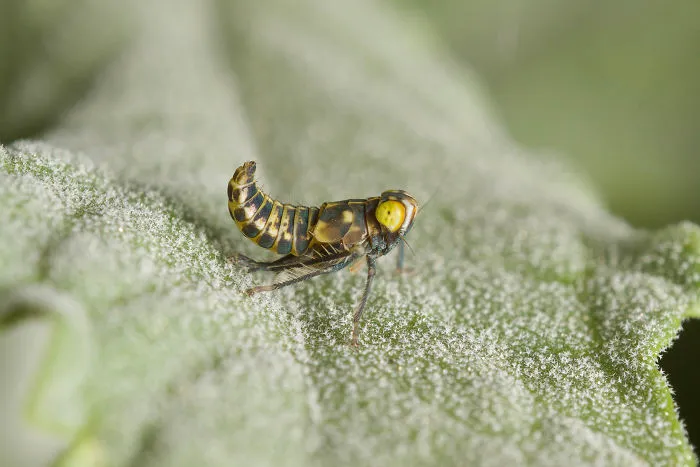
Leafhopper, planthopper, and treehopper nymphs are basically the most adorable of all insect babies.
11points
#32 Bush Katydid Nymph (Scudderia)
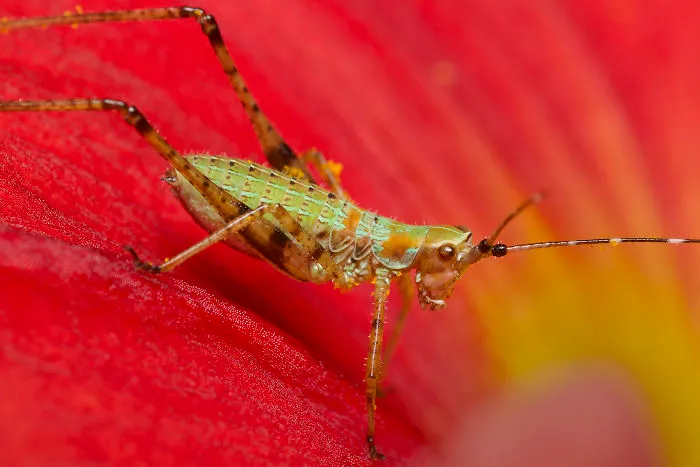
A young and colorful katydid nymph on a daylily. I think they look prehistoric!
10points
#33 Japanese Beetle (Popillia Japonica)
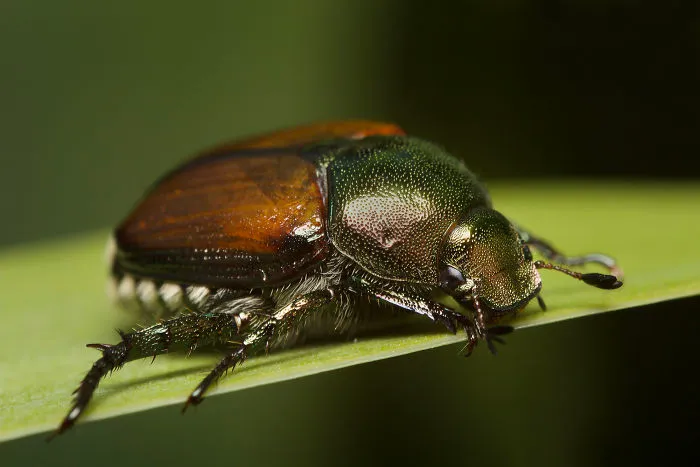
Yeah, yeah... Japanese beetles are a super pest. But they're kinda cute up close.
10points
#34 Spotted Lady Beetle (Coleomegilla Maculata)
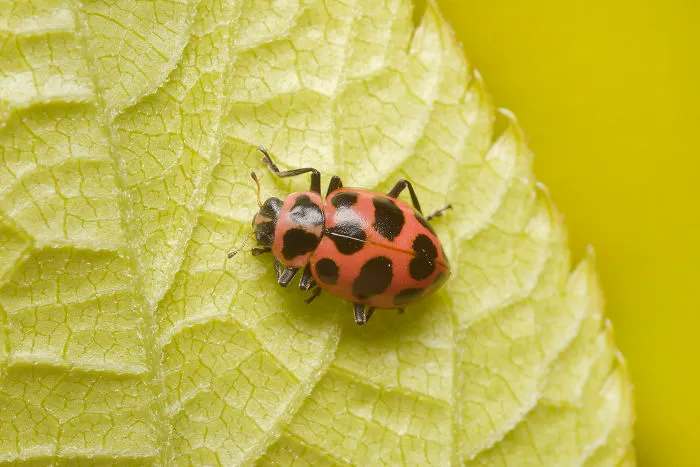
Often called "pink lady beetle," these beetles have a more oblong-shaped body compared to other lady beetle species.
10points
#35 Sand Wasp (Bembicini)
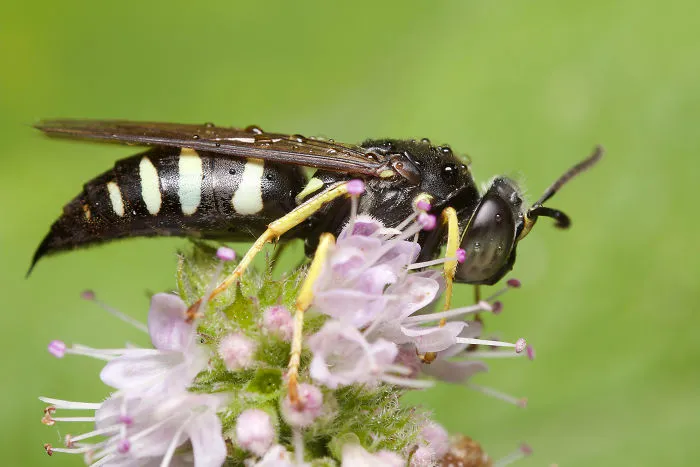
A gorgeous sand wasp I photographed in my local garden.
10points
#36 Leaf Beetle (Sumitrosis)
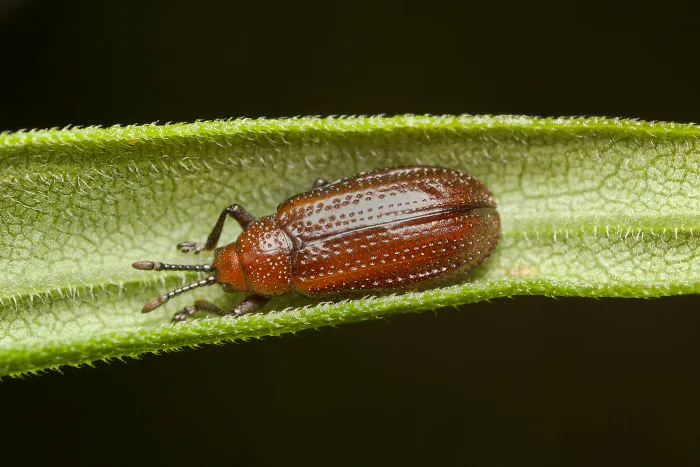
This beautiful leaf beetle looks like jewelry!
9points
#37 Sharpshooter Leafhopper (Cicadellidae)
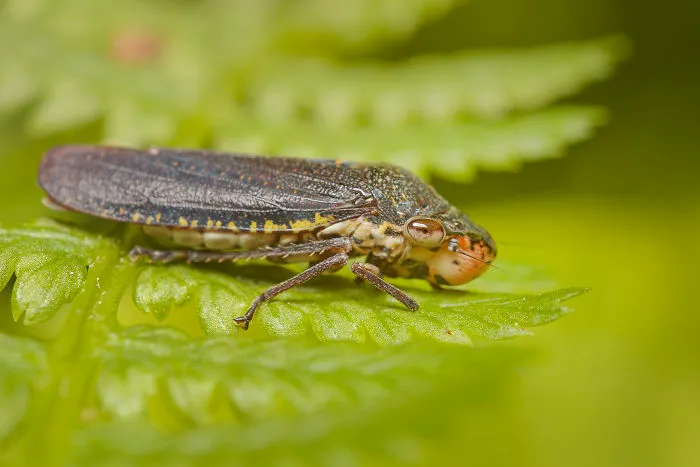
Like all leafhoppers, sharpshooters have piercing-sucking mouthparts which they use to pierce and feed on plants. Because of this, leafhoppers are often considered a pest.
9points
#38 Cranefly (Tipulidae)
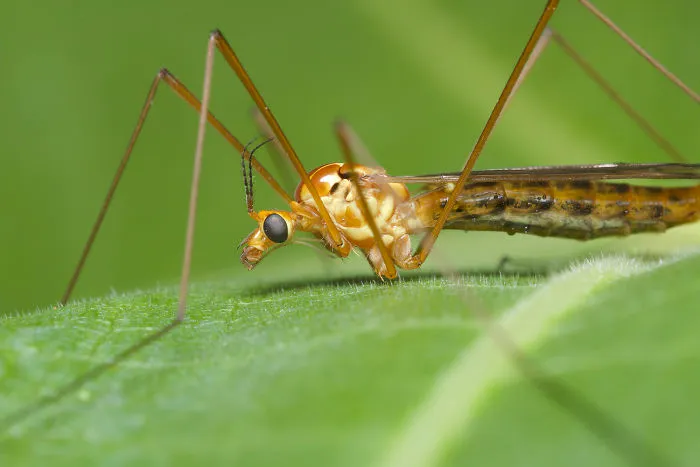
Did you know? Craneflies are colloquially referred to as daddy longlegs. Here in Ohio, however, I've only ever heard people use daddy longlegs in reference to harvestmen (Opiliones) spiders.
8points
#39 Long-Jawed Orb Weaver (Tetragnathidae)
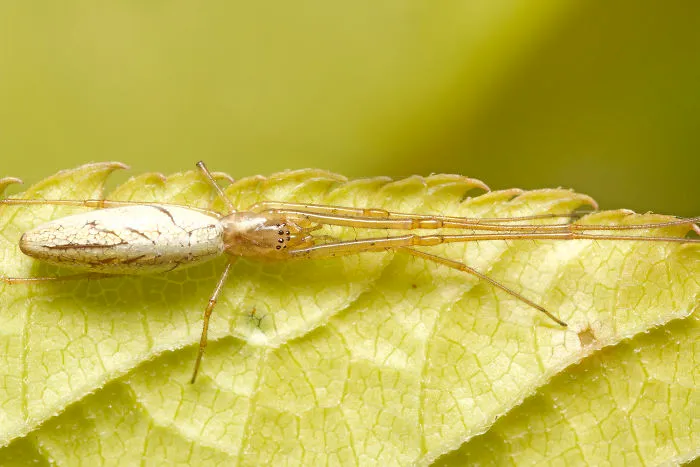
Long-jawed orb weavers are so named for their extra large fangs (or chelicerae, in spider-speak).
8points
#40 Two-Striped Planthopper Nymph (Acanalonia Bivittata)
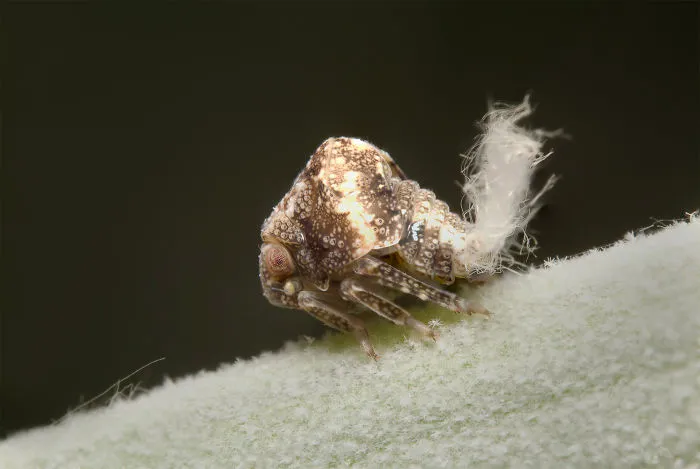
Fuzzy butt planthopper baby!
7points
