




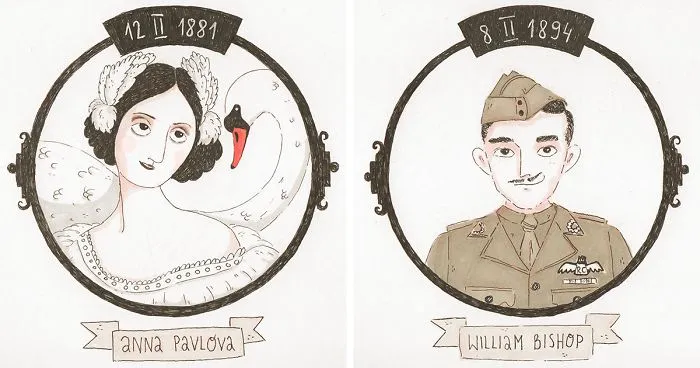

Hello Pandas! I am graphic designer and illustrator from Poland. On 5th of February I started my #366bdays project. Every day I upload a portrait of one person (dead or alive) who was born on this very day. I also add a short bio. It's for fun, to improve my drawing skills, to expand my knowledge and to finish strong commitment. I make my illustrations with red pencil, markers, fineliner and ink.
NO HOLLYWOOD CELEBRITIES! I would rather draw someone who isn't so famous but did something incredible, good, funny or is an interesting character.
More info: Instagram
#21 1/03 Mary Kom
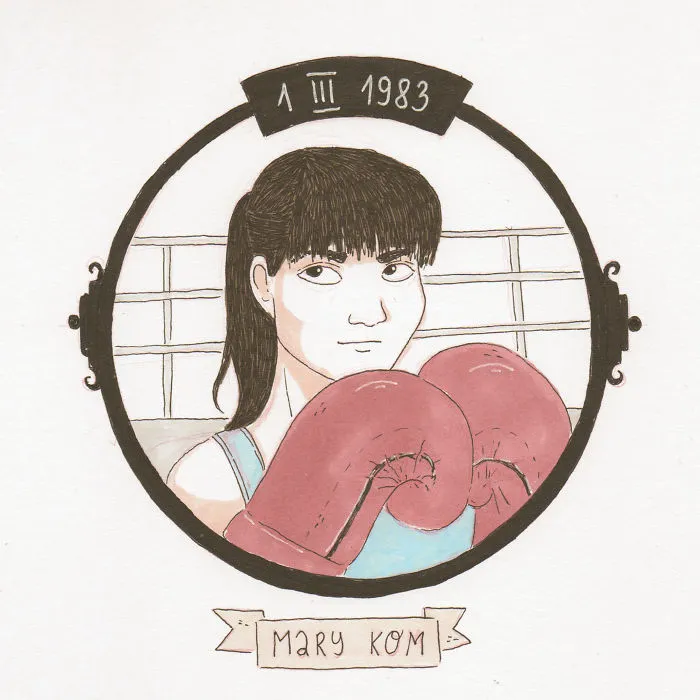
Mary Kom is an Olympic Indian boxer hailing from the Kom-Kuki tribe in Manipur. Her full name is Chungneijang Mery Kom Hmangte. She came from a poor family. Her parents were tenant farmers who worked in jhum fields. Since childhood she was into many sport disciplines. When she was 15 she started boxing inspired by Dingko Singh, a fellow Manipuri who returned from the 1998 Bangkok Asian games with a gold medal. Mary kept her interest in boxing a secret from her father as he was concerned that boxing would hurt Kom's face and spoil her chances of marriage. Eventually he started to support her dreams. Now, at age 34 she is a five-time World Amateur Boxing champion, and the only woman boxer to have won a medal in each one of the six world championships. Nicknamed "Magnificent Mary", she is the only Indian woman boxer to have qualified for the 2012 Summer Olympics, competing in the flyweight (51 kg) category and winning the bronze medal. She has also been ranked as No. 4 AIBA World Women's Ranking Flyweight category. She became the first Indian woman boxer to get a Gold Medal in the Asian Games in 2014 in Incheon, South Korea. She's also a mom to boy twins and a son. She was portrayed by actress Priyanka Chopra in the autobiographical 2014 film "Mary Kom."
6points
#22 7/02 Gerard Jean-juste
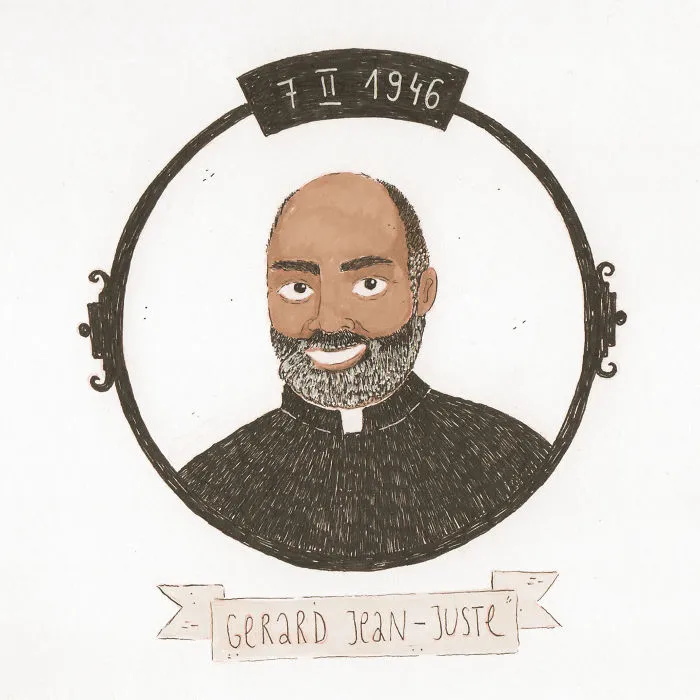
Gerard Jean-Juste was a Roman catholic priest. He was an activist and a human rights defender in Haiti. Also known for his political work for which he was twice imprisoned.
5points
#23 10/02 Benjamin Smith Barton
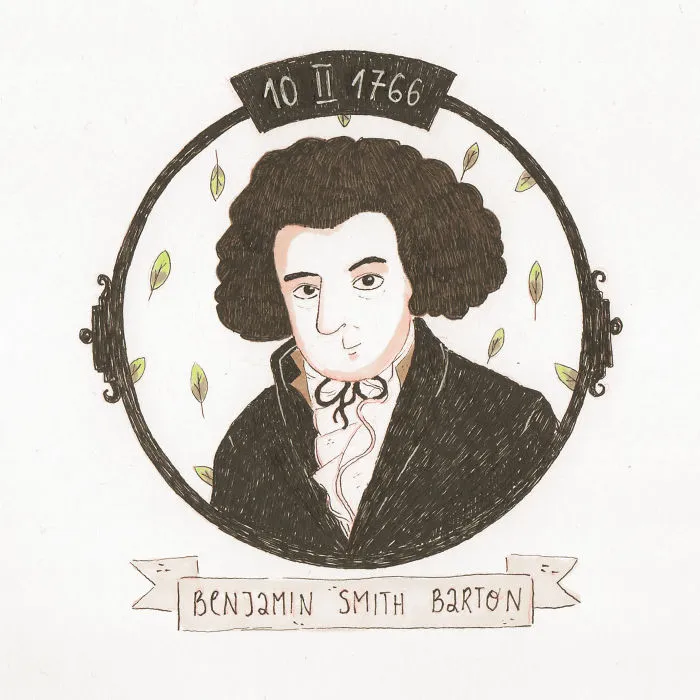
Benjamin Smith Barton was an American botanist, naturalist and physician. He was the author of the first botany textbook in US called "Elements of Botany". He was also interested in archeology, anathomy and zoology. Also, he is the father of binary Latin names rule in botany. He was a member of the American Antiquarian Society, vice president of the American Philosophical Society, president of the Philadelphia Medical Society and a member of the Royal Swedish Academy of Sciences. Very impressive!
4points
#24 27/02 Uri Shulevitz
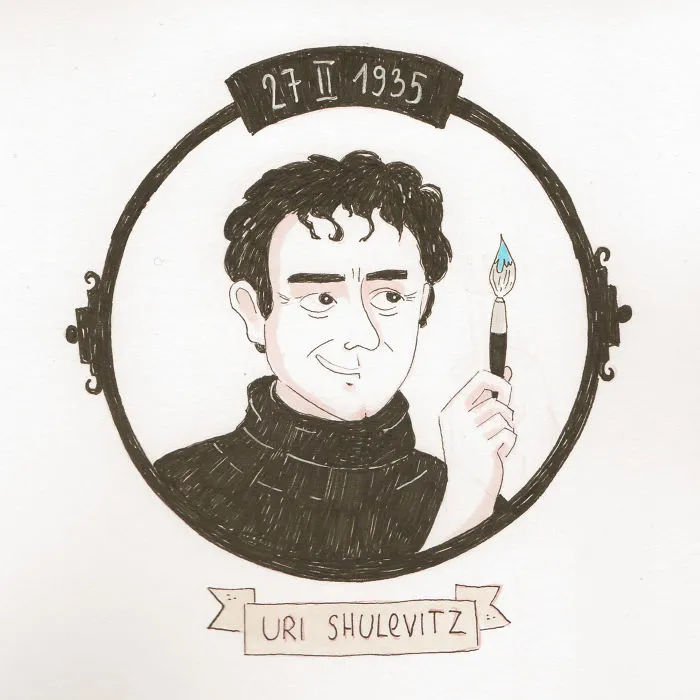
Uri Shulevitz is a Caldecott Medal-winning illustrator and author. He was born in Warsaw, Poland, on February 27, 1935. He began drawing at the age of three and, unlike many children, never stopped. The Warsaw blitz occurred when he was four years old, and the Shulevitz family fled. For eight years they were wanderers, arriving, eventually, in Paris in 1947. There Shulevitz developed an enthusiasm for French comic books, and soon he and a friend started making their own. At thirteen, Shulevitz won first prize in an all-elementary-school drawing competition in Paris's 20th district. In 1949, the family moved to Israel, where Shulevitz worked a variety of jobs: an apprentice at a rubber-stamp shop, a carpenter, and a dog-license clerk at Tel Aviv City Hall. He studied at the Teachers' Institute in Tel Aviv, where he took courses in literature, anatomy, and biology, and also studied at the Art Institute of Tel Aviv. At fifteen, he was the youngest to exhibit in a group drawing show at the Tel Aviv Museum. At 24 he moved to New York City, where he studied painting at Brooklyn Museum Art School and drew illustrations for a publisher of Hebrew books. One day while talking on the telephone, he noticed that his doodles had a fresh and spontaneous look—different from his previous illustrations. This discovery was the beginning of Uri's new approach to his illustrations for The Moon in My Room, his first book, published in 1963. Since then he was written and illustrated many celebrated children’s books. His other books include One Monday Morning, Dawn, So Sleepy Story, and many others. He also wrote the instructional guide Writing with Pictures: How to Write and Illustrate Children’s Books. He lives in New York City.
4points
#25 29/02 Herman Hollerith
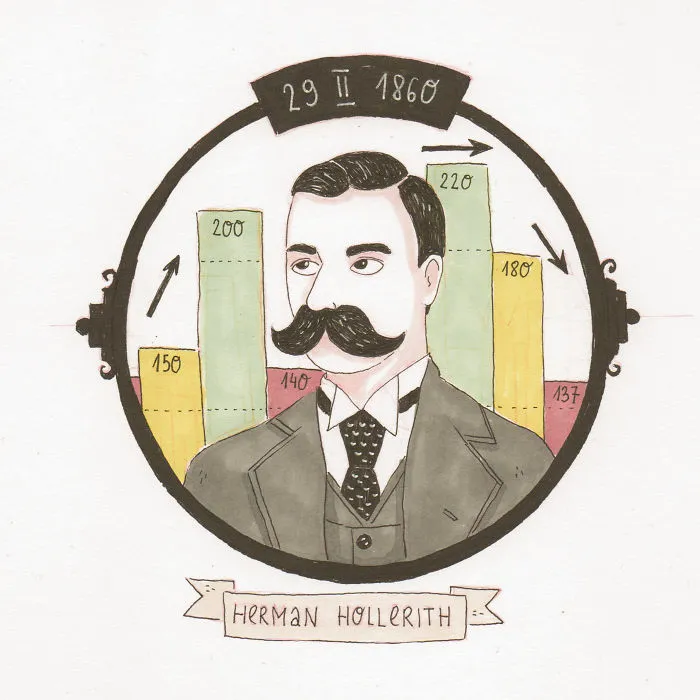
Herman Hollerith was an American inventor of a tabulating machine that was an important precursor of the electronic computer. Immediately after graduation from the Columbia University School of Mines in 1879, Hollerith became an assistant to his teacher William P. Trowbridge in the U.S. census of 1880. During the next decade he taught briefly at the Massachusetts Institute of Technology, Cambridge; experimented on air brakes; and worked for the Patent Office in Washington, D.C. During all this time he was occupied with the problem of automating the tabulation work of the census. By the time of the census of 1890, he had invented machines to record statistics by electrically reading and sorting punched cards that had been numerically encoded by perforation position. The invention was a success in the United States but drew much more attention in Europe, where it was widely adopted for a number of statistical purposes. In 1896 Hollerith organized the Tabulating Machine Company, incorporated in New York, to manufacture the machines; through subsequent mergers it grew into the International Business Machines Corporation (IBM).
4points
#26 3/03 George Pullman
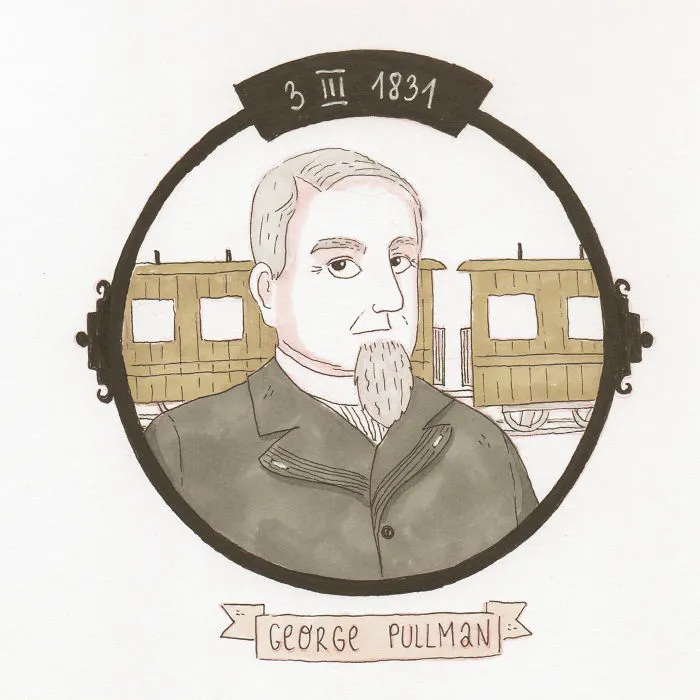
George Pullman was an American engineer and industrialist. He dropped school at age 14 and started to work with his father. Later he moved to Chicago and was one of the engineers who worked to raise the buildings of central Chicago to the new grade, and constructing new foundations under them. He frequently used railroads in pursuit of business but did not enjoy the experience. George Pullman decided to build a better sleeper, one that was not only comfortable but also luxurious. Debuted in August 1859, the Pullman sleepers were an immediate success. Some reviews compared them to steamboat cabins and declared them to be the most-luxurious way to travel. He also briefly caught the gold fever then spreading through the country in 1859. He relocated to Colorado, where he quickly realized that a profitable business could be made in catering to the needs of miners. After President Abraham Lincoln was assassinated, Pullman arranged to have his body carried from Washington, D.C. to Springfield on a sleeper, for which he gained national attention, as hundreds of thousands of people lined the route in homage. As he was a great inventor he was also a shitty boss who made his workers' life miserable, He built a town for his workers but was paying them less while keeping the life cost high. On May 12, 1894 the workers went on strike which ended badly for Pullman's reputation. His company was reported as "un-American". He died 3 years later.
4points
#27 16/02 Francis Galton
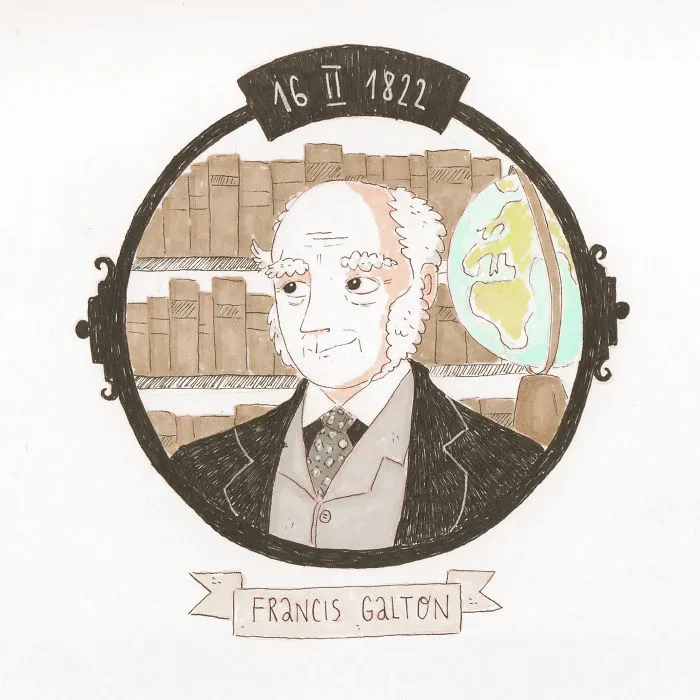
Francis Galton was a man of many professions and interests. He was a statistician, sociologist, psychologist, anthropologist, eugenicist, tropical explorer, geographer, inventor, meteorologist, proto-geneticist and psychometrician. He was also a half-cousin of Charles Darwin. He wrote more than 340 publications on many subjects. Francis Galton was travelling all over Africa and Middle East writing books. He created the first weather map showing different climate conditions across a geographical area. As he was very into Darwin's theory, he studied human inteligence and made first intelligence test. Galton was a pioneer in eugenics, coining the term itself. He also devised a method for classifying fingerprints that proved useful in forensic science.
3points
#28 20/02 Joshua Slocum
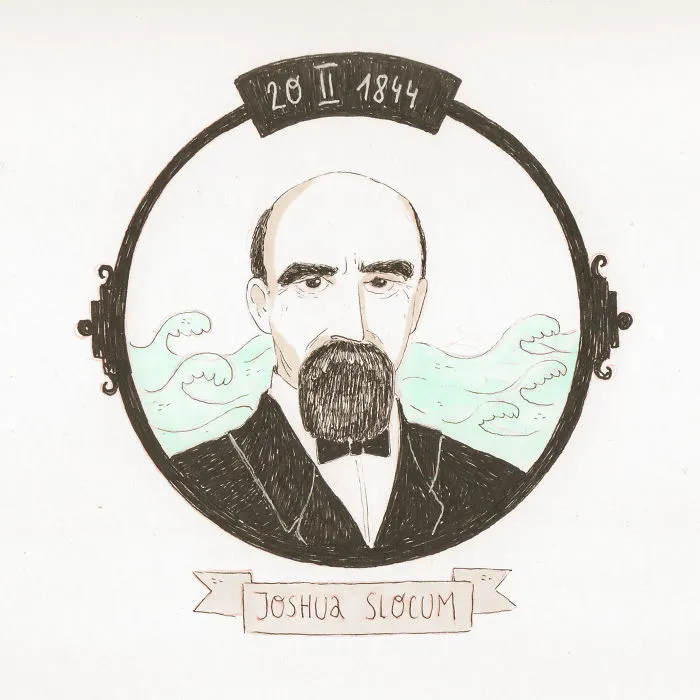
He was a Canadian sailor, adventurer and writer. He was the first man to sail around the world alone and he wrote a book about his journey: "Sailing Alone Around the World ". It became a bestseller. Started from age of 12 he run away from home and back again for several times. When he was 16 he was gone for good. He and a friend signed on at Halifax as ordinary seamen on a merchant ship bound for Dublin. Slocum spent almost all of his life on the sea. He even married a woman who loved to sail and they had 7 seaborn children. In 1886 his ship was attacked by pirates and Joshua Slocum fought bravely and killed one of the pirates. In 1909 he set sail for the West Indies on one of his usual alone winter voyages. He disappeared and after some time he was pressumed dead. His body was never found. Ironically, Slocum never learned to swim and considered learning to swim to be useless.
3points
#29 22/02 Savielly Tartacover
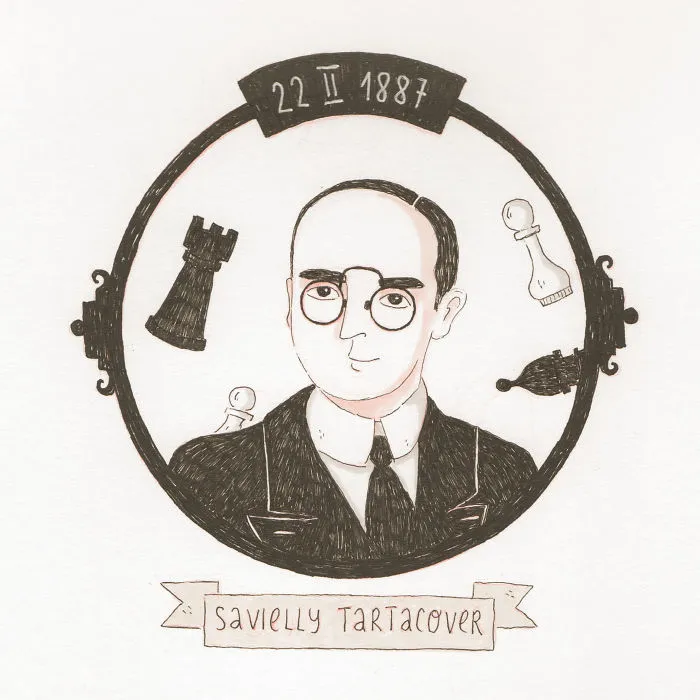
Savielly Tartacover was a Polish and French chess grandmaster born in Russia. His parents were killed in a robbery when he was 24 years old. Savielly (or Xavier) was a very extraordinary and wit man, known for his sharp sense of humour and intelligence. He loved to play chess since he was a student but for him it was a entertainment and fun, not something that he was very serious about. His first achievement was first place in a tournament in Nuremberg in 1906. Three years later he achieved second place in the tournament in Vienna, losing only to Réti. After WWI he moved to Paris, he also accepted Polish citizenship, even though he didn't speak polish. He was the captain and trainer of Polish Chess Team in six international tournaments, winning a gold medal for Poland at the Hamburg Olympiad in 1930. One day he asked the orangutan what opening should he play in the next round. Monkey suggested a move and it was named "Orangutan opening" after that event. Savielly was known for his very wise and sharp aphorisms that were even named " Tartakoverisms". Here are some of his quotes: "It's always better to sacrifice your opponent's men.", "Erro ergo sum.", "Chess is a struggle against one's own errors."
3points
#30 26/02 Henry Molaison
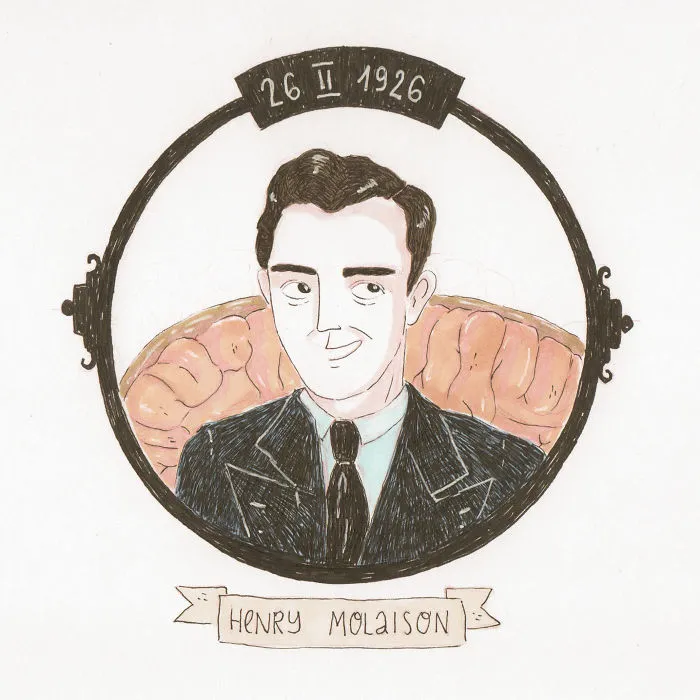
Henry Molaison was an American memory disorder patient and a medical phenomenon. Probably because of a bike accident in his childhood, Henry suffered from intractable epilepsy. When he was 27 years old he got a brain surgery that was supposed to cure his epilepsy attacks. During this procedure surgeons cut out some of his brain tissue causing damage in his short term memory and he also could not remembers some years before operation. He was able to make a conversation but after some time he did not remember anything that happened or person that he spoke to. Interesting thing is that he could learn new abilities and use them but he did not remember how he learned it. His case played an important role in the development of theories that explain the link between brain function and memory. He was also studied by psychologists and neuropsychologists for all his life. After his death in 2008 his brain was carefully sliced for science purpose. And yes, surgery did cure his epilepsy attacks...
3points
Graphic design and illustration often serve as powerful expressions of personal achievements and narratives. While one person might explore these themes through artwork of influential individuals, others find unique ways to express their greatest accomplishments.
For those who choose to highlight personal triumphs over conventional expectations, the insights from a mother redefining pride can provide a compelling perspective on celebrating nontraditional successes.

