

When you marry someone, you're often expected to build a relationship with their family too. And while family get-togethers can be wonderful, they can also come with their fair share of drama. After all, everyone has different habits, expectations, and boundaries. That's why having a partner who understands your needs and supports you can make all the difference. Without that support, even a simple family visit can turn into a stressful experience.
This post may include affiliate links.
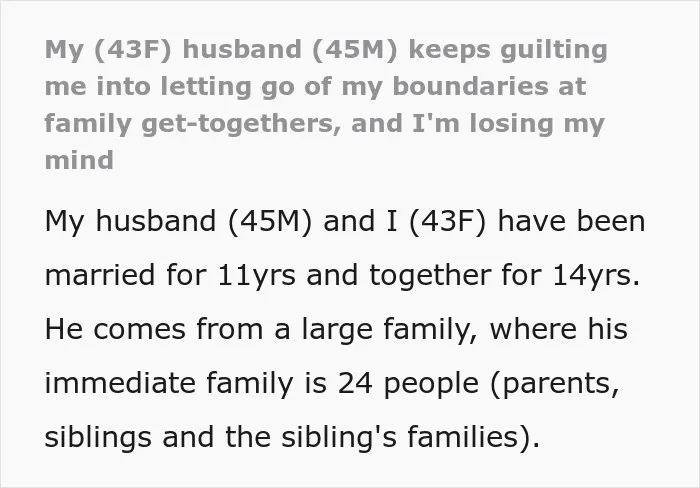
Take this woman's story, for instance. Whenever she and her husband visited his family, he insisted they stay at his parents' house, even though the arrangement wasn't working well for her. She suggested an alternative, but her husband wasn't willing to budge. Eventually, the frustration reached a breaking point, and things got heated. Keep reading to find out what happened.
Family get-togethers can be wonderful, but they can also come with their fair share of drama

A woman shared how a stay at her husband's family home left her so frustrated that she eventually lashed out at him
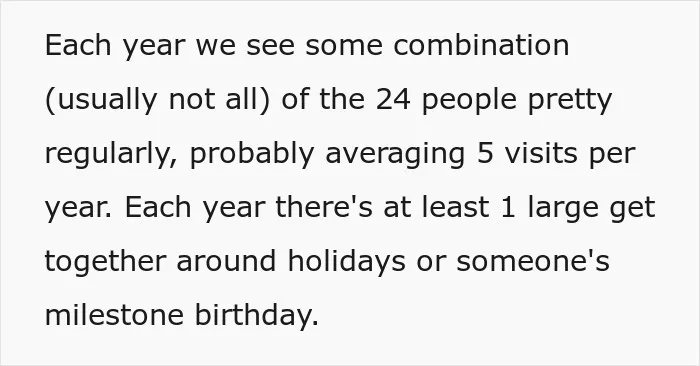
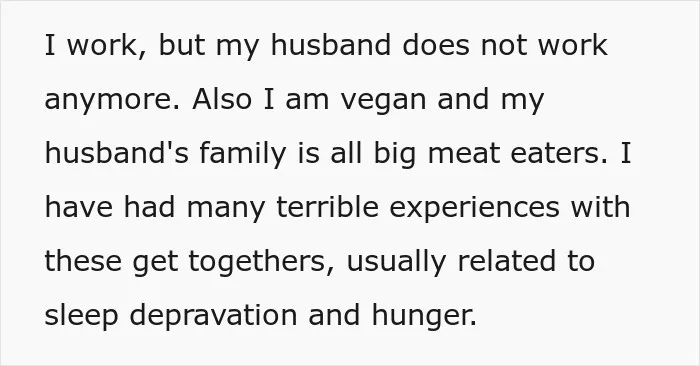
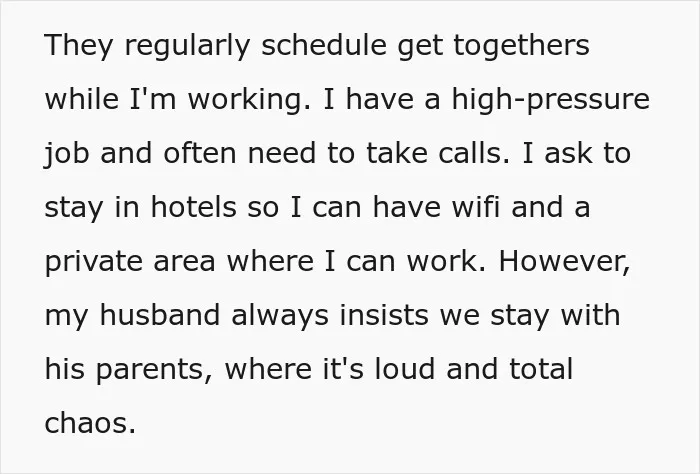



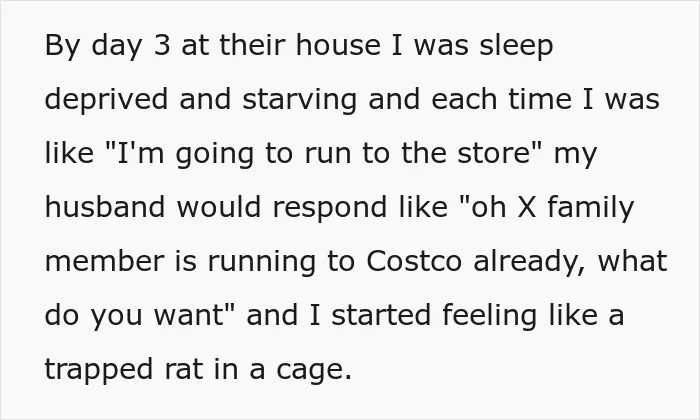
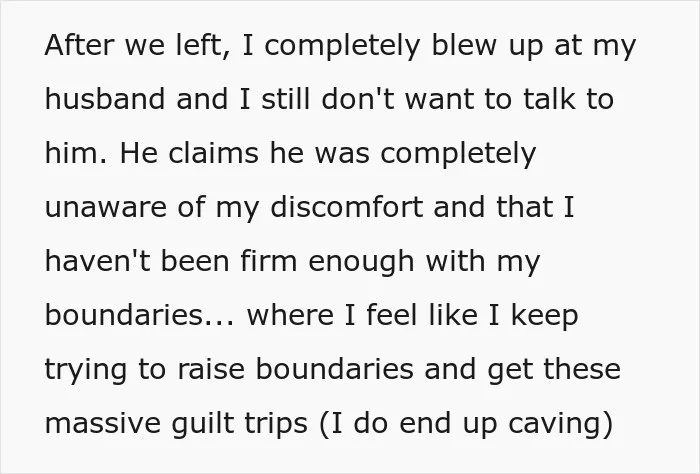

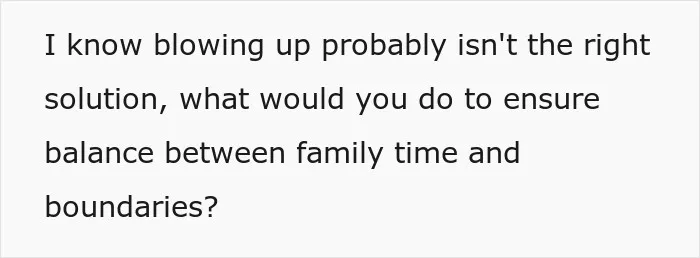




Healthy boundaries in a relationship might feel strict at first, but they actually help protect both partners and strengthen trust
Whether you're married, dating, or in a committed relationship, it's natural to make compromises for your partner. But sometimes, people go out of their way to keep their partner happy, even when it means ignoring their own needs. What starts as a few small sacrifices can eventually become emotionally exhausting, especially when you're constantly putting someone else first. After all, caring for your partner shouldn't mean neglecting yourself.
Think about it. Your partner asks you to cook their favorite meal after you've had a tiring day at work. Instead of saying you're exhausted, you agree because you don't want to disappoint them. Harmless enough once in a while, right? But when this becomes a habit, frustration and resentment can build. That's why it's important for both partners to respect each other's needs and limits.
This is where boundaries come in. And contrary to what some people believe, setting boundaries in a relationship isn't selfish. It's about making sure both partners feel heard, respected, and comfortable expressing their needs. In fact, research highlights how personal boundaries can support mental well-being and healthier relationships. But here's the thing: simply telling someone what makes you uncomfortable isn't always enough.
In her book Set Boundaries, Find Peace: A Guide to Reclaiming Yourself, licensed counselor Nedra Glover Tawwab explains the importance of being clear about your limits and what you'll do if they're crossed. For example, you might tell your partner, "I'm not comfortable discussing this topic. If you bring it up again, I'll end the conversation." The idea isn't to threaten or punish the other person, but to take responsibility for protecting your own well-being. After all, healthy relationships aren't about one person always getting their way; they're about finding a balance that works for both.
Of course, setting boundaries is one thing, but sticking to them can be a little trickier, especially if you're someone who hates disappointing others. Many people fall into the habit of people-pleasing, agreeing to things they'd rather avoid just to keep the peace. And while making compromises is an important part of any relationship, it shouldn't mean constantly putting your own feelings aside. Sometimes, a simple "I'm not comfortable with that" is all you need to say. You don't have to justify every preference or feel guilty for having different needs. After all, a healthy relationship should let both partners express themselves without worrying that every disagreement will turn into an argument.
And while it's important to be clear about what you're comfortable with, protecting your feelings and mental well-being matters just as much. That's where emotional boundaries come in. Everyone experiences emotions differently, and having the space to express yourself honestly without judgment is key. When people respect these boundaries, it’s easier to open up, share thoughts, and even have tough conversations without fear of backlash. Setting and protecting your emotional space isn’t cold or selfish—it’s how you keep your relationships healthy, supportive, and full of trust, so everyone feels heard and safe.
Clearly communicating boundaries to family members ensures everyone understands limits and helps prevent conflicts before they start
Financial boundaries are equally important, particularly for couples who share expenses or responsibilities. Money can often become a source of tension if expectations are unclear. Discussing finances openly (whether it’s spending habits, savings goals, or shared responsibilities) often helps prevent misunderstandings. Setting financial boundaries helps both partners feel secure and respected when it comes to money matters. Transparency in this area can strengthen trust and stability within the relationship.
Boundaries also matter with extended family. Of course, you want to get along with your partner's loved ones, but that doesn't mean you have to agree to everything they expect. If something makes you uncomfortable, speak up rather than let frustration build. After all, your partner might not always realize how you feel unless you tell them. And while setting boundaries can sometimes feel awkward, it can actually help build healthier relationships based on mutual respect and understanding.
Coming back to today's story, the woman's husband seemed to assume that staying with his family was fine, without fully considering how it affected her. And while better communication might have helped, it's equally important for both partners to listen and respect each other's needs. After all, marriage is about making decisions together, not having one person call all the shots. What do you think, pandas? Was the woman right to stand her ground, or could she have handled the situation differently?
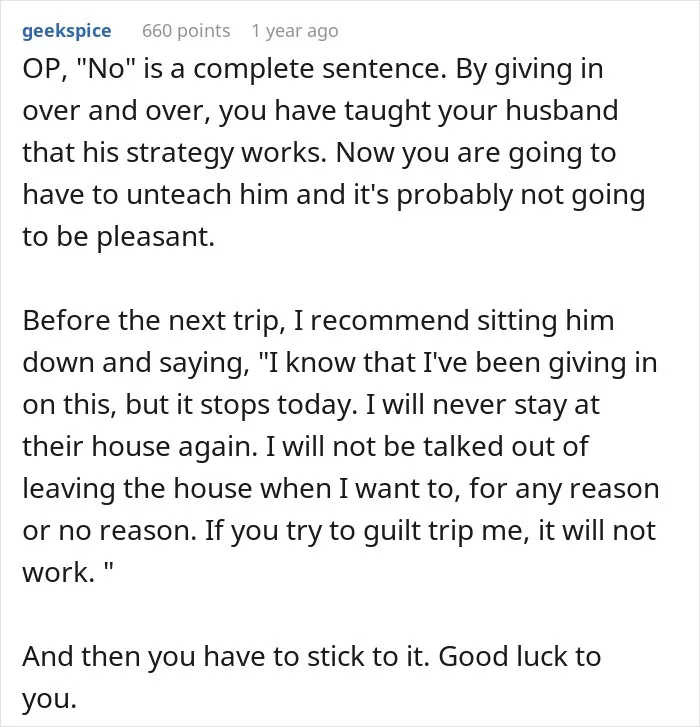
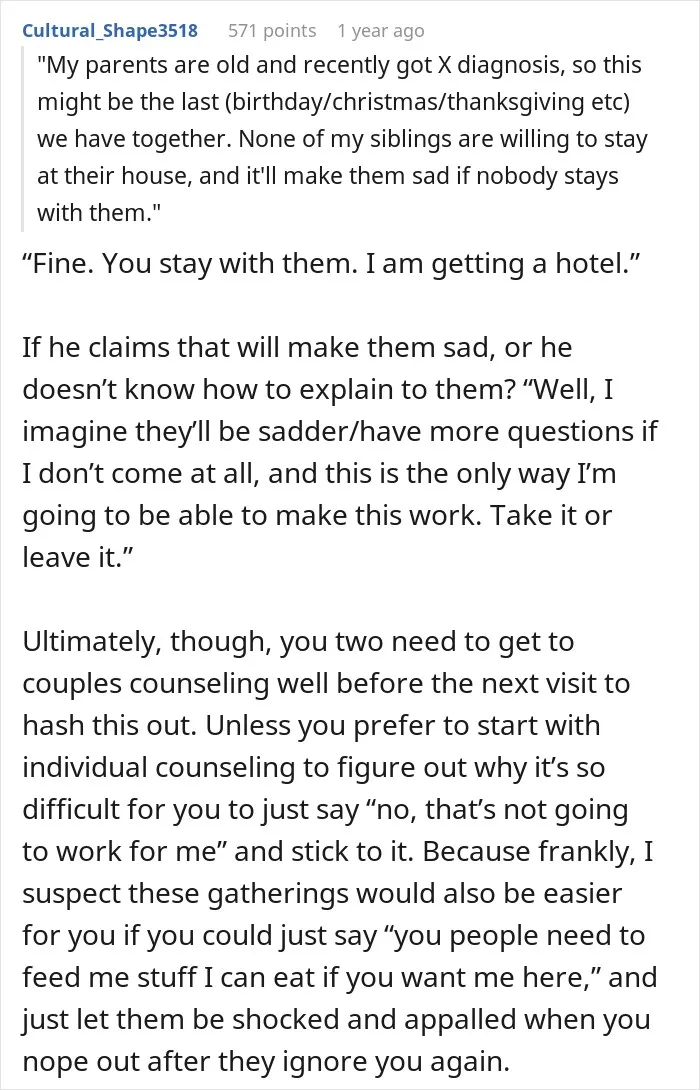
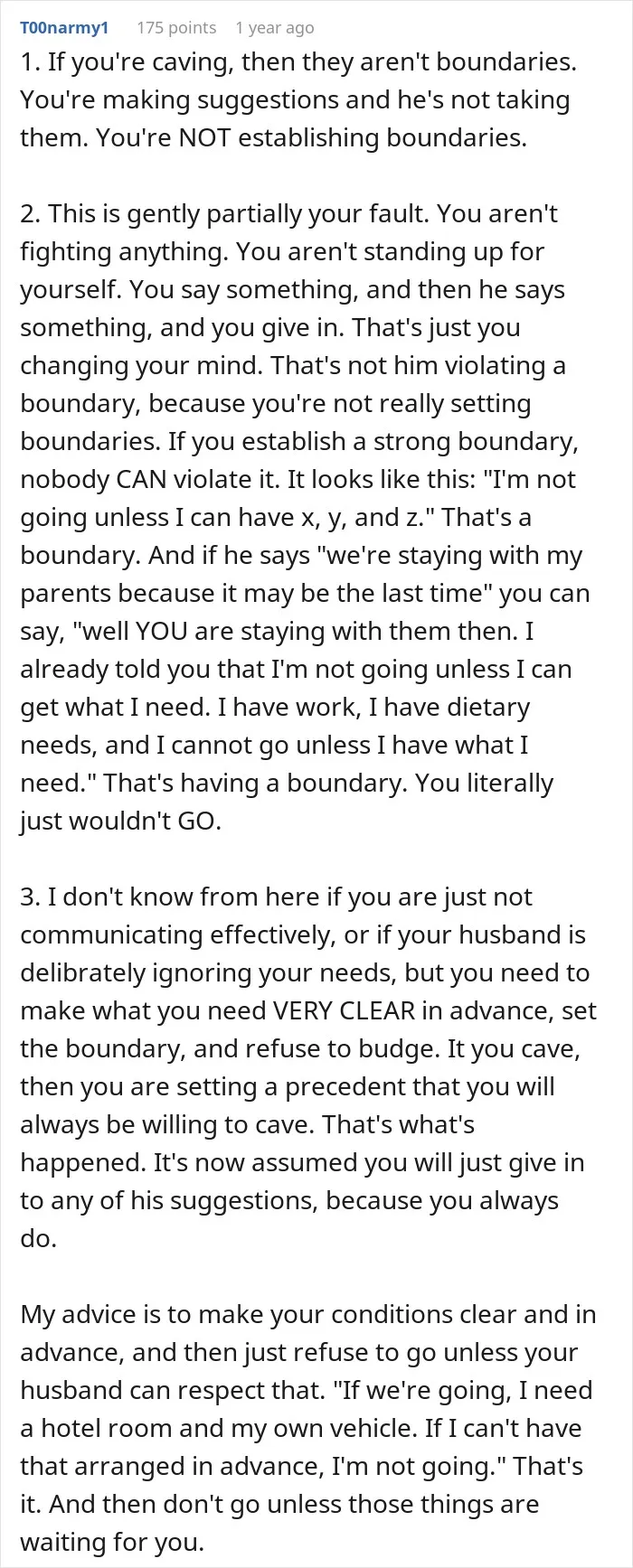
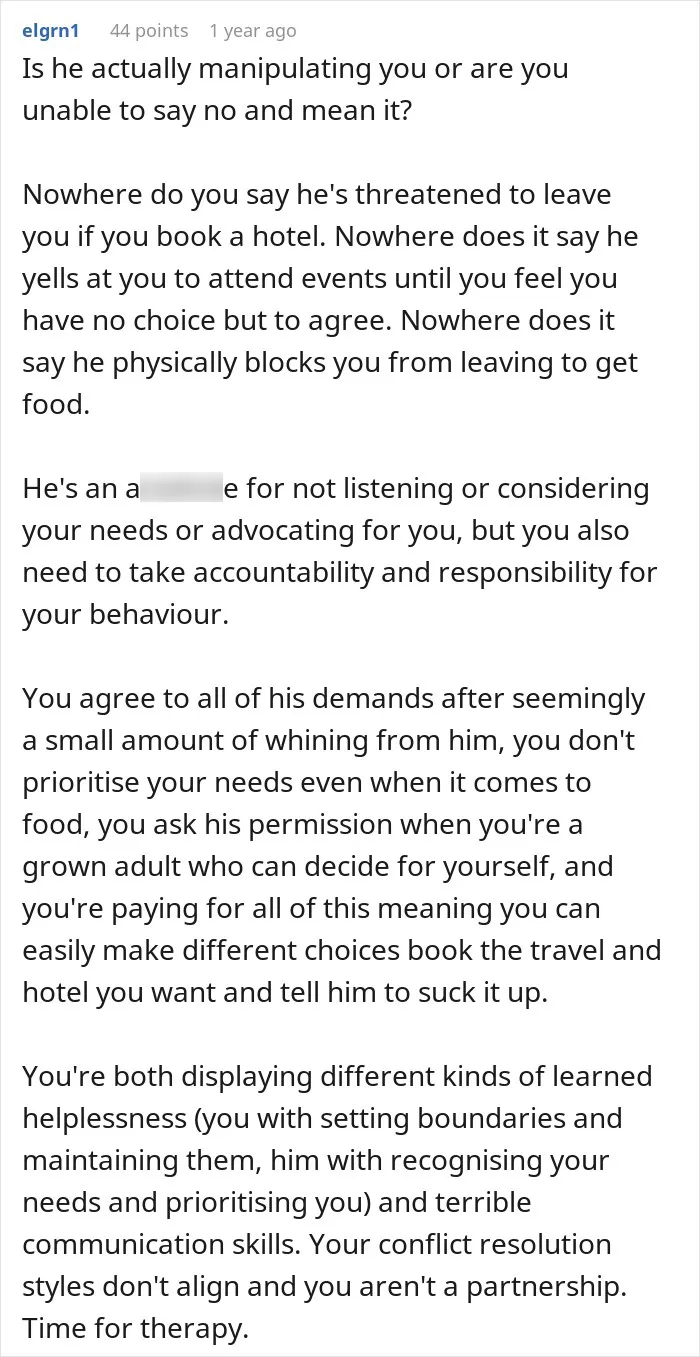
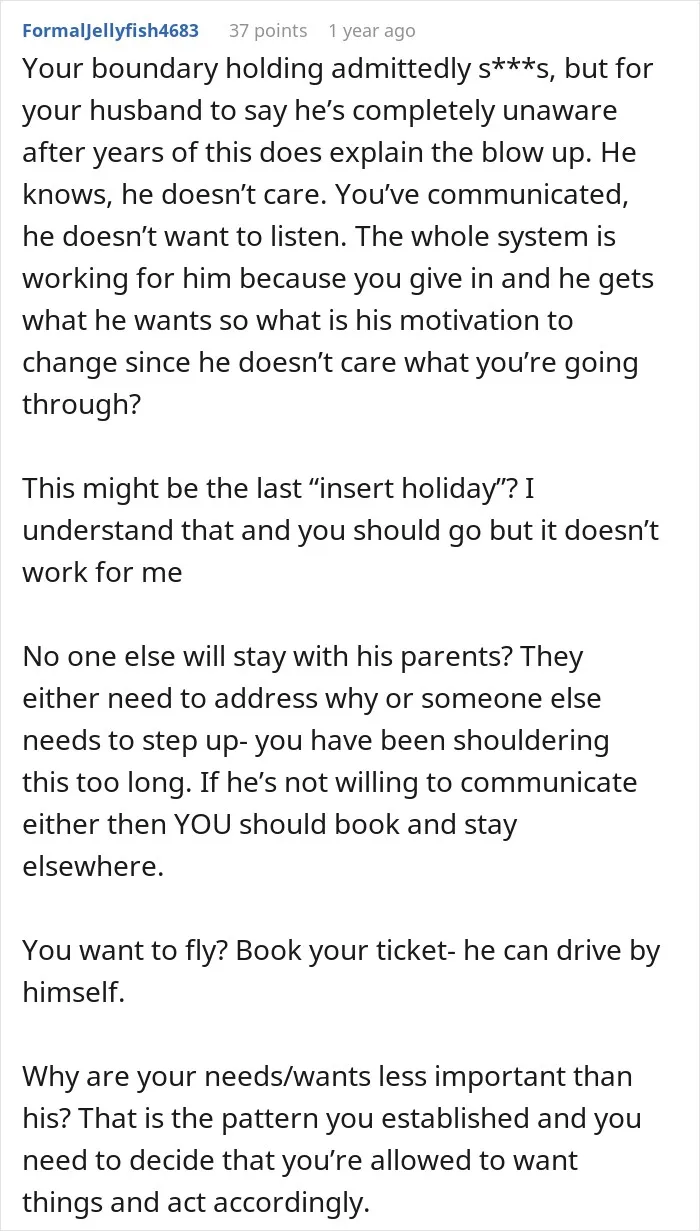
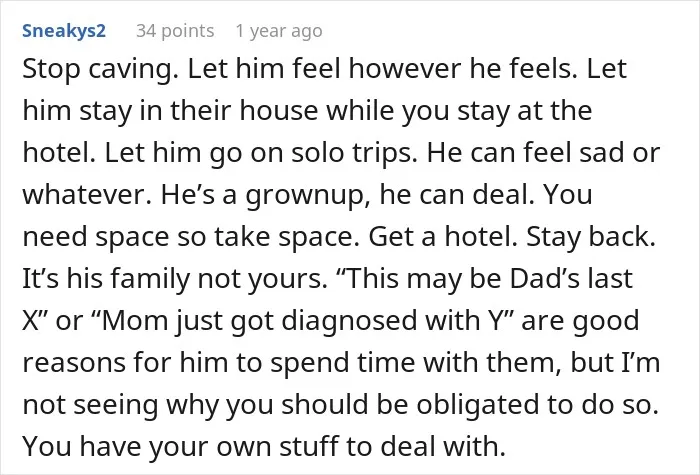
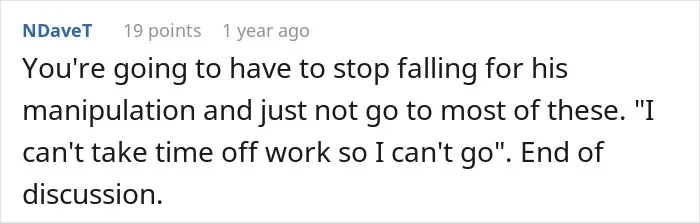
People online were quick to emphasize the importance of setting boundaries and communicating them clearly