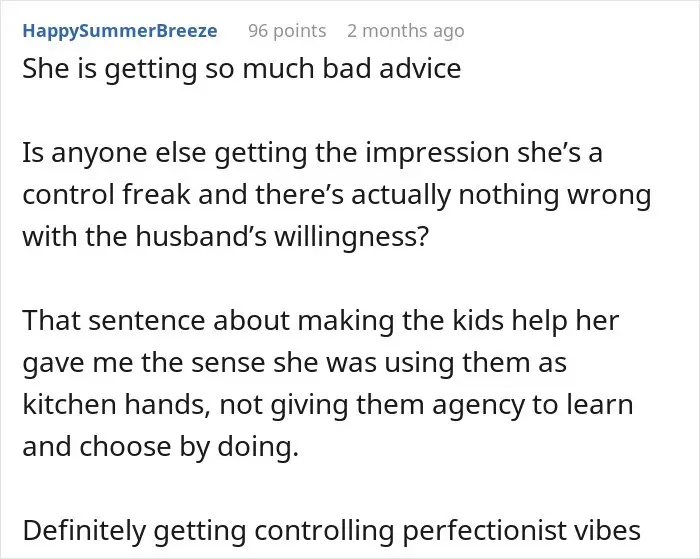


Whether you enjoy cooking or would rather stay out of the kitchen, knowing how to prepare a few basic meals is an important life skill. And when you have a partner and kids, being able to share cooking responsibilities can make life a lot easier.
This post may include affiliate links.
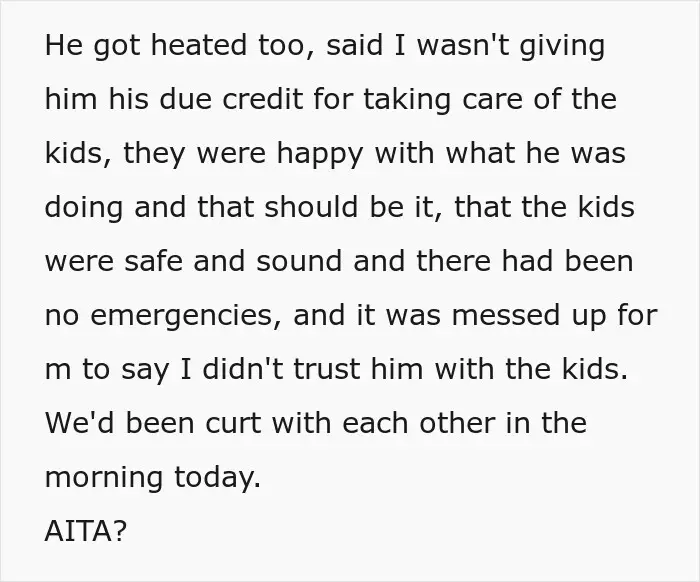
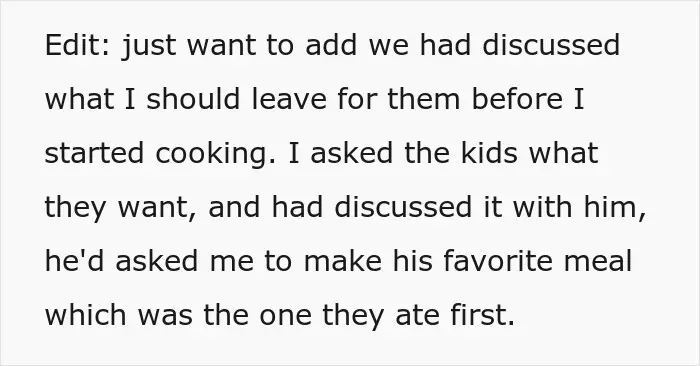
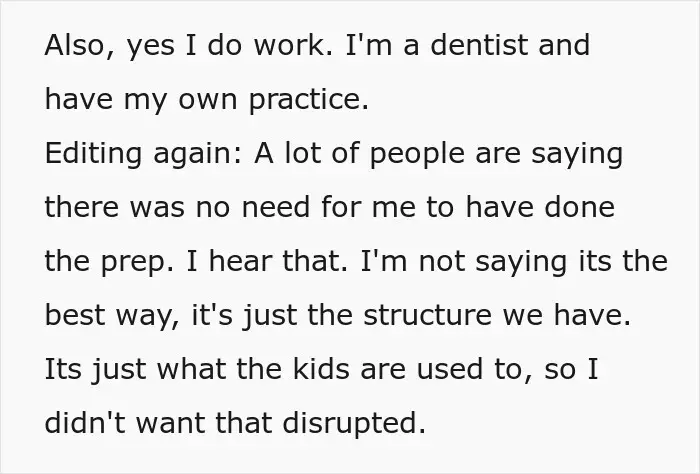
But one woman shared how she returned home to discover that her husband had been giving their kids money to buy lunch and taking them out to eat. Surprisingly, she'd already prepared meals and stored them in the freezer before leaving. So why wasn't he using them? Keep reading to find out what happened and how the couple handled the disagreement.
Sadly, not everyone will appreciate the lengths you go to for your loved ones
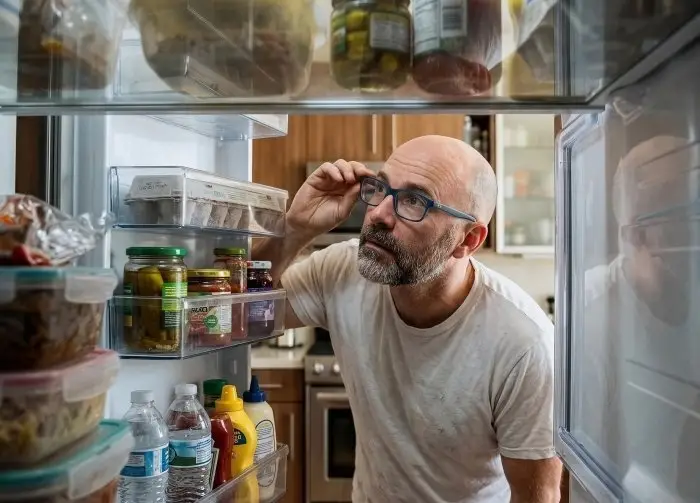
One woman went viral after sharing how she and her husband had a falling out over food and cooking
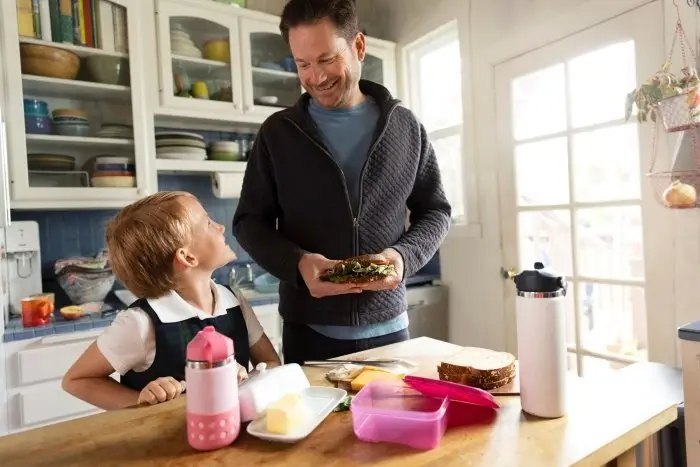


Self-control is an essential life skill because it helps us manage our emotions, resist impulsive decisions, and stay focused on our long-term goals
Is cooking a basic life skill? The answer isn't quite as simple as it sounds. Cooking isn't necessarily something everyone needs to master to the same degree, but being able to prepare at least a few simple meals can be an important part of looking after yourself. After all, feeding yourself is one of those everyday responsibilities that doesn't disappear just because you're busy, living alone, or sharing a home with someone else.
In her acclaimed book Mind in the Making, child development researcher Ellen Galinsky identifies seven essential life skills that are closely connected to the brain's executive functions. These skills combine cognitive, emotional, and social abilities, helping people manage their thoughts, feelings, and behavior while working toward their goals.
Galinsky's seven essential life skills include:
- Focus And Self-Control: Staying attentive, managing impulses, remembering rules, and resisting distractions so you can work toward longer-term goals.
- Perspective Taking: Understanding your own thoughts and feelings while recognizing that other people may see and experience the same situation very differently.
- Communicating: Knowing not only what you want to say, but also how your words may be understood by someone else and choosing the right way to express yourself.
- Making Connections: Recognizing patterns, spotting similarities and differences, and linking ideas that may initially seem unrelated. This ability also forms an important foundation for creative thinking.
- Critical Thinking: Questioning information, looking for reliable evidence, and thinking carefully about whether something is accurate rather than simply accepting it at face value.
- Taking On Challenges: Being willing to tackle difficult tasks, step outside your comfort zone, and keep going when things become stressful or don't work out the first time.
- Engaged Learning: Staying curious and actively looking for opportunities to learn, explore, and discover your potential throughout life.
These skills cover many of the mental and social abilities we use every day, but there is another category of skills that matters just as much in everyday life: practical skills. Organizations such as UNICEF, UNESCO, and the World Health Organization have highlighted the importance of psychosocial and mental life skills, many of which overlap with Galinsky’s ideas. They also recognize that practical domestic skills are an important part of becoming independent and managing everyday life. One of the most fundamental is simply knowing how to take care of yourself—and that starts with something as basic as being able to prepare a meal.
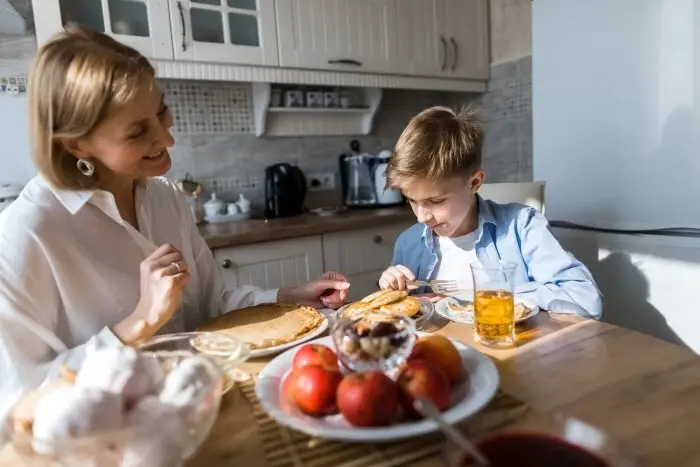
Learning to plan affordable meals is an important step toward independence
Knowing how to plan affordable meals, shop for ingredients, and prepare simple dishes can make everyday life much easier. You don't need to be a professional chef, but understanding basic nutrition and knowing your way around the kitchen can help you eat well without spending a fortune on takeout.
Of course, being independent doesn't mean knowing how to do everything yourself. There's nothing wrong with dividing household responsibilities, but having a few basic skills, including cooking, means you won't always have to rely on someone else.
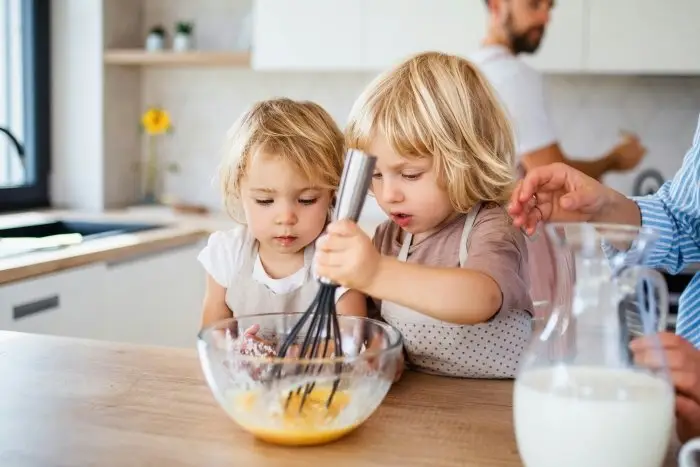
Coming back to today's story, the woman had thoughtfully prepared meals for her family before leaving. But surely, her husband and children could also learn to prepare a few simple dishes rather than depending entirely on her?
What do you think, pandas? Should everyone in a household know how to cook at least a few basic meals? Let us know in the comments!
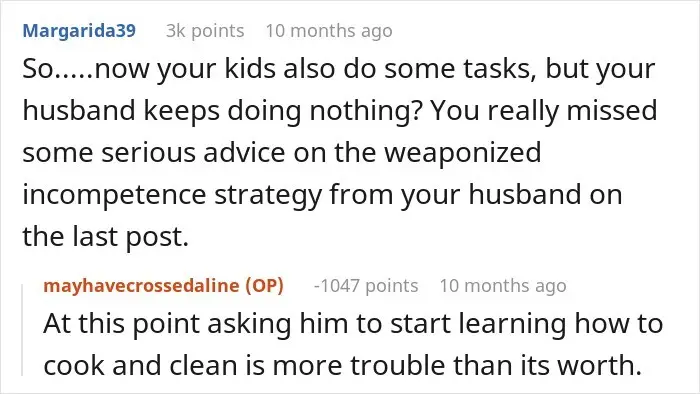
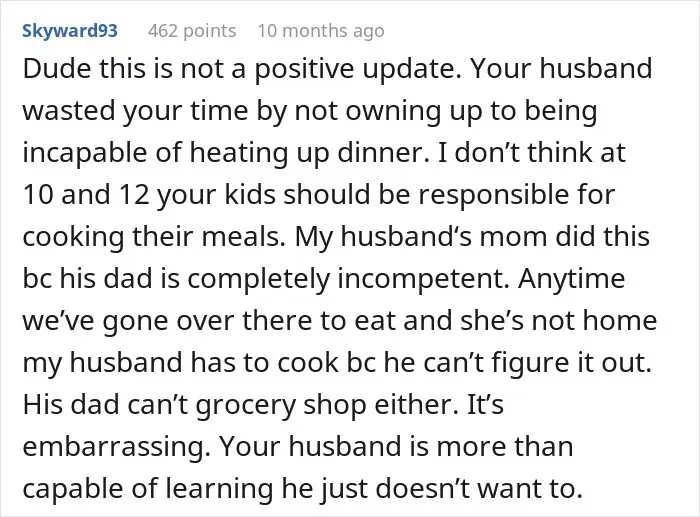
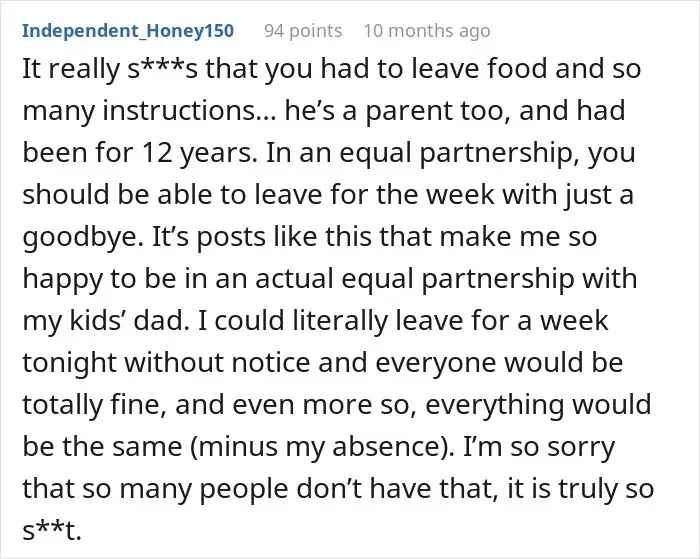
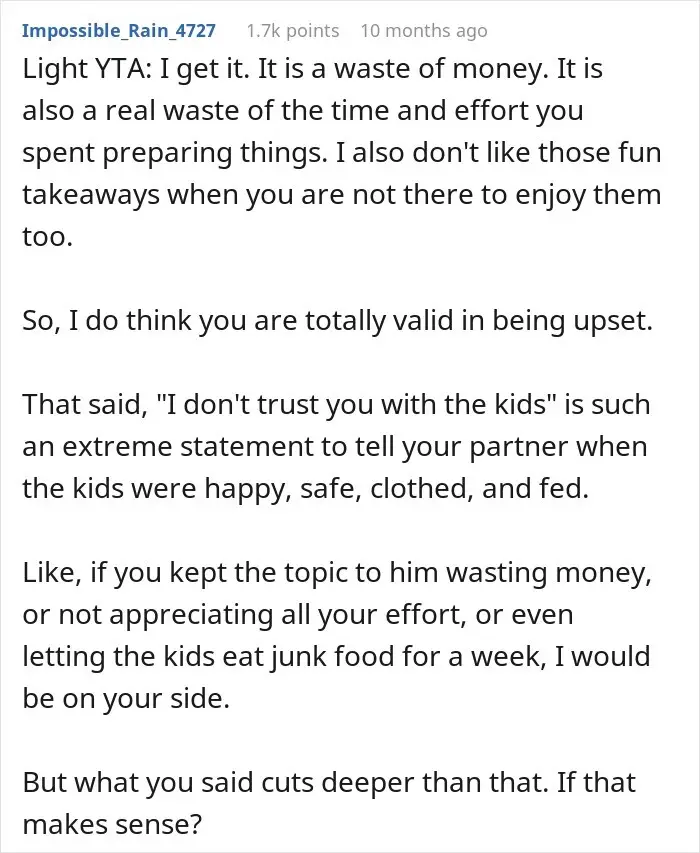
Many people online took the woman's side
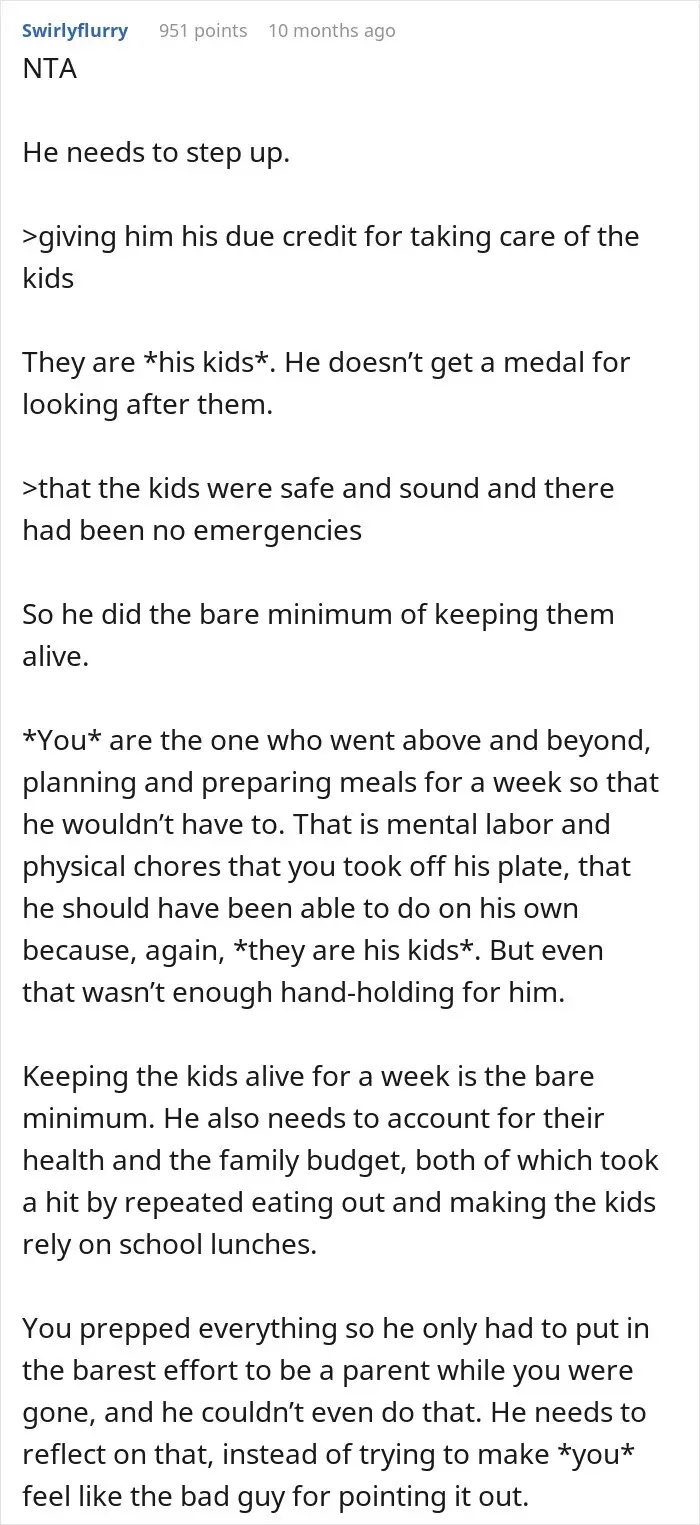



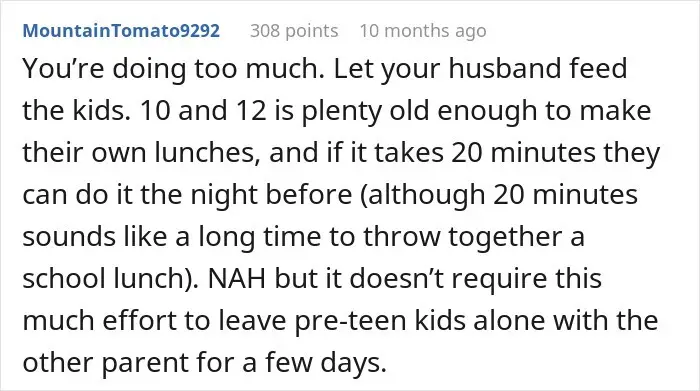
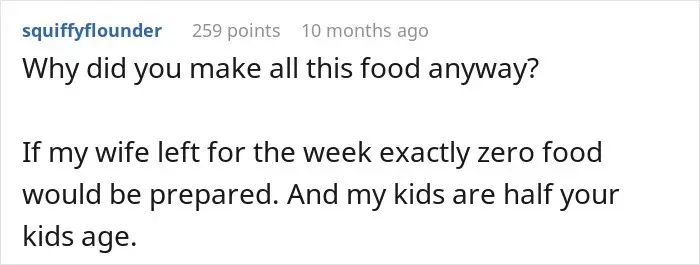

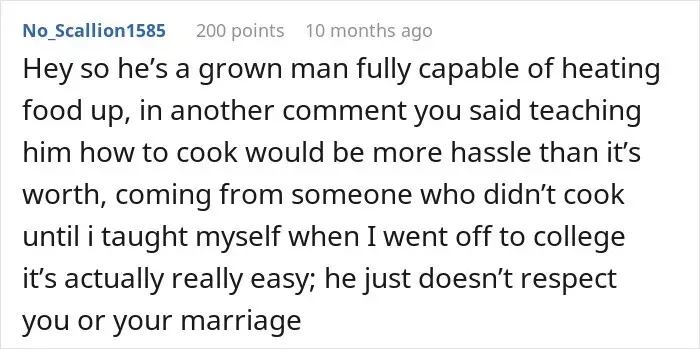
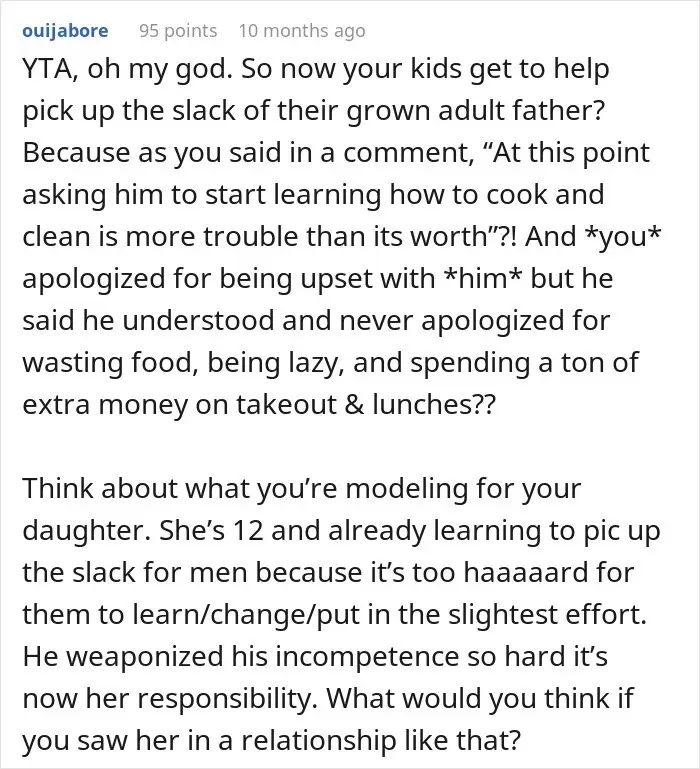
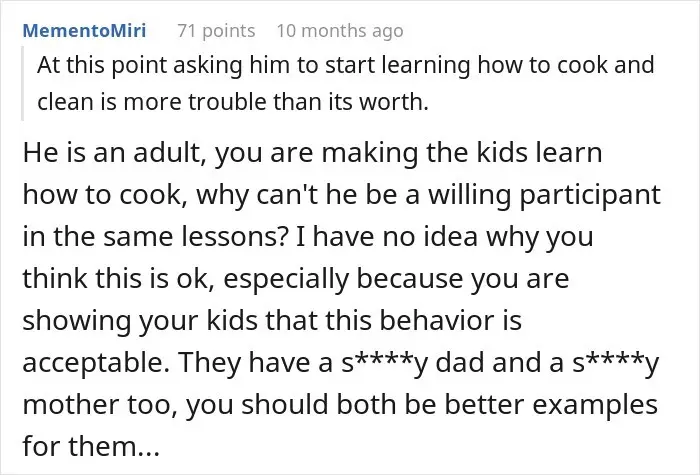
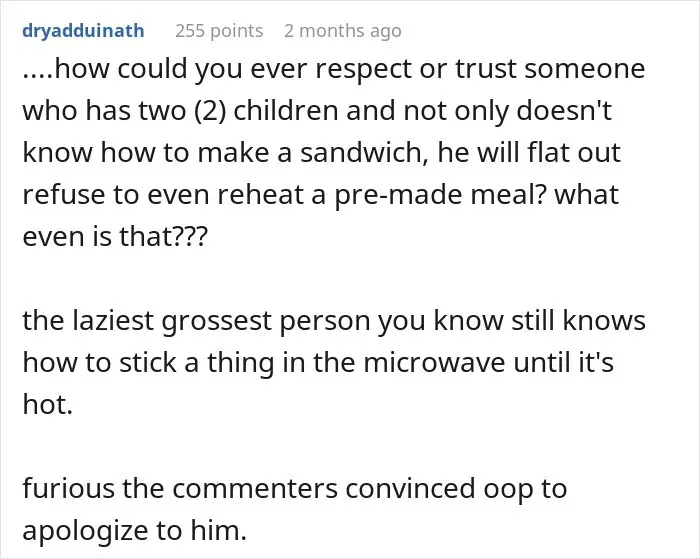
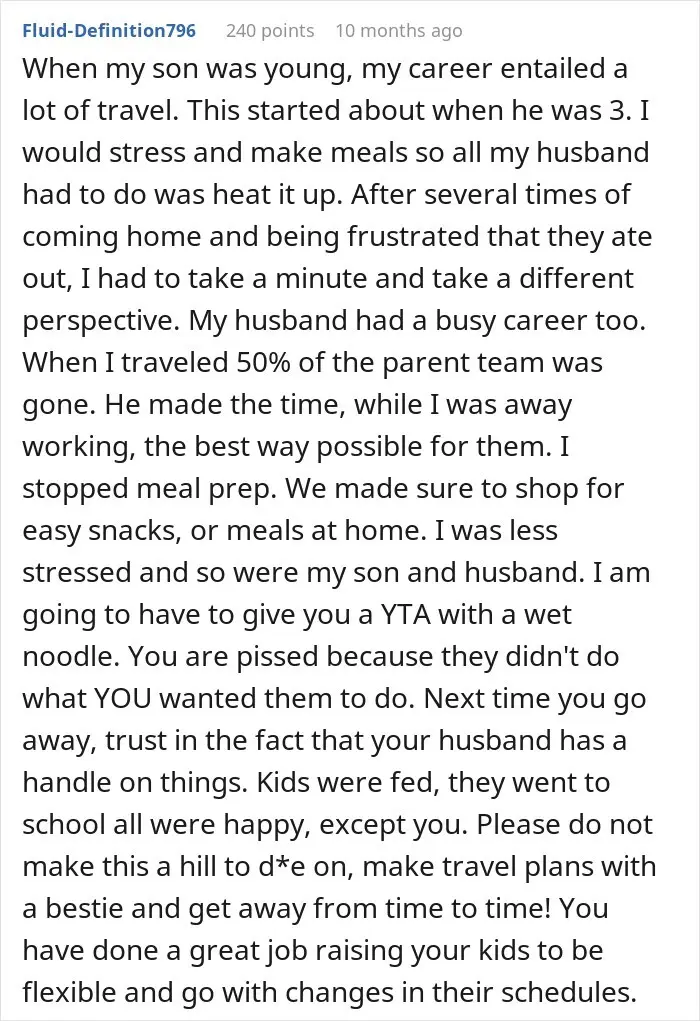
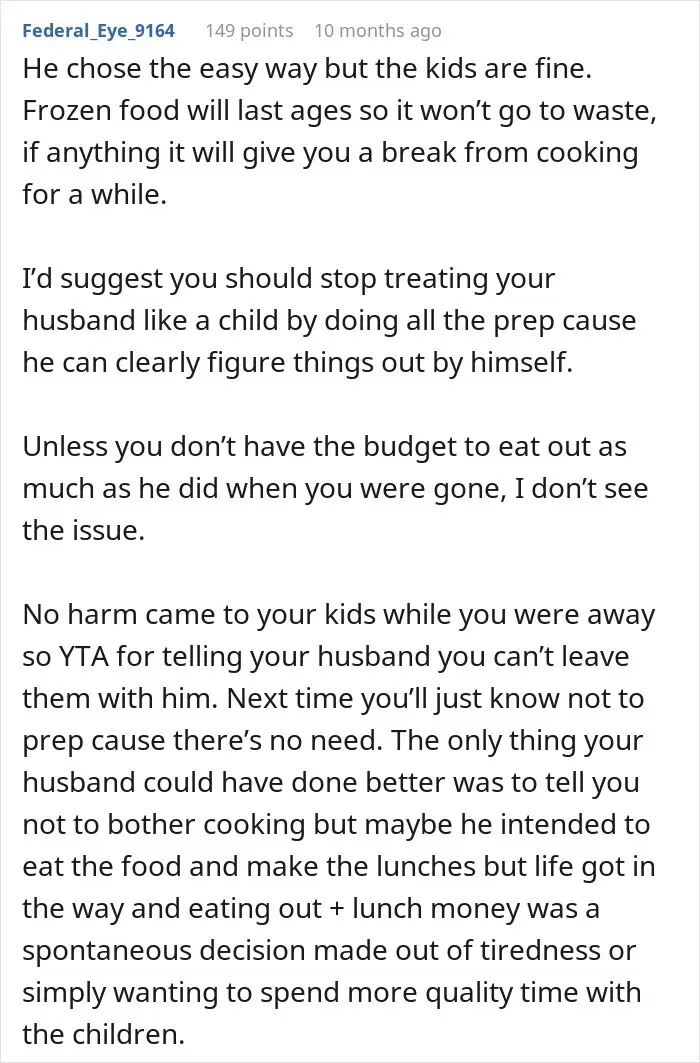
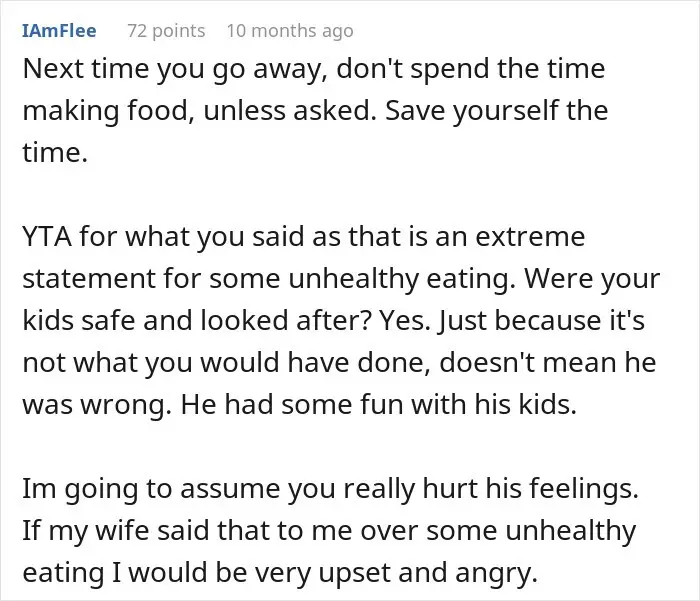
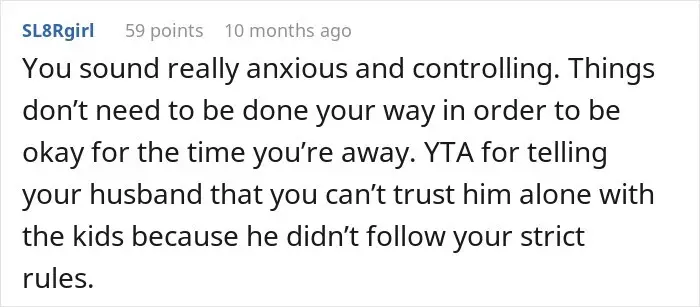
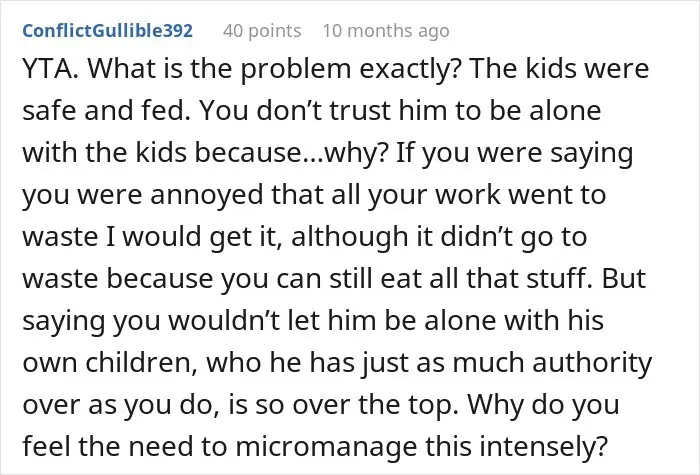
Some readers loudly called out the author, too
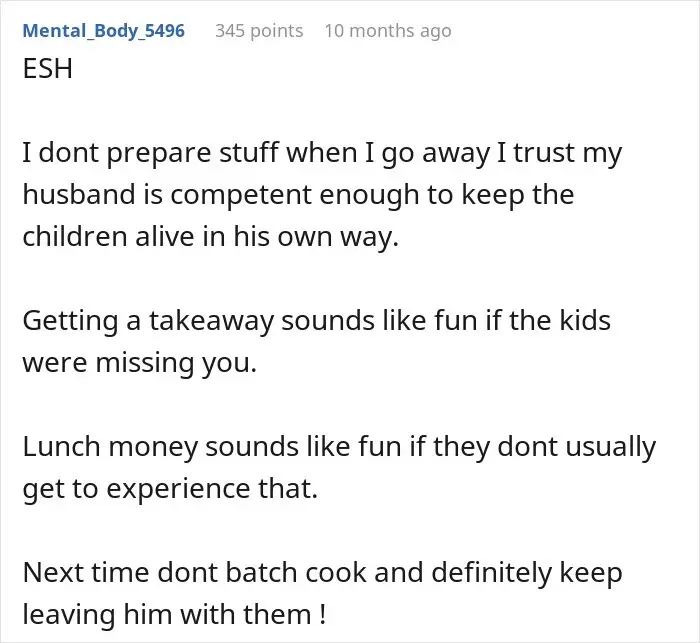

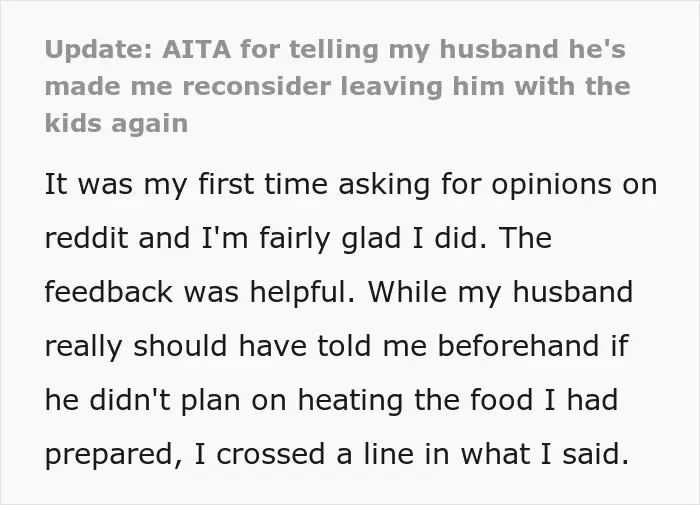
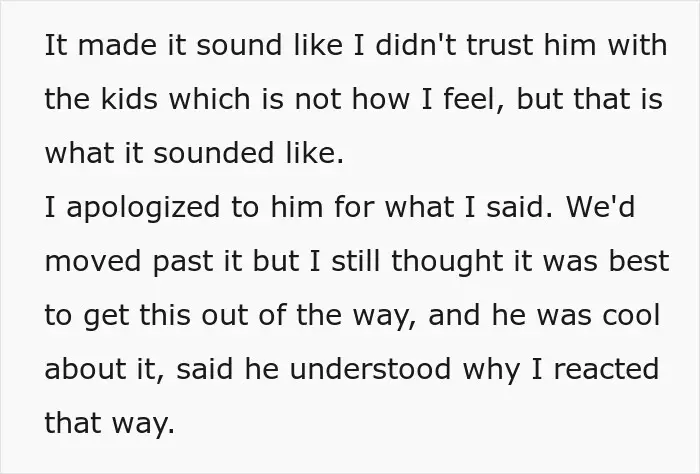
Later, the author had an important update to share

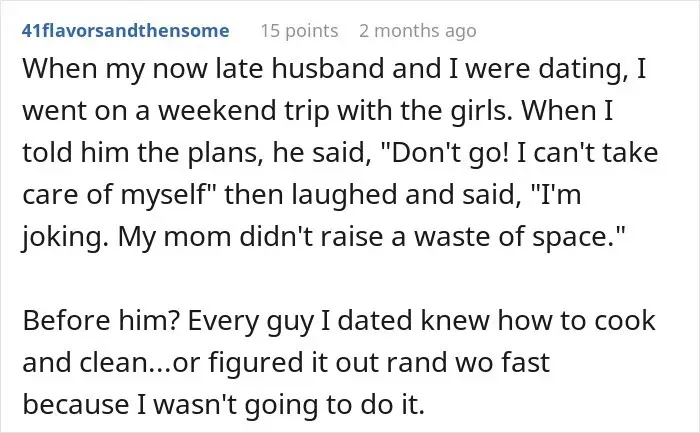
Internet users weighed in with their perspectives after the update