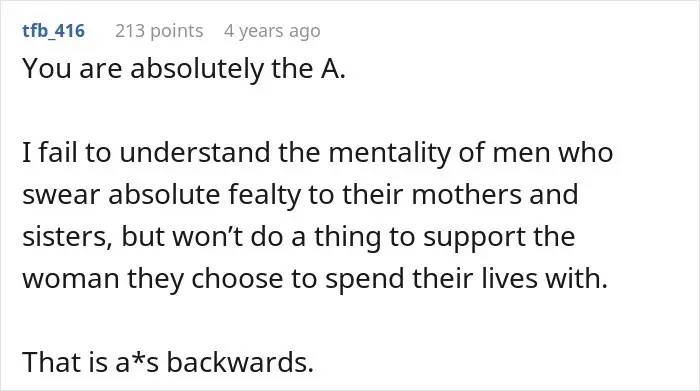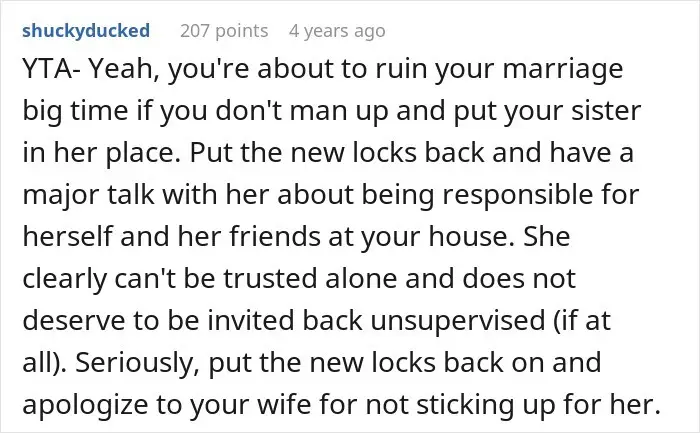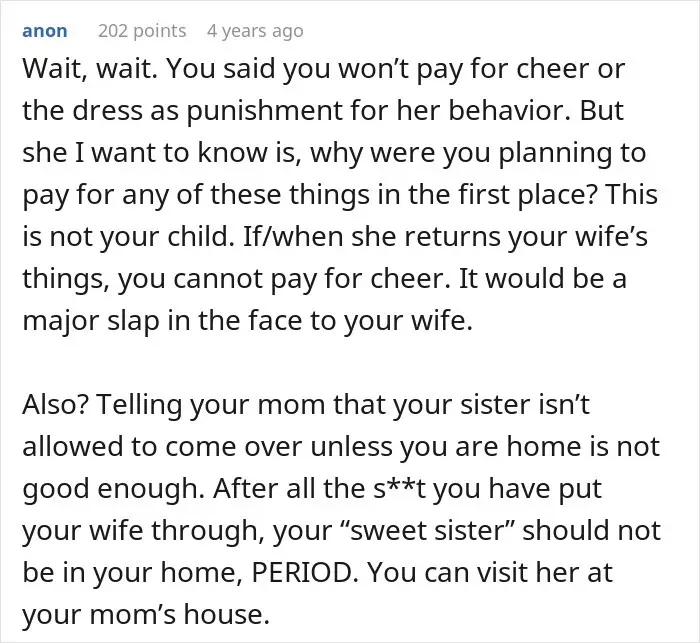


Even if they aren’t around all the time, marrying someone means at least a few interactions with their family every now and then. If those don’t happen to be going too well then in a good relationship you should always be able to ask your partner to step in.
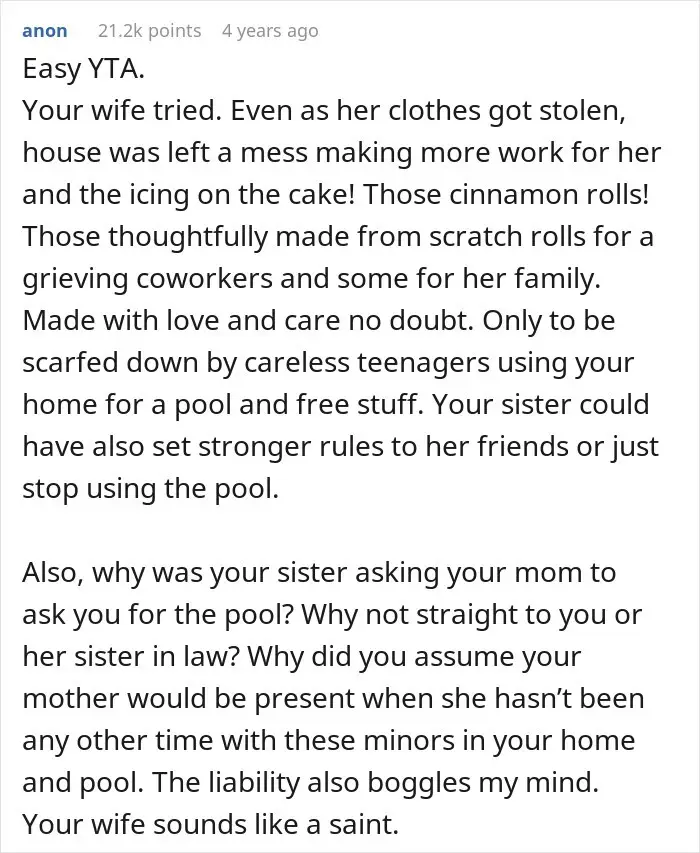
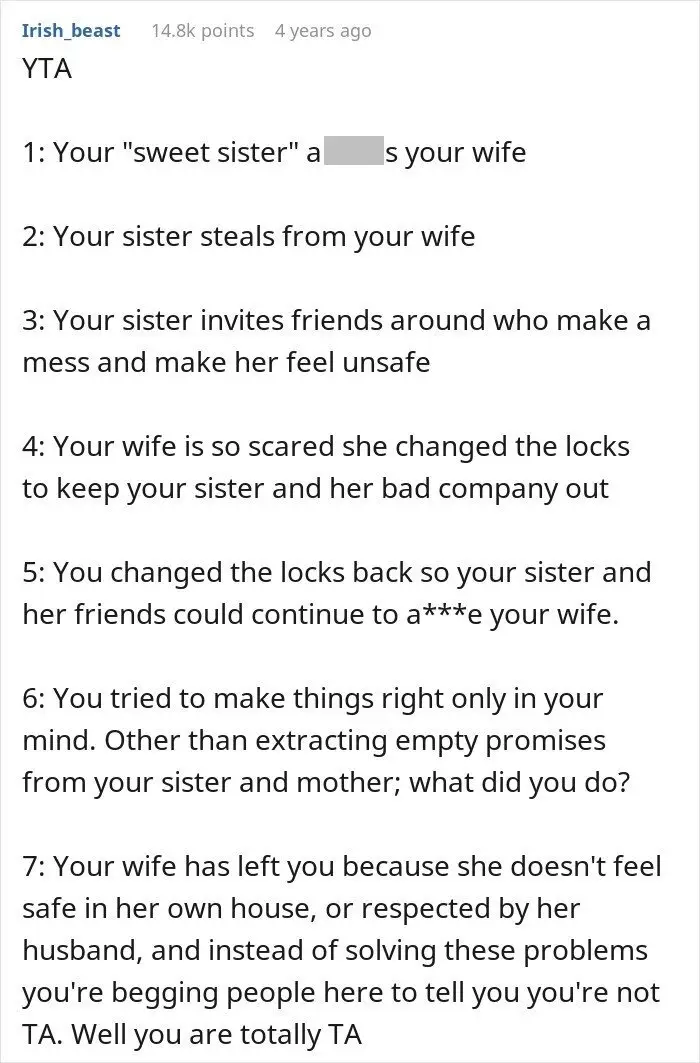
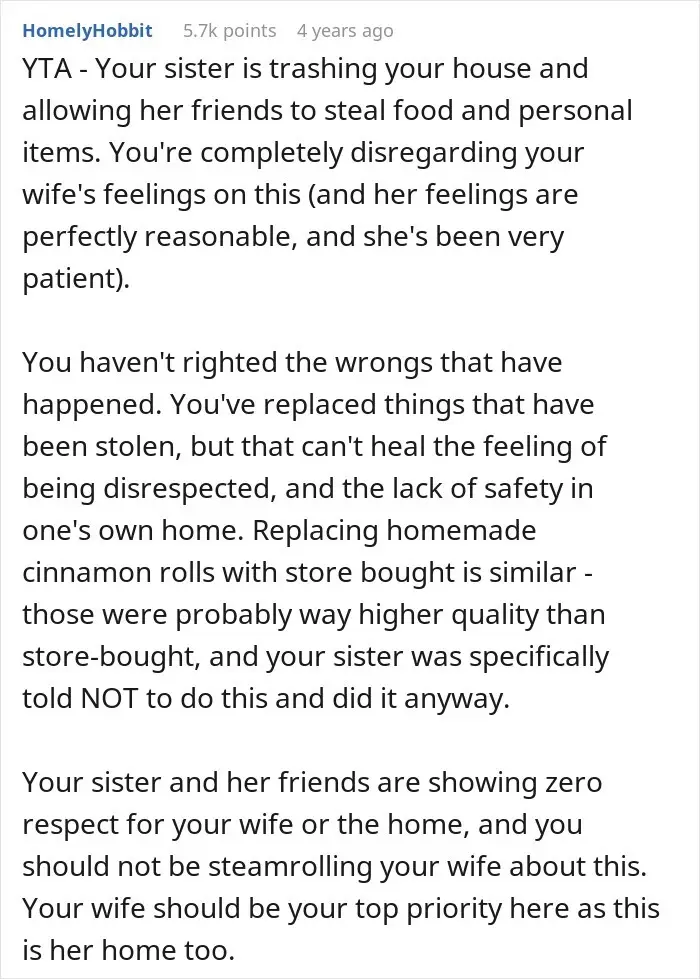
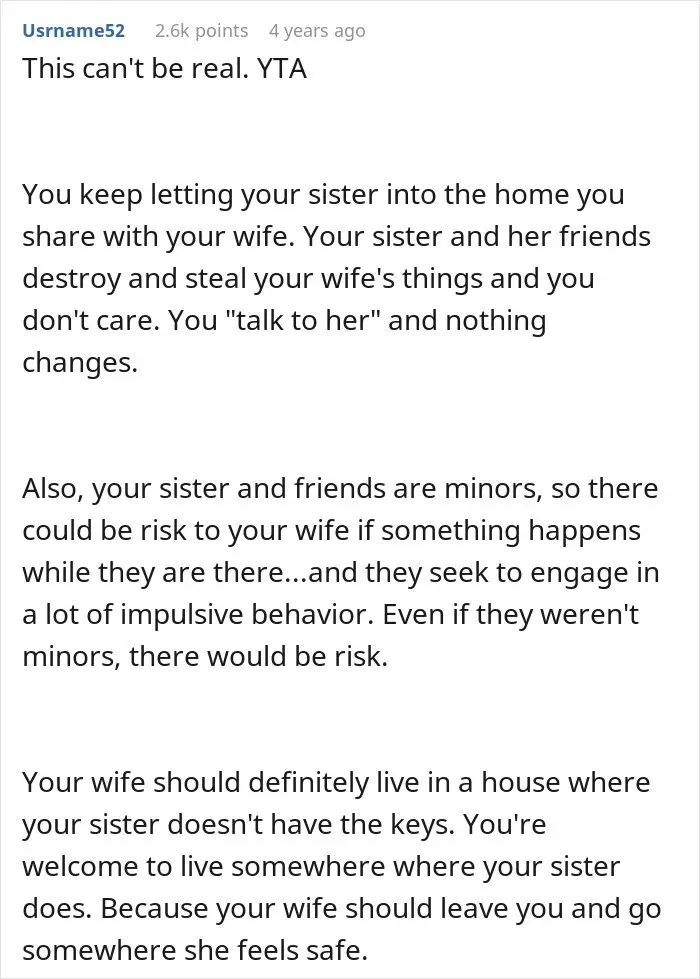
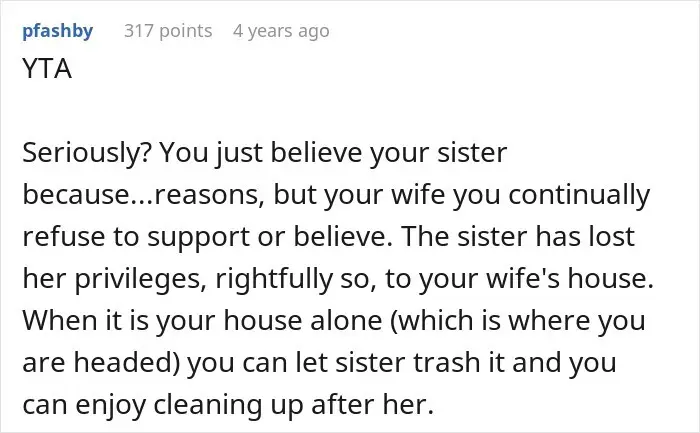
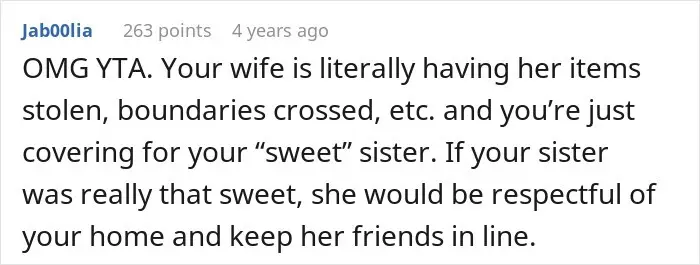
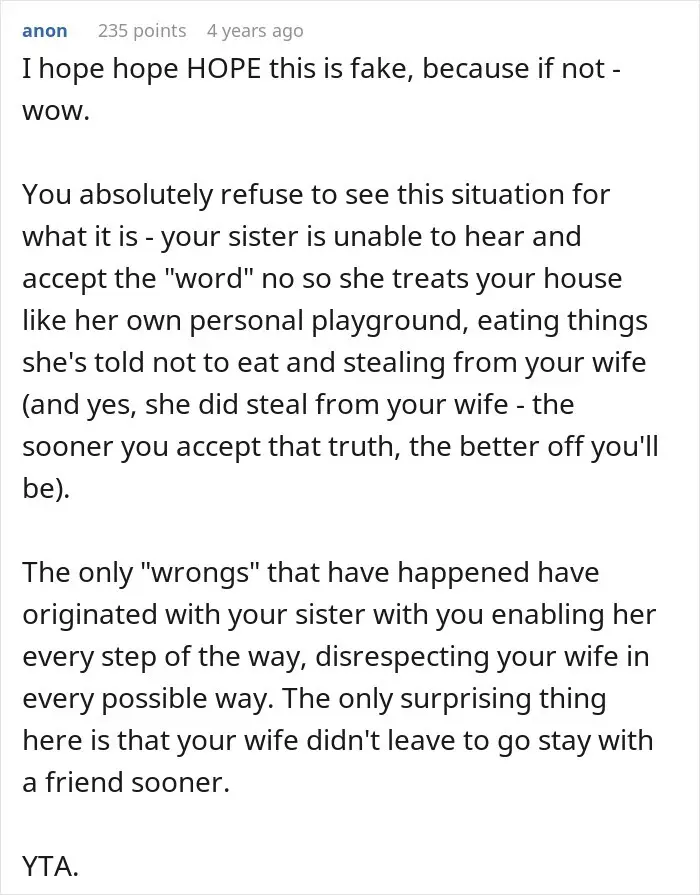
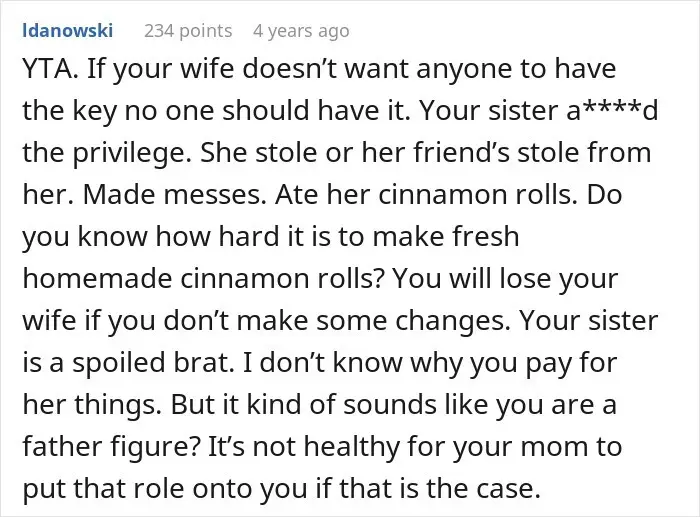
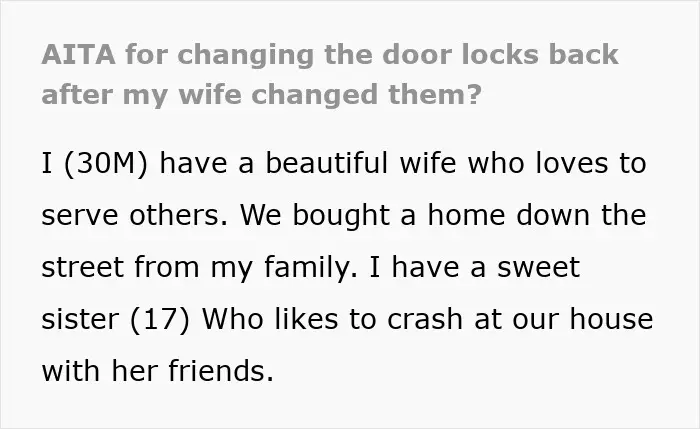
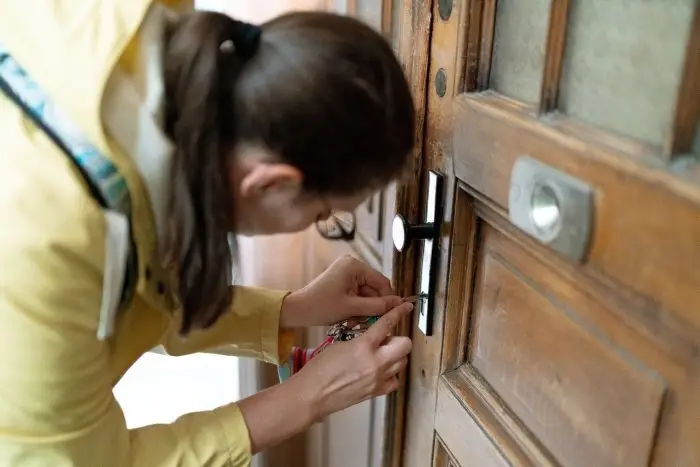
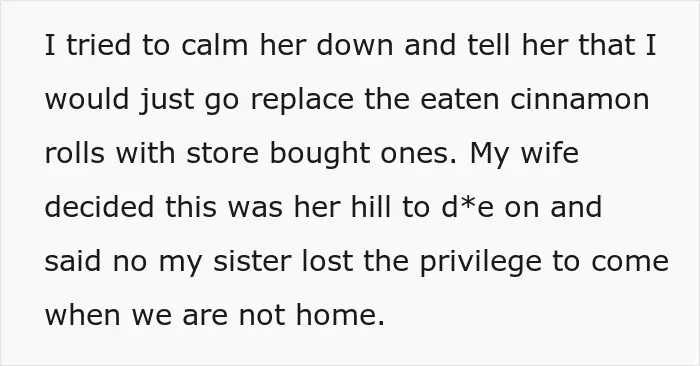
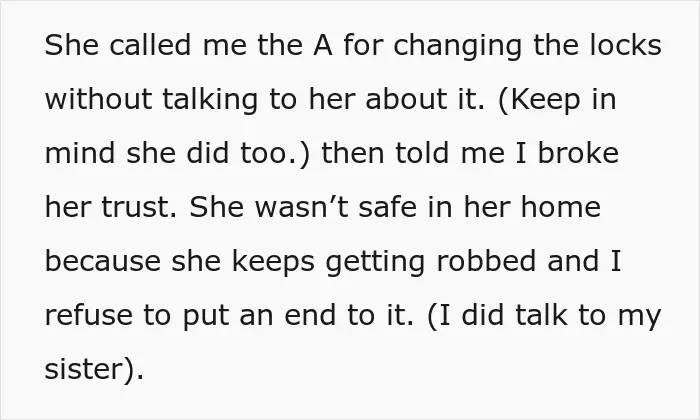
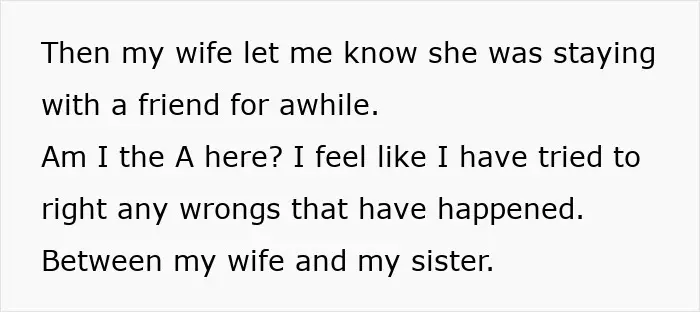
A man went online to get a second opinion after changing the locks back on his house after his wife had done the same. This was all instigated by his sister who would frequently drop by, steal food and leave a mess. So folks online cracked their knuckles and shared their assessment of the situation.
It can be hard to draw a line with your relatives

But one man decided to undo the lock change his wife put in place for his sister

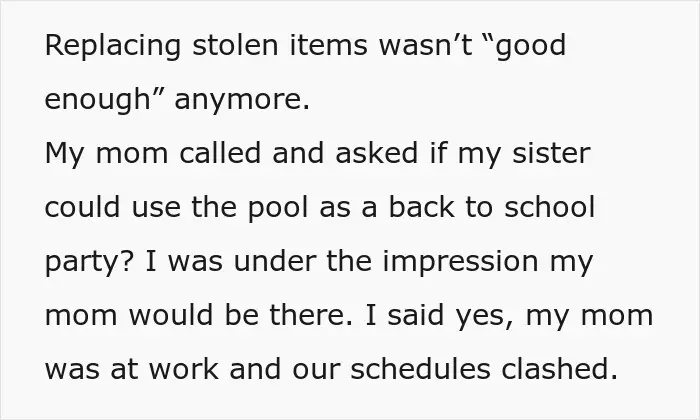
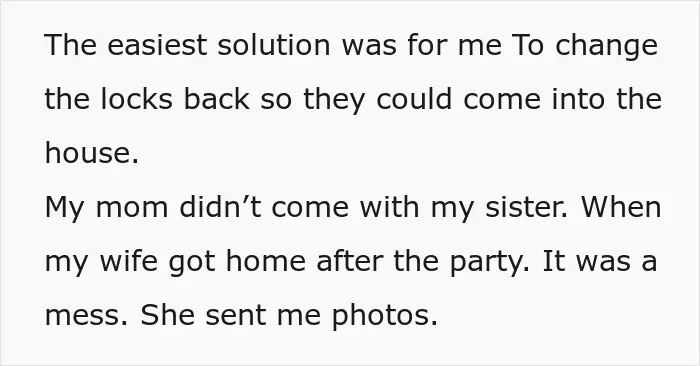

Later he shared an update
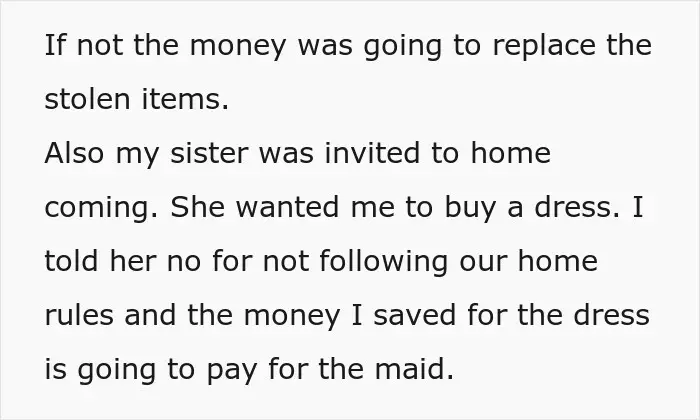

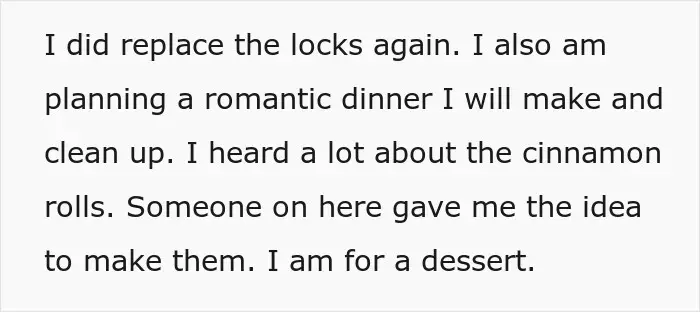
Then came a second update
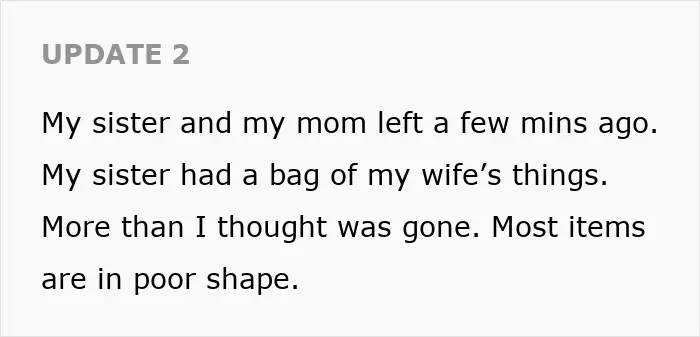
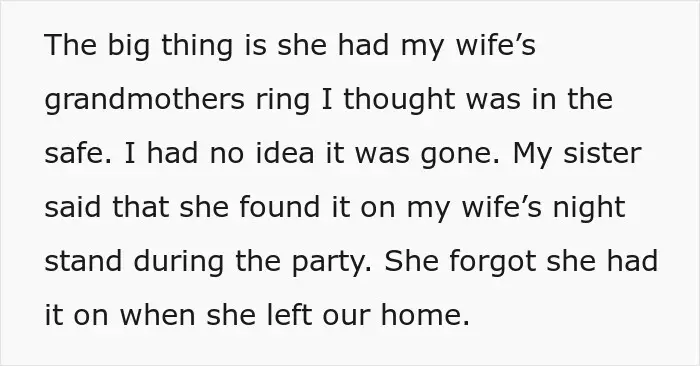

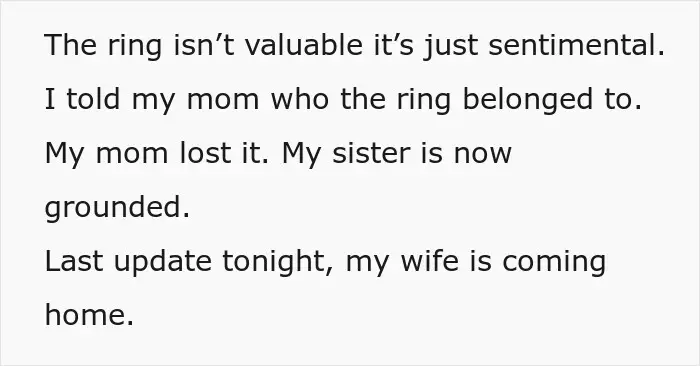
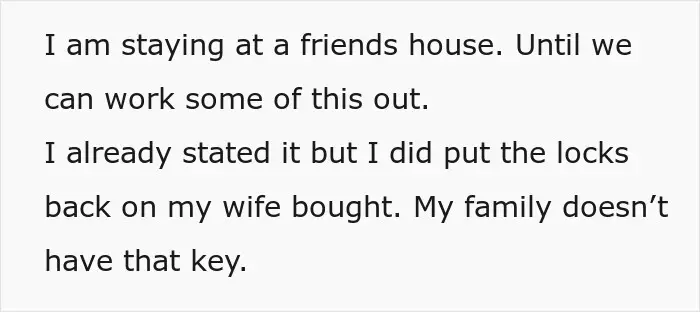
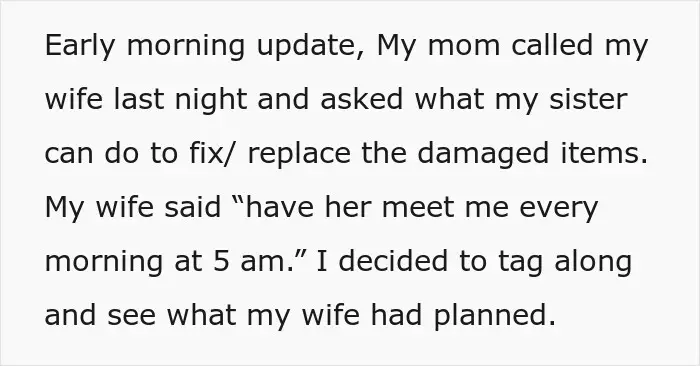
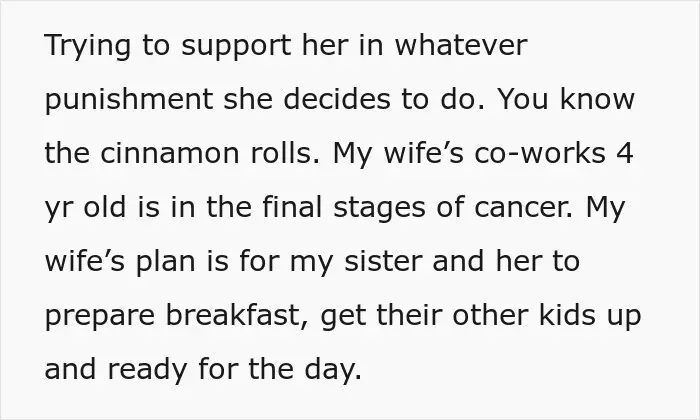

Inter-family arguments are often a bit messy
Family stories like this one tend to light up comment sections because almost everyone has stood somewhere in the middle of one. Nobody in this saga was the villain of a cartoon, and nobody was a saint either. What it really shows is how quickly responsibility gets blurry when several households overlap, and how a small thing like a pan of cinnamon rolls can carry a lot of weight.
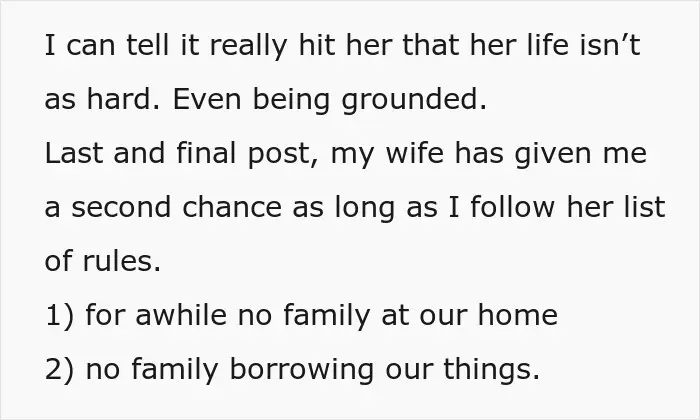
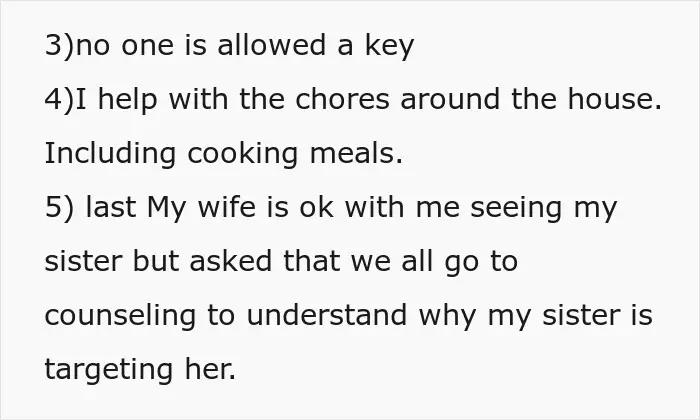
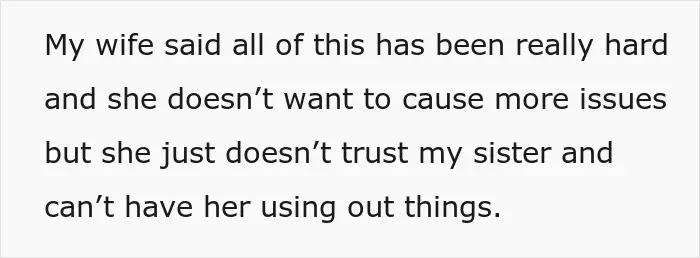
Start with the idea that a marriage creates a new household with its own rules, even when the old family lives down the street. Relationship writers keep repeating the same advice here, which is that couples should agree on boundaries before a flare up rather than during one. Utah State University offers similar guidance for newlyweds, suggesting partners discuss likely family conflicts ahead of time and back each other up when saying no. In this story the locks changed hands more than once, and neither spouse consulted the other first. That detail matters more than who swapped them last, because a boundary only one person understands tends to collapse the moment someone tests it.
Then there is the question of who is responsible for a seventeen year old's behavior. The honest answer is several people at once. The teenager owns her choices, and psychologist Carl Pickhardt describes responsibility as owning the link between a choice and its consequences. Yet the adults around her set the conditions. A pool party approved on the assumption that a parent would be present, with no one confirming it, is a supervision gap, and gaps like that are rarely one person's fault. It appears each adult assumed another one had it covered. Anyone who has organized a potluck knows how that ends.
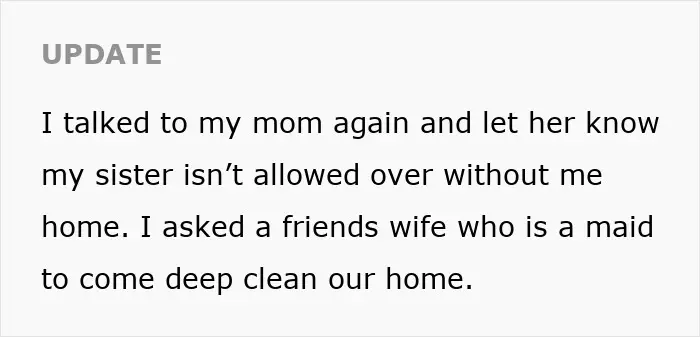
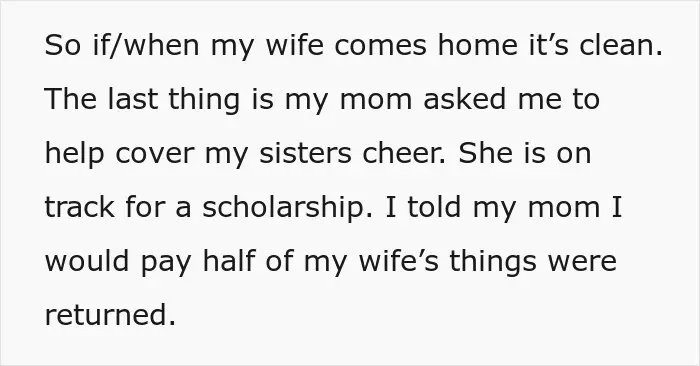
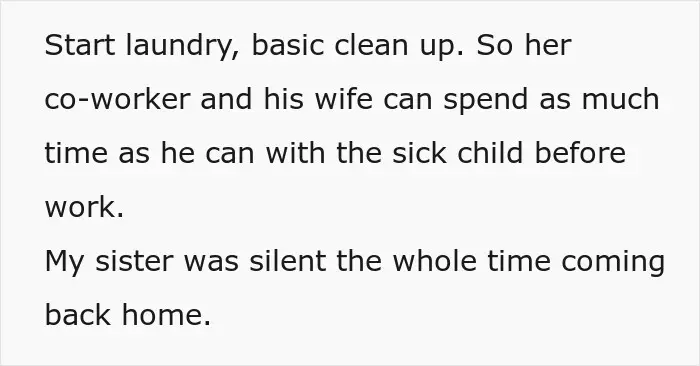
The cleanup plan that eventually emerged is the most interesting part for anyone thinking about teens and accountability. Helping prepare breakfast and tidy a household under strain is a long way from a generic grounding, because it connects the harm to a way of repairing it. An article on teens who make bad choices adds a useful caution, noting that harsh punishments can push young people to fixate on the penalty rather than their own behavior. Whether the early mornings achieve that is something only time will tell, but the design at least points somewhere constructive.

The husband doesn’t seem to understand his own role in this story
The marriage side of the story deserves its own look. Research on household labor suggests that fairness, as each partner perceives it, matters as much as the raw number of chores. Greater Good Magazine summarizes studies finding that couples who agree on how work should be split are happier than couples with mismatched beliefs. Another study went further, describing a tri-load of physical, cognitive, and emotional work, and found that partners who disagreed about how those loads were shared reported more unhappiness. Picking up towels every day is physical, but noticing missing items, wondering who to trust, and managing a guest list are the cognitive and emotional parts. Those rarely show up on a chore chart, yet they can wear a person down faster than any laundry pile.
Finally, the counseling suggestion at the end is worth a note. Couples benefit from deciding together what they value, then resetting as a team after a hard conversation. A neutral third party can help everyone separate the question of what happened from the question of who someone is. Teenagers make mistakes, spouses make mistakes, and parents miss details. The more useful question for any family reading this might be a plain one: if something went sideways in your house this week, would everyone know whose job it was to prevent it, and whose job it is to fix it?
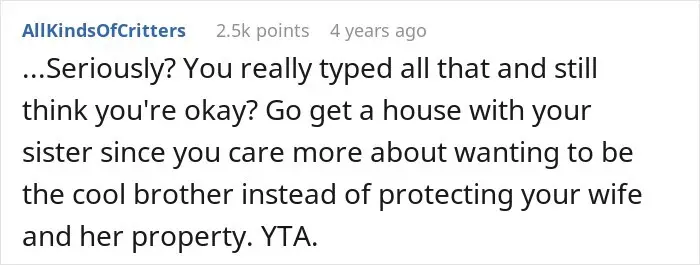
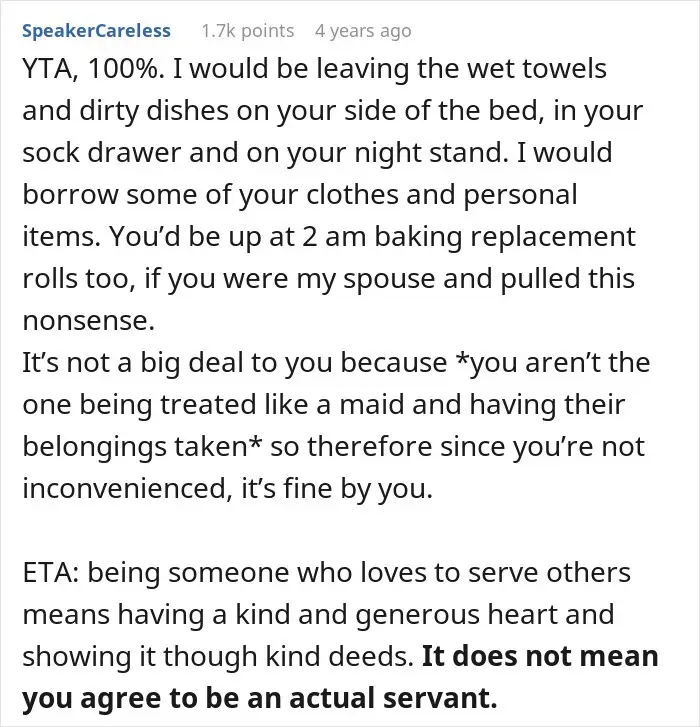
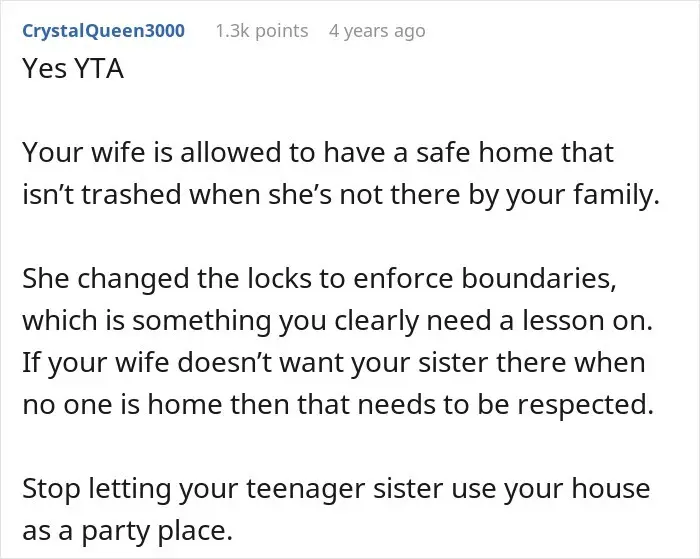
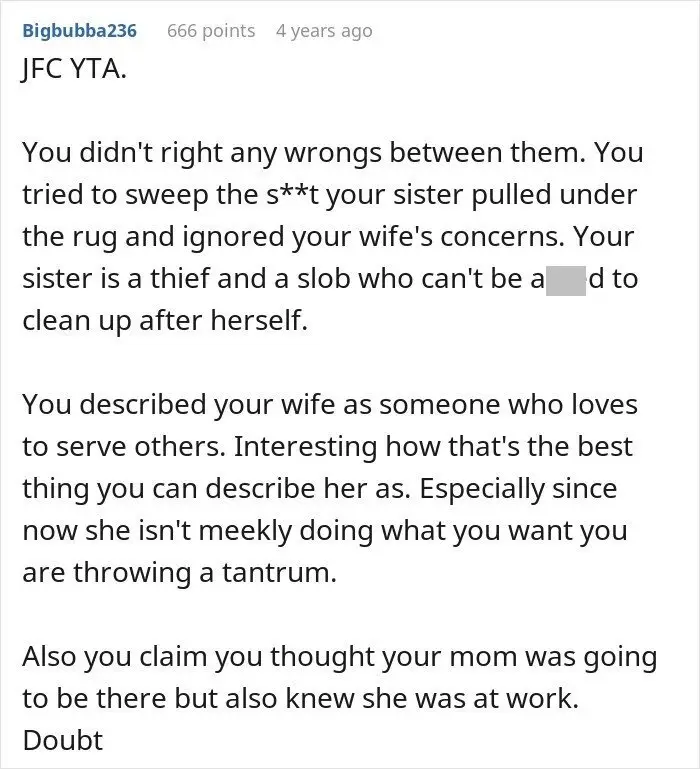
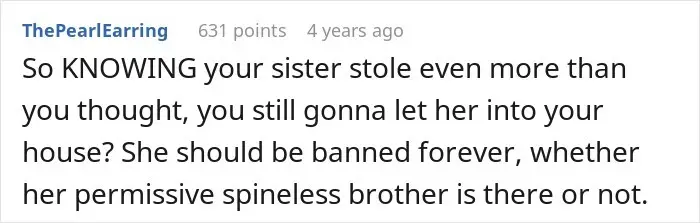
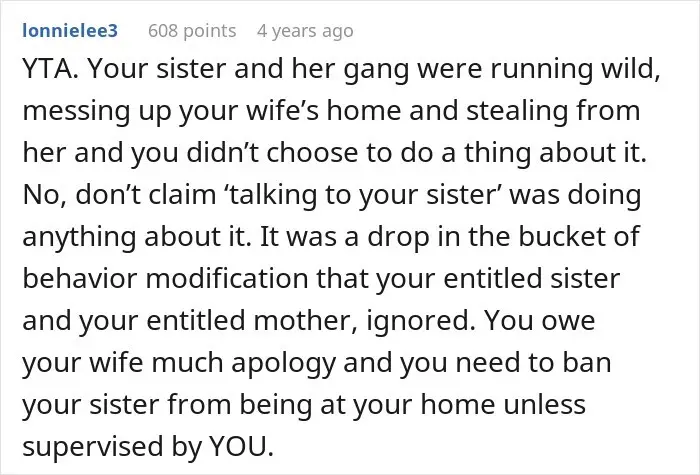
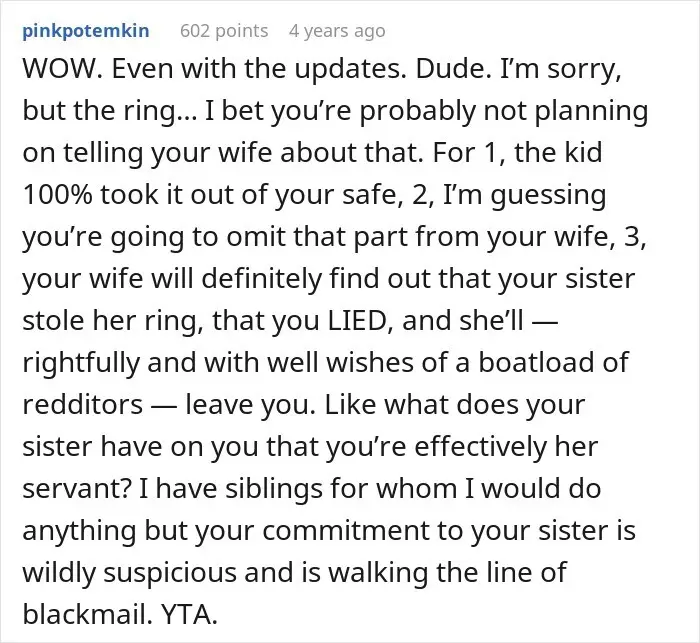
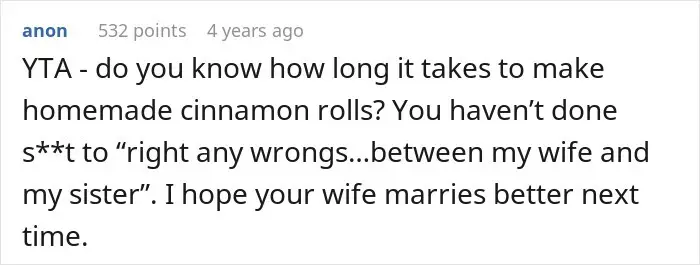
Folks online were not sympathetic