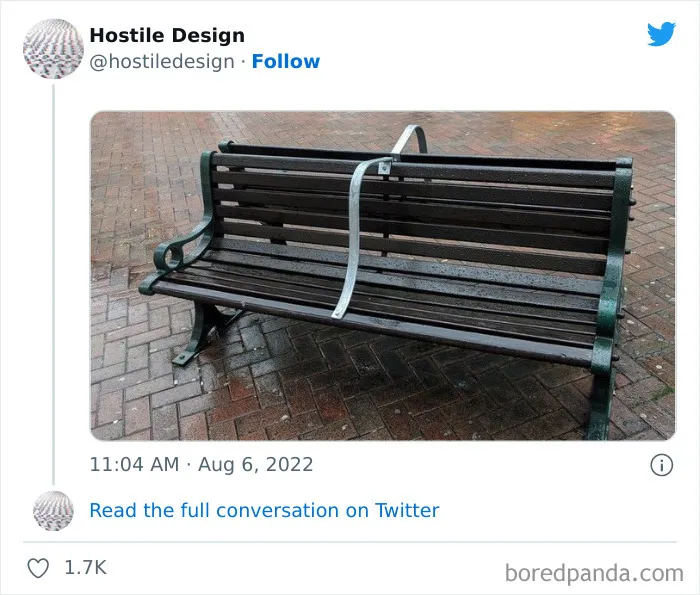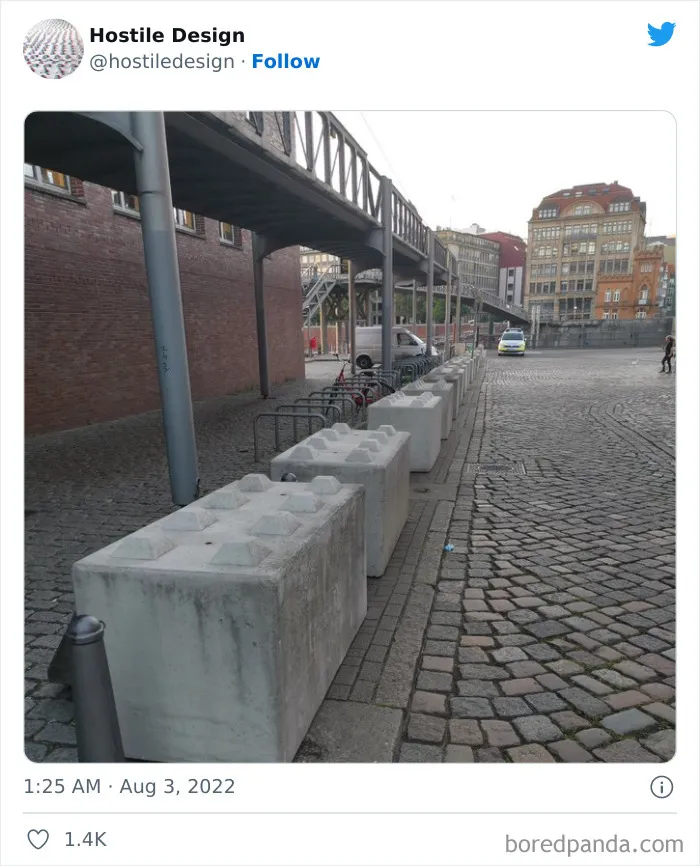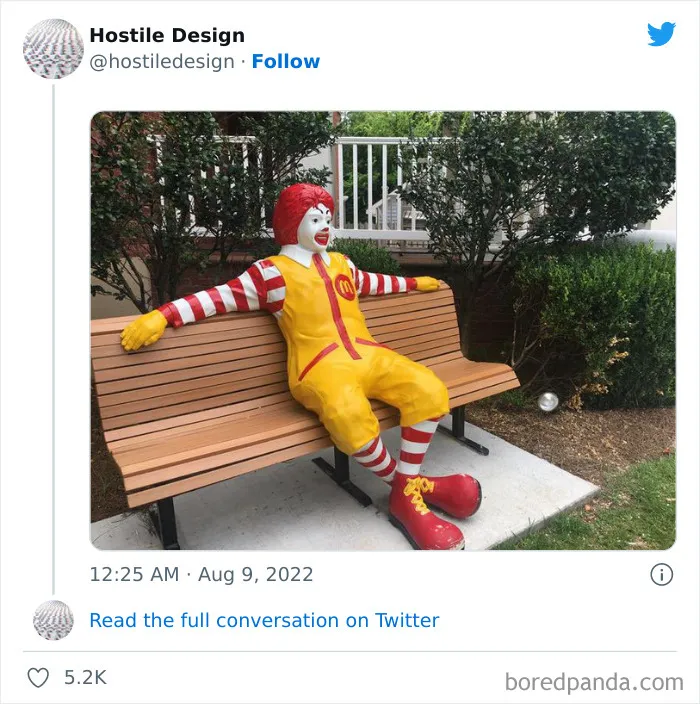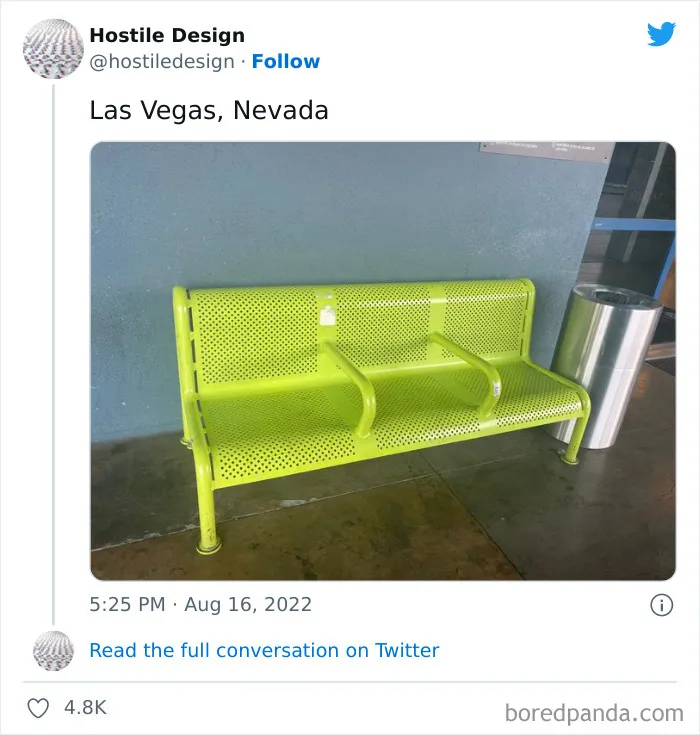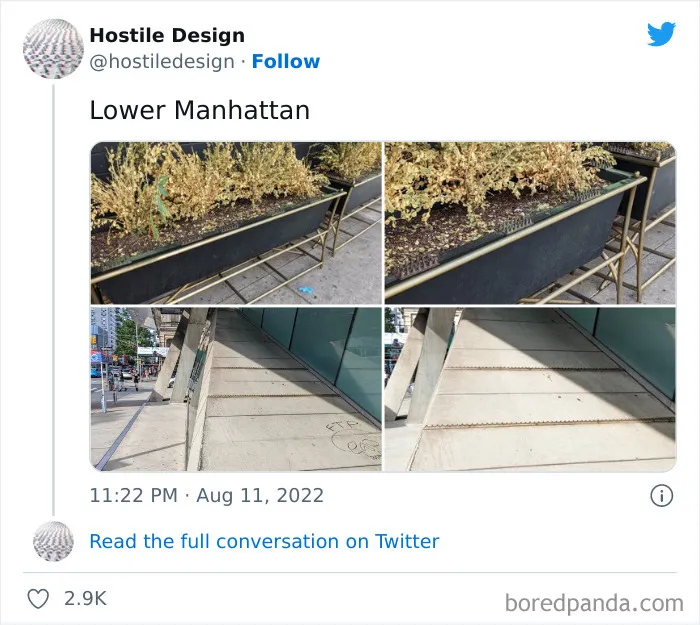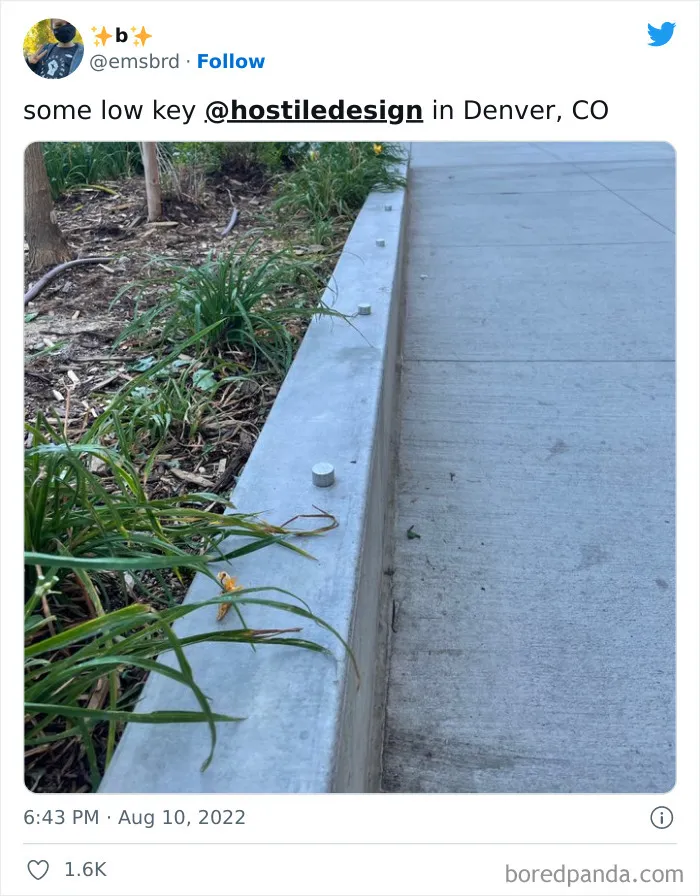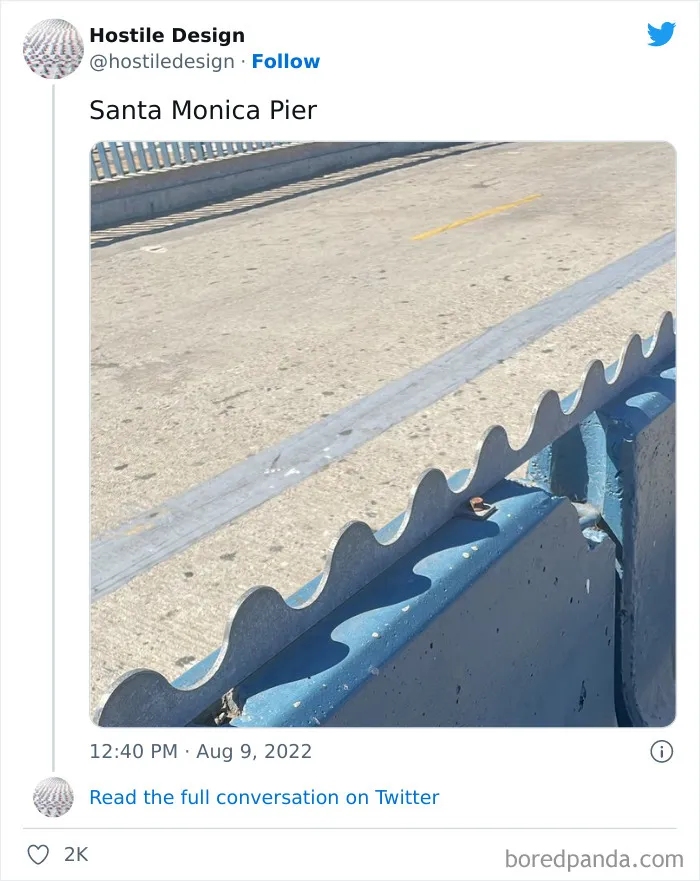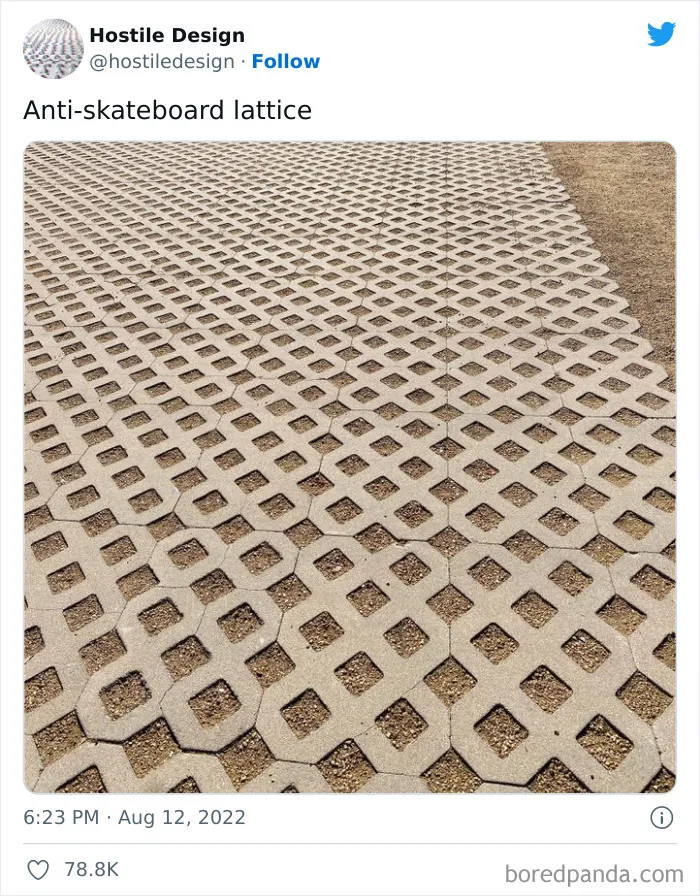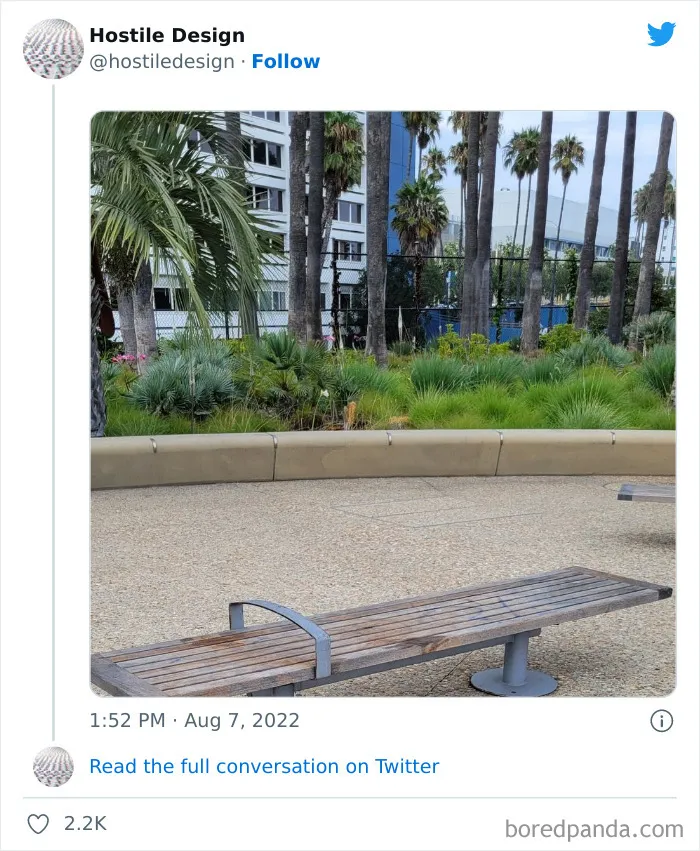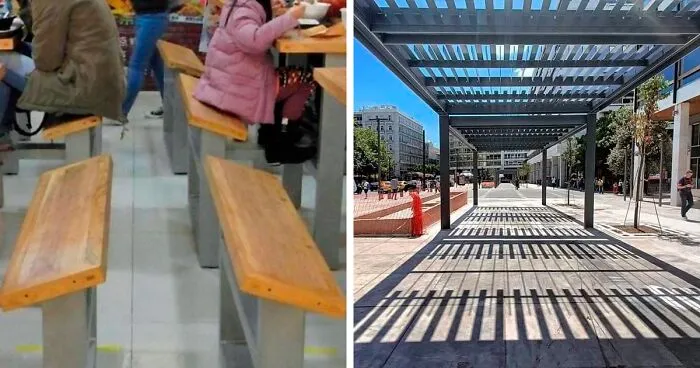



The recurring examples of hostile design are not to say designers and architects themselves are encouraging it — that’s rarely the case. As Chellew told us, it happens because cities and private developers are looking for quick-fix solutions. "If there are complaints that people are sleeping on benches it is easier to put center bars on benches rather than looking at why people have to sleep on benches in the first place."
If we want to see change and create public spaces that would feel inviting to all, "we must also address the lack of affordable housing and lack of free mental health and addiction supports," she explained. "It is all interconnected."
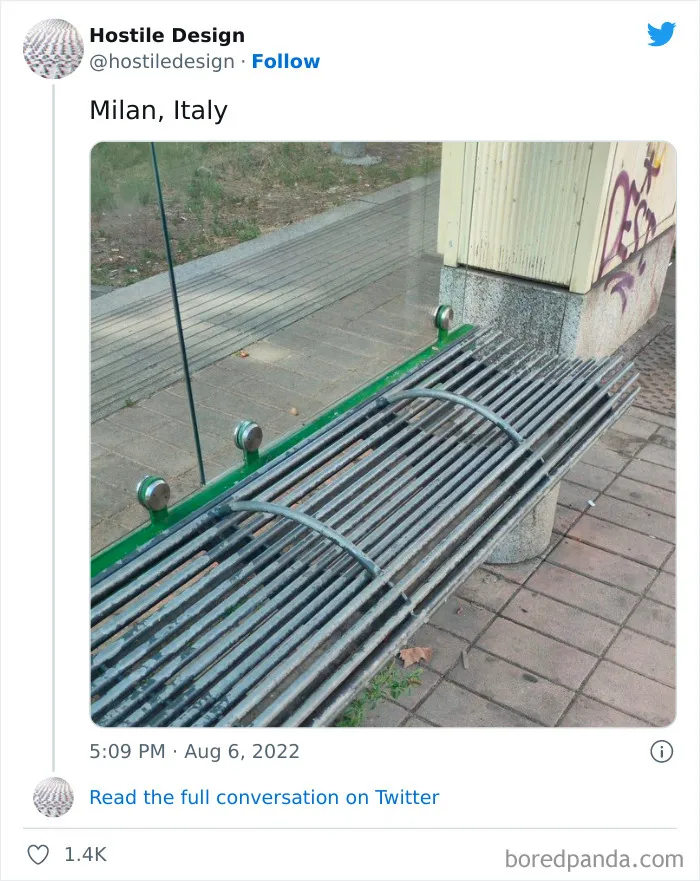
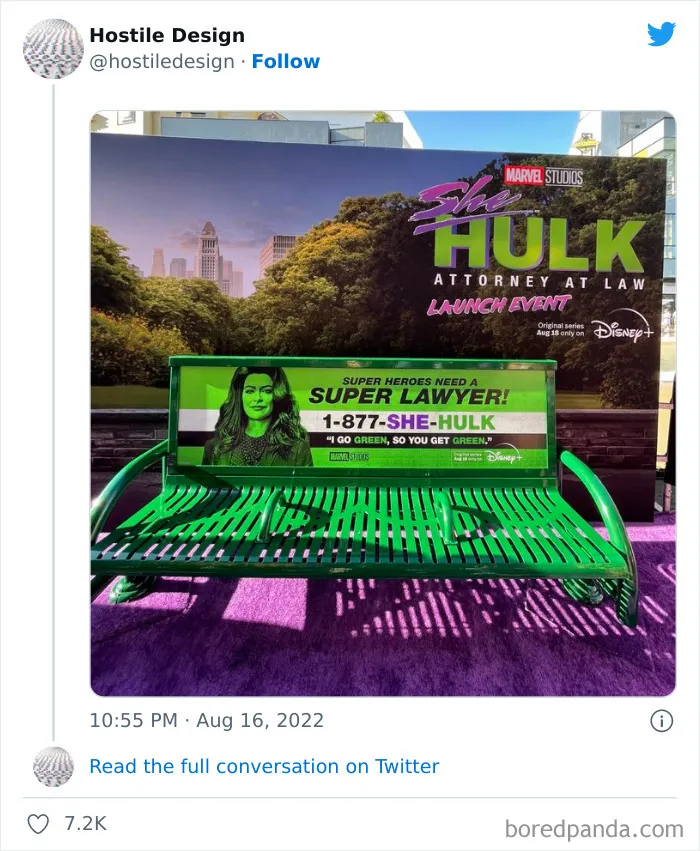
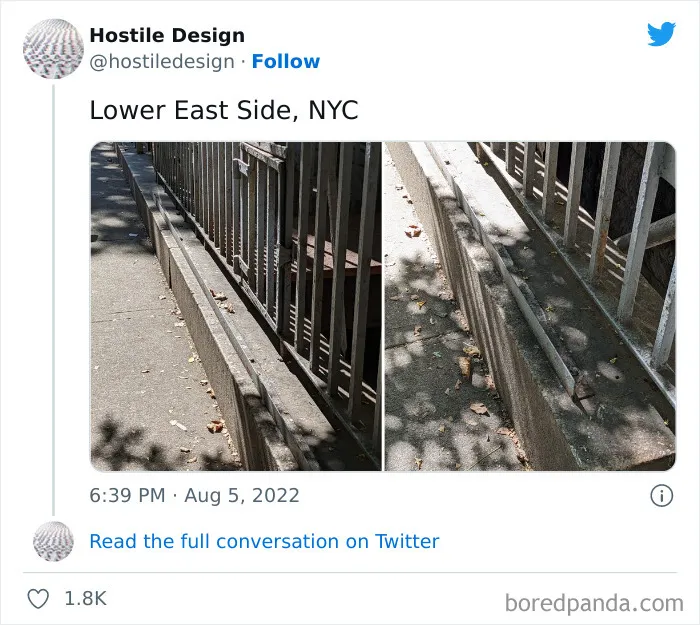
Chellew said the use of defensive design to govern public spaces is a political and ethical decision. "Policy must be changed at the municipal or even provincial or state level to prohibit design and management approaches that are meant to make spaces less accessible and more uncomfortable."
"People can engage with their local political representatives through requesting meetings or creating petitions. In addition, professionals like planners, designers, and architects must take a stand against the practice as unethical as it does not promote the public good," she concluded.