





Most of us would have to actively plot if we wanted to create a proper industrial disaster. But sometimes bad luck, unknown issues and simple negligence can do more than anyone actually accounted for.
Someone asked “What is the most horrifying scientific or industrial accident in history where a tiny, overlooked mistake led to absolute catastrophe?” and people shared stories they knew. Be warned, some are unpleasant. Otherwise, get comfortable as you scroll through, upvote your favorites and be sure to share your own examples in the comments below.
#21

Eastern Airlines flight 401. Crashed into the Everglades because the pilot and flight crew got obsessed with fixing a broken lightbulb.
In fact, most major airline crashes of the last 75 years can be traced to a single event, causing a chain reaction of events that led to the disaster.
In fact, most major airline crashes of the last 75 years can be traced to a single event, causing a chain reaction of events that led to the disaster.
Report
4points
#22

Dutchman's Curve Great Train Wreck of 1918. Train #4 was on a double-track section, under orders to not enter a single-track section until train #1 had passed by in the opposite direction. Conductor on #4 was collecting tickets, and confused a small switch engine with train #1. Rest of crew also made similar mistakes. Train #4 then misinterpreted a "clear" signal as a signal that they could proceed.
Train #4 encountered train #1 head-on at Duchman's Curve, where their view was blocked.
Worst passenger accident in USA. Made worse by being one of the last crashes with wooden passenger cars. The "block signaling" method became much more popular after this, where red signals stop trains except where trains are allowed by green/yellow lights.
4points
#23

Coconut Grove fire, partly because the main lobby only had revolving doors and panicking people jammed them when rushing to exit. It's why all public buildings in the US must have exit doors that swing out.
Report
4points
#24
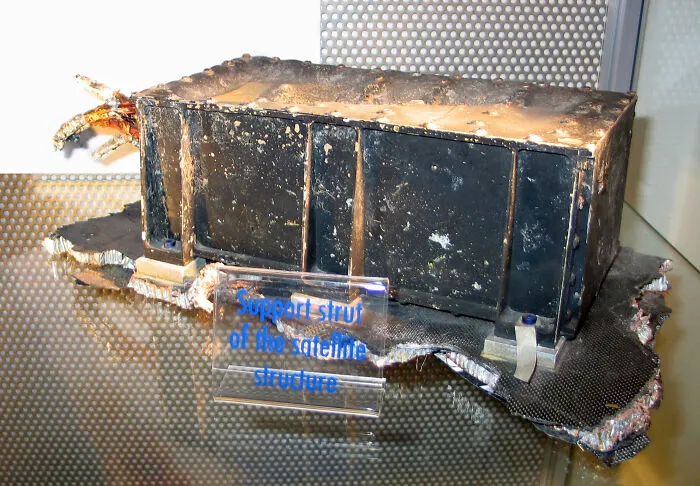
Ariane Rocket Failure
Rocket blew up 37 seconds after launch due to an integer overflow error - they tried to store too big a number in the space allocated for it in the computer memory.
A software oversight blew up a rocket.
The faster acceleration was too much for the space allocated in memory, causing the insertion and updates to overwrite other critical parts of the computer program.
Report
4points
#25

In terms of sheer scale and body count, others have provided what is likely the correct answer. In terms of overall horror, my first thought was the Byford Dolphin incident.
Wikipedia:
Byford Dolphin was a semi-submersible, column-stabilised drilling rig operated by Dolphin Drilling, a subsidiary of Fred Olsen Energy. Byford Dolphin was registered in Hamilton, Bermuda, and drilled seasonally for various companies in the British, Danish, and Norwegian sectors of the North Sea. In 2019, Dolphin scrapped the rig.
The rig was the site of several serious incidents, most notably an explosive decompression in 1983 that k**led four divers and one dive tender, as well as critically injuring another dive tender.
Report
3points
#26

Maybe it’s not the most horrifying, but the incidents with the “Demon Core” are pretty interesting. I’m sure someone else on here can explain it better than I could, but here’s the wiki link:
Wikipedia:
The demon core was a sphere of plutonium–gallium alloy that was involved in two fatal radiation accidents when scientists tested it as a fissile core of an early atomic b*mb. It was manufactured in 1945 by the Manhattan Project, the U.S. nuclear weapon development effort during World War II. It was a subcritical mass that weighed 6.2 kilograms (14 lb) and was 89 millimeters (3.5 in) in diameter. The core was prepared for shipment to the Pacific Theater as part of the third nuclear weapon intended to be dropped on Japan, but when Japan surrendered, the core was retained for testing and potential later use in the case of another conflict.
The two criticality accidents occurred at the Los Alamos Laboratory in New Mexico on August 21, 1945, and May 21, 1946. In both cases, an experiment was intended to demonstrate how close the core was to criticality, using a neutron-reflective tamper (layer of dense material surrounding the fissile material). In both accidents, the core was accidentally put into a critical configuration. Physicists Harry Daghlian (in the first accident) and Louis Slotin (in the second accident) both suffered acute radiation syndrome and died shortly afterward. Others present in the laboratory were also exposed to radiation during the accidents. The core was melted down during the summer of 1946, and the material was recycled for use in other cores.
3points
#27

Leaded gasoline. It is estimated to have lowered the IQ of 2 generations by 2-6% or something like that. Breathing lead in the air is bad mmmk.
Report
3points
#28
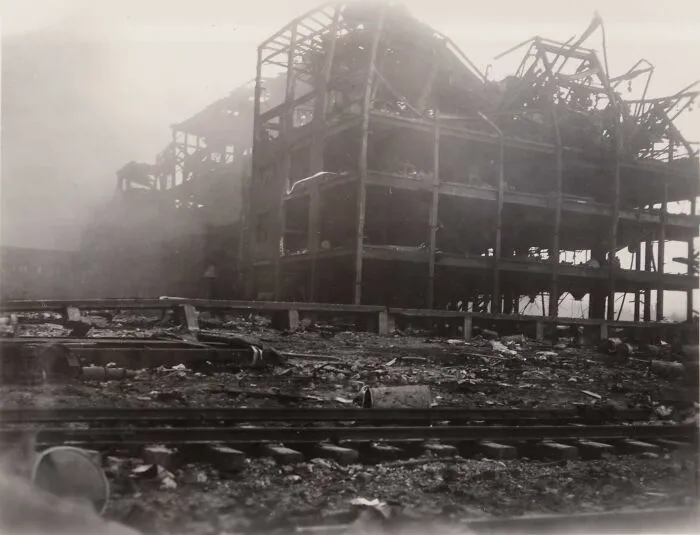
Texas City port explosion 1947, one ship capt who decided to save his cargo over sounding the alarm when his ship caught fire. 581 people died. It was the largest explosion besides an atomic one in the US.
Report
3points
#29

Until the 1980s, doctors assumed babies couldn't feel pain. Surgeries survival rate rapidly increased once they gave babies proper pain medication during procedures.
Report
3points
#30

Salt babies in Binghamton, NY.
There doesn’t seem to be a wiki page but the tldr is in the early 60s salt was used in the nursery formula causing infants to suffer convolutions and even d***h. This was at a local hospital.
There doesn’t seem to be a wiki page but the tldr is in the early 60s salt was used in the nursery formula causing infants to suffer convolutions and even d***h. This was at a local hospital.
Report
3points
#31
Titanic.
Wikipedia:
RMS Titanic was a British ocean liner that sank in the early hours of 15 April 1912 after striking an iceberg on her maiden voyage from Southampton, England, to New York City. Of the 2,208 passengers and crew aboard, approximately 1,500 died (estimates vary), making the incident one of the deadliest peacetime sinkings of a single ship. Titanic, operated by White Star Line, carried some of the wealthiest people in the world, as well as hundreds of emigrants from the British Isles, Scandinavia, and elsewhere in Europe who were seeking a new life in the United States and Canada. The disaster drew public attention, spurred major changes in maritime safety regulations, and inspired a lasting legacy in popular culture. It was the second time White Star Line had lost a ship on her maiden voyage, the first being RMS Tayleur in 1854.
Titanic was the largest ship afloat upon entering service and the second of three Olympic-class ocean liners built for White Star Line. The ship was built by the Harland and Wolff shipbuilding company in Belfast. Thomas Andrews Jr., the chief naval architect of the shipyard, died in the disaster. Titanic was under the command of Captain Edward John Smith, who went down with the ship. White Star Line's chairman, J. Bruce Ismay, survived in a lifeboat.
The first-class accommodations were designed to be the pinnacle of comfort and luxury. They included a gymnasium, swimming pool, smoking rooms, fine restaurants and cafes, a Victorian-style Turkish bath, and hundreds of opulent cabins. A high-powered radiotelegraph transmitter was available for passenger use. Titanic had advanced safety features, such as watertight compartments and remotely activated watertight doors, which contributed to the ship's reputation as "unsinkable".
Titanic was equipped with sixteen lifeboat davits, each capable of lowering three lifeboats, for a total capacity of 48 boats. Despite this capacity, the ship was equipped with twenty lifeboats. Fourteen of these were regular lifeboats, two were cutter lifeboats, and four were collapsible boats that proved difficult to prepare for launch while the ship was sinking. Together, these lifeboats could have held 1,178 people – roughly half the number of passengers on board, and a third of the number that the ship could have carried at full capacity (a number consistent with the maritime safety regulations of the era). The British Board of Trade's regulations required fourteen lifeboats for a ship of 10,000 tonnes. Titanic carried six more than that, room for 338 more people than the standard. When the ship sank, the lifeboats that had been lowered were carrying an average of 60% of their rated capacity.
Report
2points
#32
Didn't a Mars probe auger itself into the surface instead of deploying its chutes/thrusters due to a (lack of) conversion between metric and american units? Hubble telescope was initially useless as well due to a tiny mistake on the main mirror. Both of those were catastrosphies in the financial sense, not really loss-of-life.
Not exactly an overlooked mistake, but the proliferation of thalidomide for morning sickness led to a lot of birth defects. I guess the mistake was lack of testing and forethought
The same could be said about the addition of lead into gasoline, leading to all kinds of environmental and health issues.
Report
1point


