






Hollywood has often blurred the line between movie marketing and reality, using unexpected stunts to get audiences talking.
Some campaigns have sparked curiosity, while others have caused genuine panic or damaged reputations.
From Glen Powell and Sydney Sweeney’s fake romance rumors to a horror film that convinced viewers three actors had disappeared, these promotional tricks went far beyond ordinary advertising.
Here are six Hollywood hoaxes that brought the drama into real life.
#1 A Horror Project That Made People Search For Three Missing Students
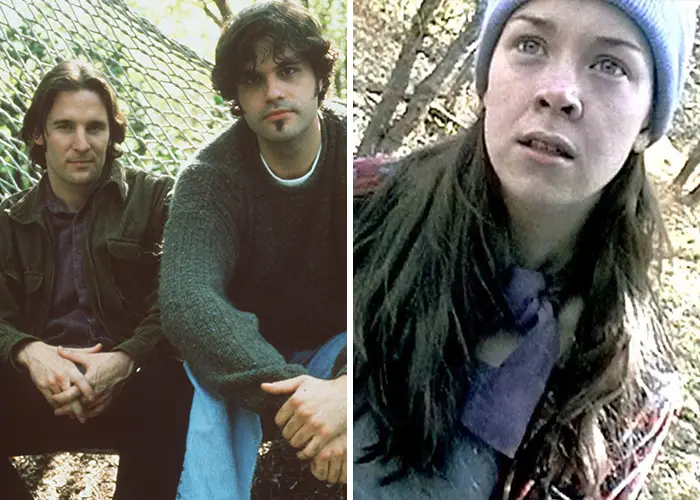
Imagine seeing a missing-person poster for three young filmmakers, then discovering a website filled with police reports, interviews, and clues about their disappearance.
Now imagine learning that the people in those posters were actors promoting a horror movie.
That was the clever trick behind The Blair Witch Project, whose marketing campaign made audiences question whether they were watching fiction or a real-life mystery.
Released in 1999, the film followed three student filmmakers, Heather Donahue, Michael C. Williams, and Joshua Leonard, who traveled to the woods near Burkittsville, Maryland, to investigate a local legend about a witch.
Filmed in a found-footage style, the movie presented their recordings as the only evidence left behind after they disappeared.
Filmmakers Daniel Myrick and Eduardo Sánchez wanted audiences to feel as though they were watching something that had actually happened. Therefore, the marketing team took that idea beyond the screen.
The film’s official website launched in June 1998.
Instead of simply showing a trailer and announcing a release date, it featured fake police reports, missing-person notices, staged interviews, and details about the fictional Blair Witch legend. The material gave visitors plenty of reasons to investigate the story themselves.
The campaign also moved offline.
Missing-person flyers featuring the three actors appeared at film festivals, including Sundance, asking people to share any information about their disappearance. Even IMDb listed the actors as “missing, presumed d*ad” during the film’s first year of availability.
The filmmakers also released Curse of the Blair Witch, a mockumentary that added more details to the fictional legend. Its staged interviews, newspaper articles, and news reports made the backstory feel like something audiences could uncover through their own research.
The mystery soon became bigger than the movie.
By August 1999, the website had received 160 million hits.
Fans debated whether the events were real, shared theories, and spread the story online. The campaign had turned curious viewers into people actively helping to promote the film.
After its midnight premiere at the Sundance Film Festival in January 1999, Artisan Entertainment bought the distribution rights for $1.1 million. The film eventually grossed around $248.6 million worldwide.
Its success also helped revive found-footage horror and influenced movies such as Paranormal Activity and Cloverfield.
The filmmakers summed up the idea behind the film's unsettling ending in a way that also explains the campaign's appeal.
Myrick said, “What makes us fearful is something that's out of the ordinary, unexplained. The first ending kept the audience off balance; it challenged our real-world conventions, and that's what really made it scary.”
Report
21points
#2 A Sci-Fi Movie That Sparked An Alien Invasion
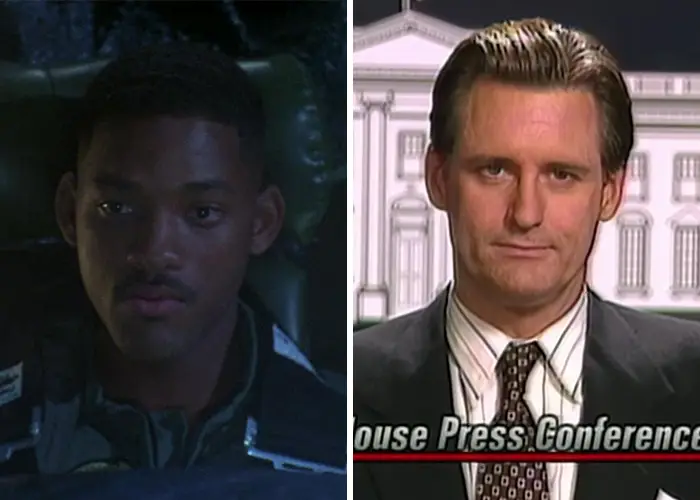
Independence Day became one of the biggest films of 1996, but its promotional campaign genuinely scared some viewers in Spain.
Directed by Roland Emmerich, the science-fiction blockbuster followed an extraterrestrial invasion that threatened humanity. Its impressive visual effects and large-scale destruction scenes made the threat feel convincing.
In 1996, Spain's Telecinco network aired promotional clips that resembled urgent news bulletins.
The advertisements featured scenes from the film, including a White House press conference and footage of people fleeing through New York's streets. An announcer interrupted regular programming to report what appeared to be an alien attack.
According to a report published by the Daily Gazette on September 10, 1996, hundreds of viewers contacted television and radio stations after watching the broadcasts.
Although the word "advertisement" appeared along the bottom of the screen, some people still mistook the clips for genuine news reports.
The incident brought back memories of Orson Welles' famous 1938 radio broadcast of The War of the Worlds.
Welles and his Mercury Theatre company adapted H.G. Wells' novel into a radio drama that used fictional news bulletins to describe a Martian invasion.
Newspaper reports the following day claimed that listeners had panicked, although the actual scale of the reaction remains disputed.
Some suggested that newspapers exaggerated the incident because radio was becoming a competitor for advertising revenue.
The Independence Day campaign, however, reportedly convinced some Spanish viewers that an alien invasion was actually happening.
The marketing campaign helped build excitement around the film, which went on to earn approximately $817 million worldwide against a reported $75 million budget.
20points
#3 Glen Powell And Sydney Sweeney’s Fake Romance Turned Into A Real-Life Mess
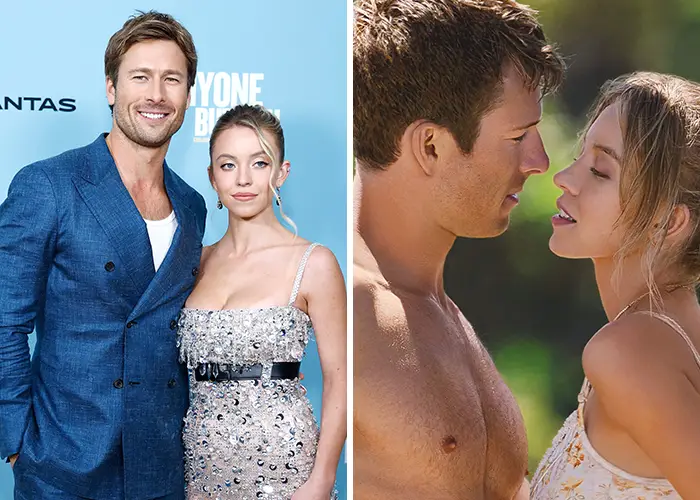
When Glen Powell and Sydney Sweeney starred together in the 2023 romantic comedy Anyone But You, their on-screen chemistry quickly became a talking point.
But the attention soon shifted from the film to rumors that the two actors were dating in real life.
Their flirty interviews, playful social media exchanges and photos from the Australian set only added to the speculation. As it turned out, the stars had leaned into the rumors as part of the film’s marketing strategy.
Powell later admitted that the campaign worked.
“The two things that you have to sell a rom-com are fun and chemistry. Sydney and I have a ton of fun together, and we have a ton of effortless chemistry,” he told The New York Times.
He added, “That’s people wanting what’s on the screen off the screen, and sometimes you just have to lean into it a bit — and it worked wonderfully. Sydney is very smart.”
Sweeney, who also served as an executive producer, played an active role in the campaign.
She said she joined calls and group chats with the studio’s marketing team, constantly sharing ideas to keep audiences talking.
“I wanted to make sure that we were actively having a conversation with the audience as we were promoting this film, because at the end of the day, they’re the ones who created the entire narrative,” she explained.
However, the publicity came at a personal cost.
Sweeney was engaged to Jonathan Davino, while Powell was dating model Gigi Paris.
Powell and Paris eventually split in April 2023, as speculation about his connection with Sweeney grew.
Years later, Paris spoke about the breakup on the Too Much podcast.
She said she wanted basic respect as the rumors unfolded.
“Like, don’t make an a*s out of me,” she said. “Just don’t make a fool out of someone you’ve been with for over three years, talking about forever with. Just have some decency, you know?”
Paris also recalled flying to Australia to visit Powell while he was filming Anyone But You.
According to her, Powell called and told her that he and the producers had decided it would be best if she did not visit the set. She said that conversation ended any hope she had of saving their relationship.
“I thought we had hope, like, maybe when I got there that, like, things would maybe get better,” Paris recalled. “But once I got that phone call, I just knew it was done.”
Meanwhile, the film eventually found a much bigger audience than its opening weekend suggested.
After opening to around $8 million domestically, it benefited from social media trends and word of mouth, eventually earning more than $218 million worldwide.
19points
#4 Joaquin Phoenix’s Fake Retirement Stunt Backfired Miserably
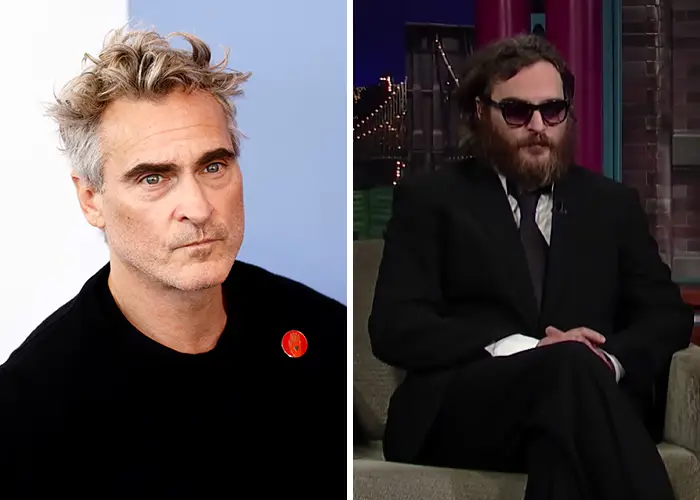
Phoenix once announced that he was quitting acting to pursue a career in hip-hop.
His bizarre appearance on David Letterman's talk show in 2009 left viewers confused, but the announcement was actually part of a publicity stunt for his 2010 mockumentary, I'm Still Here.
During the interview, Phoenix appeared disheveled, wore sunglasses, and struggled to answer Letterman's questions.
He also announced his retirement from acting, claiming he wanted to become a rapper. At the time, audiences had no idea that he was staying in character for the film directed by Casey Affleck.
Looking back on the appearance during an interview with Stephen Colbert, Phoenix admitted he knew the stunt wasn't going well but continued because he didn't want to break character.
“It was so uncomfortable. I regret it; I’ll never do it again. I’m so sorry. It was strange because in some ways, it was a success, and it was also just one of the worst nights of my life,” he said.
Phoenix also explained that the project lasted much longer than he had expected.
What he initially thought would take two months turned into a year of filming. He revealed that Letterman knew about the act but wanted the audience's reactions to remain genuine.
Affleck later confirmed that the film was a performance rather than a real account of Phoenix abandoning his acting career.
He described it as “the performance of his career” and said, “I never intended to trick anybody.”
However, the experiment did not translate into strong reviews.
I'm Still Here received a 53% critics' score and a 38% audience score on Rotten Tomatoes. It also struggled at the box office, earning just $96,658 during its limited US release.
The stunt left viewers divided. One person recalled, “No one was fooled. I remember.”
18points
#5 Mission: Impossible III Triggered A B*mb Scare

Paramount’s promotional campaign for Mission: Impossible III caused a real b*mb scare in Los Angeles in 2006.
The studio placed around 4,500 red digital music boxes inside newspaper stands. When someone opened a stand, the device was supposed to play the franchise’s famous theme song.
However, some boxes fell onto the newspapers, exposing their wires and making them look suspicious. On April 28, residents reported the devices to authorities, prompting the Los Angeles County Sheriff's Department b*mb squad to investigate.
In Santa Clarita, officers blew up one of the newsstands to eliminate the potential threat.
Another device at the Veterans Affairs Medical Center in West Los Angeles triggered an evacuation. Around 300 people were displaced for approximately 90 minutes while authorities investigated.
The incident also brought legal trouble. An assistant U.S. attorney threatened a federal lawsuit against Paramount and the Los Angeles Times over the disruption. Damages at the medical center reportedly reached $92,855.77.
18points
#6 A Fake Stuntman Passing Became The Marketing Hook
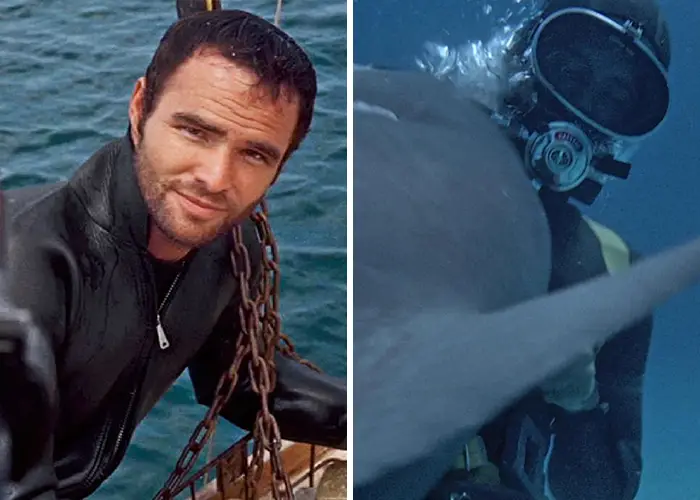
The 1969 film Shark! gained notoriety after reports claimed a stuntman had been ki**ed by a shark during filming, with the footage allegedly appearing in the movie.
LIFE magazine published the story under the headline "Shark Kil*s a Man," claiming that stunt double José Marco died after a great white shark broke through protective netting and attacked him in Mexican waters.
The story became part of the film's publicity. Originally titled Caine, the movie was renamed Shark! and its posters used the alleged d**th to attract attention.
However, a 1969 investigation by scuba diving magazine Skin Diver raised serious doubts.
Writer Dewey Bergman spent more than a year contacting divers, experts and local sources.
He found no Mexican newspaper reports, hospital records or witnesses who could confirm the incident. The local hospital director also said there was no record of Marco being treated for a shark attack.
Following the investigation, LIFE acknowledged that the story may have been a hoax and said it was satisfied that the incident had not happened. The alleged on-set d**th had been a publicity stunt, not a real tragedy.
17points