



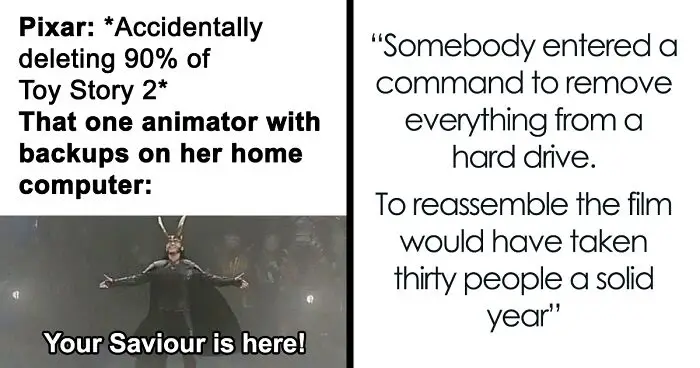


If history textbooks were more like this Instagram account, maybe more kids would open them. Or at least try to.
History Memes Explained is a social media project with a simple mission: to collect and dissect the best memes about our past.
From famous figures and funny maps to cold-hearted betrayals and memorable battles, History Memes Explained has a little something for everyone, and the pictures are as amusing as the explanations are educational.
Continue scrolling and check out some of its most popular posts.
More info: Instagram
#21
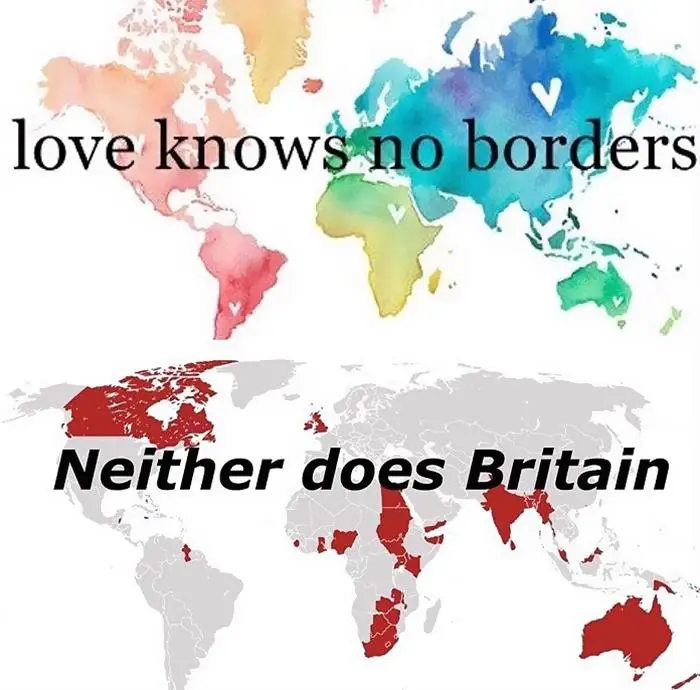
The British began to establish overseas colonies in the Americas in the 16th century, but it wasn't until the 18th century that its expansion really accelerated. British expansion, particularly in Asia, was facilitated by the construction of trading posts set up by the East India Company, a London based trade business. In the face of increased competition from the French East India Company, the organisation expanded its territorial claims in India with the use of a private army of more than 260,000 men, until the Indian Rebellion of 1857 saw the British Crown assume direct control of the Indian subcontinent - the epicentre of the Empire.
From India, further expansion was undertaken through Asia, and by 1913 the British Empire was the largest to have ever existed. It covered around 25% of the world's land surface, including large swathes of North America, Australia, Africa and Asia, while other areas - especially in South America - were closely linked to the empire by trade, according to the National Archives. While proponents say it brought various economic developments to the parts of the world it controlled, critics note the massacres, famines and the use of concentration camps by the British Empire. Although there is no single answer to this question, the collapse of British imperial power can be traced directly to the impact of World War Two.
The campaigns it waged in Europe, Asia and Africa virtually bankrupted the UK and the subsequent debt it acquired severely comprised its economic independence; the foundation of the imperial system. In 1947 India became independent following a nonviolent civil-disobedience campaign spearheaded by Mahatma Gandhi. Britain had lost the jewel in its crown, and this kickstarted a domino effect across the Empire. By 1967 more than 20 British territories were independent. Little remains of British rule today across the globe, and it is mostly restricted to small island territories such as Bermuda and the Falkland Islands. However, a number of countries still have Queen Elizabeth as their head of state including New Zealand, Australia and Canada - a hangover of the Empire.
Report
85points
#22
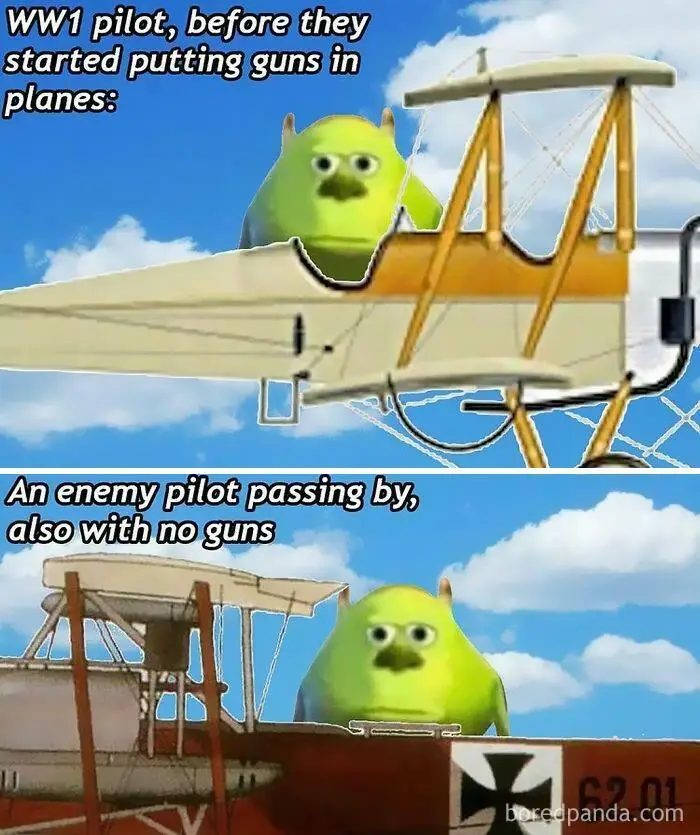
World War I was the first major conflict involving the large-scale use of aircraft. Aeroplanes were just coming into military use at the outset of the war. Initially, they were used mostly for reconnaissance. Initially air combat was extremely rare. There are even stories of the crew of rival reconnaissance aircraft exchanging nothing more belligerent than smiles and waves. This soon progressed to throwing grenades, and other objects — even grappling hooks. The first aircraft brought down by another was an Austrian reconnaissance aircraft rammed on 8 September 1914 by Russian pilot Pyotr Nesterov in the Eastern Front. Eventually pilots began firing handheld firearms at enemy aircraft, however pistols were too inaccurate and the single shot rifles too unlikely to score a hit. On October 5, 1914, French pilot Louis Quenault opened fire on a German aircraft with a machine gun for the first time and the era of air combat was under way as more and more aircraft were fitted with machine guns.
Report
82points
#23

The most straightforward theory for Western Rome's collapse pins the fall on a string of military losses sustained against outside forces. Rome had tangled with Germanic tribes for centuries, but by the 300s “barbarian” groups like the Goths had encroached beyond the Empire’s borders. The Romans weathered a Germanic uprising in the late fourth century, but in 410 the Visigoth King Alaric successfully sacked the city of Rome. The Empire spent the next several decades under constant threat before “the Eternal City” was raided again in 455, this time by the Vandals. Finally, in 476, the Germanic leader Odoacer staged a revolt and deposed the Emperor Romulus Augustulus. From then on, no Roman emperor would ever again rule from a post in Italy, leading many to cite 476 as the year the Western Empire suffered its deathblow.
Even as Rome was under attack from outside forces, it was also crumbling from within thanks to a severe financial crisis. Constant wars and overspending had significantly lightened imperial coffers. In the hope of avoiding the taxman, many members of the wealthy classes had even fled to the countryside and set up independent fiefdoms. At the same time, the empire was rocked by a labor deficit. Rome's economy depended on slaves. But when expansion ground to a halt in the second century, Rome's supply of slaves and other war treasures began to dry up. A further blow came in the fifth century, when the Vandals claimed North Africa and began disrupting the empire's trade by prowling the Mediterranean as pirates. With its economy faltering and its commercial and agricultural production in decline, the Empire began to lose its grip on Europe.
Report
78points
#24

The Polish-Austrian army that defeated the Ottoman army and lifted the second Turkish siege of Vienna in 1683 discovered several sacks of dry, dark brown beans among the booty left behind by the retreating enemy. Unaware of their purpose or value, Polish king Jan III Sobieski gave the sacks of useless beans to an officer named Jerzy Kulczycki. Kulczycki was well aware of just how valuable the beans were, having learned about coffee during time spent in Turkish captivity. Kulczycki is often credited with adapting coffee to European tastes by adding milk and sugar to the strong, bitter Turkish drink. At any rate, the first recognized coffee house in Europe was opened by Johannes Theodat in 1685, just two years later!
Report
77points
#25
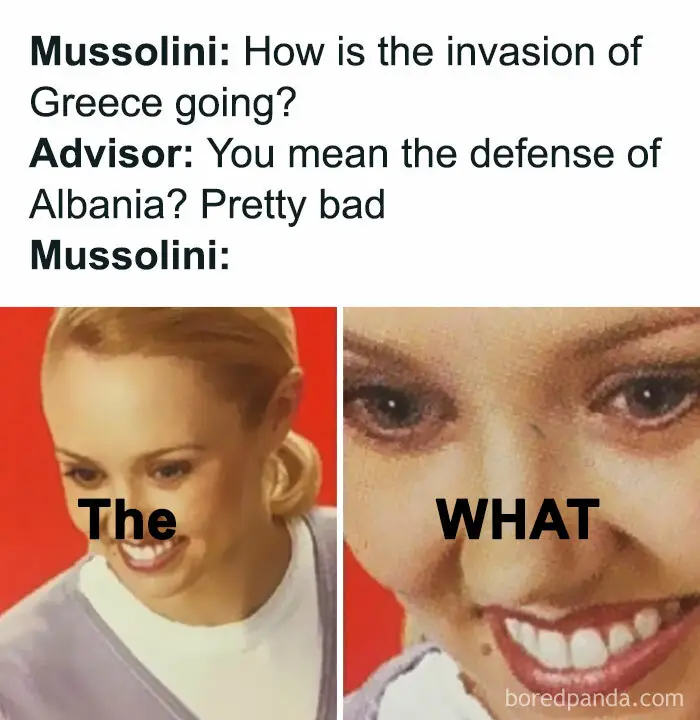
On October 28, 1940, Mussolini's army, already occupying Albania, invades Greece in what will prove to be a disastrous military campaign for Italy's forces. Mussolini surprised everyone with this move against Greece; even his ally, Adolf Hitler, was caught off- guard, especially since the Italian leader had led Hitler to believe he had no such intention. Hitler denounced the move as a major strategic blunder. According to Hitler, Mussolini should have concentrated on North Africa, continuing the advance into Egypt. Even Mussolini's own chief of army staff found out about the invasion only after the fact.
Despite being warned off an invasion of Greece by his own generals, despite the lack of preparedness on the part of his military, Mussolini moved ahead out of sheer hubris, convinced he could defeat the Greeks in a matter of days. He also knew a secret, that millions of lire had been put aside to bribe Greek politicians and generals not to resist the Italian invasion. Whether the money ever made it past the Italian fascist agents delegated with the responsibility is unclear; if it did, it clearly made no difference whatsoever-the Greeks succeeded in pushing the Italian invaders back into Albania after just one week, and the Axis power spent the next three months fighting for its life in a defensive battle. To make matters worse, virtually half the Italian fleet at Taranto had been crippled by a British carrier-based attack. Mussolini had been humiliated.
Report
73points
#26

During the Eisenhower era, Americans achieved a level of prosperity they'd never known before. While other parts of the world struggled to rebuild from the devastation of World War II, citizens of the United States saw their standard of living surpass what previous generations had only dreamed about.
Eisenhower himself deserves a good deal of credit for this economic growth. He found the right combination of low taxes, balanced budgets, and public spending that allowed the economy to prosper.
The economy also benefitted from steady growth in spending on new homes and consumer goods as citizens began to buy on credit. The economy overall grew by 37% during the 1950s. At the end of the decade, the median American family had 30% more purchasing power than at the beginning. Inflation was minimal, in part because of Eisenhower's efforts to balance the federal budget.
Unemployment remained low, about 4.5%. Many factors came together to produce the '50s boom. The GI Bill gave veterans an affordable college education, providing a pool of highly-educated employees to the work force. Cheap oil from U.S. wells fueled industry. Advances in science and technology improved productivity, while competitors in Europe and Asia were still recovering from World War II. One of the factors that fueled the prosperity of the '50s was the increase in consumer spending. Americans enjoyed a standard of living that no other country could approach.
Report
70points
#27
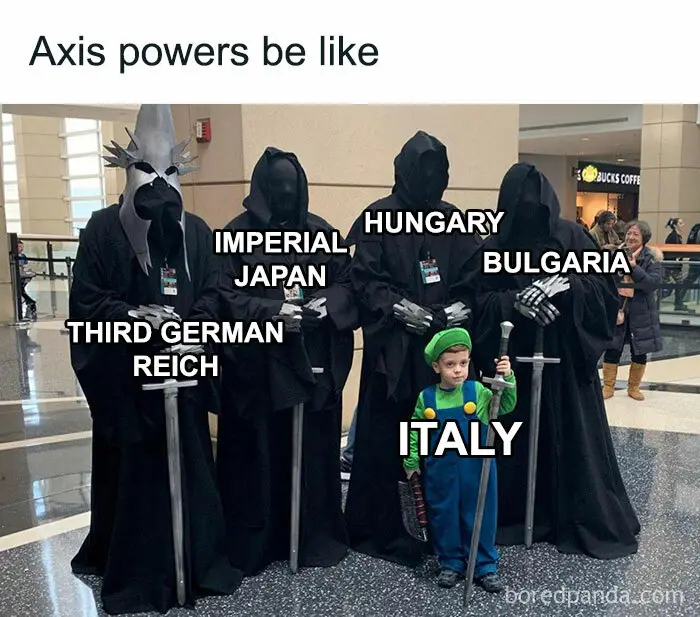
On Oct. 13, 1943, one month after Italy surrendered to Allied forces, it declared war on Nazi Germany, its onetime Axis powers partner. Italy was led into the war by Benito Mussolini, the fascist prime minister who had formed an alliance with Nazi Germany in 1936. In the summer of 1943, as Allied forces landed in Sicily, public support for the war and for Mussolini diminished. Mussolini was ousted on July 25 and his replacement, Gen. Pietro Badoglio, sought peace with the Allies, and reached an armistice on Sept. 3. Germany, which had troops stationed throughout Italy, proceeded with an occupation of the country, and seized strongholds from a disorganized Italian military.
In the Oct. 14 New York Times, the correspondent Milton Bracker noted that the Allied leadership believed that the Italian military would be of use in driving out the Germans: “Italian hatred of the Germans unquestionably grew as the fighting spirit waned, and episodes between German and Italian soldiers and civilians before and after the armistice have shown pretty clearly a complete and incontrovertible end of all sympathy between the former Axis partners. Therefore, it seemed reasonable to take advantage of the Italians’ willingness, even eagerness, to pin their hopes of a better role in the peace settlement to the status of co-belligerency now.” Allied forces advanced slowly and arduously north through the Italian peninsula before finally defeating Nazi forces in May 1945. Mussolini, who was rescued by the Nazis from an Italian prison and made the leader of a puppet state, the Italian Social Republic, in parts of Italy not occupied by Allied forces, was captured and executed by members of the Italian Partisan Resistance.
Report
70points
#28

For centuries, the tiny Alpine nation of Switzerland has adhered to a policy of armed neutrality in global affairs. How did it earn its unique place in world politics? The earliest moves toward Swiss neutrality date to 1515, when the Swiss Confederacy suffered a devastating loss to the French at the Battle of Marignano. It was the Napoleonic Wars, however, that truly sealed Switzerland’s place as a neutral nation. Switzerland was invaded by France in 1798 and later made a satellite of Napoleon Bonaparte’s empire, forcing it to compromise its neutrality. But after Napoleon’s defeat at Waterloo, the major European powers concluded that a neutral Switzerland would serve as a valuable buffer zone between France and Austria and contribute to stability in the region. During 1815’s Congress of Vienna, they signed a declaration affirming Switzerland’s “perpetual neutrality” within the international community. A more significant challenge to Swiss neutrality came during World War II, when the country found itself encircled by the Axis powers. While Switzerland maintained its independence by promising retaliation in the event of an invasion, it continued to trade with Nazi Germany, a decision that later proved controversial after the war ended.
Report
68points
#29

The death and destruction of World War | was so horrible that it was called “the war to end all wars.” Yet, the agreement to end World War | did not resolve the problems of the world and, according to some historians, lead directly to the next catastrophe: World War II. The major causes of World War II were numerous. They include the impact of the Treaty of Versailles following WWI, the worldwide economic depression, failure of appeasement, the rise of militarism in Germany and Japan, and the failure of the League of Nations.
The whole world was hit by an economic depression in the late 1920s. In a depression, economies shrink, trade is re- duced, businesses close, prices fall, banks fail, and unemployment rises. Sometimes during a depression, people look for a strong political leader to resolve their problems. In 1933, Adolf Hitler became the leader of Germany by promising to restore German wealth and power. Hitler immediately began secretly building up Germany's army and weapons. Although Britain and France knew of Hitler's actions, they thought a stronger Germany would stop the spread of Communism from Russia. In 1936 Hitler ordered German troops to enter the German-speaking areas of the Rhineland (France), Austria, and Czechoslovakia. At this point neither France nor Britain was prepared to go to war. In 1936, Hitler made alliances with Italy and Japan. The military alliance of Germany, Italy, and Japan was called the Axis Powers.
Appeasement meant agreeing to the demands of another nation in order to avoid conflict. During the 1930s, politicians in Britain and France began to believe that the Treaty of Versailles was unfair to Germany and that Hitler's actions were understandable and justifiable. This belief, adopted by Britain, was the Policy of Appeasement. An example of appeasement was the Munich Agreement of September 1938. In the Agreement, Britain and France allowed Germany to annex areas in Czechoslovakia where German-speakers lived. Germany agreed not to invade the rest of Czechoslovakia or any other country. In March 1939, Germany broke its promise and invaded the rest of Czechoslovakia. Neither Britain nor France was prepared to take military action. Then, on September 1, 1939, German troops invaded Poland. Britain and France immediately declared war on Germany. World War II had begun in Europe.
Report
65points
#30

During World War Il, the attitudes towards medics and the wounded depended on the theater and the combatants. In North Africa and Western Europe, most soldiers of both sides were generally willing to forebear targeting medical personnel and arrange local truces to allow medical treatment and evacuation of wounded. If one side deliberately targeted medics in a particular incident, the other side might retaliate. There was an advantage to both sides to observe the niceties because the soldiers of both sides knew that they might be wounded and in need of medical attention and respect for the rules of war could benefit them. In the Pacific, there were no such niceties.
In the Pacific, at times both sides considered medical personnel legitimate targets. That being said, US medics would try to take care of Japanese wounded (if it did not entail too much risk), but there is not a lot of evidence of that Japanese soldiers reciprocated. The intense hostility of the Pacific theater is described in this personal account from US Marine E.B. Sledge, who served in Okinawa:
“Toward the end of the Okinawa campaign, we found this emaciated Japanese in the the bunk of what may have been a field hospital. We were on a patrol. There had been torrential rains for two weeks. The foxholes were filled with water. Pitiful. This buddy of mine picked him up and carried him out. Laid him out in the mud. There was no other place to put him... We were sittin’ on our helmets waitin' for the medical corpsman to check him out. He was very docile. We figured he couldn't get up. Suddenly he pulled a Japanese grenade out of his G-string. He jerked the pin out and hit on his fist to pop open the cap. He was gonna make hamburger of me and by buddy and himself. I yelled, "Look out!" So my buddy said, "You son of a b*tch. If that's how you feel about it-" He pulled out his .45 and shot him right between the eyes.”
- E.B. Sledge, Marine Rifleman
Needless to say, the ferocity and intensity of the war in the Pacific was pretty horrific.
Report
63points
In the world of animation, reaching unprecedented levels of visual detail is a pinnacle achievement. While History Memes Explained dives into the intricacies and hidden gems of historical narratives, Pixar's relentless pursuit of refining animation details is nothing short of inspiring. Exploring how Pixar achieved jaw-dropping attention to detail can be as fascinating as unearthing the rich historical anecdotes in memes.
Delve deeper into some incredible examples of computer-animated perfection as highlighted by fans of Pixar.