







When people talk about social media, it is usually presented in a bad light. It makes us feel more insecure, it messes up our attention spans, and it makes us drop our goals for that sweet instant gratification. To put it simply, it is bad in many different proven ways.
However, there are some good things about it, too. One of them is the fact that it provides easy access to information. If we curate our social media feeds responsibly, we can learn from scrolling on our phones.
One such account that is dedicated to spreading knowledge on the internet is Daily Historian on Instagram. There, you will find not only funny memes and pictures but also interesting stories from our history. Scroll down to read our favorite ones.
#21
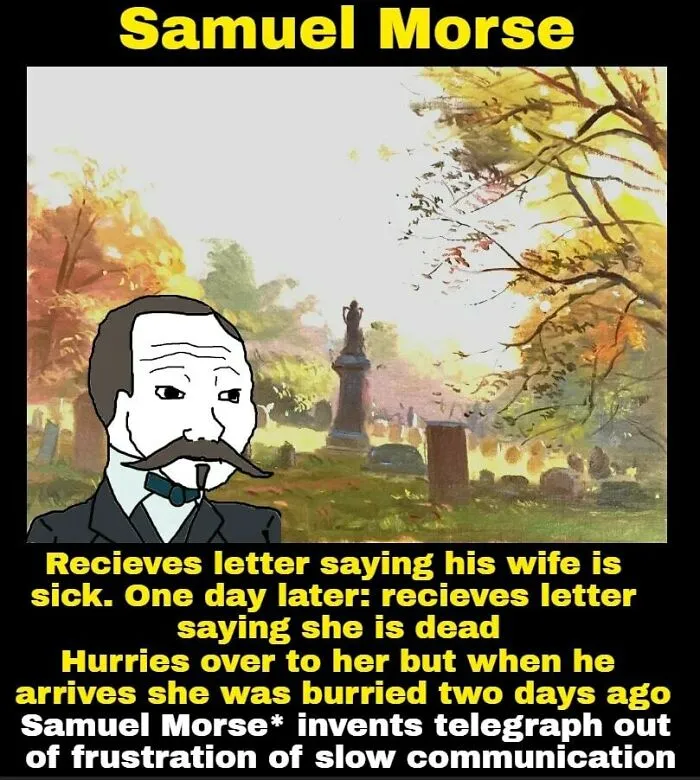
The death of Samuel Morse's wife, Lucretia, had a significant impact on his motivation to create the telegraph. In February 1825, Morse was in Washington, D.C., working as a painter when his wife suddenly died at the age of 25. His father sent him a letter with the sad news, but due to the slow communication methods of the time, Morse did not receive it for several days. By the time he returned home to New Haven, Connecticut, his wife had already been buried. This personal tragedy inspired Morse to explore faster ways of communication. He wanted messages, like the news about his wife, to reach people more quickly and efficiently. This led him to develop the telegraph, which revolutionized long-distance communication by transmitting electrical signals over a wire laid between stations. Morse, along with Joseph Henry and Alfred Vail, invented an electrical telegraph system in 1836. The invention of the telegraph and the development of Morse code allowed for the simple transmission of complex messages across telegraph lines, significantly improving communication speed and efficiency.
Report
31points

#23

The Tuskegee Syphilis Study was a research experiment conducted by the U.S. Public Health Service and the Tuskegee Institute in Alabama between 1932 and 1972. The study aimed to observe the natural history of untreated syphilis in 600 Black men, 399 of whom had syphilis and 201 who did not have the disease. Participants were not informed about their diagnosis or the true purpose of the study. They were told they were being treated for "bad blood," a local term used to describe various ailments, including syphilis, anemia, and fatigue. In exchange for participating in the study, the men received free medical exams, meals, and burial insurance. The study continued even after penicillin became the recommended treatment for syphilis in 1947. Researchers did not offer treatment to the participants and convinced local physicians not to treat them either. The study was finally terminated in 1972 after it was exposed in the media, leading to public outrage and significant changes in research practices and ethical standards.
Report
29points
#24

The P-59 Airacomet was the first operational jet-powered fighter aircraft used by the United States Army Air Forces (USAAF) during World War II. The first pilot of the P-59 was none other than Bell Aircraft Corporation's test pilot, Robert Morris Stanley. On October 2, 1942, Stanley was to make the first flight of the P-59. However, there was a catch - the USAAF had requested that Stanley wear a gorilla suit during the flight. The reason behind this strange request was to maintain secrecy. At the time, the development of jet engines was top secret, and the USAAF wanted to keep the P-59 project under wraps. So, they requested that Stanley wear a gorilla suit during the flight to make it appear as if the aircraft was being flown by a "crazy" pilot. The idea was that if anyone saw the aircraft flying, they would think it was a stunt or joke, rather than a top-secret military aircraft. Stanley complied with the request and donned the gorilla suit before climbing into the cockpit of the P-59. The flight was a success, and the P-59 went on to become the first operational jet-powered fighter aircraft used by the USAAF. The gorilla suit incident has since become a footnote in aviation history, but it serves as a reminder of the extreme measures taken during World War II to protect military secrets.
Report
29points
#25
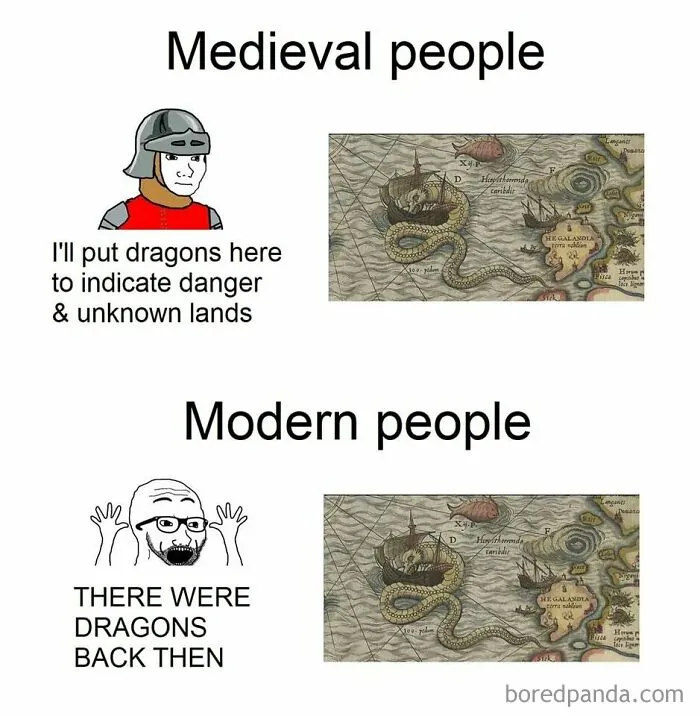
Some Medieval maps used dragons to indicate unknown or dangerous areas as a way to represent the uncharted territories and the potential dangers that explorers might encounter. This practice is thought to be rooted in the Christian tradition, where dragons were associated with evil and Satan. Examples of dragons on historical maps include: -The Fra Mauro Map (c. 1450 AD): This map shows the "Island of Dragons" (Italian: Isola de' dragoni), an imaginary island in the Atlantic Ocean. Near Herat in modern-day Afghanistan, the map mentions dragons with stones in their foreheads that cure infirmities. -The T-O Psalter map (c. 1250 AD): This map features dragons as symbols of sin in a lower frame below the world, balancing Jesus and angels on the top. However, the dragons do not appear on the map proper. -The Borgia map (c. 1450 AD): A world map engraved on a metal plate, featuring a drawing of a dragon on its peripheral near the area that depicts Asia.
Report
27points
#26

J. Robert Oppenheimer, known as the "Father of the Atomic Bomb," played a crucial role in the development of the atomic bomb during World War II. After the bombings of Hiroshima and Nagasaki, Oppenheimer expressed his guilt and remorse over the devastating consequences of the bomb. In a meeting with President Harry Truman in October 1945, Oppenheimer famously claimed to have "blood on his hands." This comment infuriated Truman, who believed that the responsibility for the bombings was his alone as the president. Truman's anger towards Oppenheimer's remark led to a strained relationship between the two. In later years, Truman would retell and embellish the story of their meeting, claiming that he sarcastically offered Oppenheimer a handkerchief to wipe his hands. Truman referred to Oppenheimer as a "cry baby scientist" and would never trust him again. Despite Oppenheimer's efforts to prevent the development of more powerful nuclear weapons, such as the hydrogen bomb, his opposition to the project and his alleged Communist ties led to his dismissal from the U.S. Atomic Energy Commission during the McCarthy era. Truman's decision to dismiss Oppenheimer was influenced by his concerns about the prospect of Soviet nuclear development and his belief that the responsibility for the bombings was solely his own.
Report
26points
#27
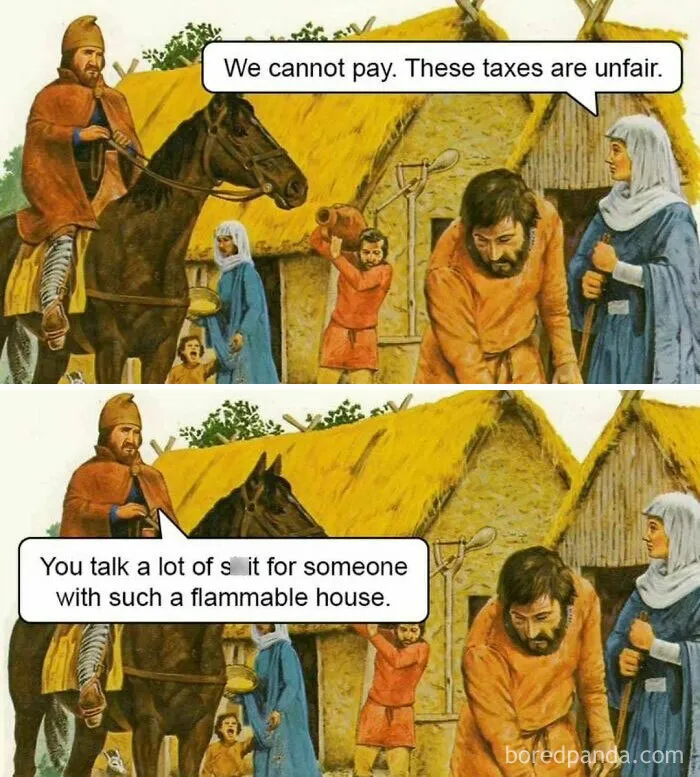
Taxation in medieval Europe was administered in various ways, depending on the region and the type of tax. In general, taxes were levied on land, trade, and movable property, and were collected by different authorities, such as the king, feudal lords, and the Church. In medieval England, the main form of taxation was land taxes, such as the geld, which was first regularly collected in 1012. The geld was unique in Europe at the time, as it was a universal land tax on all the king's subjects, not just his immediate feudal tenants and peasants. It was assessed on the hide, and the usual rate was 2 shillings per hide. In the 13th century, as people became rich from trade rather than land, kings began to impose taxes on trade. For example, King Edward I taxed every sack of wool that was exported to other countries. Taxes were also imposed on movable property, with people having to pay a percentage of their property's value (usually about 10%) to the king. Feudal lords could ask their vassals for an aid, a tax paid by persons or communities to someone in authority. Aids were limited to specific occasions, such as the knighting of the lord's eldest son, the first marriage of his eldest daughter, the payment of his ransom, or his going on a crusade. In addition, the lord of the manor could demand a taille, a tax from the inhabitants of his domain, which developed into the royal taille or tallage, a direct tax levied by sovereigns. Tax collection was often delegated to local governments or private tax collectors. In medieval Paris, the taille was an institution that resolved the tax compliance problem by turning the social cost of tax evasion into a private one.
Report
26points
#29
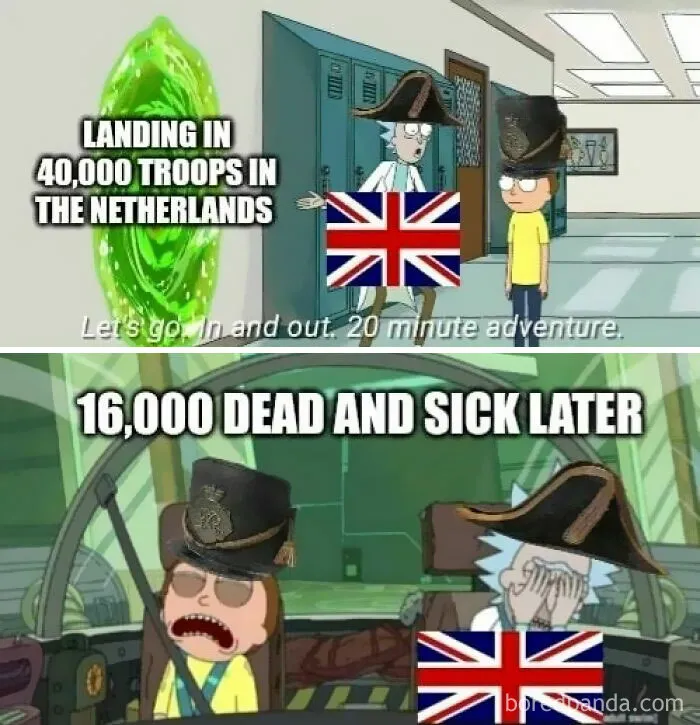
The Walcheren Campaign was an unsuccessful British expedition to the Netherlands in 1809, intended to open another front in the Austrian Empire's struggle with France during the War of the Fifth Coalition. The campaign had two main objectives: capturing Flushing and Antwerp in the Netherlands and enabling navigation of the Scheldt River. The commander of the expedition was Sir John Pitt, 2nd Earl of Chatham. The campaign involved a large British force of 39,000 soldiers, 15,000 horses, and 616 ships. Despite the size of the force, the campaign failed to achieve its objectives and was plagued by disease, with over 4,000 British troops dying during the expedition, and only 106 of them dying in combat. The survivors withdrew on December 9, 1809. The Walcheren Campaign was a disaster for several reasons: 1. Poor timing: The British force landed after the Austrians had already been defeated, which meant that the campaign's goal of assisting Austria was no longer relevant. 2. Slow progress: The British army advanced too slowly, allowing the French to reinforce Antwerp and preventing the British from capturing i. 3. Poor communication: There was poor communication between the British military and naval commanders, which hindered the coordination of their efforts. 4. Disease: The campaign was severely affected by the outbreak of "Walcheren fever," which struck down a quarter of the entire army within three weeks. This fever was likely a combination of malaria, typhus, typhoid, and dysentery.
Report
22points
#30
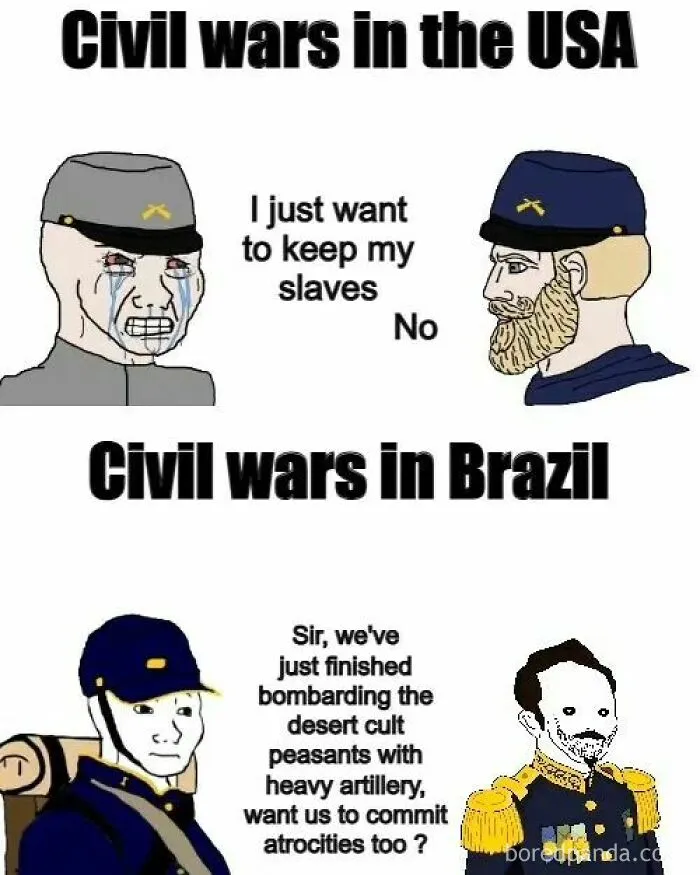
The War of Canudos (Guerra de Canudos) was a conflict between the First Brazilian Republic and the residents of Canudos in the northeastern state of Bahia from 1895 to 1898. The war took place in the aftermath of the abolition of slavery in Brazil (1888) and the overthrow of the monarchy (1889). The conflict arose from a millenarian religious revival led by Antônio Conselheiro, who began attracting attention around 1874 by preaching spiritual salvation to the poor. The war was fought between the military forces of the newly-formed Republic and the community of Belo Monte/Canudos, which was led by Antônio Conselheiro. The conflict involved four offensives carried out by the Brazilian army between 1896 and 1897, resulting in an estimated 30,000 deaths. The final offensive took place between October 1 and 5, 1897, when Canudos was set ablaze after an intense cannon bombardment. On October 2, around 600 councilors, mostly women, the elderly, and children, surrendered in exchange for a guarantee of life. The War of Canudos is considered the deadliest civil war in Brazilian history. The conflict was covered extensively by national and international journalists, including Euclides da Cunha, who later published the influential book "Os Sertões" in 1902, based on his experience as a war correspondent.
Report
15points