





Give it enough time, and what we consider everyday life will become a distant and unfamiliar past to someone else. The only way they will be able to explore it is through the remnants and records left behind by those who lived it.
The Instagram account 'History Everyday' offers us exactly that. Sharing pictures from earlier epochs, it allows us to take a glimpse into how our predecessors looked and what they were up to when they were just trying to get by.
More info: Instagram
#21
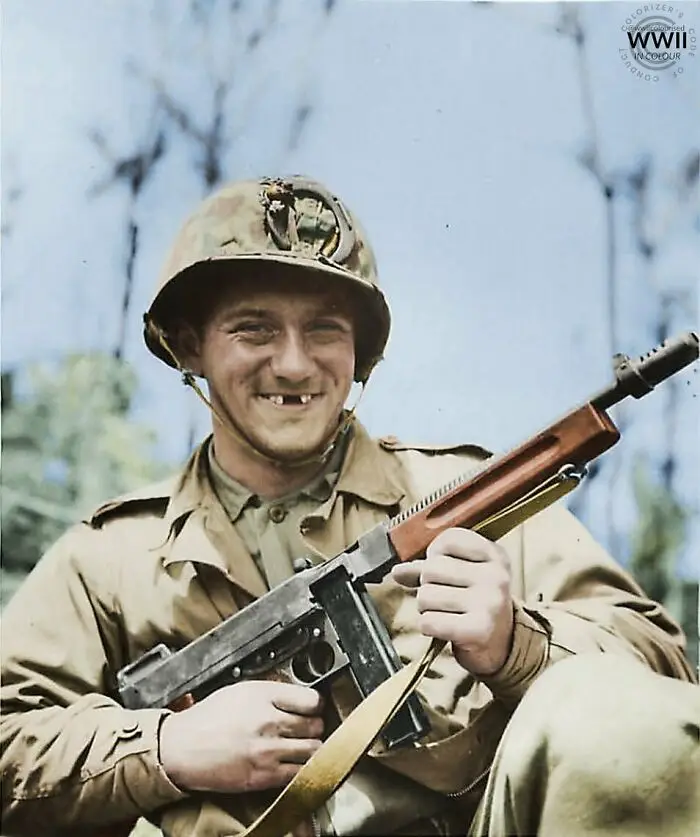
A US Marine attached his lucky horseshoe to his helmet and it actually did turn out to be lucky. It blocked a Japanese bullet, as can been seen in this photo, and saved his life during WW2 in Okinawa, 1945.
Report
119points
#22
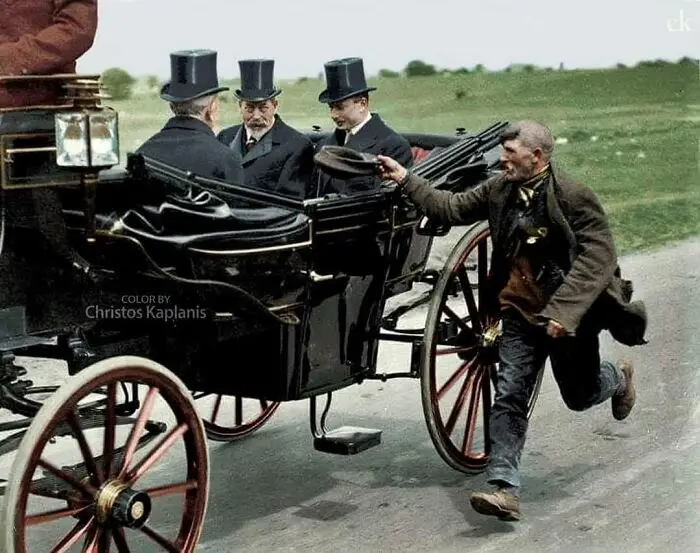
WW1 veteran runs alongside the coach of King George V to ask for money, 1920. It’s surprising that anyone could get so close to the king, considering that just six years previous Archduke Ferdinand had been assassinated by a man running up to his carriage, triggering WW1.
Report
119points
#24
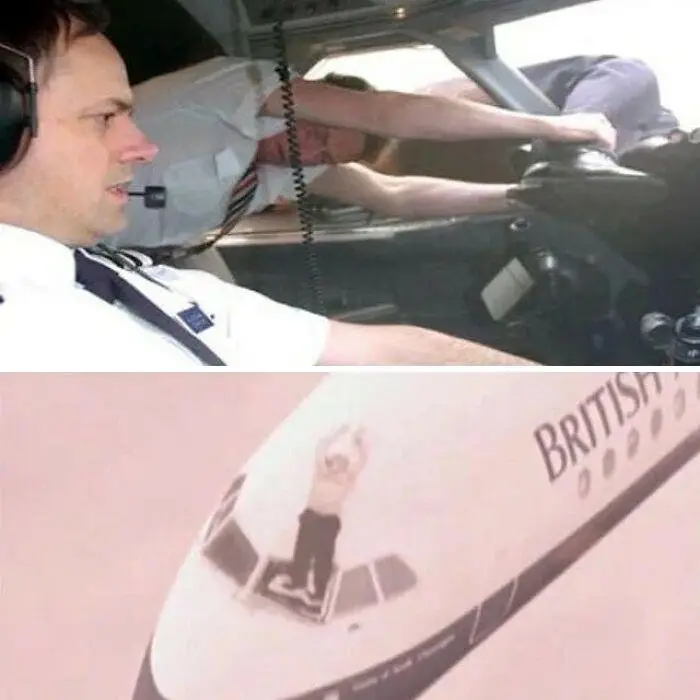
While British Airways Flight 5390 was flying over Didcot, Oxfordshire in 1990, an improperly installed windscreen panel separated from its frame causing the captain, Timothy Lancaster, to be sucked out of the aircraft. The captain was held in place through the window frame for twenty minutes, as shown in this reenactment image, until the first officer landed at Southampton Airport. Lancaster survived with frostbite, bruising, shock, and fractures to his right arm, left thumb, and right wrist. Flight attendant Nigel Ogden, who helped hold Lancaster in place, had cuts and bruises to his arm, and later suffered from PTSD. There were no other injuries.
Report
108points
#25
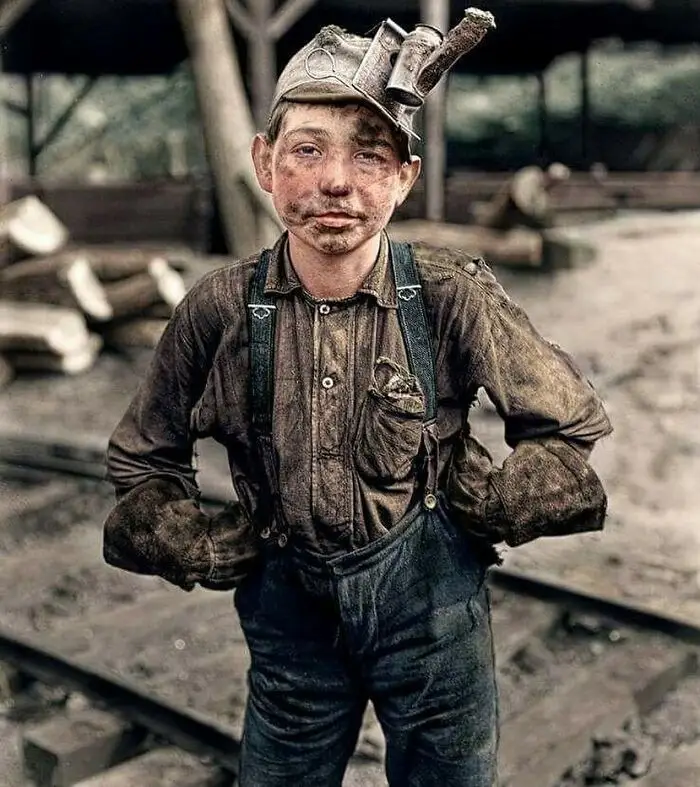
This photo from 1908 shows 11 year old coal miner Otha Porter Martin at the Turkey Knob Mine in West Virginia. As a ‘tipple boy’ his job would be to load coal for transport, typically into railroad hopper cars. Otha went on to live a long life until passing away in 1985.
Report
107points
#26
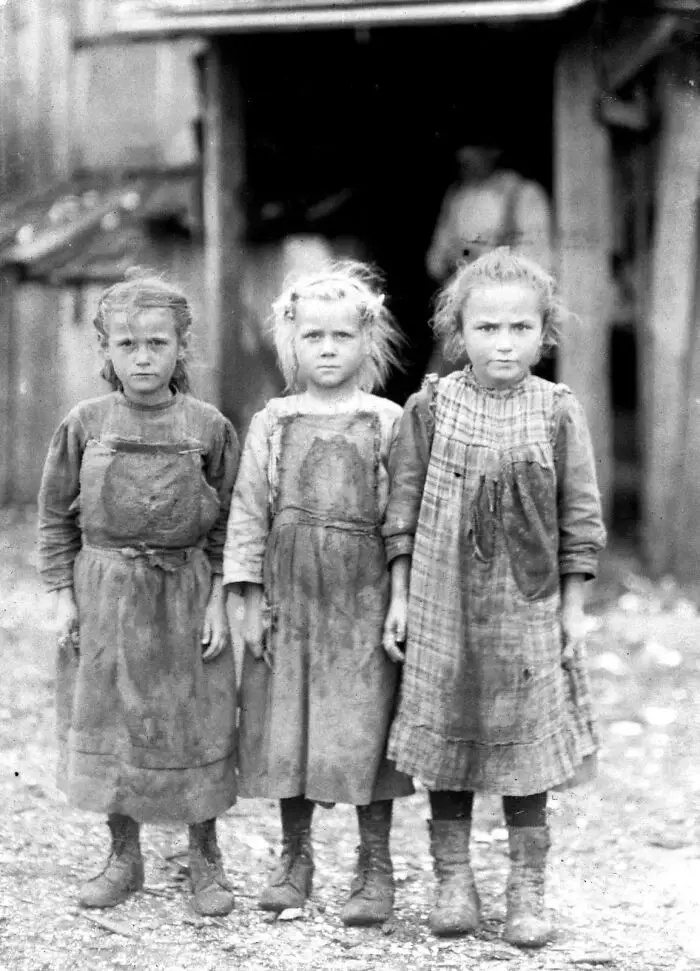
Young oyster shuckers in South Carolina, 1912. Josie, 6 years old, Bertha, 6 years old, and Sophie, 10 years old, began work at 4am.
Report
104points
#27
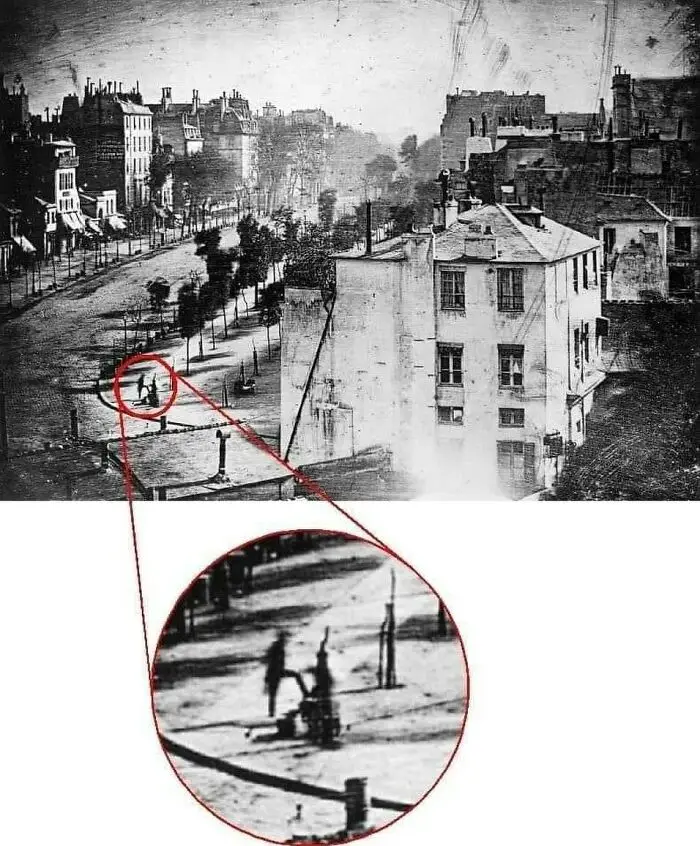
The first ever photograph of a person, taken in 1838 in Paris. Look to the bottom left of the frame. There is a man having his shoes shined. That man is the earliest known photograph of a recognizable human being, taken by Louis Daguerre. It wasn’t that the man in question was the only person on the street. More than likely, the street was full of horses and carts and pedestrians going about their business. It was rather that the exposure time for the image was around ten minutes, which meant that everything else in the scene was moving too fast to be captured in any clarity.
Report
102points
#28
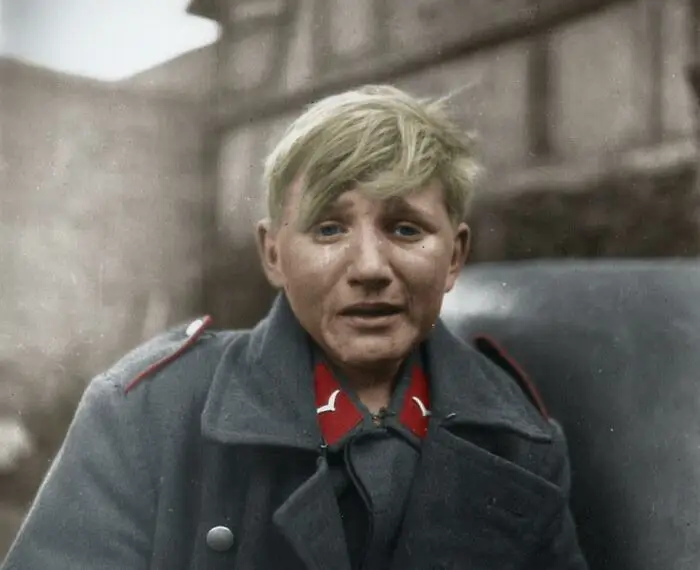
16 year old German soldier, Hans-Georg Henke, crying as he is captured by the US 9th Army in Germany on April 3rd, 1945. He was a member of the Luftwaffe anti-air squad and burst into tears as his world crumbled around him. His father died in 1938, but when his mother died in 1944 leaving the family destitute, Hans-Georg had to find work in order to support the family. At 15 years of age he joined the Luftwaffe.
Report
100points
#29
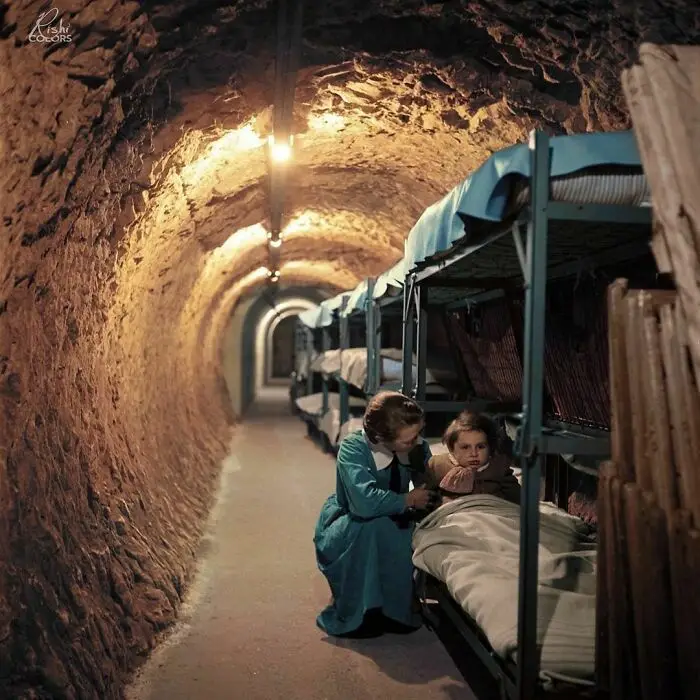
A woman kneels beside the bed of a child in an underground tunnel during the bombing of London in WW2. London built a whole underground tunnel infrastructure to protect citizens during bombing attacks in WW2. They were called London deep level shelters, which were eight deep level air raid shelters that were built under London Underground stations. The final capacity in each was around 8,000 people. The shelters were started in 1940 during the Blitz in response to public demand to shelter in the London Underground stations. However, they were not completed until 1942 after the Blitz was over, so they were initially all used by the government, but as bombing intensified five of them were opened to the public in 1944.
Report
93points
#30
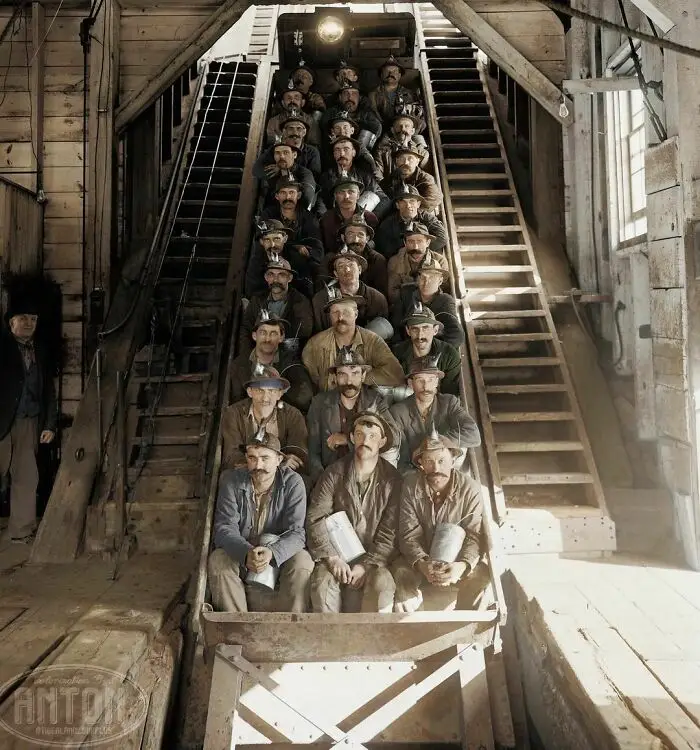
Workers for the Calumet and Hecla Mining Company in Michigan prepare for the long ride down into the copper mines to work, 1906.
Report
88points
#31
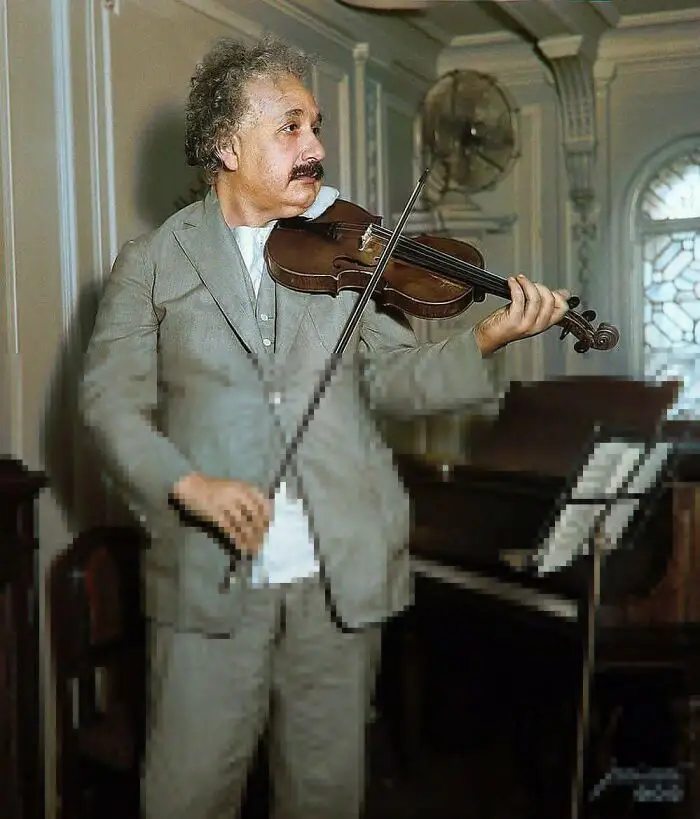
Albert Einstein playing the violin, circa 1930. In 1929, Albert Einstein told the Saturday Evening Post, “If I were not a physicist, I would probably be a musician.” By then Einstein was world renowned for his theory of relativity, but only a few knew that his biggest joy in life was music. He had played piano and violin since childhood.
Report
83points
#32

900 year old Crusader sword found off Israel's northern coast in October 2021. The iron sword is just under 4 ft. long and is presumed to have belonged to a Crusader sailing to the Holy Land in approximately the year 1100.
Report
80points
#33
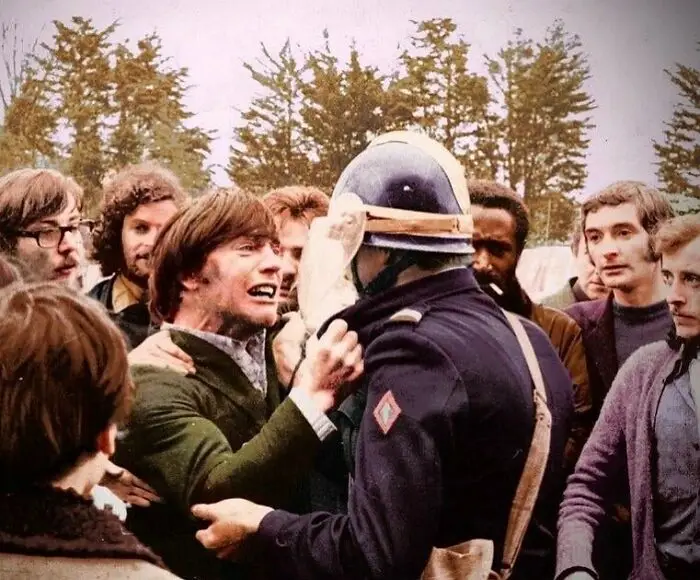
Two childhood friends unexpectedly reunite on opposite sides of a demonstration in 1972. True story. Long before Jacques Gourmelen took this photo on April 6th 1972 in Saint-Brieuc, France, the worker, Guy Burmieux, and the riot policeman, Jean-Yvon Antignac, had grown up together. The two had gone to high school together. Partied together. One article called them “best friends.” Guy himself is quoted as calling them “inseparable.”
Report
80points
#34
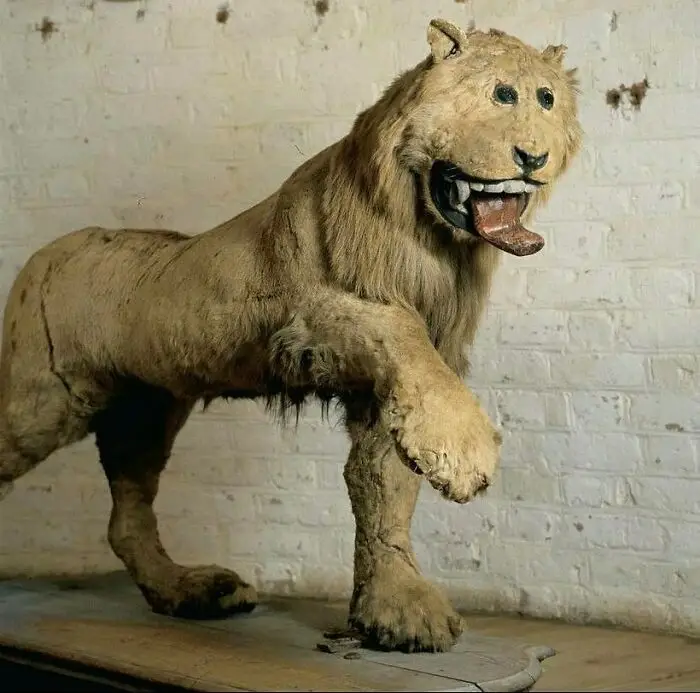
In 1731 King Frederick I of Sweden was gifted a lion, one of the first lions in Scandinavia. When the lion died shortly after, it was given to a taxidermist and this was the end product. The taxidermist and the museum keepers had never actually seen a lion before, and did not know how they were supposed to look. As a result, the resulting mount was especially anatomically inaccurate, most apparent in its face.
Report
77points
#35
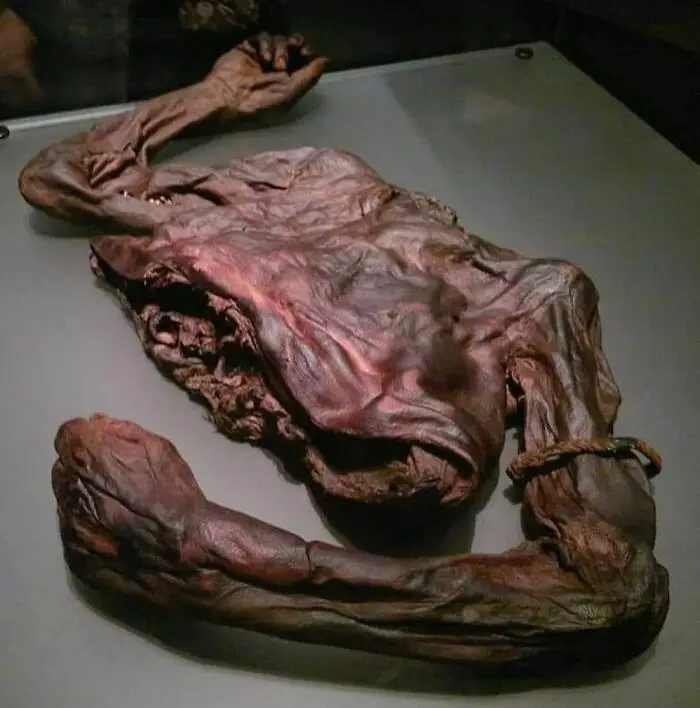
Old Croghan Man is a well preserved Irish Iron Age body found in June 2003, who is believed to have died between 362 BC and 175 BC. The man is calculated (based on his arm span) to have stood approximately 6 ft 6 in (1.98 m) tall, which is considered to be exceptionally tall for the period when he lived. His last meal (analysed from the contents in his stomach) was believed to have been wheat and buttermilk. However, he was shown to have had a meat rich diet for at least the 4 months prior to his death.
Report
76points
#36
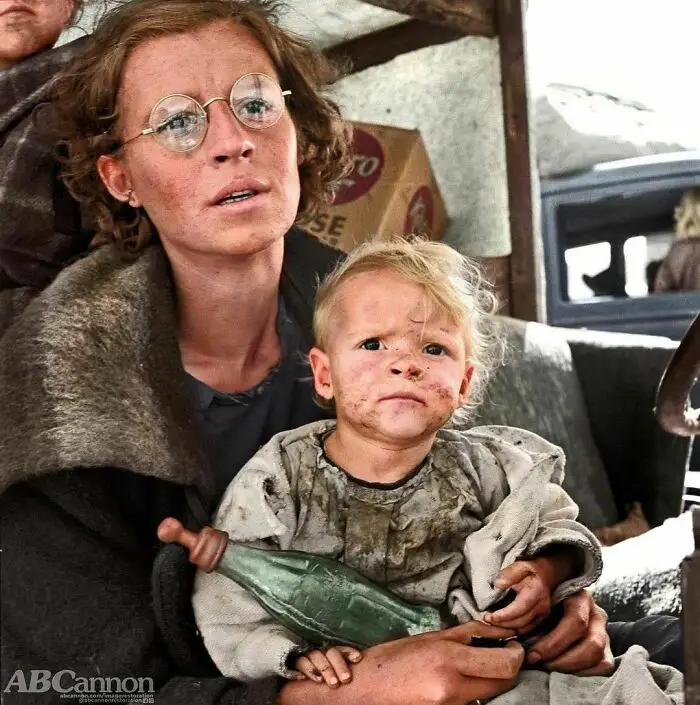
A mother and child during the Great Depression, 1939. This photo was taken by Dorothea Lange in Tulelake, California. During the Great Depression Lange photographed unemployed and migrant workers, showing some of the horrible conditions they lived in.
Report
75points
#37
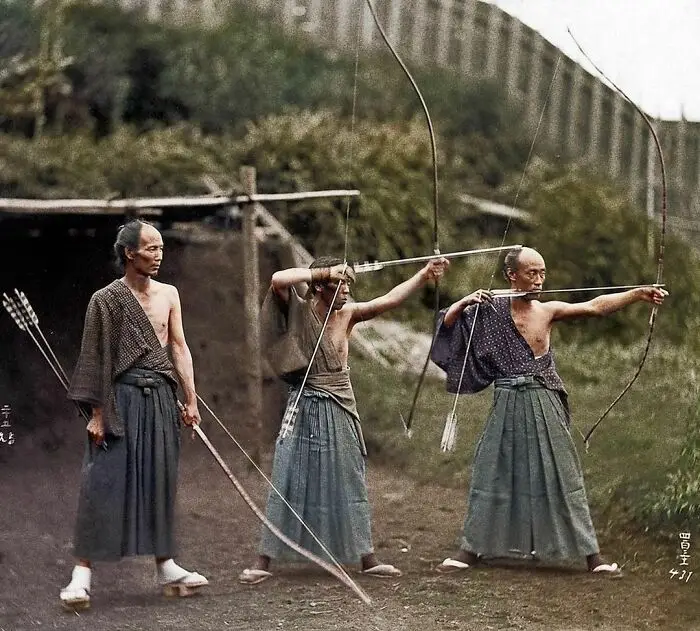
Japanese archers, circa 1860. The men are practitioners of Kyudo, which is the Japanese martial art of archery. The Japanese bow (Yumi) used is exceptionally tall, surpassing the height of the archer.
Report
73points
#38
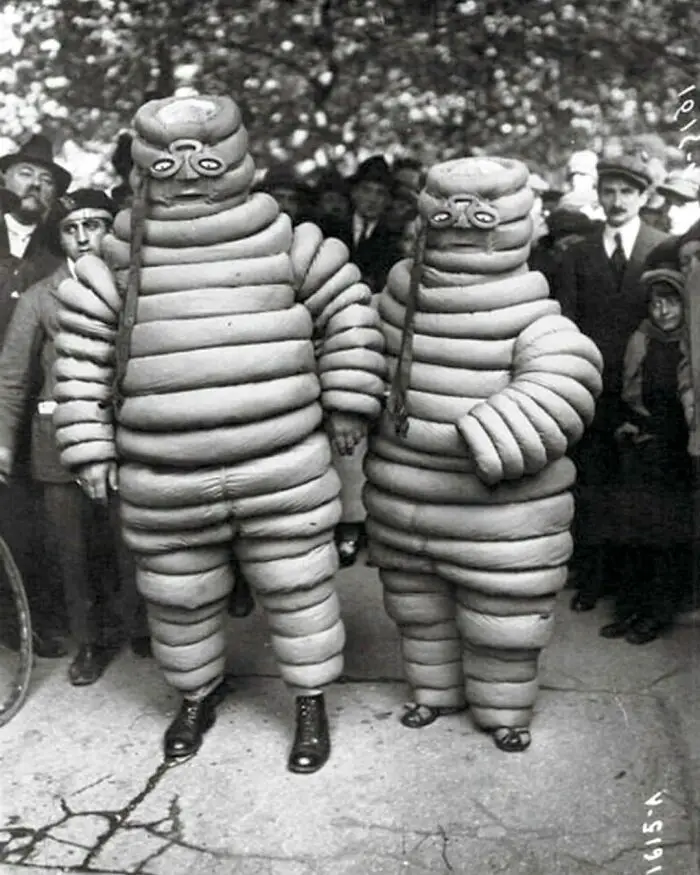
The Michelin Man, official sponsor of the Michelin tire company, in 1920. Fun fact: The restaurant rating system ‘Michelin Stars’ also originated from this. Michelin began reviewing restaurants so that more people would travel further distances in their cars to eat at restaurants. This in turn would wear down their tires faster, and force them to buy more. The Michelin star system goes up to three and has the following criteria: 1 star: "A very good restaurant in its category". 2 stars: "Excellent cooking, worth a detour". 3 stars: "Exceptional cuisine, worth a special journey".
Report
72points
#39
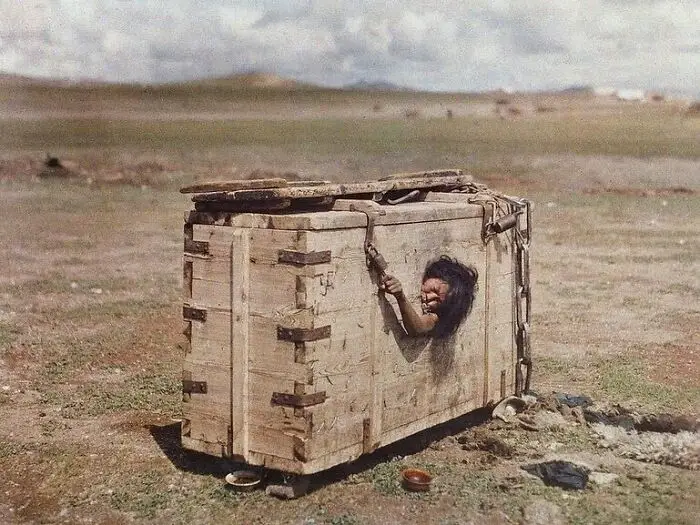
A woman is held captive in a wooden crate and left to die of starvation in a remote desert in Mongolia, 1913. It was capital punishment for committing adultery. Stéphane Passet was touring Mongolia and taking pictures in 1913, when he came across the Mongolian woman in a box. In the photograph you can see two bowls on the ground for water and food. She was given food and water not on a daily basis but in a way to prolong her suffering. In order not to alter the balance of local laws and civilizations of Mongolia, or in another words get himself in trouble, Stéphane Passet Left the woman in the box.
Report
72points
#40
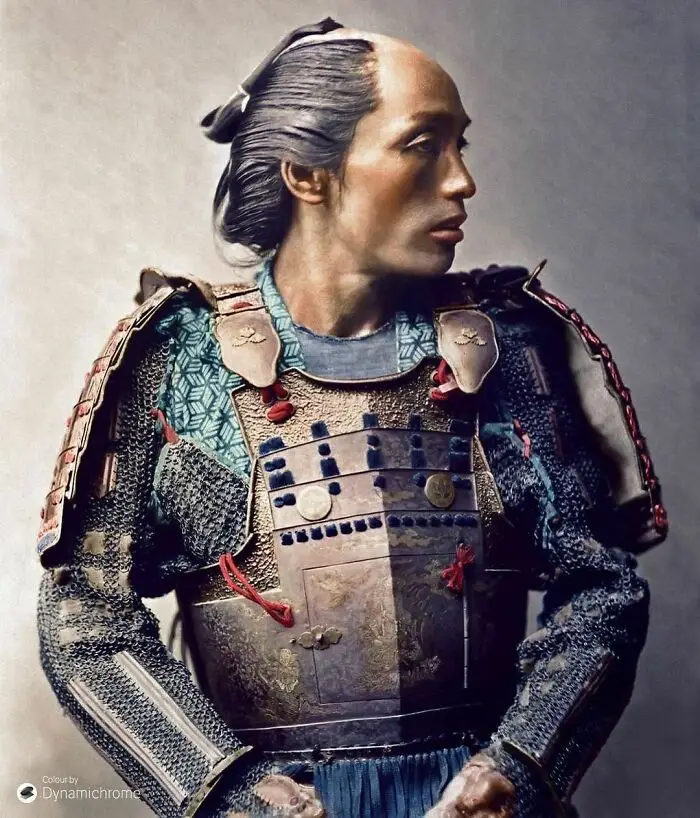
Samurai, 1881. This portrait of a soldier was taken during the Meiji Restoration, a period of technological and political upheaval in which Japan as a nation transformed from centuries of feudal rule to a consolidated political system under the Emperor of Japan. This mostly ended the role of the samurai, and the 5% of the population that were comprised by samurai families moved into professional and entrepreneurial roles. Their memory and weaponry remain prominent in Japanese popular culture.
Report
69points