




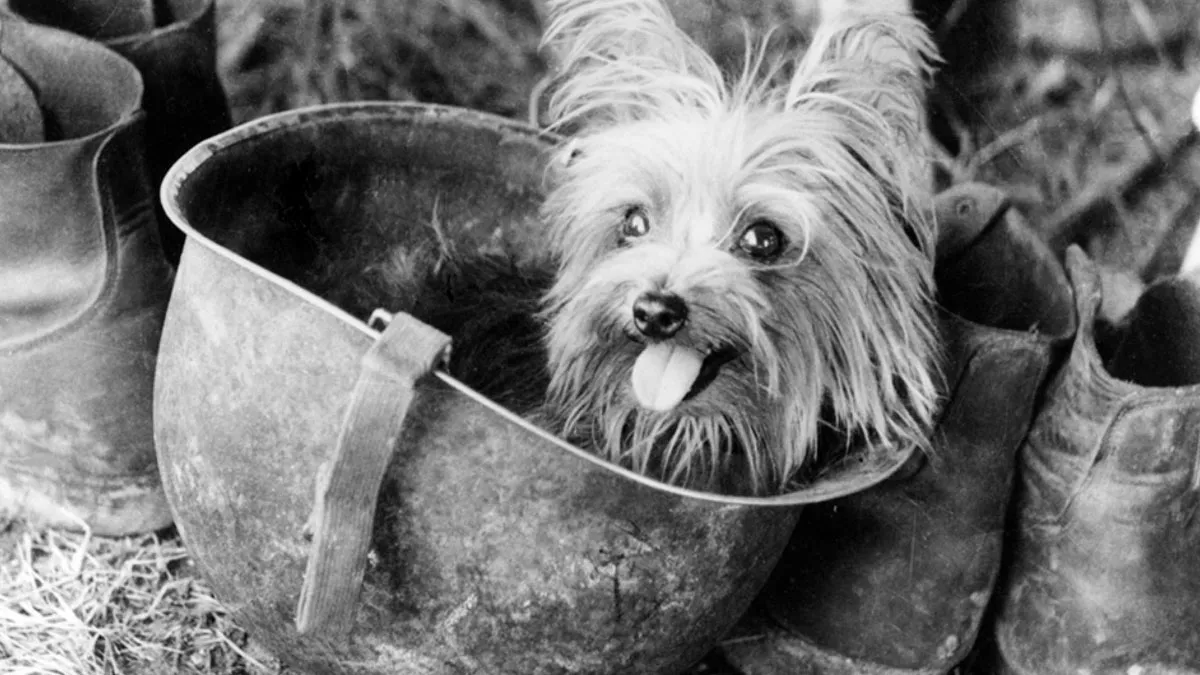


History books are full of people who have taken on extraordinary voyages, created unimaginable inventions, or fought for what matters the most. But what they often leave out are the animals that also had a significant influence on human history and culture. From Yorkie Smoky, who was credited as the first therapy dog while serving in WWII, to the actress Pepper the Cat, the pets that surround us shape the world we live in in the most precious and unlikely ways.
Below you’ll find many more historical pets from this Instagram account that made headlines and history with their exceptional stories. Scroll down to see them for yourself, so the paw prints they left on our past continue to live on!
#41
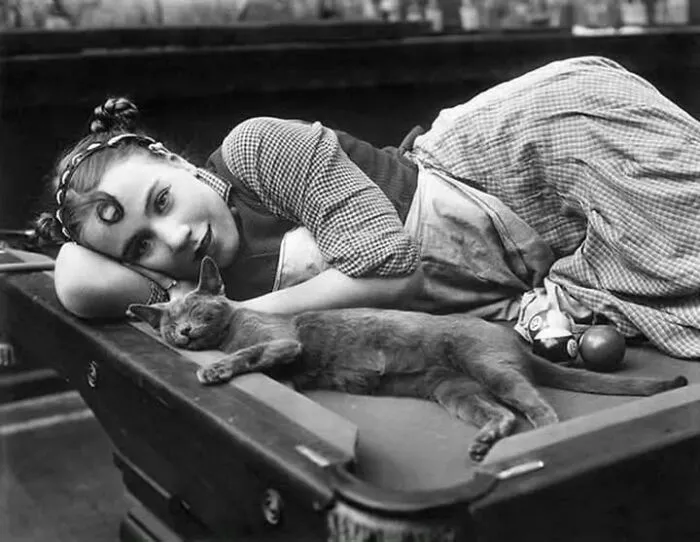
Pepper the Cat and Louise Fazenda taking a rest during the filming of “Are Waitresses Safe?” Circa 1917.
Pepper was a female Oriental Maltese cat who had starring turns in several silent comedy films produced by the Mack Sennett Studios from 1917 to 1922. Noted for her exceptionally photogenic good looks and her catty yet lovable personality, Pepper became the first true celebrity feline in film history.
Louise Fazenda (June 17, 1895 – April 17, 1962] was an American film actress, appearing chiefly in silent comedy films.
Report
25points
#42
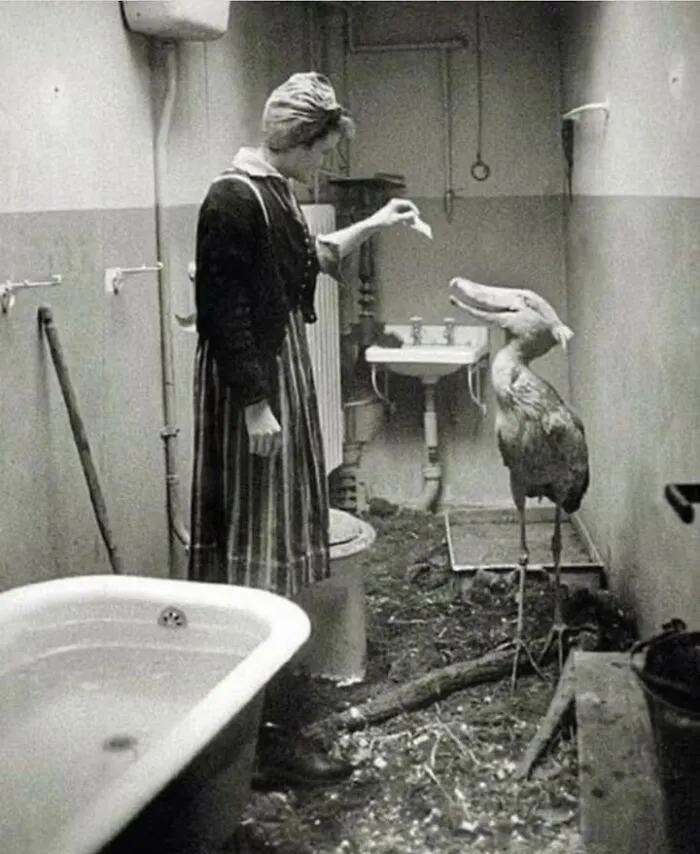
During World War II, November 1943, Berlin Zoo faced heavy bombing by Allied forces. The attacks resulted in significant casualties among the zoo’s animal population. The zookeepers witnessed scenes of destruction and loss as a substantial portion, estimated around 30%, of the zoo’s animals perished during the bombings.
The following day, the suffering continued as the beloved aquarium, known for housing various marine species and being a popular tourist attraction, was destroyed, reduced to rubble in the bombings.
Amidst the chaos, zookeepers risked their lives to rescue and care for the remaining animals. They worked tirelessly to create makeshift shelters promptly, providing the surviving animals with necessary care and protection despite the ongoing turmoil and danger posed by the bombings. The dedication and efforts of the keepers were crucial in trying to safeguard the remaining animals during this challenging and tragic period in Berlin’s history.
Report
25points
#43
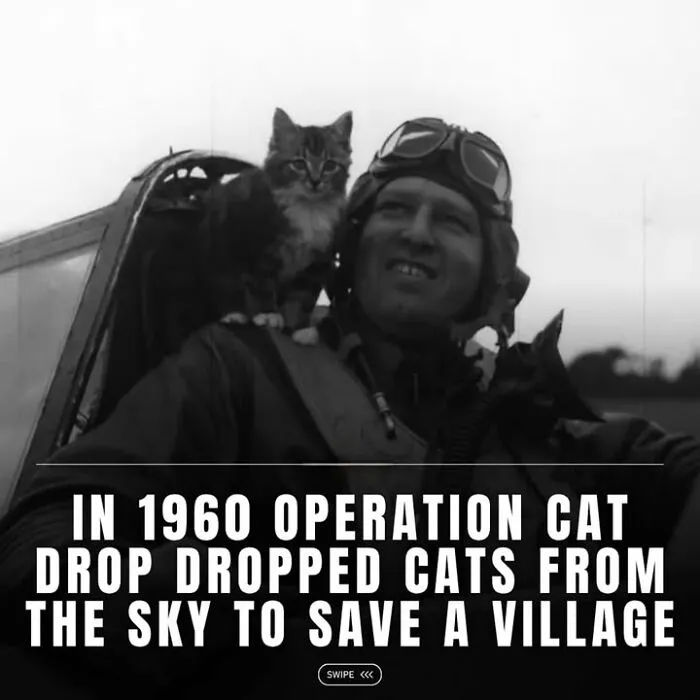
In 1960 Operation Cat Drop was launched as an unusual but effective response to a devastating rat infestation in the remote village of Bario in Borneo. After insecticide spraying to control malaria-carrying mosquitoes accidentally k****d off the local cat population the rat numbers exploded. These rats were destroying food supplies and threatening the village’s survival. To combat this, the British Royal Air Force parachuted crates containing live cats into the area along with other supplies. The cats were released to naturally reduce the rat population and restore balance to the local ecosystem.
The use of cats was not the only innovative part of the operation. Along with cats, the parachuted crates sometimes contained other animals like dogs and beavers to help with pest control and maintain security. This creative wildlife management technique relied on nature itself to address a problem caused by human intervention. The cats quickly adapted to their new environment and became an effective line of defense against the invasive rats. Villagers welcomed the animals and worked alongside them to protect their homes and food stores.
Operation Cat Drop stands as a remarkable example of ecological problem-solving through unconventional means. Rather than relying solely on chemicals or traps the intervention used living creatures to restore order. This method highlighted the importance of biodiversity and the role animals play in supporting human communities. The operation remains a fascinating story of how teamwork between humans and animals saved a village and prevented further disaster.
Report
22points
#44
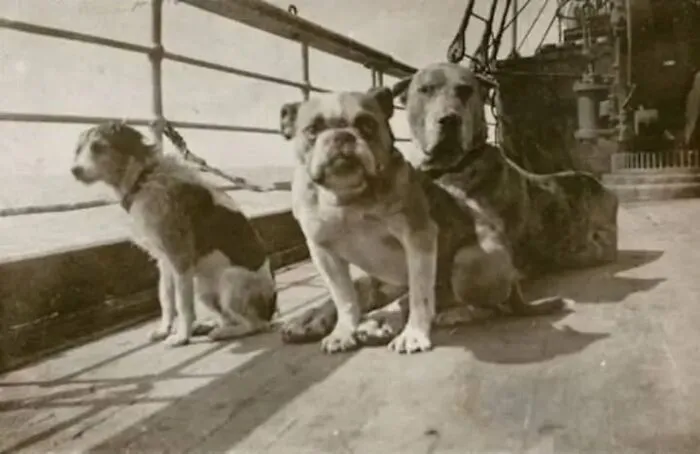
The RMS Titanic carried more than just people on its ill-fated maiden voyage—it also transported twelve dogs, reflecting the luxury and status of its wealthier passengers. These canine companions included a variety of breeds such as a French Bulldog, a Pekingese, a Fox Terrier, two Pomeranians, and even a Great Dane. Cared for in the ship’s kennels or in the cabins of first-class passengers, these animals were as much a part of the voyage as their owners.
When disaster struck on the night of April 14, 1912, chaos reigned as passengers scrambled for safety. Amid the confusion, only three of the twelve dogs managed to survive: a Pekingese and two Pomeranians. Their small size likely enabled them to be hidden in coats or smuggled onto lifeboats, a luxury the larger dogs didn’t have. The fate of most of these animals mirrored the tragedy faced by the majority of the ship’s passengers.
One particularly poignant story is that of Elizabeth Isham, a devoted dog owner traveling with her Great Dane. When told her dog was too large to board a lifeboat, Elizabeth made a heartbreaking choice—she refused to leave him behind. Days later, rescuers found her body in the ocean, still clutching her beloved companion. Her act of loyalty and love stands as a deeply human moment amid the vast scale of the Titanic disaster.
Report
22points
#45
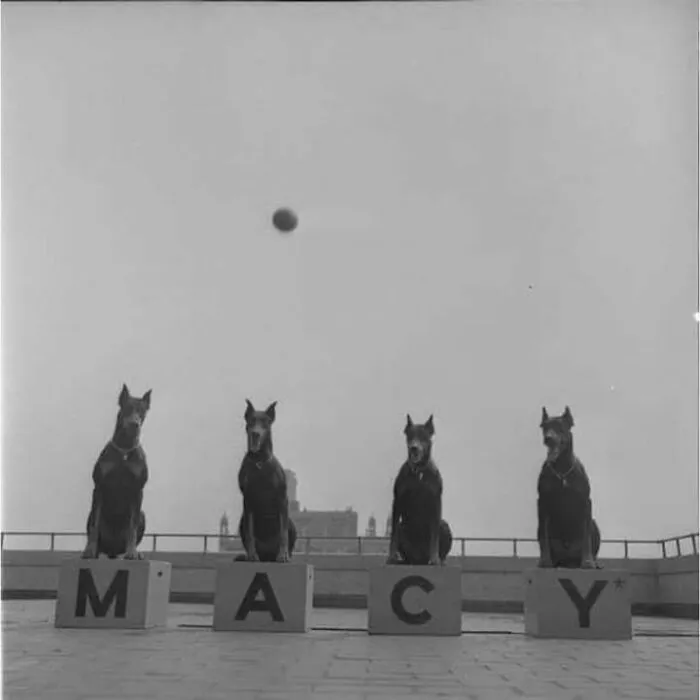
In 1952, Macy's formed a canine security corps at their flagship Herald Square department store. Six Doberman Pinschers were introduced. They were provided by John Behan, a dog trainer who had been in the Army’s K-9 Corps during World War II.
Once customers left for the day, the dogs took over. They worked as night security guards, patrolling Macy’s two million square feet of retail space from the sub-sub-basement to the twentieth floor. They prowled the aisles at night, inspecting shipping bays, looking under counters, and sniffing every corner of the store. Each dog was taken out on a leash, but at certain points, they were released and told to “search.” They were on the look out for burglars and thieves, stragglers caught after hours, and indications of fire or water leakage.
One time, two young girls were reported missing and traced back to Macy’s enormous store. They were found by a Doberman guard dog who, to the surprise of his handler, licked the girls’ hands to put them at ease.
The dogs were looked after by a staff of nine. They slept in the penthouse, and hung out in four fenced-in dog runs, each with its own large, heated and air conditioned doghouse. They were bathed weekly in the summer, and bi-monthly in the winter. The dogs ate a special diet and saw a veterinarian twice a year, along with regular pedicures and dentals. They even put on demonstrations at the Madison Square Garden horse show.
Most of the Dobermans were 7, and tended to work until they were 10 or 11 years old. After that, they were sold or given away for less-demanding work.
Anthony Nicola, Macy's VP of Security, explained "This building has 2 million square feet. We have alarms and sensors, but they fill in the gap. Their sense of smell is terrific. You can't buy an alarm that does what they do."
There's record of Doberman security guards at Macy's as late as 1998, but I could find no proof that the program still exists today. Rumor has it it does not. Do you know?
Once customers left for the day, the dogs took over. They worked as night security guards, patrolling Macy’s two million square feet of retail space from the sub-sub-basement to the twentieth floor. They prowled the aisles at night, inspecting shipping bays, looking under counters, and sniffing every corner of the store. Each dog was taken out on a leash, but at certain points, they were released and told to “search.” They were on the look out for burglars and thieves, stragglers caught after hours, and indications of fire or water leakage.
One time, two young girls were reported missing and traced back to Macy’s enormous store. They were found by a Doberman guard dog who, to the surprise of his handler, licked the girls’ hands to put them at ease.
The dogs were looked after by a staff of nine. They slept in the penthouse, and hung out in four fenced-in dog runs, each with its own large, heated and air conditioned doghouse. They were bathed weekly in the summer, and bi-monthly in the winter. The dogs ate a special diet and saw a veterinarian twice a year, along with regular pedicures and dentals. They even put on demonstrations at the Madison Square Garden horse show.
Most of the Dobermans were 7, and tended to work until they were 10 or 11 years old. After that, they were sold or given away for less-demanding work.
Anthony Nicola, Macy's VP of Security, explained "This building has 2 million square feet. We have alarms and sensors, but they fill in the gap. Their sense of smell is terrific. You can't buy an alarm that does what they do."
There's record of Doberman security guards at Macy's as late as 1998, but I could find no proof that the program still exists today. Rumor has it it does not. Do you know?
Report
21points
#46
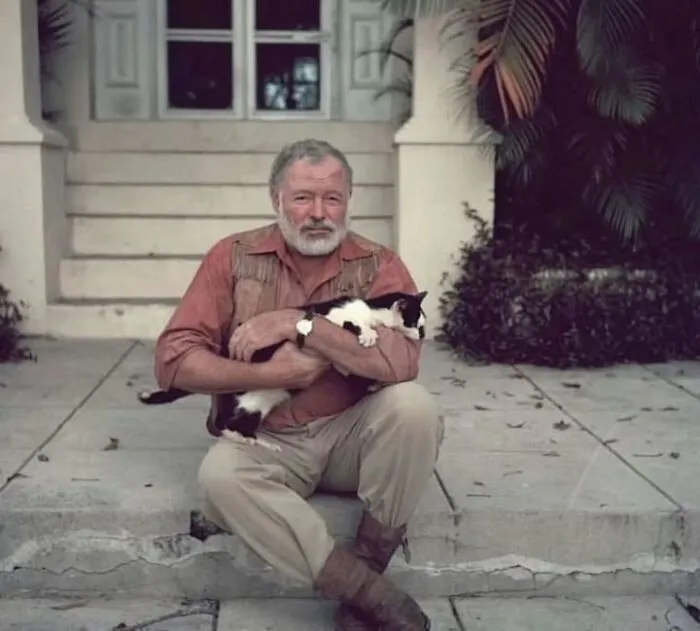
Ernest Hemingway and his Cuban cat by Hans Malmberg, 1954.
Ernest Hemingway was known for many things, including his love for cats and writing. At his home in Key West, he kept a colony of cats, many of which were polydactyl, meaning they had extra toes. These cats, known as Hemingway’s six-toed cats, have become a beloved attraction at the Ernest Hemingway Home and Museum.
Report
21points
#47
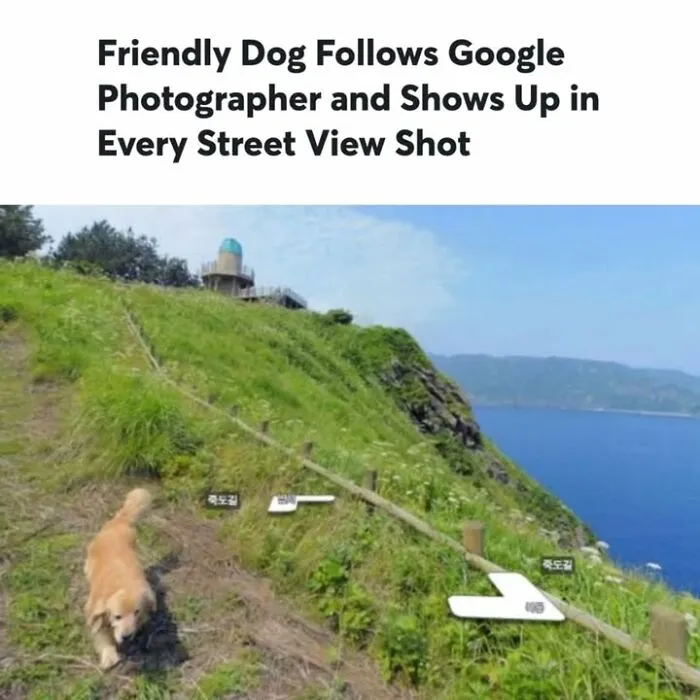
The Dog People – On a tiny island off the coast of South Korea, one sweet dog made sure the visiting photographer had a friendly escort. The golden retriever followed the visitor everywhere as he photographed the street view map of the area. As a result, this dog is now in all the images!
The island of Jukdo boasts a beautiful landscape, as you’ll see if you follow this handsome golden retriever tour guide along trails around the coastline. Here is the link for a virtual tour. Jukdo has daily ferry service, which tourists use to enjoy the pristine ecosystem and visit the observatory.
If you’ve ever spent time looking at the street view level on Google maps, you’ve probably seen some interesting things. Some people use services like Mapcrunch to drop themselves into a random location to explore the scenery. And, apparently, find dog friends!
Jukdo has a small area of farmland used to grow medicinal herbs. The friendly golden retriever probably belongs to a family on the island. Thanks for the tour, friendly doggo.
Report
21points
#49
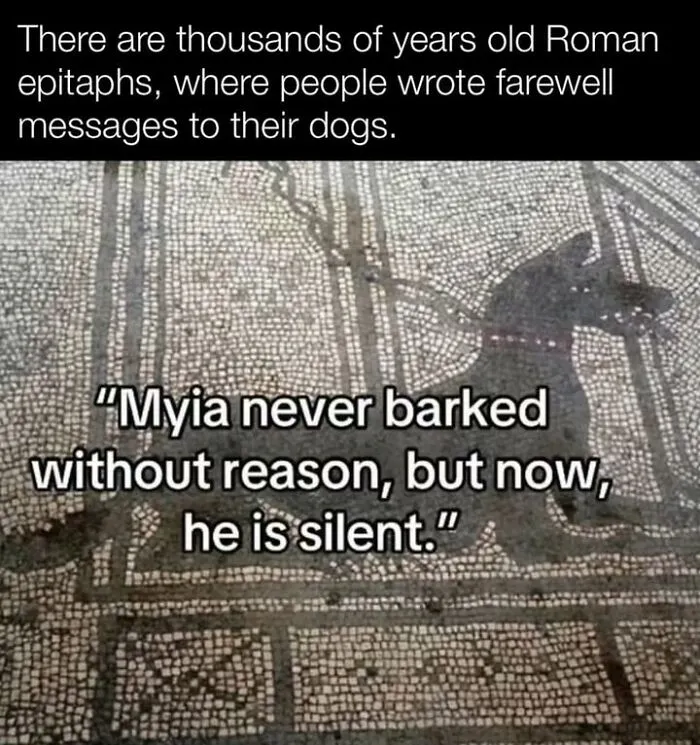
For thousands of years, Romans crafted heartfelt epitaphs for their beloved dogs, inscribed on stone tablets. These farewell messages, dating back to the 1st century BCE, express deep affection and grief, often praising the dogs’ loyalty, playfulness, and companionship. Found in archaeological sites across the Roman Empire, these epitaphs reveal the enduring bond between humans and their canine friends.
Report
19points
#50
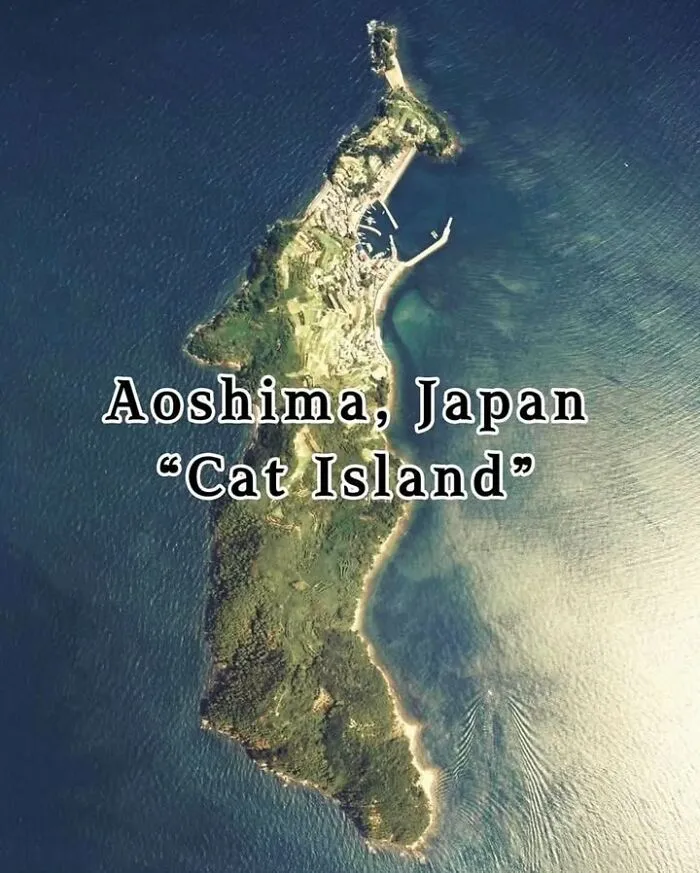
Human Population: 13
Cat Population: 210
Cat Population: 210
Aoshima also known as “Cat Island” in Ozu, Japan, is renowned for its overwhelming cat population, originally introduced to control rodents on fishing boats. As the human population declined, the cats thrived, attracting many tourists.
All cats on Aoshima Island are being neutered or sterilized, according to major media reports. The reason is that there are too few people on the island who can feed them.
Report
14points


